
Is the 2025 Subaru WRX tS Really the Best WRX Yet—or Just a Reminder of What’s Missing?
What Sets the 2025 WRX tS Apart From Previous Generations?
The WRX badge has always meant something special to car enthusiasts. It’s shorthand for rally-bred performance, turbocharged thrills, and a certain rawness that made every drive feel like a mini adventure. The 2025 Subaru WRX tS, with its STI-tuned upgrades, aims to honor that legacy—but it’s also a clear sign of how much the WRX has grown up.
Let’s get the basics out of the way. The tS stands for “Tuned by STI,” and this model sits at the top of the WRX lineup. It’s more refined than ever, with a cabin that finally feels worthy of the price tag and driving dynamics that strike a balance between daily comfort and weekend fun. But here’s the thing: it’s not the hardcore, visceral machine that old-school fans might crave. Instead, Subaru has created a car that’s more accessible, more polished, and, for better or worse, more mature.
How Does the WRX tS Look in Person?
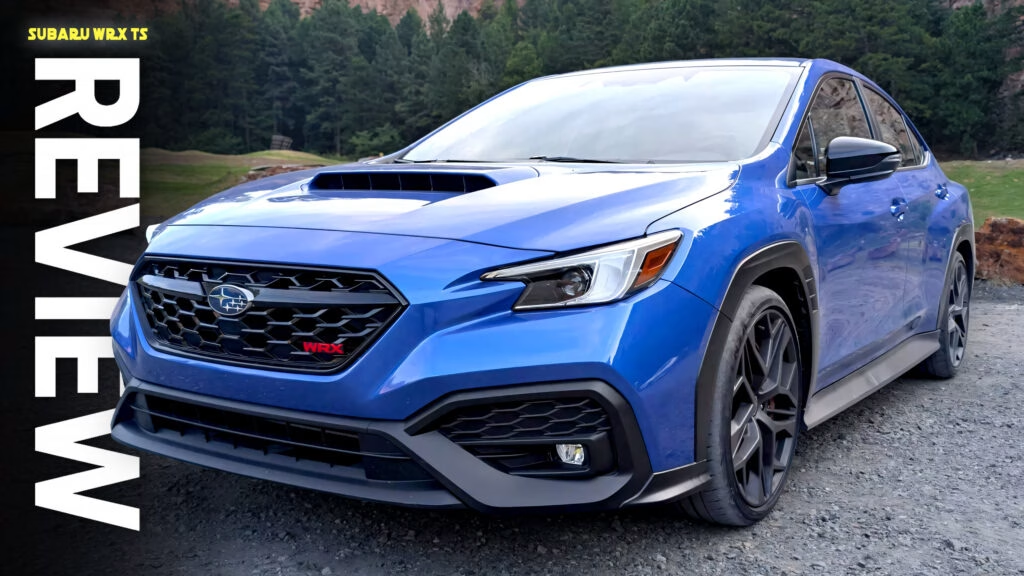
If you’re expecting a car that shouts for attention, you might be surprised. Even in the iconic World Rally Blue Pearl with gold brake calipers, the WRX tS is subtle. The design language is purposeful—think functional hood scoop, fender vents, and a rear diffuser that whispers “performance” rather than screams it. There are clever details, too, like jewel-like taillight internals and hidden creases that reward a closer look.
It’s a car that flies under the radar, much like its predecessors. For many, that’s a huge part of the appeal. You get the sense that the WRX tS is built for drivers, not for bystanders.
Is the Interior Finally Up to Par?
Let’s be honest: WRX interiors used to be pretty spartan. Hard plastics, minimal creature comforts, and a vibe that said “function over form.” The 2025 tS changes all that. The Recaro seats are a revelation—deep, supportive, and comfortable enough for long hauls or spirited drives. Blue stitching and faux suede add a touch of personality, while the leather-wrapped steering wheel feels just right in your hands.
That said, Subaru still hasn’t nailed the infotainment experience. The touchscreen interface is slow—sometimes painfully so—and both Android Auto and Apple CarPlay suffer from lag and occasional crashes. It’s a blemish in an otherwise much-improved cabin. On the plus side, rear seat comfort and trunk space (13 cubic feet) are both solid for the segment, making the tS a genuinely livable daily driver.
How Does It Drive? Is It Still a WRX at Heart?
Here’s where things get interesting. The 2.4-liter turbocharged flat-four puts out 271 horsepower and 258 lb-ft of torque. On paper, that’s respectable. In practice, the WRX tS feels quick but not blistering. Zero to sixty takes about six seconds—slower than some previous WRX models. The engine note is subdued, and there’s no wild top-end rush.
But the magic is in the chassis. Adaptive dampers, tuned by STI, transform the car’s handling. The tS feels planted and predictable, with far less understeer than older WRXs. The six-speed manual is satisfying, though the clutch can be tricky in stop-and-go traffic and pedal spacing isn’t ideal for heel-toe downshifts. Still, it’s a world better than the CVT found in some other WRX trims.
On twisty roads, the tS shines. Steering is direct, brakes are strong, and the car invites you to push harder. Yet, when you dial the suspension back to Comfort mode, it’s perfectly civil for commuting. Subaru’s EPA fuel economy estimates (19 city, 26 highway) are spot-on in real-world driving.
How Does the WRX tS Stack Up Against the Competition?
If you’re shopping for an all-wheel-drive performance car under $50,000, your options are limited. The Toyota GR Corolla is the WRX’s main rival, and it brings more horsepower, a more engaging exhaust note, and a similarly practical hatchback body. The GR Corolla is also priced between $40,000 and $49,000, overlapping with the WRX tS.
Front-wheel-drive alternatives like the Honda Civic Type R and Hyundai Elantra N offer fantastic driving experiences, but if you’re a diehard fan of AWD, they might not cut it. The Genesis G70 is a tempting used option, with more power and luxury, but no manual transmission.
The WRX tS is the most refined choice in its class, but those seeking raw excitement may find the Toyota more compelling.
Why Are Sales Down Despite the Improvements?
Here’s the paradox: the 2025 WRX tS is objectively the best WRX Subaru has ever built. Yet, sales are plummeting—down 35.4% year-over-year through July, with just 457 units sold in that month. What gives?
Two things stand out. First, the WRX has lost some of its youthful edge. It’s no longer the affordable, slightly unhinged rally car for the masses. Instead, it’s matured—maybe too much for its own good. Second, pricing has crept up. A decade ago, a base WRX cost about $26,000 (about $36,000 in today’s dollars). Now, the base is nearly $39,000, and the tS or GT trims start above $48,000. That’s STI money, but without true STI performance.
What’s the Real Takeaway for Enthusiasts and Buyers?
The WRX tS is a fantastic all-rounder. It’s fun, practical, and finally feels like a car you don’t have to make excuses for. But it’s also a reminder of what’s missing: that raw, affordable, rally-inspired spirit that made the WRX a legend in the first place.
The big takeaway? The WRX tS isn’t about perfection—it’s about smarter adjustments. Start with one change this week, and you’ll likely spot the difference by month’s end. Whether that’s dialing in the suspension, exploring the competition, or just embracing the car’s newfound maturity, the WRX tS rewards those who appreciate evolution over nostalgia.