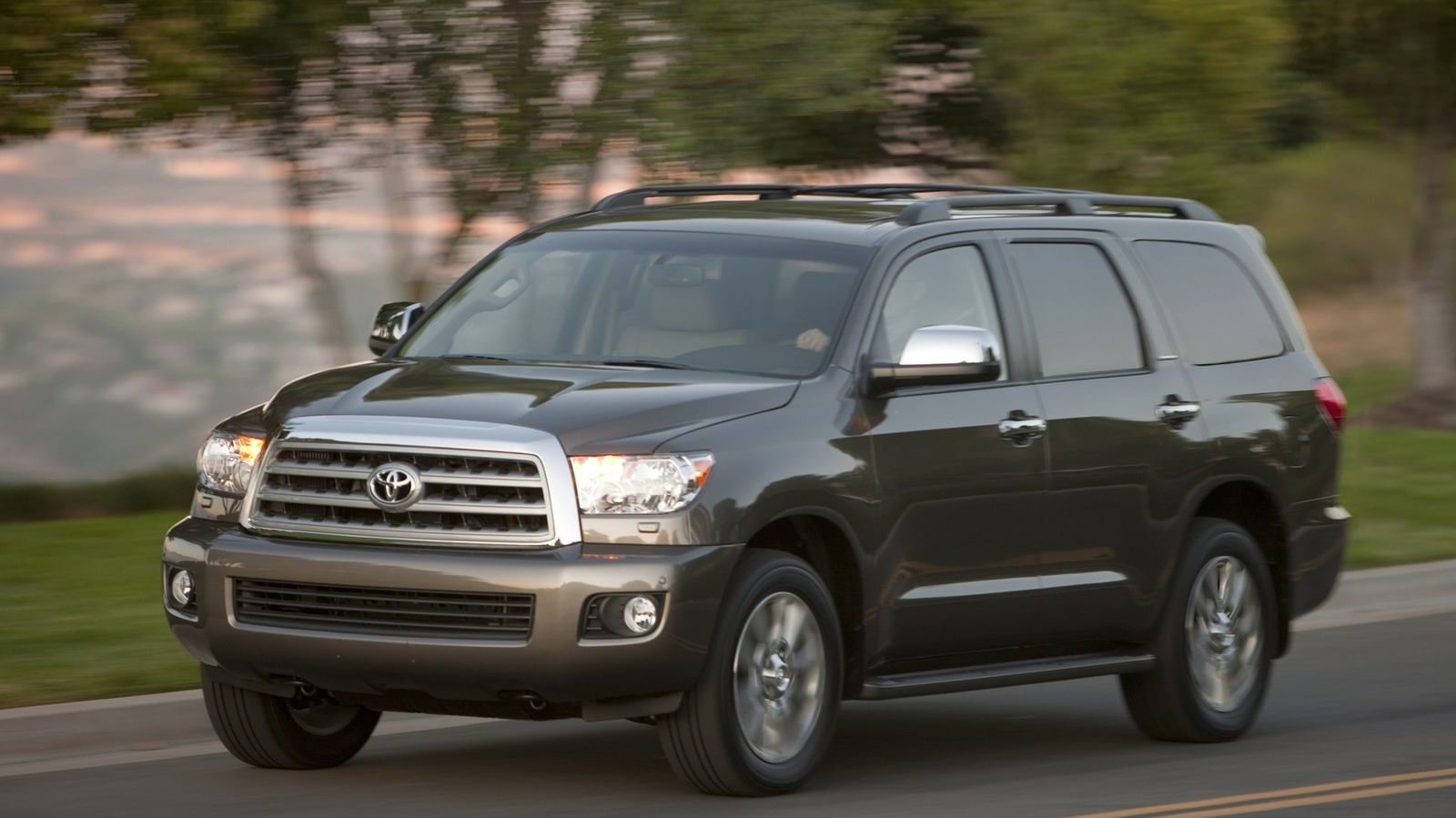
How Does the Body-on-Frame Design Shape the Toyota Sequoia’s Appeal?
The Toyota Sequoia’s enduring popularity among large SUV buyers can be traced, in significant part, to its body-on-frame construction—a design choice increasingly rare in an era dominated by unibody crossovers. This architecture, inherited from the brand’s truck lineage, confers tangible benefits: superior towing capacity, enhanced durability under punishing conditions, and a sense of solidity that resonates with drivers who prize mechanical robustness over car-like refinement. For families with boats, trailers, or a penchant for off-road excursions, these attributes are not mere marketing flourishes but practical advantages that shape daily utility.
Yet, the body-on-frame platform is not without its trade-offs. The very rigidity and strength that enable heavy-duty performance also contribute to a heavier curb weight, which, in turn, exacerbates fuel consumption. The evidence suggests that while the Sequoia’s design fulfills a specific set of needs—often overlooked by urban-centric automotive commentary—it does so at a cost that becomes increasingly difficult to justify as fuel prices fluctuate and environmental consciousness grows. The core mechanism at stake, then, is a structural one: a deliberate prioritization of capability over efficiency, rooted in a model of vehicle use that may be losing relevance for a significant subset of buyers.
Why Does Fuel Efficiency Remain the Sequoia’s Most Contentious Liability?
Despite its many virtues, the Sequoia’s reputation for voracious fuel consumption remains a persistent drag on its broader market appeal. EPA estimates for recent model years place its combined fuel economy well below that of similarly sized crossovers and even some rival SUVs. While these figures are often cited as self-evident proof of the model’s inefficiency, a more nuanced interpretation is warranted. The Sequoia’s powertrain and chassis are optimized for load-bearing and off-road resilience, not for maximizing miles per gallon in stop-and-go commuting. Under specific conditions—such as long highway hauls with heavy cargo—the efficiency gap narrows, though rarely closes entirely.
This dynamic has second-order consequences that extend beyond the individual owner’s fuel budget. For municipalities and organizations with large fleets, aggregate fuel costs can become prohibitive, prompting a shift toward more efficient alternatives. Moreover, the Sequoia’s carbon footprint, while not anomalous within its segment, stands in sharper relief as regulatory pressures mount and consumer expectations evolve. The mainstream interpretation—that the Sequoia is simply “thirsty”—misses the deeper structural tension: a vehicle engineered for a paradigm of mobility that is increasingly at odds with prevailing economic and environmental imperatives.
Who Benefits—and Who Loses—From the Sequoia’s Design Priorities?
The Sequoia’s design choices create a bifurcated landscape of winners and losers. Owners who exploit the vehicle’s full towing and payload capabilities—contractors, outdoor enthusiasts, large families with specific recreational needs—derive clear, ongoing value. For these users, the trade-off in fuel economy is rationalized by the absence of credible alternatives that deliver comparable ruggedness and reliability. Conversely, urban and suburban drivers, seduced by the Sequoia’s imposing presence but rarely testing its mechanical limits, bear disproportionate costs. Their driving patterns—short trips, frequent stops, minimal cargo—exacerbate the model’s inefficiencies without extracting its core benefits.
This misalignment is not merely a matter of individual choice but reflects broader market blind spots. Marketing narratives often universalize the Sequoia’s virtues, glossing over the reality that its optimal use case is far narrower than its broad sales pitch suggests. The evidence points to a structural limitation: a vehicle whose engineering logic is sound within a specific context, but whose generalist appeal is, at best, overstated.
What Should Prospective Buyers Infer From the Sequoia’s Contradictions?
For the analytically minded consumer, the Sequoia presents a case study in the perils of category confusion. Its strengths are undeniable—provided one’s needs align with its design assumptions. Yet, for those seeking a large SUV primarily for passenger comfort and occasional cargo, alternatives with unibody construction and hybridized powertrains offer a more balanced proposition, both economically and environmentally. The evidence does not support a categorical indictment of the Sequoia; rather, it invites a more discriminating calculus.
In sum, the Sequoia’s body-on-frame design is both its greatest asset and its most conspicuous liability. The vehicle’s appetite for fuel is not an incidental flaw but a predictable outcome of its engineering priorities. For buyers whose requirements match those priorities, the Sequoia remains a rational—if increasingly niche—choice. For others, the model’s contradictions serve as a cautionary tale about the importance of aligning product capabilities with actual use patterns, rather than aspirational marketing.