Can Electrified Forced Induction Resolve the Enduring Challenge of Turbo Lag?
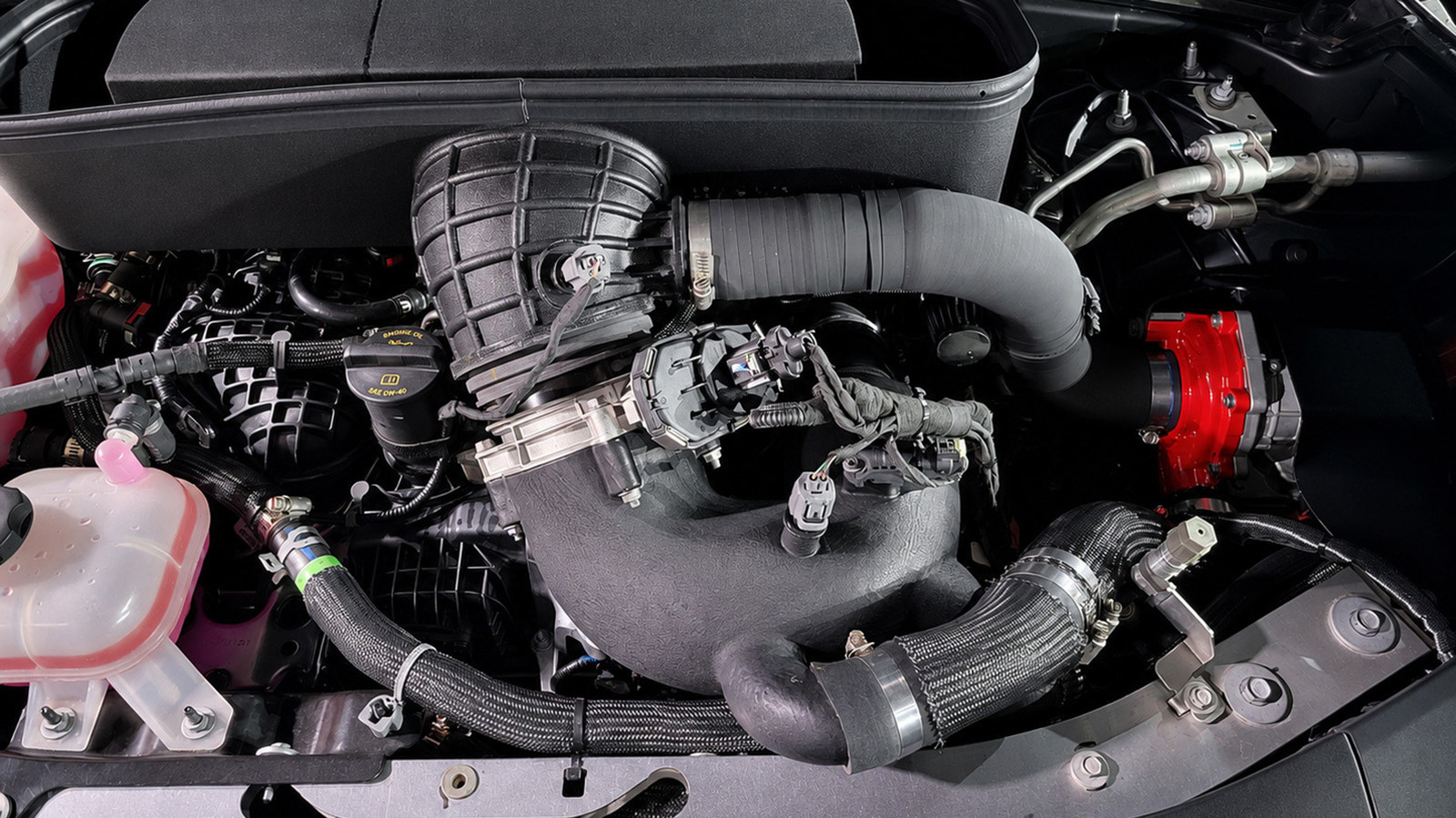
The persistent dilemma of turbo lag—an interval of delayed throttle response as exhaust-driven turbines spool—has long undermined the promise of turbocharged engines. Stellantis’ decision to incorporate an electrically driven compressor into its twin-turbo Hurricane inline-6 signals a renewed attempt to reconcile high-output performance with immediacy of response. The underlying mechanism is straightforward in theory: by supplementing traditional exhaust-driven boost with an electric compressor, the powertrain can deliver compressed air on demand, sidestepping the inertia and flow dependencies that constrain conventional turbos at low engine speeds. Yet, the practical efficacy of this approach remains subject to both technical and experiential scrutiny.
The evidence from analogous systems—most notably in certain high-performance German sedans—suggests that e-compressors can indeed truncate lag to near-imperceptible levels under specific conditions. However, the degree of improvement is not uniform across all driving scenarios. While the e-compressor’s intervention is most pronounced during aggressive throttle transitions from low RPM, its contribution diminishes as exhaust flow increases and traditional turbos assume dominance. This raises a subtle but consequential question: does the marginal gain in responsiveness justify the added complexity, cost, and potential failure points introduced by hybridized forced induction? The answer, as always, is context-dependent.
What Are the Broader Implications for Performance, Emissions, and Market Positioning?
Beyond the immediate technical intrigue, Stellantis’ move reflects a broader industry tension between regulatory compliance and enthusiast expectations. Electrified forced induction offers a pathway to higher specific output without resorting to larger displacement or additional cylinders—an attractive proposition as emissions standards tighten globally. Yet, the practical emissions benefit is not as straightforward as marketing narratives imply. While a more responsive engine may encourage efficient driving under some conditions, the temptation to exploit newfound immediacy could, paradoxically, erode real-world fuel economy gains.
This dynamic is further complicated by demographic and market segmentation. For the enthusiast minority, the elimination of lag is a qualitative leap, restoring a sense of mechanical connection that has been eroded by successive waves of emissions-driven compromise. For the broader consumer base, however, the distinction may be imperceptible, subsumed by concerns over reliability, maintenance costs, and long-term durability—areas where the track record of electric-boosted systems remains nascent and, in some cases, contested.
Which Structural Limitations and Blind Spots Persist in the Electrified Turbo Paradigm?
Despite its promise, the e-compressor solution is not a panacea. The system’s reliance on high-voltage electrical infrastructure introduces new vectors for thermal management challenges and parasitic losses. Moreover, the integration of electric and exhaust-driven boost demands sophisticated control algorithms to avoid surging, oscillation, or suboptimal transitions—an engineering challenge that has tripped up even well-resourced manufacturers in the past. There is also the matter of weight: the incremental mass of batteries, wiring, and the compressor itself, while modest in isolation, accumulates in vehicles already burdened by the accretions of modern safety and infotainment systems.
Perhaps most critically, the industry’s focus on electrified forced induction may reflect a form of path dependency—a reluctance to abandon the internal combustion paradigm even as full electrification looms. The e-compressor, in this reading, is less a technological breakthrough than a transitional artifact: a bridge for manufacturers and consumers reluctant to make the leap to battery-electric vehicles, yet unwilling to accept the compromises of legacy turbocharging.
What Should the Informed Observer Conclude?
For the discerning reader, the advent of e-compressors in mainstream performance engines is best understood not as a definitive solution, but as a sophisticated negotiation with the constraints of the present. The technology offers tangible, if contextually bounded, improvements in drivability and emissions compliance. Its long-term significance, however, will hinge on factors that extend beyond the dyno sheet: reliability in real-world use, consumer willingness to pay for incremental gains, and the pace at which electrification renders such hybridized solutions obsolete. The prudent observer will recognize both the ingenuity and the limitations of this approach, reserving judgment until longitudinal data and broader market adoption clarify whether electrified forced induction is a genuine advance or merely an elegant stopgap.