
Can AI Really Design Cars That Stand Out? Mercedes’ Top Designer Weighs In
Why Are Automakers Turning to AI for Car Design in the First Place?
AI has crept into nearly every corner of the modern workplace, and car design is no exception. From crunching numbers in spreadsheets to generating slick digital sketches, artificial intelligence is now a tool in the creative arsenal of automakers worldwide. Mercedes-Benz, a brand synonymous with luxury and innovation, has been experimenting with AI in its design process. But does the technology live up to the hype when it comes to crafting cars that truly turn heads?
What Does Mercedes’ Design Chief Think About AI’s Creative Abilities?
Gorden Wagener, the man steering Mercedes’ design direction, isn’t shy about his skepticism. He’s seen AI churn out endless renderings—some eye-catching, most forgettable. In his view, AI is great at producing quantity, not quality. “You get 99% of crap with AI and sheer quantity. That’s the biggest problem – sorting out the good stuff from the bad,” Wagener admitted in a recent interview. Sure, the odd gem pops up, but the real challenge is sifting through the digital noise.
He points out that while AI can make a sketch look polished with fancy lighting and effects, it stumbles when tasked with shaping an actual car. The result? Lots of images flooding the internet, but very few that feel truly iconic or original. For Wagener, originality is the holy grail—and AI just isn’t there yet.
Is There a Risk of AI Making Car Designers Obsolete?
Here’s where things get interesting. Wagener once predicted that AI could make car designers obsolete within a decade. It’s a bold claim, and one that’s sparked plenty of debate in design circles. On one hand, he sees AI as a distraction right now—something that generates more noise than substance. On the other, he acknowledges that the technology is improving rapidly. “It’s getting better every day. AI will drastically change the way we design,” he says. The implication? Designers need to adapt, or risk being left behind by their own digital creations.
How Is Mercedes Responding to the Flood of AI-Generated Designs?
With the internet awash in AI-generated car renders, standing out has become a real challenge. Wagener’s answer is to double down on distinctiveness. Rather than chasing trends or letting AI dictate the look of every model, Mercedes is giving each car its own personality. The E-Class gets a sporty edge, the S-Class exudes stately elegance, the SL is all about performance, and the Maybach line epitomizes luxury. This approach isn’t just about aesthetics—it’s about giving buyers something memorable, something that feels crafted rather than computed.
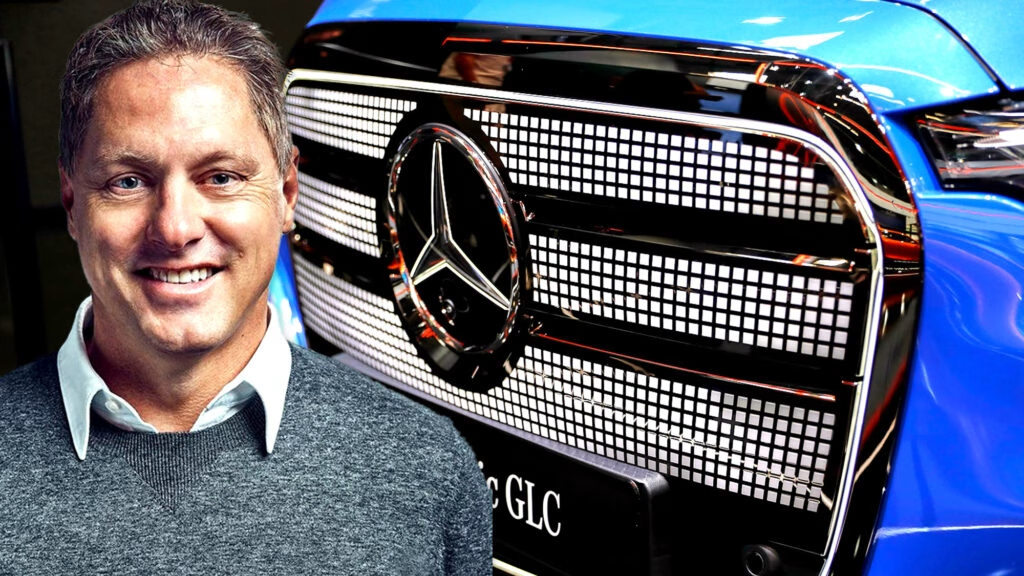
A recent example? The new GLC EV, which debuted in Munich, features an illuminated grille inspired by classic Mercedes designs. Interestingly, this wasn’t part of the original plan. The idea came up in a conversation with Mercedes’ CEO Ola Källenius, and the team decided to go for it—even though it meant extra work and resources. That kind of last-minute inspiration? It’s tough to imagine an algorithm pulling it off with the same flair.
What’s the Real Impact of AI on the Future of Car Design?
There’s no denying that AI is changing the way cars are designed. It can generate thousands of concepts in the time it takes a human to sketch one. But as Wagener points out, more isn’t always better. The real art lies in curation—knowing which ideas to pursue and which to toss aside. And that’s where human intuition still reigns supreme.
Industry experts echo this sentiment. According to a 2023 report by McKinsey, while AI can accelerate the early stages of design, the final decisions still rely heavily on human judgment, especially when it comes to brand identity and emotional appeal. Automakers like Mercedes aren’t ditching their design teams anytime soon. Instead, they’re using AI as a tool—one that can inspire, but not replace, the creative spark.
Can AI Ever Capture the Essence of Iconic Car Design?
It’s tempting to imagine a future where machines dream up the next automotive icon. But for now, the magic still happens when designers blend tradition, innovation, and a dash of risk-taking. The illuminated grille on the new GLC EV? That was a human call, driven by a gut feeling and a conversation—not a line of code.
The big takeaway? Car design isn’t about perfection—it’s about smarter adjustments. Start with one change this week, and you’ll likely spot the difference by month’s end. AI might be a powerful assistant, but the soul of great design still belongs to people who know when to break the rules.