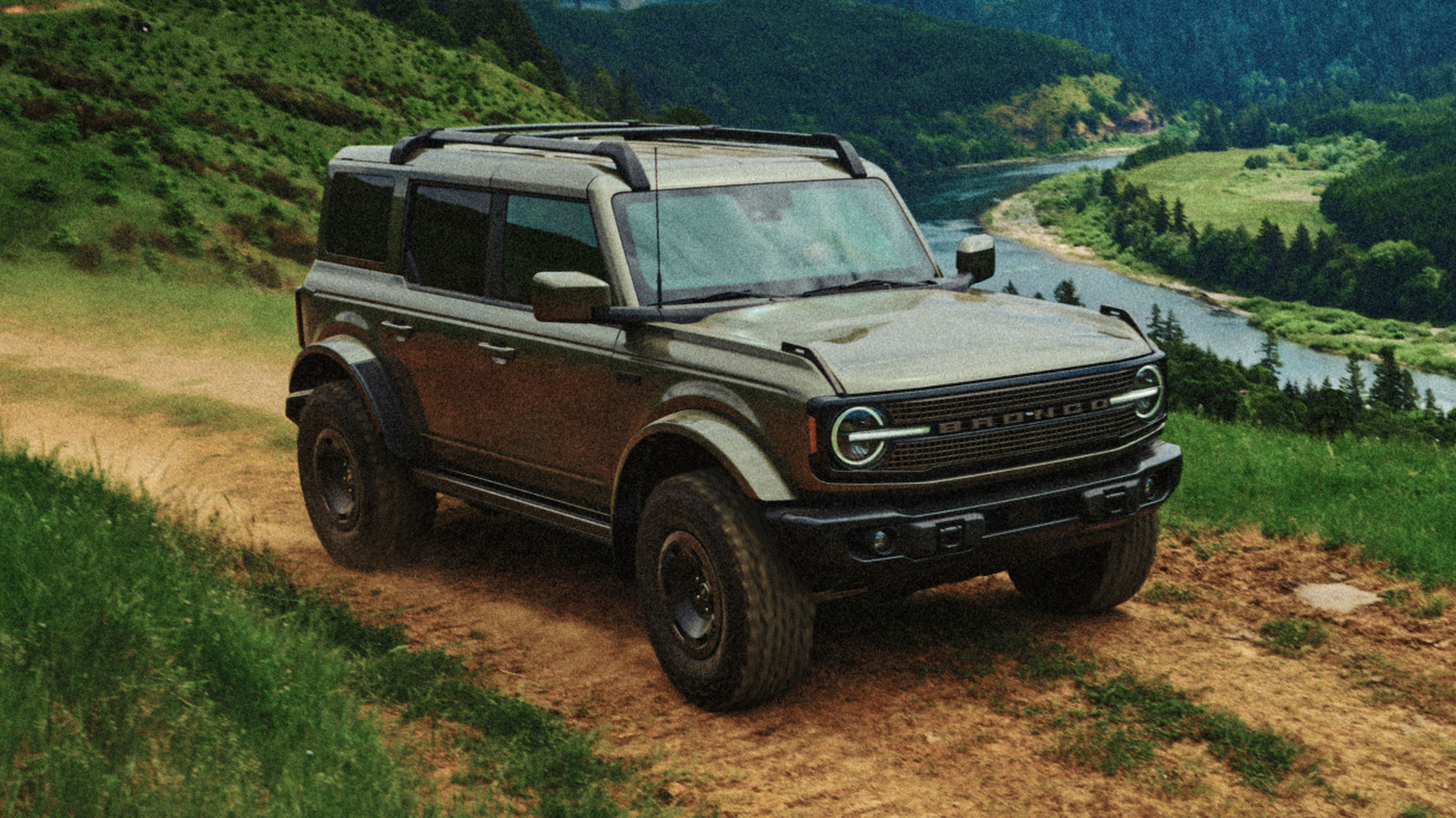
How Does the Filson Edition Bronco Reframe the Intersection of Luxury and Utility?
The emergence of the Filson Edition Bronco signals a calculated recalibration of the off-road vehicle’s cultural positioning. No longer merely a utilitarian tool for the rugged or the nostalgic, this iteration courts a clientele whose expectations straddle the domains of performance and conspicuous refinement. The evidence suggests that Ford, in collaboration with Filson, is not simply layering premium materials atop a familiar chassis; rather, the partnership is attempting to synthesize two historically divergent consumer aspirations—authentic off-road capability and the semiotics of luxury workwear. This hybridization, while not unprecedented, raises questions about the coherence and sustainability of such a market segment. Is the Filson Edition a harbinger of a new genre, or merely a transient artifact of contemporary branding logic?
What Mechanisms Enable the Filson Edition to Command a Distinct Market Niche?
At the core of the Filson Edition’s appeal lies a dual mechanism: material differentiation and narrative construction. The vehicle’s design incorporates elements—both aesthetic and functional—that evoke the heritage of outdoor craftsmanship, yet these cues are meticulously curated to avoid the pitfalls of pastiche. Underneath, the inclusion of the so-called “Braptor” engine (itself a portmanteau signaling both performance and playfulness) positions the Bronco Filson as a legitimate off-road contender, not merely a lifestyle accessory. However, the extent to which these enhancements translate into substantive capability, as opposed to symbolic capital, remains open to empirical scrutiny. Early reviews and limited test data suggest that while the Filson Edition does not compromise on core Bronco competencies, its incremental improvements are most salient in environments where status signaling is as important as technical prowess.
Who Benefits—and Who Is Marginalized—by the Premiumization of Off-Road Vehicles?
The strategic targeting of affluent consumers—those for whom the Bronco’s “crappiness” was a dealbreaker—has second-order consequences that ripple beyond the showroom. On one hand, the Filson Edition democratizes access to off-road aesthetics, making them palatable to urban professionals and aspirational buyers. On the other, this move risks alienating traditionalists who perceive such collaborations as dilutive, if not outright antithetical, to the Bronco’s foundational ethos. Moreover, the price premium associated with this edition may exacerbate the bifurcation of the off-road community, reinforcing socioeconomic stratifications that have historically been less pronounced in this segment. The evidence here is mixed: while sales data for luxury-branded off-roaders have trended upward, ethnographic accounts from enthusiast forums reveal a persistent skepticism regarding the authenticity of such offerings.
What Structural Limitations and Blind Spots Undermine the Filson Edition’s Promise?
Despite its surface-level allure, the Filson Edition Bronco is not immune to structural limitations. The most salient of these is the tension between form and function: the very features that render the vehicle desirable to a new cohort—premium materials, bespoke detailing—may prove vulnerable under the rigors of actual off-road use. This contradiction is not merely hypothetical; warranty data from analogous vehicles indicate higher rates of cosmetic wear and owner dissatisfaction when luxury trims are subjected to harsh conditions. Furthermore, the collaboration’s reliance on the cachet of both brands introduces a dependency on shifting consumer tastes; should the pendulum swing away from “bougie workwear flair,” the Filson Edition risks obsolescence. Finally, the edition’s exclusivity, while a selling point, may limit its broader cultural impact, relegating it to the status of collectible rather than catalyst.
What Should the Informed Reader Infer About the Future of Premium Off-Road Vehicles?
The Filson Edition Bronco exemplifies a broader trend: the commodification of ruggedness for a clientele that values both performance and prestige. Yet, this synthesis is fraught with contradictions—between authenticity and aspiration, durability and display, inclusivity and exclusivity. For stakeholders—whether prospective buyers, industry analysts, or cultural critics—the prudent stance is one of cautious engagement. The Filson Edition may well succeed as a limited-run experiment in cross-market appeal, but its long-term significance will depend on whether it can reconcile the competing demands of its hybrid identity. The evidence, while suggestive, remains incomplete. For now, the Filson Edition Bronco stands as both an emblem of evolving consumer desire and a test case for the limits of automotive reinvention.