
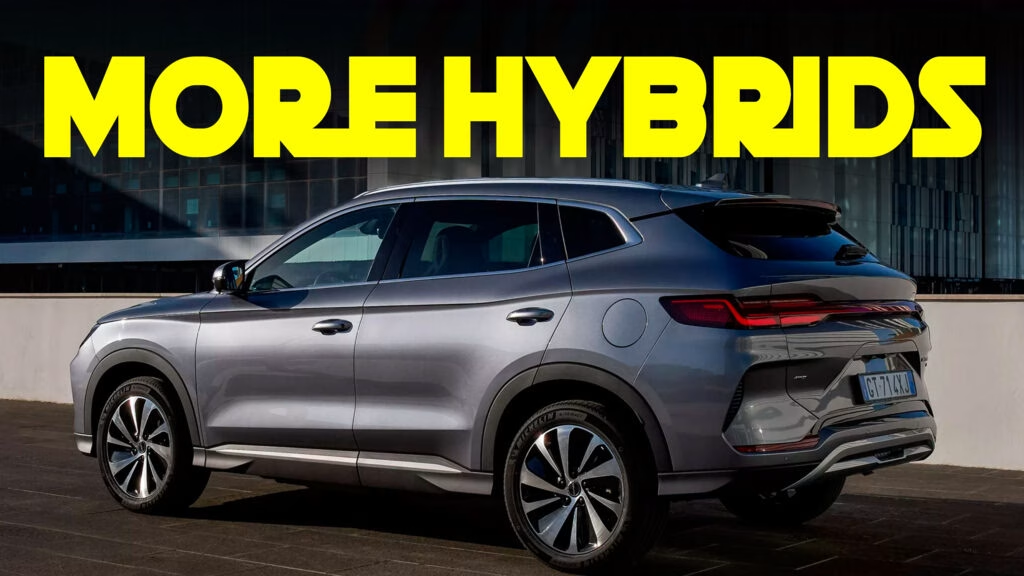
BYD, a name that’s becoming increasingly familiar in the automotive world, is making waves in Europe with its strategic shift towards plug-in hybrid electric vehicles (PHEVs). While the brand is renowned for its battery-electric vehicles, it turns out that PHEVs are where BYD is seeing significant traction. This pivot is not just a business strategy; it’s a response to the evolving preferences of European consumers who are still warming up to fully electric options.
Why PHEVs Are Gaining Popularity in Europe
The landscape of car buying in Europe is changing. Many potential buyers are hesitant to commit to fully electric vehicles, often due to concerns about charging infrastructure, range anxiety, and the initial cost of EVs. BYD has recognized this trend and is responding by expanding its PHEV offerings. Maria Grazia Davino, BYD’s chief for several Central European countries, recently highlighted the need for alternatives to fully electric cars. “Not everyone is ready for electric. We need something else to convince the customer,” she stated at a recent event in Stuttgart.
This insight is crucial. It reflects a broader understanding that the transition to electric mobility isn’t a one-size-fits-all approach. By introducing more PHEVs, BYD aims to cater to a wider audience, providing a bridge for those who are not quite ready to go fully electric.
What’s Next for BYD in Europe?
In 2025, BYD plans to launch at least two new PHEV models in key markets like Germany. Currently, the only PHEV available in Europe is the Seal DM-i, which has already made a mark. The company sold over 37,000 vehicles in Europe during the first quarter of this year, marking a notable increase from the previous year. This growth indicates that BYD is slowly but surely establishing its presence in a competitive market.
Furthermore, BYD is not just stopping at PHEVs. The company has also introduced its premium Denza brand in Europe, aiming to compete with established luxury automakers like Mercedes-Benz and Audi. The Denza Z9 GT, designed to rival the Porsche Taycan Sport Turismo, is set to make waves in the luxury segment, showcasing BYD’s ambition to cater to diverse market segments.
Navigating Challenges: Tariffs and Production
Despite its ambitious plans, BYD faces challenges, particularly with European import tariffs that were announced last year. However, the company is strategically sidestepping these tariffs by establishing production facilities in Hungary and Turkey. This move not only allows BYD to produce vehicles locally but also enhances its ability to respond quickly to market demands.
The establishment of local production is a game-changer. It not only reduces costs associated with tariffs but also signals BYD’s commitment to the European market. By localizing production, BYD can better tailor its offerings to meet the specific needs and preferences of European consumers.
The Road Ahead: A Balanced Approach
BYD’s strategy of balancing fully electric and plug-in hybrid models is a smart move. It acknowledges the current market realities while positioning the brand for future growth. As Davino mentioned, the company is focused on finding the best balance between customer desires and successful distribution. This approach is likely to resonate with consumers who are still navigating their options in the electric vehicle landscape.
The big takeaway? BYD’s expansion into PHEVs isn’t just about selling cars; it’s about understanding and responding to consumer needs. As the market evolves, so too will the strategies of automakers. For consumers, this means more choices and potentially a smoother transition to greener mobility. If you’re considering a new vehicle, keep an eye on BYD’s upcoming models—you might find the perfect fit for your lifestyle.