

EU Cars Flood US Market as New Trade Deal Leaves Export Imbalance Unchanged

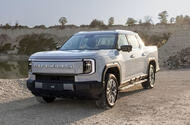
Chinese Electric Pickups Set to Shake Up UK Market as Emissions Rules Drive Industry...
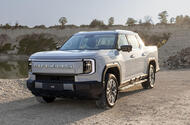 UK's pick-up market has been resilient despite punitive tax measures against double-cab models
The double-cab pick-up market is heading for a shake-up as new Chinese entrants seek to capitalise on tougher emission standards with electrified versions.
The UK market for pick-up trucks has been surprisingly resilient this year, with sales up 10% in the first six months to 20,902 despite an overall slump in light commercial vehicle sales.
Demand was led by the Ford Ranger, which was the UK’s third best-selling LCV overall, according to figures from automotive lobby group the SMMT. The Toyota Hilux was the next best-selling pick-up in seventh place overall.
Some of that increase was driven by buyers wanting to jump ahead of changes in company car tax rules from April that recategorised double-cab pick-ups as private cars to better reflect their role as an SUV substitute for some buyers.
That change would increase company car tax by as much as three times, and the 13% sales drop in May suggested the change had seriously dented the market. By June, however, demand was almost back on course, with sales only down 0.8% according to the SMMT.
Outwardly, then, the market looks normal, with Ford, Toyota and, further back, Volkswagen and Isuzu picking up customers of the now discontinued Mitsubishi L200 and Nissan Navara.
But the ZEV mandate for LCVs, which stipulates that 16% of sales this year and 24% in 2026 should be electric, is forcing a rethink of drivetrains and allowing the Chinese, with superior electric knowhow, a sniff of a market that has for years has been owned by Ford and the Japanese.
Sales of electric or plug-in hybrid pick-ups have been slow across Europe, with just 478 registered in the first four months according to figures from market research firm JATO. Of those sales, however, 61% were Chinese.
In the UK the only contender so far is the electric Maxus e-Terron from MG-owner SAIC. The twin-motor pick-up costs from £53,000 excluding vat and has a claimed 250-mile range from its 102kWh battery.
As with most Chinese electric entrants, the e-Terron is well equipped and includes the ability to power electric tools on site. But crucially it lacks the all-important one-tonne payload required for businesses to be able to reclaim the VAT after purchase.
Others are coming. Great Wall Motor (GWM) has hinted that it is preparing its Cannon pick-up for a UK launch. The initial offering would be a budget diesel model, but the company showed off the Cannon Alpha plug-in hybrid earlier this year.
In continental European markets, experienced Chinese commercial player Foton sells two pick-ups, including the Tunland mild-hybrid diesel.
Bigger pick-up markets are already feeling the effect of the influx of Chinese players. In June, for example, the BYD Shark plug-in hybrid pick-up jumped to fifth place in Australia's sales charts, behind the Ranger, Hilux and Isuzu D-Max but moving ahead of the Mitsubishi Triton (L200).
At the Shanghai motor show in April, pick-ups featured heavily as makers previewed the next wave of attack. “The global pick-up market is now entering a golden era of growth,” Chery declared as it launched its new Himla pick-up brand. It quoted IHS data showing that global pick-up sales hit 5.67 million units in 2024 and are expected to surpass 6.3 million units by 2030.
Other pick-ups included the Geely Radar hybrid and the JAC T9 Hunter plug-in hybrid, the latter with its dual electric motors, 524hp and 62-mile electric range.
Established players know they have to respond. Ford CEO Jim Farley referenced the Chinese push for growth in emerging markets where the brand has already built significant share with the Ranger. “We have to think about future-proofing that Ranger business,” Farley said in February. He didn’t reveal more except, to say it has to be "a very capital-efficient approach”. That suggests an expansion of its Chinese joint venture partnerships, potentially with commercial vehicle specialist JMC.
Nissan is already leveraging connections with its Chinese partnerships. At the Shanghai show the Japanese company launched the new Frontier Sport pick-up, which has been developed with Dongfeng under the Zhengzhou Nissan brand.
That vehicle is set to be produced in Spain after the joint venture inked a deal with Santana Motors, the revived former Land Rover partner, to build diesel and plug-in hybrid versions.
The Frontier Sport, which is likely to be assembled in kit form, would mark the return of Nissan pick-up production to the country after the company halted production of the Navara at its Barcelona plant in 2021.
Nissan Barcelona also made the Renault Alaskan, but after continuing production at its Argentina plant, Renault is now out of the one-tonne pick-up business. “This is a very specific market,” Bruno Vanel, head of product at Renault said at the launch of the new Boreal SUV for emerging markets. “There are some very, very strong players, with very competitive production bases in Thailand.” Renault has switched its pick-up focus to the smaller half-tonne market in South America, where it can use car platforms rather than continue development of a ladder-frame chassis.
Mitsubishi is one of those with a Thailand pick-up factory, but despite growing its operations in Europe with a possible plan to return to the UK, the Japanese brand is unlikely to bring back the L200. “We are quite good in those kind of vehicles, but the difficulty with pick-ups in Europe is the powertrain,” Frank Krol, head of Mitsubishi Europe, told Autocar. Regulations require an electrified powertrain, something none of Mitsubishi’s other markets is currently demanding. “You can't build a powertrain for that kind of volume only for Europe,” Krol said.
That hasn’t stopped others. Ford, for example, has developed a 2.3-litre plug-in hybrid powertrain for the Ranger and the VW Amarok, which Ford also builds. Meanwhile, Isuzu has just launched an electric version of its D-Max.
However the D-Max EV will have a very restricted audience, with a 163-mile range from its 67kWh battery, charging speeds of just 50kW and a price of £60,995 (excluding VAT) for the double-cab, compared with £36,755 for the diesel. It can also carry a one-tonne payload, the magic figure that continues unlock tax benefits in the UK.
Company’s Quirkiest Model Faces Uncertain Future Under New CEO

Adrian Mardell Retires After Transforming JLR With Record Profits and Bold Electric Vision
 Adrian Mardell steps down after three years leading JLR, having delivered best profits in 10 years
JLR CEO Adrian Mardell is leaving the British manufacturer after almost three years at the helm, Autocar can reveal.
Mardell was appointed as CEO in 2023, following the sudden departure of Thierry Bolloré, and has led the Jaguar and Land Rover brands through one of the most transformative periods in their respective histories.
A JLR spokesperson said in an official statement sent to Autocar India: "Adrian Mardell has expressed his desire to retire from JLR after three years as CEO and 35 years with the company. His successor will be announced in due course.”
Mardell has steered the company through a remarkable financial turnaround, with it going from heavy losses and huge debt in the wake of the pandemic, to posting its best profit figures for a decade last year.
The dramatic change in the company's fortunes was underpinned by the popularity of its highly profitable Defender and Range Rover models, which have put JLR on track to achieve a targeted 10% profit margin by 2026.
Mardell has also overseen the formation of JLR's House of Brands retail strategy, under which Defender, Discovery, Range Rover and Jaguar have each been carved out as distinct brands in their own right, with bespoke marketing strategies centred around the positioning of those model families.
But arguably the most significant moment of Mardell's tenure as boss was the unveiling of the radical Jaguar Type 00 concept, which marked the beginning of the all-out transformation of the marque from a BMW and Mercedes-Benz rival to a purveyor of high-end, high-performance EVs that will do battle with Bentley.
The first of these models, a four-door super-GT in the vein of the Porsche Taycan, is now in the final stages of testing ahead of a production-spec unveiling at the end of the year and a launch in summer 2026 - until which time no Jaguar models are being produced.
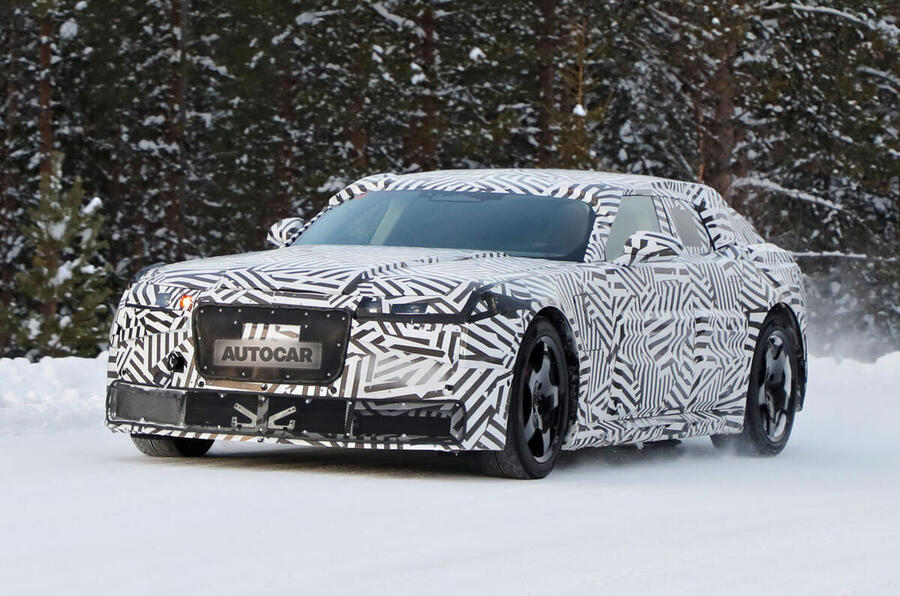
In a recent interview with Autocar, Mardell revealed that he had driven the new GT and said it was the "most fun I've had" in his time as JLR boss.
"It was stunning in terms of its speed, its acceleration, its performance, but also how it delivered the power with a real sense of character," he said. "The chassis team are really excited about the possibilities of the vehicle.”
Speaking more generally about Jaguar's prospects as an all-electric luxury brand, Mardell said he was "certain we will have wait lists which are significant relative to the volumes we aspire for with the first product”.
He continued: "In today’s market conditions, I don’t see anything which is going to concern me about the success of the new Jaguar in this new world at all, actually.”
Mardell leaves JLR in a position of far greater stability than that it was in when he took the top job, but the company still faces strong headwinds.
Chief among those is the imposition of new tariffs on foreign-built cars in the crucial US market, which accounts for a huge proportion of sales of JLR's most profitable models.
The UK recently secured a trade deal that reduced the US import tariff on its exported cars from an initially mooted 25% to 10%, which is good news for the Solihull-built Range Rover models and the Halewood-produced Range Rover Evoque and Discovery Sport.
But that levy only applies to the first 100,000 cars shipped to the US in a year, meaning any JLR models shipped above that number are liable to attract the higher 25% fee.
Similarly, while the EU has now struck a deal with the US, cars shipped from the region to North America will still attract a 15% tariff, which will have significant implications for the Defender and Discovery, both built in Slovakia.
Mardell's eventual replacement will also have to negotiate JLR's inevitable shift to a pure-electric line-up over the coming years, in the face of waning global demand for premium EVs.
Only recently it emerged that the long-awaited Range Rover EV, originally planned for showrooms by the end of 2025, had been delayed to next year - in part to allow for demand to pick up.
The company has not confirmed a new date for the Range Rover EV, nor said if the electric Jaguar models will still launch on schedule.
Car Sales Slump Hits Hard as Tariffs and Recalls Bite
Fiat Panda 100HP Dream Turns Costly Nightmare My Rollercoaster Ride With a Hot Hatch...
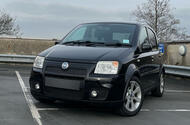
Martin's 100HP cost £3800 with 80,500 miles on the clock – relatively low mileage for the breedThe hot Panda is a joy to drive, but you need to buy very carefully...
Meet the Mean Machine, my old Fiat Panda 100HP. It was my first car and, as it turned out, a bit of a brat.
Because it’s a Panda, you might think you can run it on a shoestring, but you’d be dead wrong. It turns out Fiat went a bit mad developing the 100HP, fabricating new parts wherever it could get away with it. I could forgive a bespoke rear axle, given the move from rear drums to discs, but did we really need a special rear wiper?
When I knocked the front bumper, a replacement (in the wrong colour) was £500. Then the car failed its MOT on its front wishbones – yet another 100HP-specific bit – and I was billed another £540.
I grew a little frustrated with its ability to wallop my credit card, but every time I drove the car I was reminded how good it was. On one memorable occasion I took a wrong turn and ended up on the South Downs, giving chase to a Ferrari 296.
This brief encounter summarised the simple joy of the 100HP. The 296 was plodding along completely normally yet, with just 1.4 litres at my disposal and that lovely dashboard-mounted, short-throw gearlever in hand, I had to really work to keep pace.
With the throaty four-pot barking through the firewall and the speedo flitting between 30mph and 60mph, a bumble down sunny country lanes turned into a proper dogfight – for me, at least, for I'm sure the Ferrari driver had no idea of my presence.
All I cared about was keeping crimson in sight. In such moments of absolute immersion, all its sins were forgiven.
But when the weather took a turn for the worse and my brother wanted a lift home from the nearby tube station late one evening, I rushed out, turned the key and – achoo! The Panda had caught a cold.
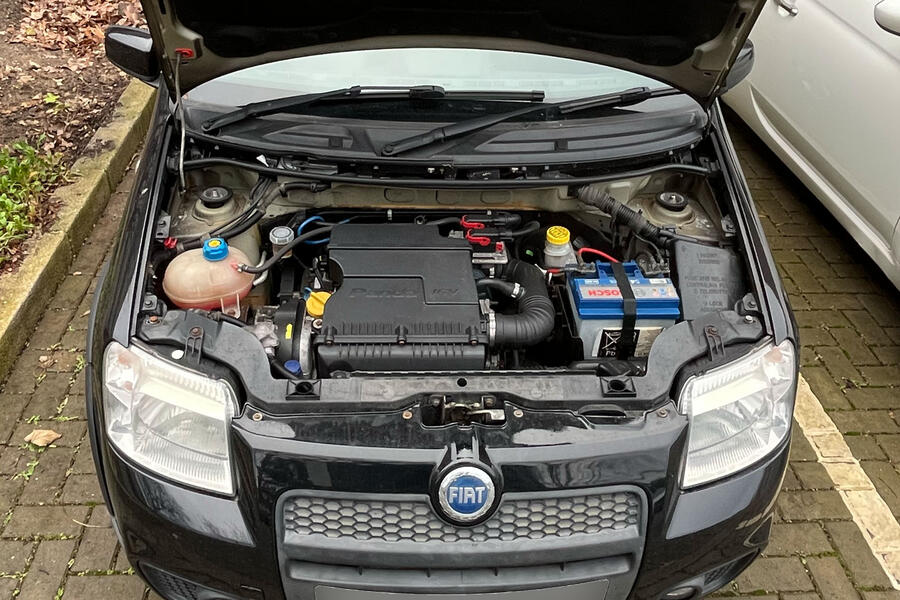
I was told by fellow 100HP owners that the weird noise from under the bonnet was just a foible of the starter motor, as it doesn’t much like chilly weather. That or it was on its way out, putting yet another bill on the horizon. Either way, it sapped my confidence in the car.
Not long after I’d had a grand old moan about the Panda’s starter motor, a remarkably clean example of a Renault Clio RS 182 came up for sale. It’s a car I’ve wanted for yonks and the numbers just about made sense, so it all felt like the stars were aligning to give me a way out.
I’d just started organising all of the paperwork in preparation for a part-exchange when the dealer asked for a 10% deposit – oh, and it would be non-refundable. When they then said they couldn’t send a picture of the Clio’s underside, alarm bells started ringing.
I slept on it, only for someone else to beat me to reserving the car. C’est la vie, and probably for the best.
Here’s the odd bit: the following day, the Panda returned to working completely normally, minus the start-up sneezing noise. I thought perhaps it was down to the weather – an unusually warm winter’s morning – but the problem was fixed. It’s almost as if the car was apologising, begging for another chance.
Reinvigorated, I treated the Panda to a new timing belt, a service and a thorough inspection from Fettle & Finesse, the UK’s leading 100HP specialist.
But all went south rather quickly. I mentioned that I was worried about the condition of the sills – a common issue on 100HPs, hidden away under the chunky bodykit.
Then Laurence, F&F’s chief Panda whisperer, managed to pull away a wedge just by hand.
Still, I didn’t think it would be quite so bad.
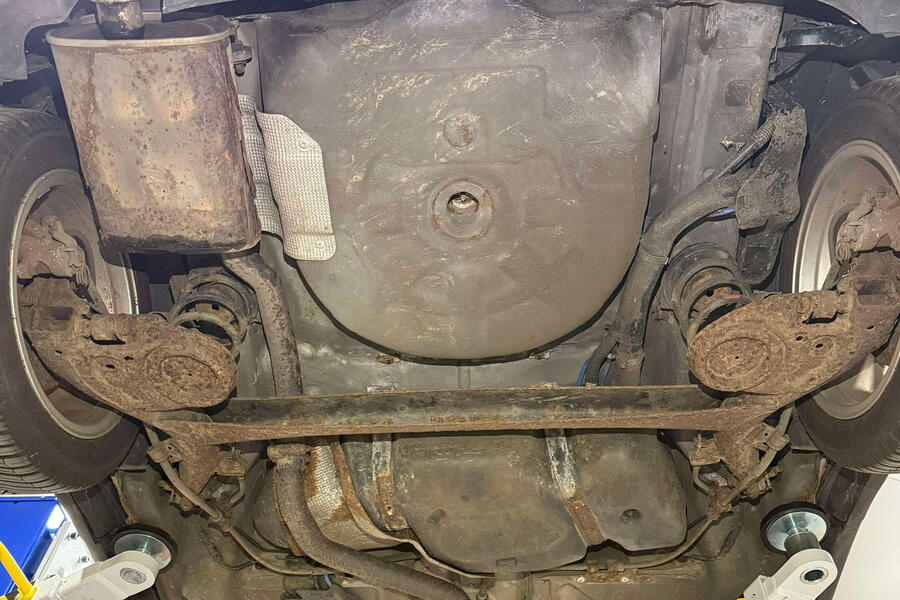
The final report totalled three pages of A4. The sills, the rear axle, the front subframe, the exhaust backbox, the springs, the dampers and the passenger-side wheel arch were all on their way out. And the rear bump stops had fallen off. And there was a coolant leak. And so on…
The bill was just under £2000 to get the imminent MOT failure items sorted, but if I wanted a more complete restoration, it might have tripled.
I almost went through with it, but I just couldn’t justify pumping so much money into a car that I had already considered moving on.
So I struck a deal with Laurence, recouping just about enough to cover the finance deposit on a nearly new, rust-free motor – about which you will hear more in due course.
In the meantime, the F&F crew completely recommissioned my hot Fiat for someone else to enjoy. It’s now absolutely stunning.

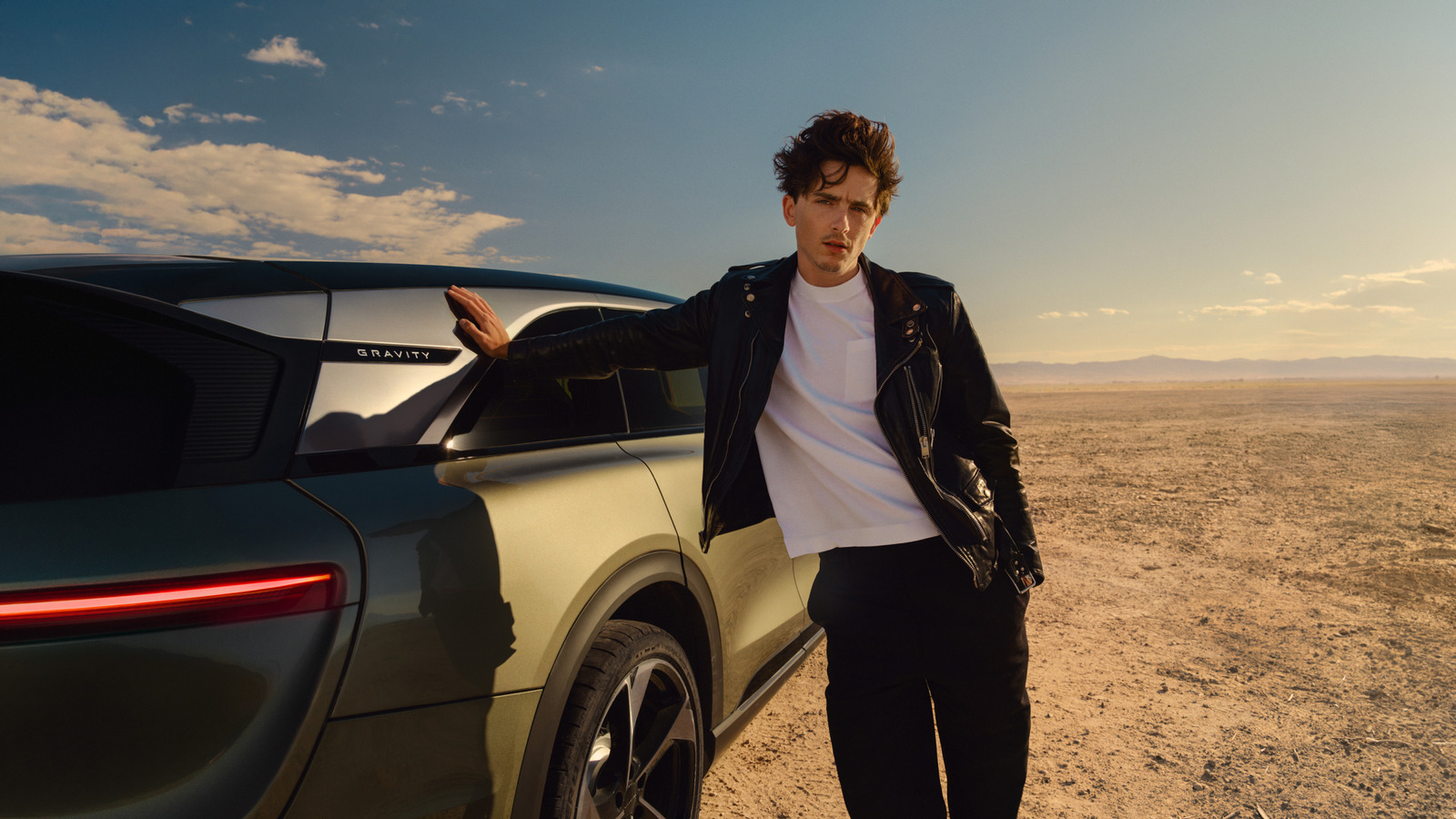
Lucid Motors Bets Big on Gravity SUV to Expand Electric Lineup
Car Cannibalism on the Rise as Soaring Parts Prices Fuel Surge in Vehicle Thefts
 High cost of new parts and easy online resale is fuelling increase in crime
Thefts of car parking sensors have risen by 300% amid an increase in overall vehicle parts crime across the country, a leading insurer has reported.
Admiral Insurance says that last year it recorded 142 claims for stolen parking sensors, compared with 36 claims the previous year, with an additional 104 claims for stolen steering wheels and airbags.
“Parking sensors are easily accessible and have a high resale demand,” said Alex Wyard, director of technical underwriting at Allianz. “Criminals see parts theft as an easy way to make extra cash, and we have seen an increase in all types of theft relating to cars over the past year.
“New airbags can cost as much as £1200, but thieves sell stolen ones for a fraction of the price. Wing mirrors, catalytic converters, wheels and car emblems are also quick to sell on.”
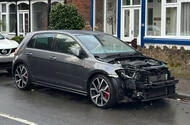
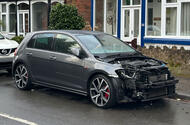
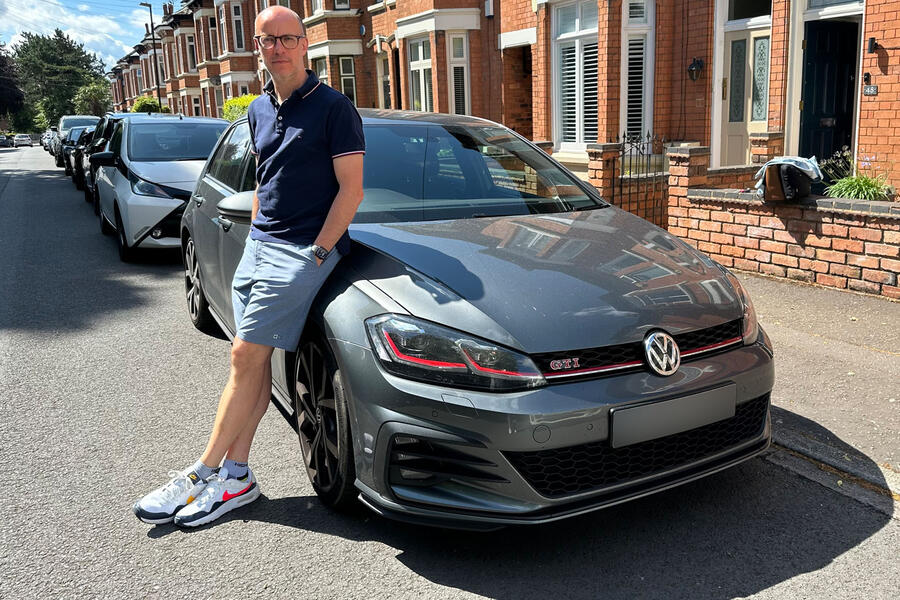
Volkswagen Golf GTI owner Jeremy Merckel is among the latest victims of vehicle parts theft. One morning in March he was woken by a neighbour with the news that thieves had stolen the headlights, front bumper, grille and bonnet from his car.
“I was fuming,” says Merckel, who lives in Sutton Coldfield. “A neighbour’s doorbell camera showed one of the thieves casually walking away carrying the bumper above his head. I’ve been told the theft probably took no more than three minutes. It’s the second time my Golf has been targeted: two years ago, the car’s original front bumper was stolen. Surprisingly, the car hadn’t been broken into, and apart from missing much of its front end, there was no other damage.”
Merckel was warned by his insurer, Ageas UK, that his Golf, registered in 2019, might have to be written off. He says: “Their first reaction was: ‘Oh no, not another one!’ But in the end they agreed to pay for the repairs. Within two weeks it was back on the road with a new bumper, grille and lights, but because no new one could be found, a used bonnet. My insurance premium doubled last time, so I’m expecting a similar increase.”
The Midlands appears to be suffering the worst with what is known as ‘car cannibalism’. Mark Silvester, of West Midlands Police, says although it’s not yet a big issue, the rising cost of new replacement parts and the existence of an efficient online market to dispose of stolen ones mean it’s one the force is monitoring.
“Unlike car theft, parts theft is an opportunistic crime rather than organised,” said Silvester. “It is often carried out when someone has posted online that they’re searching for a particular part. Motorists can help stamp it out by avoiding parts whose source is not legitimate or which are not sold under a scheme such as eBay’s Certified Recycled scheme.”
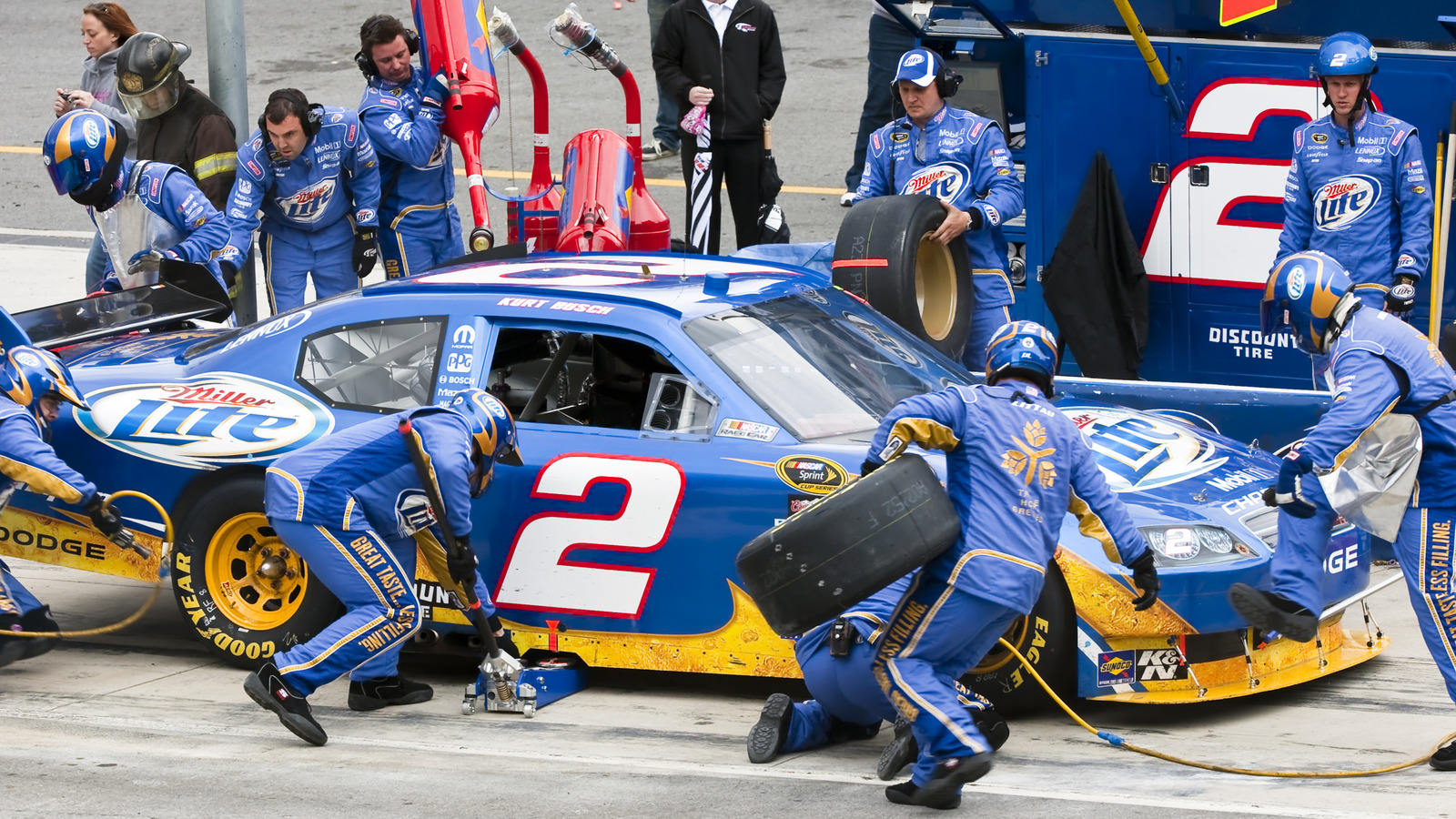
Inside the Lightning-Fast World of NASCAR Pit Crew Jacks
Skoda Unveils Vision O Electric Estate Concept Previewing the Next-Gen Octavia Revolution
Silhouette takes familiar Octavia shape and applies new 'Modern Solid' cuesVision O concept will be revealed in September as a preview of the next-gen Octavia, twinned with VW's ID Golf
Skoda has given a first glimpse of the electric estate car concept that it will reveal at the Munich motor show in September.
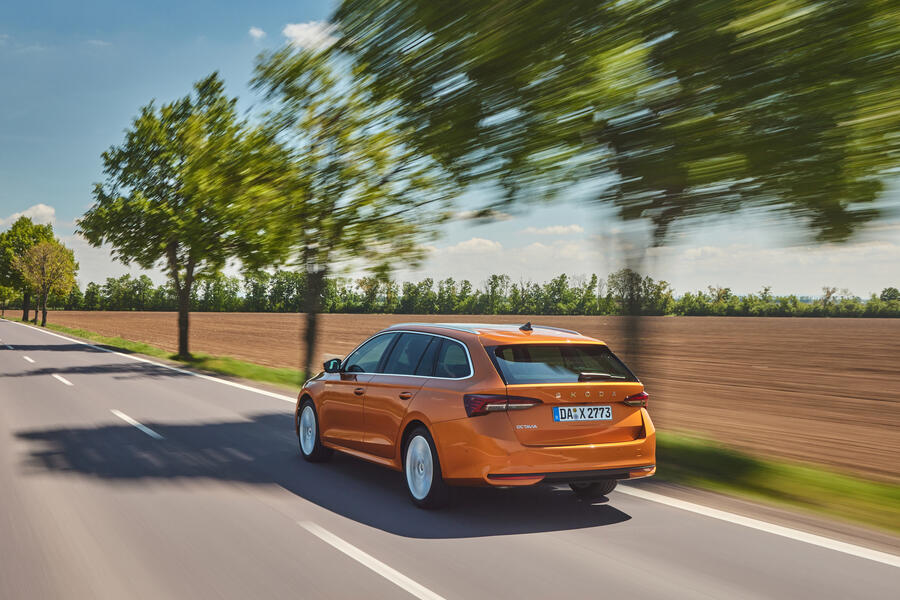
Named Vision O, the show car will give clues to the next-generation electric Octavia, which is due to arrive by the end of the decade as the first Skoda atop the Volkswagen Group's new SSP EV platform.
The first official preview image shows a silhouette that stays true to the general shape of the current car, but with distinctive new light signatures and sharper edging in line with Skoda's new 'Modern Solid' design language.
Skoda also says the "steeply raked" windscreen and "gently sloping roofline" are "design cues that have characterised Skoda's most successful estate models".
The Superb and Octavia estates are among Skoda's best-selling global models, with the Octavia 'Combi', particularly, ranking as its top seller in certain markets.
As a result, Skoda "is committed to continuing the estate bodywork legacy into the future," said the company.
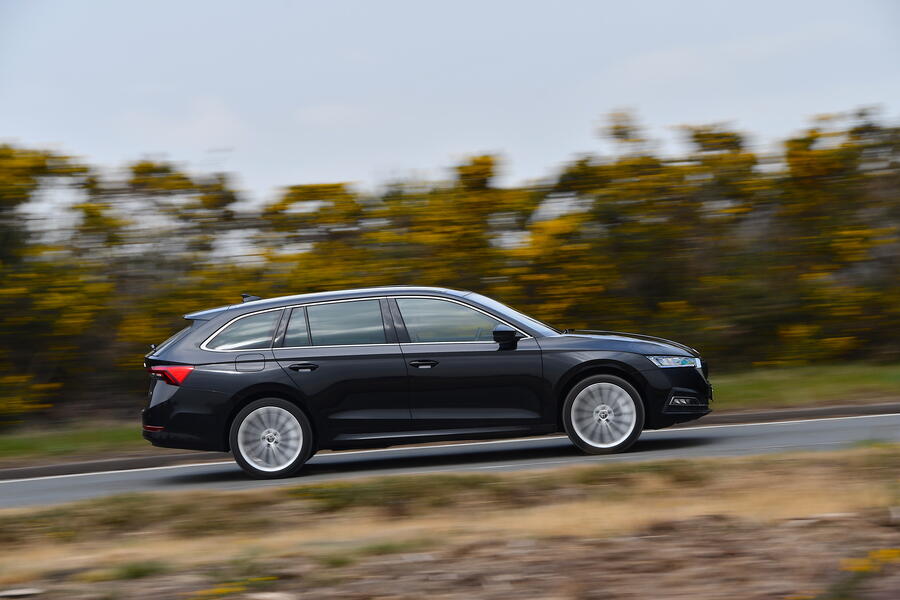
Exterior designer Jounggeen Kim shaped the Vision O's silhouette and said his task was "to apply the Modern Solid language to an estate car".
He designed the concept to be an "all-in-one" proposition and added: "This car is built to do it all.
“I see Skoda as a family-oriented brand – practical, reliable and trustworthy. I aimed to reflect those qualities through the new Modern Solid design language.”
Kim added that while the Vision O will be a future-looking concept that adheres to Skoda's current design principles, he took inspiration from past models such as the Yeti and Roomster.
Announcing the concept car earlier this year, CEO Klaus Zellmer said: “In September in Munich, we're going to have a concept car that gives an indication of what the new design language will be for the Octavia and what the technology in that car will be able to deliver.”
Skoda had originally planned to launch an electric estate version of the Octavia based on the Volkswagen Group’s current MEB electric architecture. However, Zellmer said it will instead be underpinned by the SSP architecture that’s in the works because it will offer “more performance and be more cost-efficient”.
He said: “Wait and see until September, and then we will show you the full potential and technical package that we envision. It will be a concept car, so this is also a test bed for us to see what the resonance from the media, from our dealers and from our potential customers is.”
The production version of the electric Octavia estate is due by the end of the decade at a similar time to the related Volkswagen ID Golf, which will also be based on the SSP platform. It is expected to lead the next generation of electric Skodas and mark the point where its combustion-engined and all-electric ranges start to converge.
To date, Skoda’s electric vehicles have existed in a parallel line-up as the brand prioritises consumer choice and will continue to do so. This suggests the hybridised combustion-engined Octavia estate will continue to be sold as Skoda gradually introduces battery-electric vehicles into its more familiar nameplates.
Before the electric Octavia, two more Skoda EVs are due. The Epiq, a sibling to the Volkswagen ID 2 and Cupra Raval, will be launched next year as the Skoda's entry-level electric car. The brand will also put its previous Vision 7S concept car into production in 2026 as an electric equivalent of the Kodiaq. This is likely to be Skoda’s most expensive car yet, but Zellmer said it will retain its core principles of “design functionality and value for money”.
However, there are no plans to launch a Skoda version of the recently unveiled Volkswagen ID Every1 concept car, which will arrive as an entry-level VW electric city car in 2027 and be priced from around £17,000.
“We have decided not to be part of that segment,” said Zellmer. “Within the Volkswagen Group, VW [will be left to] conquer that part of the market.”
Skoda is not abandoning entry-level cars altogether, though, and Zellmer confirmed a sub-£17,000 starting price would remain in its range as the Fabia, Kamiq and Scala have all been signed off for updates to keep them in the market for the years ahead. This will include mild-hybrid versions, something that’s required for the upcoming Euro 7 emissions regulations, which re-engineered versions of these cars will have to meet.
Zellmer is keen to add more hybrids to Skoda’s range, including more long-range plug-in hybrids off the back of the success of Superb and Kodiaq hybrids.
He said: “We want to have more hybrids in our portfolio because this is clearly something that we see reflected in the competitive landscape and consumer sentiment.
"The feedback we get from our dealers and from our customers in those cars [Superb and Kodiaq plug-ins] is very reassuring that we're heading the right way to have the best of both worlds: the range and the ease of a combustion engine, and the peace and quiet driving around and more than 100km [62 miles of electric range] with the E drive mode.”