Hidden Gems: Cars That Deserve a Thriving Tuner Community
Why the Second-Generation BMW X1 Is the Smartest Used SUV Buy for Families
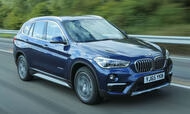
 Does BMW's second-generation crossover make for a better used buy than rivals from Audi, Mercedes and Land Rover? The original BMW X1 racked up more than 700,000 global sales between 2009 and 2015, but for all its success it was plainly styled, poorly packaged and flawed on the road.Happily, the Mk2 car of 2015 to 2022 fixed all of that, and it holds up today as a great-value family hauler with up-to-date technology and real kerb appeal.Prices start at about £5000 for cars with more than 100,000 miles under their wheels, but with a budget of around £8500 you can easily find a clean and well-equipped example that will have the neighbours’ curtains twitching.You might think it a relatively staid, front-driven family SUV, but the X1 is a surprisingly good car to drive, cleverly hiding the extra bulk and height it has over a normal family hatchback.Its steering is precise and communicative, it maintains good body control and it generally inspires confidence when you thread it down a rural road. Sure, it’s not as engaging as some of BMW’s rear-driven offerings, but it’s pleasant nonetheless and reasonably comfortable.If you’re after a bit more ride quality, look for the optional adaptive dampers, which add an extra layer of comfort. The alternative is to go for an entry-level SE car with the smallest (17in) wheels and comfort suspension.And even SE trim is well equipped, with BMW’s iDrive infotainment system, a powered tailgate and rear parking sensors all included.A tidy 60,000-miler will cost about £10,000. You will need at least £2000 more for a car in M Sport trim, with its bodykit and firmer suspension. Sport and xLine trims offer the best value for money. The latter adds leather seats and LED headlights, and looks classy with its chrome exterior trim.That said, all versions feel solid and refined inside: the plastics on the doors and by your feet are solid, while the aluminium brightwork on the dash exudes an upmarket feel. You sit nice and high in the front and there’s plenty of head and leg room in the back, too.Make sure you find a car fitted with a sliding rear bench: it adds an extra layer of flexibility to the cabin and allows you to increase the boot capacity should you need it. That said, the 505-litre boot is good for its class and is large enough for a buggy, golf clubs or a few suitcases.There’s a good mix of 2.0-litre turbocharged four-cylinder engines to choose from. The front-wheel-drive sDrive18d diesel is ideal for daily duties, and you can expect around 50mpg.You can get the same oil-burner with four-wheel drive should you need the extra pulling power, but for towing a caravan or trailer we would opt for the 187bhp xDrive20d.It has a bit more poke yet is just as efficient. Some will be drawn to the 228bhp xDrive25d: while it’s a bit firm-riding, it blends impressive performance with decent economy.There’s also the 1.5-litre three-cylinder sDrive18i petrol engine borrowed from the Mini hatchback. It’s by no means quick, but you will easily get 40-45mpg out of it. Petrol options are that 138bhp sDrive18i or the sprightly 189bhp 20i, which can be had in front- or four-wheel-drive form.A mild facelift in 2019 brought tweaks to the exterior and interior, while the 217bhp plug-in hybrid xDrive25e with an electric-only range of 35 miles joined the line-up. PHEVs are a bit dearer than regular petrols and diesels, but whichever engine or trim you go for, a Mk2 X1 is money well spent.
Trump Links European Car Sales to Drug Price Cuts in Surprising Policy Twist


Subaru Eyes Affordable Electric Hatchback Comeback to Rival Popular City Cars
 Affordable hatchback is under consideration; could be twinned with Toyota's mooted electric Yaris
Subaru is mulling a potential return to the B-segment with an affordable electric hatchback following the success of the new Renault 5.
The move would bolster the Japanese marque’s position in Europe by lowering entry into its EV line-up, made up of the recently revised Solterra, new Uncharted SUV and new E-Outback crossover.
The brand's most famous B-segment model was the Justy, sold in in the UK various guises between 1987 and 2009.
Speaking to Autocar, Subaru’s global EV product boss Inoue Masahiko said the brand was pondering the introduction of a car that could sit below the Uncharted, such has been the success of the 5 since it launched at the turn of the year: 30,000 sales in Europe so far.
“It’s something that is up for consideration, because we need to prepare a wider range of BEVs to meet every customer’s expectations,” said Masahiko.
Given Subaru has a strategic partnership with Toyota (the Solterra is heavily related to the bZ4X and the Uncharted is based on the new C-HR+), it's likely that the two will join forces again, and a previously mooted electric successor to the Yaris would be the perfect tie-up.
A launch date in the latter end of the decade would make sense, given that Toyota product boss Andrea Carlucci previously confirmed to Autocar that an electric Yaris “is the idea” but “this is not quite now”.
What’s more, Subaru Europe boss David Dello Stritto said that the concept of a Subaru electric supermini was worth exploring, given the segment has been reignited by the likes of the 5 and the impending arrival of the Volkswagen ID 2 and Cupra Raval and the prospect of an 'MG 2' by 2028.
However, Dello Stritto said that Subaru wants “to wait and see how the Uncharted does” before deciding if it needs to extend its EV line-up lower.
“I reckon we need about two years to find out how it's performing,” he added. “We might have come up with new ideas during that period, so in two years' time we can talk again.”
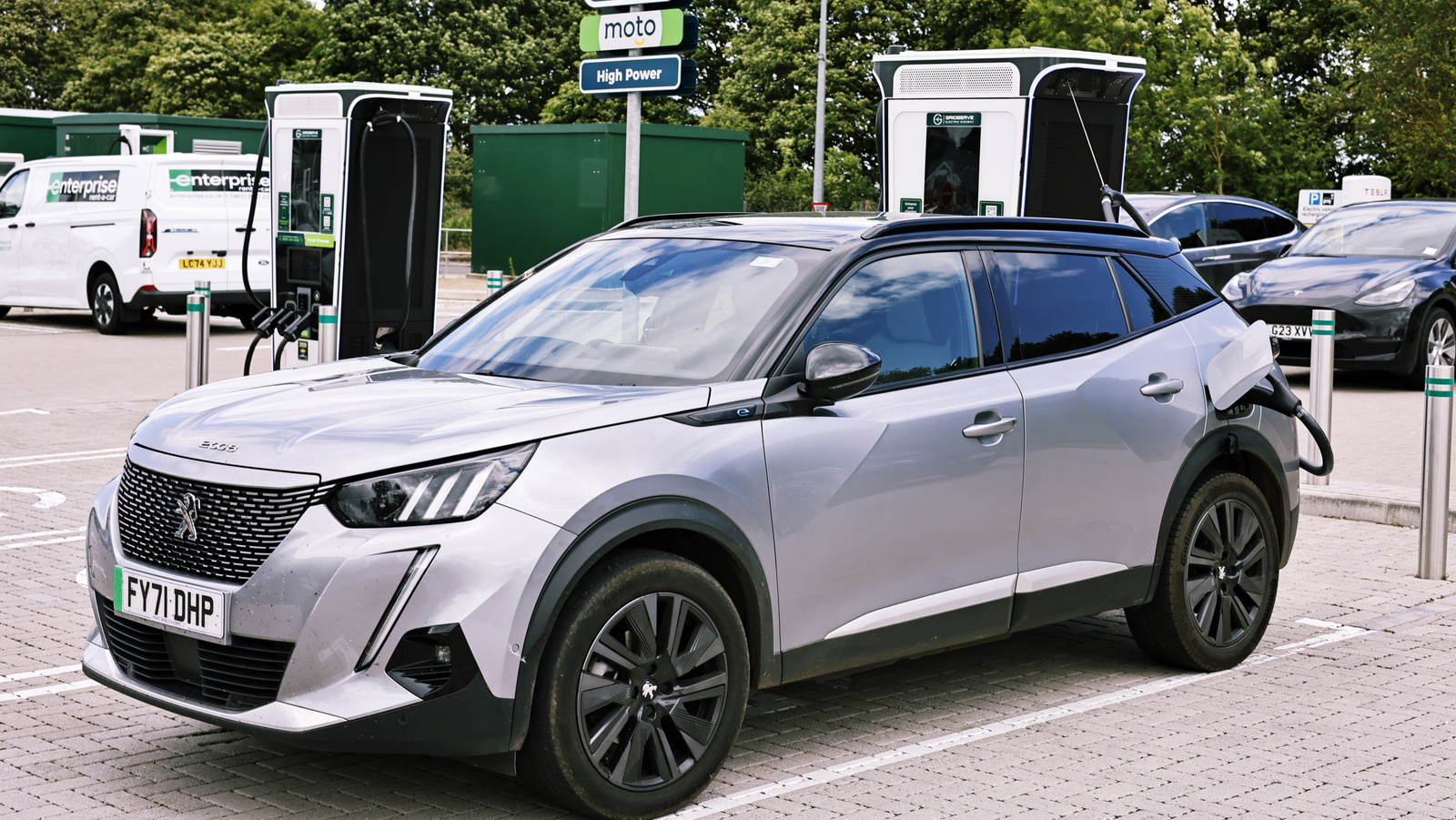
UK Drivers Embrace Electric Cars, Outpacing Gas Vehicles in Mileage

Delta Pilot Fails Breathalyzer Test, Forcing Last-Minute Flight Cancellation


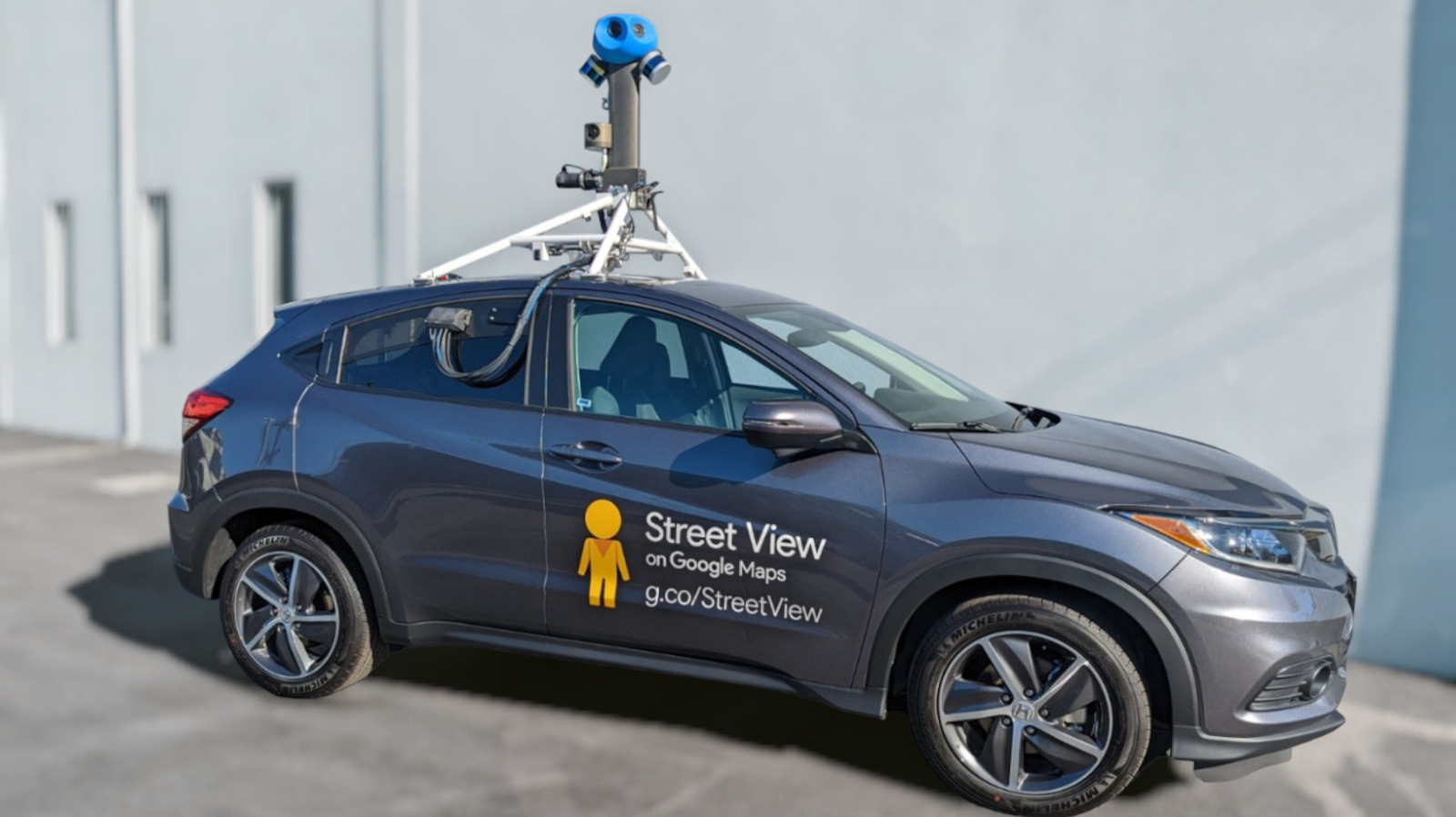
How Google Street View Maps the World Mile by Mile

New UK Electric Car Grant Revealed Which EVs Qualify for Up to £3750 and...
 Around a third of the electric cars currently on sale in the UK are expected to qualify
Car buyers are set to learn which models qualify for the UK government’s new Electric Car Grant (ECG) on August 11.
Speaking at a briefing to announce the UK’s latest automotive manufacturing figures, Society of Motor Manufactures and Traders (SMMT) boss Mike Hawes confirmed the August date and said he expected around one third of electric cars on the market to qualify for the grant based on the criteria set out by government.
This criteria includes not just a £37,000 cap for a qualifying model but also science-based targets around emissions from a car company and its models’ manufacturing location.
Should a car qualify, grants will be banded at either £1500 or £3750.
On the basis that half the market is ruled out on price, that means around two thirds of EV model ranges with a sub-£37,000 model look set to qualify for a grant, based on early projections.
Hawes confirmed that the automotive industry had not been consulted on the ECG ahead of its publication and said that while “any support is the right thing”, the fact that it “will help some but not all OEMs” isn't ideal.
The fact that some manufacturers and models would be denied access to the grant also meant that for them “the route to ZEV mandate compliance is worse" and "at £37,000 you split the market”.
The SMMT had been advocating for VAT cuts on EVs sold to private buyers as a way of ensuring support was targeted at the area of the market that needed it most.
“We understand the ambition, but there is a lack of clarity,” said Hawes.
Hawes believes that the ECG isn't intended to disadvantage any particular region or manufacturer, despite cars originating from South Korea and China set to miss out, saying it looked to have been formulated to target “products with broader sustainability goals, not just zero tailpipe emissions”.
It's also worth noting that “the government has said it will look to support local manufacturing if possible”, he added.
The chances of access to the ECG convincing any foreign car maker to invest in UK EV manufacturing is incredibly slim, said Hawes, as it's likely the £650 million purse would have run out by the time production could be ramped up.
In response to the fact that the ECG is also available to business buyers (who already get EV subsidies through favourable BIK tax rates), Hawes said the “objective of the government is to get EVs on the road, and that includes fleet, rightly or wrongly”.
Car makers will also be able to get the ECG paid to themselves through registering the likes of demonstrators and staff vehicles, but Hawes said that for manufacturers, “the grant will be monitored by the government to ensure it flows through” to the right places.
“Invariably there might be sales channels that are easier than others," he said, "but ultimately this is going to shift the market.”
To that end, Hawes believes the scheme "will be a success, as consumers respond to carrots”.
Now the challenge is to ensure that investment in charging infrastructure keeps up with a likely increase in demand.
One test of the ECG scheme's success will be whether it tempts new buyers into EVs, rather than existing EV drivers to swap one EV for another, added Hawes, saying: “It needs to be the former.”

NASCAR Brings Thrilling Street Race to San Diego’s Naval Base Next June


Man Arrested for Impersonating Firefighter With Fake Department and Used Fire Truck