MG Slashes EV Prices by £1500 Amid Grant Uncertainty as Buyers Await Government Decision
 Uncertainty over which cars qualify for new government grant has prompted buyers to hold off
MG has introduced a £1500 discount on its 4 and S5 EVs to reverse a stall in orders prompted by the new Electric Car Grant, as buyers wait for government funding to become available.
The ECG, announced last week, will eventually yield a discount of either £1500 or £3750 on a range of sub-£37,000 electric cars.
However, the government has only just opened applications for manufacturers to receive the grant and so has yet to publish a list of qualifying models, leaving buyers in the dark.
In turn, MG UK commercial director Guy Pigounakis told Autocar, orders for new EVs priced below the £37,000 threshold “quite literally stopped” within 24 hours of the grant's announcement.
Introducing the £1500 discount on the 4 and S5 before receiving confirmation that the two models qualify for the grant is no small risk for MG.
Industry insiders have told Autocar that the criteria to receive the grant are effectively a back-door method of excluding Chinese-made cars (such as the 4 and S5).
To qualify, manufacturers must be signed up to the Science Based Targets Initiative for carbon emissions reduction, and neither MG nor its parent company SAIC are.
What’s more, the level of grant funding provided to a EV depends on the cleanliness of the power grid in the country in which it and its battery cells are produced, effectively preventing any Chinese-made car from receiving the full amount.
A number of other Chinese brands have introduced their own discounts early to get ahead of the European competition.
Leapmotor was first, cutting the C10 and T03 by £3750 – making the latter the UK’s cheapest EV at retail – and it was soon followed by GWM, which discounted its Ora 03 by the same amount.
What Those Colored Markings Under Your Car’s Hood Really Mean

How Next-Gen Range Extenders Could Spark an Electric Car Comeback

ZF’s eRE and eRE+ REx products, depicted above, are due to arrive in 2026.Ineos, Lotus and Volkswagen are all developing REx powertrains
Let’s wind back to 2012: Britain is gripped by Olympic fever as Vauxhall launches the Ampera and the UK’s first ‘plug-in’ hybrid decisively beats the Volkswagen Up to European Car of the Year glory in the process.
Within 12 months the Ampera will have a carbonfibre-cored rival in the unlikely shape of the BMW i3, another car using its petrol engine purely as a range-extender in what appears to be a movement gathering momentum.
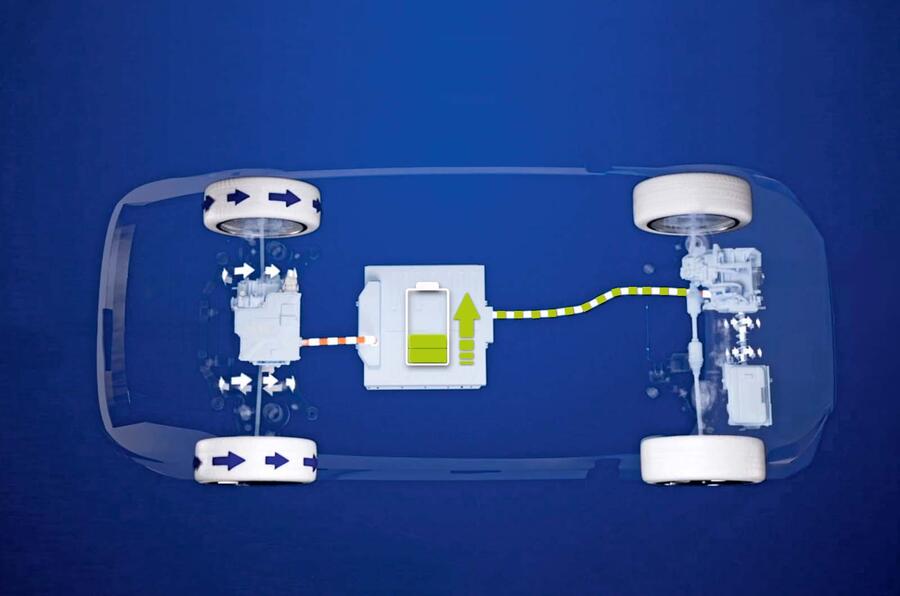
Yet more than a decade later both cars feel like distant memories and range-extender (REx) technology – essentially where an engine charges a drive battery instead of powering the car itself – remains remarkably niche.
Mazda will sell you its MX-30 crossover with a dinky rotary generator on board, while LEVC London cabs deploy REx tech on a larger scale. But most customers opt for a battery-electric vehicle (BEV) or parallel hybrid and ignore a once-pioneering stepping stone between the two camps.
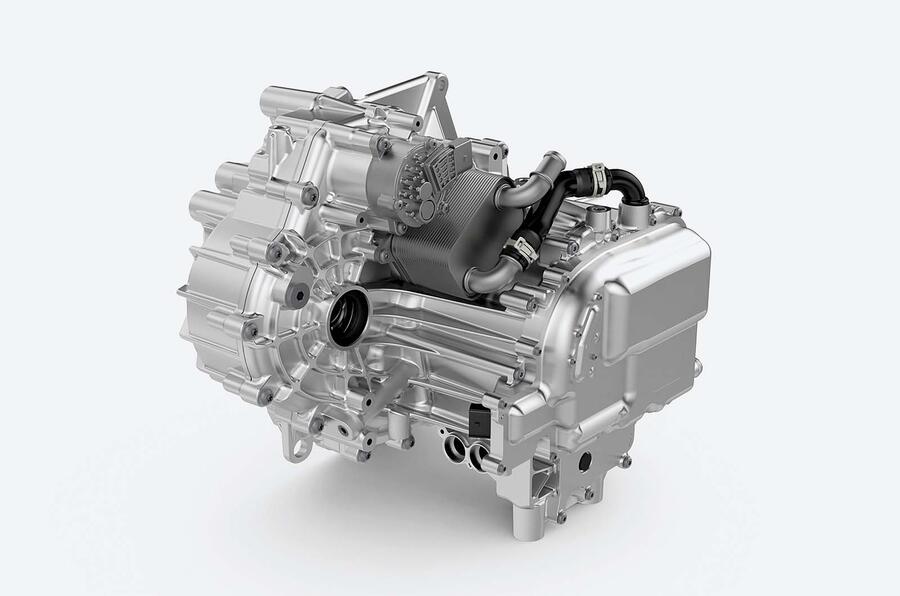
ZF reckons that is about to change. The German automotive and industrial tech giant has its hand in all manner of components and its 8HP eight-speed automatic transmission is a mainstay of the industry, with dozens of applications since its late-noughties introduction.
ZF’s latest range-extender systems, eRE and eRE+, are designed to speed up car makers’ evolution of hybrid and EV technology – and help them mould around increasingly tumultuous market conditions.
“It could potentially revitalise the somewhat sluggish electric vehicle market in Europe and the US,” says the company. “Major manufacturers like Hyundai, Ford and Stellantis are showing interest in range-extender technology and planning to launch vehicles equipped with it within the next two years.” Its halo gearbox certainly has a good track record of breaking down rivalries and supplying multiple, competing manufacturers all at once.
So what’s new compared with a decade ago? “When you look at the history of range-extenders, [engines] like those in the i3 were designed to help you in utmost urgency,” says ZF’s e-mobility R&D boss Otmar Scharrer. "This has changed. Range-extenders are now much stronger and more powerful.”

Cooling, packaging and refinement have improved as REx cars move away from shrunken engines to proven larger units with a strong, efficient mid-range and capable of running frequently rather than being dipped into sparingly. A naturally aspirated petrol four-pot is optimal.
While neither of ZF’s new offerings drives the wheels directly – it’s key to their MO – they can work with up to 200bhp of engine output and either plug and play with a manufacturer’s existing engine and motor or use a clutch and differential to create a more flexible set-up where an intermediary generator can drive the wheels. Both options can hook up to 400V or 800V charging architecture.
Scharrer sees huge market potential in areas where charging infrastructure remains a barrier to EV sales success. “I hear comments that this is a very short-term technology and that regulations aren’t following,” he laments. “But if you have a car capable of going 155 miles fully electric, then it has a range-extender for the countryside, why should you be banned from driving it in the city?
“We involve ourselves as much as we can in regulatory discussions. In China, to keep the status of a ‘new-energy vehicle’ [EVs and plug-in hybrids], you must not connect the internal combustion engine to the wheels.
The EU has not finally decided what to do with range-extenders, but I think they realise that this is an interesting opportunity to offer a product which is less dependent on rare materials and cell chemistry because you need a significantly smaller battery.
“They want to understand what the pros and cons are. The whole mobility community is ready for these discussions, because we need them. The past regulation of BEVs has shown that we cannot push things into the market against the customers’ will.
The easier a solution is, the higher its chance of surviving a long time. And this is quite an easy solution. I personally expect that we will see it beyond the next five to 10 years. I think there will be plenty of applications which really excite people.”
Confident words when sales of new hybrids are due to cease in Europe after 2035. Indeed, Ineos, Lotus and Volkswagen are three more names reportedly dabbling with REx powertrains as we speak. Maybe the Ampera was right all along.
Unlocking Subaru X-Mode: How It Enhances Traction and Where It Falls Short
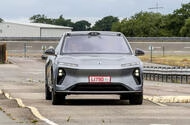
Clearmotion Unveils Breakthrough Active Suspension Bringing Luxury Ride Comfort to Everyday Cars
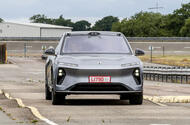 Clearmotion's fully active suspension promises a generational leap in comfort – we get a first taste
US-based start-up Clearmotion has developed a fully active suspension system that could be fitted to almost any car – and it is set to appear in future Porsches.
Fully active suspension – where the car can control both the extension and compression strokes using an actuator or motor – has been the stuff of dreams for chassis engineers for a long time.
Whereas passive or semi-active suspension (adaptive dampers and/or air suspension) can only ever react to inputs from the road, an active system can effectively pull the wheel up for a bump and push it back down when the road dips, as well as compensate for body pitch and roll in order to keep the car’s body perfectly level. In this way, it can theoretically isolate occupants from what is going on underneath. It can also control the load on the four contact patches individually to improve roadholding without compromising the ride.
In a lineage that includes Citroën’s hydropneumatic suspension, Mercedes’ Active Body Control and the Ferrari Purosangue’s Multimatic set-up, active systems have always had compromises, such as cost, reliability, functionality or all of the above.
Porsche’s Active Ride is arguably the best seriesproduction system so far, but it is very expensive and power-hungry, which means it can only be fitted to cars with a high-voltage electrical system (plug-in hybrids and EVs).
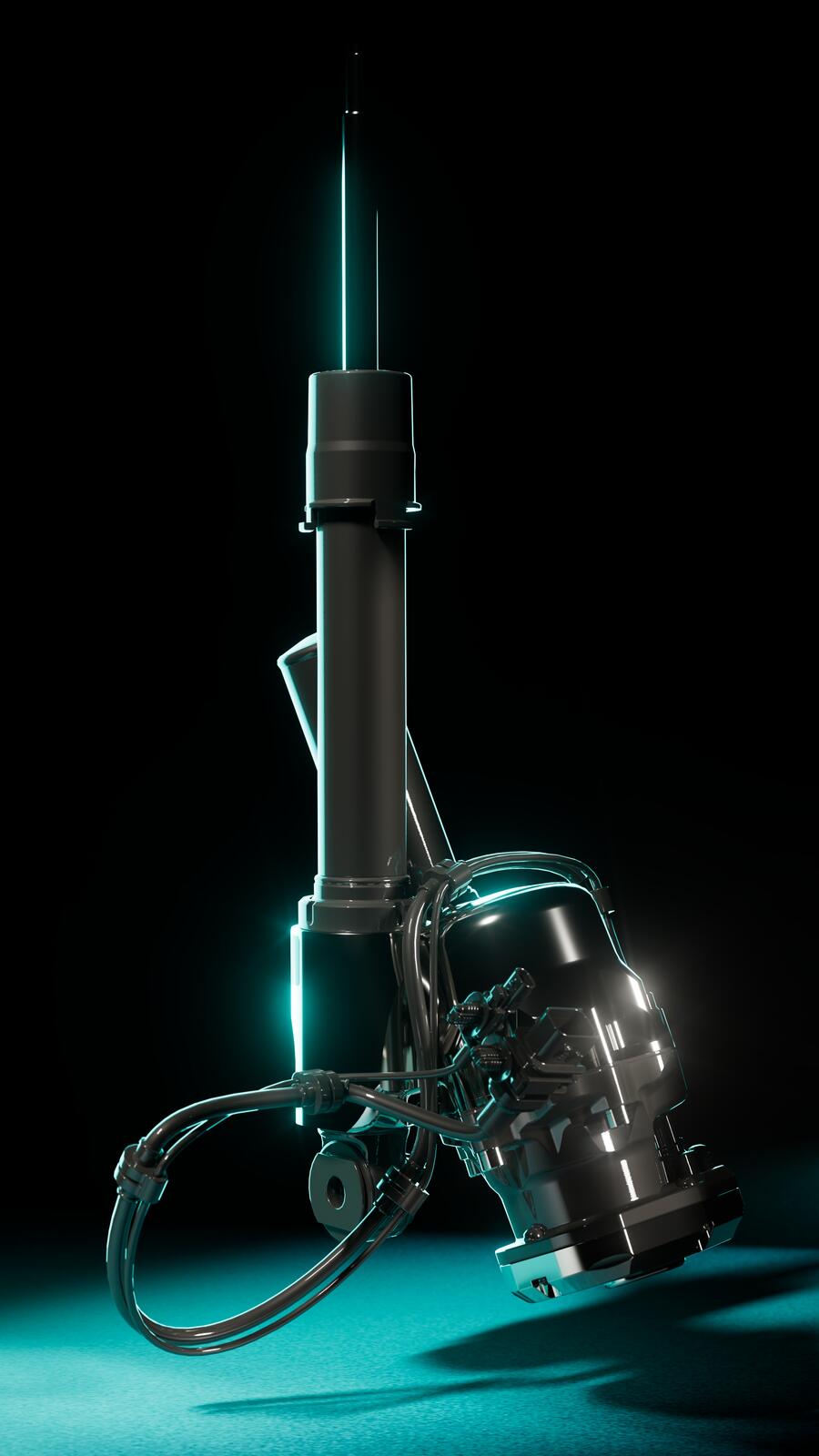
Clearmotion’s solution, as demonstrated on Chinese EV maker Nio’s ET9 flagship, looks remarkably similar to a normal combination of a spring (either air or coil, depending on the application) with a remote-reservoir damper. This compactness and relative simplicity allows it to be installed in many existing cars with minimal modification. It runs on 48V, but a converter allows 12V cars to use it too.
Clearmotion technical fellow Marco Giovanardi said: “We are a different kind of supplier from the ZFs of this world. We didn’t already have a mature product, so we couldn’t wait for someone to design a vehicle for us.”
Key to the system is a rotary electric motor with its own control unit, which powers a hydraulic pump that forces fluid in or out of the damper. There’s one for each corner of the car, rather than a central one, thus eliminating metres of pipework.
This all plugs into a central control unit, which uses data from the car’s various sensors to decide what each suspension corner unit should do. Clearmotion doesn’t use cameras because they are unreliable in less than perfect conditions, and lidar sensors are expensive and create too much data.
To add in a predictive element, Clearmotion is also developing Roadmotion, which builds up a detailed scan of road surfaces in the cloud by taking in the data from any number of cars. (Anything from the past 10 years with adaptive suspension will do.) This data can then be fed back to cars with active suspension to allow them to anticipate the road surface.
“That data portion of the business has a way bigger potential,” said CEO Christian Steinmann. For example, that data could allow autonomous vehicles to avoid potholes and other hazards.
As well as being fitted as standard on the Nio ET9, Clearmotion’s suspension will be used on future Porsches. Other OEMs are showing interest too.
With greater scale should come lower costs, said Steinmann: “So far, every application of active suspension has been in ultra-luxury vehicles or race cars. My objective is to get it into mid-size vehicles. We hope to accomplish this within this decade – in China probably by 2027.”
Is it as good as Porsche's Active Ride?

Autocar was invited to Clearmotion’s UK tech centre at the Horiba MIRA test track to experience its Nio ET9 demonstrator. In terms of hardware, it was exactly as you can buy it in China, although Clearmotion has tweaked the software to make it more to its own liking – and more suitable for UK roads.
The difficulty with such a system is that it is, by design, underwhelming. The aim is that you can’t feel the bumps. It’s only when I experience the same road in another car, or with the system turned off, that I realise that this B-road isn’t glass-smooth.
Turning the system on is quite spooky: every bit of pitch or head toss just vanishes. Adding on the Roadmotion somehow makes it even smoother. This is a more incremental change than the difference compared with normal air suspension, but it is easy to feel nonetheless.
Is it as good as Porsche’s system? Without a backto-back test, it’s hard to say. Equally, it’s clearly in the same ballpark, and in a different league from lesser systems.
That said, it’s not perfect. The active suspension is spectacular at erasing the big bumps but it can’t quite filter out the smaller ripples and asperities in the surface. On the one hand, this is perception: because the primary ride is so smooth, the secondary aspects are drawn into focus. On the other hand, the system doesn’t have the bandwidth to filter out such high-frequency inputs yet. The bushes could be made softer, but that would introduce latency as the actuators have to push through their deflection before getting to the job at hand.

California Launches Paid Apprenticeship Program to Tackle Auto Technician Shortage

Jaguar C X75 The Greatest Hypercar That Never Made It to Production
 Sometimes a brief drive of a test mule is the only taste you'll ever get of a new machine
The difference between a concept car and a prototype is huge. It’s the difference between a piece of motor show eye candy and a viable proposition that has been made convincing enough to actually prove said concept.
This is the continuation of a thread I started recently, explaining the peculiarities, pressures and, often, disappointments that are associated with test drives in concept cars.
When you drive a concept car, you feel like a significant chunk of the story you write is about the art of the imagined. If this thing comes to be, just what might it be like? Such a car could supply perhaps 30-40% of that picture – or just 4%. But a prototype might get 90% of the way there.
There’s a greater sense of occasion to driving a prototype; manufacturers usually only allow it when they’re building up to introducing something really important. At this stage, a whole lot more has already been invested and more still is on the line. You might be driving one of only two or three very valuable examples of something currently in existence.
Sometimes, the full significance of what you’re doing isn’t apparent at the time. Back in the autumn of 2006, I went to Hethel, Norfolk, to ride in, rather than drive, a prototype of something called a Tesla.
The Roadster was, of course, a stretched Lotus Elise with so many laptop batteries where the four-cylinder engine would otherwise have been. I remember still how uncannily responsive and linear the performance felt – and that was while the car still had a two-speed automatic gearbox, so it tended to shift at about 60mph in a way that was noticeable enough to, well, lunch gearboxes, it would later turn out.
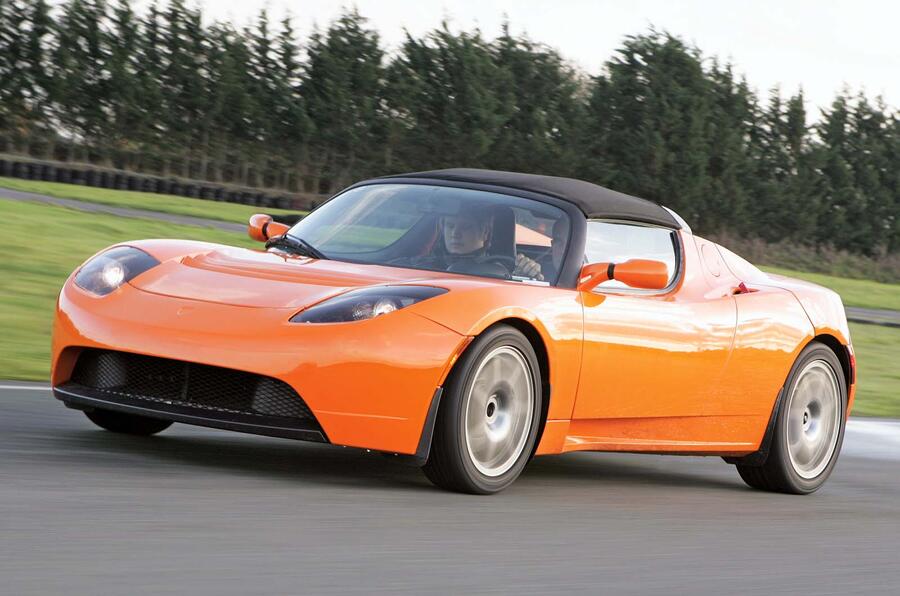
Did it feel like the start of something that would change the car industry? Not entirely. But it was clearly a more credible product than anyone with whom I spoke about it at the time was ready to believe. I wouldn’t have known that much from a show car.
There are prototype drives, by contrast, when you know precisely what strategic significance you’re dealing with. Little can give you a better idea of that than turning up at the gates of a brand-new factory built to manufacture the car you’re about to sample, a model that is being hailed as the saviour of its long-ailing creator.
That’s how I first sampled an Aston Martin DBX: with a car load of engineers along for the ride through the Welsh mountains. (“What do you think, Matt?” No pressure, there, then…)
And, just occasionally, you know that a test drive in a prototype is all you’re ever going to get. That is exactly how it was with Jaguar’s great aborted hybrid hypercar, the C-X75, when we managed a handful of laps of JLR’s Gaydon high-speed and handling circuits in 2013.
This was the time of the hypercar ‘holy trinity’. Jaguar had been bold enough to invest big and, with the help of Williams Advanced Engineering, take its particular vision for such a car all the way through to a highly polished place.
But, rather crushingly, it had also already decided not to build it. That competitors from Porsche, Ferrari and McLaren were all coming to market at the same time was too great a risk. Above all, JLR couldn’t afford another XJ220.
The car certainly didn’t deserve description in those terms. I never drove a LaFerrari, but I have driven both a McLaren P1 and a Porsche 918 Spyder, and honestly, the C-X75 was right up there.
It had bucketloads of star quality; its chassis and steering were outstanding; and its 1.6-litre, 10,000rpm twin-charged four-cylinder combustion engine topped the lot. It was like some mutant superbike motor backed by epic electric torque fill. It was monumental.
The C-X75 might well be the greatest performance car that the British industry never made. And being in the position to learn that – however bittersweet it may feel on reflection – is why you don’t turn down drives in prototypes.

NASA Employees Sound Alarm Over Risky Decisions Endangering Public Safety


UK Electric Car Grant Set to Exclude Chinese and Asian EVs Under Tough New...
 Other EVs manufactured in Asian countries, such as in Korea or Japan, are also expected not to qualify
EVs manufactured in Asia, including in China, are expected to be excluded from new UK electric car purchase incentives once strict new criteria is applied, including penalising battery manufacturing in countries with carbon-intensive grids.
The Electric Car Grant is backed by £650 million of government funding and will knock up to £3750 off the price of a new EV.
The offer of funding is a win for the UK automotive industry following months of fierce lobbying to help ease some of the burden of having to hit the strict EV sales target imposed by the ZEV mandate.
However, the money will be hard to access. “The criteria for qualification looks quite tough,” former Nissan executive Andy Palmer told Autocar. “I’m in contact with several OEMs and they still don’t know which models will qualify”.
The basic criteria is easy to understand, such as the requirement that qualifying cars must be zero-emission and cost under £37,000 (although higher trim levels can exceed that figure and still qualify, providing that an entry model with the same battery starts below it).
Cars must also be offered with a battery warranty lasting for 100,000 miles or eight years, with an agreement to replace the pack if it falls below 70% capacity during that period.
However, the deciding factor that determines whether a car falls into the highest band-one category for the full £3750 grant or band two for £1500, or is excluded altogether, is based on its environmental score – and that’s where qualification process becomes opaque.
The score is based on the manufacturing location of not just the car but more importantly the battery cells. If the country of manufacture in question generates much of the power for its national grid from fossil fuels, then the car is denied a grant.
The cell source accounts for 70% of the environmental score, while vehicle assembly contributes just 30%.
The government has said that all cars are assessed equally and the environmental score element is to “incentivise more sustainable manufacturing practices”, but the underlying purpose is pretty clear.
“Let’s call a spade a spade, this is probably looking to penalise cars that are produced in China,” Tim Dexter, UK vehicles policy manager for green pressure group Transport & Environment, told Autocar.
At this stage car makers are gathering evidence to prove they qualify, so we don’t have a list of eligible cars yet. But the scheme is very similar to the one operated in France, and it can already be seen which cars there make the minimum environmental score and which don’t.
In France, no Chinese brands qualify for the government EV incentive, and neither do any electric cars built in China by western brands, such as the Mini Cooper E or Cupra Tavascan. Mini might be rueing the decision to postpone production of the electric version at Oxford.
It's not just China. No EV imported from Korea or Japan qualifies either. The French scheme takes into account distance travelled when totting up the environment score, which hurts the Asian manufacturers. The UK didn’t copy that element, but the promised hard look at the grid cleanliness will penalise China, Korea and Japan, all of which are more reliant on fossil fuels than Europe.
European Union manufacturing locations will be assessed based on grid carbon intensity per country, rather than as a whole.
This means that Polish-built EVs, such as the Jeep Avenger, or anyone using batteries from LG Chem’s vast plant there (the biggest battery factory in Europe) could be downgraded due to Poland’s coal-fired grid, which is rated the worst in Europe for emissions at 594g CO₂/kWh, according to the European Environmental Agency (EEA).
Other high-emitting countries in Europe include the Czech Republic, home to Skoda, at 361g CO₂/kWh, and Germany, at 320g CO₂/kWh.
French-built cars should be fine given the country's low-CO2 energy generation – the Renault 5 and 4 are built at Douai using batteries sourced nearby from Envision AESC.
Outside Europe, EVs from Turkey, including the forthcoming Hyundai Ioniq 2, could be on shaky ground due to the country's high grid emissions.
The forthcoming Nissan Leaf should also score well. The government has distanced itself from reports that the scheme was established to give Nissan a leg-up as it finally starts production of its new electric crossover in northern England, but it’s hard to see how the car won’t be an automatic band-one recipient of the full £3750.
The UK is better than the European average on grid intensity, with a rating in 2023 of 162g CO₂/kWh, and Nissan has the added advantage of sourcing batteries in Sunderland from Envision AESC.
Reinforcing the idea that banding will be more generous to UK-embedded companies is a section on the car makers’ application form that asks for 'UK presence – facilities and support' and 'UK opportunities'.
A further qualification hurdle is that car companies must be signed up to the Science Based Targets Initiative that monitors and approves CO2 reduction goals within that company. That immediately takes Tesla out of the running after the US company backed out of its commitments. Hyundai and Kia aren’t signed up either, according to the SBTi dashboard that lists all participating companies. Stellantis also isn’t listed, although its former iteration PSA Peugeot-Citroën is.
In short, the scheme will take a while to get going while car makers get their ducks lined up. Many won’t qualify at all, but if it persuades someone – for example, Mini – to shift electric car manufacturing to the UK, it could prove to be worth the money spent.
2026 Mitsubishi Outlander Debuts Hybrid Power and Remains the Most Affordable Three-Row SUV