

2025 Toyota 4Runner Towing Power Revealed: Gas vs Hybrid Comparison

Inside Audi’s Design Revolution: Frank Lamberty on Innovation, Inspiration, and the Future of Electric...

Frank's finest works include the R8 supercar and the all-electric e-tron GTFrank Lamberty discusses inspiration, design language in the electric age, and Audi's iconic slogan
“A good slogan sells the product. A great slogan becomes part of the language,” so the old saying goes. That sentiment rings especially true for Audi’s iconic three-word mantra: Vorsprung durch Technik.
First uttered into existence back in 1971, the enduring phrase – meaning progress through technology – has evolved to become far more than just a catchy tagline. In essence, it’s a guiding principle that champions technological excellence – and has underpinned more than five decades of next-gen innovation, pulse-raising performance and exquisite design at Audi.
But what does Vorsprung durch Technik mean to those behind the metal? Those at the coalface? Those who make Audi, well, Audi? To find out, Autocar visited the four rings’ headquarters in Ingolstadt, Germany, to pick the brains of some of the brand’s leading designers and engineers.
In this first of four exclusive interviews, we speak with Audi royalty Frank Lamberty – the design extraordinaire behind the Audi R8 and all-electric Audi e-tron GT. Also in the series: aero chief Dr. Moni Islam; lighting expert Christoph Häußinger; and interior designer Ramon Bäurle.
Discover the all-electric Audi e-tron range
Introduce yourself and what you do...
My name is Frank Lamberty and I’m a team leader within the exterior design department at Audi. This means I head a small team of four or five designers who work in competition with other teams to come up with designs for the next generation of Audi cars. It’s a fantastic job.
What’s your personal interpretation of Vorsprung durch Technik?
In my opinion, Vorsprung durch Technik is an attitude. It is a mindset, actually.
More than 60 years ago, Audi [as we know it today] didn’t exist. It was part of Auto Union which was owned by Mercedes-Benz. Then it was bought by Volkswagen in the mid ‘60s who just wanted to use its factories here in Ingolstadt to build the Beetle.
But behind the curtain, a small group of people decided they needed to do something about this, and so they secretly designed a new car. When they showed it to the board, they were so impressed that it was immediately put into production. That car was the Audi 100, and it saved Audi. Not only that, but it was really progressive for the time because it was front-engined and front-wheel drive.
When we hear this story, it gives a new meaning to Vorsprung durch Technik. It’s about realising when something is not right we have to take action. But it’s about more than that. It’s about really searching for the next level to improve. If there is something which is not going to be successful, we must find a new way, a new solution, a new idea.
Where do you find inspiration for your work?
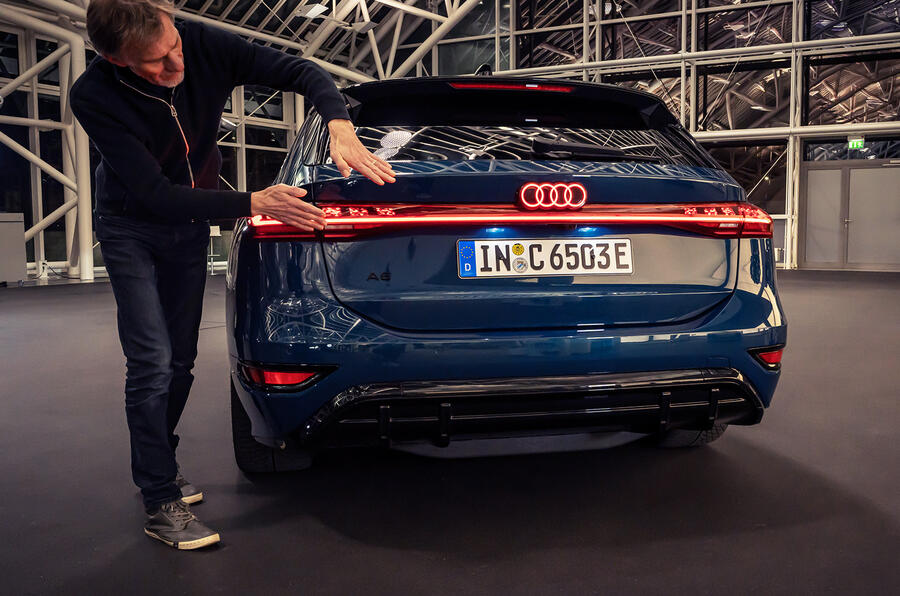
As designers, we are quite visual people. We look a lot. Not everybody can do this. Some people are more fixated on lists and numbers and figures; I’m walking through the world with my eyes wide open. I’ve always been like that. But it’s about more than just looking – it’s about understanding.
I personally take a lot of inspiration from nature. Animals, for example. Some are cool; some are funny; some are aggressive. But why is that? That’s when you start to analyse their characteristics, and I find many of these are transferable into car design. Ultimately, being a designer is about seeing something, grabbing it and doing something new out of it.
Cutting-edge exterior design has always been a core pillar of Audi’s Vorsprung durch Technik ethos. How would you describe Audi’s design language?
This is a big question! To start, Audi design has always been about reduction. We try to be as clean as possible with our designs, and that all starts with the main architecture of the car. The main body has to be just right. It has to fit. If there’s a mistake in the overall proportions of the car, everything else falls apart.
But this is not easy. The cleaner and more reduced you get, the more perfect everything else has to be. Take the first-generation Audi TT (1998), for example. When you look at this car, it is so reduced, so clean, that if something was wrong with the proportions, even the smallest detail, you would realise immediately.
Audi is also about being logical. The ‘logic of the lines’ is something I talk about. The creases. The volumes. The shut lines. There needs to be a clear logic and reason to all of them. Look at the e-tron GT (2021). The muscular blisters and creases on the rear haunch are there to symbolise the powerful quattro performance underneath. There’s a logic to them.
And then there’s the combination of form and function. The Audi 100 C3 (1982) is a good example. That car has a really long nose, which makes it incredibly aerodynamic. But it didn’t look sexy or cool, so we found a way to compensate for that and still create our own identity by carving away the corners of the car to create the illusion that everything was pointing towards the grille for this really dynamic look.
But above all else, Audi design is about emotion. A car has to move you, it has to touch your heart. And this is what we’ve tried to achieve with the new e-tron family. [More on those in a moment].
Which Audi models throughout history stand as milestones in design for you, especially through the lens of Vorsrung durch Technik?
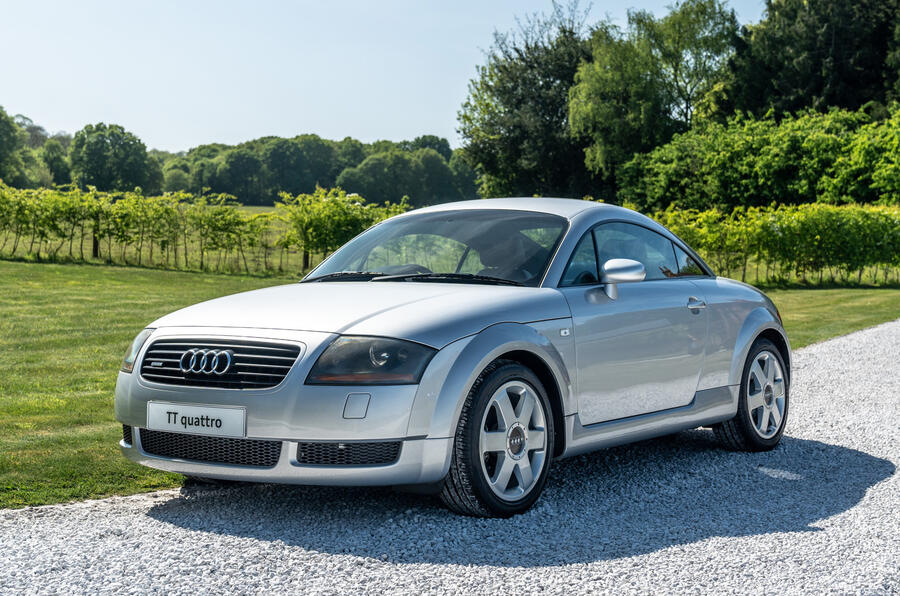
I mean, there are so many amazing cars to choose from. I have to say, looking back, the original TT was the car that actually made me come to Audi in the first place.
I was a student at the time and I remember thinking ‘Wow, how can you design a car like this?’. But it was more than just a car. The reduction. The cleanness. The coolness. The Bauhaus inspiration. To me it was halfway between car design and product design, and this is what really amazed me. It was totally my style and to this day I love it.
But thinking about Vorsprung durch Technik specifically, there have been many milestone cars that have championed innovation. The Audi A2, for example. This car was really, really clever in its design. It had a fantastic footprint: really small on the outside, really big on the inside. It was also incredibly aerodynamic and very lightweight – something we’ve come to appreciate more and more in the electric era.
And then there was the A6 Allroad, a personal favourite of mine. This was in response to the growing demand for SUVs in the premium market, and at the time Audi didn’t have an SUV. So, Audi decided to take its best, most versatile car and combine it with the features that buyers were looking for in SUVs: off-road capability, chunky design and a higher driving position. For me, it’s still one of the greatest cars Audi has ever made and a clear example of Vorsprung durch Technik thinking.
Electric mobility has changed the game for car design. What are the advantages? What are the disadvantages? How is Audi overcoming these?
This is a question we’ve been trying to answer for 15 years, ever since car design began to split between regular combustion cars and electric cars.
At first, we all said ‘Horray!’. The big, lumpy engine was gone and so we thought it would give us more freedom to design exactly how we wanted. But it didn’t turn out quite that way.
But, let’s start with the advantages. First, the added weight of electric cars means big, wide wheels are needed to carry everything, and designers love big wheels. Second, because the batteries are in the middle of the car, it means the wheels can be pushed out to each corner, which means shorter overhangs. Now Audi design has typically been about having long overhangs, but this shift in technical layout has given us some exciting opportunities in the design department, especially when it comes to finding the perfect proportions of a car.
However, there are some challenges. The first and main challenge also stems from the batteries. Having them in the floor means the car naturally wants to sit higher off the road. In SUVs this isn’t much of a problem, but in sports cars like the e-tron GT it’s tricky. But this is another example of Vorsprung durch Technik. The engineers have created a very clever, very expensive type of modular battery that isn’t just a big brick. It can be fitted together in such a way that it allows us to keep the floor of the car very close to the road, and therefore the e-tron GT is one of our most beautiful electric cars.
And then there’s the aerodynamics side of things. Aero is so important for electric cars in order to achieve good efficiency and a longer range, which is why you can see each of our e-tron models are so aero-focused.
What are your design highlights for each of Audi’s all-electric e-tron models?
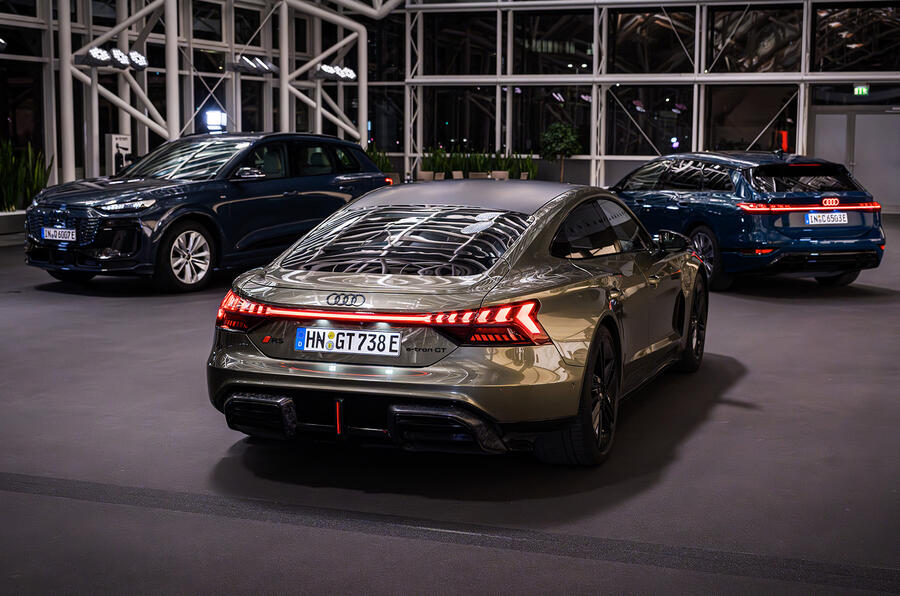 As I mentioned, the e-tron GT is, for sure, one of our most beautiful electric cars. I remember back when we started designing this car we said we wanted to create a really dynamic, emotional car. It has a nice long wheelbase, a sporty silhouette, a really nice floating roof arc, muscular wheel arches and perfect overall proportions. For me, it’s pure sculpture.
The Q6 e-tron is, to me, the SUV brother of the e-tron GT. It has a really strong, prominent front end, a really wide wheelbase, and a beautiful aerodynamic flow to the bodywork. Round the back, it has the same muscular haunches as on the e-tron GT. Overall, I’m really proud of this car because I think it's one of the most beautiful SUVs.
And finally the A6 e-tron. This is really special for us, because this is the first electric Avant. The overall ethos here is that the A6 has been designed even more smooth than the e-tron GT and the Q6 e-tron because we wanted to show the airflow around the car. One sign of this is the single crease running all the way down the side of the car.
I also like the fact it has different proportions to a regular combustion engine Avant. It has a shorter nose and a really long, elegant, stretched body with a really sharp roofline. It’s a really fluid car. I love it!
Where do you think Vorsprung durch Technik will take Audi in the future?
It’s interesting. I think Audi is in a transitional period at the moment, and the future isn’t crystal clear in terms of the cars we will be making in years to come. But I know with our Vorsprung durch Technik mentality we will always strive to do things better, improve, try new ways, explore different paths, and this will always lead Audi to success.

Which Subaru Models Are Made in America? Discover the U.S.-Built Lineup

Hyundai Ioniq 9 Sets New Standard for Seven-Seat Electric SUVs
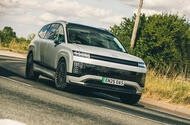
 Korean firm's new seven-seat electric flagship majors on practicality and long-distance refinement Between being unveiled in concept form in 2021 and reaching production, Hyundai’s newest SUV grew. Not literally but figuratively: the Seven became the Hyundai Ioniq 9, an adjustment intended to crown the large six- or seven-seater as the flagship of the Korean firm’s electric range (and possibly to ensure parity with sister brand Kia’s related EV9…).Given how many car makers have tripped over their own nomenclature when trying to add EVs into their already bulging line-ups (yes, Audi, we’re looking at you), credit to Hyundai for the pre-emptive minor course adjustment. And in its size, ambition and lashings of premium splendour, this car feels every inch the king of Hyundai’s ‘chess piece’ Ioniq family.We've so far only driven the bells-whistles-and-afterburners spec ‘Performance Calligraphy’, with 429bhp, dual motors and all the luxury equipment you could wish for. This particular version is likely to be a niche seller, so we’ll do a full road test with a more mainstream version later.So given how big it is in terms of size, ambition and battery capacity, can Hyundai's newest EV tempt buyers away from premium brands such as Audi, Range Rover and Volvo?
How Formula 1 Tire Choices Shape the Thrill of Every Race
Rimac Nevera R Shatters Speed Records as World’s Fastest Electric Hypercar
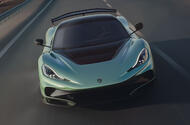 Hardcore version of Nevera outpaces Bugatti Veyron Supersport and clocks 0-62mph in stunning 1.66sec
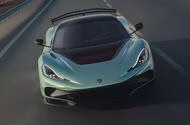
The new Rimac Nevera R has officially become the world's fastest electric car, clocking a top speed of 268.2mph.
That means the more hardcore version of Rimac's EV hypercar is also one of the world's fastest production cars of all time - surpassing even the Bugatti Veyron Supersport.
The independently verified top speed was confirmed as part of a final round of validation tests ahead of customer deliveries getting under way - during which, Rimac says, the 2078bhp Nevera R claimed "new world records in 24 categories".
Surpassing "every performance record previously set by the standard Nevera", the R also proved itself the world's fastest-accelerating production car, sprinting from 0-60mph in a dazzling 1.66sec - 0.08sec quicker than the standard car.
The R also achieved a record 0-400-0kmh (0-249-0mph) time of just 25.79sec – just over two seconds quicker than the previous fastest car – and completed a quarter-mile sprint in 7.9sec, a 0.35sec improvement.
Company founder and CEO Mate Rimac said: “When we first introduced Nevera, it almost seemed like the pinnacle of hypercar performance had been reached. In a single generation, we had created a performance jump that previously would have taken decades.
"But now, through relentless innovation, Nevera R goes even faster, while still maintaining much of the comfort and practicality that makes the Nevera a real, usable daily car. Breaking records is in our DNA, and we won’t stop here.”
While Rimac remains committed to breaking boundaries for outright performance, it is possible that the company's next car may not be fully electric.
In May last year, Rimac had not yet sold all 150 examples of the standard Nevera, and Mate Rimac suggested that "the narrative" around electric cars had changed, and buyers were becoming "a little bit repulsed" by the "forced application" of EV propulsion.
He said that Nevera development began in 2016 on the assumption that "electric cars would be cool in a few years", but instead appetite for ultra-high-end EVs was waning in favour of more traditional, analogue alternatives.
"An Apple Watch can do everything better. It can do 1000 more things; it's a lot more precise; it can measure your heart rate. But nobody would pay $200,000 for an Apple Watch," he said, adding that Rimac could branch out from EVs in a bid to tap into that demand.
"Rimac isn’t exclusively electric. It’s doing whatever is most exciting at the time,” he said.
The Nevera R's game-changing performance statistics will no doubt play a big part in re-igniting excitement around electric performance cars. However, all-out speed wasn’t the overall goal, said Rimac. Instead, greater focus was placed on making the R a better-handling and more agile proposition than its grand tourer sibling.
Billed as an electric “hyper sports car”, the R is fitted with next-generation all-wheel torque-vectoring tech, which has been tuned to suit its new Michelin Cup 2 tyres, and a steering rack that has been revised to deliver sharper responses and crisper feedback.
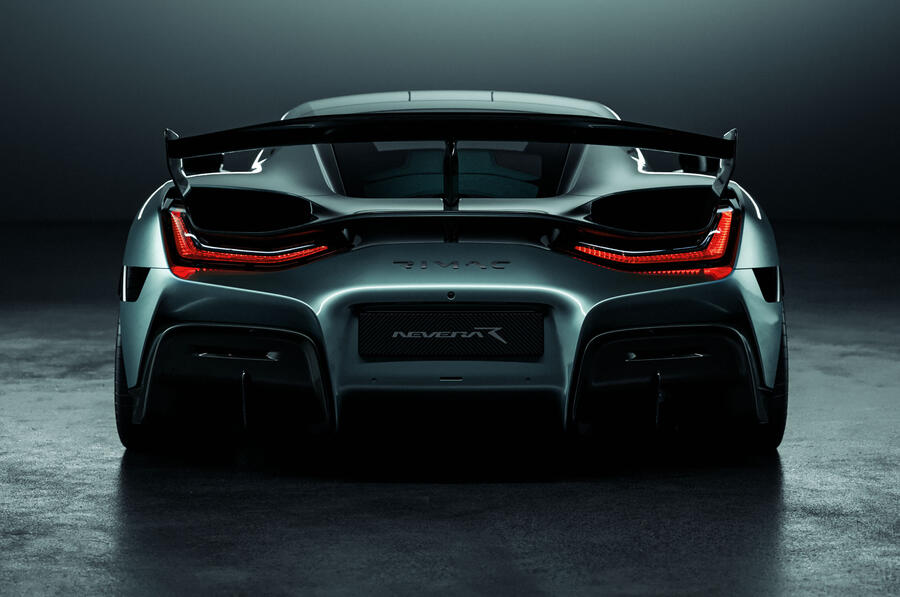
This is claimed to reduce maximum understeer by 10% and increase maximum lateral grip by 5%.
A new fixed rear wing, combined with a new large front diffuser, helps to boost maximum downforce by 15% and maximum aerodynamic efficiency by 10%, enabling sharper, faster cornering.
In line with its extra 190bhp, the Nevera R is fitted with carbon-ceramic EVO2 brakes. As a result of these measures, Rimac says the R “sets a new benchmark” for “driving excitement” on twisting B-roads.
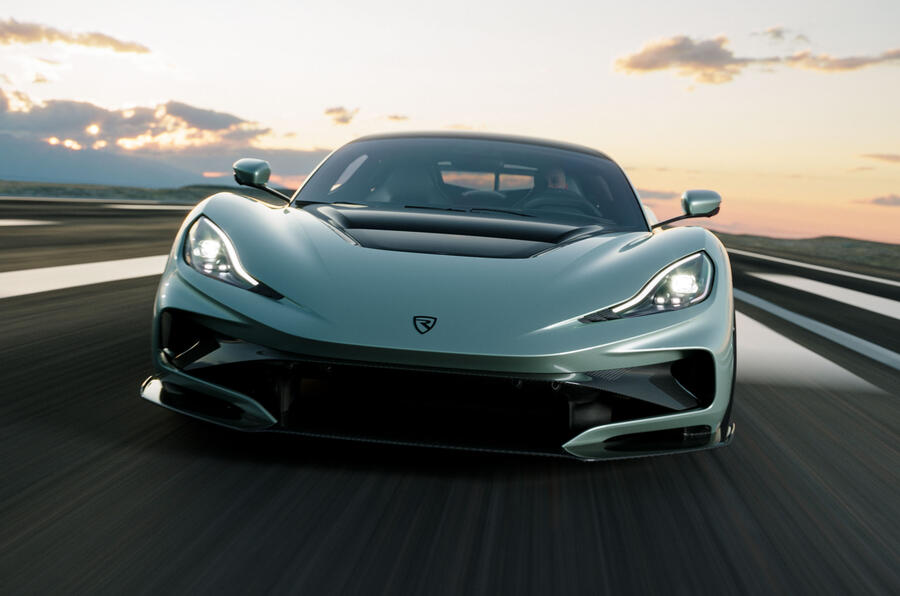
The R retains the same 120kWh battery as its sibling, which was good for as much as 250 miles in the standard Nevera. The Croatian brand has yet to confirm official range figures for the R.
Mate Rimac said: “We’re relentlessly tweaking to customers’ desires and many were looking for a car that really emphasised the Nevera’s cornering ability, using all the advanced technology on board.
“We responded with the Nevera R: all the DNA of the record-breaking Nevera, but lighter, faster and more focused.”
Launched exclusively in Nebula green, the R costs £1.97 million before personalisations – of which there are hundreds of options – are added. The standard Nevera is priced at £1.72m.
Unveiling the Muncie M22 Rock Crusher: Strengths, Weaknesses, and Legendary Status
Lexus Unveils V8 Supercar to Challenge Performance Legends with Hybrid Power
 Supercar will be made to homologate the firm's GT3 racer and is expected to weigh around 1300kg
A new V8 Lexus supercar that will rival the likes of the Aston Martin Vantage and Mercedes-AMG GT has been officially shown for the first time.
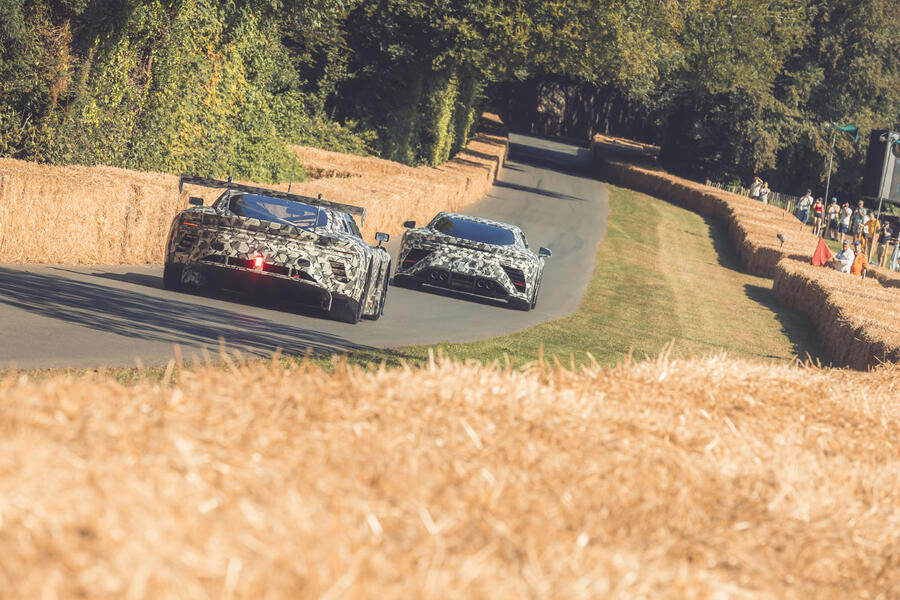
The GT Concept is the homologated variant of the incoming GT3 GR hardcore racer – itself revealed in concept form in 2022 – and both took to the hillclimb at Goodwood’s Festival of Speed.
The road-going GT3 GR – spotted by spy photographers over the past few months – is likely to wear a Lexus badge, rather than a Toyota one, in keeping with the premium brand’s history of large-engined sports cars, including the LFA, LC 500 and RC F.
As such, it is thought to preview what could be the spiritual successor to the acclaimed LFA – and may take the LFR name.
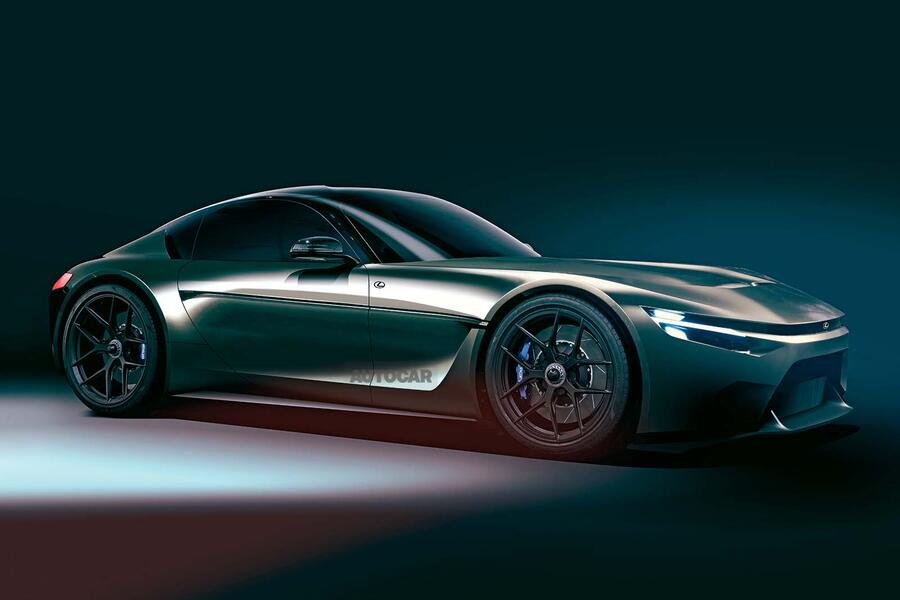
A production version of the GT Concept (previewed below by Autocar) is likely to hit showrooms at the end of 2026 and will be created because FIA homologation rules dictate that any GT3 racer shares its basic body design with a related road car. Aston Martin, BMW, Ferrari, Ford, Lamborghini, Lexus, McLaren, Mercedes-AMG and Porsche all currently sell GT3 customer cars.
Toyota has previously said it will continue “commercialising motorsports cars rather than simply adapting production vehicles for use in motorsports”, as it did with the rally-honed GR Yaris hot hatchback.
Running up the Goodwood hill, the soundtrack of the GT3 prototype - with a huge rear wing - is unmistakably that of a highly strung V8, but the quieter road car mule suggests it will add some type of hybrid assistance, most likely to meet ever-stringent emission regulations.
Currently, no GR models use a hybrid powertrain, but the performance division is extensively testing the technology. Speaking to Autocar last year, Hiroyuki Yamada, a GR engineer working on the project, said: “We can use hybrid for future cars. We will use it in our motorsport activities in the future, because of emissions.
“We will apply [this technology] to both motorsport and passenger [car] engines. In the future, we want a more fuel-efficient engine [for GR cars].”
The plan to fit GR models with hybrid power has been long mooted by Toyota. In 2023, chief technology officer Hiroki Nakajima told Autocar: “Hybrid systems are always a good solution for environmental cars, not just for passenger cars but for sporty cars as well.”
No specifications of the road car have been released yet but the race car will produce around 500-600bhp and weigh no more than 1300kg, in line with GT3 regulations. With the addition of a hybrid system, the road car is expected to produce closer to 700bhp as it vies with with the recently revealed 671bhp Aston Martin Vantage S.
Gazoo Racing boss Masahito Watanabe recently told Autocar that Toyota is pursuing a “multi-pathway” approach for sports cars, rather than investing in all-out electrification. He said: “We still think the internal combustion engine has some potential and, as we do so, we will of course be trying to comply with all the applicable rules according to the regions in each country.
“But we don’t want to give up. It’s not over just yet, because if you look at the internal combustion engine, there’s still hydrogen combustion that can be a part of that zero-emission line-up. So I think that’s going to continue.”
Lexus has retired its RC and LC coupés in Europe and hasn’t officially commented on plans for any replacements, although the outlandish Electrified Sport concept that it revealed in 2021 emphasises its continued commitment to performance cars.
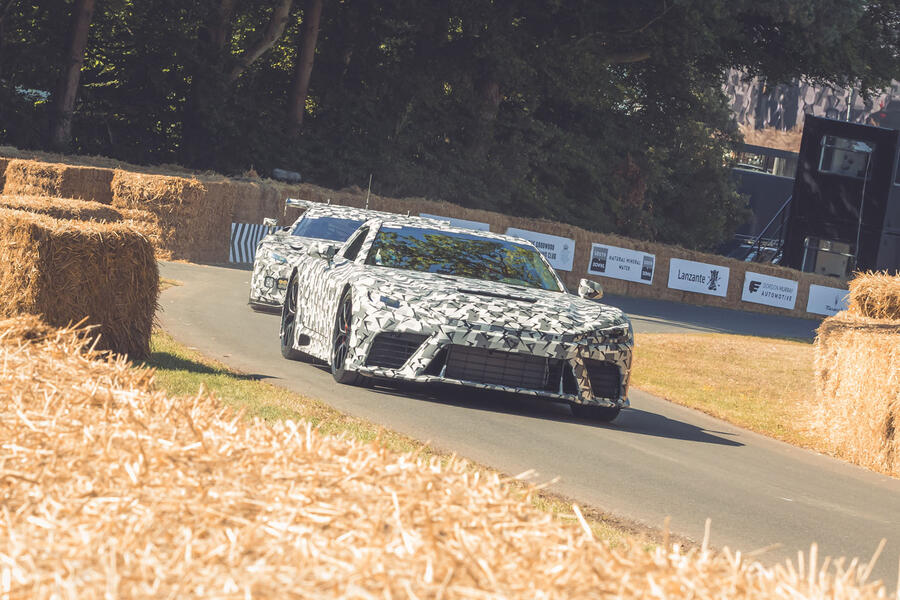
That concept, which is due to reach production by the end of the decade, is electric rather than V8-powered. But it has been confirmed to share its carbonfibre monocoque underpinnings with Toyota’s GR GT3 concept and has a similar cab-rearward silhouette, which suggests the possibility for Lexus to offer two closely related supercars – based on the same chassis but using totally different powertrains – within the next five years.

Understanding Modern Car Safety Features and How They Protect You
Honda Prelude Makes a Bold Comeback with Advanced Hybrid Power and Civic-Inspired Innovation
 Honda Prelude returns with an interesting hybrid system and Civic-based tech The Honda Prelude is back, and tested here in a prototype form on a UK circuit only, and for a few minutes only, mainly as a way to get us used to its new hybrid drivetrain, which largely uses the engine as a generator for an electric motor rather than to drive the wheels - a bit like in the Civic on which it's based, but supposedly more engaging. Lots to tell you about there. So here goes...