
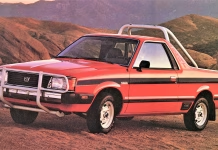
How a Quirky Pickup Truck Name Helped Subaru Outsmart Import Taxes
Maserati MCPura Unveiled: Pure Power and Fresh Design for the V6 Supercar
 V6 supercar is rebranded and lightly restyled as part of a mid-life facelift
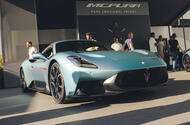
The Maserati MC20 supercar has a new look and a new name: MCPura.
The Modena firm has subtly revised the design of its five-year-old V6 flagship to keep it up to date with newer rivals like the McLaren Artura, and range-mates including the Grecale and Granturismo.
Revealed at the Goodwood Festival of Speed, the supercar has a new badge that reflects its 'pure' character, according to Maserati. The company said: "We have achieved energy in its purest form: pure speed, pure luxury and pure Italian passion."
While the Ferrari 296 and McLaren Artura use their V6 engines as part of a plug-in hybrid system, the MCPura remains a pure-combustion proposition, with its 3.0-litre Nettuno engine still sending 621bhp and 531lb ft to the rear axle through a Tremec eight-speed dual-clutch gearbox.
Maserati pegs the 0-62mph time at 2.9sec and says it will go from rest to 186mph in just 8.8sec.
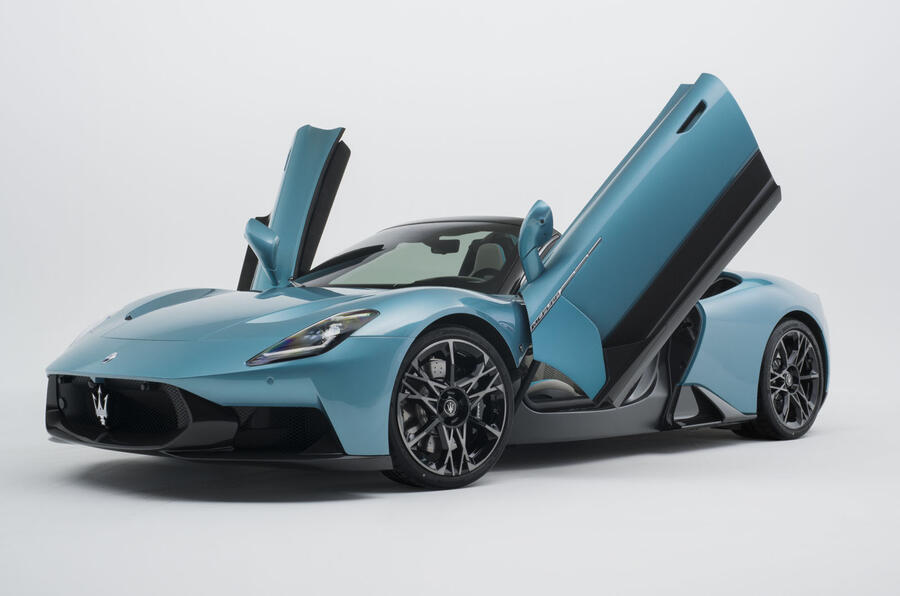
There are no significant mechanical changes, but the MCPura has a new front end with a reshaped grille and diffuser modelled on the hardcore MCXtrema track car. A cleaner diffuser design at the rear is in keeping with the model's broadly understated styling – an attribute that, designer Klaus Busse says, has been at the heart of the MC20's appeal
"Its design is not decorative," he said. "It's purposeful. Every line, every element, serves aerodynamic efficiency, cooling and performance - wrapped in elegant restraint."
He added: "This is purity realised."
Meanwhile, there is a new twin-spoke wheel design reminiscent of those fitted to the 1953 Maserati A6 GCS, and new colour options including the flagship Aqua Rainbow - a triple-layer blue-green that changes hue according to light.
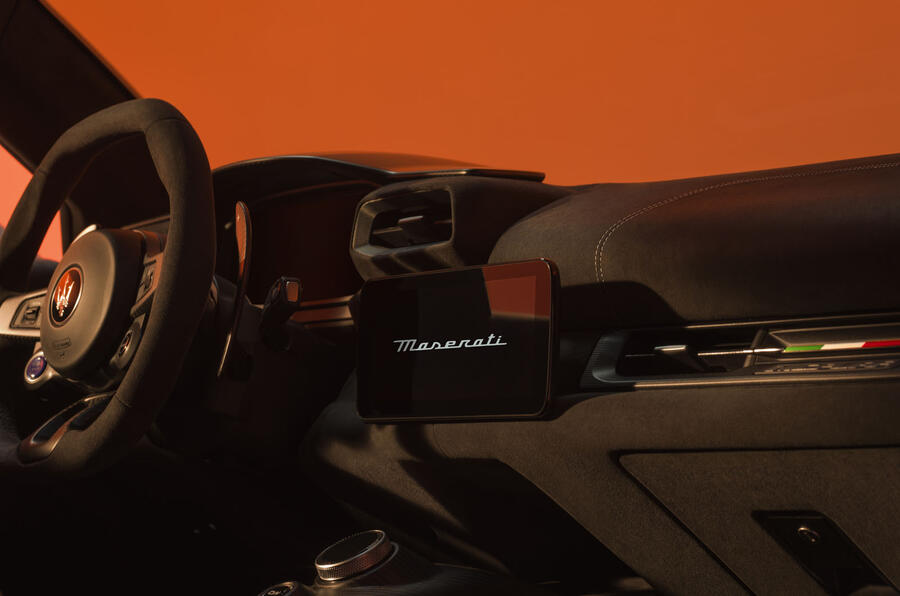
There are also subtle updates to the cabin, which now makes much more liberal use of Alcantara and features a new steering wheel inspired by that used in the MC20 GT2 racer - with a flat top and bottom, and the option of LED gearshift indicators.
Both the fixed-roof coupé and Cielo convertible have been revealed ahead of production beginning in September for customer handovers the following month.
Maserati says the MCPura will not be limited in production but emphasises that it will be built to order, with a high level of personalisation meaning no two examples are likely to be the same.
The company will confirm prices nearer to the launch, but the MCPura will command a premium over the previous car, which started from around £230,000.

Top 5 Cars with the Longest Time on Dealer Lots in Early 2025
Maserati Boosts Electric Grecale and Granturismo with Extended Range Upgrades
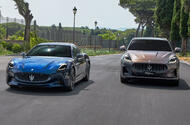 With MC20 and Quattroporte EVs on the back burner, Maserati shifts its focus to improving existing electric cars
Maserati will launch extended-range versions of its electric Grecale crossover and Granturismo sports car later this year as part of a push to keep developing and improving its EV line-up.
The Italian firm launched its first two electric cars in 2024, offering EV power in those model lines as an alternative to mild-hybrid and pure-petrol ICE options. It was due to launch an electric Quattroporte this year but delayed that car until later this decade and now says improving its existing EVs and increasing uptake is the priority over launching new models.
Speaking at the unveiling of the new MCPura – the renamed and lightly restyled replacement for the V6-powered MC20 supercar – Maserati engineering boss Davide Danesin said the firm has adjusted its strategy in light of declining demand for premium electric cars and will continue to invest in its existing EVs rather than branching out into new segments.
He said: “Maserati has invested a lot in an electric roadmap in the past years and we produced two wonderful products: the Grecale Folgore and the Granturismo Folgore. Unfortunately, the acceptance from the market of BEV cars is low, so we are also affected, like all the other brands, by the low demand.
“But we developed great technologies in the past years for electrification and I think many of them are going to last. For example, this year, we are releasing the Grecale Folgore in an extended-range version, with additional kilometres of range, and we're going soon to do the same for the Granturismo. We are still developing our battery-electric vehicles to improve performance.”
He did not disclose any details about these extended-range EVs. The Grecale Folgore is currently offered with a 105kWh pack under the floor, giving an official range of 311 miles, while the electric Granturismo’s T-shaped battery has a usable capacity of 83kWh for an official 280 miles.
It remains to be seen whether Maserati will boost the capacity of these batteries to eke out more miles per charge, or whether the duo’s respective range figures will be extended by virtue of efficiency improvements elsewhere.
Danesin said Maserati will continue to update its electric cars to keep pace with rivals and new technologies: “Of course, on the other side, we need to follow the roadmap of the technology. We know the technology is evolving and we are evolving.
"We are going to follow the roadmap of cell evolution in the next years to continuously improve our products. Some other technologies that we developed on the current Folgore we are going to further refine and bring on. We are following our internal roadmap of continuous improvement.”
However, there are no plans to resurrect the cancelled MC20 Folgore project for the latest generation of the supercar, now called MCPura. Danesin said: "For the MC20, we took the decision already some time ago to stop the battery-electric version of it because of the situation of the market.
“We think the current propulsion we are selling on the MC20 is fulfilling perfectly the real request from the market. So I think that we will not go on with any electric roadmap [on the MCPura] for the next few years. Then about the future we will see."
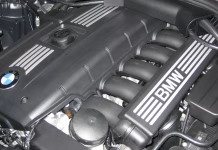
BMW N52 Engine Years to Avoid and Common Issues Explained
Lanzante 95-59 Unleashed: Three-Seat Supercar Redefines Lightweight Power and Iconic Design
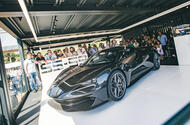 Limited-run, lightweight supercar produces a power-to-weight ratio of 700bhp per tonne
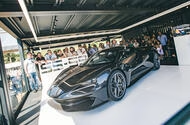
Performance specialist Lanzante has created an homage to the iconic McLaren F1 with its own three-seat supercar, which produces an uncompromising 700bhp per tonne.
Called the 95-59, the limited-run model is a tribute to the Lanzante-run #59 McLaren F1 GTR that won the 1995 Le Mans 24 Hours. The Petersfield-based firm's new three-seat supercar packs 850bhp and 649lb ft from a mid-mounted 4.0-litre twin-turbo V8.
The car is based on the McLaren-built Monocage carbonfibre chassis used by the P1, 720S and Senna, but it has been adapted by Lanzante to accommodate three seats.
Weight has been pared back to 1250kg, aided by the fitment of carbon body panels and, as part of the optional LM30 Pack, a host of weight-reducing features such as forged aluminium wheels, titanium tailpipes and gold-plated heat-shielding.
This gives the three-seater a power-to-weight ratio that is just 39bhp per tonne shy of the new 1183bhp Ferrari F80. It betters the original McLaren F1 by 158bhp per tonne.
The 95-59 sends its 850bhp to the rear wheels via a seven-speed sequential gearbox. An large active wing helps to keep the rear planted at speed and in corners.
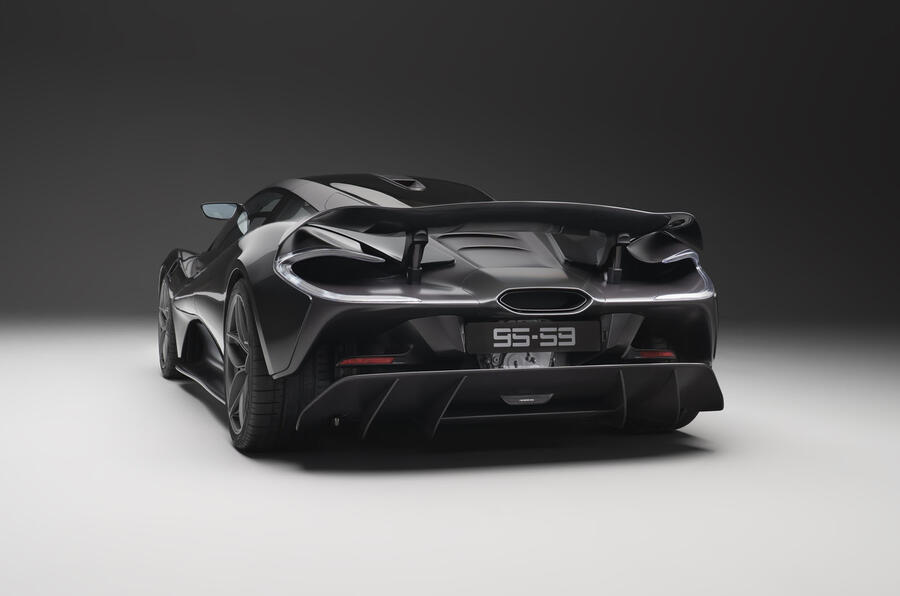
While full technical details have yet to be confirmed, the 95-59 is expected to hit 62mph from rest in around 2.5sec.
The supercar, which is making its world debut at this week’s Goodwood Festival of Speed, has been shaped by former McLaren designer Paul Howse.
The Briton oversaw the exterior design of the P1, 570S, 720S and Artura, and many McLaren-esque design elements are evident on the 95-59, especially at the rear.
Key to the design was controlling air flow to improve the aerodynamics, said Howse, which gives the car a “bullet-like” appearance from the side.
Howse said: “I like to think we have created something that is unlike anything else, building its own legacy.”
In keeping with its exclusive positioning, it has been fitted with dihedral doors, similar to those found on hypercars such as the Koenigsegg Jesko.
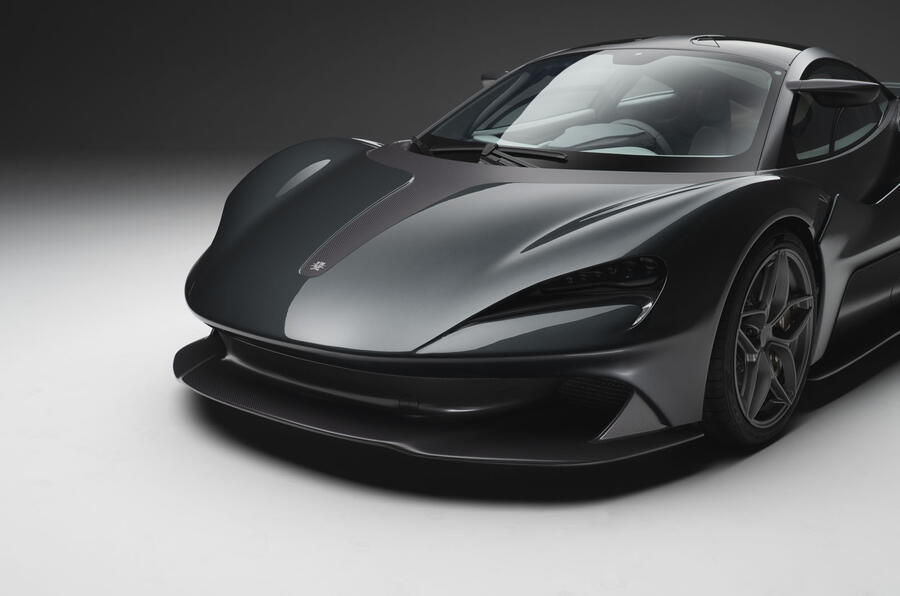
Inside, the centrally sited driver's seat is positioned in front of a cockpit layout that features physical buttons around and even above the steering wheel. The driver’s display shows only key information.
The two passenger seats are positioned either side of the driver's.
Founder Dean Lanzante said the car “is the result of everything I personally and we, as a business, have learned and experienced over three decades since winning Le Mans”.
The 95-59 is limited to 59 examples, each priced at £1.2 million (including UK VAT).
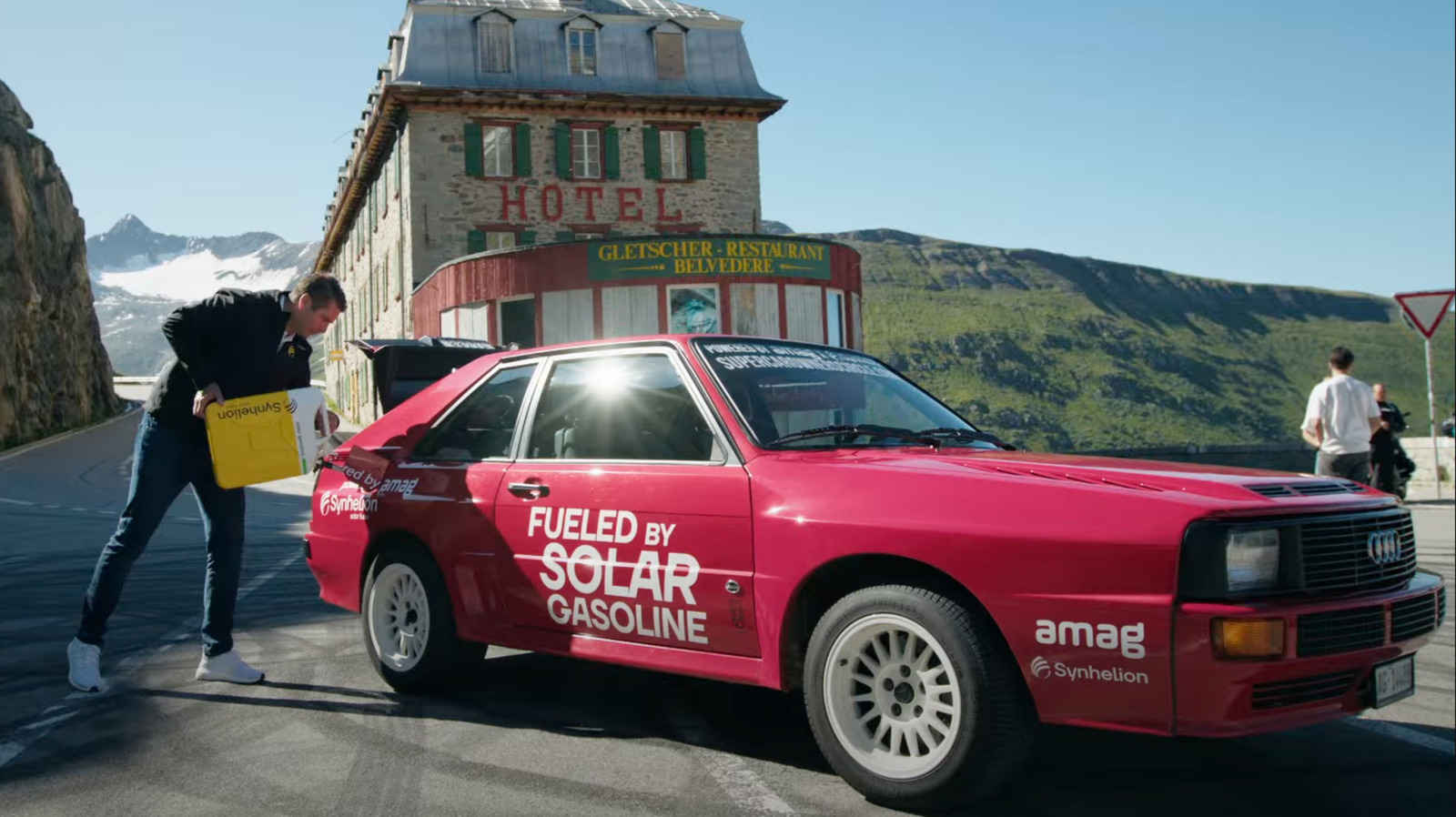
Turning Sunlight Into Fuel The Future of Solar-Powered Gasoline
Renault 5 Turbo 3E Electric Hyper Hatch Sells Out Until 2028 With Supercar Performance
Yellow, black and white livery takes inspiration from 1980s Renault 5 rally carsHalf the 1980 units of the wild 533bhp 'mini supercar' have been spoken for as Renault starts building prototypes
The extreme Renault 5 Turbo 3E is sold out until 2028, with just half the build run still to be allocated.
The 533bhp hyper-hatchback is an electric tribute to the original Renault 5 Turbo, with wild styling, a totally bespoke platform and supercar-baiting performance.
It is highly exclusive, with just 1980 units planned to be produced – a reference to the launch year of the original car – and the first 1000 cars have now been spoken for. Prices now start at £140k for the remaining cars, slightly inflated over the £135k launch price.
"Currently, we are globally at half of the total volume, so reservations are for delivery in 2028," project leader Michael Grosjean told Autocar as the 3E made its dynamic debut at the Goodwood Festival of Speed.
"It's sold out until 2028 - and there is still one and a half years of production that can be reserved."
The company has started building the first prototypes and is on course to begin customer deliveries next year, Grosjean said, adding that Renault's most expensive car yet has so far attracted a diverse range of buyers.
"We have various customers, but what is common to all is that they are all passionate about wild cars and sports cars. Some are owners of the original R5 Turbo, and they want to have the new one as well.
"Some have more cars – Alpines, Ferraris, Porsches - and they find that this car is different, exotic in the landscape."
The 3E is due to finish production in 2029, and Grosjean said there are not currently any plans to follow it up with similarly extreme limited editions but other models in the line-up could be celebrated in the same way.
Asked if, for example, the company could celebrate the heritage of the Renault 4 with a Dakar Rally-themed version of the new electric crossover, Grosjean said: "It's possible. It's not planned, but why not?"
The 5 Turbo 3E is loosely based on today's retro-styled Renault 5 electric supermini but with a bespoke platform, its own bodywork and a pair of in-wheel motors.
These combine to produce a claimed 3540 lb ft of wheel torque, although the torque transferred to the road is likely to be more like 10% of that figure.
The resulting performance is a 0-62mph time expected to take less than 3.5sec, 0-120mph in under 9.0sec and a track-only top speed of 168mph.
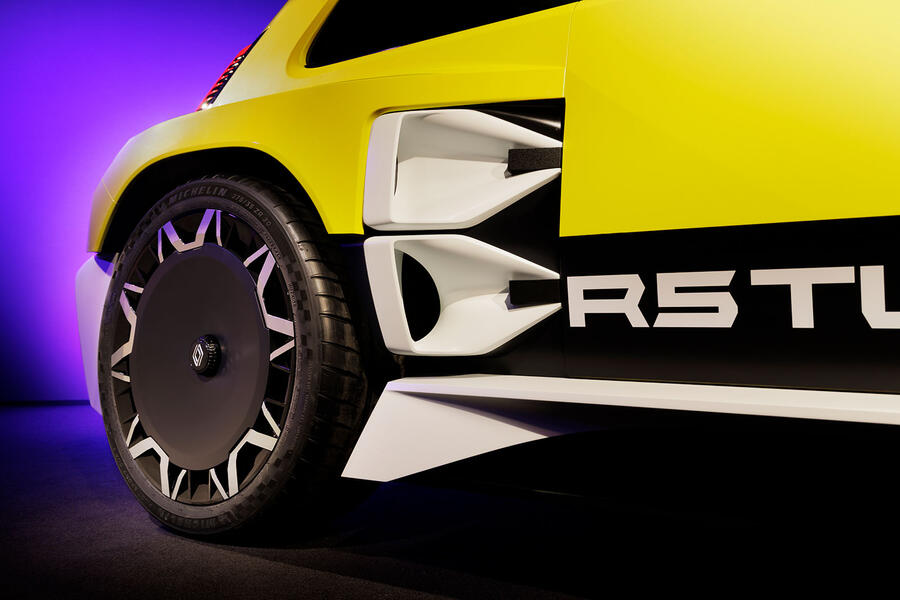
The in-wheel motors are said to deliver their power to the rear wheels more immediately than conventional ones, while enabling more precise control of each wheel and providing a "significant" weight and space saving at the axle.
The technology – which Autocar understands has been supplied by British specialist Protean Electric – removes the need for an electronic differential.
The motors draw their power from a 70kWh battery pack that is fitted in a way that optimises agility and offers "spectacular" drift capabilities, claims Renault. It even has a dedicated drift mode and a rally-style vertical handbrake.
The battery pack is good for a range of 250 miles, although Renault has admitted that it will last between 15 and 20 minutes when driven flat out on a track.
Given its track credentials, the thermal management of the battery is such that it can be driven at speeds of up to 168mph before being fast-charged at 350kW, enabling it to charge from 15% to 80% in 15 minutes.
Renault CEO Fabrice Cambolive said: "For me, it was very important to be able to have as extensive as possible coverage in terms of customer needs for the 5 - beginning with a very interesting price bracket but opening the adoption of this car to people who want extreme sensations.
"When you have such a car which is such fun to drive, why not push the boundaries?"
The all-aluminium platform was developed by Renault’s sporting sibling brand, Alpine, and has been designed to achieve no compromise in performance, lightness, agility or efficiency. It aims to be "in line with supercar standards".
The platform sits under a bespoke body made of lightweight materials, with only the mirror, door handle and tail-lights carried over from the standard Renault 5. Its carbon-composite structure means it has a kerb weight of around 1450kg, which is just 1kg more than the Renault 5 despite its larger battery pack, extra performance and additional motor.
It has been designed to look like a supercar while referencing the original 5 Turbo and 5 Turbo 2, with aero-optimised front and rear bumpers as well as a front splitter and a large air outlet on the bonnet to maximise downforce. It also has side scoops to funnel air under the rear lights and make it as slippery as possible, along with rear wing extensions, large intakes to cool the motors, 20in alloys and a squat overall appearance.
The menacing appearance has been achieved thanks to a change in dimensions. It's 158mm longer, 256mm wider and 118mm taller than the standard 5, with the windscreen moved back and the wheelbase extended to help it achieve "the length of a city car for the width of a supercar".
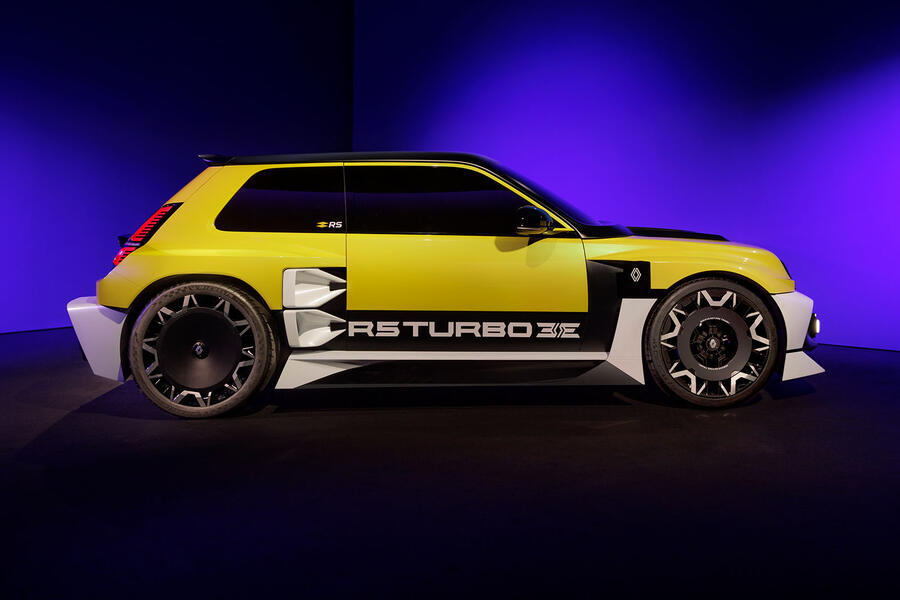
Talking about the challenges faced when designing the car, Renault Group design boss Laurens van den Acker said: "The big enemy is weight because of the battery. This car is 1450kg and we're trying to get it lower knowing that an Alpine A110 in aluminium is 1000-plus kilos. This is the biggest drawback: weight and price. Weight is a never-ending battle."
When asked about the subsequent learning curves during development, van den Acker said: "I think we've learned that conceptually it's possible to put our dreams on the road. I've had a long career in design and we've stood there in front of a concept car and said: 'This gives you an impression of the future direction, but it won't be like this, because A, B, C, D, E'. The biggest eye-opener to us is how close to the concept we can get if the company is behind it."
Inside are a pair of bucket seats upholstered in Alcantara, hand-woven tartan cloth on the dashboard, six-point harnesses, a raft of weight-reducing carbon and the same 10.1in instrument display and 10.25in infotainment touchscreen as in the standard 5, although in this car the instrument display will have its own, 1980s-inspired look. The driver's seat will be upholstered in its own colour.
Cambolive previously suggested to Autocar that there could be more performance models in the pipeline for Renault after this. "I prefer to speak about Turbo 3E, and after that to see what we can do on top of that if Turbo 3E is a success," he said. "Let's build our 'sportivity' step by step."
Porsche 911 Sees Rare Sales Dip Amid Record-Breaking Year
Why the Smart Roadster Is the Quirky Summer Classic You Can Afford
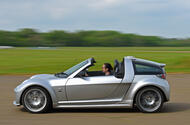 The last 20 years have turned the Smart Roadster from annoying and expensive to quirky and cheap
The pauses didn’t help, nor not knowing quite when they’d come. And there was more than one kind of pause to be experienced aboard a Smart Roadster.
The most obvious, and persistent, was the between-gears interruption generated by the automated manual transmission. The Roadster’s gearbox was not an especially speedy shuffler of clustered cogs and its six gears meant that, unless cruising, you’d experience perpetual ascents and descents of its generous ratio set. And if you left the ’box to think about its own shifting, you’d find that you were never quite ready for the moment when it chose to cut the power supply from the mid-mounted triple, even with familiarity.
There were dynamic hesitations too. This was an exceptionally light, mid-engined sports car that ought to have changed direction like a dragonfly. Spear a bend, and in the first instant you’d think it was going to do just that, the front wheels eagerly steering a new trajectory. But then the Smart’s athleticism would start to evaporate. You couldn’t call it understeer, but if you were expecting Lotus Elise balletics, well, you’d have to buy the real thing.
There was more, besides – the Roadster’s traction control dropping the curtain on any on-the-limit expeditions before they really started. It looked like a sports car, and an exciting one at that, but the Roadster’s cornerus interruptus methods protected its occupants from almost all kinds of on-the-road excitements. Still, after Mercedes’ adventures with toppling A-Classes and Smart Fortwos accelerating hard enough to land flat on their backs, you could understand the caution.
In plenty of other ways, though, the Roadster was the result of some admirably brave decisions. The bold Smart project wobbled for more than stability reasons, the two-seat city car falling massively short of sales expectations following its (delayed) 1998 debut, but that didn’t stop the Roadster project going ahead. Indeed, this dinky little device promised to deal with Smart’s mild glamour deficit.
It was also admirably true to the Fortwo’s construction concept. There was the so-called Tridion safety cell, this the pressed steel inner tub that provided a structure from which to hang the suspension, powertrain and a colourful collection of composite body panels. The engine was the same lively 698cc turbo triple that powered the Fortwo, its 80bhp impressive for one so small, and less burdened than it might have been with only 815kg to shove along.
The Roadster benefited from Smart’s appealingly distinct cabin furnishing schemes too, chunks of its dashboard sheathed with non-reflective cloth. Much of it was grey, but there were multiple shades of the stuff and you could give the interior ambience a cheerfully spectacular lift by specifying orange cloth. And like the Fortwo’s, the Roadster’s instrument pods were so shapely that you wanted to pick them up.
In fact, the entire car was so shapely that you wanted to pick one up and take it home. Especially if it was the oddly named Roadster Coupé version, with its pertly curving fastback rump. The standard Roadster, this sadly the more common version, had a flat rear deck and a conventional boot, and looked more pick-up than convertible because it had B-pillars and a targa roof, like the Coupé. This electric roll-back fabric slice instantly opened the cabin to the sky, and if you stirred yourself, you could get out, remove the side panels, lock them into their under-bonnet slots and generate a real, windows-down breeze.
So with all this temptation, how to overcome those disappointing pauses? For the transmission, do your shifting manually. Then you’ll know when the pause is coming, just as you do in a car with a clutch. An optional sports wheel with paddles eases the process, and you can mitigate the jerks with some fancy (right) footwork.
The dulled steering? There’s less you can do about that, but you soon adapt, and you’ll certainly enjoy the Roadster’s low centre of gravity, unwillingness to roll and grippy grip. Which, up to a point, gets you around the ESP interference.
Above all – and your reporter knows this, because his wife has one – this Smart is still great fun. It’s surprisingly brisk, comfortable, reasonably practical and not too noisy, the sounds emanating from behind in any case throbbily intriguing. Despite its flaws, the concept car-ish Roadster is sure to become a classic, especially as there aren’t huge numbers. Production ended after only three years and 43,400 units, sales undermined by the aforementioned issues, high pricing (for its size if not sophistication) and warranty costs that were alleged to reach €3000 per car. Water leaks were one reason.
Right now, around £2000 nets you the cheapest decent Roadster, which isn’t much for the resulting entertainment. And at the top end, £6000 will get you a low-mileage, hard-riding 100bhp Brabus, or a mint 80bhp survivor, a price that confirms their creeping desirability.