
Unleashing Speed: Nevera R Sets New Records With Blazing Acceleration and Top Speed
Renault 5 Turbo 3E Electrifies with Retro Style and Supercar Power—Sold Out Until 2028
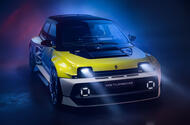
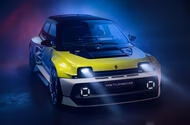
Yellow, black and white livery takes inspiration from 1980s Renault 5 rally carsHalf the 1980 units of wild 533bhp 'mini supercar' have been spoken for as Renault starts building prototypes
The extreme Renault 5 Turbo 3E is sold out until 2028, with just half the build run still to be allocated.
The 533bhp, £135k hyper hatchback is an electric tribute to the original Renault 5 Turbo, with wild styling, a totally bespoke platform and supercar-baiting performance.
It is highly exclusive, with just 1980 units planned to be produced – a reference to the launch year of the original car – and has become more exclusive still with the first 1000 cars now spoken for.
"Currently, we are globally at half of the total volume, so reservations are for delivery in 2028," project leader Michael Grosjean told Autocar as the 3E made its dynamic debut at the Goodwood Festival of Speed.
"It's sold out until 2028 - and there is still one and a half years of production that can be reserved."
The company has started building the first prototypes and is on track to begin customer deliveries next year, Grosjean said, adding that Renault's most expensive car yet has so far attracted a diverse range of buyers.
"We have various customers, but what is common to all is that they are all passionate about wild cars and sports cars. Some are owners of the original R5 Turbo, and they want to have the new one as well.
"Some have more cars: Alpines, Ferraris, Porsches - and they find that this car is different, exotic in the landscape."
The 3E is due to finish production in 2029, and Grosjean said there were not currently any plans to follow it up with similarly extreme limited editions, but said that other models in the line-up could be celebrated in the same way.
Asked if, for example, the company could celebrate the heritage of the Renault 4 with a Dakar rally-themed version of the new electric crossover, Grosjean said: "It's possible. It's not planned, but why not?"
The 5 Turbo 3E is loosely based on today's retro-styled Renault 5 electric supermini but with a bespoke platform, its own bodywork and a pair of in-wheel motors.
These combine to produce a claimed 3540 lb ft of wheel torque, although the torque transferred to the road is likely to be more like 10% of that figure.
The resulting performance is a 0-62mph time expected to take less than 3.5sec, 0-120mph in under 9.0sec and a track-only top speed of 168mph.
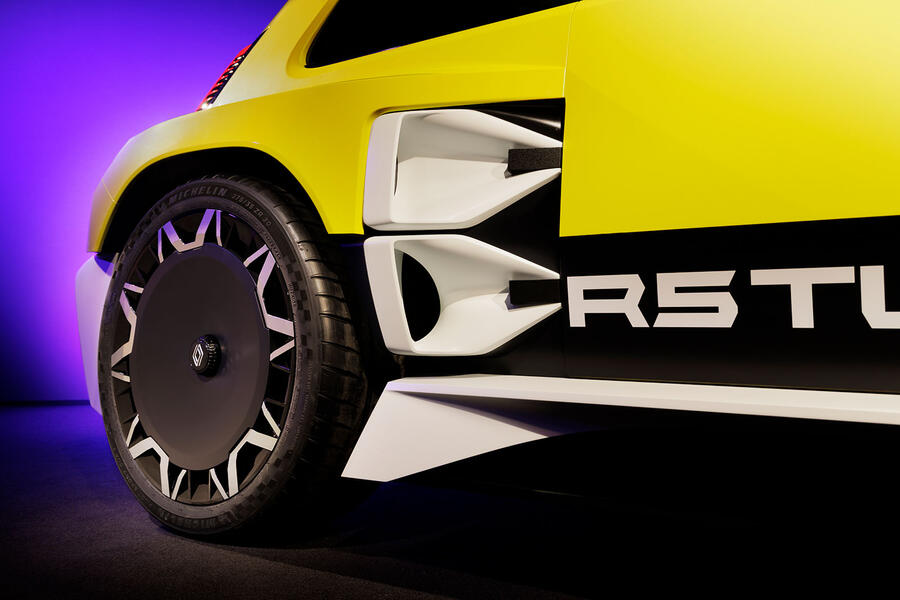
The in-wheel motors are said to deliver their power to the rear wheels more immediately than conventional ones, while enabling more precise control of each wheel and providing a "significant" weight and space saving at the axle.
The technology – which Autocar understands has been supplied by British specialist Protean Electric – removes the need for an electronic differential.
The motors draw their power from a 70kWh battery pack that is fitted in a way that optimises agility and offers "spectacular" drift capabilities, claims Renault. It even has a dedicated drift mode and a rally-style vertical handbrake.
The battery pack is good for a range of 250 miles, although Renault has admitted that it will last between 15 and 20 minutes when driven flat-out on a track.
Given its track credentials, the thermal management of the battery is such that it can be driven at speeds of up to 168mph before being fast-charged at 350kW, enabling it to charge from 15% to 80% in 15 minutes.
Renault CEO Fabrice Cambolive said: "For me, it was very important to be able to have as extensive as possible coverage in terms of customer needs for the 5 - beginning with a very interesting price bracket but opening the adoption of this car to people who want extreme sensations.
"When you have such a car which is such fun to drive, why not push the boundaries?"
The all-aluminium platform was developed by Renault’s sporting sister brand Alpine and has been designed to achieve no compromise in performance, lightness, agility or efficiency. It aims to be "in line with supercar standards".
The platform sits under a bespoke body made of lightweight materials, with only the mirror, door handle and taillights carried over from the standard Renault 5. Its carbon composite structure means it has a kerb weight of around 1450kg, which is just 1kg more than the Renault 5 despite its larger battery pack, extra performance and additional motor.
It has been designed to look like a supercar while referencing the original 5 Turbo and 5 Turbo 2, with aero-optimised front and rear bumpers as well as a front splitter and a large air outlet on the bonnet to maximise downforce. It also has side scoops to funnel air under the rear lights and make it as slippery as possible, along with rear wing extensions, large intakes to cool the motors, 20in alloys and a squat overall appearance.
The menacing appearance has been achieved thanks to a change in dimensions. It's 158mm longer, 256mm wider and 118mm taller than the standard 5, with the windscreen moved back and the wheelbase extended to help it achieve "the length of a city car for the width of a supercar".
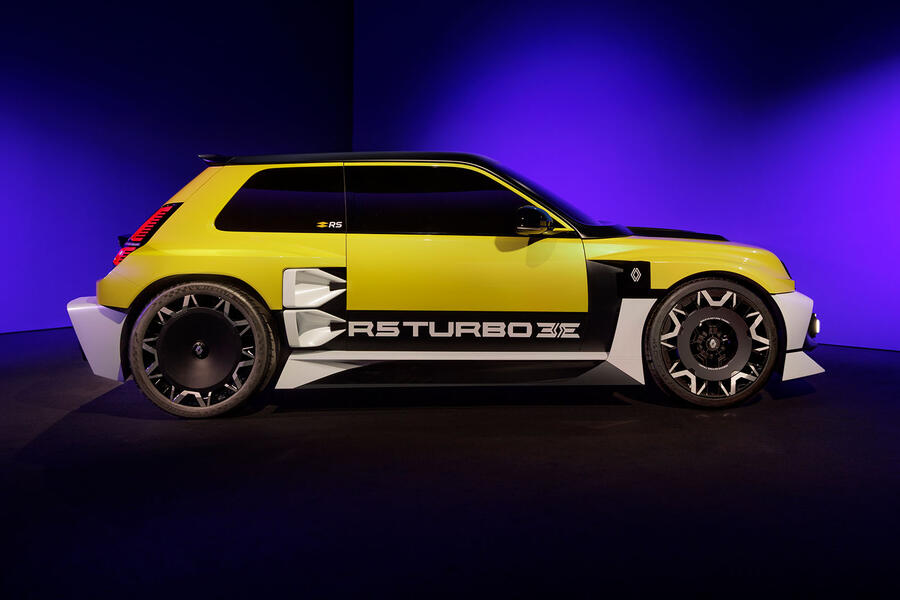
Talking about the challenges faced when designing the car, van den Acker said: "The big enemy is weight because of the battery. This car is 1450kg and we're trying to get it lower knowing that an Alpine A110 in aluminium is 1000-plus kilos. This is the biggest drawback: weight and price. Weight is a never-ending battle."
When asked about the subsequent learning curves during development, van den Acker said: "I think we've learned that conceptually it's possible to put our dreams on the road. I've had a long career in design and we've stood there in front of a concept car and said 'this gives you an impression of the future direction, but it won't be like this, because A, B, C, D, F'. The biggest eye-opener to us is how close to the concept we can get if the company is behind it."
Inside are a pair of bucket seats upholstered in Alcantara, hand-woven tartan cloth on the dashboard, six-point harnesses, a raft of weight-reducing carbon and the same 10.1in instrument display and 10.25in infotainment touchscreen from the standard 5, although in this the instrument display will have its own, 1980s-inspired look. The driver's seat will be upholstered in its own colour.
Cambolive previously suggested to Autocar that there could be more performance models in the pipeline for Renault after this. "I prefer to speak about Turbo 3E, and after that to see what we can do on top of that if Turbo 3E is a success," he said. "Let's build our 'sportivity' step by step."
Why Dodge Stuck With Pushrod V8 Engines Over Modern DOHC Designs

Corvette E-Ray Hybrid Storms UK with Supercar Speed and Electric Power
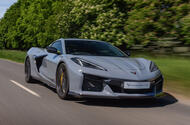 Right-hand-drive E-Ray can do the 0-62mph dash in just 2.9sec
The 634bhp hybrid Corvette E-Ray has been launched in the UK for £153,440 in the latest phase of General Motors' plan to revive its business here.
Right-hand-drive E-Rays will be sold in a broader range of dealers than the Stingray and Z06 models currently are. GM will start with the Arnold Clark franchises in Manchester and Glasgow, Lumen Automotive in Shrewsbury and the Cambria Group in Birmingham, with more to follow in due course.
This will prime GM for the imminent relaunch of Cadillac, which is set to bring the Optiq and Lyriq electric SUVs to the UK, following their arrival in continental Europe.
It also gives the industry titan an infrastructure for the rollout of more right-hand-drive Corvette derivatives or mainstream models from the wider Chevrolet brand, such as the Equinox and Blazer EVs – though the company has yet to hint at any such plans.
In the meantime, the E-Ray will be GM's flagship model in the UK.
It packs a 6.2-litre naturally aspirated V8 and a single front-mounted electric motor. The mid-mounted engine sends 475bhp to the rear wheels while the 159bhp e-motor powers the front axle, giving a combined 634bhp and four-wheel drive.
This allows the E-Ray to cover 0-62mph in 2.9sec, matching the vastly more expensive Ferrari 296 GTB and Maserati MC20.
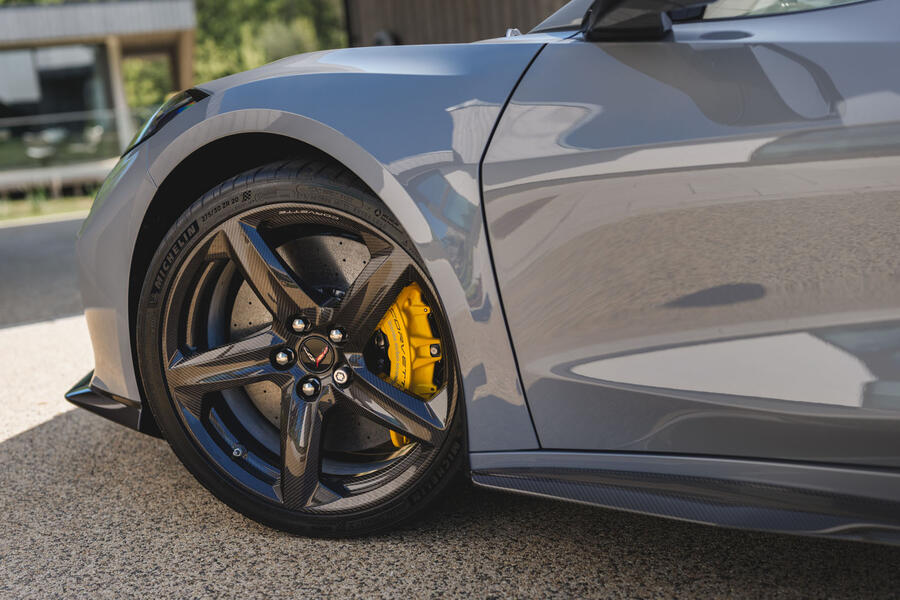
A 1.9kWh battery pack is nestled between the Corvette’s front seats, enabling it to drive under electric power alone at up to 44mph and for up to four miles.
When the battery is depleted, the E-Ray can still hit 62mph in 3.4sec.
The hybrid also gets Brembo carbon-ceramic brake discs and magnetorheological dampers as standard and is 91mm wider than the Stingray.
The E-Ray can be seen at this week’s Goodwood Festival of Speed, where it is making its UK debut. Customer deliveries will begin in September.
How Your Driving Data Could Impact Your Insurance Rates
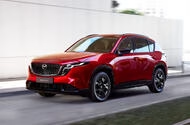
2025 Mazda CX-5 Unveiled with More Space, Smarter Tech, and Family-Friendly Upgrades
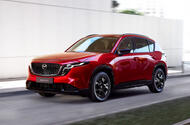 Third-generation family SUV has been developed with young families in mind
The Mazda CX-5 has grown for its third generation, bringing more space and new family-focused elements and introducing an array of features that are set to be rolled out across the rest of the Japanese firm’s line-up.
The CX-5 remains a chunky SUV aimed squarely at young families, but Mazda has tweaked the design and slightly increased the size of its self-branded “most important global model” (with more than 4.7 million examples shipping since its 2011 launch) in a bid to further widen the SUV's appeal and make it an easier vehicle to live with.
The new CX-5 is 4690mm long, 1860mm wide and 1695mm tall, making it marginally larger than the car it replaces – and closing the size gap between the CX-5 and the premium CX-60 in the line-up. But it's the 115mm increase in wheelbase that is said to vastly improve the car’s roominess, especially in the back, end where shoulder, leg and head room have all increased.
That usability push can also be found in clever packaging tweaks. The rear doors have been rehinged so they can now be opened wider as part of a focus on making it easier to fit child car seats and buckle in the kids, while the boot lid lifts higher and the loading lip is lower so bigger and heavier items are easier to get in and out. Boot space, too, has increased by 61 litres to 583 litres – a change that takes the CX-5 above popular rivals such as the Honda CR-V (579 litres) and much closer to others such as the new Kia Sportage (587 litres).
One of its biggest introductions is in the front, where the CX-5 features a new, 15.6in Google-powered infotainment touchscreen (a smaller 12.9inch screen is used in base trims). Most notably, the new set-up means Mazda has done away with physical climate controls and removed the long-standing selection dial.
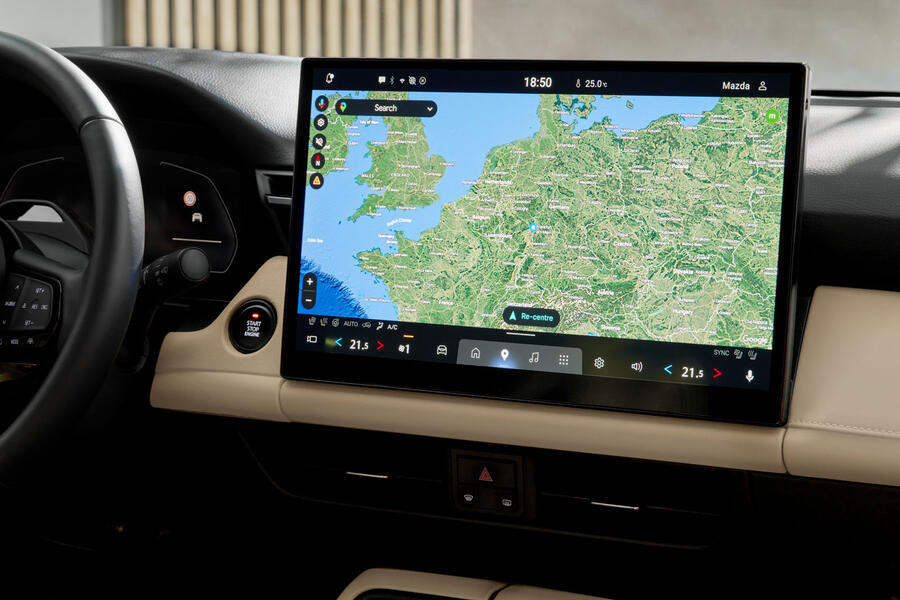
This change was requested by owners, technology research boss Christian Schultze said, and is a “big improvement” over what Mazda currently offers.
“The dial offered limited functionality,” he said. “It was good for volume and simple functions but was harder when more complex operations were called for.”
He added that customisation – for example, the ability to add widgets to the homescreen – was another reason for the change and another key request by owners. “Customers are crazy for that,” said Schultze.
The first Mazda screen to be powered by Google – the system is already used by Renault, Volvo and Polestar among others – features maps and apps similar to those users will find on Pixel phones, and the screen can run wireless Android Auto and Apple CarPlay. This is paired with a 10.25in driver’s display that can also run some Google apps, such as Maps.
When parked, the system can run media apps such as Netflix and Amazon Prime. “So people in the back can also benefit from the new screen,” said CX-5 project manager Moritz Oswald.
Elsewhere, the removal of the dial has freed up space on the centre console, meaning a wireless charging pad has been fitted. This new interior set-up, which European design director Jo Stenuit confirmed will be rolled out across the rest of the range in due course, also features a new steering wheel adorned with Mazda’s fresh typeface branding (which can also be found at the rear).
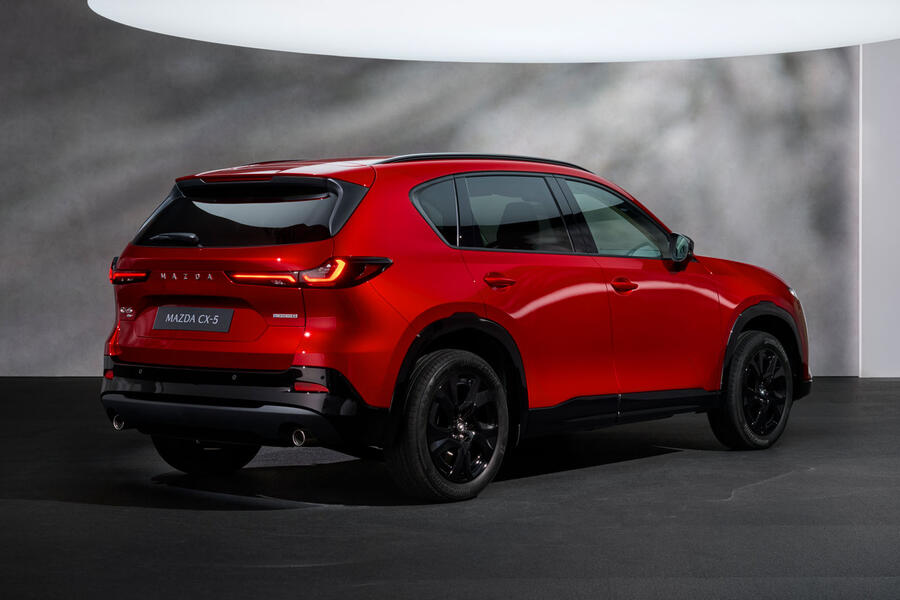
The new CX-5 builds on Mazda’s Kodo design language that began with the second-generation SUV in 2012. The new CX-5 has a noticeably longer nose, which gives it “a much better stance”, according to Stanuit.
It also draws inspiration from 2023’s SP concept, with angled arches to push the body shape towards the wheels “to make it look a lot more stable”.
Power across the range comes from Mazda’s 139bhp 2.5-litre e-Skyactiv G hybridised petrol engine – as used by the Mazda 3 and CX-30. This replaces the previous car’s 2.0-litre and 2.5-litre petrol and 2.2-litre diesel options. As before, an all-wheel drive option will be available.
Mazda has also tweaked the CX-5’s steering and suspension to reduce tiredness on longer drives.
The new CX-5 will be priced from around £30,000, similar to the previous car.
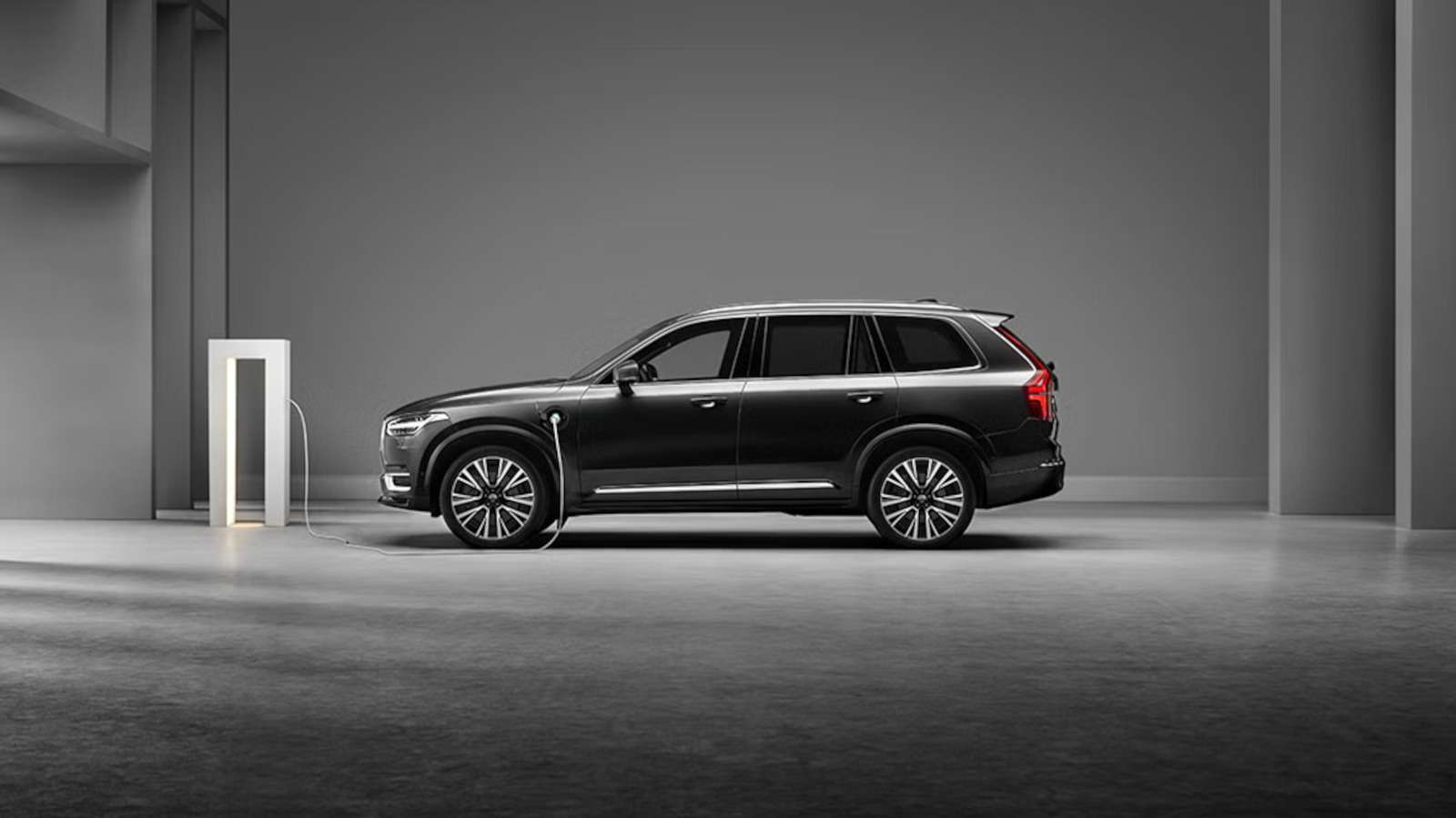
Inside Volvo’s Process of Transforming SUVs into Armored Safe Havens
Why Affordable Hot Hatchbacks Are Disappearing and Why It Matters for Car Lovers
 The hot hatches still on sale today cost from £40k – but most are being taken off sale
It’s taking a while, like closing an ill-fitting lid on a plastic kitchen container. But another corner on the ‘affordable hot hatch’ tub is clicking shut, and, unlike sometimes previously, I don’t think a corner on the other side is about to pop back open again in defiance.
Which is a slightly clumsy way of avoiding the ‘nail in the coffin’ cliché. Also I think it’s vanishingly rare (I could be wrong) that a coffin lid’s opposite corner creeps open again when someone is hammering down the opposite side.
Anyway, what I’m saying is that Ford is preparing to unalive the Focus ST. Production ends in November, and it has been removed from price lists in the UK because all the remaining ones are accounted for.
And this time I don’t think anyone is about to launch a new affordable petrol hot hatchback you could choose to consider instead. Although do go ahead and prove me wrong, somebody, please.
It seems like a very long time, partly because it is, since my mate Jason, when he was a young man, bought a Citroën Saxo VTR on low- or no-interest finance and got free insurance thrown in. It even feels like a long time, although it isn’t, since Hyundai offered the i20 N for under £25k.
The hot hatches that remain on sale today – and there are fewer than a handful, including the Focus ST – are basically £40k cars. So it has sort of been true for a while, but only now, with the demise of the Focus ST confirmed, does the malaise feel as terminal as it clearly has been for quite some years now. The hot hatch era is gone.
Should one be sad about it? I think so. Because not very long ago, if you were young and you wanted to get into cars, you bought an ordinary hatchback with a bigger engine and some tidy suspension, and you had a nice time driving it. Then, when you were older and had a house and some money, you bought a sports car. But the mood was established early on.
What’s the option now? New hot hatchbacks are too expensive, and while some fun electric cars, like the Alpine A290, are becoming affordable, that will be little solace to you if you live in a rented flat, because buying an Alpine will be too expensive, and your rented accommodation has no charger anyway.
A used one? This is a possibility, if it hasn’t already been stolen or crashed. Or how about an affordable used sports car? This is also a nice idea, but it requires one to choose wisely. Since April, cars registered between 2001 and 2017 have had some wacky VED rates applied.
My Audi A2 emits 119g/km of CO2 and costs £35 a year to tax. I like the lovely idea of a bargain Porsche Boxster, which emits 239g/km of CO2 – twice the amount, so naturally that will cost twice as much as the Audi to tax, yes? Actually no. It is £735 a year, 21 times as much.
I doubt that banning new affordable fun cars and making thousands of old ones exhaustively expensive to run was the aim. We live in a time of complex regulation and unintended, unexpected consequences. But if you were feeling ostracised by ‘the system’ or ‘the man’ (or ‘the woman’) and were having uncharitable thoughts when a VED bill of £760 arrived (for 255g/km-plus), I completely understand why.
There are fudges, loopholes, gaps in the system, of course. It’s why Ford’s main performance car in the UK is now a Ranger Raptor and there was a story in a newspaper the other day complaining about the number and size of American V8 pick-ups being privately imported to Britain.
Well, if you make a satisfying domestically approved V8 near impossible to come by, that’s what people will do.
And I believe in the car enough, both as the most brilliant and convenient form of transport and as a fun object for enthusiasts and hobbyists, that at whatever your budget, I can see a way into having and enjoying one.
But as the affordable performance Ford disappears from price lists for the first time in my half-century life, it has never felt quite so difficult as today.
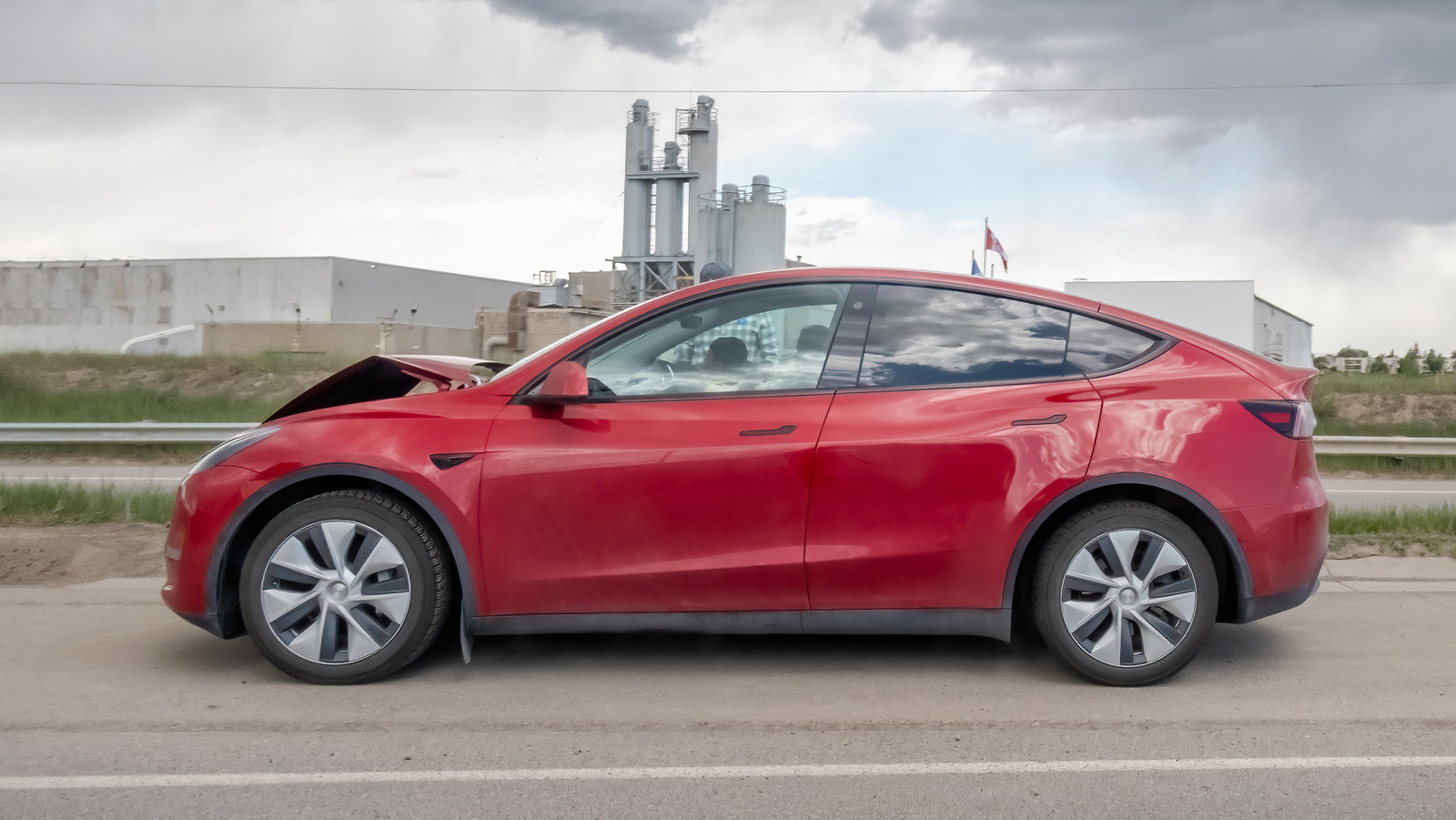
Tesla Model Y Hits 126 mph in Fatal Crash With Motorcyclist and Pickup Truck
Families Fight to Save School Crossing Patrols Amid Rising Road Dangers
 Safety concerns raised as councils cut back on school crossing patrols
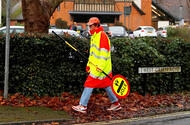
Families across the UK are campaigning to stem the decline in school crossing patrol officers, otherwise known as lollipop men and women, in the face of council cutbacks.
They argue the roles are still needed, given that new police data released in June reported that 413 pedestrians were killed in 2024, an increase of 2% compared with 2023, amounting to a quarter of all road-related deaths. People aged 16 years and under accounted for 4% of these deaths and 10% of those injured.
The figures have been released against a background of reductions in school crossing patrols, the numbers of which have halved in the past 10 years but which their supporters insist make roads safer for children.
Croydon Council is one of the latest to scrap its lollipop patrollers, with schools losing them at the end of the current term.
“This decision leaves me worried for the future safety of our children,” said a parent of children attending one of the six affected schools. “The presence of lollipop men and women is essential.”
A Croydon Council spokesperson said “most patrols were phased out many years ago” and risk assessments for the remaining sites will result in a new permanent crossing at one and temporary crossings at three more.
Elsewhere, alarmed by the withdrawal of their schools’ crossing officers, concerned parents around the country have taken to campaign platforms to rally support for their reinstatement.
Among them is one to save the crossing officer at Dalbeattie High School near Dumfries in Scotland, which also has a nursery and a primary school nearby.
Diana Finnigan, whose 10-year-old grandson attends the primary school, is opposing the council’s decision to withdraw crossing staff and has started an online petition that has so far attracted 500 signatures.
“I live close to the school and see every day how dangerous the roads outside it are for children,” she said. “Local councillors say the children can use the light-controlled crossings but you can’t assume every child, especially young ones, will. Some just ignore the lights and dash across, risking their lives. I’ve seen cars jump the lights too.”
A spokesman for Dumfries and Galloway Council confi rmed its intention to withdraw crossing patrol officers from the school. “Elected members of the council chose to remove crossing patrol staff from automated crossings,” he said. “Council offi cers are preparing communications so that parents and carers are aware of the changes.”
This month, road safety charity Brake highlighted that 16 primary school-age children are harmed on UK roads every day and called for a blanket 20mph speed limit outside schools.
However, while accepting that crossing patrols can play a vital role in keeping children safe, Brake campaigns manager Luca Straker said what mattered more was ensuring safety measures are in place.
“One of the key elements of road safety for schools is having safe places to cross,” said Straker. “That could be crossing patrols, it could be fi xed crossings, but what we need to ensure is that there is something in place that enables children to cross the road safely.”
When did lollipop patrols begin?
Crossing patrols for children were in use in the early 1930s, although some reports credit Mary Hunt, a school caretaker who began to informally help children cross the road in Bath in 1937, as the first ‘lollipop lady’.
It took another 26 years for school crossing patrols to be officially enshrined in law as part of new road safety measures brought in by the government.
A classic tool of a lollipop man or woman, the distinctive ‘lollipop’ sign was introduced in the 1960s and the yellow coat arrived a decade later.