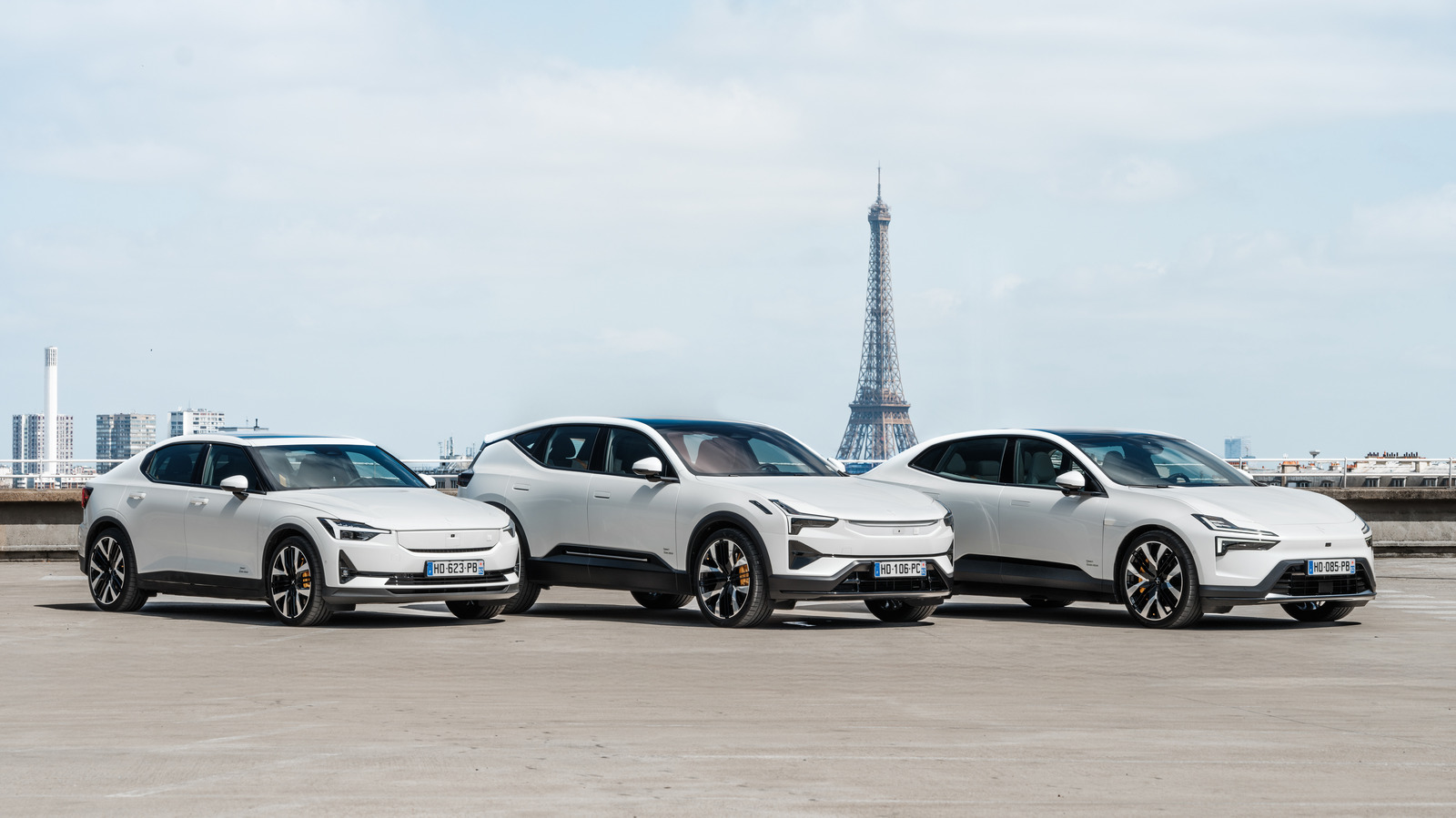
Exploring Lotus and Nostalgia: A Journey Through Cars and Memories
 Cropley travels to Hethel to meet Lotus, Prior laments the demise of a Cozy Coupe, and the pair discuss Caterhams and Dacia Joggers
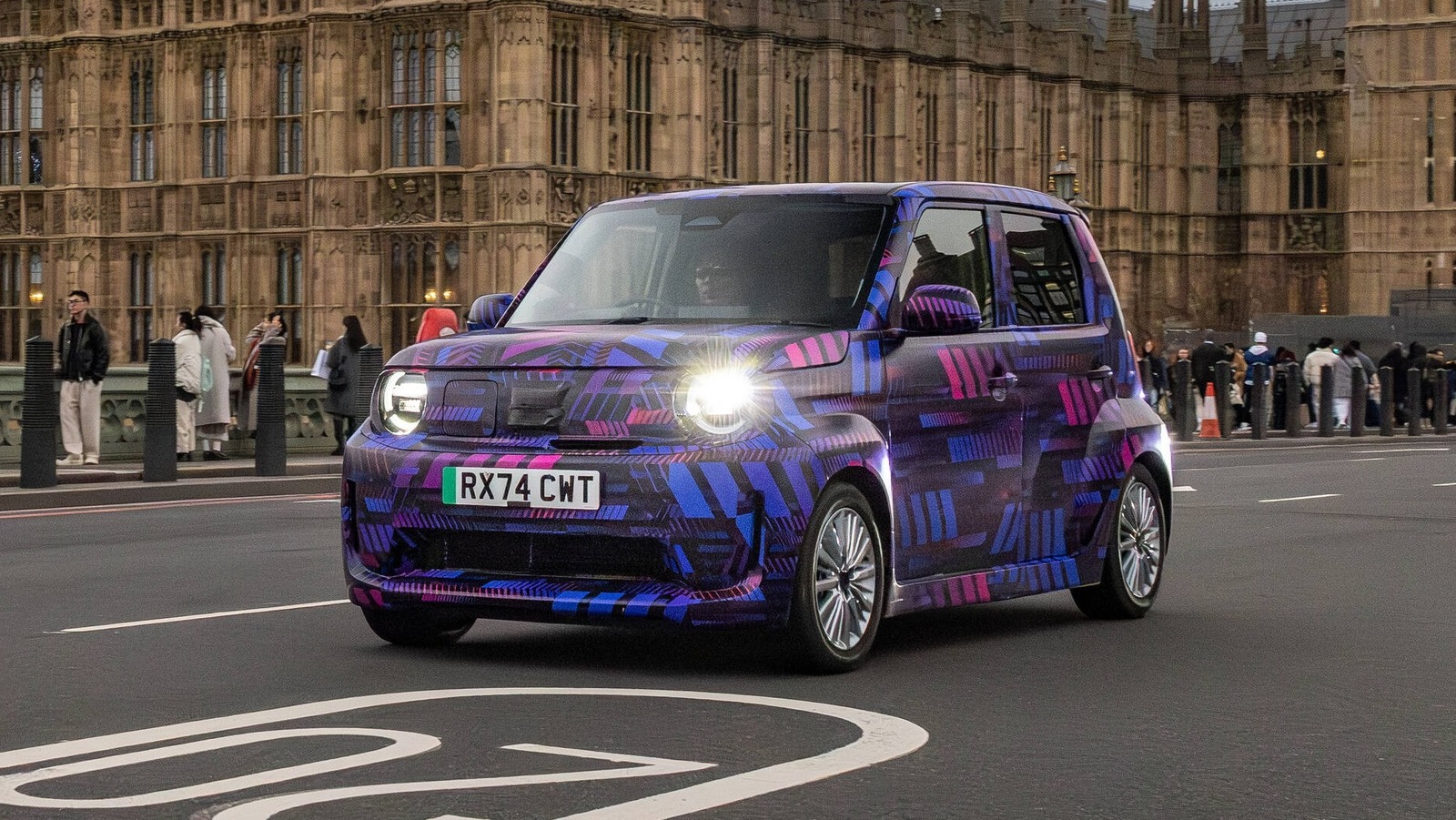
Unveiling the Super EV: A Bold Kei Car Concept Set to Dazzle at Goodwood
Dacia’s Game-Changing Strategy: How to Build Affordable Cars Without Compromise
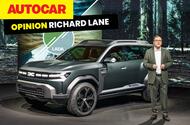 Dacia's exuberant CEO imposes an unorthodox way of working on Dacia’s designers and engineers
You wouldn’t think an electrically powered tailgate could be the topic of engrossing chatter, because 99.9% of the time it can’t.
But then you find yourself in a room with Denis Le Vot, and suddenly it’s as if Walter Röhrl is explaining that the next Porsche 911 is going to get a V12.
Le Vot, an engineer by training, is the CEO of Dacia. He’s one of those fascinating, shrewd execs who’s been around the corporate block.
Turkey, Russia, Belgium, the US, mostly within the Renault-Nissan universe, and with a stint as a board member at AvtoVAZ, the Soviet state-owned car maker that went private in the 1990s and was then bought by Renault before being returned to the Russian state in 2022.
He has lived a life of unglamorous car-industry realpolitik, making profit where it isn’t easily found. It isn’t hard to see why Renault Group CEO Luca de Meo thought him a superb fit for Dacia – a brand that squeezes margin from cars until the piston rings squeak.
Le Vot loves this stuff, as I discovered on the recent Bigster launch in Provence, where we talked not about how Dacia’s new SUV rides or handles (well enough) but how the hell the company can charge so little for it.
The range starts at £25k, and when you consider the kit on offer, it’s the same as Aston Martin offering its new Vantage for BMW M4 money. It’s tough to see how some of the Bigster’s rivals will survive, especially as it’s reasonably easy on the eye as well as the wallet. A bloodbath seemingly awaits.
Dacia’s approach is triple-pronged, beginning with modularity. Okay, no surprise there (it’s the only way that any car maker short of Ferrari et al can do business today), but the Romanian brand takes it a step further than most.
Save for the tiny Spring EV, all of its cars are identical up to the B-pillar. Le Vot jokes that while it took two years and 3000 engineers to turn Renault’s Clio into the Sandero, it then cost £5 to turn the Sandero into the Jogger.
Adapting it for Duster duties cost a little more, mainly for the reinforced sills and ride height, but from there, for the extra-large Bigster, the only major change has been to extend the A-pillars by 50mm.
Every kilogram is managed, too. The reason the Bigster doesn’t offer a seven-seat interior is because Dacia worked out only 25% of buyers in the segment consider them but the added weight would require strengthening for the rear axle, which would add expense across the range. Ergo the Bigster is a five-seater only, being ruthlessly focused on the main audience.
Which brings Le Vot to his second point: the importance of learning what the intended buyer really wants and then not straying beyond that kit level by so much as an additional USB-C port.
“We’ve been studying the Germans, I must confess,” he says, smirking. The Germans are the big market for cars like the Bigster. They’re also fussy, which is crucial. If our German chums ‘need’ something in their C-SUV, you damn well better offer it. And if they don’t, nobody else will want it and you’re off the procurement hook.
“If the car doesn’t have AC [air-con], then it’s disqualified. But if I offer, whatever, electric seats for the front passenger or AC in the seats? No need: it’s not disqualifying. So we have dual-zone AC [in the Bigster], which we’ve never had before, and we have two-tone paint and an electric tailgate. These are the things we will offer, and if we don’t, they will say ‘I’m not buying’. Hundreds of people. It’s complicated; new territory for us.”
The final part of the equation is the supplier negotiations, where Le Vot’s sojourns in hard-nosed Russia has fortified his resolve. By all accounts, this charismatic Frenchman and his accomplices in accounts are utter bastards.
Le Vot says: “We define the car [at] €25k and the hybrid [at] €30k, then we split this price. It seems obvious, but most manufacturers don’t do that.
"They design the car they want to have, then give the parts to suppliers, negotiating like hell to get the best price, but the best price is a surprise. When you expect €100, you get €110 more often than €95.
"You put it all together and it’s 10% more than you thought. We design to cost. So we say €25k, cut [the car] into pieces [then say] this part has to be €45, and if you can’t make it at €45, we don’t make the part. It takes a little time, of course, but they come back and propose a solution.”
An electric tailgate, then. In short, Germans insisted the Bigster needed one, so Dacia’s suppliers, donning their thumbscrews, invented one at the required cost.
One strut is electric, the other is hydraulic. It’s cheap but it works and is strictly necessary. Inimitable Dacia in a nutshell.
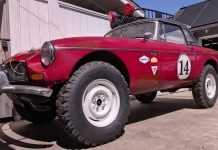
Unleashing Adventure: The MGB That Redefines Off-Roading
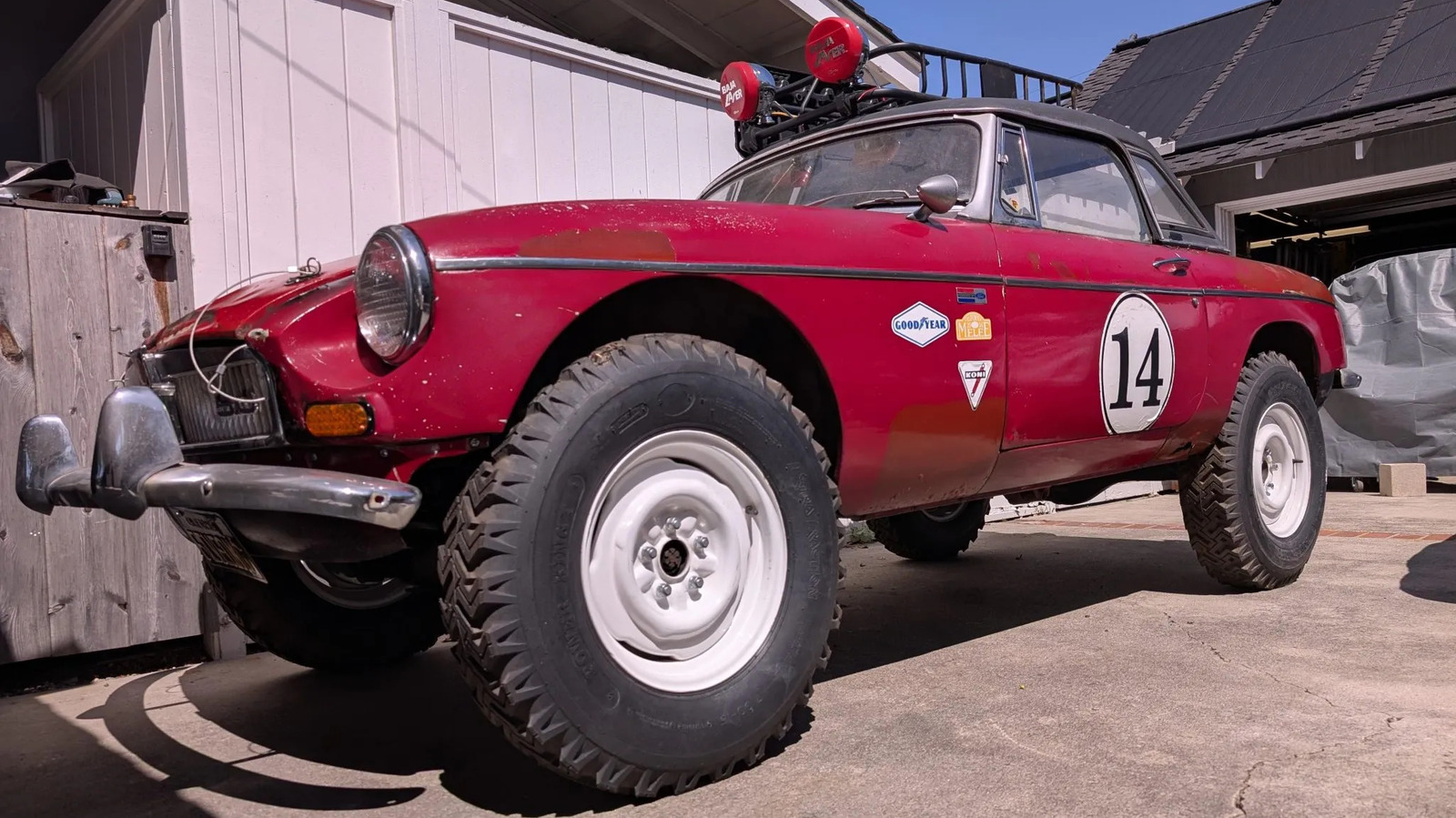
Electrifying Performance: The Next-Gen Audi RS6 Blends Hybrid Power with Electric Innovation
 Both hybrid and electric performance A6s are being readied for 2026
The next Audi RS6 will be completely electrified for its fifth generation in 2026, when it will arrive with both a plug-in hybrid V8 powertrain and a fully electric one – a first for Audi Sport.
Set to rival both the electric BMW i5 M60 and the PHEV BMW M5, the new RS6 will be the most powerful version yet, producing as much as 730bhp in combustion-engined form.
And for the first time since 2010, the RS6 will offer a choice of estate and saloon bodystyles.
The decision to continue offering a combustion-engined RS6 comes two years after Audi Sport confirmed its intention to take the RS6 fully electric. Slower than anticipated EV sales in important markets prompted a revision of that plan, with Audi now instead seeking to extend the life cycles of key ICE models well into the next decade.
The dual-powertrain approach is underpinned by a dual-platform strategy. The electric RS6 E-tron sits on the Volkswagen Group’s Premium Platform Electric (PPE). Meanwhile, the combustion-engined RS6 adopts the Premium Platform Combustion (PPC) – an evolution of the MLB architecture used by the current RS6, which was introduced in 2019.
Details remain scarce, but the combustion-engined RS6 is understood to continue with an updated version of the Porsche-developed twin-turbocharged 4.0-litre V8 petrol engine used by its predecessor. But in order to meet stricter Euro 7 emissions legislation, it is expected to be combined with a plug-in hybrid system that incorporates a gearbox-mounted electric motor and a lithium ion battery – a set-up already deployed in various Porsche and Bentley models.
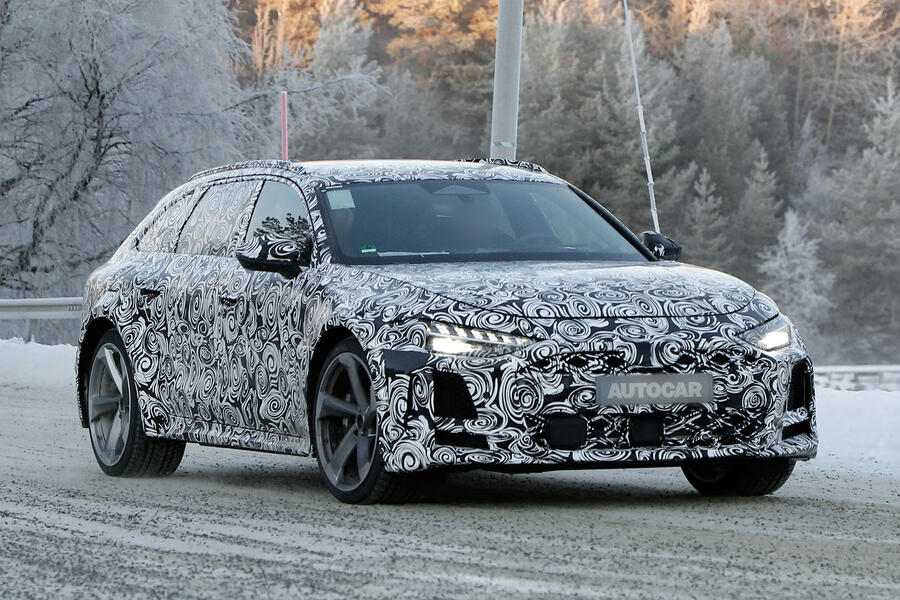
Recent sightings of test vehicles appear to confirm this development, with mules spotted wearing smaller, more inboard tailpipes closely resembling those fitted to the Porsche Cayenne Turbo E-Hybrid. A ‘high voltage’ sticker has also been seen on these prototypes.
Using this set-up also means a bump in power over the existing RS6’s 621bhp and 627lb ft. For example, in the most potent Cayenne, the PHEV arrangement delivers a combined 730bhp and 701lb ft of torque.
An even more powerful version of this PHEV powertrain is used in the facelifted Porsche Panamera Turbo S E-Hybrid, where it develops 771bhp and 738lb ft. That provides the four-wheel-drive luxury liftback with an official 0–62mph time of 2.9sec and a 202mph top speed – figures that Audi Sport will be aiming to emulate with the new RS6.
The move to develop the V8 for the RS6 is reinforced by fellow Volkswagen Group brand Porsche, which announced last year that the next-generation Cayenne and other models will retain combustion engines into the future, with investment aimed at “improving the efficiency of the V8 developed by Porsche and built at the Zuffenhausen engine plant”.
The electric RS6 E-tron, meanwhile, is confirmed to run a sophisticated dual-motor, four-wheel-drive powertrain that builds on the one already in the S6 E-tron.
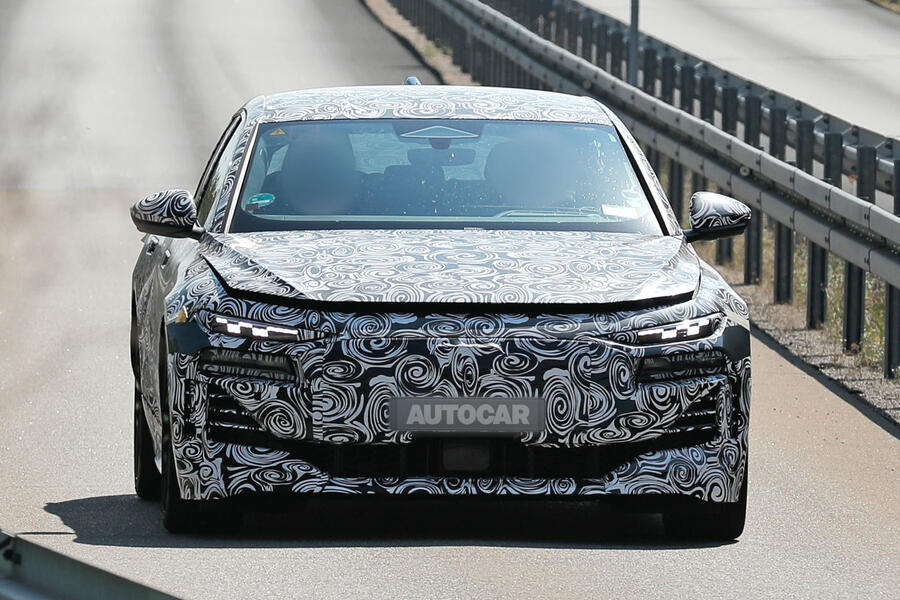
In that model (launched alongside the standard A6 E-tron earlier this year), the system develops 543bhp and 631lb ft.
Insiders at Audi Sport have suggested to Autocar that power will be ramped up to somewhere closer to 670bhp and 701lb ft.
One source said: “It’s unlikely to reach as far as the RS E-tron GT [Audi Sport’s most powerful model, at 912bhp], but there will be a solid increase over and above the S6 E-tron as part of the differentiation measures.”
Like some other performance EVs, such as the Hyundai Ioniq 5 N, Audi will also give the RS6 E-tron a trick gearbox and pump sound into the cabin to increase driver engagement.
Audi Sport engineers are also claimed to be developing a progressive torque curve.
The EV will use the same 94.8kWh (usable) battery as the A6 E-tron but, given its performance positioning, it isn’t expected to achieve the same range as the standard saloon (463 miles) or Avant estate (437 miles).
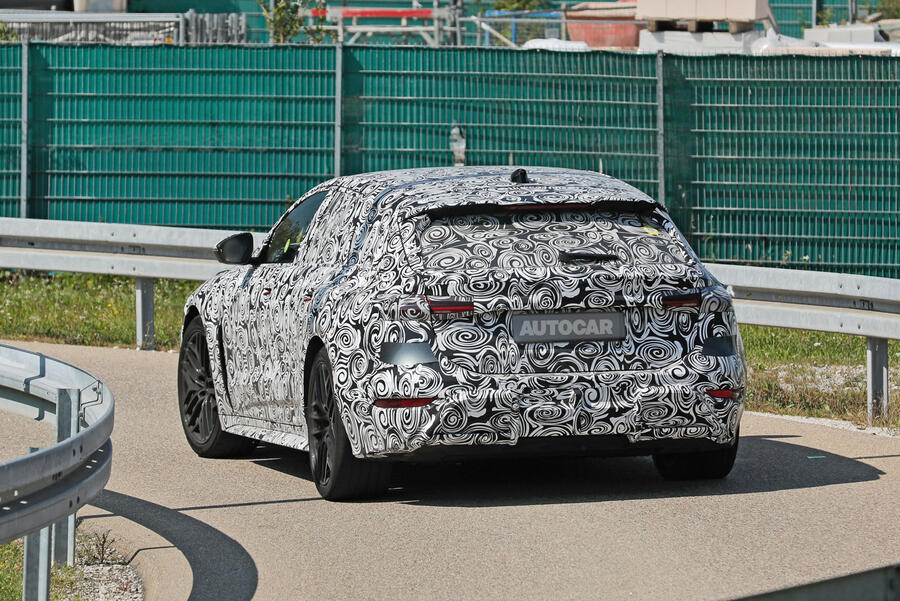
Both the electric and combustion-engined RS6s will be visually more aggressive than their standard stablemates, with a more angular design, wider arches and, at the rear, a deep diffuser and larger roof-mounted spoiler.
For the PHEV, notably larger air intakes and centrally positioned oval tailpipes will be added. Meanwhile, the EV will grow to 4900mm in length, to match its PHEV V8 sibling.
Despite the adoption of lightweight materials such as aluminium and composites, the extra hybrid hardware will add mass, tipping the new PHEV RS6 beyond the 2090kg of its predecessor. The electric RS6 E-tron, meanwhile, is set to exceed the 2500kg mark.
To preserve handling agility and improve comfort, Audi Sport is expected to introduce a new active suspension system similar to that of the Panamera Turbo S E-Hybrid.
Sightings of prototypes also suggest braking will be handled by large carbon-ceramic discs and 10-piston front calipers.
As with previous iterations, the new RS6 is expected to maintain a significant premium above the rest of the A6 range. For the EV, it will rise beyond its £99,300 S6 sibling, while prices for the petrol-powered car are expected to extend in the direction today’s £176,975 RS6 Avant GT.
Unlock Big Savings: Top Discounted SUVs You Can’t Miss

Transportation Chief’s Warning: Funding at Risk for States Ignoring Protest Crackdown


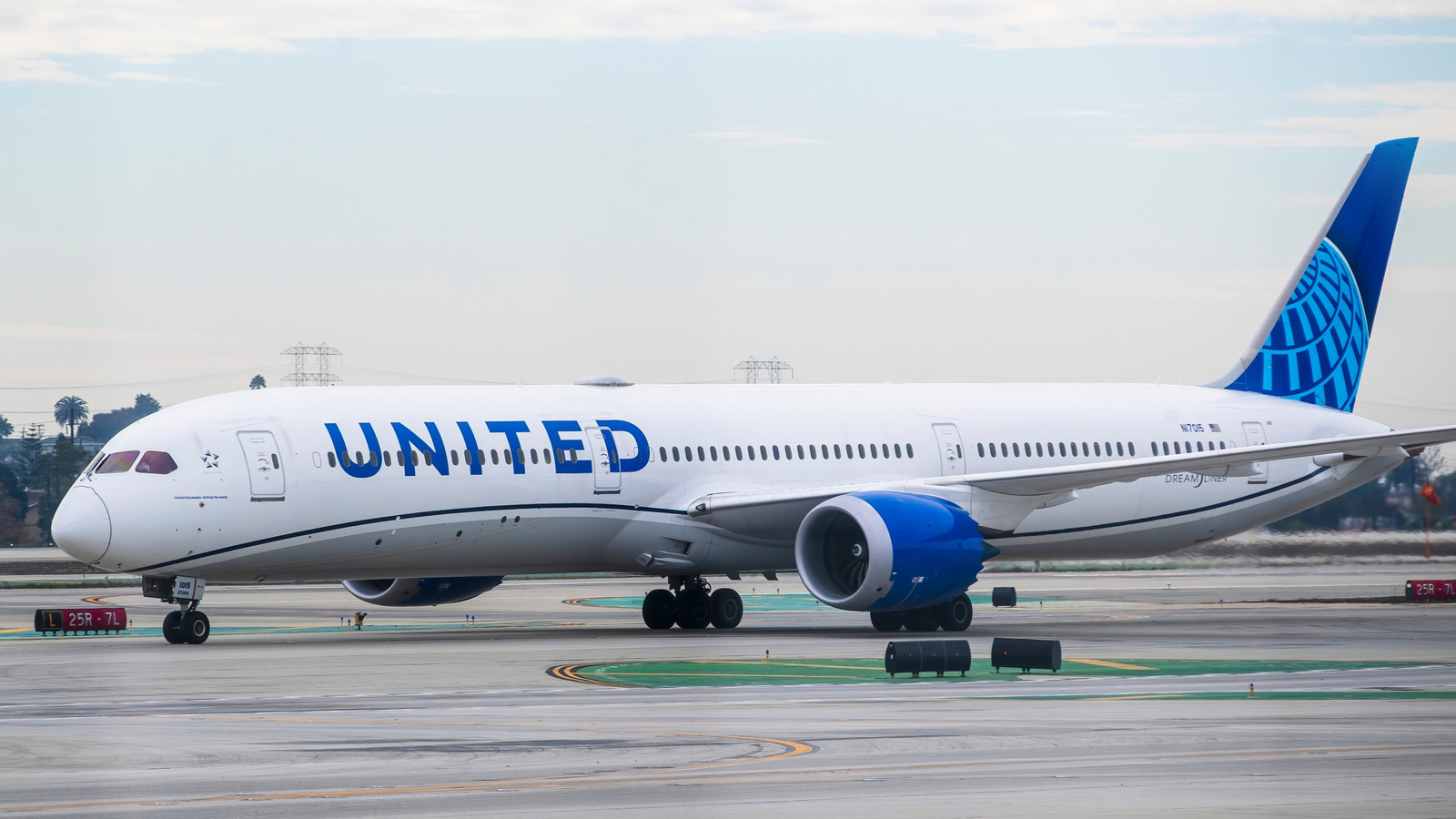
Boeing’s Dreamliner Grounding: A Major Shake-Up for Airlines and Passengers

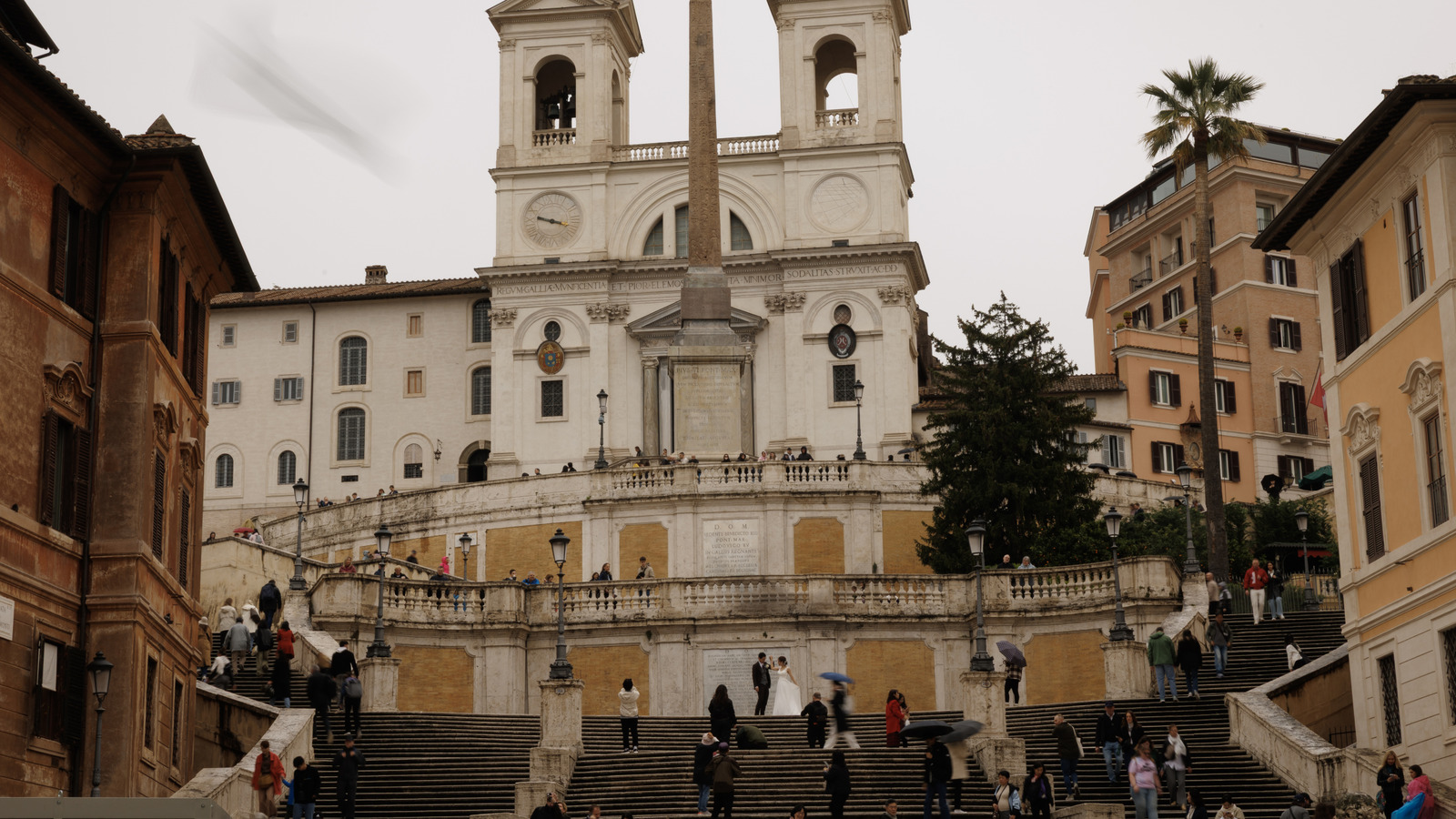
Elderly Driver’s Wild Ride: Stuck on Rome’s Iconic Spanish Steps
Polestar’s Global Reach: Why Sweden Lacks a Local Plant