Unveiling Tesla’s Sentry Mode: What Happens to Your Footage?
Audi Q3 Unveils Bold Redesign and Innovative Control System for 2025
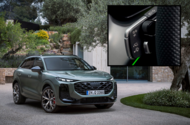 The crossover is one of Audi's best selling models and will arrive in September priced from £38,300
The Audi Q3 has returned for a third generation, bringing a fresh design and a quite radical interior operational change.
One of the German car maker’s best selling models – having sold more than two million globally since its 2011 launch – the crossover will arrive in September priced from £38,300.
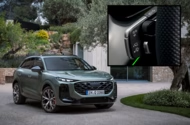
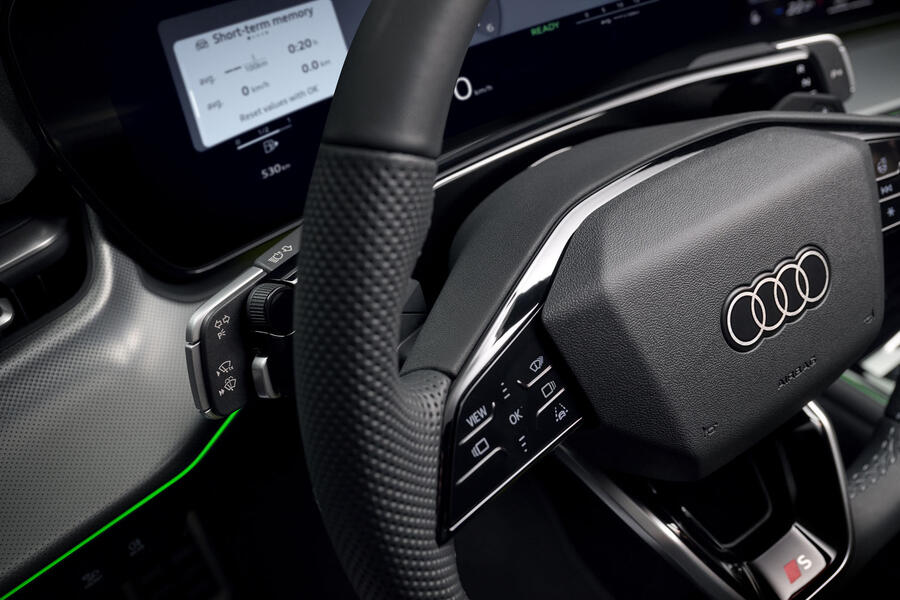
While sporting a much-changed new design compared to the previous model, one of its most interesting changes comes inside, where traditional control stalks have been replaced with a new solid block with buttons.
What Audi refers to as its ‘steering wheel control unit’ houses everything from drive selection and light functions to windscreen wiper operations and even the indicators. All are operated by physical buttons and the panel ends do not, like a stalk, move.
If customer feedback is positive on the new control unit, it will likely be rolled out across the rest of the range. Audi isn’t the first car maker to try and reinvent operational stalks, the most notable being Tesla which, with the facelifted Model 3, did away with them altogether, moving indicators to touch-sensitive buttons on the steering wheel - something, after feedback, it reversed with the updated Model Y.
What’s more, removing the previous model’s gear lever has freed up space in the centre console for a pair of cup holders and a wireless charging pad. Elsewhere, the Q3’s cabin gains a new 12.8inch infotainment screen and 11.9inch instrument cluster.
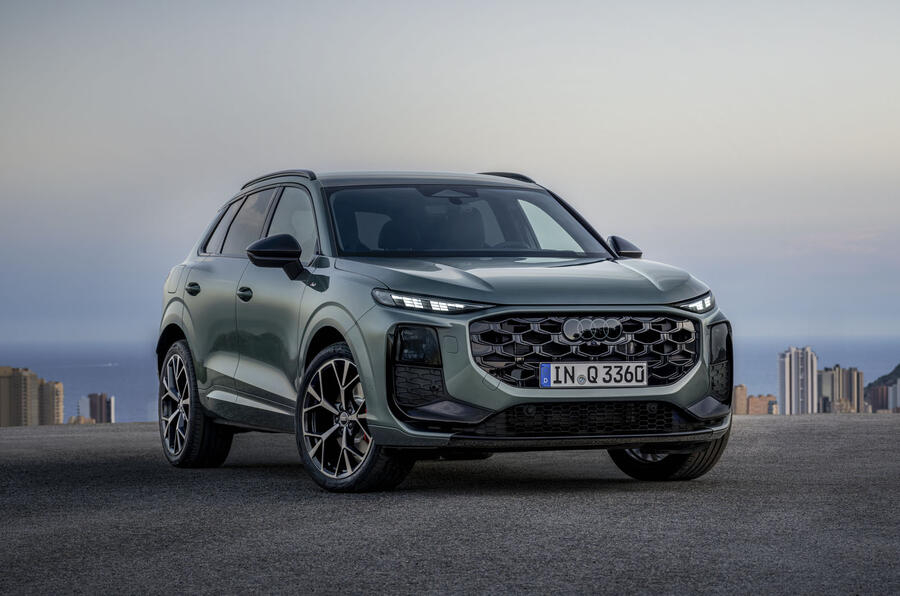
The new Q3 arrives with a fresh exterior design which is a big departure from the more rounded second-generation car it replaces.
The crossover borrows much of its lighting signatures from the new A6 Avant: at the front it uses its slimmed LED lights, and at the rear the same light bar and rear light designs. The Q3’s rear badge is, like most new VW Group cars, also illuminated.
Again based on the same MQB platform as the Audi A3 and VW Golf, the new Q3 opens with the 148bhp four cylinder mild-hybrid and is topped by a 268bhp plug-in hybrid with 75 miles of engine-off range, double that of the car it replaces. With that top spec powertrain, the Q3 is priced at £45,800.
The Q3 is also offered with a £40,000 148bhp diesel which, alongside the new A6, will be some of the final Audis to offer the fuel option.
What remains unclear is the future of the hot RS Q3 variant. The previous generation used the Audi RS3’s 394bhp turbo fi ve-pot, but Autocar understands that engine will soon be retired (in part down to increasingly stringent emission regulations) and Audi is increasingly pushing towards EVs.

Unlocking Fuel Efficiency: The Impact of Spark Plug Replacement on Your Vehicle’s Performance


Unlocking the Future: Join Our Free Webinar on Automotive Software Innovations
 We're partnering with Siemens, 2025 Autocar Awards sponsor, to explore how software will change the car world
A free webinar will delve into how software is defining the future of automotive - and you can sign up here now.
As its role in vehicle development and functionality becomes ever-more important, there are huge questions over what software means for how we use our cars - and what the future holds.
Hosted by Autocar and technology giant Siemens, the webinar on 25 June will look at answeing question such as how can manufacturers upgrade cars post-purchase? Does your car have untapped technological potential built in already? What is a software-defined vehicle? and more.
Siemens is a technology leader with a significant influence on the mobility sphere so is well placed to help answer those questions and reveal the full potential of software in this space.
Join Siemens head of automotive, battery and mobility Uday Senapati, Volvo Cars software engineering boss Alwin Bakkenes, Autocar deputy editor Felix Page and another special industry guest – to be announced in the coming weeks – for an insightful and interactive deep-dive into the world of automotive software.
Mark Tisshaw, Autocar editor, said: “Throughout our collaboration with Siemens, it has become clear just how deeply connected the company is to the automotive industry and how influential its relationships are at every level.
“We are thrilled to partner with Siemens to tell the stories of the industry's most impressive individuals and companies at this year's Autocar Awards ceremony and to hear how the company's insights and expertise are shaping the future of the car in our upcoming webinar.”
The webinar will be broadcast live on Wednesday 25 June from 14:00-15:00, with the opportunity to put questions to our expert guests.
As part of the collaboration, Siemens has been named as the sponsor of the 2025 Autocar Awards, which will celebrate the people and organisations shaping the future of automotive - as well as the best cars on sale.
This year's awards ceremony takes place on 24 June, where Autocar and Siemens will name the industry's most innovative and impactful individuals, and provide a platform for them to tell their stories.
Sign up here to watch for free
Meet the panellists
Uday Senapati

As head of automotive, battery and mobility for the EMEA region at Siemens Advanta, Uday is helping to expand the company's portfolio f consulting and implementation services for the e-mbobility industry.
Having worked at General Motors, JLR, Bentley and Group Lotus, he has a wealth of automotive experience that he will leverage in his efforts to establish Siemens as a leading consulting and integration partner for the increasing number of businesses making a strategy shift towards electric mobility.
Alwin Bakkenes

Alwin is head of software engineering and R&D at Volvo Cars. He leads the team responsible for development of the technology stack at the heart of Volvo's in-car systems and wider user experience.
He has experience in product strategy and programme execution that helps guide Volvo's development of next-level safety technology - working towards autonomy and a software-defined platform.
Why the Audi Q4 E-Tron Stands Out with Drum Brakes in a Disc Brake...

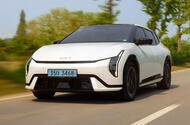
Kia EV4: The Bold New Contender for Tesla’s Model 3
 Latest eye-catching EV from bullish Kia muscles in on Model 3’s patch One of the many remarkable things about Tesla is that so much of its growth has been built on a bodystyle that had seemingly long since gone out of fashion.The success the Tesla Model 3 has had as a fairly traditional – perhaps even old-fashioned – low saloon defies logic when every other car maker is packing its range full of crossovers and SUVs, backfilled by evergreen hatchbacks.There have been other electric saloons, most notably the BMW i4, but among a sea of electric crossovers and hatchbacks flooding the market, the number of true Model 3 rivals barely makes a puddle.The Kia EV4 is the brand's first electric saloon and, as a global model from a car maker with one of the industry’s better electric car ranges in its breadth and quality, its big range and attractive price allow it to be considered a true Model 3 rival.Even so, given Kia's global footprint and the need to tailor models to different markets, the company hasn’t gone all in on the EV4 as a saloon and is also offering it as a hatchback. This will be built in Europe, the first Kia electric car to do so at its Slovakia plant.Kia UK recognises that the Model 3 is very much onto something, so this saloon version of the EV4 will be offered in the UK as well to make sure Tesla doesn’t have the electric saloon segment all to itself. It’s the saloon we’re testing in Kia’s native Korea, where the EV4 has gone on sale first.
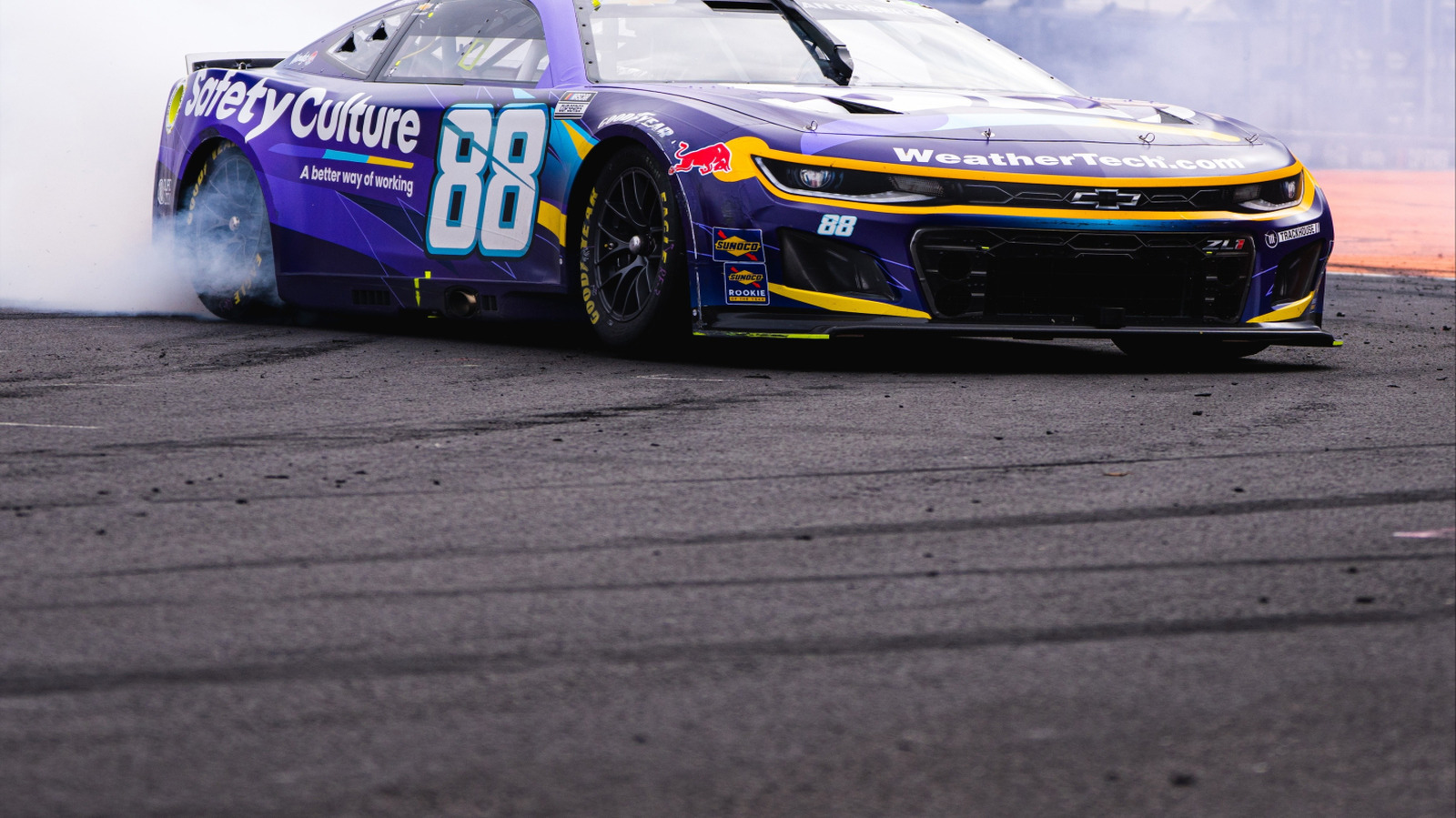
Shane Van Gisbergen’s Thrilling Victory: A Masterclass in Car Control in Mexico City

Kia Tasman: A Bold New Contender in the Pickup Truck Arena
 Korean firm's first pick-up is a great design, a decent to drive and an interesting next step in Kia’s evolution
Forbidden fruit in the car industry comes in all shapes and sizes. The latest model denied to the UK is the Kia Tasman, the brand’s first-ever pick-up truck.
While it’d be easy to ignore such a development given the Tasman is not only denied for UK buyers, but those in Europe and even the US, too, it is significant in showing how the brand is continuing to develop and enter new markets and model segments. Later this year, for example, Kia will launch its first-ever van, the PV5.
In short, Kia is a brand willing and able to try new things and the Tasman is a fantastic piece of product design. If you look around the Tasman’s rivals - the likes of the Ford Ranger, Toyota Hilux and Nissan Navara - you’d think there wasn’t much you can do to make an everyday pick-up visually interesting before you start making them performance machines like the Ford Ranger Raptor.
Yet the Tasman would be the pick-up your eyes are drawn to lined up against its peers, looking stealthy in the black of our test car and like it means business.
Of course, a pick-up is no good if it’s all show and no go but Kia has packed the spec sheet, too. Kia claims true go-anywhere ability, a claim we weren’t able to test, and best-in-class strength from an all-new body-on-frame pick-up platform developed for the Tasman.
There is double-wishbone suspension up front, high mounted to better protect from corrosion and offer improved ground clearance. At the rear is a rigid axle with leaf springs.
The Tasman has switchable high and low-speed four-wheel drive as well as an automatic four-wheel drive and rear-wheel drive modes. An electric locking differential is in charge or torque distribution on uneven surfaces and there are several different terrain modes to suit the surfaces being driven on, including a dedicated ‘Desert’ mode for Middle East and Africa-spec Tasmans.
Four-cylinder engine options include a 277bhp/311lb ft 2.5-litre petrol and a 207bhp/325lb ft 2.2-litre diesel depending on the market. An eight-speed automatic is offered on both engines and a six-speed manual is also available on the diesel. We tested the petrol and it had plenty of torque and a nice relaxed style.
Other key parts of the powertrain and exhaust are also mounted high to help with the wading depth of 800mm. The respective approach, departure and ramp-over angles are 33.2, 26.2 and 25.8 degrees while the payload is 1151kg (including cabin loads) and towing capacity 3500kg. Kia claims the bed has a best-in-class capacity of 1212 litres.
While we didn’t test the Tasman’s off-road credentials in this short taster drive we did drive it on the road. Kia is talking up SUV levels of ride comfort in the Tasman thanks to the likes of urethane bump stops and frequency-sensitive valves in the shock absorbers. While generally good and, with plenty of wheel travel in particular and more sophistication than most rivals, it can’t ever fully cheat the body-on-frame construction so to call it car-like is pushing things slightly.
Otherwise it steers like a modern pick-up and handles like one, too, which means you have to respect its size and speed of response. Even so, it doesn’t require anywhere near as much adjustment from a car than in days past. One corner and you’ll have worked out that it’s nowhere near as intimidating to drive as you’d think.
The best bit about the Tasman, which is initially offered in dual cab form with a single cab to come, is the interior. Here you really could be in a top-end SUV. The material quality is superb, and while there are familiar parts from Kia’s road cars like the dual screen display, there are plenty of Tasman-specific features that really give it its own character.
These include sturdy grab handles in all the right places, some of the best interior door handles you’ll ever use (they feel very expensive but oh-so robust) and clever little usability touches like the Tasman’s dimension and key off road stats displayed on a graphic on the centre console. Great seat comfort, too. The only real concern would be getting it dirty and covered in sand.
Kia is a company exuding confidence at the moment, and again it shows in the Tasman. It is not another me too pick-up truck, rather an interesting addition to the segment in its own right. Given it’s already being made in right-hand drive for Australia, it’s a shame that the Tasman won’t be offered here.
Trim Kia Tasman X-ProPrice $74,990 AUD (£36,000) Engine 2497cc, four-cylinder, petrol, turbocharged Power 277bhp at 5800rpmTorque 311lb ft at 1700-4000rpmGearbox 8-spd automatic Kerb weight 2237kg0-62mph 8.5sec Top speed 115mphRivals Ford Ranger, Toyota Hilux

Transforming Your Ride: How Any Car Can Conquer the Great Outdoors

Fine-Tuning Spark Plugs: When and Why to Adjust the Gap