
Navigating Turbulent Skies: The Struggles of Budget Airlines in a Changing Travel Landscape
Porsche Unveils the 963 RSP: A Road-Legal Tribute to Le Mans Glory
 Porsche's 671bhp WEC hypercar gains indicators, numberplates and a striking 1970s-inspired spec
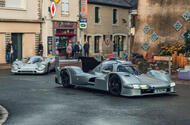
Porsche has created a road-legal version of its successful 963 endurance racer, rekindling the spirit of a road-going Le Mans legend it built 50 years ago.
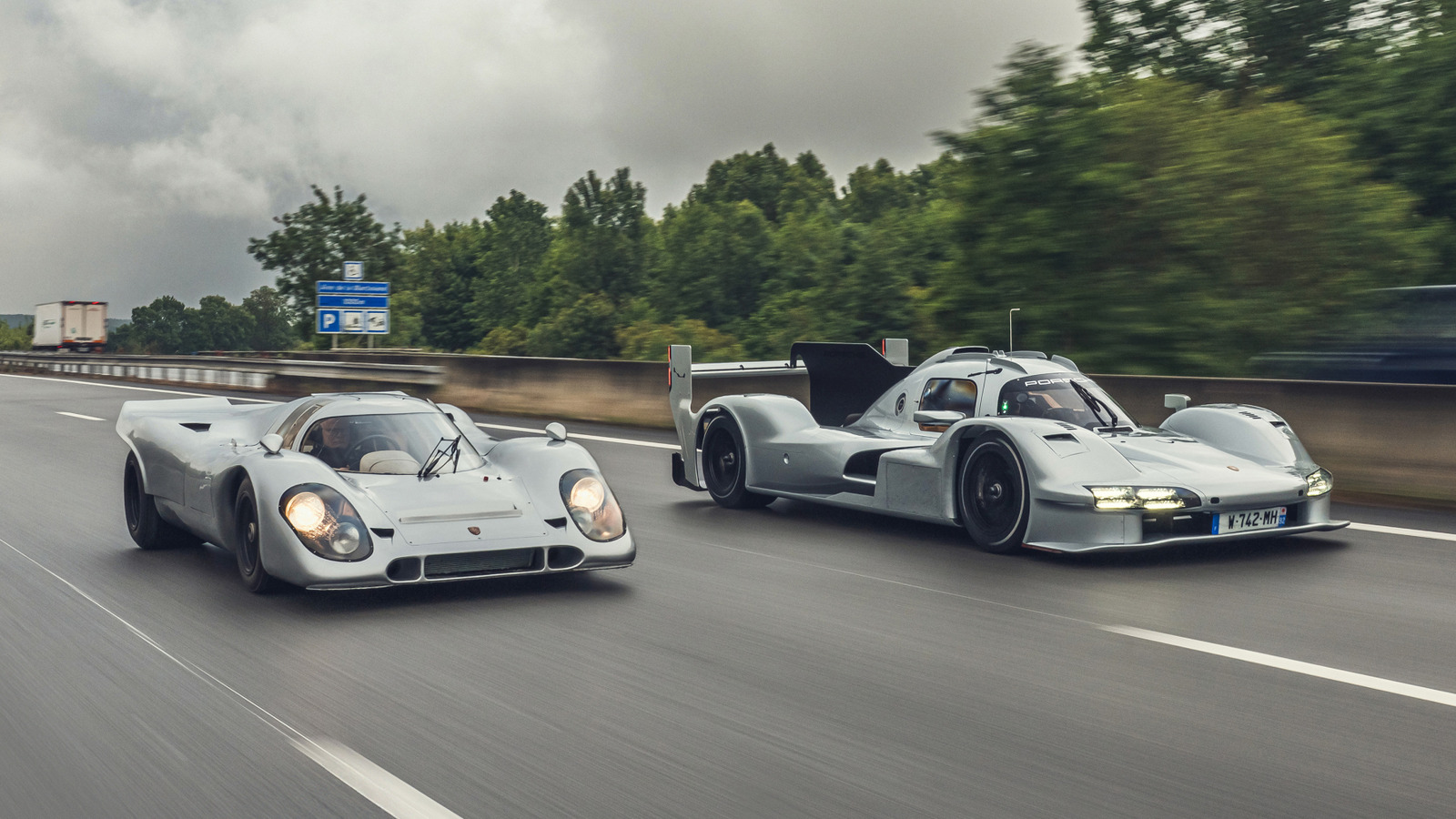
The 963 RSP is inspired by, and specified to match, the road-legal version of the legendary 917 that Porsche built for Italian aristocrat Count Gregorio Rossi di Montelera in 1975.
Like that car, which still appears regularly at events like the Festival of Speed and Villa d'Este, the road-legal 963 is all but technically identical to its racing counterpart, which will go for glory at Le Mans next week.
Porsche's LMDh hypercar – which competes in the same World Endurance Championship (WEC) class as the Ferrari 499, Alpine A424 and BMW M Hybrid V8 – is based on an LMP2-spec chassis made by Canada's Multimatic.
However, its 671bhp hybrid drivetrain is centred around a thumping 4.6-litre twin-turbo V8 derived from the old Porsche 918 Spyder hypercar.
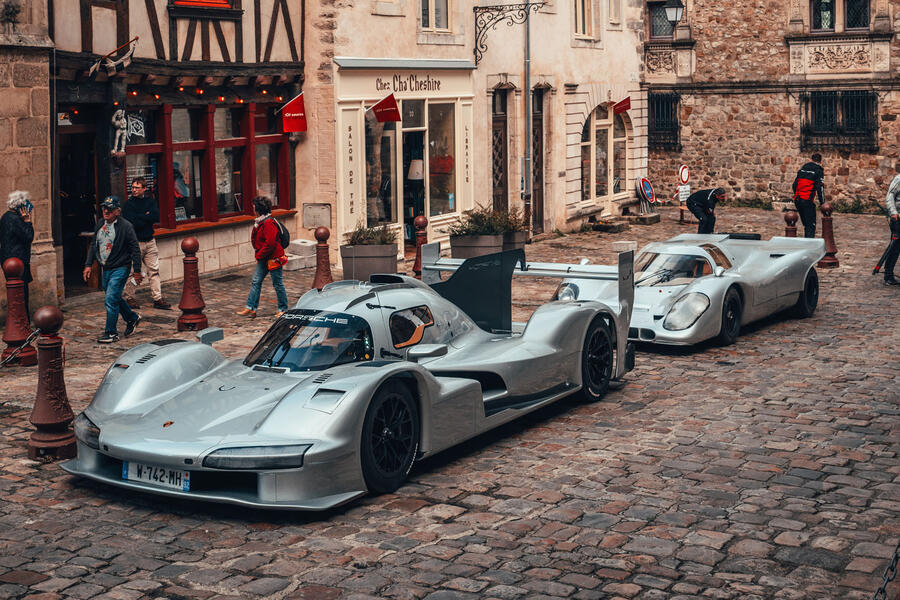
Porsche hasn't revealed performance figures, but taking into account the 963 racer’s estimated 0-62mph time of around 3.0sec and a top speed of more than 205mph, the 963 RSP should be one of the fastest Porsches yet to wear a numberplate.
As well as competing in the WEC, the 963 is a regular fixture at the top of the standings in America's IMSA Sportscar Championship, in which it is fielded by Porsche's motorsport partner Penske - the owner of which, Roger Searle Penske, has commissioned the road-going car, hence its 'RSP' moniker.
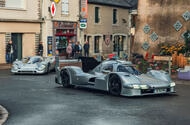
Rather than being adapted from an ex-race car, the 963 RSP was built from the off for road use by the US division of Porsche's Sonderwunsch bespoke arm, based in Atlanta - and it has proven its cross-country credentials by driving on the roads around Le Mans ahead of next week’s 24-hour race.
To ensure it can be driven on the road, Porsche has fitted the 963 RSP with indicators and brake lights, put the suspension in its highest setting, fitted less extreme wet-weather tyres and subtly reworked some of the more track-focused bodywork. The vents on the front wings, for example, have been covered so that the wheels don’t throw stones back at the windscreen.
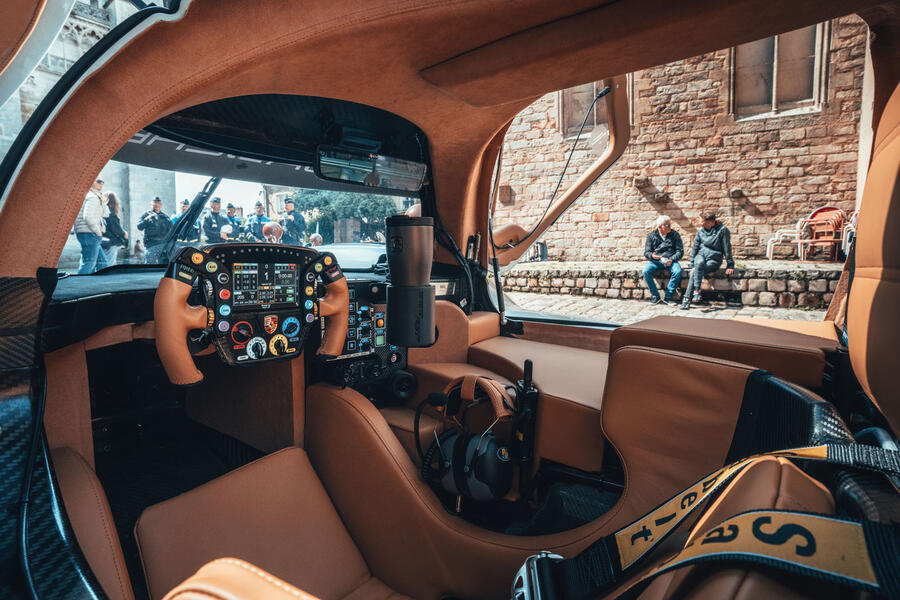
It also has a cupholder fitted, to compensate for the removal of the button-activated drinks system that hydrates the 963’s drivers during a race.
Sonderwunsch has worked to closely match the specification of Rossi’s car, down to the tan interior and ‘Martini’ silver paint, which was a particular challenge to apply, due to the 963 being completely carbonfibre-bodied.
Despite being road-legal in certain countries, the 963 RSP does still need a laptop to start - unlike Rossi’s 917, which had a very conventional ignition key.
Porsche will show off the 963 RSP on the sidelines of La Sarthe next week before bringing the car to the UK in July for the Goodwood Festival of Speed.
It has told Autocar that the car – understood to have cost in the region of €5 million – is a one-off for now but that it wouldn't rule out building another if approached.
Porsche Unveils Exclusive Street-Legal 963 Hypercar to Honor Racing Legend Roger Penske
Discover the Mazda RX-8: A Hidden Gem Before Prices Soar
 Reliability issues aside, the RX-8 is a wondrous car – worth a punt before prices rocket
It was one of the most exciting and intriguing cars to be launched into the new century.
Here was a decidedly stylish, highly distinctive coupe with the novelty (for most buyers at least) of a smooth-spinning rotary engine, four seats and a quartet of doors that opened like clamshells to reveal an unexpectedly spacious interior. There was nothing else quite like it.
And now you can buy one for the price of a cheap weekend away. Not that this sum will necessarily enable you to take that weekend aboard the car in question, because for this money, there’s a fair chance that it won’t start. That could be because it’s engine is flooded with fuel, an apparently trivial happening requiring know-how to overcome, or it could be coil packs unable to deliver a spark fat enough for ignition, or something really serious. Serious enough that an expert mechanic will need to burrow into the heart of this Mazda’s rotary engine, and rebuild it using a wallet welting collection of replacement hardware.
Which is why it’s quite easy to find non-running Mazda RX-8s for no more than a few hundred pounds. They will likely be bodily intact, relatively tidy inside and probably have run for well under 100,000 miles. There’s a fair chance that the large, lobe-indented plastic engine moulding will have been removed to the boot, a sure sign of resignation, frustration or despair at the engine ever revving again. There are surprising numbers of dormant RX-8s too, not so much because engine trouble is inevitable, but because Mazda sold impressively large quantities of them during the early 2000s. It’s not hard to see the temptation even now.
Not that the RX-8 was without appealing competition. The early 2000s were a golden moment for mid-market coupes, the market lit up by first by the hugely desirable Audi TT in 1999, followed four years later by both this Mazda and the equally wonderful Nissan 350Z. Demand for the Audi was far from sated at this point, but Mazda was able to undercut the Nissan by an arresting £4000, the new RX-8’s prices matching the less versatile and technically duller TT. Couple this to the fact that it had four doors and four seats, allowing it to creep onto many company car user-chooser lists despite its sometimes chilling fuel consumption, and Mazda had a hit on its hands.
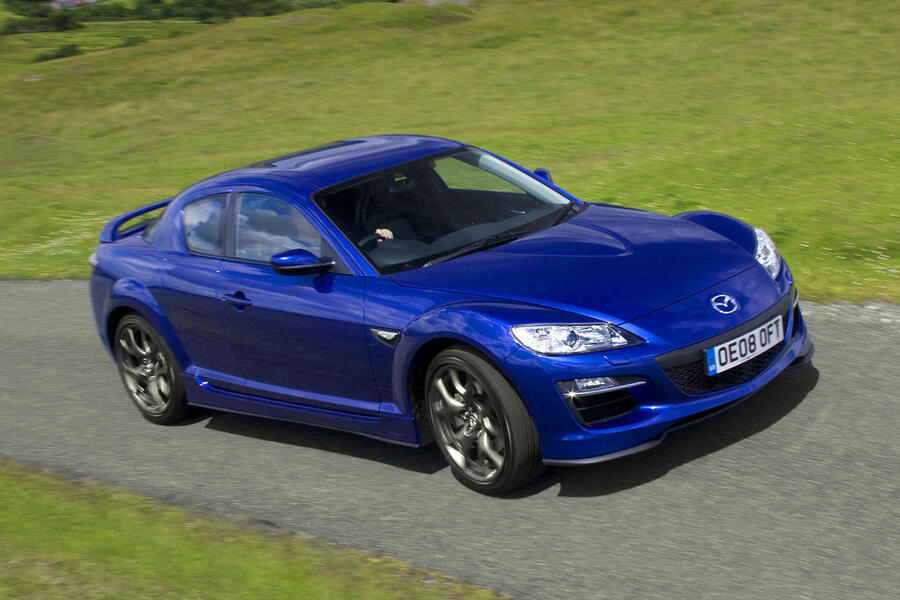
It also had a car to complement the already legendary MX-5. The RX-8 was bigger, but the extra heft of its slinky bodyshell was partly offset by the low weight of the dinky little 1.3 litre rotary, which also lived well aft of the radiator, to the considerable benefit of the chassis balance. It was agile, stayed tidy when pressed and could drift, its predilection for dangling an angle part-limited by the rotary’s limited grunt. Revving it, to as much as 9000rpm, and using the gears was the keen driver’s satisfying counter-measure to this shortfall.
You could choose from two power outputs, the lower of the two actually offering more torque with its 189bhp, the peakier 228bhp version compensating with a six-speed transmission. Differences like these will be mere details when the issue of whether the car will start and the scale of the bank debit necessary to keep it running is in question, but there’s plenty of help at hand. There are surprising (or possibly not) numbers of RX-8 specialists across the land, and while an extensive rotary rebuild can come to a substantial percentage of the value of the running car, well, what a car.
At the moment you can get yourself a non-runner for less than £1000 from the usual channels, less if you venture onto a salvage site. But this isn’t going to last, because the attrition rate is now quite high. Jump in now, I reckon, before it becomes a (much pricier) classic.
This column first appeared as an email to subscribers.

Musk and Trump: A Tumultuous Split Unfolds

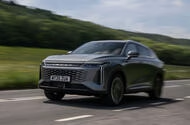
Omoda 9: A Bold Contender in the Premium SUV Arena
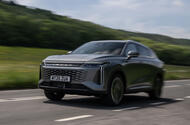 With a 93 mile electric range and low price, is the Omoda 9 good enough to take on premium PHEV SUVs? Calling a car ‘premium’ is a bit tricky, these days, isn’t it? After all, the new Omoda 9 is undeniably premium in its objective merits.At 4.75-metres long it’s seriously spacious, it’s got the LED lighting and sleek surfacing of most posh SUVs, and it is absolutely brimming with tech including autonomous parking, head-up display, heated and cooled seats in the front and back, ‘breathing’ ambient lighting… It’s also got a whopping electric-only claimed range of 93 miles. Mated to the turbocharged, 1.5-litre four-cylinder petrol engine and 70-litre fuel tank, that makes for a potential combined driving range of over 700 miles. By any quantifiable benchmark, the Omoda 9 is a premium, D-segment SUV that’s just as upmarket as a Volvo XC60, Audi Q5, BMW X3 and Lexus RX.And yet… How much weight do we put on brand perception and heritage? Volvo, Mercedes et al are established as premium because they’ve earned that reputation over many decades. Omoda, by contrast, was established in 2022 under Chinese parent-company Chery as a dedicated global brand to sell outside of its domestic market.That’s all very well and good, but for many buyers you could fit the Omoda 9 with a retractable chandelier and it still wouldn’t really be ‘premium’ simply due to the newness and untried standing of the brand. Certainly not for a few years yet, anyway.Omoda is perfectly aware of all this, of course, and it’s making up for its youth by undercutting its premium rivals by many, many thousands. You can only get the Omoda 9 with the all-wheel drive, Super Hybrid Sytem (SHS) plug-in hybrid powertrain, and the only option is your paint colour. Everything else is included, which makes it much better equipped as well as a whole chunk cheaper than a Volvo XC60 or Mercedes GLC PHEV, for instance. But the Omoda 9 is very much in contention with alternatives like the plug-in hybrid Skoda Kodiaq, Kia Sportage, Hyundai Tucson, Peugeot 3008 and VW Tayron. All of which are from brands that have spent the last ten years moving inexorably more upmarket. As we said; this ‘premium’ classification is getting very messy.Anyway, the Omoda’s got lots of rivals – and whether you consider it properly premium or not will really come down to your opinion.
Discover the Charm of the 1970 Honda N600: A Tiny Classic with Big Appeal
Kia’s Bold Move: Reviving Hatchbacks to Compete in Europe’s Car Market
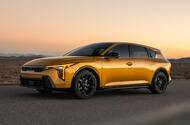 Firm chases ‘big volume’ sales for new EV4 and K4 alongside SUVs
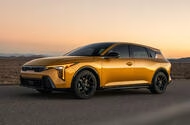
Kia is committed to launching more hatchbacks and saloons, rather than going all in on SUVs, as it prepares the European launch of ICE-powered and electric hatchbacks to rival the Volkswagen Golf and ID 3.
Speaking exclusively to Autocar, Kia executive vice-president Ted Lee said there was still “big volume” for hatchback models in Europe in particular, and he confirmed the firm would continue to offer them and indeed launch all-new family hatchback models.
The first of these new hatchbacks, the EV4, will be the first electric Kia to be built in Europe when it’s launched in the UK in October. The hatchback will be built at Kia’s plant in Slovakia, but it will also be offered as a saloon imported into Europe from South Korea.
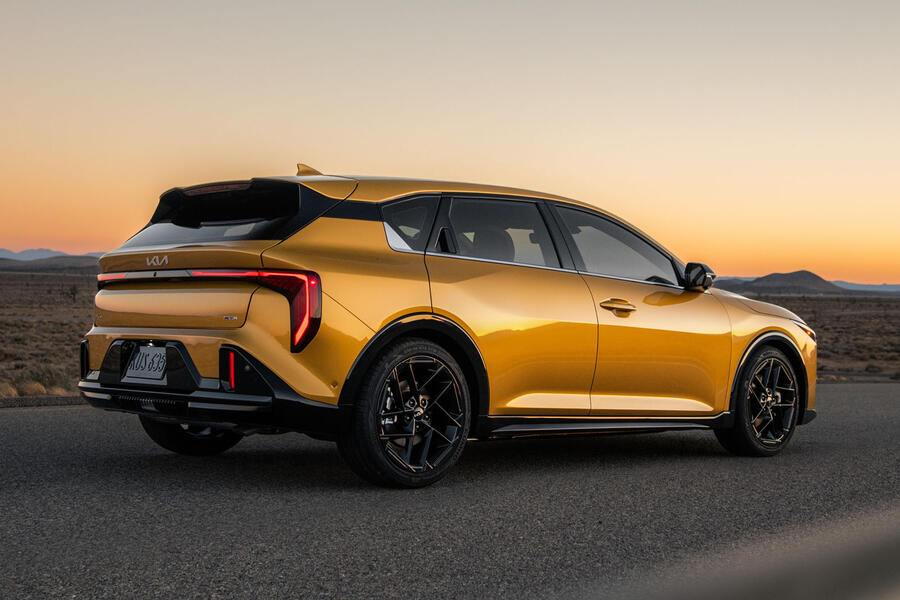
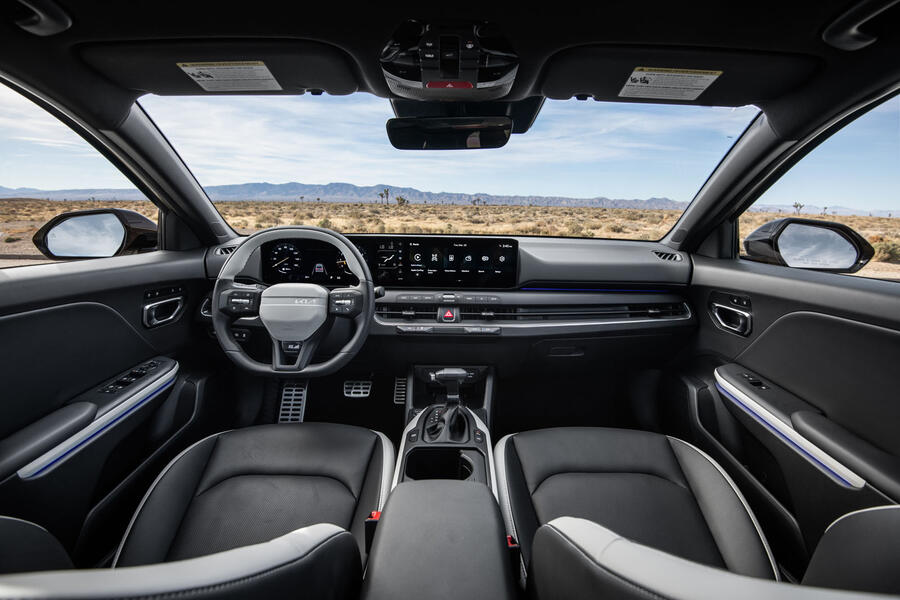
The EV4 will be joined by the new K4, which was unveiled in hatchback form at the recent New York motor show and will eventually replace the outgoing Ceed in Europe.
The EV4 takes the place of the Ceed in the Slovakian factory, so the K4 will be imported to Europe from Kia’s plant in Mexico in both hatch and saloon forms.
An estate version of the K4 has also been spotted undergoing testing, making what would be a three-strong model range for the K4 ahead of an expected launch later this year.
More broadly, Lee believes that Kia currently has a “strong position in Europe”. He added: “Especially in the UK, where we have a very strong stance”.
Lee was the first Korean to work at Kia UK , joining in 2002, when the UK operation became a wholly owned subsidiary of Kia’s main global business.
He now co-ordinates the firm’s global business outside of Korea.
While Kia sales in Europe did slip back slightly year-on-year in 2024, they have still grown more than 30% since 2020. In the UK, Kia has sold more than 100,000 cars for three years running, and it is currently the third best-selling brand in 2025, less than 300 units behind second-placed BMW.
Increased competition in Europe from Chinese brands makes for a “difficult market ”, Lee admitted, but Kia will look to further strengthen its aftersales, parts supply and customer journeys in particular.
“We have to strengthen the advantages of Kia in the market,” he said.
Kia will not get embroiled in a price war in Europe in the face of new lower-cost competition and will not ‘push’ cars onto the market; it will instead maintain a laser focus on residual values, which it credits as partly responsible for the “sustainable growth” the brand has enjoyed.
Lee said Kia has done this by maintaining a “pull demand strategy”, by which cars are not pushed to dealers and onto customers at discounted rates but built and sold according to customer demand.
Describing this as a “healthy cycle”, Lee said: “ It might sound very easy, but in reality it requires a very strong determination and sense of principle.”
Chaos on the Track: The Thrills and Risks of the 24-Hour Race Showdown
Rethinking the Future: Why Smaller Cars Are Key to Affordability and Sustainability
 Shift toward bigger and bigger cars harms the enivronment – and the affordability of smaller models
“It's ridiculous to buy a C-segment car just to take to school or the supermarket. You’re using tonnes of metal and lots of screens just to go to Tesco. It’s fair and intelligent to ask: ‘Have we gone too far?’”
Dacia CEO Denis Le Vot certainly thinks so, as does his boss, Renault Group CEO Luca de Meo, along with de Meo’s counterpart at rival firm Stellantis, executive chairman John Elkann.
De Meo and Elkann recently joined forces to call on European legislators to move away from EV mandates and instead focus on an overall reduction of CO2 emissions. Their goal is to preserve the affordable small cars that are being priced out of existence with the rise of costly EV tech and further active safety legislation.
Given that Dacia’s raison d’être lies in small, affordable cars, it ’s a topic that’s clearly in Le Vot’s wheelhouse. He is pleased that the conversation has entered the mainstream at the top of the industry, and it’s with legislators to do something about, to focus more on the “life-cycle assessment” of a car rather than its tailpipe emissions.
Can they really change their mind? “Yes,” comes his emphatic response. “It ’s just a question of time.” That time is within the next six months, when legislators will reconvene to check on the industry’s progress in hitting EV targets and review the legislation itself.
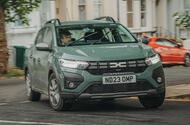
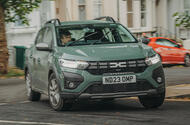
Le Vot has nothing against larger cars; he is currently overseeing the launch of the brand’s first C-segment SUV, the Bigster. Yet he laments the death throes of the A-segment.
“It has almost died,” he says, “pushing people straight into the B-segment. Now that’s suffering, so people would go straight to the C-segment.”
Even if you only want or need a small new car, you’re forced into something big, and this is directly affecting the affordability of new cars.
“Step back and you see that we have a problem,” Le Vot says. “Now is the moment to do something about it.”
De Meo’s and Elkann’s recent comments centred on CO2 emissions, but Le Vot also highlighted the active safety technology, namely GSR2 regulations, which require new cars to have a suite of extra safety tech, that is also driving up the price of small cars.
“Do we really need to have lane keeping assistance in a little family car?” he asks.
Le Vot also reiterated that Dacia won’t “chase stars” in terms of a Euro NCAP safety rating. He is a firm supporter of standards and standardised testing for passive safety, but he questions “the weight active safety has in the game” when deciding a car’s overall safety rating.
One thread binding all this is that any new car will be safer and less polluting than the one it is replacing.
As Le Vot reaffirms: “When you replace a car that is six, seven years old, you are doing a good job for the planet and its population.”