
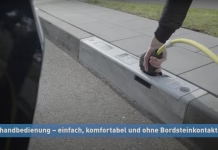
Revolutionizing EV Charging: Rheinmetall’s Sleek Curbside Solutions

Next-Gen Jeep Cherokee Unveiled: A Bold Step into Electric Power and Modern Design

New Cherokee looks like a larger Compass – and will also get EV powerGo-anywhere Discovery rival moves onto a new platform to add the option of EV power for the first time
Jeep has provided the first look at the next-generation Cherokee ahead of its official debut later this year and an expected European launch in 2026.
The first pictures of Jeep's Land Rover Discovery rival confirm that it will look very similar to the recently revealed Compass, above which it sits in the SUV brand's line-up.
This new version will be completely unrelated to its predecessor, swapping onto parent company Stellantis's new STLA Large architecture, which will enable it to be offered with hybrid and pure-electric power. Jeep has not confirmed which will come first and has yet to disclose any technical details.
It will be closely related to the next-generation Alfa Romeo Stelvio, which will use the same platform.
The first images of the new Cherokee have been published just a day after former Jeep CEO Antonio Filosa was named as the new CEO of Stellantis, following Carlos Tavares's exit from the role late last year.
His replacement at Jeep, CEO Bob Broderdorf, said: “The all-new Jeep Cherokee headlines our efforts to deliver more product, innovation, choice and standard content to customers than ever before.
“Jeep Cherokee will boast competitive pricing that strikes at the core of the largest vehicle segment and sits perfectly between Jeep Compass and Jeep Grand Cherokee to bolster our winning mainstream line-up.”
These official images, and earlier spy shots, confirm that the Cherokee shares several design cues with the electric Wagoneer S, including a sloping roofline, squared-off haunches, rear doors set into the wheel arches and door handles recessed into the body.
Up front, however, it features a more prominent variant of Jeep’s seven-slot grille, mirroring that on the new Compass.
It's possible that the combustion version of the Cherokee will use the twin-turbocharged 3.0-litre ‘Hurricane’ straight six from the petrol-powered Wagoneer and Grand Wagoneer, offered with outputs of 420bhp and 510bhp.
An electric Cherokee is likely to be equipped with the 600bhp dual-motor, four-wheel-drive powertrain from the Wagoneer S.
This is paired with a 118kWh nickel-manganese-cobalt battery in that car, giving it a range of 303 miles (according to the US’s EPA test, which is less lenient than the WLTP regime used in Europe).
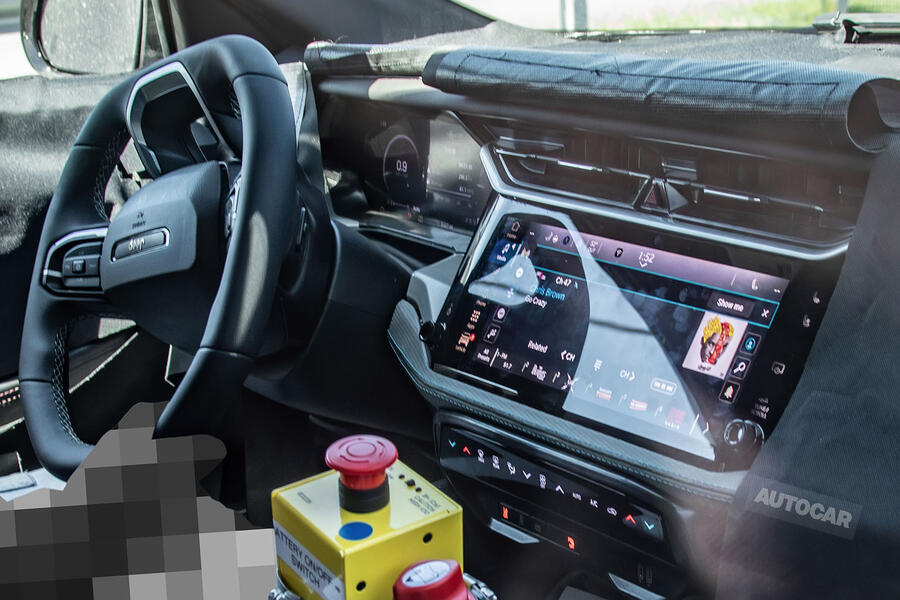
Inside, spy shots reveal that the new Cherokee has a large infotainment touchscreen similar to the 12.3in unit featured in the Wagoneer S, with rotary control dials on its sides.
The climate functions, meanwhile, are operated using a touchbar recessed into the dashboard, just below the main screen.
The Grand Cherokee will be withdrawn from sale in Europe in the coming months to make room for the Wagoneer S.
A similar decision may be made about the Wrangler when the upcoming Recon EV lands in Europe next year.
Elon Musk’s Robotaxi Dream: Is the Future Finally Here?

Volkswagen’s Currywurst: From Factory Favorite to Supermarket Sensation
 Currywurst is estimated to generate seven-figure revenues annually – and now it's a ready meal
Volkswagen has launched a new version of its best-selling product and it has the potential to dramatically increase revenues and profitability – but it’s nothing to do with cars.
In a twist that might make even the most seasoned automotive analyst do a double-take, one of the firm’s most important product lines isn’t a vehicle, or even a vehicle component, but a traditional type of German sausage.
The world’s second-largest car maker is also a heavyweight in the processed meat business, and its famed Volkswagen currywurst is now heading for the ready meal aisle in supermarkets.
First grilled into existence in 1973 at the company’s own butchery in Wolfsburg, the sausage was originally intended for internal use only, fuelling staff in Volkswagen’s canteens, but it soon escaped the factory gates and quickly attained cult status among the German public.
In 2024 alone, Volkswagen sold close to 8.6 million currywursts, comfortably eclipsing the 5.2m Volkswagen-branded cars and commercial vehicles it delivered globally. Even counting all Volkswagen Group brands combined (9.03m), currywurst runs a close second.
From June 2025, it’s getting the full ready meal supermarket treatment, with a microwave-ready version launching at retailers such as Edeka and Netto in northern and eastern Germany. A national rollout is reportedly in the works.

While microwave currywurst trays have been available since the early 2000s, Volkswagen’s version has a factory-fresh twist: no sachet of curry powder for the tomato sauce, which Dietmar Schulz, head of Volkswagen’s in-house meat department, says is because “there’s already enough curry in there – in the sausage and in the sauce”.
Currywurst isn’t just a PR novelty: it’s big business. Although Volkswagen doesn’t specifically detail its sausage sales in its annual report, estimates suggest its processed meat operation generates seven-figure annual revenues in euros.
The currywurst even has an official Volkswagen part number: 199 398 500 A.
Over the decades, currywurst has become part of Volkswagen folklore. When the German car maker attempted to replace it with a vegetarian alternative in one factory canteen, the backlash was swift and fierce. “No Volkswagen sausage? No way!” became the rallying cry.
Now, with the new microwave-ready version, Volkswagen is keeping things properly seasoned and aiming for even bigger sales.

Shifting Gears: Musk’s Departure, Nissan’s Farewell, and Automakers’ New Alliances


UK Eases EV Charger Installations to Boost Infrastructure Growth
 Move to accelerate the roll-out of charging infrastructure is claimed to "save months of delays” and cut costs
The UK government will now allow the installation of EV chargers without planning permission from a local authority, regardless of whether it's for private or public use.
The move is intended to accelerate the roll-out of EV chargers across the UK, the previous Conservative government having set a target for the installation of 300,000 chargers across the nation by 2030.
Installations of private chargers at homes with off-street parking were already exempt from planning permission in most cases. However, the requirement of a green light from local authorities for larger public developments had previously been cited as a key bottleneck in the roll-out of the UK's charging network.
Ian Johnston, CEO of charger provider Osprey, last year told Autocar: “The problem is you've got to go through a process which is under-resourced and takes six to nine months to get planning permission.”
The new exemption from obtaining planning permission is likely to make a particular difference in the speed at which large charging ‘hubs’ can be installed, given that these typically require the installation of supporting infrastructure, such as electrical substations.
Lewis Gardiner, Osprey’s operations director, today said in a government statement: “This is a hugely welcome and practical change that will make a real difference on the ground.
"Removing the need for planning permission for essential electrical infrastructure like substations across the majority of sites will save months of delays, reduce costs and accelerate the delivery of the rapid charging hubs drivers need.”
Lilian Greenwood, minister for the future of roads, added: “We’re cutting down on paperwork to power up the EV revolution so that drivers, businesses and those looking to make the switch will have more charge points to power from and less red tape to deal with."
Jack Cousens, head of roads policy for motoring organisation AA, said the move was “a positive step” that “will help accelerate installations”.
According to charger mapping firm Zap-Map, there were more than 79,000 publicly accessible charge points across the UK at the end of April 2025. This was up from some 73,000 at the end of 2024 and just under 54,000 at the end of 2023.
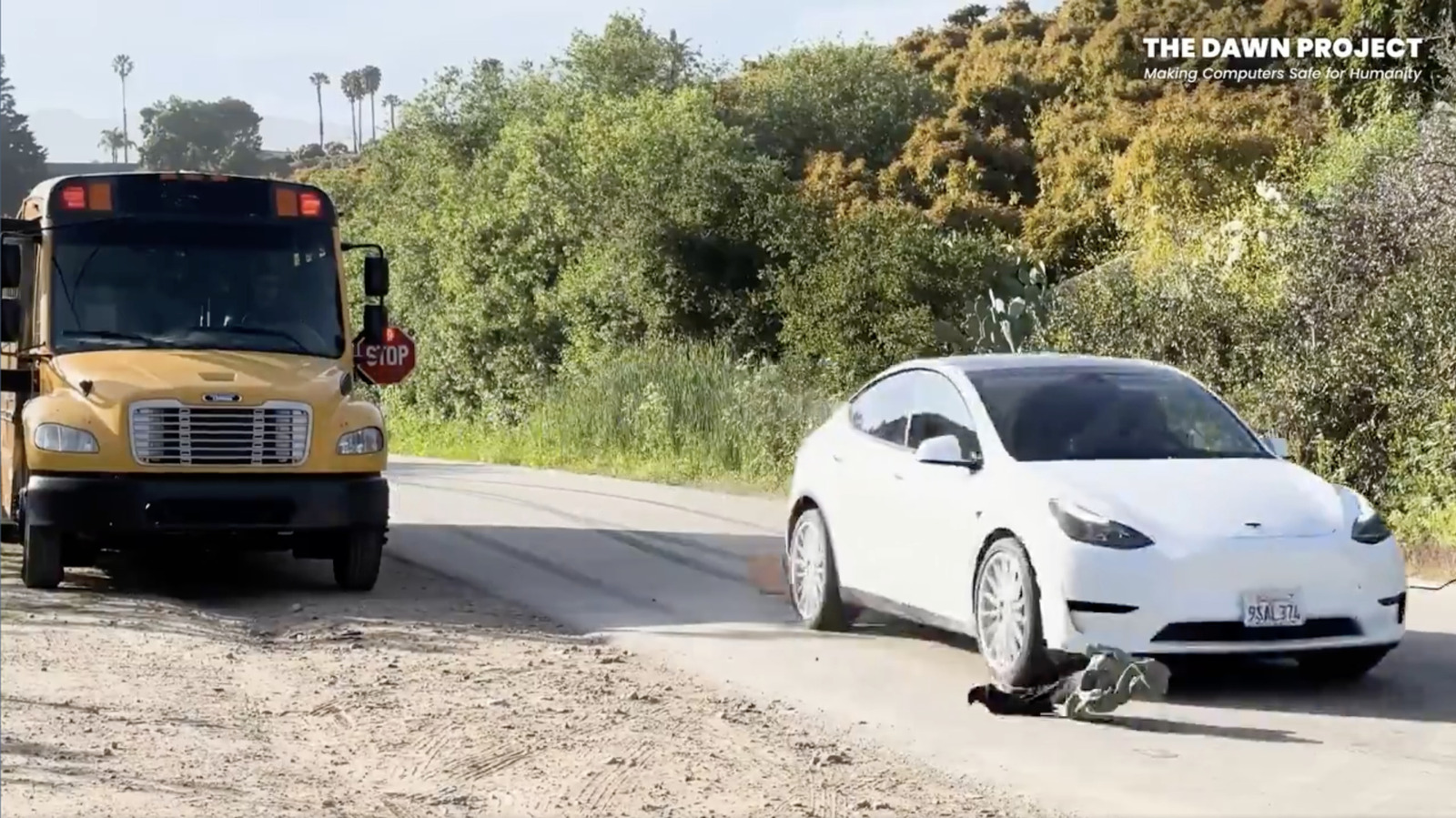
Tesla’s Autopilot Misses Key Safety Alert in Child Simulation Test

Driving Innovation: Join Siemens and Autocar to Explore the Future of Automotive Software
 We're partnering with Siemens, 2025 Autocar Awards sponsor, to explore how software will change the car world
Technology giant Siemens has been named as the sponsor of the 2025 Autocar Awards, which will celebrate the people and organisations shaping the future of automotive - as well as the best cars on sale.
This year's awards ceremony takes place on 24 June, where Autocar and Siemens will name the industry's most innovative and impactful individuals, and provide a platform for them to tell their stories.
As part of Autocar's collaboration with Siemens, the two brands will also host a free, interactive webinar on 25 June in which we will delve into how software is defining the future of automotive.
As its role in vehicle development and functionality becomes ever-more important, there are huge questions over what software means for how we use our cars - and what the future holds.
Siemens is a technology leader with a significant influence on the mobility sphere so is well placed to help answer those questions and reveal the full potential of software in this space.
How can manufacturers upgrade cars post-purchase? Does your car have untapped technological potential built in already? What is a software-defined vehicle? These are just some of the questions we’ll seek to answer in our free webinar on Wednesday 25 June from 14:00-15:00.
Join Siemens head of automotive, battery and mobility Uday Senapati, Autocar deputy editor Felix Page and a selection of special industry guests – to be announced in the coming weeks – for an insightful and interactive deep-dive into the world of automotive software.
Mark Tisshaw, Autocar editor, said: “Throughout our collaboration with Siemens, it has become clear just how deeply connected the company is to the automotive industry and how influential its relationships are at every level.
“We are thrilled to partner with Siemens to tell the stories of the industry's most impressive individuals and companies at this year's Autocar Awards ceremony and to hear how the company's insights and expertise are shaping the future of the car in our upcoming webinar.”
The webinar will be broadcast live on Wednesday 25 June from 14:00-15:00, with the opportunity to put questions to our expert guests.

Tom Cruise Takes a Wild Ride: The Motorcycle Moment We Can’t Miss in Mission...


Volvo EX40 Review: A Blend of Comfort and Efficiency Challenges in the EV Landscape
 Could Gothenburg’s lowest-profile EV also be its best? We aim to find out
Why we're running it: To see i f this veteran might actually be the pick of Volvo’s growing, tech-first EV range
Much of the talk surrounding Volvo concerns its evolving model range, headlined by the addition of the electric Volvo EX30 crossover and Volvo EX90 flagship SUV.
But the Swedish firm’s first production EV has also been transformed in recent years – to the point that it’s been rebranded as the EX40 to differentiate it from its petrol-powered Volvo XC40 sibling.
The XC40 Recharge was launched in 2019, which is several generations ago in the fast-developing world of electric car technology.
That’s forced Volvo to make significant upgrades, although they can go only so far. For example, the infotainment in the EX40 remains an older generation than in the EX30 and EX90, in which virtually all of the controls have migrated to a screen. Of course, for many buyers that old-school design could well hold plenty of appeal.
All this has left Autocar's latest long-term test car, for better or for worse, feeling a bit old-tech by comparison. That said, it’s still based on parent company Geely’s Compact Modular Architecture, which it shares with the much lauded Polestar 2.
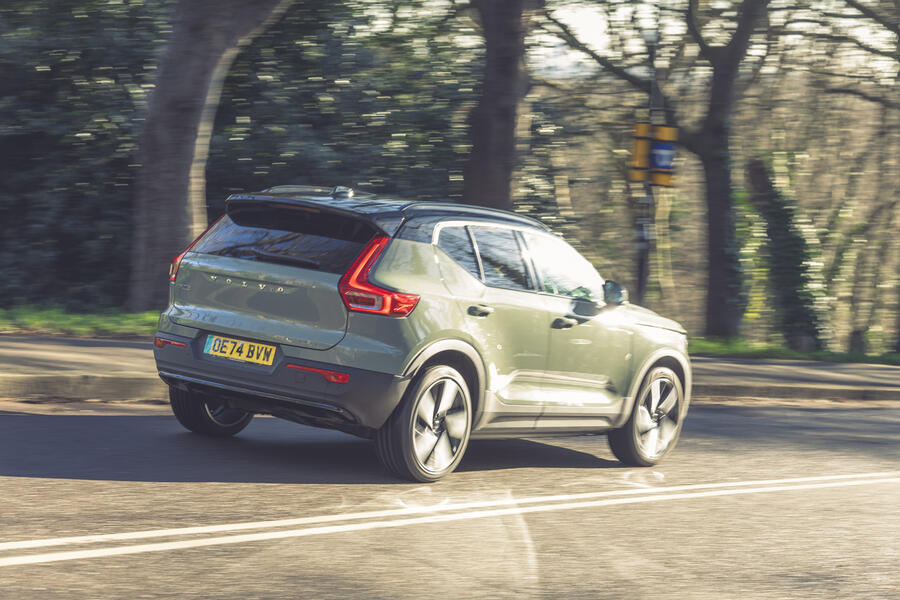
The updated car looks almost identical on the outside to the XC40 Recharge, but some important changes have been made under the skin. While the old model was front-wheel drive, single-motor EX40s instead have a powered rear axle, which should theoretically improve efficiency.
Our car is a Single Motor Long Range model, with a 78kWh battery giving it an official range of 340 miles and putting it between the 69kWh Single Motor (295 miles) and 82kWh Twin Motor and Twin Motor Performance models (332 and 326 miles) in the EX40 line-up.
That in theory should be enough to last me an entire week with my driving schedule, but this report is being written during winter, so I’m not going to be complacent. After all, the EX40 is a heavy beast (2001kg) and its boxy silhouette doesn’t exactly lend itself to peak aerodynamic performance. That a lone is a recipe for low efficiency, and while I’ve previously driven EVs through the coldest months without heating, those spending over £50,000 to buy this car understandably won’t want to compromise their comfort in return for a respectable range, so the climate control will be glued at a toasty 21deg C until the sun decides to come out again.
Over its first few hundred miles, the EX40 has self-reported use of around 38kWh per 100 miles, which equates to about 2.6mpkWh, or 205 miles of range – a full 135 miles below the advertised figure. At least charging speeds aren’t quite so miserly – the quoted 185kW easily beats the Skoda Enyaq (125kW) and BMW iX3 (155kW).
While efficiency may be an early concern, the EX40’s performance is not. Even this Single Motor version makes 252bhp and 310lb ft, good for a 0-62mph time of 7.2sec. I suspect that will be plenty fast enough for buyers of this kind of car, who will also appreciate the smooth delivery of that power. At least as importantly, it’s so far proving to be a very comfortable cruiser over longer distances too.
The interior is also full of promise. Like the exterior design, it’s almost identical to that of the XC40 Recharge so doesn’t subscribe to the minimalist, hands-free ethos of the EX30 and EX90 – yet. It almost sounds silly to draw attention to such things at this point, but the steering wheel has buttons for quick access to multimedia functions and the cruise control and our car has a modest 9.0in portrait infotainment touchscreen, paired with a 12.3in digital gauge display.
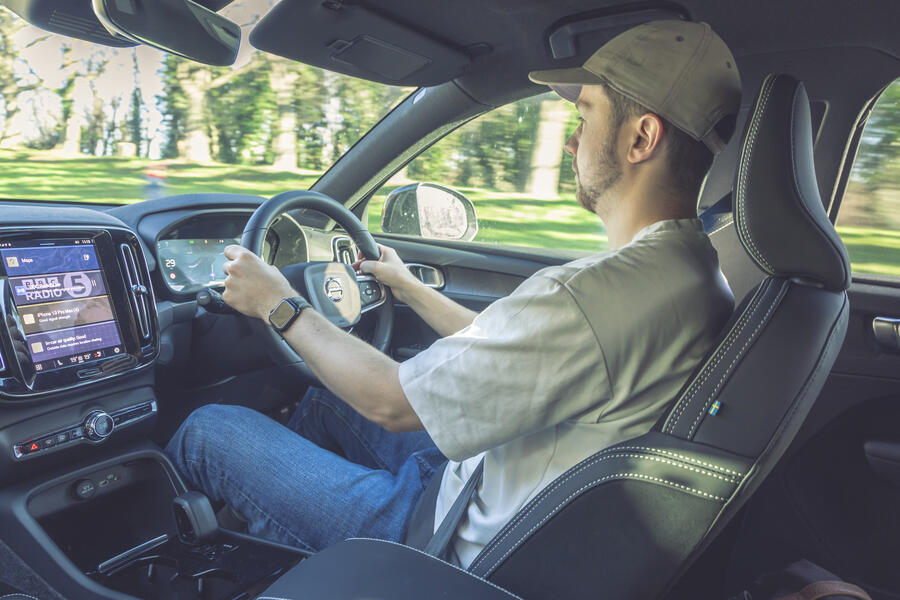
Both displays are crisp and clear, and Volvo’s Google-powered user interface remains one of the best – although many functions, including Google Assistant, Maps and Play Store (for downloading apps), will demand paid subscriptions after four years. Regardless, it’s so well integrated that I haven’t even considered using the standard Apple CarPlay. I can just get into the car and forget about my phone for the duration of the journey. Bliss.
Plus trim, the middle one between Core and Ultra, is well equipped. In addition to wireless phone charging, heated seats and a reversing camera, it gets air purification, adaptive cruise control, 19in alloy wheels and keyless entry. And I’ve already had some highly satisfied passengers, because Plus also offers rear heated seats – quite a rarity.
Early complaints? The EX40’s low-speed ride is a bit unsettled and road noise is pronounced. Handling is on the numb side too, but that’s hardly surprising given it’s positioned as a relaxed family runner, not a Hyundai Ioniq 5 N rival.
So far then, the EX40 on the whole feels as impressive on the road as it looks on paper. Whether it goes nearly as far on a charge as the brochure says it will may prove the deal-breaker. We will see.
Update 2
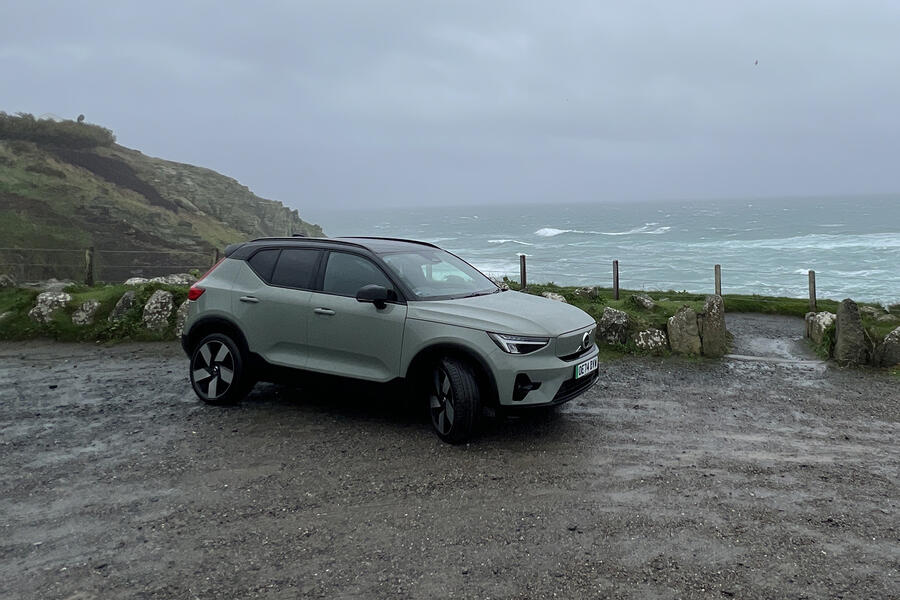
Shortly after starting life with a new car, it’s become a ritual for me to take it on a south-westerly trip across the country to get properly acquainted.
Our Volvo EX40 comes with the larger, 79kWh battery that is claimed to offer a range of up to 340 miles, so there was initially some hope that I’d make it the full 302 miles from north London to Lizard Point without stopping. The plan never stood a chance, however, once a meagre ‘220 miles’ appeared on the range display as I set off.
That was enough to get me to my usual stopping point of Exeter services, where a Gridserve charger replenished the battery from 10-80% at a peak rate of 145kW (not far off the EV’s claimed 155kW maximum). It meant I didn’t have to sit in the car park for more than 30 minutes during the worst storm of the year.
The journey itself was silky smooth. This Volvo’s ride quality over long distances is excellent, with its cosseting front seats and unobtrusive ADAS technology helping to shrink hours-long drives.
Its 252bhp electric motor was more than a match for the hilly A303 and faster A30, but it was here that efficiency took a big hit. The EX40 returned an economy of 2.4 miles per kWh for the duration of the journey. That’s equivalent to around 190 miles of range – nowhere near the WLTP figure.
It’s a world away from the nearly 200kg-lighter Cupra Born I ran previously: that car routinely achieved 4.5mpkWh at highway speeds. But where the 2001kg Volvo has the Cupra beaten is refinement, in which area the EX40 has so far been hard to fault.
Those comfort seats, fitted as standard in Plus-spec models like ours, live up to their name and like the steering wheel are heated too, so I’m kept warm without being too reliant on energy-sapping climate control. This electric SUV does a good job of nullifying wind and road noise too. The EX40 certainly stakes a strong claim to being among the most refined and relaxing models in its class.
Unlike in the newer, more technologically advanced Volvos on sale today, the EX40 ’s safety kit leaves you largely to your own devices, and its software doesn’t intrude. Switch off the lane assist, driver monitoring and other handholding systems, and they stay off.
The only feature that switches on (owing to European legislation) each time you start the car is the speed limit warning, which for me isn’t a problem. The system reads roadside speed limit signs and motorway gantries effectively, and it augments that with GPS data. It ’s actually quite handy to have in London, which is beset with continually changing speed limits. Over 2000 miles so far, I have yet to experience any difficulties or erroneous speed limit detection.
While most of the tech is simple to use and (for the most part) effective, it’s not perfect. The regular cruise control works well, but the Pilot Assist system takes some getting used to. It is in effect a semi-autonomous cruise control that can support braking, steering and acceleration, but it feels a bit odd in practice. It lacks the smoothness of BMW’s Active Cruise Control: the steering wheel jerks around in small increments rather than with intuitive movements, and drivers behind must think I’m correcting my steering way too often. When news editor Will Rimell ran an XC40 Recharge (as the EX40 was previously known) in a different spec, he had no issues with the same system and suggested it made his commute far easier, so I’ll persevere with it to see if my thoughts change.
One frustrating feature I doubt I’ll get used to is the automatic braking system that functions when reversing. It detects obstacles to the side of the car and immediately behind, plus traffic when you’re backing out of a parking space. It also seems to detect ghosts: often when I’m reversing, it will apply the brakes jarringly for no reason, both spooking me and making me look like a buffoon. Still, it ’s a fairly minor gripe that takes little away from the EX40’s overall charm.
Update 3
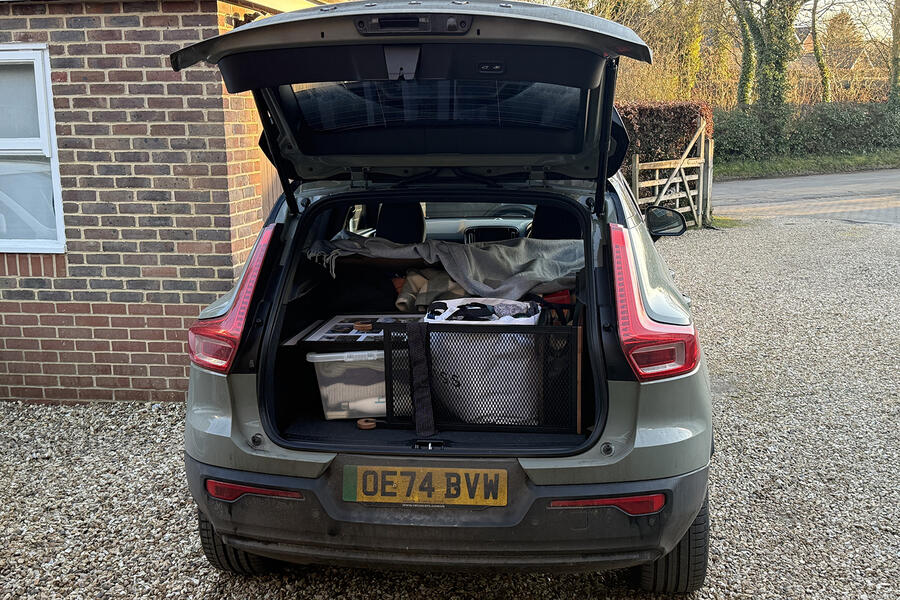
No matter how clean and tidy you think you are, moving house always highlights how much tat you own. These occasions can expose a flaw in many small SUVs: practicality. Some, despite their raised ride height and perceived capaciousness compared with a conventional hatchback, actually have no more interior space.
My electric XC40 has decent but not class-leading practicality, according to the official figures, which I put to the test when I moved out of my north London flat with two years’ worth of accumulated cargo.
My makeshift removal vehicle has a 452-litre boot. That ’s some way from being the biggest in the class, beaten easily by the Kia Niro EV (475 litres) and BMW iX1 (490 litres) and positively outclassed by the Tesla Model Y (854 litres – although Tesla cheekily includes space above the parcel shelf ). Fold the rear seats down flat, however, and there’s a reasonable 1328 litres to play with.
The EX40’s boot is generally a practical and usable space. With a wide opening and square shape, it’s ideal for shifting furniture and boxes. I squeezed in a dresser, an air fryer, three boxes of clothes and a bedside table easily, and the 252bhp electric motor had no trouble coping with all the extra weight.
I unexpectedly found a use for the tiny 31-litre ‘frunk ’, too. Turns out it’s perfect for half a sourdough loaf and some lunchboxes.
If I had one complaint, it’s that the rear doors have a narrow opening, so it can be hard to squeeze larger, rigid items in. Some reshuffling ensued, if only as a result of my own poor planning.
On the 80 -mile route back to my temporary accommodation – my parents’ house – the EX40 showcased its exemplary ride quality. London’s roads are rubbish – no secret there – but believe it or not the roads in this corner of Berkshire are even worse. In our village, potholes are more like trenches and cracks in the road resemble canyons. Yet the EX40 remained composed and cosseting and my treasured commemorative glassware remained undamaged.
The EX40 performed valiantly throughout the move, but despite a successful first run I succumbed to hiring a van for the rest of my stuff.
All of it will now sit in my parents’ garage for two weeks (much to their dismay) until I can pack up and do it all again. After the EX40’s positive initial showing, it may have earned itself a full day’s work next time out.
Update 4
Moving from a shared house to an unfurnished flat has meant I’ve had to buy furniture, cutlery and lots more besides, and because I currently run a Volvo, I knew there was only one store for the job. Okay, I’ll admit I chose Ikea for its prices rather than its provenance, but it was a nice coincidence nonetheless.
So, another practicality challenge for our resident Swede: Poängs, Färgklars, Vardagens – you name it, it would all have to be squeezed into the EX40’s 452-litre boot. And, once again, the car proved itself worthy – although I did have to lower the rear seats to liberate all 1328 litres.
I was feeling quite smug until my colleague and fellow shopper Sam Phillips arrived in his 128,000-mile 2011 Ford Focus and seemed to fit at least as much stuff in the back of it. And that was with a mere 316-litre boot, increasing to 1215 litres with the rear seats folded flat.His cargo included two wardrobes, a bedside table, an office desk and a lamp, albeit boxed up in classic Ikea flat-pack fashion.
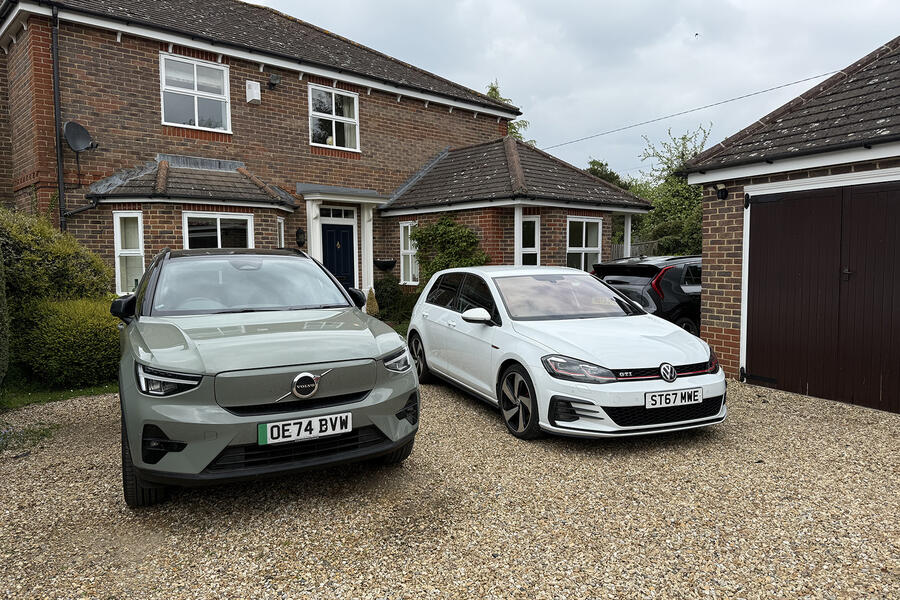
The Volvo has spent most of the past few weeks quietly and effectively undertaking similarly mundane duties. The excitement has come from my 2017 Mk7.5 Golf GTI (manual, if you’re asking), which I bought back in March.
Of course, comparing two very different cars would be unfair, but driving a hot hatch legend has only served to emphasise one of the EX40’s biggest shortcomings: its handling. As a result of its raised height and two-tonne weight, the SUV leans significantly when cornering, and there’s not much room for adjustment, either.
There are just two steering settings, standard and firm, the latter of which adds a bit of weight but little in the way of dynamic ability. And, unfortunately, while the ride is largely settled, it ’s not much better than that of the low-riding hot Golf, either.
On the other hand, even the GTI can’t match the instant power of the EX40, and the EV is inevitably better equipped with the latest technology.
The EX40 has another card up its sleeve. Parking in the south-west London neighbourhood I’ve moved to requires a resident’s permit. A pain in the backside, but the council has at least included some incentives to ease the burden. Being electric, the EX40 has a Band A classification and thus is eligible for a cheaper rate. A standard permit is £108.50 for the year, but I’ve paid just £54.25.
More problematic is the limited number of rapid-charging stations in the area. According to Zap-Map, there’s a fair discrepancy compared with other parts of London.
Within a few miles of my flat, there are six fast chargers, three of which are inaccessible on private land, while another is at a garage and has been out of service for months. The other two are at a McDonald’s three miles away, so it might be time to explore the world of lamp-post chargers, unless I can stand going up a few trouser sizes.
Goodbye
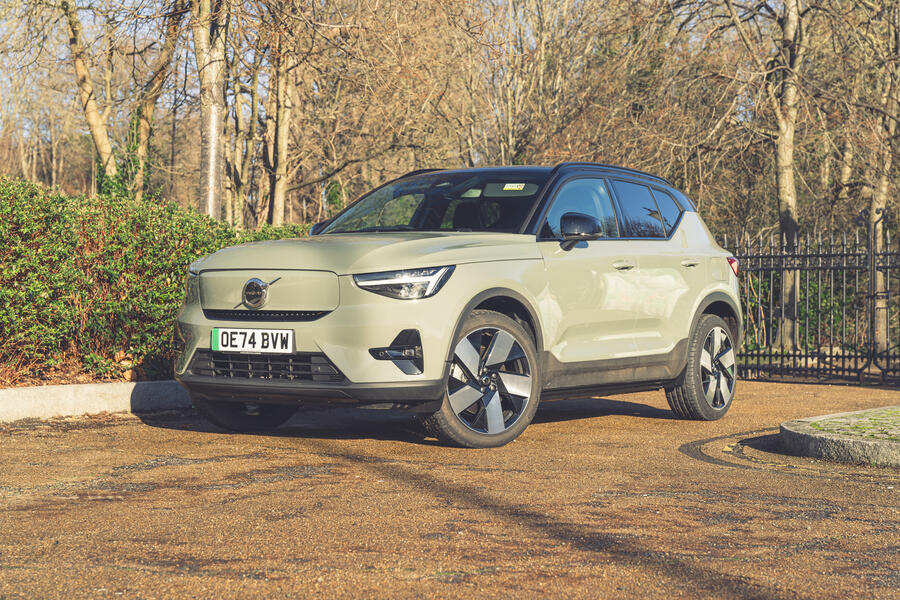
Such is the reassuring familiarity of a Volvo SUV that when this EX40 arrived on our fleet several months ago, I knew exactly what to expect: a dependable, refined, spacious tourer with a premium feel and a dash of Scandicool. It wouldn’t be tremendously exciting, but it would fit a brief that has kept plenty of buyers happy. And, as the EX40 departs, I’m pleased to say it delivered on those expectations – mostly.
To start with, the EX40 is one of the most accessible electric cars I’ve driven. A newcomer to EVs wouldn’t be intimidated to drive it, and it was expertly undemanding on the road. What it lacked in dynamism it made up for by making every journey straightforward and stress-free. Not a given in today’s tech-led cars.
That accessibility could be because the EX40 is so familiar, being based on the highly successful petrol-powered XC40. We have run a number of examples on our fleet over the years, ranging from pure ICE and plug-in hybrid XC40s to a dual-motor XC40 Recharge EV.This EX40 Plus Single Motor Extended Range is perhaps the ideal spec for an EV, since its combination of a single rear-mounted motor and the biggest battery in the line-up gives the longest range possible. The 252bhp offered is well down on the range-topping Twin Motor Performance model’s 436bhp but I found it to be comfortable enough for all day-to-day driving situations.
The feeling was reinforced when I got the chance to try a 402bhp dual-motor EC40. That model (essentially identical to the EX40 aside from the sloping coupé roofline) was sharper in the corners and clearly faster, but all its extra power felt unnecessary in a family SUV on UK roads.
My EX40 also felt more settled on country lanes, perhaps because it was rear-driven and a little lighter. I also welcomed the extra interior and boot space enabled by the EX40’s higher roofline, not least because I kept bashing my head on the EC40’s bootlid whenever I opened it. But that might just be me.
The EX40’s 452-litre boot served me well during our time together and helped me move house more than once, but it’s a fair bit down on the Audi Q4 E-tron (520 litres) and put to shame by the admittedly bigger Skoda Enyaq (585 litres). I couldn’t have asked for much more from behind the wheel, though. The EX40’s interior is practical and extremely relaxing. The suede textiles and Microtech upholstery and highly adjustable cushioned seats helped make all my journeys pass by in total comfort.
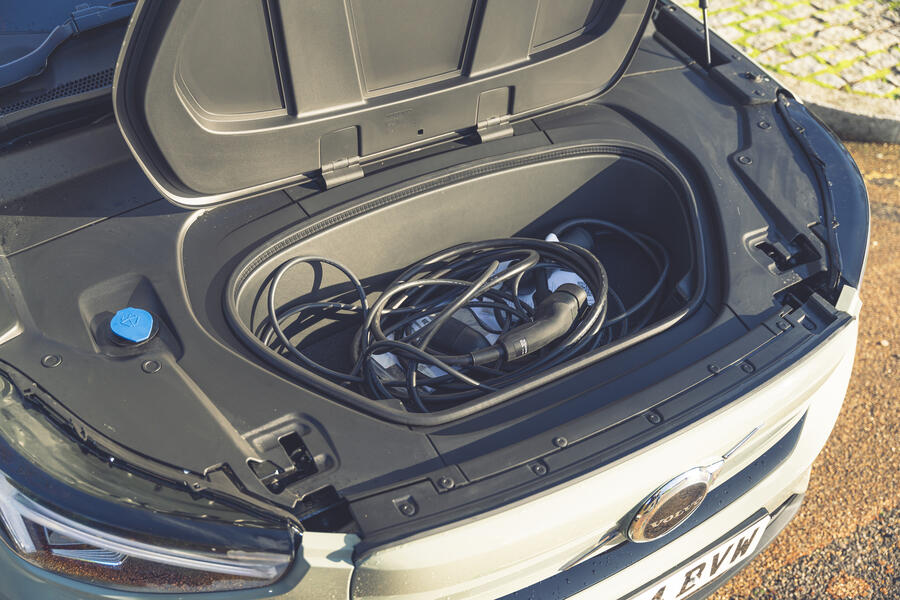
Comfortable inside and pleasantly undemanding to drive, then. What ’s not to like? Well, there was one glaring issue I encountered whenever I drove the EX40: efficiency.
Our car was fitted with the bigger, 82kWh battery, compared with entry-level models that come with a 66kWh pack. When it was delivered, our car had an official WLTP range of 340 miles, which is competitive for this class. Better still, a software update during its time on the fleet boosted this to 353 miles.
Sadly, I never saw anything close to that. And while most EVs fail to match their official rating in the real world, this EX40 simply isn’t competitive with newer, more efficient rivals, some of which can easily exceed 4mpkWh.
In 8000 miles of driving, I never saw more than 260 miles of range on my digital driver display. My average economy amounted to around 198 miles on a full battery. Even a peak of 268 miles was well down on the claimed range, pre-or post-software update. Winter driving was of course a factor, but things didn’t improve markedly once the weather warmed up.
Still, the charging speed was decent at 185kW, so I was able to get it topped back up fairly quickly.
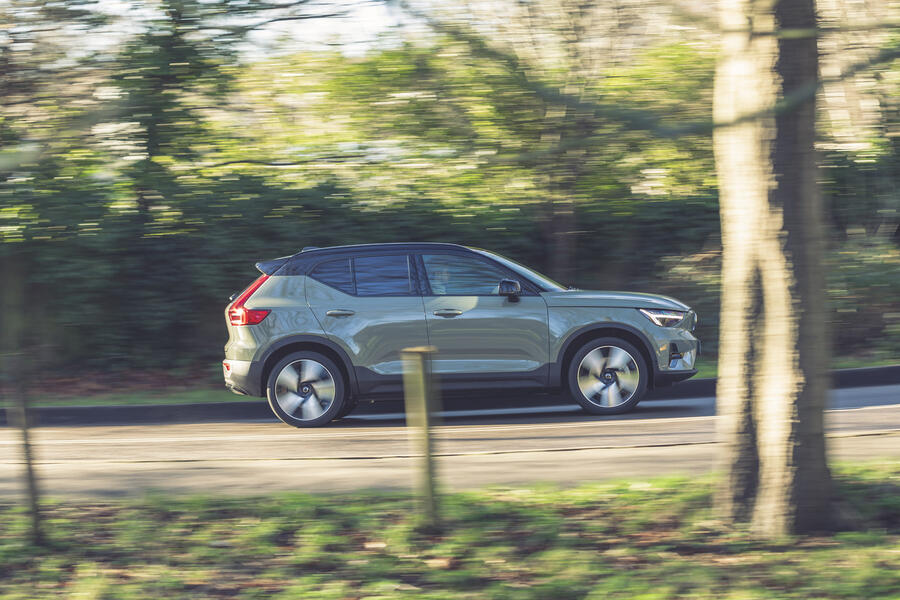
While parked up at the chargers I was able to fully explore Volvo’s infotainment system, which in my experience is among the easiest to use and one I will really miss. It has a Google-powered user interface, so I was able to log into my account and access all my saved locations and Google Maps search history.
The various downloadable apps even made those charging stops rather enjoyable: I watched videos on YouTube to keep me entertained, logged in directly to Spotify to access my music library and used the fireplace app to warm me up. It nearly made me forget I had the heating turned off in January to conserve range.
It was also a reminder that Volvo cars are increasingly becoming software-based, and that this EX40 is a bit of an outlier in a line-up now also including the smaller EX30 and the larger EX90.
If you’re already tempted by the EX40 and its range meets your driving needs, though, don’t let its age put you off. This is a compelling proposition, mixing intuitive and user-friendly technology with a bit of old-school Volvo charm.