
Behind the Scenes: How Air Traffic Controllers Keep Our Skies Safe Amidst Growing Challenges

Charging Ahead: Insights from Andersen EV’s Visionary CEO David Martell
 Prior and Cropley talk to David Martell, CEO of Andersen EV, makers of premium chargers, the choice for the likes of Porsche and JLR
Volkswagen Ditches ID Names for Clearer EV Branding
The Rise of Humanoid Robots: How Car Companies Are Shaping the Future of Automation
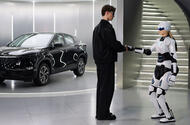
Chery's Aimoga division recently revealed the humanesque Mornine robotIt's seven years since Honda retired Asimo but BYD, Tesla and others have rekindled the robot wars
Seven years ago, almost to the month, Honda announced it would scrap its long-running Asimo humanoid robot programme. The dream of the robot butler popularised by comic books in the 1950s looked to have died with it.
Since then, however, the rapid pace of development in electronics, sensors, robotics and artificial intelligence has persuaded car companies including BYD, Tesla, Hyundai, Chery and Xpeng that robots are suitably product-adjacent enough for them to spend big on producing Asimos of their own.
Such is the buzz about the potential market for these machines either in the home or workplace that at least two of those car companies – Tesla and Chery - are predicting sales will outstrip those of its cars.
Some of the more bullish financial analysts agree. “Over the long term, we project the market for humanoid robots to be materially larger than the global auto industry,” Morgan Stanley autos analyst and Tesla permabull Adam Jonas wrote in a recent report, in which he forecast the market would be worth $50 trillion (£38tn) by 2050 with 63 million jobs replaced.
China and the US are leading the charge, with humanoid robots showing off their (still-limited) moves at both the CES technology show in Las Vegas in January and the Shanghai motor show in April.
Most impressive was perhaps Chery’s Mornine from its Aimoga division – an unquestionably female robot decked out with wraparound shades and long blonde hair that could walk, hand you a drink and hold a conversation of sorts via integration with China’s cut-price AI large language model DeepSeek.
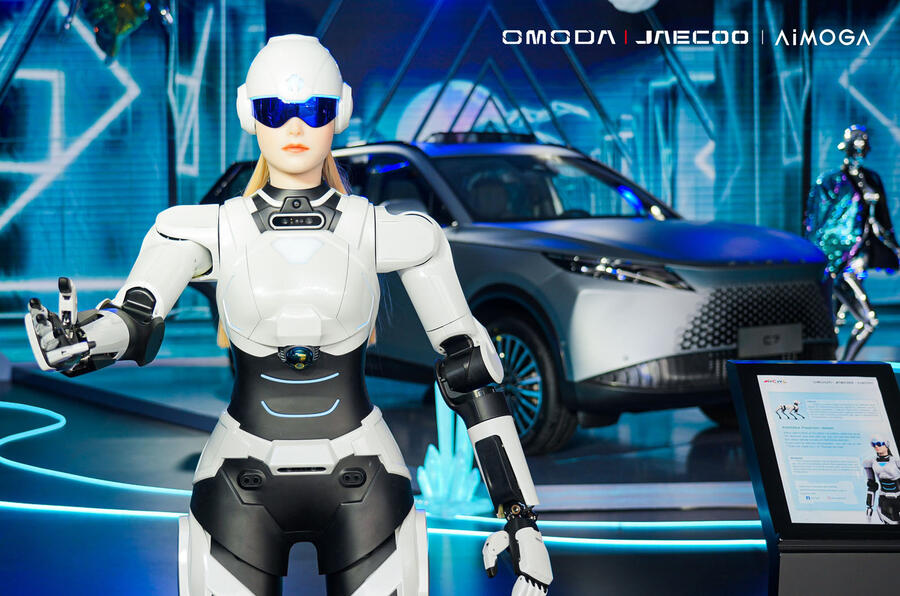
Chery is launching the robot first as an “intelligent sales consultant” in brand dealerships globally, including those for Omoda and Jaecoo, and has already begun trialling it at a showroom in Malaysia.
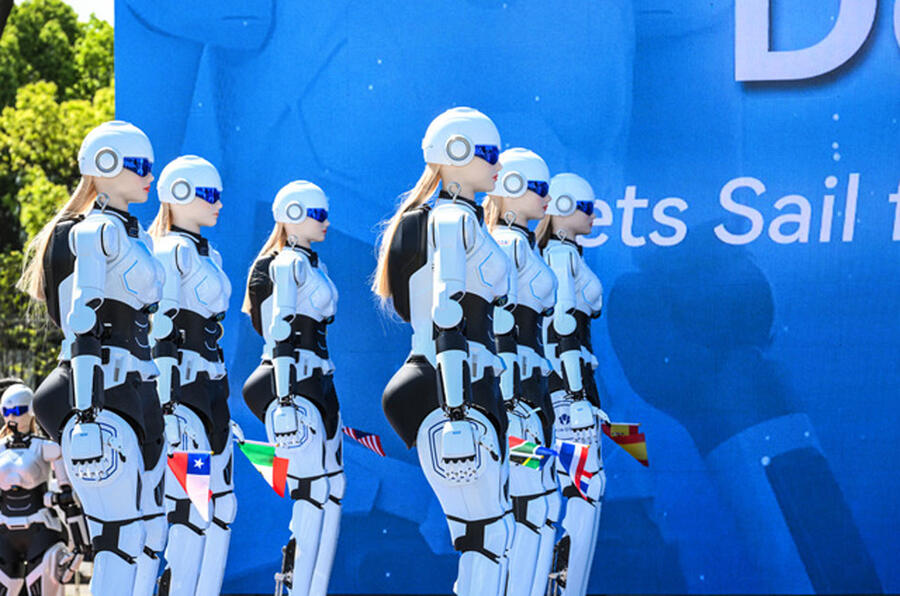
During an event held for the benefit of Chery’s global dealer network in April, Zhang Guibing, president of Chery International, touted Mornine’s abilities to help out showroom staff by answering questions on model specs and he encouraged dealers to buy one of the 220 robots Chery plans to make this year, at a discounted rate.
However, the longer-range goal is to sell the robots alongside the cars. “Aimoga is the real future for the Chery company,” Zhang told the crowd “The market is huge. One assistant for living, one assistant for your job.”
No price was given but robots are currently still prohibitively expensive. A study by the Bank of America put the bill of materials for a robot currently at around $35,000 (roughly £26,500). Last year, Morgan Stanley calculated that Tesla’s Optimus would cost between $50,000-$60,000 (around £37,500-£45,000) to make, while automotive supplier Sona Comstar, a big name in the actuators that robots will need, estimates between $35,000 to $50,000.
That’s before factoring in all the other expenses as well as a profit margin.
That price will come down, though. Tesla is hoping to sell its Optimus robot from between $20,000 and $30,000 (roughly £15,000-£22,500) by 2026, while the Bank of America estimates the bill of materials for the average humanoid robot will fall to $17,000 (about £12,750) by 2030.
The drop will come from a combination of an improvement in component design, a cut in the cost of sensors, including lidar, and the economies of scale that will result from the predicted ramping up of production of something that currently isn’t built anywhere in volume.
“Almost everything in Optimus is new,” said Tesla CEO Elon Musk on the company’s earnings call in April. “There's not like an existing supply chain for the motors, gearboxes, electronics, actuators, really anything in the Optimus apart from the AI for Tesla.”
However, some are already dangling the prospect of lower prices. BYD, for example, announced in April a new humanoid robot butler costing from $10,000 (£7500) with deliveries promised in December. When the so-called BoYoboD is low on batteries, it’ll go and stand in the sun to recharge via solar.
Meanwhile, China’s Unitree showed off the $16,000 (£12,000) G1 humanoid robot at CES.
Of course, car companies have been at the forefront of robotics for years as they continue to automate more elements of vehicle production. But in general the large robots that are welding, painting and glueing on the assembly line are caged creatures programmed to perform a single task.
Only recently has the idea of ‘cobots’, collaborative robots, been introduced into the factory space, where they are still fixed in place but are aware enough of their surroundings to work safely alongside human employees line-side.
Humanoid robots are newer still, with Mercedes this year launching a pilot project at its Berlin facility with the aim that they will work alongside humans from around 2030. Ford has a robot dog built by Boston Dynamics (owned by Hyundai) patrolling its Kuga plant in Valencia, Spain, to sniff out oil leaks among other tasks. And BMW has started working with a Figure 02 robot to sort sheet metal parts at its Spartanburg plant in South Carolina.
Cars and humanoid robots are entirely compatible in terms of development, argues He Xiaopeng, co-founder and CEO of China’s Xpeng. “If you have a very early preparation, you can definitely create a lot of synergies across different domains,” he said on the company’s earnings call in March. “For example, what we are developing right now is the level three capability for our autonomous driving vehicles. And this physical-world, AI model is definitely compatible with the humanoid robot's level three capability.”
Xpeng is another car maker planning robot production in 2026 but there are hurdles in the way. “It's actually more challenging than even producing AI vehicles,” said He.
According to He, the promise of all the show robots is not actually translating yet to a useful product. “A lot of our peers are actually focusing on the lower body motion capability of humanoid robots,” he said. “And I believe that is still very limiting because it's restricting themselves to the level two kind of capability, which is not enough.”
Xpeng claims to have solved basic lower body capability as well as movement in the arms, mouth and also some brain capability. However, the future is still looking “very foggy”, He told investors. “It’s very hard to predict when the turning point will come technologically and commercially,” He said, adding that in terms of development, humanoid robots are roughly where EVs were 15 years ago.
As with EVs, China is the key to the success of humanoid robots, as noted somewhat gloomily by Musk amid his trademark bombastic predictions on the investor call. “With respect to humanoid robots, I don't think there's any company that matches Tesla,” he said. “And then I'm a little concerned that on the leaderboard, ranks two through 10 will be Chinese companies.”
The Bank of America’s prediction of a $35,000 bill of material cost by the end of this year was only achieved on its most of the components being made in China.
“Currently, the [humanoid robot] supply chain is pretty much dominated out of China,” Vivek Singh, CEO of suppler Sona Comstar, told investors in April. The Indian-based company is looking to capitalise on firms wanting to diversify out of China.
Tesla might be one. Musk admitted that production of the first Optimus robots was affected by the Chinese ban on the export of rare-earth materials to the US amid the trade war between the two countries. The US’s speedy negotiation of a lower tariff rate for Chinese goods was perhaps a recognition of how far China is ahead of the US on supply chain for tech-focused future products like robots.
But first, these robot developers need to convince private individuals or companies that they need to spend £20,000 or more on a robot to make tea, sell cars, replace the night-time cleaning crew or whatever menial job a humanoid robot might turn out to be good at.
As Singh noted: “If you have the greatest product in your lab and you can't sell a single unit, it doesn't really have any meaning.”

Why the President Can’t Stop Talking About Mayor Pete’s Unexpected Exit


The Timeless Thrill of Super Mario Kart: Why It Reigns as the Ultimate Racing...
 So fun was Super Mario Kart that kids young and old still love it today
As computers and games consoles rapidly evolved in the 1990s from literally BASIC (as in the BBC Micro’s programming language) to the ultra-cool Sony PlayStation, so developers created some amazing racing games.
In 1991, Geoff Crammond’s Grand Prix set new standards for an accurate Formula 1 simulator, then in 1997 Gran Turismo’s staggering realism and unprecedented scale changed the genre forever.
TOCA Touring Car Championship and Colin McRae Rally melded simulation with accessible dynamics and there were pure arcade classics such as Sega Rally Challenge, Daytona USA, Ridge Racer and Need for Speed.
But the greatest racing game of the decade – no, actually, the greatest racing game of all time – arrived on the Super Nintendo in 1992, featuring a cartoon plumber racing karts against rivals including a gorilla, a princess and a mushroom.
But underneath that cutesy cartoon froth, Super Mario Kart was a supreme racing title. Clearly, Super Mario Kart isn’t realistic in the style of Gran Turismo, but its faux-3D backdrops (enabled by the Super Nintendo’s parallax scrolling and Mode 7 graphics wizardry) were groundbreaking.
Even the technical limitations, such as the inability of the system to render 3D elevation, meant the track design had a simple purity that fancier, more capable games have since lost.
But it was in gameplay where Mario Kart excelled. The cartoon karts actually handled like karts. You had to hustle them, and unlocking true speed meant mastering the ‘jump drift’ technique to powerslide round corners.
As a result, even Time Trial mode became a huge challenge. I maintain that my still-standing Attwood family lap record on Ghost Valley 1 is the nearest I’ll ever come to Ayrton Senna’s 1988 Monaco pole lap for in-the-zone driving transcendence.
And the racing modes were another area where Super Mario Kart absolutely shone. For starters, the various characters had different characteristics (Bowser had a high top speed but handled badly and was slow to accelerate; Koopa Troopa would zip off the line and round corners but lagged on long straights) that created a real balance.
Then there were the power-ups: the green and red shells, mushrooms, bananas and stars. Forget Balance of Performance or success ballast, this was the ultimate way to level the field: the lower down the order you were, the better power-ups you got.
Many times I would dominate a race, only for my brother to time a red shell strike to perfection and sweep past on the run to the line. Insanely frustrating and unfair, yet somehow we kept coming back for more.
There have been numerous Mario Kart titles on various Nintendo consoles (and now even mobile) since, but none has matched the simplicity and purity of the original. Nor has any other racing game.
And more than 30 years on, Super Mario Kart is still as enjoyable to play as it ever was.
Anyone up for a showdown on Rainbow Road?

Towed and Trapped: How Connecticut Companies Are Holding Your Belongings for Ransom

Tragedy Strikes at Bicester Motion: Fire Claims Lives of Two Firefighters and a Community...
 Two firefighters and one member of the public have died; two more firefighters are in hospital with serious injuries
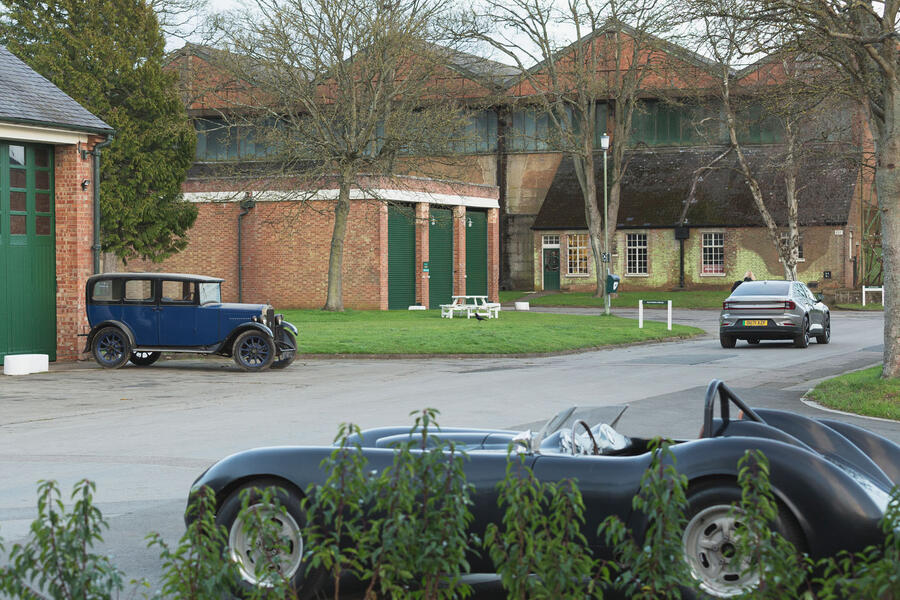
Two firefighters and a member of the public have died after a large fire broke out at Bicester Motion - an ex-RAF base in Oxfordshire that hosts more than 50 automotive businesses.
The blaze erupted in the evening of 15 May, and members of the public reported that the smoke was visible from several miles away, as 10 fire crews were dispatched to the scene.
Oxfordshire County Council has confirmed that two firefighters were killed as they attacked the inferno, while another two have been hospitalised with serious injuries.
The BBC quoted chief fire officer Rob MacDougall as saying: "It is with a very heavy heart that we today report the loss of two of our firefighters. Families have been informed and are being supported."
Details of the member of public killed in the incident have not yet been given.
It isn't yet known what caused the fire, nor which businesses were based in the buildings that were consumed.
Prime minister Sir Keir Starmer has reacted to the incident on X: "Devastating news. My thoughts are with their families and friends. The bravery of our firefighters is astounding. Hoping those in hospital make a full and swift recovery."
Bicester Motion – previously known as Bicester Heritage - is home to a number of classic car restoration businesses and engineering firms, while Polestar and Morgan also have showrooms in the old airfield complex.
In a statement issued this morning, Bicester Motion said: "We are deeply saddened to share the tragic news that two firefighters and a close friend of the site have lost their lives.
"There are no words at times like this, but our thoughts and prayers are with their families and loved ones.
"We pray for the two firefighters in hospital. The bravery shown by the emergency services teams has been overwhelming. We are grateful for all the support and especially the exceptional work by all in such unprecedented circumstances.
"The strength and kindness of the Bicester community, of which we are proud members, has truly shown itself.
"The site will remain closed over the weekend as we continue to work closely with the emergency services. Thank you for your understanding at this time."

From Corporate Life to Ocean Adventure: Oliver’s Journey to Hawaii

Lotus Eyes Expansion: New Leadership Plans to Boost Production and Explore Electric Models
 Production at the brand's UK base could be broadened, says Matt Windle, potentially to include the Polestar 6
The new boss of Lotus Europe is seeking to broaden production at the brand's UK base to include new models from the wider Geely group.
Matt Windle has been promoted from his position as Lotus Cars MD following the departure of former Lotus Europe CEO Dan Balmer after less than a year.
His broader role coincides with the recent merging of Lotus Cars with the Chinese-based Lotus Technology, which oversaw the brand's so-called lifestyle EVs, the Eletre SUV and Emeya saloon.
“I think it's better for the business,” Windle told Autocar in an interview. “It gives us a solid link between manufacturing and commercial on sports cars but allows me to work wider across the business as well.”
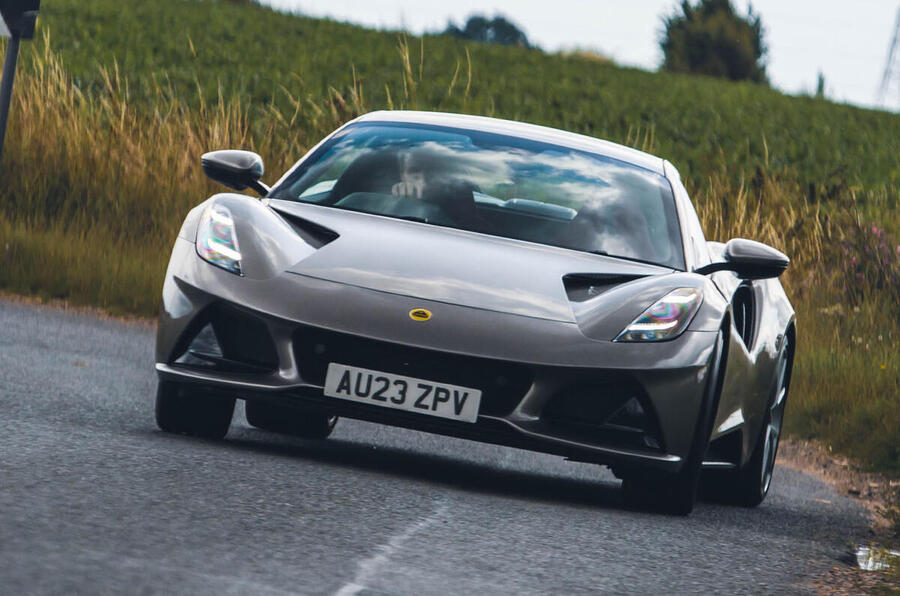
Windle is keen to grow production at Hethel, which earlier this year announced 270 job cuts as demand for the Emira petrol sports car was hit by the sharp increase in tariffs in the US.
“It has been a turbulent start of the year, which has had an impact on the business,” he said.
Lotus last year posted record wholesales (sales to dealers) of the Emira at 5272, up 102%, but Windle is keep to push close to the factory’s limits of 10,000 cars annually.
"Back in the late 1990s and 2000s, we were building several models at Hethel [including the Elise-based Vauxhall VX220 and Tesla Roadster], and I think that's a business model we're exploring,” he said.
One possibility is the forthcoming Polestar 6 electric roadster. “I think we could build it,” Windle said. “There's an element of transition, because at the moment it's just ICE [at Hethel], but we're going to have to go on that journey.”
The US's new car import tariff has hit Lotus hard, with the company cancelling sales of the Chinese-built Emeya and Eletre in the country due to the now-insurmountable financial hurdles.
Lotus has also halted shipments of the British-built Emira to the US after the new 25% tariff was applied in April, meaning that no cars are heading to a market that last year accounted for a fifth of all Lotus sales.
The deal recently agreed between the UK and US to lower those tariffs to 10% has helped Lotus, but Windle has yet to press go on restarting shipments to the US as he waits for the details.
"The headline numbers have gone out there, but actually the specifics behind it still haven't been clarified,” he said.
“There's product that's ready to ship, but what we don't want to do is jump the gun and end up getting clobbered.
“The tariffs are a negative with where we are now, but they could be a positive."
Lotus’s volume growth has been impressive, given where it has come from, with overall deliveries hitting 12,134 last year, double that of the year before.
However, EV sales are below planned volumes as demand for luxury electric cars has fallen below expectations.
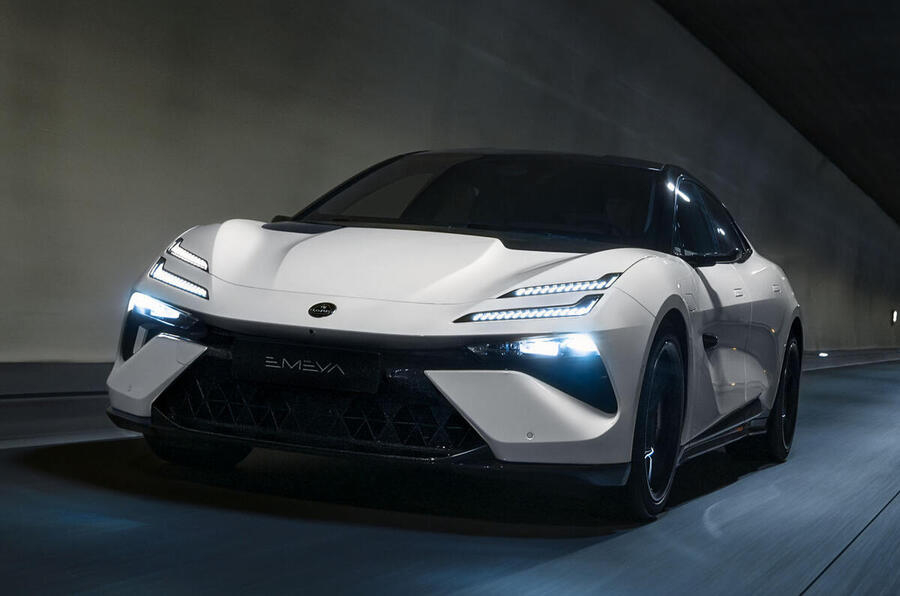
Lotus is countering that with planned launch of ‘Hyper Hybrid’ range-extended EVs that feature a turbocharged combustion engine.
The first such model will be unveiled at the end of this year for sales starting in China early next year, CEO Feng Qingfeng said on the company’s earnings call on 22 April. No date has been set for European sales, though, Windle said.
The planned new electric sports car to be built in Hethel, meanwhile, is on hold as Lotus assesses likely demand.
“Is the market ready for an electric sports car? I don't really know the answer to that yet,” Windle said.
One possibility is to install an electric drivetrain and batteries into the current Emira platform and offer it as a variant, but uncertain customer response is hampering decision-making.
“I think being a product strategy person in the automotive industry is probably one of the most difficult jobs areas at the moment,” Windle said.
His message to the UK and EU governments is to keep options open for consumers past 2035, including possibility allowing a longer life for range-extended EVs.
“A full BEV future is maybe not the answer,” he said.
Windle’s elevation to Lotus Europe boss gives him oversight of sales within Lotus’s biggest global market, which accounted for 39% of the company’s global sales last year, at 4743.
He plans to growth that at first by expanding the dealers.
“Network development is a big part of our strategy is around volume growth going forward,” he said. “I think the opportunity is there and it's going to be exciting couple of years.”