Aston Martin Unveils Revolutionary Dual-Screen Apple CarPlay Experience
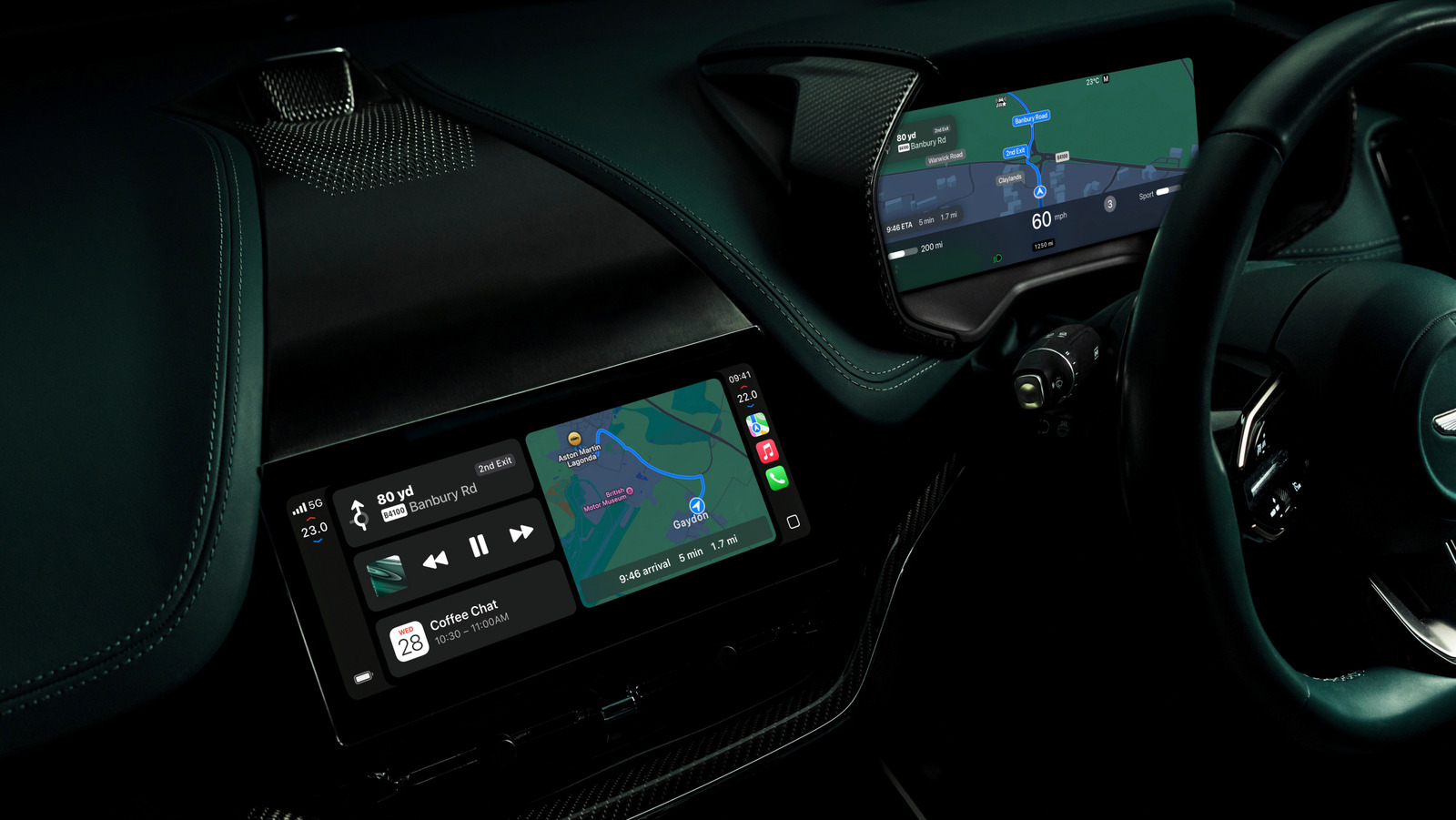
Apps such as maps can now be mirrored on the car's instrument panel as well as its infotainment screenCarPlay now runs across two screens and can control various in-car functions in latest Aston Martin models
Aston Martin has become the first manufacturer to offer the second generation of Apple's in-car smartphone mirroring system.
Apple CarPlay Ultra dramatically expands the amount of screen space that the Apple interface can occupy, entering the car's instrument display as well as its infotainment screen.
This means users can display maps or media alongside the rev counter and speedometer. They will also be able to select one of various designs for the instruments, as well as personalised colours, backgrounds and screen layouts.
Additionally, functions such as the climate and audio controls are now accessible via the CarPlay interface and can be adjusted using Apple's Siri voice assistant.
“Building on our in-house state-of-the-art infotainment system, CarPlay Ultra will provide additional functionality and personalisation opportunities which place Aston Martin at the forefront of infotainment in the sector,“ said CEO Adrian Hallmark.
The new system will first be rolled out in the US and Canada, then the UK and Europe within the next 12 months.
CarPlay Ultra will be included as standard in the DB12, Vantage, Vanquish and DBX 707 from the 2025 model year, plus the new DBX S.
Owners of existing cars with Aston Martin's latest-generation infotainment system (introduced with the launch of the DB12) will be offered a free software update at official dealerships.
CarPlay was launched in 2014 and first featured in the Ferrari FF, with the California T following shortly thereafter.
Aston Martin’s current technology boss, Roberto Fedeli, held the same role at Ferrari at that time.
By 2016, CarPlay had become an optional extra on many mainstream cars, such as the Mercedes-Benz A-Class, Peugeot 208 and Volkswagen Golf, and today it's rare to see it omitted from the standard kit list on any new car.
Notable exceptions include the Tesla Model 3, Tesla Model Y and Leapmotor models.
Aston Martin Unveils Apple CarPlay Ultra: Revolutionizing In-Car Experience
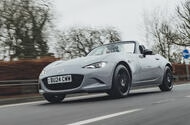
Rediscovering the Mazda MX-5: A Timeless Roadster Reimagined for Modern Drivers
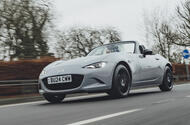 Fourth-generation MX-5 heads back to Mazda's roadster's roots, surpassing its predecessor in every area While everyone was swooning over the new Toyota GR86 and subsequently getting worked up that you can’t actually buy one, some might have forgotten that if you want a lightweight, front-engined, rear-wheel-drive sports car with a manual gearbox, you could simply go to a Mazda showroom and buy a Mazda MX-5 all along.The current generation of the Mazda MX-5, codenamed the ND, was brilliant when it launched in 2015, and because it’s such a timeless concept, it hasn’t aged a day. It also helps that Mazda has kept it fresh with model-year tweaks here and there – some small, some quite significant.Other long-running nameplates, such as the Mercedes SL, have markedly changed in character throughout their run, but the MX-5 still fulfils much the same role as it did when it first went on sale in 1989.It came about as the result of an American wistfulness for cheap British roadsters on the one hand, and a Japanese firm’s readiness to speculate and innovate in order to make its global reputation on the other. ‘Mazda Experiment, Project Number Five’ would go on to become the world’s fastest-selling sports car.The idea of an affordable open-top was hardly new to Japan. Preceding decades had seen oddities such as the Datsun Fairlady, Honda S500 and Toyota Sports 800 emerge, often as their fledgling makers’ first production models. But by the end of the 1970s, with the demise of such icons as the Triumph Spitfire, MG B and original Lotus Elan, the segment was assumed to be in decline. It was these models, though, that Mazda dissected during the MX-5’s development, and they are among the reasons why it emerged in 1989 as a small, sub-one-tonne, front-engined, rear-drive, perfectly balanced home run.Ironically, the MX-5’s success found a counterpoint almost immediately in the lukewarm reception and ailing sales figures that greeted the all-new Lotus Elan, which emerged only a few months later, lumbered as it was by a higher price, lumpier looks and front-wheel drive. The first MX-5 – the NA – was arguably the model’s dynamic high point. Its successors were generally very good too, but they became progressively more powerful, bigger, heavier and that bit less exciting to drive. Until the current ND generation, that is. It was a return to the old template: shorter, lower, wider and – most importantly – lighter than its predecessor, the ND MX-5 comes with a choice of either 1.5 or 2.0-litre naturally aspirated petrol engines and the promise of unparalleled ‘Jinba ittai’ – the manufacturer’s catch-all term for oneness between car and driver.Range at a glanceEver since its launch in 2015, the ND-generation MX-5 has been available with a 1.5-litre four-cylinder and a 2.0-litre four-cylinder, both naturally aspirated. In 2018, both got updated, but while the changes for the 1.5 were mild, the 2.0-litre got an extra 23bhp and a 700rpm-higher redline. All MX-5s come with a six-speed manual gearbox as standard, but the 2.0-litre can be optioned with a six-speed torque-converter automatic.Through the years, trim levels have come and gone, and there have been more special editions than stars in the universe. In 2017, Mazda added an RF (for ‘Retractable Fastback’) model with a metal folding roof to the line-up. It can be had with both engine options.
Toyota Unveils bZ Woodland: The Versatile Electric Wagon for Adventure Seekers

Discover the Top Electric Cars Breaking the 300-Mile Range Barrier
 EVs that can break the 300-mile barrier are growing in number – as are number of those that can crack 400 miles
For many buyers, one number defines an EV: range.
Which is understandable. Early electric cars didn’t go far between charges, and public chargers were few and far between. Take the 2010 Nissan Leaf - the first mass-market EV - which managed just 100 miles and took eight hours to charge at home.
Times have thankfully changed. Even the cheapest electric cars of today can double the Leaf’s range and recharge in a fraction of the time.
Thanks to major advances in battery and motor tech, some modern EVs can now go as far on a charge as petrol cars do on a full tank.
Below is a list of the 10 longest-range electric cars on sale in the UK, based on official WLTP figures. Real-world results will vary and you are unlikely to achieve these figures unless you drive gently, in warm weather, or know a thing or two about hypermiling.
The longest range electric car on sale in the UK is the Mercedes-Benz EQS with an impressive 481-mile range. Curious about the rest? Let’s get into it.

Reimagining the Daily Driver: Embracing the Everyday Ride
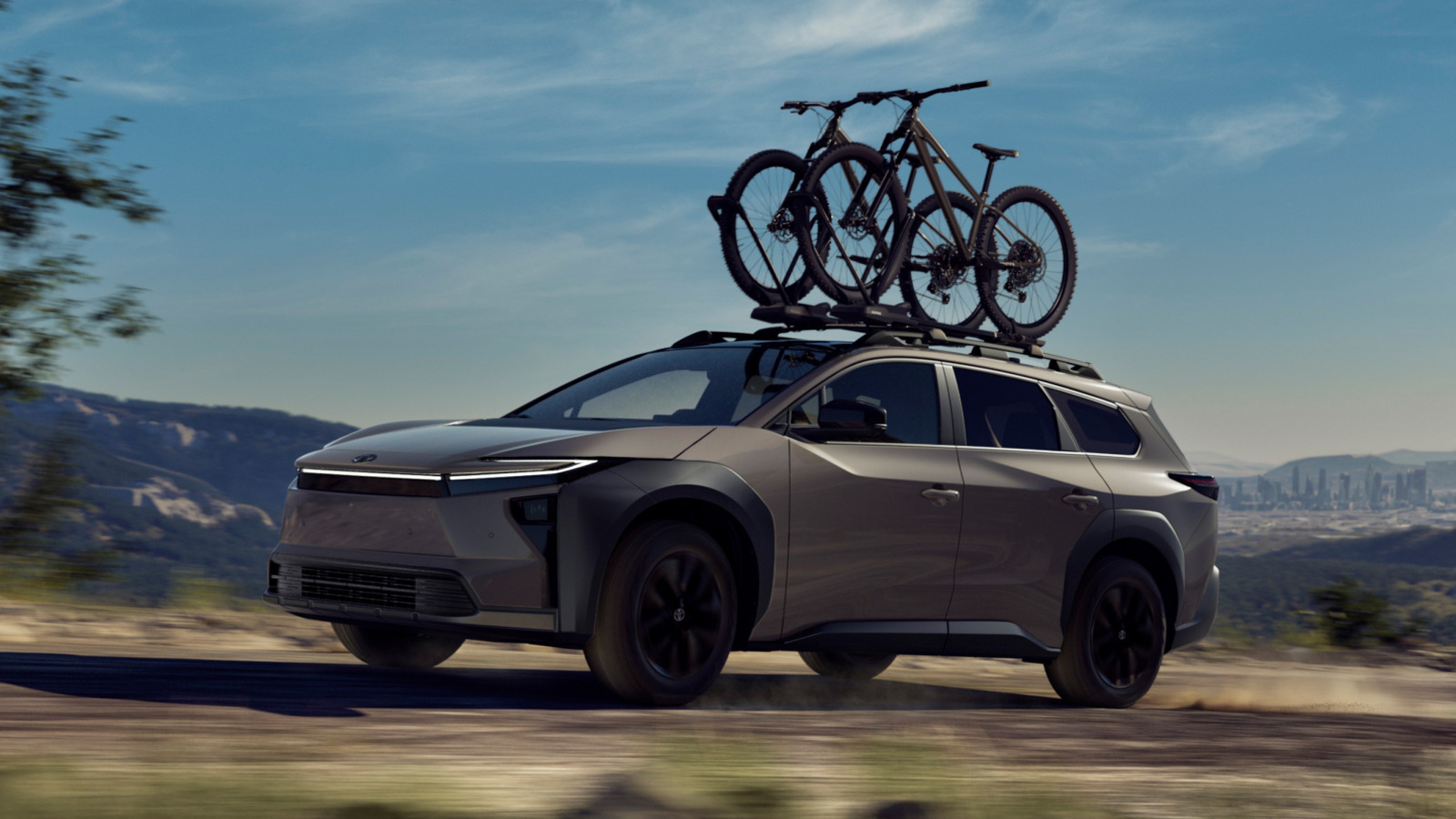
Toyota Unveils bZ4X Touring: The Most Powerful Electric SUV for Adventurers
 New range-topper is twin to the Subaru Trailseeker and the most powerful Toyota EV on sale
Toyota has revealed a stretched, off-road-focused variant of its bZ4X electric SUV that brings more space and more power.
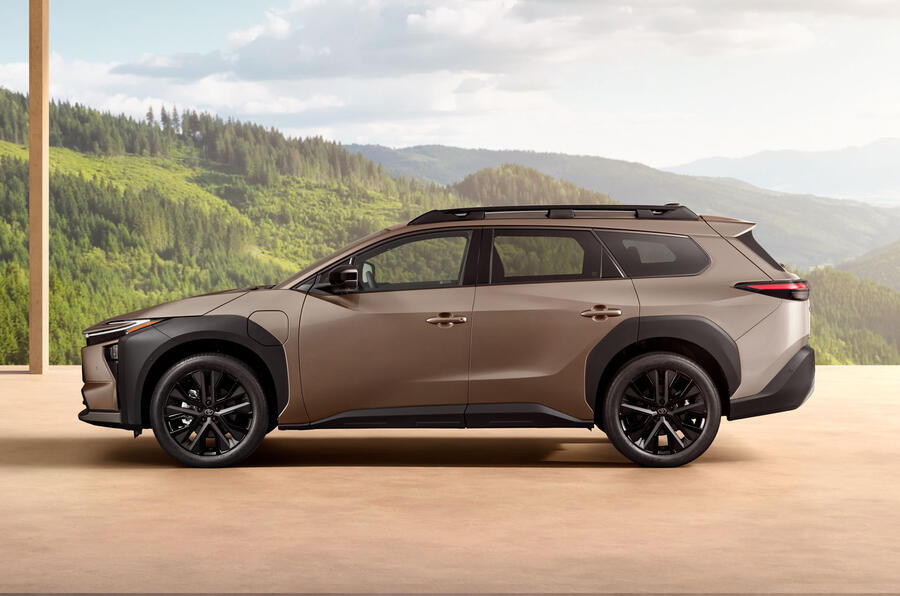
The bZ4X Touring will arrive in the UK next spring and, as the name suggests, it is an off-Tarmac estate version of the three-year-old EV that adds 140mm in length, 20mm in height and a host of rugged design elements.
Clearly a twin of the new Subaru Trailseeker - both use the same e-TNGA platform – the Touring gets more boot space than its standard SUV equivalent, with an increase of 148 litres to 600 litres. This takes it above the likes of the similarly sized Volkswagen ID 5 and BYD Sealion 7 to make it one of the most cavernous on the electric car market.
What’s more, thanks to Subaru’s push for the Trailseeker to feature two identical motors on either axle for better off-road balance (going against Toyota’s previous philosophy of a bigger rear motor), the new Touring puts out 376bhp, up from the SUV’s 338bhp. This cements it as the most powerful electric Toyota available. A 221bhp single-motor set-up is also offered.
Power is drawn from a new 74.4kWh (usable) battery, up from the recently updated car’s 73.1kWh pack. A range figure has yet to be disclosed, but the standard SUV offers up to 318 miles in its most efficient form.
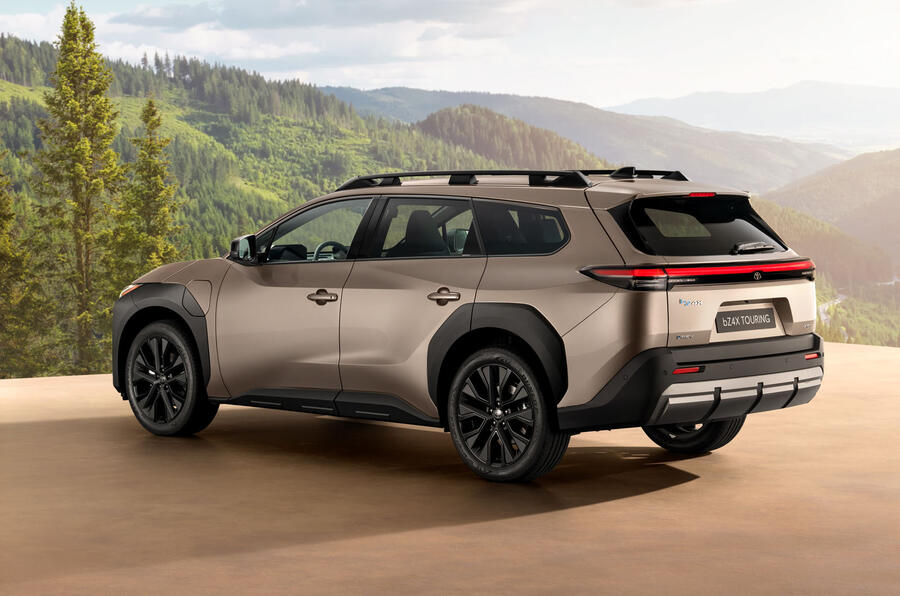
Visually, the Touring is more of a rugged proposition than the standard SUV. While it adopts the new front-end look of the recently updated bZ4X SUV, the Touring also features the Trailseeker’s thicker rear light bar and chunkier rear bumper. In addition, it gains roof rails, blackened wheel arches and an exclusive Brilliant Bronze paint scheme.
Inside, the Touring adopts the same interior as the latest bZ4X, which features a new centre console and 14.0in infotainment screen. For the Touring, a City Moss colour has been added.
Pricing and full UK specifications for the new range-topping variant will be revealed later this year, Toyota says. For reference, the current bZ4X range tops out at £54,000.
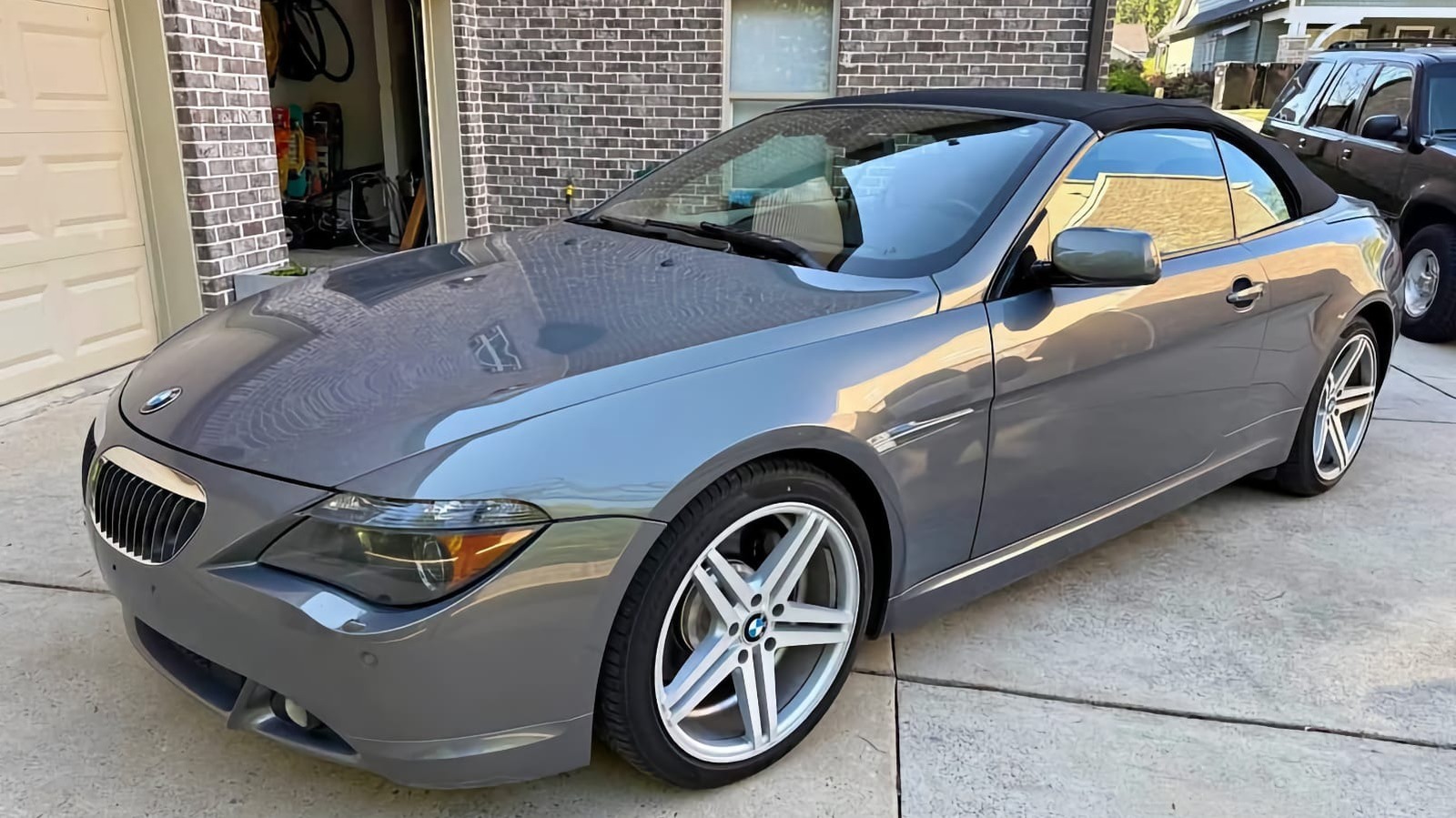
Sleek Elegance: Discover the Allure of the BMW E64 Convertible
Revolutionizing In-Car Sound: How Flat Surfaces Become Speakers with Innovative Technology
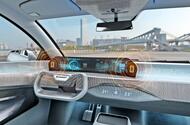 German firm's new tech enables an instrument panel or any flat surface to be a speaker
In-car audio is as much about relaying information to the occupants as it is listening to music.
With that in mind, one of the latest ideas to emerge from Continental is an instrument display that doubles as a sound chamber to transmit sound without the need for separate speakers.
The display is based on the company’s Ac2ated Sound Technology, which it began developing a number of years ago with audio specialist Sennheiser.
An exercise in system integration, the display does away with the need for separate speakers, saving cost, weight and space.
Sound is generated by actuators, which effectively turn the entire display surface into a speaker thanks to audible vibrations induced in the glass. It can transmit all kinds of sound, including speech, in “exceptional quality”.
According to Continental, a further advantage is ‘acoustic localisation’. As humans, we can tell where a sound is coming from and tend to turn our heads in that direction.
So when a spoken message or alert sound is produced by the display, the driver’s gaze is drawn to the instrument it’s related to, directing attention where it’s needed.
The thinking behind the combined audio and display technology comes from part of the team specialising in vehicle acoustics and also ‘psychoacoustics’, the science of how humans perceive sound.
Although the main use of the display may be to relay information and link visuals and sound more closely, Continental says the actuator technology can be integrated into almost any existing flat component in a car’s interior.
By installing the actuators in door trims, headrests, A-pillars, the rooflining and so on, there is the potential to get rid of all conventional speakers.
That could provide aesthetic benefits (no need for speaker grilles) together with a significant saving of around 40kg (about the weight of multiple speakers and fittings in a high-end audio system) and a 90% reduction in the space needed, which Continental estimates at 30-40 litres depending on the number of speakers used.
Some premium audio systems incorporate more than 30 speakers, so the packaging benefits could be substantial too, assuming the active surface technology can match them for the audio quality.
When the original Ac2ated system was shown by Continental at CES in 2020, it was audio system-focused, rather than display-focused, and called the Speakerless Immersive Sound system. Then, it was integrated with Sennheiser’s Ambeo 3D audio technology.
As Continental said at the time, the concept is similar to the way the wooden body of a string instrument like a violin acts as a resonance chamber and the surface vibrates to project the sound.
Different sizes of surfaces, such as an A-pillar compared with a door panel, handle various frequency ranges in the same way as specific types and sizes of speaker.

Trump’s Trade Deals: A Boost for Tesla, A Blow for Subaru