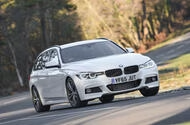
Discover the BMW 3 Series Touring: A Timeless Estate with Unmatched Performance and Value
 The formidable 3 Series is equally compelling in estate form. Is it as good a used buy? BMW’s 3 Series Touring has been a front-runner in the executive estate car class for 40 years now, having been progressively improved across seven generations.You could spend a good chunk of cash on a nearly new ‘G81’ example, but why not save yourself around £10,000 by buying an older ‘F31’ that’s very nearly as talented?Launched in 2012, this particular 3 Series immediately outclassed many desirable alternatives like the Audi A4 Avant and Mercedes-Benz C-Class for comfort, refinement, equipment and space – but what really set it apart was its chassis tuning and suspension, which made the car as rewarding and engaging to drive as the saloon.“The handling is agile and sure-footed,” we said when we first drove it, “and it has just the right amount of roll, pitch and dive to remind you that you’re testing the chassis.”If you can, spring for a 3 Series fitted with adaptive dampers: they allow you to adjust the firmness of the suspension and can turn the car from genuine performance estate to comfortable cruiser at the touch of a button. And if you want even more grip, and greater usability in wintry conditions, then opt for a four-wheel-drive xDrive car.There’s a broad and brilliant range of models to choose from. The clear standout is the 320d, with a 184bhp four-cylinder diesel engine that’s smooth and will return 42mpg day to day or an impressive 56mpg on longer journeys.You can snap one of these up for as little as £2500, but this will tie you to a moon-mileage car with clear signs of hard use. Stretch to around £7000-£10,000 and you will get a much tidier example.Our top choice, though, would be the brawny and characterful 330d, which gets a punchier six-cylinder oil-burner that makes 254bhp and 413lb ft of torque. It’s a crackerjack engine and suits the car well, and it will still do 53mpg on motorway schleps. You will need more than £10,000 for a decent example, though.There are several petrols to choose from, but we would aim for either the 320i if you’re after the best economy or the slightly thirsty, 242bhp 328i if you want potency.Classified adverts with ‘LCI’ in the headline refer to the ‘Life Cycle Impulse’ (which normal people would call a facelift), rolled out to the car in 2015, bringing a new look and LED headlights.BMW also added the ultra-frugal 320d Efficient Dynamics model to the range – a tempting choice when you consider its real-world 60mpg economy, and it’s tax-exempt too.Also new was the 340i, which feels like a pseudo-M3 to drive. Its 322bhp turbocharged petrol straight six is a smooth, elastic and flexible engine that provides serious pace – and it will still do upwards of 35mpg, whereas the Jaguar XE S, say, will struggle to return 30mpg.Upgrades were also made to the interior, but whether you opt for an early or late example, all versions of the 3 Series Touring have a suitably upmarket cabin, with a neat dashboard layout and high-quality materials throughout.It’s comfortable, it has excellent ergonomics and rear space is good enough for adults – plus you get a capacious 495-litre boot.Sure, you will choose this estate for its additional practicality, but you will love owning one more for its impressive economy, engaging drive, elegantly finished interior and, in most cases, outstanding performance.
Uncovering the States with the Highest Car Registration Fees


Reviving the Classic: The New Fiat 500 Hybrid Combines Tradition with Modern Efficiency
 Petrol-powered city car will finally enter a new generation after 18 years, using electric 500e underpinnings
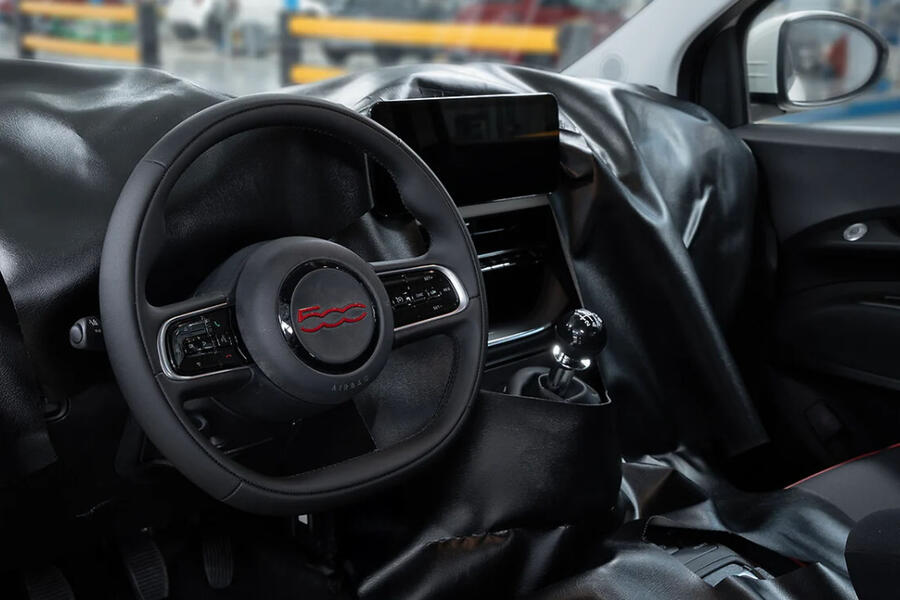
Fiat has released the first images of the new 500 Hybrid, revealing it will get an overhauled interior and a six-speed manual gearbox.
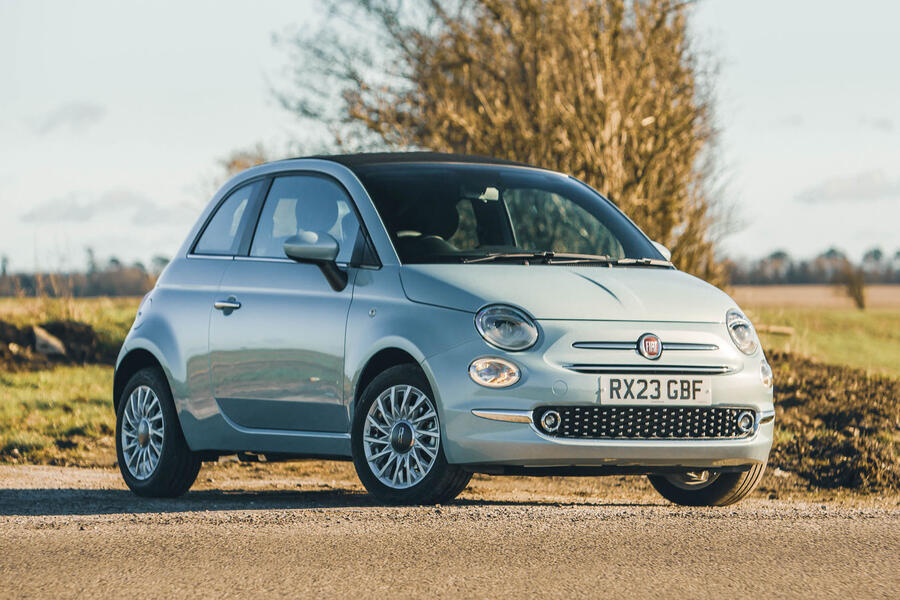
Photographs of a group of pre-release prototypes show that it will look identical to the electric 500e except for a reworked front grille to feed more air to a petrol engine.
Inside, the dashboard features a larger and squarer new storage cubby and the gearlever is elevated alongside the steering wheel – as in the old petrol 500.
Fiat has yet to confirm which powertrain the 500 Hybrid will use, but it's expected to employ the same 1.0-litre three-cylinder mild-hybrid Firefly engine featured in the old 500 and Fiat Panda.
The presence of a manual gearbox rules out the 1.2-litre three-cylinder mild-hybrid Puretech engine used in a wide range of models under the Stellantis corporate umbrella, such as the new Fiat Grande Panda, because it has been offered exclusively with a six-speed dual-clutch automatic gearbox.
Production of the 500 Hybrid will begin in the fourth quarter of this year – earlier than the early 2026 deadline previously set by Fiat.
The move to retrofit an electric car with a combustion engine is unprecedented in the European car industry.
Several reports in March 2024 suggested that the bold measure was borne out of two key challenges.
First was the need to up production rates at the Mirafiori factory amid slow sales of the 500e and its Abarth 500e hot hatch sibling, which led Fiat to pause production on several occasions last year.
Meanwhile, it ended production of the old petrol 500 (which accounted for the majority of 500 sales), as the 17-year-old model fell foul of new EU legislation on cybersecurity, which would have required a costly rehomologation effort.
Fiat CEO Olivier François acknowledged the challenges, saying in a statement that the 500 Hybrid will boost production at Mirafiori "to ensure the plant’s productivity".
He added that launching a new combustion-engined 500 in response to flagging sales of the EV serves as "proof that social relevance is at the core of the brand mission".
Fiat previously said it would also invest some €100 million (£85m) into the 500e, with plans to redesign its platform for new battery technologies aimed at improving its affordability.
This suggests that an update for the EV is also due around 2026.
The Ultimate Guide to the Best Car Batteries: Top Picks for Every Size
Is the New Honda Civic Type R Still the Ultimate Hot Hatch?
 The latest Civic Type R gets an increase in power, price and capability. Is it still the king of the big hot hatches? The previous-generation Honda Civic Type R was the Porsche 911 GT3 of hot hatchbacks: the hardcore choice among family-friendly sports cars. This latest variant has the feeling that it will continue that charge.Such is the rate of change of the car business in 2025 that it’s the only non-electrified Honda model in the UK. It does already feel like something from days gone by, given its lack of any type of electrical element as Honda - like other manufacturers - pushes to hit increasingly stringent emissions targets.That's another reason why Type R imports have been restricted to the “hundreds, not thousands” and why, one suspects, Honda has decided it can charge more than £50,000. Zoinks.So, with a new look, an increase in power, price and capability, is this still the king of the big hot hatches?
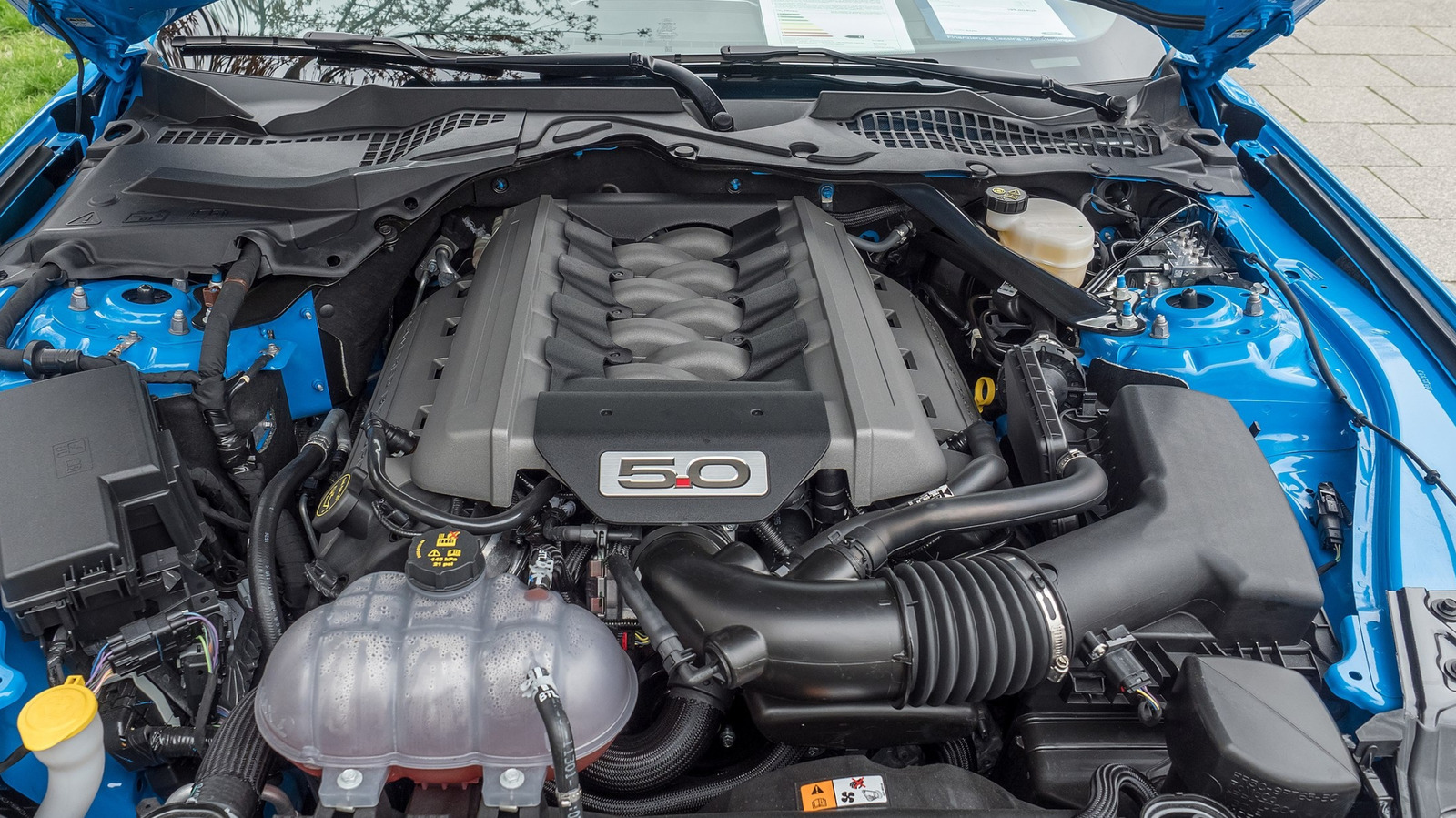
Unlocking Power: A Guide to Coyote 5.0 Engine Generations for Your Car Swap
Volkswagen Tiguan: Embracing Versatility in a Changing Automotive Landscape
 Wolfsburg's global sales champion moves further into premium territory Before we dive into and learn about the Volkswagen Tiguan, some context.After all, it feels like the uncertainty that, since the early days of large-scale electrification, has been shrouding the decision-making of those who design and build, but also buy and consume, new cars ought to be lifting by now – yet it isn’t. Time only seems to unearth bigger obstacles for the industry to overcome and ever-greater problems to solve before the car can be made fully sustainable.And so when someone with the influence of Volkswagen CEO Thomas Schäfer seeks to ease that uncertainty, his sentiments strike an instant chord. Schäfer recently did so by guaranteeing that, however the cars of tomorrow are powered, his brand would commit always – or, at least, for the foreseeable future – to make a Golf; always to keep the GTI sub-brand alive and kicking; and, finally, to keep at least one other current model in production.That car wasn’t the long-lived Volkswagen Passat or the affordable Volkswagen Polo but this road test subject: the Tiguan. This car has become VW’s biggest-selling model worldwide bar none. And now entering a third model generation, it's adopting VW’s very latest platform, suspension and electrified hybrid powertrain technology in a bid to protect its exalted status.It’s perhaps a reflection of the current climate that VW isn’t turning to full electrification for the Tiguan. Instead, it has introduced quite an extensive derivative line-up including plug-in hybrids that are “of sufficient range that they can almost be used like fully electric cars”, as well as more affordable mild-hybrid petrols, more powerful four-wheel-drive petrols and even a diesel.For as long as it can, Wolfsburg clearly wants to give us the power to choose for ourselves which kind of Tiguan suits us best. And for the moment, we have tested the car both as a 1.5-litre eTSI petrol and a range-topping 1.5-litre e-Hybrid 272 PHEV.The range at a glanceModelsPowerFrom1.5 eTSI 130129bhp£34,0751.5 eTSI 150 Life148bhp£36,7202.0 TDI 150 Life148bhp£37,9201.5 eHybrid Life201bhp£42,5251.5 eHybrid R-Line268bhp£48,220There are no four-wheel-drive Tiguans in the line-up yet. It’s revealing that VW has kept one diesel engine on for the third-generation car, but the addition of a second PHEV model shows where it expects the balance of interest to be.Trim levels start with a base model that has 129bhp 1.5-litre mild-hybrid power only and rise through Life, Match, Elegance and R-Line tiers. The upper-level PHEV is sold exclusively as an R-Line model.
Revving Up Cinema: How Car Culture Transforms Film Quality


Rugged Redesign: The Next-Gen Toyota RAV4 Unveiled Soon
 Sixth-generation SUV takes on a more rugged look than the car it will replace
Toyota has released the first images of the next-generation RAV4, due to be fully revealed on 21 May.
From both the overhead images and previous spy shots, the SUV looks to have taken a more rugged form than the current car, borrowing cues from the new Land Cruiser.
What’s more, it seems to have use the same hammerhead-style headlights as the new Urban Cruiser and updated bZ4X.
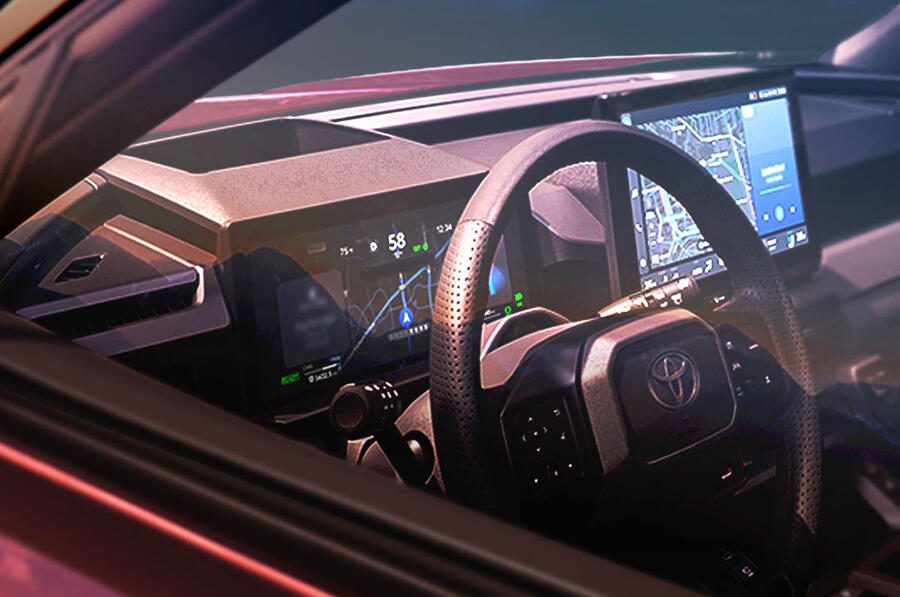
An inside shot shows the Mk6 RAV4 has adopted the same display set-ups as its Land Cruiser and Urban Cruiser siblings, but instead of their enclosed screens, there's a pair of 'floating' units.
Another pictures confirms the cabin will be fitted with a chunky centre console.
The current car is sold exclusively with a 302bhp plug-in hybrid powertrain, centered on a 2.5-litre petrol engine, that can do 46 miles of electric-only driving.
While Toyota has yet to confirm power offerings for the new RAV4, it's likely to continue to be offered with this set-up but with more power and EV range.
Toyota will hope the wide-reaching update for the RAV4's sixth generation will boost sales in the UK. While the SUV sells well in other markets (such as the US, where it’s the Japanese brand's best-seller), it sold only some 6100 examples here (of a total 101,000) last year.
The new car is expected to increase the opening price over today's £44,395. Sales are likely to begin at the end of this year.

Jaguar’s Bold Rebrand: From Everyday to Ultra-Luxury Icon