
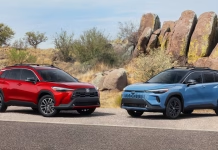
Revamped and Ready: The New Toyota Crossover Blends Power with Eco-Friendly Choices

Revving into the Future: The Mercedes-AMG E53 Hybrid Redefines Performance Saloons
 Affalterbach looks to a new high-performance PHEV powertrain for the replacement for the much-loved E63 super saloon The Mercedes-AMG E63 was a brash, loud, powerful super-saloon of a kind that isn’t easily forgotten and that only Affalterbach could make. To the dismay of a generation of dyed-in-the-wool performance car enthusiasts, it's no longer in production.Sacrificed as part of Mercedes' wide-ranging electrification plans, one of the most multi-faceted of AMG’s modern-day performance cars has been laid to rest with a celebrated reputation built up over a period of 16 years and three model generations. And it has been indirectly replaced by this: the petrol-electric Mercedes-AMG E53 Hybrid 4Matic+.This new headlining E-Class model, to be sold in the UK in both saloon and estate forms, may lack the character-defining V8 engine used by other key AMG models, but it doesn’t want for performance. With 603bhp in combination with a so-called AMG Dynamic Plus package, it offers exactly the same power as the previous-generation E63 4Matic+.
Navigating the Moon: The Need for Steady Leadership in Lunar Exploration

Skoda Enyaq: The SUV That Redefines Practicality and Style
 Can the Czech brand’s re-jigged large SUV remain as one of our favourites? The new Skoda Enyaq is proof that some manufacturers stay true to their core focus, even in the age of the rebrand.Kia and Hyundai have taken the 'reinvention' baton and run a country mile, Mercedes is going to launch 21 new models in just two years, and Jaguar's new look needs no introduction. But Skoda and its cars have always stayed true to their intentions; they're easy to live with, easy on the eye and easy to use.When the previous Enyaq made its first appearance in 2020, it quickly became a car we liked because of its inherent ‘Skoda-ness’. It was affordable, energy-efficient, had decent performance and a cleverly thought-out, good-quality cabin. No surprises, then, that it was one of Europe's best-selling cars in 2024.Many of its competitors like the Hyundai Ioniq 5, Kia EV6, Tesla Model Y and Volkswagen ID 4 have all been updated since, and now Skoda has given the Enyaq some new styling in line with its current design language, an upgrade to the infotainment system and a small boost in range.In light of this, then, let’s find out how it stacks up.The Skoda Enyaq range at a glanceAs before, you can have the Enyaq in regular SUV or coupé guise. Both come with the choice of two battery sizes and three powertrain options. At the entry-level is the Enyaq 60, which comes with a 63kWh lithium ion battery (59kWh usable) good for up to 277 miles of range. The next levels up, the 85 and 85x, use an 82kWh battery (77kWh usable), with electric ranges up to 370 miles and 346 miles respectively.The 85 was originally called the 80, but in 2024 Skoda upgraded the rear motor of it, the 80x and vRS for more power and better efficiency and renamed the first two to 85 and 85x.The entry-level 50, meanwhile, has been discontinued for this generation, owing to a lack of demand.In lieu of trim levels, Skoda offers interior design themes (Loft, Lounge, Lodge, Suite Cognac, Suite Black and Sportline) and a selection of other option packages. UK buyers will not be able to get the 60s in Sportline trim.
Your Vision for a Better America: Creative Policy Changes from Everyday Citizens

Elevate Your Journey: Discover the 2024 Mercedes V-Class MPV Experience
 Mercedes’ van-based MPV offers economical diesel engines and up to eight seats, but it commands a hefty premium compared with rivals One can make a case that it’s vans such as the Mercedes V-Class – and not the SUVs we’re plied with – that today come closest to mastering the art of the lifestyle vehicle.It’s why you find so many MPV owners, never to return to the SUV fold, eulogising the utility and surprising opulence of their boxy (and sometimes quite expensive) wheels.Playing into this is the fact that the ‘van with windows’ market has recently become more desirable and competitive than ever. Volkswagen has its understatedly charming Multivan; Ford’s Tourneo Custom has a panoramic roof; and the new Lexus LM, with its Mark Levinson sound system, is pitched as something to go up against the BMW 7 Series.As an established player in this area (one in which its compatriots Audi and BMW still have never so much as dabbled), Mercedes-Benz needs to keep up, and so it has updated the V-Class for 2024, with a sharper exterior design and an overhaul of the infotainment system.
The Perfect Popemobile: A Ride Fit for the Holy See

Tariff Relief Sparks Hope for US Auto Industry Recovery
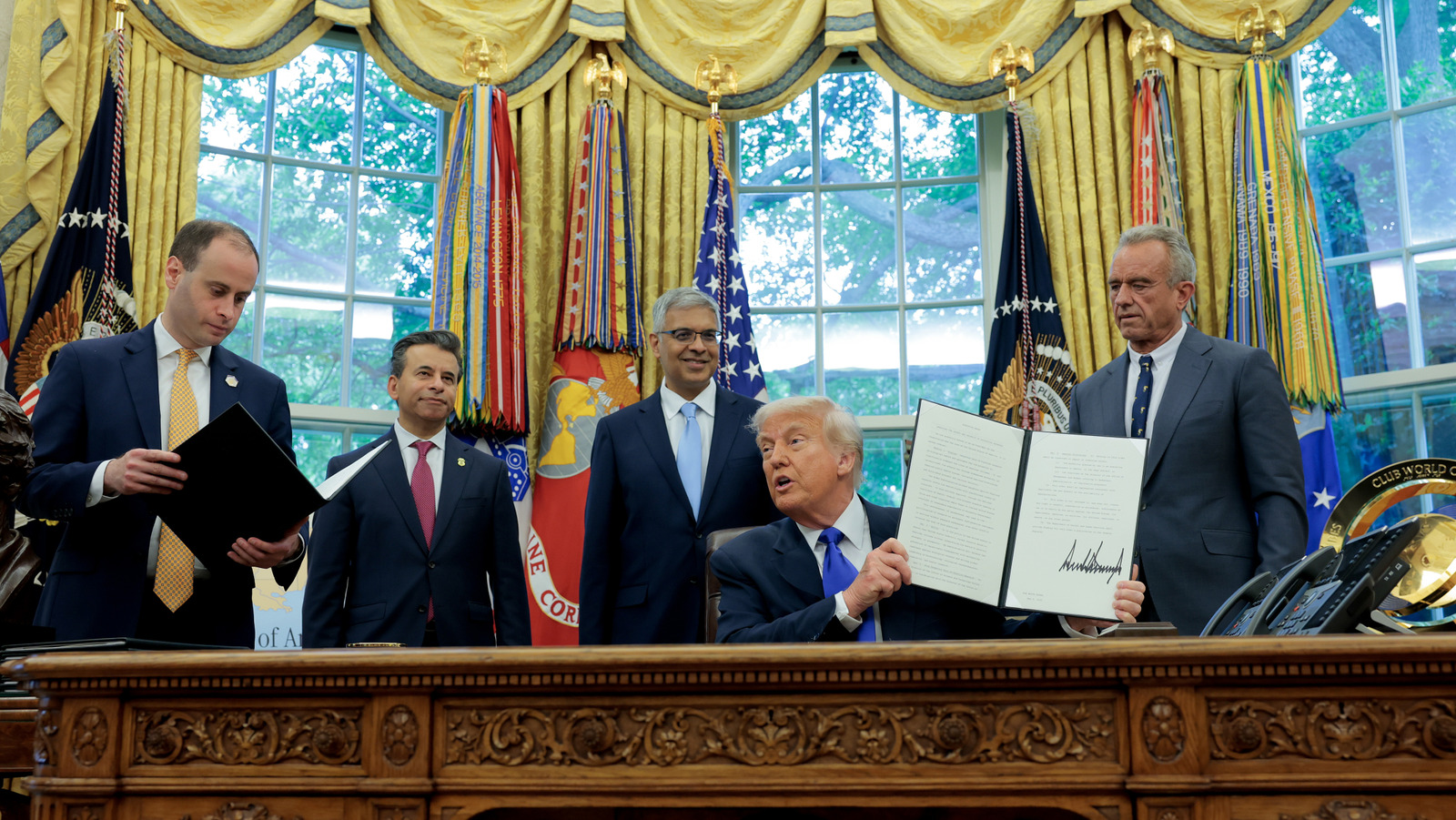
 The US president has proven that he can be persuaded to reduce his punitive car import tariffs
The grey cloud hovering over the car industry has lifted partially on evidence that US president Donald Trump can be persuaded to roll back his protectionist policies.
On Thursday, the UK announced that it had struck a wider deal with US that will include reduced import tariffs on cars, bringing relief to a beleaguered JLR (Jaguar Land Rover) in particular.
The announcement came a day after BMW confidently predicted that it expected the punitive 27.5% rate on cars to fall after 1 July, sounding a more optimistic note than other car makers the previous week.
The tariffs on all cars coming into the US has been in place since 3 April – one of the biggest of the multiple blows to car makers selling in the US since Trump decided to use drastic measures to bring back more manufacturing to his country.
Companies including the Volkswagen Group, Mercedes-Benz and General Motors warned of profit hits reaching into the billions.
However, the deal negotiated by UK prime minister Keir Starmer to reduce the tariff from 27.5% to a caveated 10% has shown that what looked like a permanent fixture can in fact be chipped away.
The UK deal came after BMW CEO Oliver Zipse struck a much more optimistic note about the tariffs during its earnings report on 7 May, following a series of gloomy communications from car companies including GM, Mercedes and Volkswagen.
“Our base assumption that these are temporary tariffs. There is no indication that they will be permanent,” Zipse told investors, without being specific about his information.
The tariffs applied to imported cars has been one of the biggest impacts to car makers, even those with production facilities in the country, like BMW.
It came on top of tariffs on imported car parts and tariffs on imported steel and aluminium.
Trump has been gradually softening his stance after experiencing blowback in the US from a worsening economy caused mainly by the tariff turmoil.
Businesses including the car industry have been uncertain how to respond to the changes, with many cutting costs and reducing production output after warning about the dangers of a wholesale shift in strategy.
Concessions made by Trump included handing car makers a tax relief of 3.75% when importing parts for cars built in the US.
The additional 25% on fully built-up cars coming into the country hurts car makers the most, so BMW’s far more optimistic belief it too will be rolled back was seized on by analysts on the company’s first-quarter earnings call as they looked for any kind of positive news.
Zipse refused to reveal the source of information for his confident statement and bypassed a media question about a rumoured meeting with Trump himself. Instead he mentioned BMW’s strong US connections.
“We have deep roots there, and that is true for political relations as well, and we have had the closest dialogue with different stakeholders on a state level, not only South Carolina [home of BMW’s Spartanburg factory] but also California and also in a national level,” Zipse said.
The main thrust of BMW’s argument was that the tariffs came from flawed logic and that common sense would prevail.
“If they stay, there will be serious disadvantages to the whole economic system of cars being produced and sold and exported in the United States. And I think there is a better model,” Zipse said.
BMW’s arguments that tariff relief safeguarded local jobs and investment “made sense… but lacked tangibility”, wrote Philippe Houchois, analyst at the bank Jefferies, in a note to investors.
BMW produces the widest range of models among the German car makers in the US, making the X3, X4, X5, X7 and XM SUVs at Spartanburg.
However, the factory also imports engines and gearboxes from the EU – something that Trump and his team have seized on in the past.
Trump’s hawkish trade advisor Peter Navarro called BMW’s operations there a “scam”, prompting a furious response from BMW detailing $15 billion of investment and highlighting the $1bn the company is spending to introduce electric vehicle production there.
Some of Zipse’s answers to analyst and media questions seemed to suggest that only car makers in BMW’s position – both making in and exporting from the US – would qualify for any future tariff reduction on that basis.
“We have positive arguments for having some form of netting of import and exports in the United States,” Zipse said.
The EU's response to the tariff increases has been to prepare a list of possible retaliatory tariffs, which has so far excluded cars – likely because of the hit to BMW and Mercedes, which use their US production hubs to export their bigger SUVs globally.
In a sign of how interconnected the world’s biggest car makers still are, Zipse saved his harshest criticism for the EU’s tariffs on imported Chinese-built EVs, which hits electric Minis. That hurt profits by hundreds of millions of euros in the first quarter, BMW said.
BMW however glossed over the fact that China’s retaliatory tariffs on the US have essentially killed imports of the X7 and XM from the US to China.
China was the third-largest export market from Spartanburg in 2024, BMW has previously said.
Mercedes was more open, saying it made the export of the GLS and GLE SUVs from the US to China “prohibitive”.
Those cars would likely have be redirected towards US customers, giving JLR a headache. However, the UK deal considerably lightens the tariff burden on the British company, which had been facing a smaller market and job losses, given that rivals including BMW, Mercedes and Volvo build SUVs in the US and thus avoid the worst of the tariffs.
JLR paused exports to the US immediately after the 25% additional tariff was applied on 3 April but has now resumed them again, it has confirmed to Autocar.
The cost of doing business in the US remains high. JLR was paying only 2.5% duty to send cars to the US before April, compared with 10% now (the same as the US pays to bring cars to the UK), and the quota limits growth.
Elsewhere, Ford has started raising prices on cars brought into the US from Mexico, with prices on the Mustang Mach-E EV, Maverick pick-up and Bronco Sport SUV going up by as much as $2000, Reuters reported.
BMW is right that reducing tariffs will help car makers and thus the US economy. “We have a very, very strong argument,” Zipse said. Whether Trump comes to the same conclusion, however, is far from certain.

Is the Porsche 924 Turbo the Hidden Gem of Classic Cars?
Reviving Italian Elegance: The Mignatta Rina Speedster Unleashed
 Carbonfibre-bodied speedster harks back to classic Italian racers
Italian company Automobili Mignatta (AM) has unveiled the Rina, a V8-powered tribute to the nation's sports cars from the 1960s.
It is a speedster based around a carbonfibre monocoque, with curved haunches and a long bonnet headlining a design that echoes contemporary race cars from the likes of Alfa Romeo, Ferrari and Maserati.
Its cockpit is devoid of any digital displays – described by AM as "superfluous" – and is designed instead to immerse the occupants in their drive. The rev counter, oil and temperature dials are placed front and centre of the driver, for example, while the speedometer is offset, placed high on a carbonfibre spine that splits the interior into two halves.
In a further hint at the car's sporting intent, each doorcard features a storage slot for a helmet, in similar fashion to the Lancia Stratos.
Under the bonnet lies a naturally-aspirated 5.0-litre V8. AM has yet to confirm a supplier, but several of the unit’s specifications – four valves per cylinder, four camshafts and a 92.7mm stroke – suggest it is a derivative of the Ford Mustang’s Coyote powerplant.
This has been breathed on by engineering firm Italtechnica, which was previously responsible for the Kimera Evo37’s 2.1-litre four-pot engine. The changes, AM said, are focused on maximising air intake and reducing weight.
It has yet to disclose power and torque figures, but said the car has a power-to-weight ratio “close to 2 [kg per bhp]” and a weight of around a tonne, suggesting an output close to 500bhp.
This is sent to the rear wheels via a six-speed manual gearbox and a limited-slip differential.
AM said it will build around 30 examples of the Rina annually at its base in Piedmont, northern Italy. Each will be offered with extensive customisation – and presumably at great cost, although the company has yet to announce a price.