Reimagining a Classic: The All-New Electric Volkswagen Golf Set to Debut in 2028
 Benchmark family hatch to live on in ninth-generation form, with choice of ICE and EV powertrains
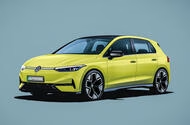
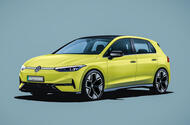
The Volkswagen Golf is set to be radically reinvented as an advanced electric car when it enters its ninth generation, benefiting from bold new hardware and software technology
The new model, due in 2028 or 2029, will be a key part of a wide-reaching overhaul of Volkswagen’s EV line-up that will kick off with the ID 2X later this year. The new model will start the brand’s pivot back towards more conventional and familiar styling.
There have been electric variants of previous generations of the Golf, but the new version will be the first engineered purely as an electric car. While that marks a significant step for the Golf, it will retain familiar design cues from the model’s history and be offered with GTI and R performance variants.
The new Golf will mark the point where Volkswagen’s long-running model names will effectively merge with its ID sub-brand, possibly resulting in the car being called the ID Golf.
The model will also be the culmination of a major reworking of the marque’s electric range, spearheaded by boss Thomas Schäfer to make Volkswagen what he refers to as an emotional “love brand” once again.
New entry-level models to kickstart brand revamp
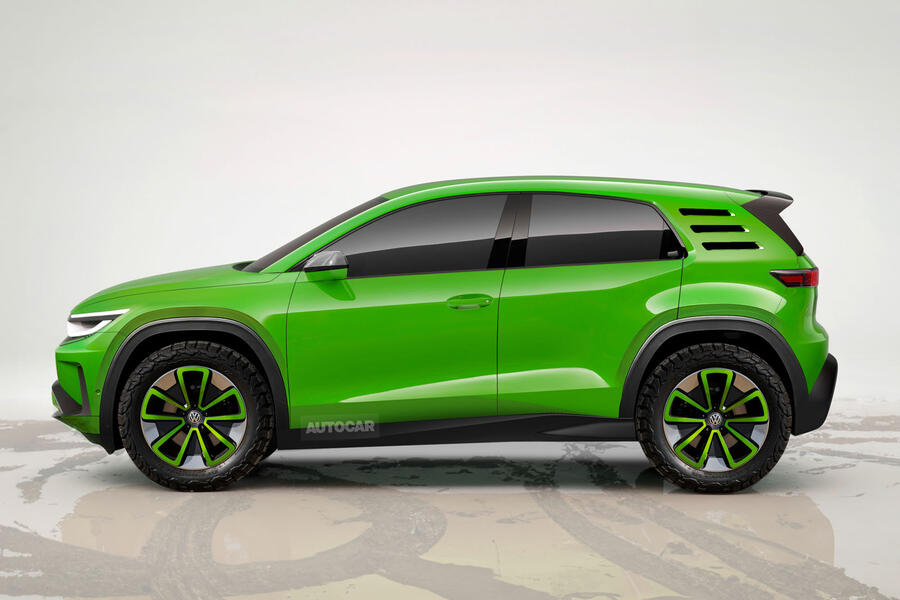
Before the ID Golf arrives, three new small EVs will be launched to kick-start Volkswagen’s new age. This will begin with the unveiling of the ID 2X compact SUV, which will be closely followed by the production version of the ID 2all hatch. Both those models will sit on the Volkswagen Group’s new MEB Entry platform, with the ID 2all positioned as a Renault 5 rival and priced from around £25,000.
The ID 2all will be a similar size to the current Polo – it could yet take that name into production – and retain styling very similar to that of the concept version, with deliberate nods to classic Volkswagen models.
The ID 2all will also spawn a GTI version, which has already been previewed by its own concept. It will bring the classic ‘everyday performance’ badge to an electric Volkswagen for the first time, replacing the GTX brand used by hot ID models to date.
While the firm has yet to outline performance targets for the ID 2all GTI, tech chief Kai Grünitz has said the focus will be on developing a model that is fun to drive, rather than simply adding maximum power.
Those two models will then be joined in 2027 by the production version of the ID Every1, a £17,000 city car that will in effect succeed the Up in Volkswagen’s line-up.
Notably, that model will be the first VW to feature elements of an advanced new software architecture being developed in a joint venture with US EV start-up Rivian and which will be key to the development of all the brand’s European models in the future.
ID Golf to get fresh but familiar styling
The retro-infused designs of the ID 2all and ID Every1 concepts hint at what design chief Andreas Mindt has planned for the ID Golf – and for future VW models. While the next Golf won’t be an overtly retro design, it will build on traditional Golf design traits. That will be eased by a more regionalised product approach in future, allowing for the Golf to be focused more on European tastes where its heritage is valued.
Mindt recently told Autocar he was already thinking what design elements would be key to the next ID Golf, but he said it would be designed “without doing retro”.
He added: “We have to look forward and not backwards, but our values are important and we should play with our heritage. So many new brands coming to Europe don’t have this, so we need to use it.”
Asked what elements would be important for the new model, Mindt said: “You have to stay true to the Golf. Golf is a brand of its own [within Volkswagen], and GTI is another brand within that. Within those brands there are various models you can play with. There’s a lot of nice content you can use for the future of Golf.”
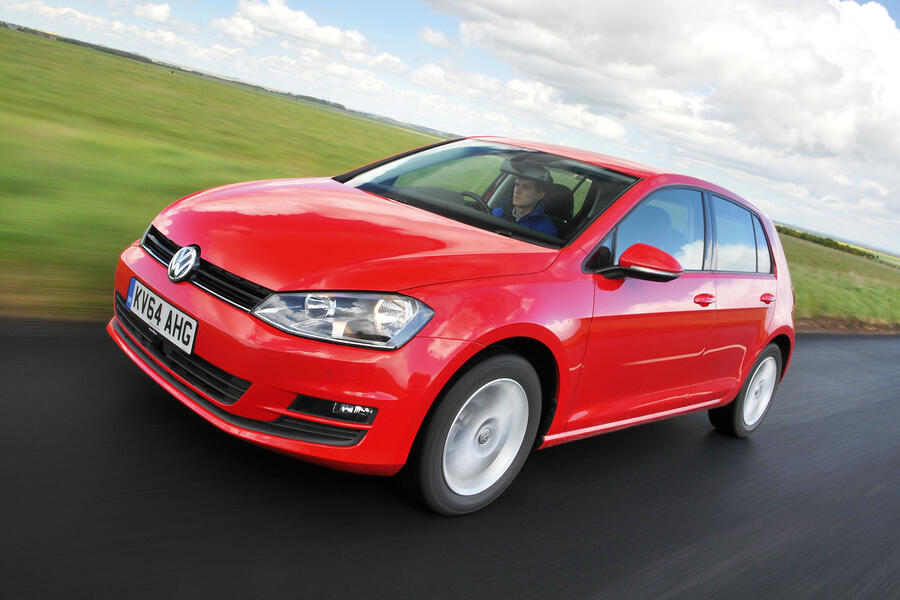
Notably, Mindt was part of the design team for the Mk7 Golf (pictured above), which is regarded as one of the finest in the nameplate’s long history. Mindt admitted that model was a “good starting point” for his work on the ID Golf, adding: “The Mk7 is kind of a masterpiece, because it resembles all the best elements from history, but it’s still a fresh design.”
Mindt will also play a key role in the interior overhaul of the next Golf’s design, and he has vowed that all future Volkswagen models will feature physical buttons for key controls such as the infotainment volume and heating systems. That will represent a marked contrast from the Mk8 Golf, which was launched with controversial ‘slider’ controls and haptic steering wheel buttons.
The ID Golf will, as before, be joined by several closely related sibling models from other Volkswagen Group brands, starting with the next-gen Skoda Octavia.
New tech key to unlocking ID Golf's potential
The ID Golf is set to arrive in 2028 or 2029. It will be one of the first models in the VW Group to use the new SSP electric platform, which in effect fuses elements of the existing MEB mainstream and PPE premium platforms. It is designed to be ultra-flexible through a modular set-upthat allows it to be offered in a wide range of dimensions and with a wide variety of powertrain set-ups and battery sizes.
The SSP platform will also be built around the new Rivian-developed software architecture, which will control the bulk of the systems on the vehicle through a greatly reduced number of processors.
It’s that software set-up that will be key to unlocking the ID Golf’s potential: it is a zonal system that can be adapted based on how much technology each model needs, and it allows for much greater system integration. That means, for example, the ability to blend automatically the optimum mix of friction braking and regen when the driver presses the brake pedal.
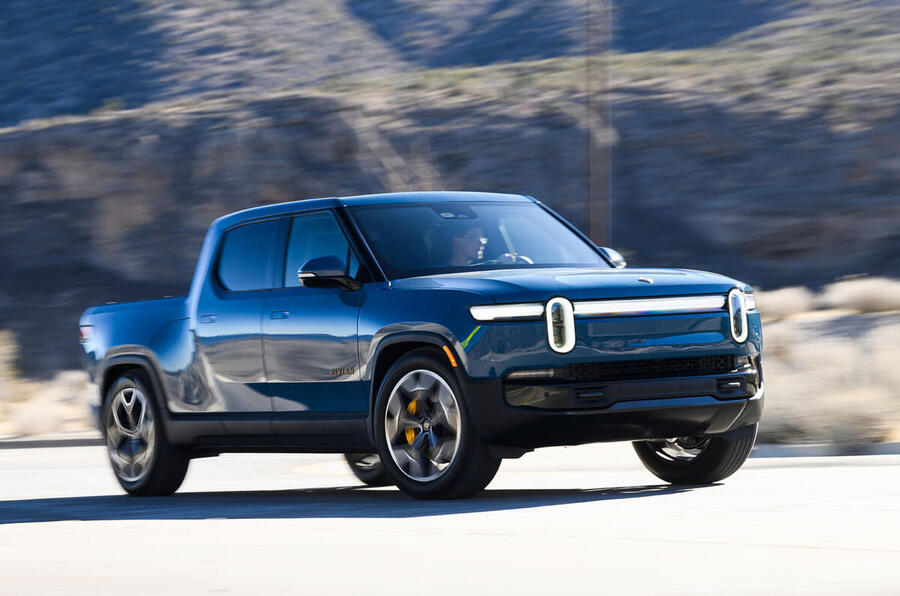
It also allows for much greater control over the car’s hardware, including through over-the-air (OTA) updates. For example, Rivian used OTA updates to rework the air suspension of its R1T pick-up (below) to materially alter the vehicle’s ride and handling dynamic.
Speaking about the software platform recently, Grünitz said the real benefit was that it was “highly flexible and highly updateable”. He added: “With OTA updates I can introduce new functionality to our customers even after they bought the car, without them needing to bring it in for a service. That means it’s really the next step.”
That ability of the software to control the key hardware elements will be crucial to both GTI and R variants of the Golf and ensure they offer performance that will be recognisable to fans of the combustion-engined versions of those models
The GTI is likely to be offered with two-wheel drive to best replicate its established character, and it will doubtless use the software control of systems such as torque vectoring to put B-road handling to the fore. Meanwhile, the R is expected to get all-wheel drive – probably via a dual-motor set-up – but with more of a focus on handling than the previous dual-motor GTX models.
Existing ICE Golf to remain on sale
The ID Golf will be built at the firm’s main factory in Wolfsburg, Germany, where the Golf has been produced continuously since it was first launched in 1974. To accommodate that, production of the existing combustion-engined model will in 2027 be shifted to Volkswagen’s factory in Mexico, creating space for the production of the new ID Golf to ramp up the following year.
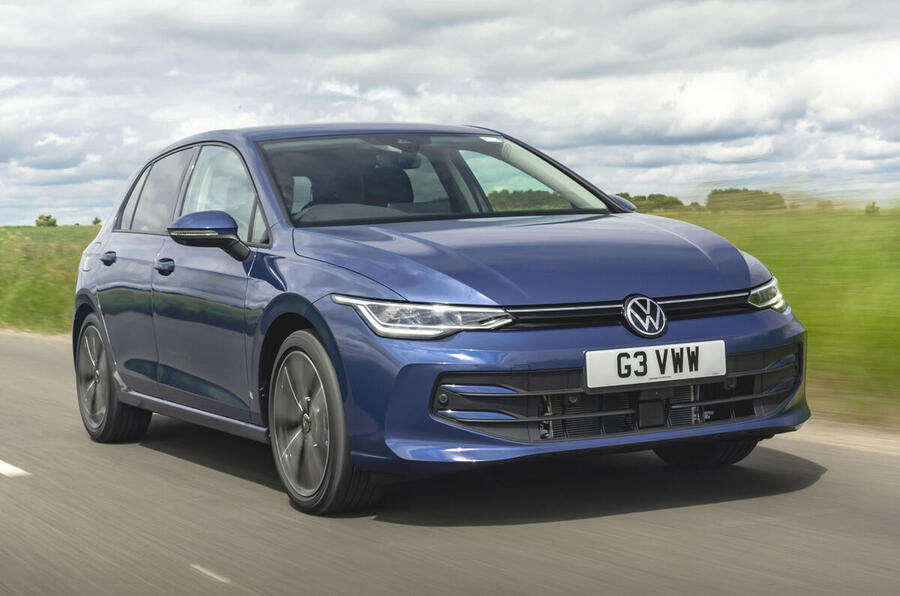
Notably, the current Mk8.5 Golf will be heavily updated and remain on sale alongside the ninth-generation EV. A similar move is being undertaken by Volkswagen Group sibling Porsche with the combustion-powered and electric Cayennes.
In Europe and the UK the ICE Golf will only be offered in plug-in hybrid form while demand and regulations allow – currently until 2035, when all new non-EVs will be banned from sale.
The shift to production in Mexico hints that, as with the Beetle before it, the model could remain on sale for longer in countries that are slower on EV uptake.
The ID Golf will also mark the starting point of another revamp of Volkswagen’s EV line-up. It is likely to be followed by an SUV that will serve to succeed the ID 4, and it could potentially continue the best-selling Tiguan model line.
The ID Golf will arrive around the time that the ID 3 would be due for replacement, but it is not expected to replace that model. Instead, there are hints that the bespoke EV could gain its own successor, albeit with some differentiation to ensure there is little crossover between the two models.

Sky Safety Showdown: D.C. Legislators and Army Clash Over Helicopter Flights


Riding Electric: How My Zero Motorcycle Fueled My Fury Against Diesel Trucks

Exciting New Trailer Unveils Vehicles in Grand Theft Auto VI Amid Delay to 2026

Silverado EV: The Electric Pickup Redefining Range and Performance
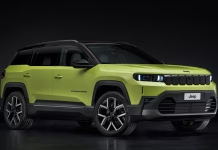
Jeep Compass Unveiled: A Stylish Hybrid and Electric Option, But Will It Make It...
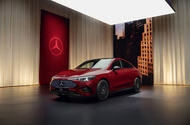
Mercedes-Benz CLA EV Faces Charging Compatibility Challenge with 400V Stations
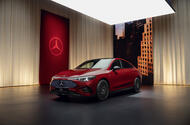 The omission of a 400V DC converter is thought to be a cost-saving measure by the German brand
The incoming electric Mercedes-Benz CLA, the German brand's game-changing EV that promises a 492-mile range, is unable to use any 400V DC charger - a common standard across the UK and Europe.
This means the third-generation CLA, based on the German firm's new MMA electric car platform, is incompatible with many older 50kW units and most Tesla Superchargers currently in operation.
This is because it lacks a DC-to-DC voltage booster, meaning it can only fast-charge at stations that supply 800 volts - typically found on newer HPC (high-power charging) networks that can charge at speeds almost double that of 400V.
The UK currently has 14,448 public charge points capable of 50kW charging or faster, according to Zap-Map. Although the data doesn't include the voltage of the chargers, Zap-Map does confirm that while 800V charging (up to 350kW) is available at some locations, it's not nearly as widespread as 400V charging (up to 250kW), given that it's a newer - and therefore much more expensive - technology.
The omission of a 400V DC converter is thought to be a cost-saving measure, the likely thinking being that the majority of customers will charge their CLA mostly at home via an AC connection –there, 400V AC flows into an onboard charger and is converted into 800V DC internally for battery use.
Mercedes confirms the charging limitation on its German website configurator with the message "charging at 400V charging stations is not possible".
Backing its decision, a spokesperson for the car maker told Autocar that "the share of 800V DC-fast-charging stations in the entire charging network is constantly increasing" adding that drivers will only be "directed to a compatible charging station" via the navigation system. "The update of available and compatible charging stations works almost in real time," it said.
Asked if there would be a paid option to fit a DC converter for the UK market, the spokesperson said: "We cannot comment on this now."
Rival car makers have taken a different approach. Hyundai and Kia equip their E-GMP-platform EVs, including the Ioniq 5 and EV6, with internal voltage boosters to allow 400V-800V conversion, enabling charging even from older DC stations.
Meanwhile, Porsche and Audi use a split-pack battery strategy with their PPE-platform EVs, such as the Macan Electric and A6 E-tron, dividing the battery into two 400V sections for charging (albeit at reduced speeds).
Mercedes has chosen not to implement either solution in the CLA EV sold in selected European markets. There is still a DC-DC converter onboard, but it's only used to supply 12V power to auxiliary systems such as seat heating and infotainment.
While 400V chargers are being replaced by 800V chargers across Europe, many 400V chargers still remain, particularly in countries such as Norway, where the EV charging infrastructure was established much earlier than in other countries.
Reports suggest the new CLA EV to be sold in Norway will be fitted with the DC-to-DC booster, but it remains unclear if this will be included on models offered in other European countries.
Mercedes' Belgian and Dutch online configurators make no mention of the charging limitation.
Autocar has asked Mercedes for clarification on the specification of the CLA EV to be sold in the UK but has yet to receive a reply.

Lewis Hamilton: Racing into Fashion at the Met Gala

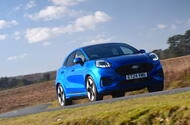
Ford Puma Reigns Supreme: Discover the UK’s Best-Selling Cars of 2025
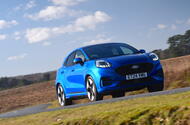 The compact crossover, which was crowned 2024's best-seller, leads the charts after a strong April
Can anything overtake the Ford Puma as the UK's best-selling car?
The popular small SUV topped the charts for the second consecutive year in 2024 and, four months into 2025, it's still clinging on to the number one spot.
While it has been a successful start to the year for the Puma, the overall new car market is struggling slightly.
New car registrations dropped by 10.4% in April to 120,331, down from 134,274 the year prior. That made it the worst April for the market since 2022.
However, electric car sales continued to look healthy, increasing by 8.1% year-on-year to 24,558. The Renault 5 was the best-selling EV for retail buyers in its first month on sale.
But which are the top 10 best-selling cars of the year so far? Keep reading to find out, with data directly from the SMMT.
The most popular new cars of 2025
1. Ford Puma – 18,241 units
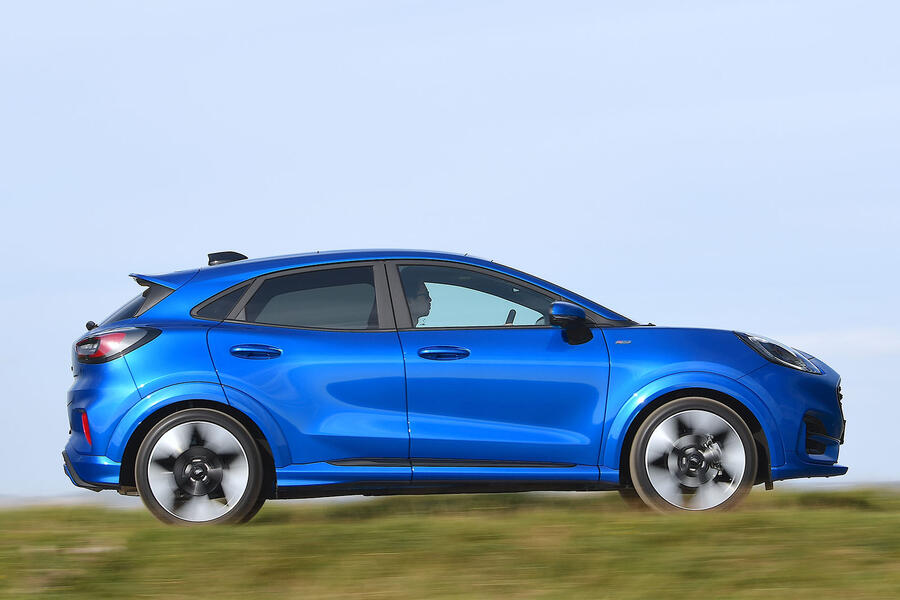
The best-selling car of 2024 had a slow start to this year but three months of consistently strong performance pushed it back to the top spot, where it has sat since February.
The Puma appeals because it's engaging to drive and attractively priced, plus it offers the option of a hot Puma ST variant.
Perhaps the impending arrival of the electric Ford Puma Gen-E will give it an additional boost.
Read our Ford Puma review
2. Kia Sportage – 16,380 units
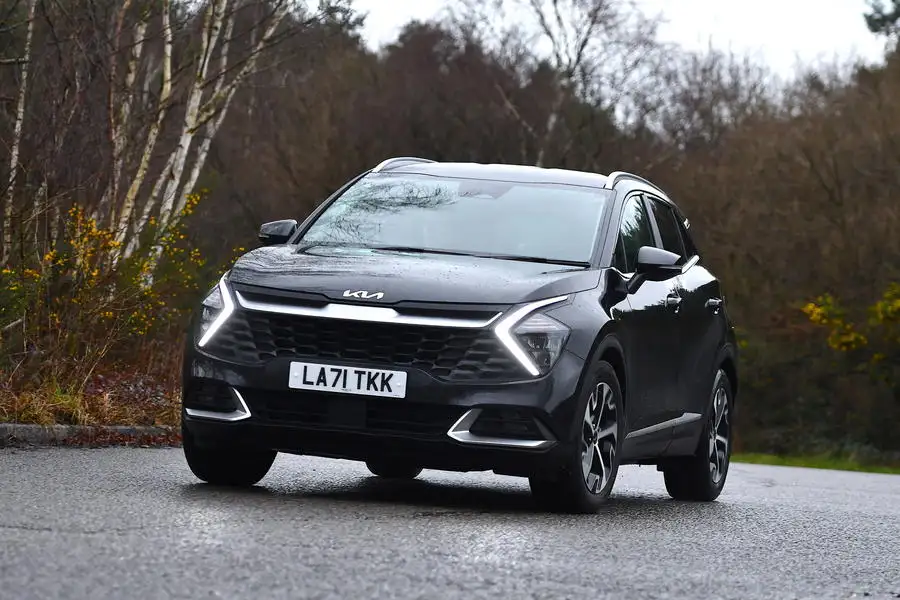
The Kia Sportage finished fourth in the 2024 sales charts, and we suspect the people of Seoul will be thrilled to see the SUV retain second place for the second consecutive month.
Consistency is the key to this family SUV. It entered its fifth generation at the tail end of 2022 and still looks fresh, eye-catching and modern.
Its mild-hybrid, full-hybrid and plug-in hybrid powertrains ensure a great variety for buyers, too.
Read our Kia Sportage review
3. Nissan Qashqai – 13,989 units
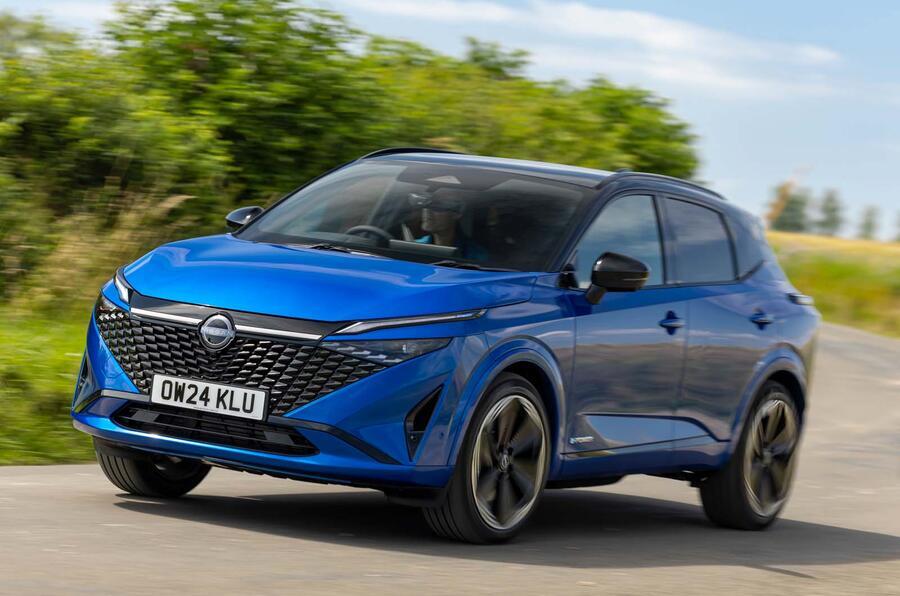
The Nissan Qashqai was the UK's best-seller in 2022, but it has since been outpaced by rivals, finishing second in 2023 and third in 2024.
That said, it's still extremely popular and continues to appeal to buyers here with its excellent practicality.
The British-built family crossover's appeal has also no doubt been bolstered by the addition of electrified powertrains for its third generation.
Read our Nissan Qashqai review
4. Vauxhall Corsa – 13,852 units
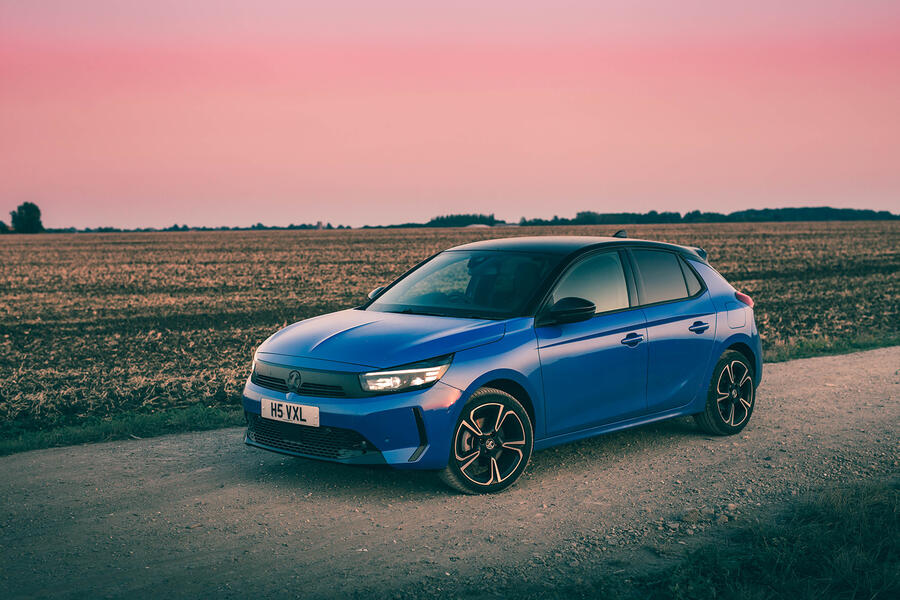
The sales figures for the evergreen Vauxhall Corsa have been a bit up and down of late. It was the best-seller of 2021 but failed to place in the top 10 for 2024. So Vauxhall will be happy to have it performing well again.
A 2024 facelift and keen finance offers have given the supermini a real shot in the arm, and it's deserving of its place on the podium.
Today, the Corsa offers great value for money, with strong, economical powertrains and a pretty impressive roster of digital tech.
Read our Vauxhall Corsa review
5. Nissan Juke – 12,373 units
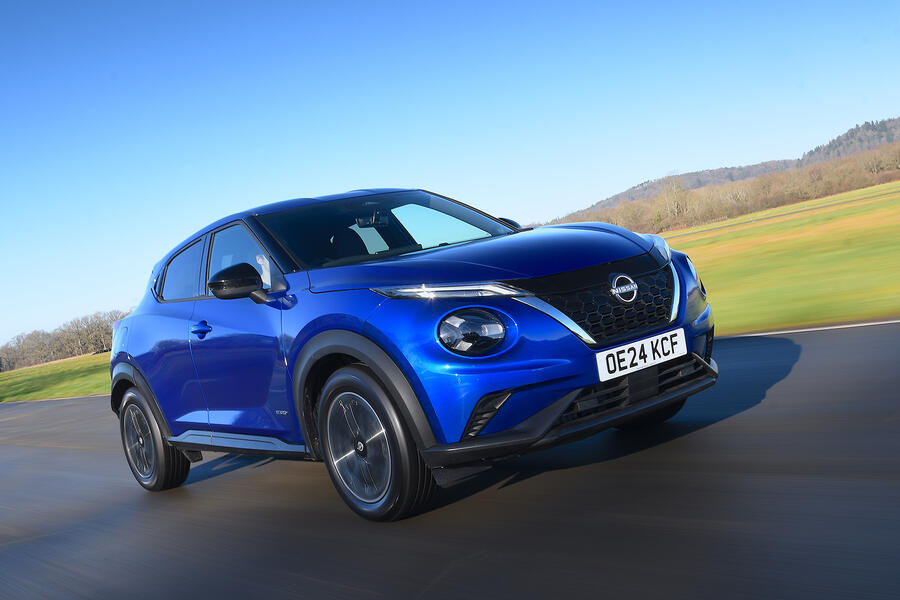
The Nissan Juke remains a popular car among UK buyers, having finished 2024 in fourth place.
The small SUV went on sale with a brand-new design in 2020 and then a facelifted version arrived in the middle of 2023, along with hybrid power for the first time.
Read our Nissan Juke review
6. Volkswagen Golf – 12,348 units
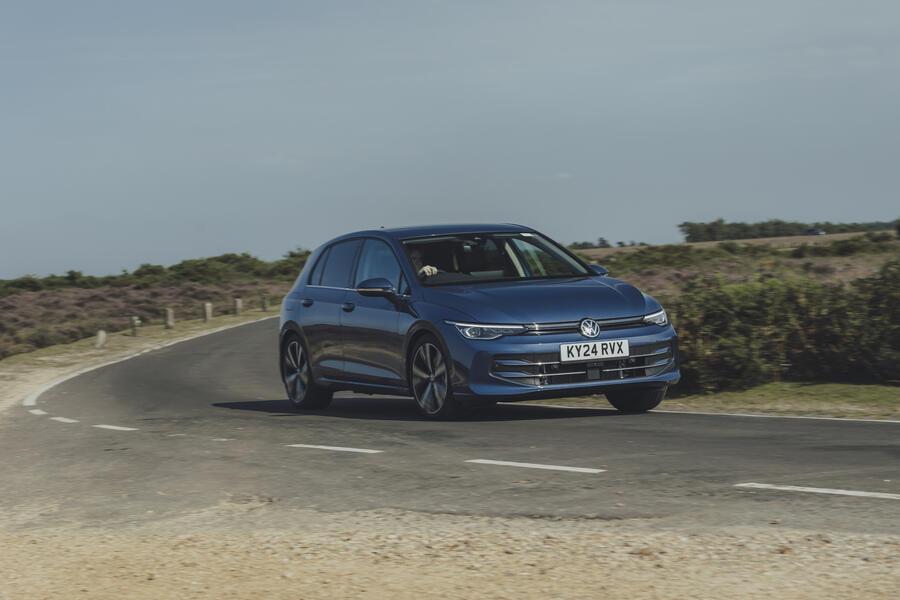
The Golf isn’t quite as popular as it once was, but it’s still a top pick for drivers on the hunt for a good all-round family hatchback or estate. In fact, it has been slowly creeping its way back up the charts.
The German stalwart has been kept fresh with a wide-reaching technology update, a design revamp, a more powerful GTI hot hatch and a longer-range plug-in hybrid, so it could climb higher still.
Read our Volkswagen Golf review
7. MG HS - 11,016 units
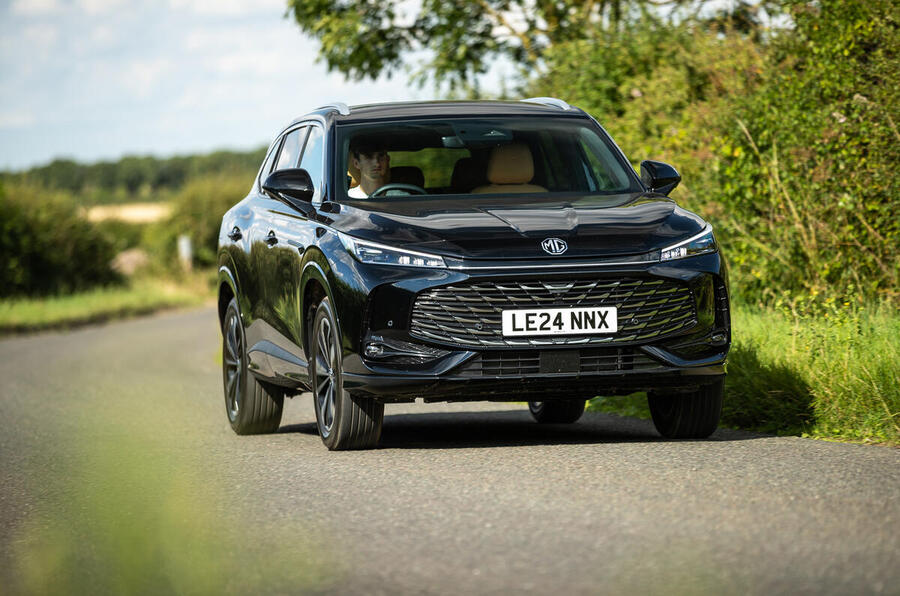
The MG HS offers class-leading value for money.
Available with a petrol engine or as a more frugal plug-in hybrid, the HS comes with good levels of equipment as standard, including a 10.1in touchscreen, a 360deg parking camera and smartphone mirroring as standard.
Its PHEV powertrain is the star of the show, offering 75 miles of electric-only driving.
Read our MG HS review
8. Volkswagen Tiguan - 10,664 units
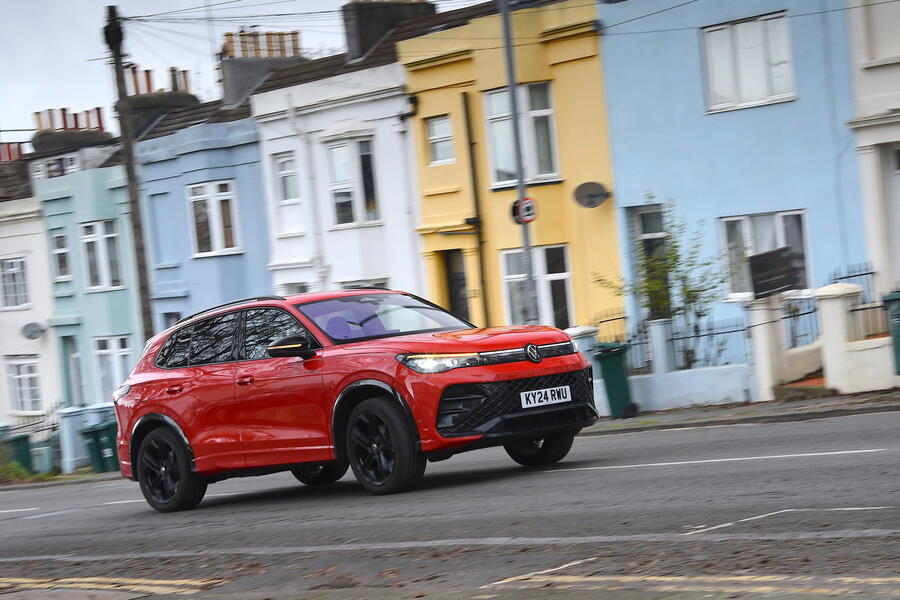
Volkswagen's popular family SUV has long been one of its best sellers, and it's the brand's second model on this list after the Golf.
A practical and versatile option, the Tiguan gets a wide range of powertrains, including petrols, diesels and plug-in hybrids.
Standard equipment is good too, with a reversing camera, parking sensors, wireless smartphone mirroring and dual digital screens all basic equipment.
Read our Volkswagen Tiguan review
9. Volvo XC40 - 10,612
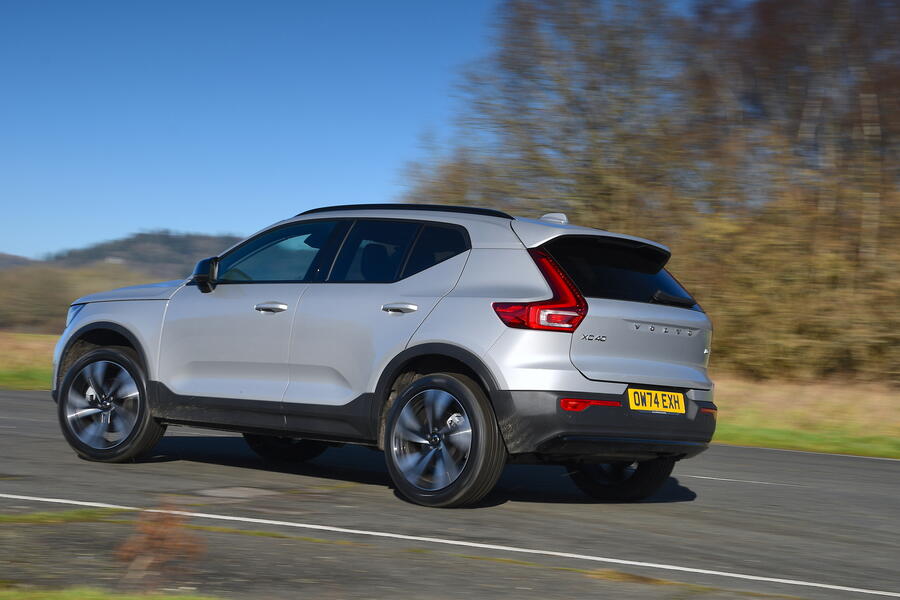
The eight-year-old Volvo XC40 is a surprise re-entry into the top 10 following a successful April, surging above the similarly positioned Hyundai Tucson.
A well-rounded model, the XC40 is a compelling SUV for buyers after something a bit more posh-feeling. Its interior is still one of the best around for technology and material quality.
It's currently available with a choice of mild hybrid powertrains with either 159bhp or 194bhp, which propels it on from 0-62mph in as little as 7.6sec. An electric version is also available, badged EX40.
Read our Volvo XC40 review
10. Hyundai Tucson - 8715 units
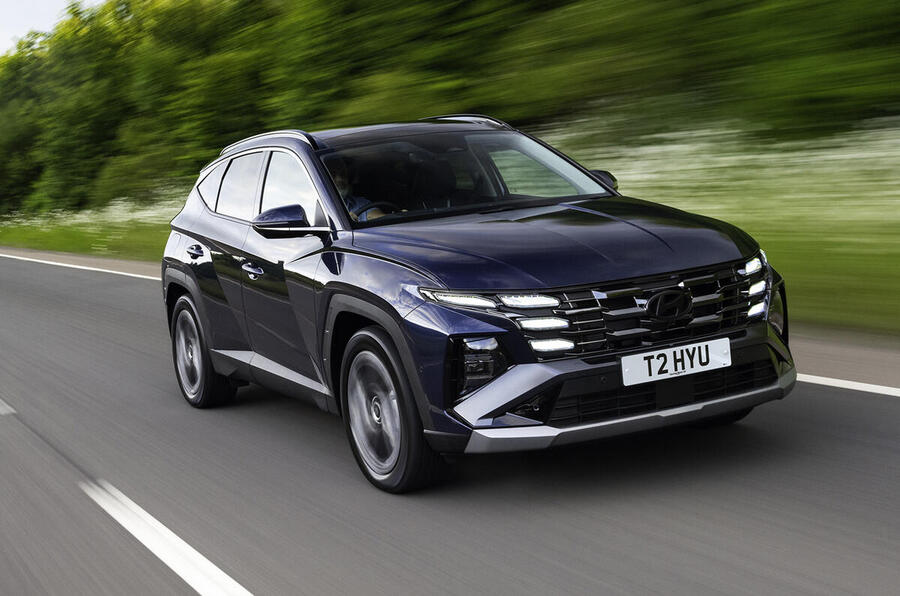
The Hyundai Tucson is one of the UK’s most popular SUVs and regularly appeared in the top 10 in 2024.
Along with the XC40, the Tucson has been battling it out in the top 10 for the title of most premium SUV.
It was renewed in 2021 with a fresh front end that featured a unique, eye-catching lighting arrangement. Its plush interior and range of electrified powertrains are attractive propositions for many Brits.
Read our Hyundai Tucson review
Ram Revives the 1500 Express: A Budget-Friendly Truck for Savvy Buyers