Revved Up and Ready: Why the 2025 VW GTI and Golf R Deserve Your...
Ferrari 296 Speciale: The Pinnacle of RWD Performance and Engineering Excellence
 New 296 "very close" to the limit of what a RWD Ferrari is capable of
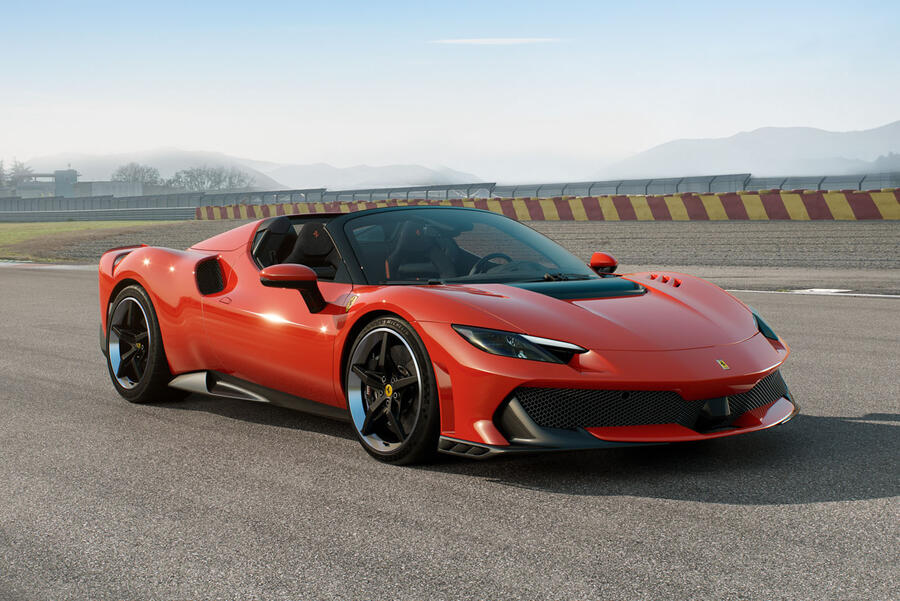
The new Ferrari 296 Speciale is billed as the “most fun to drive, emotionally charged” car the marque has built yet, with its 868bhp claimed to be “very close” to the limit of what a rear-wheel-drive car can offer.
Priced from €407,000 (£349,000) in Italy and offered in both coupé and spider forms, it packs 49bhp more than the 296 GTB, has 20% more downforce and is 60kg lighter.
However, it is “not just an exercise where we put a few additional horsepower”, said Ferrari marketing chief Enrico Galliera. The Speciale instead represents a more comprehensive engineering effort.
For instance, its twin-turbo V6 uses aluminium pistons and the titanium conrods from the new F80 hypercar, and the head is secured to the block with titanium bolts.
This has allowed an increase in combustion chamber pressure of 7%, boosting the V6’s output from the previous 654bhp to 690bhp.
Moreover, the crankcase has been shaved down to save 1.2kg and the turbo design has been reworked to shed another 1.2kg.
Ferrari has also doubled the size of the ‘hot tube’ – the sound pipe linking the engine bay and cabin – to improve the sound quality and volume of the V6.
Revised cooling for the hybrid system has unlocked a further 13bhp, independent of the V6.
“We are very, very close to the limit of the maximum horsepower that we can manage for a rear-wheel-drive car,” said development chief Gianmaria Fulgenzi.
With that in mind, an aerodynamic overhaul has resulted in a redesign of the 296’s rear end, inspired by the Challenge and GT3 racers.
This has brought about the fitment of two winglets atop the car’s rear haunches and a small active spoiler that rises from the back end – from just above the Prancing Horse badge.
The spoiler has three possible positions and adjusts based on the steering angle and throttle position.
It plays a key role in boosting the car’s maximum downforce by 20% compared with the 296 GTB, with 435kg at 155mph.
The damper and spring set-up has been revised, bringing a 5mm drop in ride height and a claimed 13% reduction in maximum body lean when cornering.
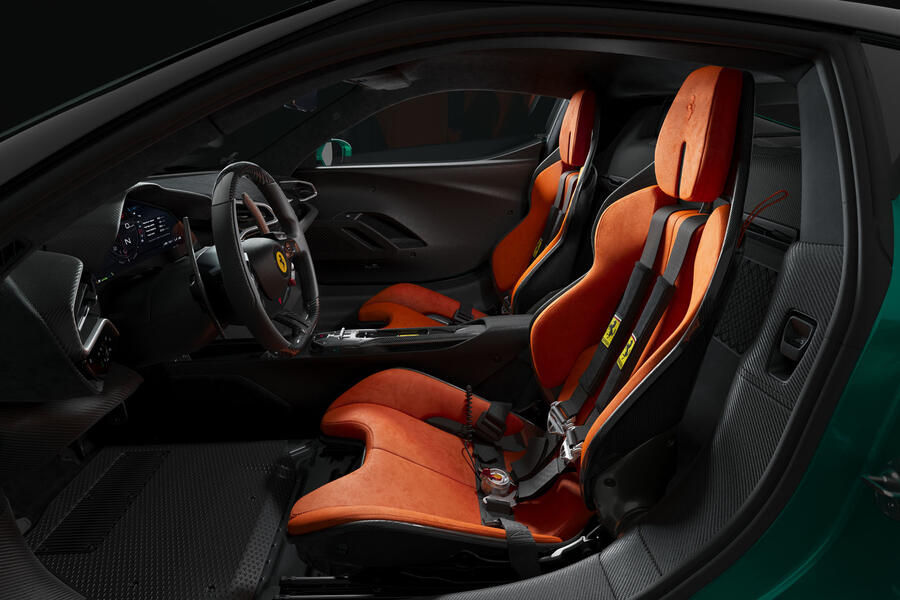
The cockpit has been reworked to minimise weight, with new seats that are said to be 5kg lighter than those in the 296 GTB.
There is more carbonfibre than before, including on a new single-piece door card, and the new steering wheel swaps the previous unit’s touchsensitive control pads for traditional buttons.
Ferrari said the Speciale will not be strictly limited in number but by the time it spends in production, which will be significantly shorter than for the now-discontinued GTB. It will be “very exclusive”, said Galliera.
Ferrari will offer the car only to what it calls “active” clients: those who have bought a new or approved-used car (or maintained an older car) through an official dealer within the past five years.
Unlock Your Car Repair Potential: What Skills Do You Want to Master?
Isuzu D-Max Goes Electric: The Future of Tough Trucks Arrives in 2026
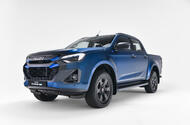 Twin-motor EV version of popular truck will land in 2026 with one-tonne payload and 163-mile range
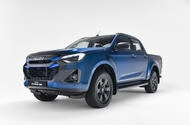
Isuzu has revealed an electric version of its D-Max pick-up truck with full-time four-wheel drive and a payload of more than a tonne.
The D-Max EV is making its debut at the LCV show in Birmingham this week ahead of a UK launch in February next year - when it will go up against the upcoming KGM Musso EV and new Maxus eTerron 9.
It's all but identical to the diesel D-Max (Isuzu's only model line in Europe) but swaps the oil-burner for a pair of electric motors – one on each axle – giving combined outputs of 188bhp and 240lb ft for a 0-62mph time of 10.1sec and a top speed north of 80mph.
Power is supplied by a 66.9kWh battery under the floor, which is good for a WLTP range of 163 miles and can be charged at speeds of up to 50kW for a 20-80% top-up time of one hour.
Importantly, the battery doesn't have a drastic impact on the D-Max's off-road ability, with the EV claiming 210mm of ground clearance and a wading depth of 600mm. It has approach and departure angles of 30.5deg and 24.2deg.
In addition to permanent four-wheel drive, the D-Max EV has a dedicated Rough Terrain Mode for "extreme off-road capability".
While it uses the same ladder chassis as the existing truck, Isuzu has fitted a bespoke de Dion rear suspension system in place of the leaf springs for improved handling.
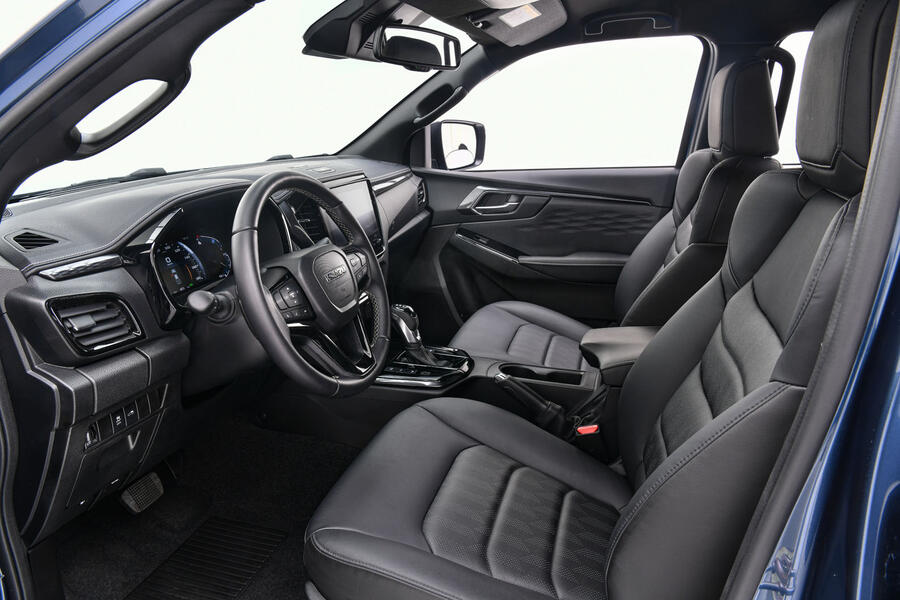
Just as important is the fact that the EV is rated to carry more than 1000kg in its loadbed and can tow up to 3500kg - although Isuzu has yet to say what impact this will have on the range. The D-Max EV weighs 2350kg at the kerb.
Otherwise, the D-Max EV is largely identical to the diesel D-Max, inside and out - down to the kit list, which includes a touchscreen infotainment screen with smartphone mirroring, a digital driver's display, dual-zone climate control, parking sensors front and rear and heated front seats.
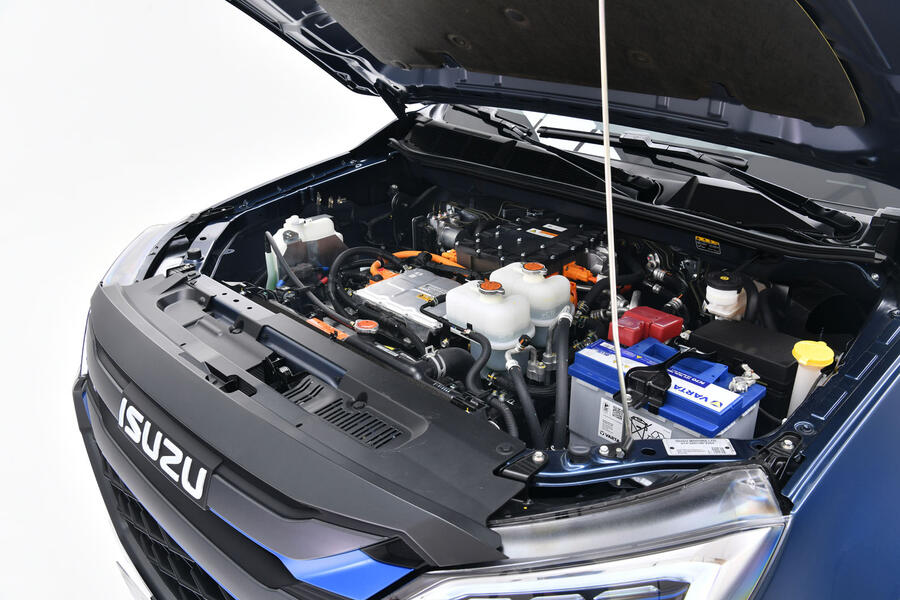
The D-Max EV is being offered only in double-cab form for now.
Prices have yet to be confirmed, but it's likely to command a substantial premium over the diesel D-Max, which starts at £36,505 before VAT.
Pre-sales will begin in the second half of this year, and the first customers will receive their D-Max EV in March 2026.
Discover Your Perfect Ride: From Budget-Friendly Cars to High-Performance Electric Vehicles
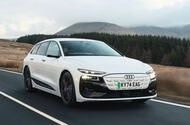
Electric Evolution: Unveiling the All-New Audi A6 E-Tron
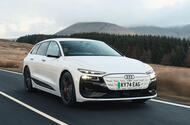 Audi’s larger executive car turns electric - and natively rear-drive - but retains other Audi-typical traits Whatever other decisions may yet be made in the busy corridors of power at Audi’s Ingolstadt headquarters, we know one thing for sure: this is the new, all-electric Audi A6 E-tron - and it’s just touched down in the UK, in right hand drive form.Soon enough, however, another new Audi A6 will touch down, that you can have with a combustion engine if you prefer. That will, no doubt, leave some a little confused.The latter car was all set to be a new A7. But the idea, as Audi originally planned, that A6 devotees might willingly switch to an A5 or A7 in order to avoid inadvertent electrification - and that even-numbered Audis would, for the sake of simplicity, hence force be electric - has proven too much for the company’s customer base and dealer network to accept.So, rather than adjusting the entire model nomenclature strategy to make room for a growing number of EVs which European buyers remain stubbornly slow to warm up to, Audi’s had a rethink. A sensible one, it seems to me. Right now, lots of people instinctively know what an Audi A6 is; likewise an A4, a Q2, etc. That’s money in the bank that, frankly, Audi can ill afford to lose.
Discover the Magic of the Suction Car: A 17-Minute Journey into Innovative Engineering
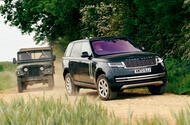
Off-Road Legends: Comparing the Willys Jeep and Range Rover’s Capabilities
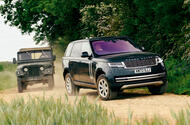
Both of these are unstoppable, but only one gives its driver a full body workoutCan today’s tech-rich, for-the-rich off-roaders tackle the rough stuff any better than the original workhorses?
Ever since God was a child, people have been trying to solve the conundrum of how to get places.
First it was just with our legs. Then we discovered horses and worked out that their limbs were better than ours.
Then, skipping forward a tad, the industrial revolution dropped and the options multiplied tenfold: cars, bikes, trains, planes, scooters, hoverboards and on and on, ad infinitum.
But the fundamentals of getting somewhere tricky have remained remarkably constant in our Autocar world – four bits of rubber shrouding four round bits of metal. And yet, as you can see from the images here, there’s a vast difference across the decades as to how that conundrum is solved.
To the new car, then. It’s the Range Rover plug-in hybrid, and while it’s not ideally suited to out-and-out off-road adventuring (more on that shortly), it is absolutely laden with the latest electronic off-road tech.
You could argue that we should have had the Land Rover Defender on this test, it being the halo off-roader and the ultimate expression of where the capability has got to, but to be honest I’m more interested in where the technology has enabled luxury and mud to mix.
Introducing the Willys Jeep
How far can this tech be pushed? Certainly a chunk further than with the other car here. It’s a Willys Jeep, of the M38A1 variety.
Technically it’s not the oldest of the breed, as this particular one was built in 1955 under licence in the Netherlands (a Nekaf Dutch variant, to be precise), but if Spyker can claim to be the first with a four-wheel-drive passenger vehicle, it’s generally accepted that Willys and the original WW2 Jeep made the genre what it is today. And this car is a successor to that icon of the Second World War.
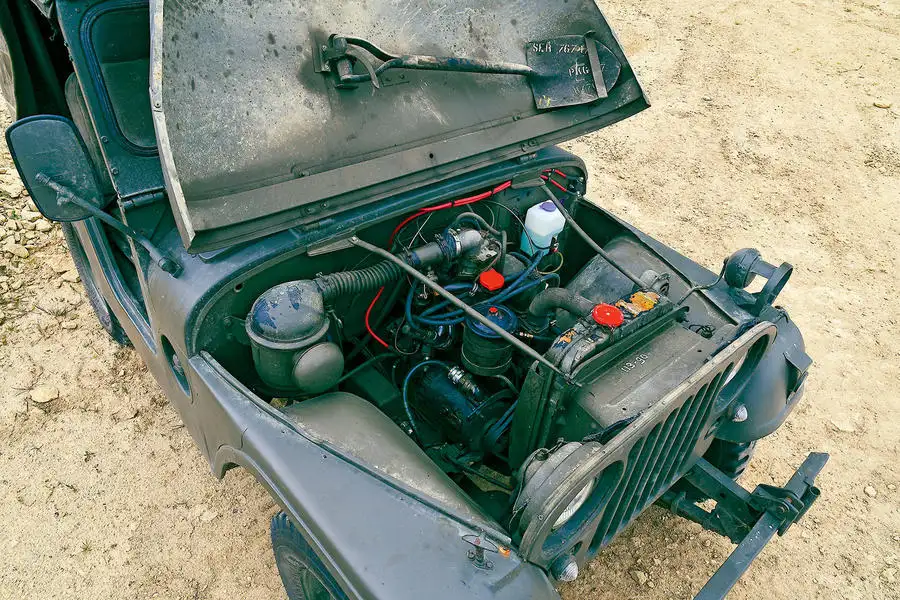
It’s basic in the extreme: leaf spring suspension all round, a choice of four- and two-wheel drive that is switchable by a very long lever, and a high- and low-range gearbox, all powered by a water-cooled, four-cylinder Hurricane engine linked to a three-speed ’box.
There are no doors or heater, and technology is limited to a set of dials, most of which don’t seem to work. If an item isn’t needed in order to fulfil the car’s singular, go-anywhere purpose, it’s not on it.
Introducing the Range Rover
The contrast to the Range Rover is extreme. Here is the car that should be able to drive both to and up the ski slope, with barely a fluster.
Air suspension that can raise the body by 135mm and Land Rover’s first-ever five-link rear axle take care of the comfort, while the six-setting Terrain Response 2, e-locking rear and centre diffs, rear-axle steering with 7.3deg of possible turn and low-speed gearbox mean the off-road box is also ticked.
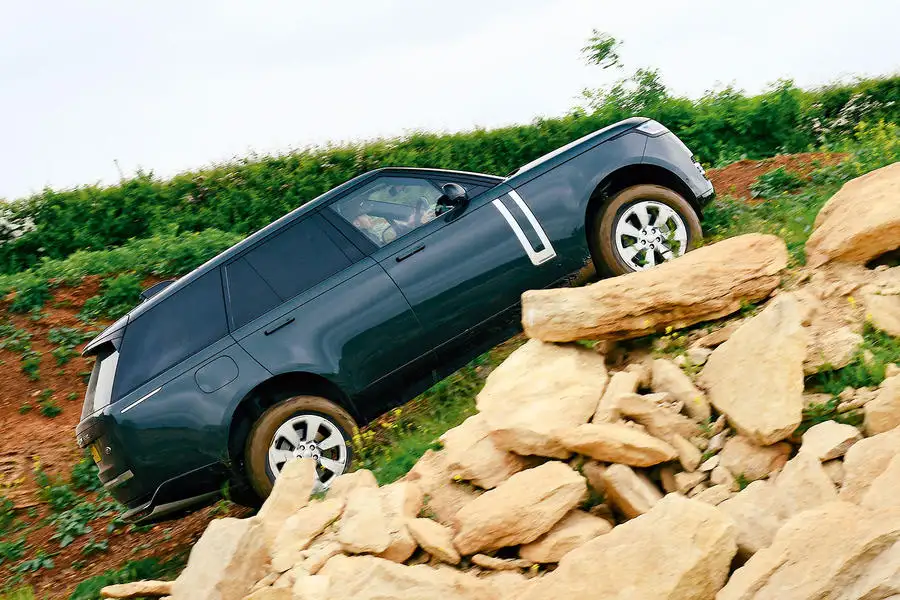
The reason it’s not the ideal Range Rover is because of the PHEV element. While that is enabling us to achieve fuel economy in the mid- to high 30s, the 38.2kWh battery sits low under the chassis, thereby reducing the ramp angle by 2.5deg and the ground clearance by 11mm from a regular Range Rover.
The aim of the day, then, is a simple one. To discover if luxury has blunted ability.
Off-road performance: Range Rover
We start off with a seriously steep drop down into a quarry, where the challenge is not only the angle but also the surface, being a vicious mix of smooth stone and more grippy shale rock.
The four cameras on the Rangie immediately come in handy – although Gerry McGovern’s styling looks good on the King’s Road, it tapers away from the visible edges so the car is difficult to place.
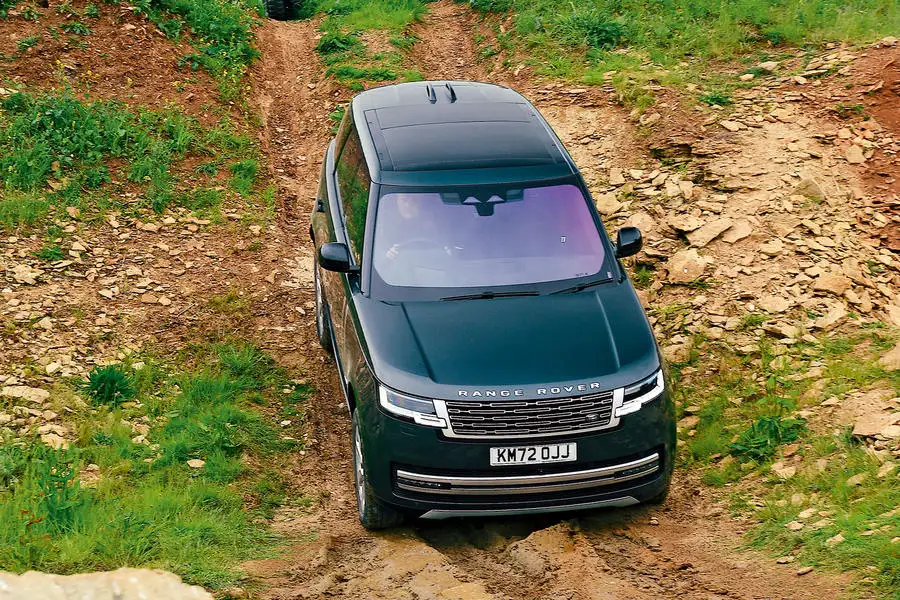
Switch it to off-road mode (max height on the air suspension) and use the ClearSight Ground View mode (essentially a function that allows you to peer through the bonnet) and suddenly it’s clear what’s ahead.
Select hill descent and low range, wind the maximum speed right back within the settings and let the car simply creep down the slope. This isn’t new or unique to Range Rover, but every time it never fails to amaze how damn easy it has all become. Even the change in surface halfway down doesn’t upset it.
Off-road performance: Willys Jeep
The Jeep is just as capable, but not as relaxing. It’s in low range as I head over the edge, but then bounces and careers down the hill with the sort of suspension movement that wouldn’t look out of place in a Benny Hill movie.
You don’t worry about it like you do with the Range Rover (the £130k price difference will do that to you), but there’s never quite the level of faith that tyres/brakes/clutch will do what you need when you need (the car’s 68-year-old age will do that to you).
Where the Jeep does feel happier is on a cross slope. It’s narrow at just 152cm wide but stable, and because it’s so light, it doesn’t pull itself down the slope.
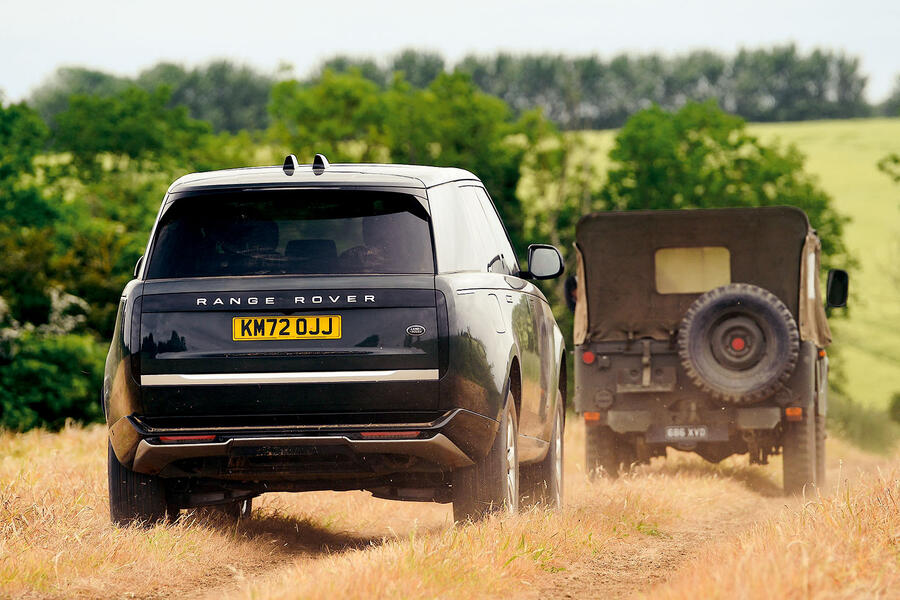
The Range Rover is lucky today in that it’s dry, so the on-road tyres (a set of 20in Michelin all-seasons) don’t struggle to contain the 2695kg mass from slipping with the gradient. If it was wet, it would be a different story.
Still, the four-wheel steer means it navigates through a wood with the same ease as the Jeep, despite being 1.5m longer.
The system also gives traction in unexpected places, allowing the tyres to turn across a slope and keeping the contact patch more stable. It’s impressive stuff.
The downsides
There are some quirks with the Range Rover. It’s very clever, with all the systems talking to each other and sensors measuring every conceivable degree, but sometimes it has a brain-fart moment.
Like reversing back up a slope from a standstill, where the throttle is difficult to control and jerks the car up the hill rather than smoothly climbing. (The second time around it’s much smoother, like it has learned the grip parameters.) Or there’s an occasional random rock that upsets the traction control, sending a thump through the cabin.
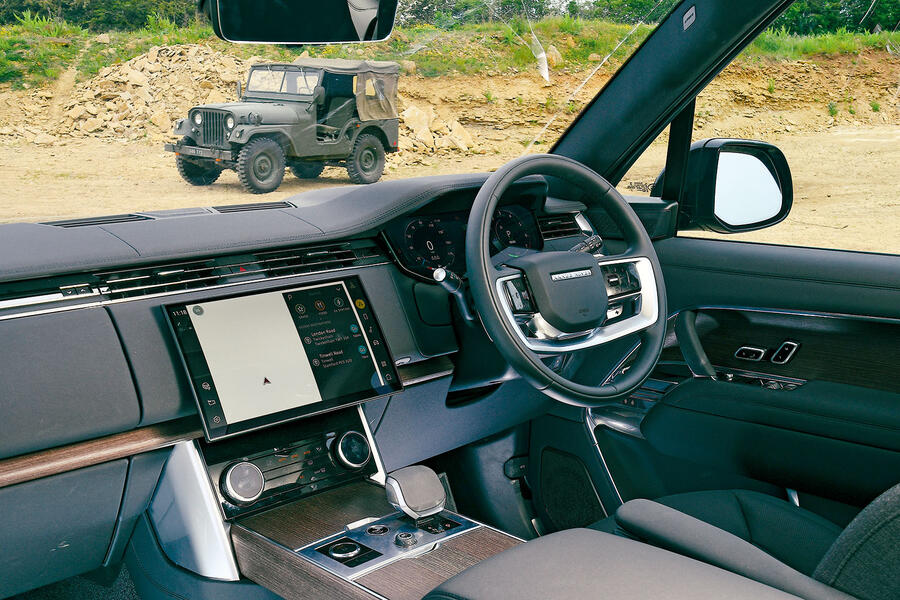
Still, you only get time to reflect on these elements because the experience is otherwise so smooth.
The Jeep could quite easily be doing the same but is so extreme in its lack of comfort that you would never notice. It’s the only car I’ve driven that makes me cast my eyes enviously at early Series Land Rovers as they drive past.
Verdict
Neither car copes well going back up the steep slope. For the Jeep, blame the tyres. The ‘bar grip’ rubber is great in slippery conditions, but on smooth rock it doesn’t have the contact patch.
With the Range Rover, it’s the suspension travel. Being maxed out on the high setting, it struggles to keep its wheels on the floor and can’t use its full 434bhp to drive all four.
These are, though, extreme situations. What all this really demonstrates is how much more multi-purpose the modern off-roader is. And while that may feel like stating the obvious, given the Jeep’s lack of doors, it really is remarkable how capable the Range Rover is.
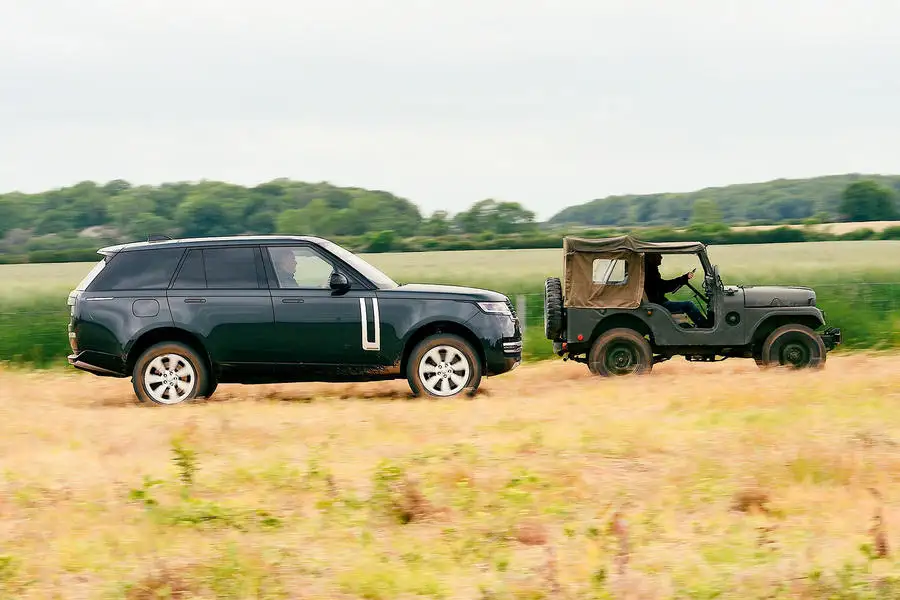
For while there is nothing that the Range Rover can do that the Jeep can’t match, the reverse is also true.
The Jeep was conceived for one purpose: to get soldiers to where they need to be, no questions asked. The Range Rover was conceived with an entire global remit, from LA’s Rodeo Drive to Middle Eastern dunes, and for it to do that as a single entity is mighty impressive.
That breadth of capability and ease of use is not something I expected, even with JLR's (formerly Land Rover’s) reputation.
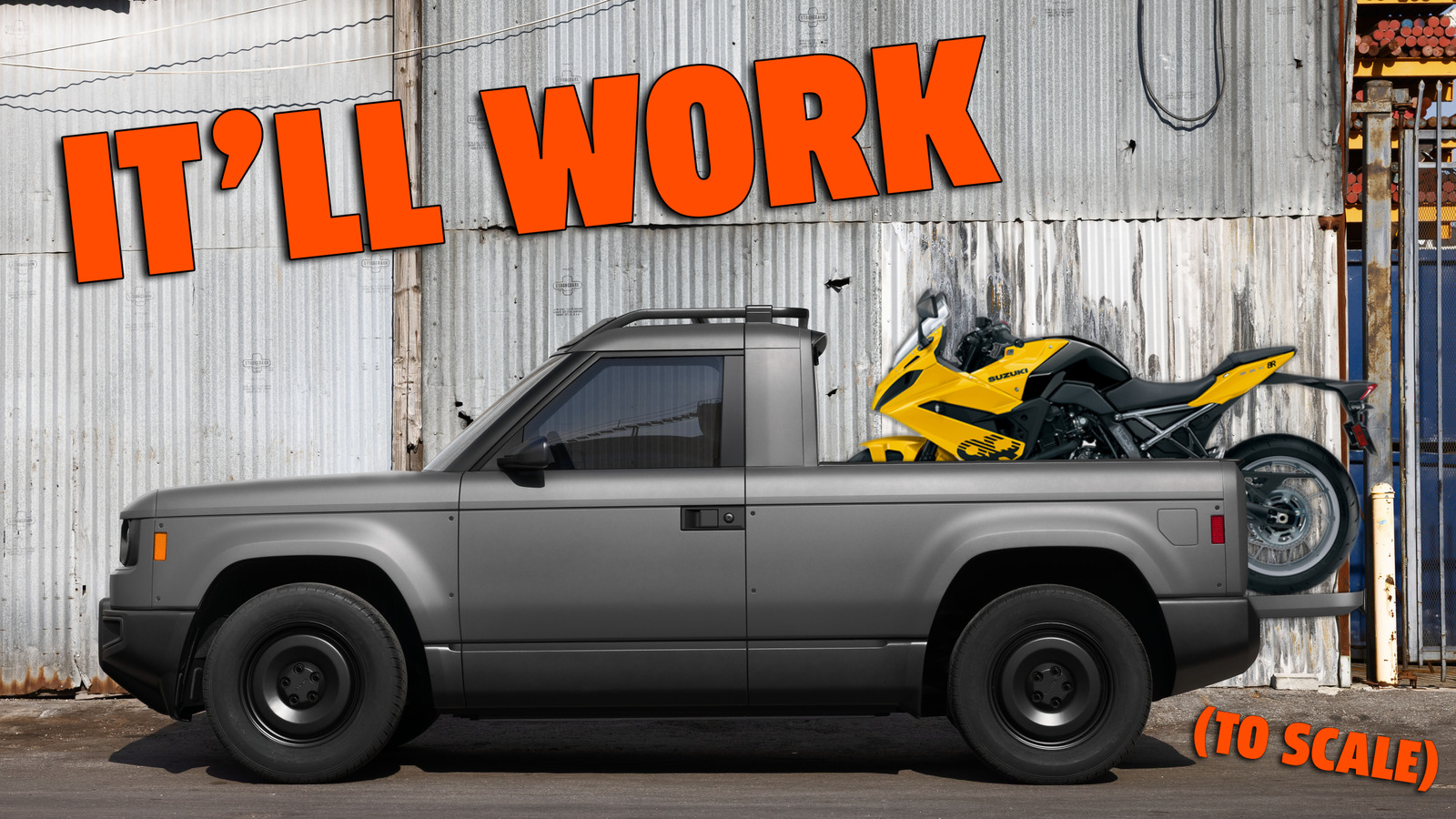
The Ultimate Motorcycle Hauler: Discover the Versatile Slate Pickup Bed

The Temptation of Free Money: Why Stealing Cash is a Legal No-Go