
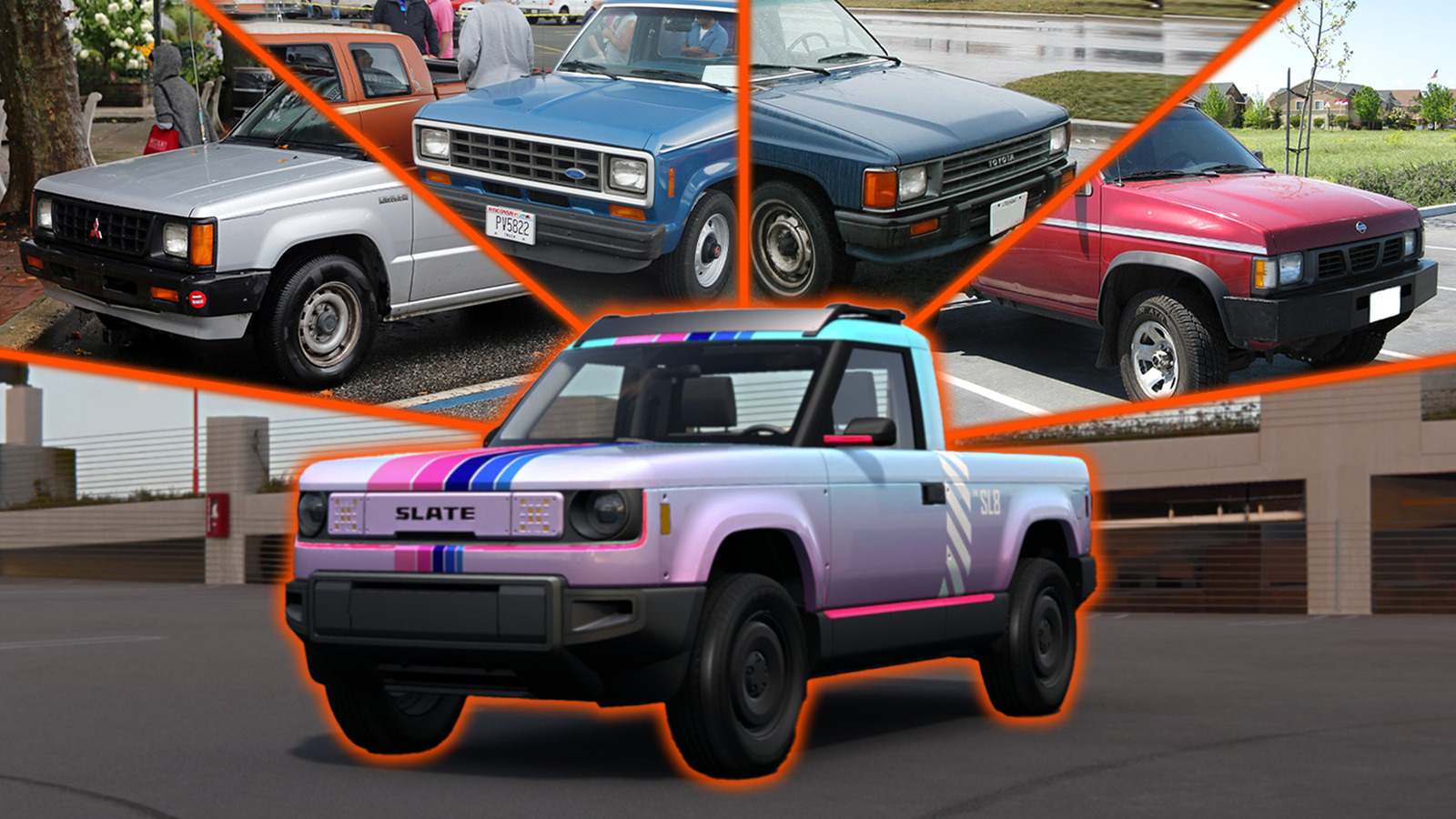
Compact Truck Showdown: How the Slate Compares to Classic Legends
Range Rover Electric: Conquering Extremes with Unmatched Off-Road Capability
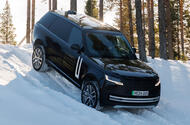 Land Rover brand's first EV is pictured testing in extreme conditions as it approaches launch
The new Range Rover Electric has completed a second round of winter testing ahead of its launch.
Key aspects put to the test included the EV's new thermal management system: how well it could heat the cabin and maintain rapid-charging performance in extreme sub-zero temperatures.
The prototypes also faced high-angle inclines and declines on frozen surfaces, testing that their one-pedal driving modes (using the motors' regenerative effect to slow and stop the car while off the throttle) work across a range of terrains.
"Rigorous testing procedures in extreme and unpredictable conditions like those experienced in Arjeplog [Sweden] are crucial to Range Rover Electric's real-world reliability and resilience," said JLR product engineering chief Thomas Müller.
JLR has also confirmed that the Range Rover Electric uses a 117kWh battery pack designed and assembled in-house, comprising 344 prismatic cells and running at 800V.
The firm has yet to detail a range figure, but such a large capacity should comfortably yield more than 300 miles between charges.
The winter testing comes after prototypes were last year driven in the UAE in temperatures approaching 50deg C.
They were sent up Big Red, a 300ft sand dune in the heart of Sharjah’s Al Badayer desert, to test the EV’s new Intelligent Torque Management system, which replaces a conventional ABS-based traction control system.
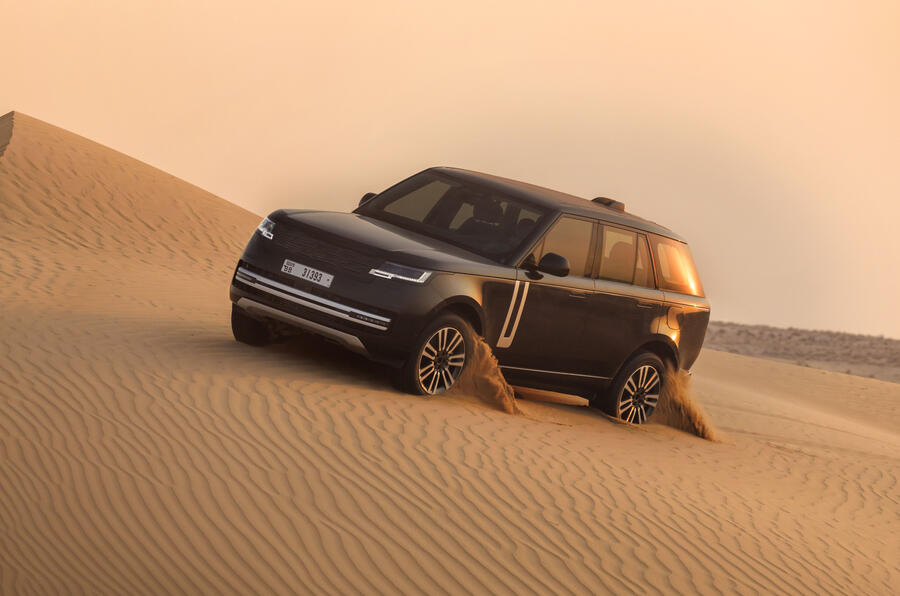
This is claimed to improve traction control off road by diverting power to each electric motor to reduce torque reaction time from around 100 milliseconds to as little as one millisecond. JLR says, after five continuous attempts, none of the cars demonstrated any fall in performance.
Müller said: “A hot climate is one of the most challenging for any battery-electric vehicle, because of the need to cool the cabin and optimise battery performance at the same time.
“The additional challenge of driving on sand requires controlled low-speed torque, so our specially developed traction control and thermal management systems work in harmony to ensure power delivery is unaffected.
“Our tests have shown that in this climate, repeatedly driving the equivalent of 100 metres uphill on fine sand, Range Rover Electric matches the performance of its ICE equivalents; in some instances, even surpassing them – thanks to the introduction of these new features.”
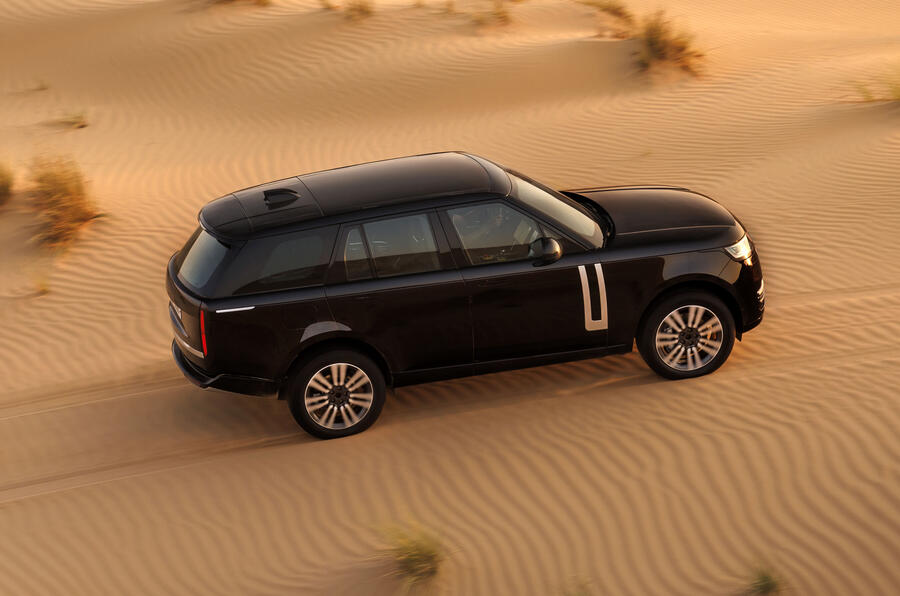
Like the cars pictured in the Arctic Circle, these Range Rover EV mules are shown completely uncamouflaged – a decision made to "underline the build quality of the initial prototypes", according to JLR.
Painted all in black and without the contrasting matt trim elements that JLR has previously suggested will mark out the EV powertrain, the prototype looks all but identical to the ICE Range Rover that has been on sale since 2022.
JLR said this shows how the prototype's "modernist design language stays true to the Range Rover bloodline", suggesting that the Range Rover Electric – as it is officially named – will only be subtly differentiated from the straight-six, V8 and plug-in hybrid derivatives.
JLR previously highlighted that this is the first car to use a battery and electric drive unit assembled in-house.
Although bosses have yet to give any performance details for the new Range Rover, it has been promised to have the same “go-anywhere” capability as the ICE version, with a pledge that it will offer towing, wading and all-terrain capability that will exceed any other luxury electric SUV – including the ability to wade through 850mm-deep water.
The hint that the Range Rover Electric will offer performance “comparable” to the existing V8 suggests a total output close to the 523bhp that model offers.
It's expected to adopt a dual-motor system, which will allow for greater four-wheel-drive ability and systems such as torque vectoring to boost its off-road potential.
JLR said its test programme has been adapted to particularly examine the vehicle’s underfloor, battery durability and thermal derating.
The Range Rover Electric will be built in Solihull alongside the existing mild-hybrid and PHEV versions. It will initially use batteries from a third-party supplier before eventually switching to packs produced in the new Somerset gigafactory that JLR parent firm Tata is planning.
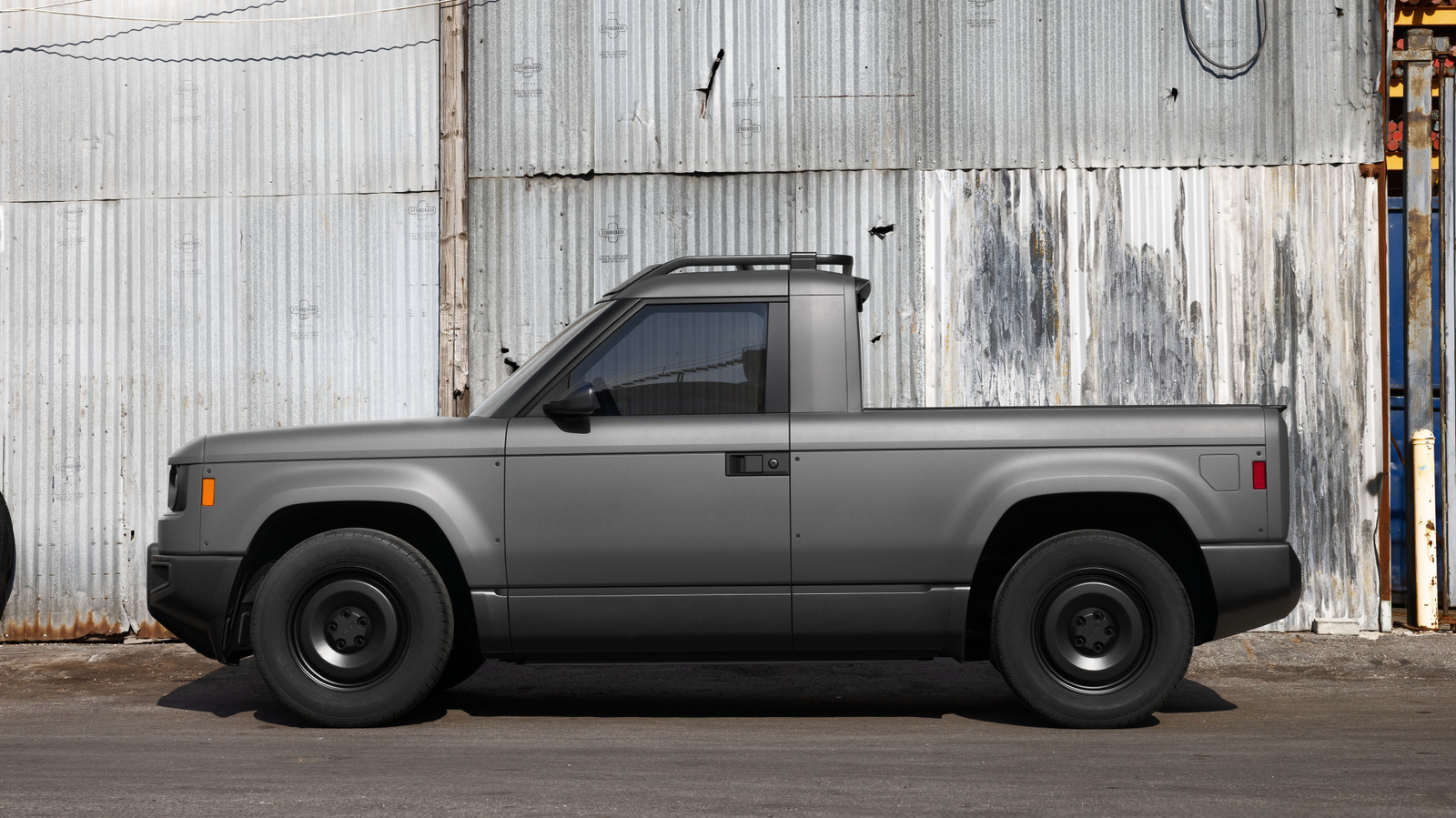
Revolutionizing the Ride: The Return of Manual Windows in 2026 Trucks
Hatchback Heritage: Is the Audi A3 Diesel Still Relevant in an Electric Era?
 In a world of SUVs and electrification, did a diesel hatch still do it for us?
Depending on which day you ask, hatchbacks are my favourite kind of cars. And most days, I stand by that statement.
I suspect it’s my generation – millennials, we’re called – growing up in the hatchback’s heyday. Maybe someone 20 years younger would say the same about SUVs...
For me, a hatchback is perfectly practical and the best size for all scenarios: suburban living, tight car park spaces, motorway driving and, most notably, handling on country roads. Driving a Volkswagen Golf R in north Wales years ago still stands out as one of those days of purest pleasures.
So when it was revealed that I would be the caretaker of a new Audi A3 Sportback, I was pleased. I drive a variety of cars, but hatchbacks don’t come round too often these days, for all the reasons we’re familiar with.
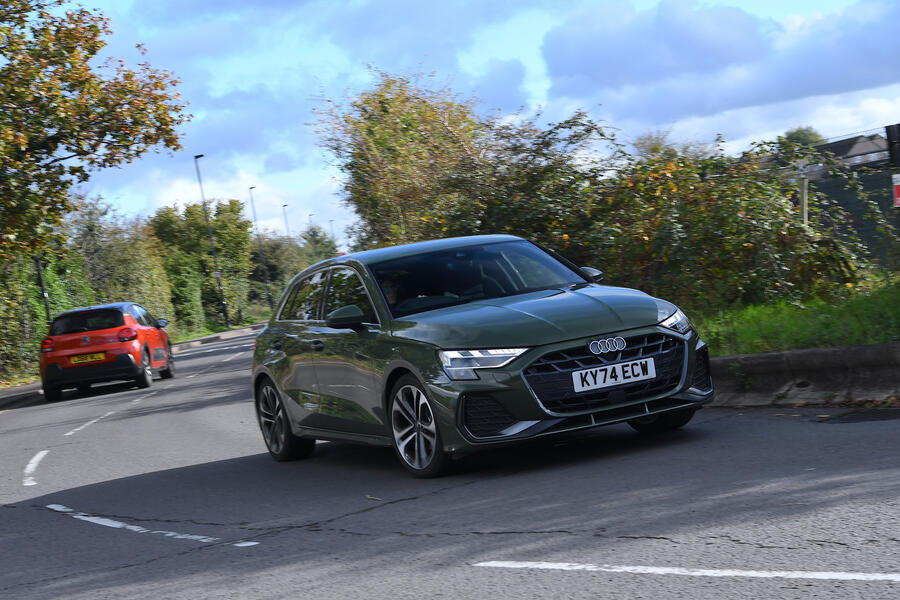
I often wonder how much cannibalisation goes on between a brand’s hatchback and similarly sized SUV, because there absolutely must be some. Indeed, I worry that the popularity of SUVs will kill off hatchbacks. But happily the A3 is still going strong.
It accounts for a notable 25% of Audi’s UK sales, and in terms of the crossover between it and the Audi Q3, the firm tells me: “One year, [someone] may buy an A3 and when they come to renew they may have new requirements (for example, a family or a dog) whereby a Q3 may be more suitable for their needs – or they may be in a Q3 and want to downsize to an A3.”
What’s more unusual than having a hatchback in an era of SUVs is that it’s... a diesel. Remember those? Remember when they took 50% of new car sales?
Diesel now accounts for less than 5% of A3 Sportback sales, but Audi still thinks it’s worth having it in the mix. While diesel was once the first choice for company car buyers, they now favour plug-in hybrids and EVs. Instead, it’s high-mileage retail customers who are opting for this powertrain.
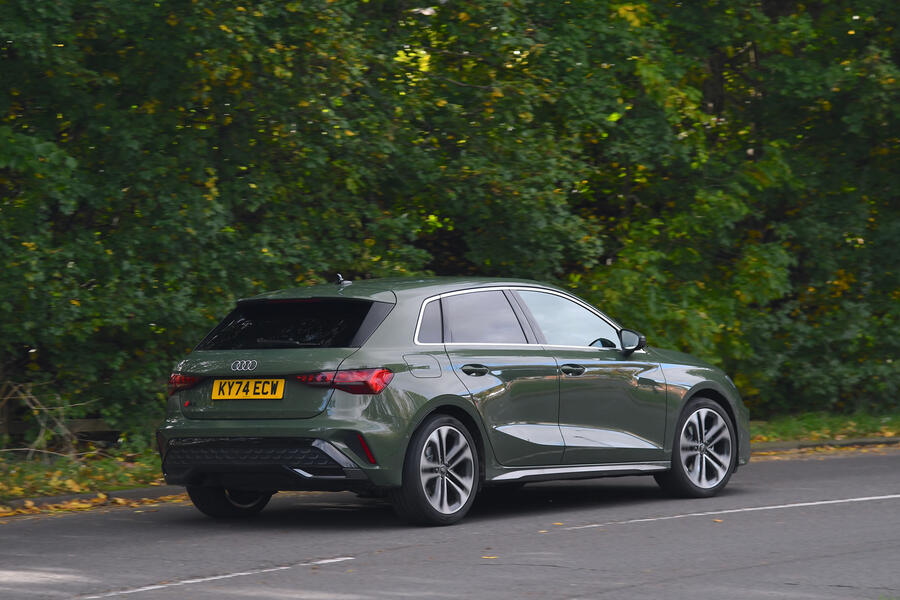
The engine is a 2.0-litre turbo four delivering 148bhp and 266lb ft at 1600-2750rpm, mated to a seven-speed automatic gearbox. It takes 8.1sec to hit 62mph and the top speed is 141mph. I haven’t written about a diesel for a while, but that all sounds as I’d expect it to.
Our car is in S Line trim, which sits between the basic Sport and the range-topping Black Edition. The A3’s starting price is £29,515 (less than £30k!), rising to £31,845 for the S Line. That’s for a 1.5-litre
turbo petrol four with a six-speed manual. For this diesel, the price creeps to £38,355.
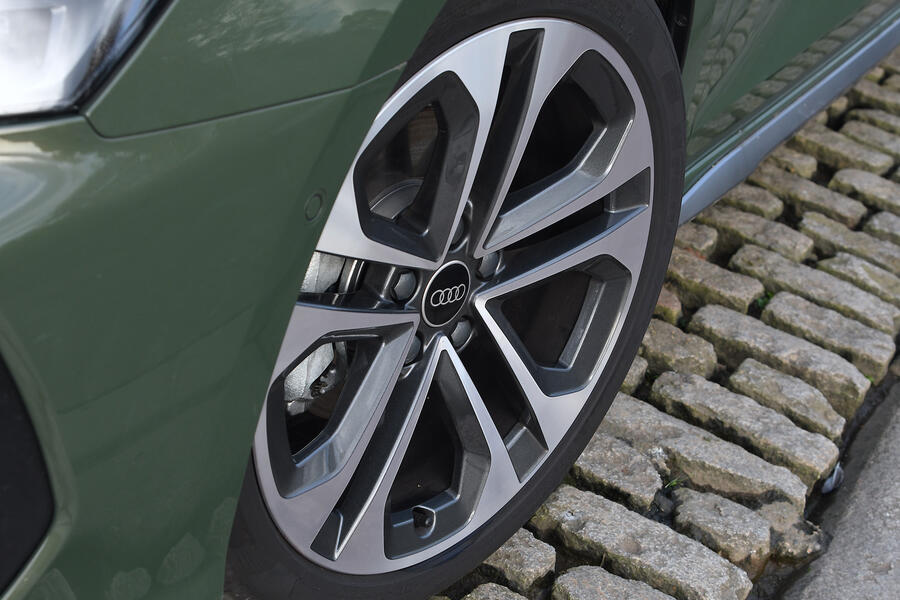
There’s inevitably a long spec list, including 18in alloy wheels, a 10.1in touchscreen, heated leather sports seats and plenty of sporty design touches, including a gloss dark chrome finish for the front grille, sportier-looking bumpers, a spoiler and a rear diffuser in matt black.
Most notable technically is the addition of sport suspension, which has “more dynamic spring/ damper adjustment” and lowers the ride height by 15mm for “more direct contact with the road and sportier handling”, claims Audi.
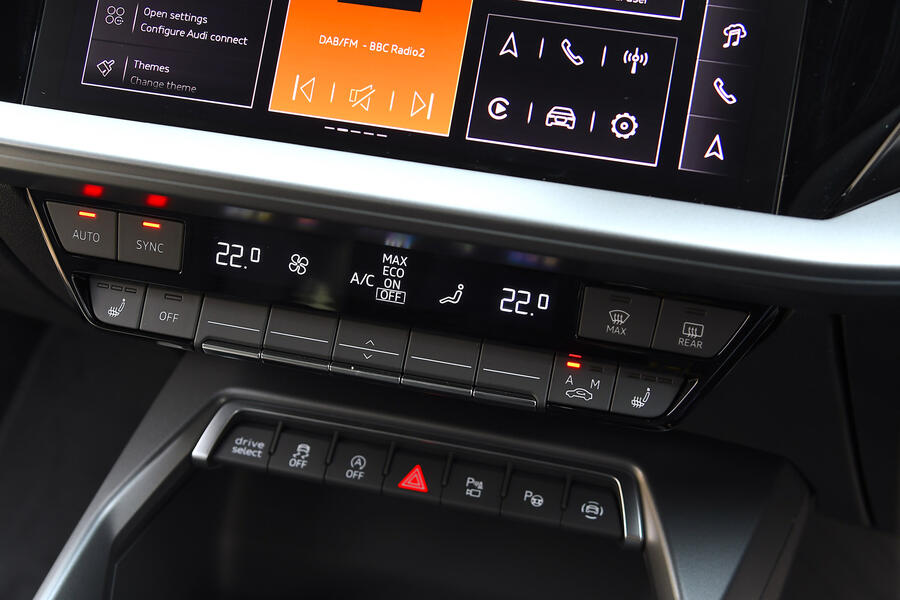
Just two options are fitted to our car: the already much-discussed Distinct Green metallic paint (£595) and the Technology Pack (£1495), which includes a head-up display, a reversing camera, adaptive cruise control (without speed limiter) and a Sonos 3D premium sound system.
There’s one considerably more expensive pack, the similarly named Technology Pack Pro, which for £4390 adds matrix LED headlights, multiple driver assistance systems, a panoramic sunroof, a ‘comfort key’ (that’s keyless entry to you and me) and electrically adjustable front seats with memory function. That’s it on the packs, which is pleasingly simple for buyers.
When the A3 first arrived, it didn’t even have three digits on the clock, so it’s still too early in the run-in phase to judge fuel economy against the official figure of 55.4mpg.
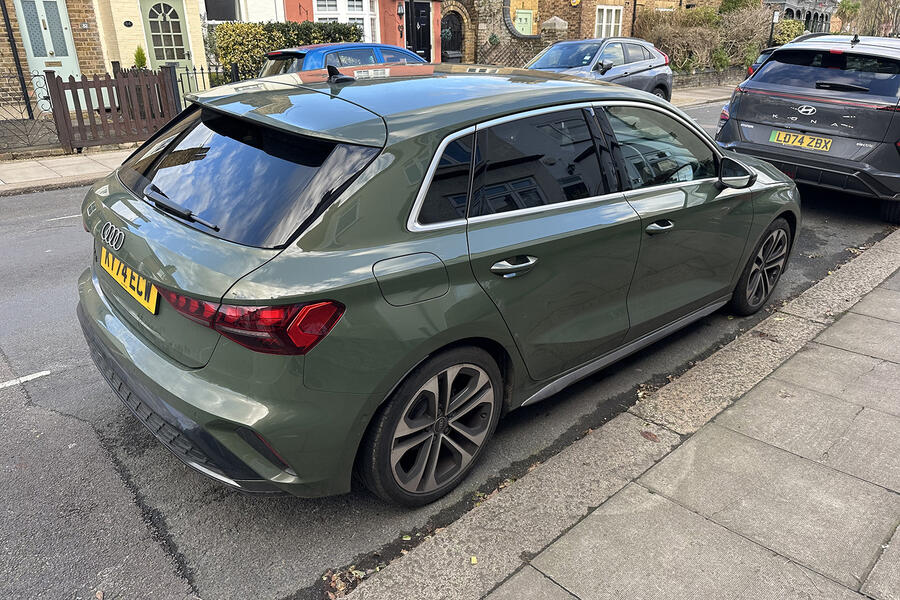
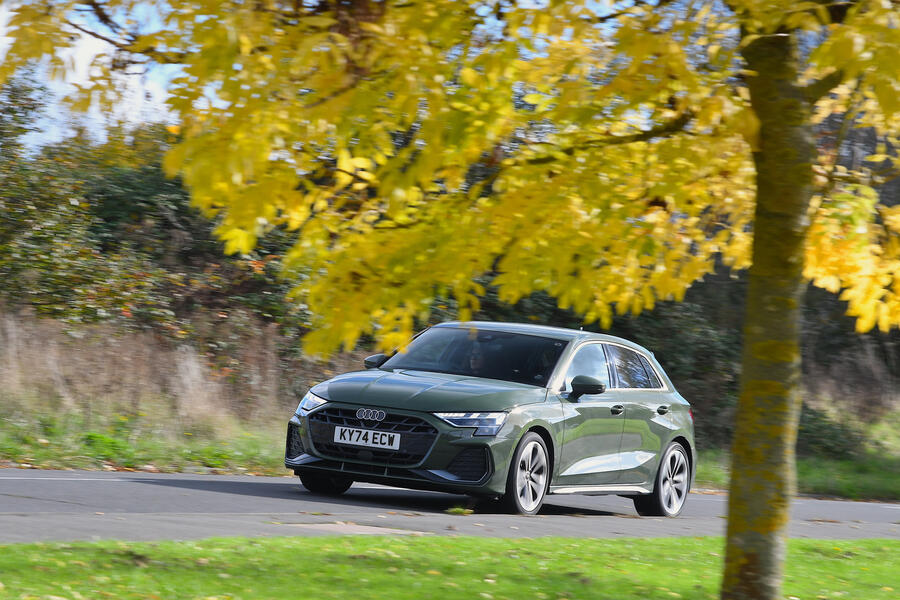
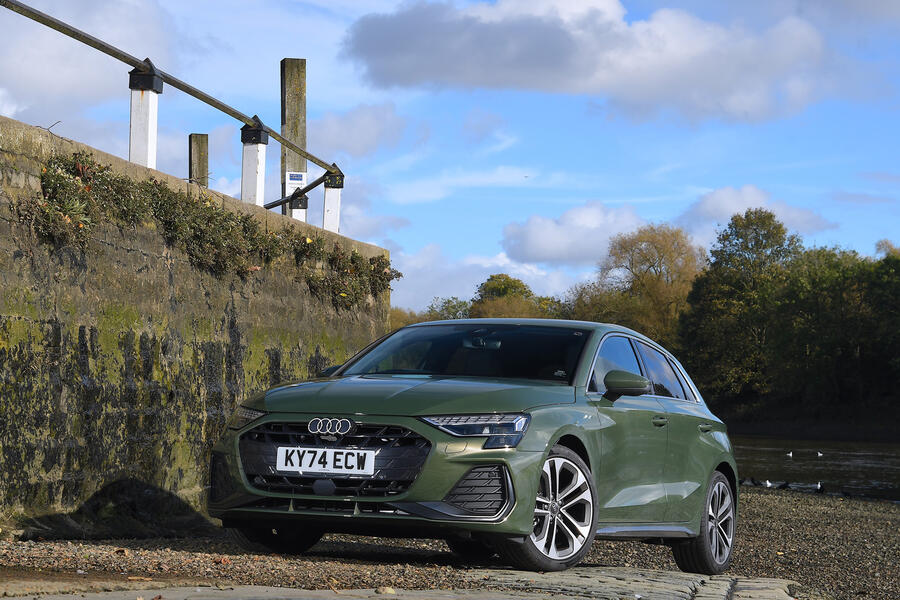
First, I observed the car’s good looks: I typically like hatchback proportions and this S Line spec, complete with spoiler and other touches, makes it appear sleek and smart without trying too hard.
Second, I was surprised by how much I noticed the lack of instant torque, having run cars with electric motors for so long. Our just-gone Lexus LBX was only a hybrid, but it still permitted an effortlessly smooth departure.
I suspect very few buyers are going from hybrids to diesels (but I would be interested to hear from you if you have) and, inevitably, I quickly adapted to moving away fluidly in this diesel A3, but on that first go it was a little off-putting.
No complaints about the A3 during my short stint so far. Well, actually, once I’ve finished writing this I’m off for my second attempt to connect to the MyAudi phone app, having lost my patience the first time round. But nonetheless, so far, so enjoyable.
Update 2
Having spent a couple of months in this diesel A3, I’ve had plenty of time to ponder the evolution of diesel power.
Not least because its almost inevitable fate is a result of a scandal that involved former derivatives of this very engine used across the Volkswagen Group, of which Audi is part.
The drama of Dieselgate is hard to grasp 10 years on – how shocking it was and how it affected an entire industry when diesel really was in its heyday.
Not to say that the world wouldn’t have evolved by now regardless (bad news stories about pollution from fossil fuel-burning cars didn’t just become a thing because of the scandal), but it certainly exacerbated the issue.
And yet here I am with a diesel A3, which accounts for 5% of A3 sales (the overall UK diesel market share last year was 6.3%). Audi hasn’t said it will stop selling it, but with those gures it seems hard to justify.
Plus, when I asked about the future of diesel for Audi, a brand spokesman said: “Audi has just launched a new generation of diesel engines for the A5 and Q5 families, featuring a completely new mild hybrid-plus system that further reduces CO2 output and increases performance.
But Audi has a clear roadmap for the transition to electromobility: "2026 marks the turning point in our strategy.” That turning point means no non-electric Audis will be launched from next year – but that’s not to say the firm won’t leave ageing ICE cars on sale for a longer period, especially in markets where EVs aren’t yet viable.
Without that background context, and assessing a car purely on its own merits, what would I, or newcomers to diesel, make of this smart, gas-guzzling Audi?
As I mentioned in my first report, it took a few journeys to adapt to not having instant power from the 1968cc turbo four at start-up in the way of many hybrids I’ve run lately.
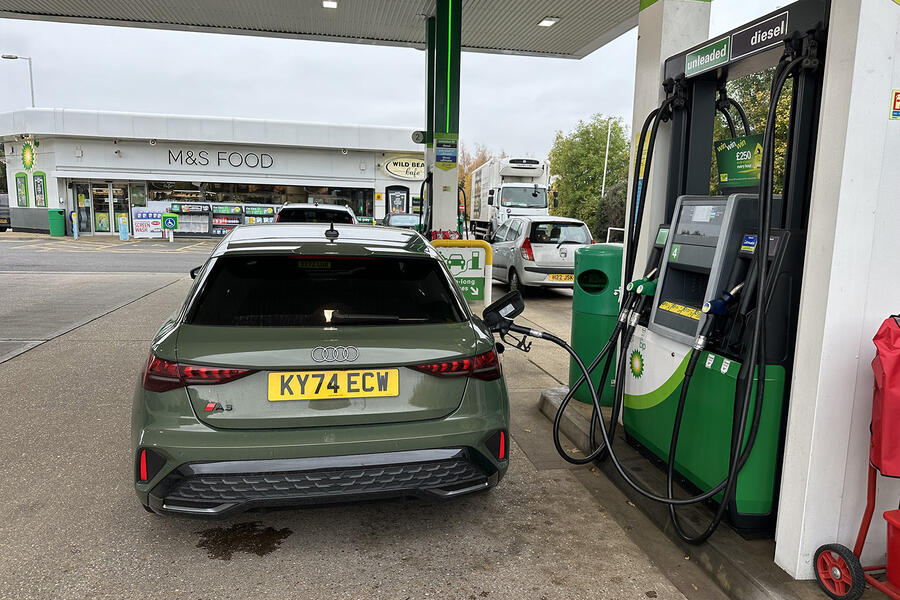
But the diesel A3 is effortless to drive and it remains satisfying to see the range slowly drop from the 500s, meaning I rarely need to go to a garage. Convenience is king and all that. I’m getting 51.4mpg, which is not far off the official 55.4mpg.
Not many people I know drive a diesel these days, but just the other week I went to see an old friend and her family in Hertfordshire and there on the drive were not one but two diesels – a Mini Countryman and a Skoda Kodiaq.
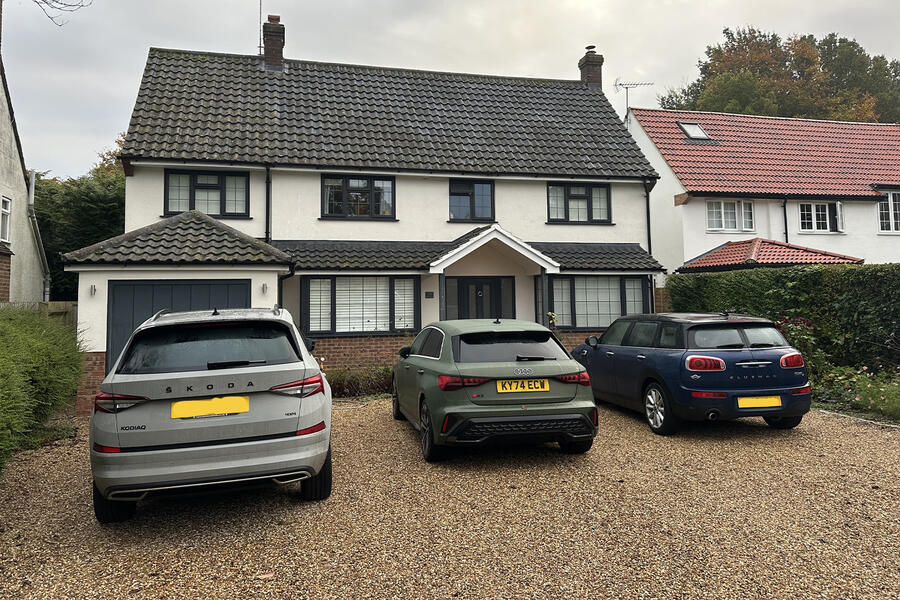
I asked why they had gone for diesels and was told: “They emit less CO2 and need filling up less often. Not living in an urban area makes the air pollution impact less of a concern and the higher torque is good for heavier cars.
“EVs are really expensive: you would have to rack up a higher mileage than a diesel to recover the initial cost and the environmental impact of building the car. Plus there’s range anxiety.”
Diesel may have only a handful of remaining fans based on its market share, but those hanging on – who understand the pros and cons and recognise it suits their lifestyle – still think there’s a place for it. Like them, I’ll be making the most of my diesel while I still can.
Update 3
When we welcomed this car to the Autocar fleet, road test editor Matt Saunders wrote: “I’ll be keen to find out if Rachel thinks an A3 S Line diesel still feels sufficiently ‘2024’ or like a car ready for retirement.”
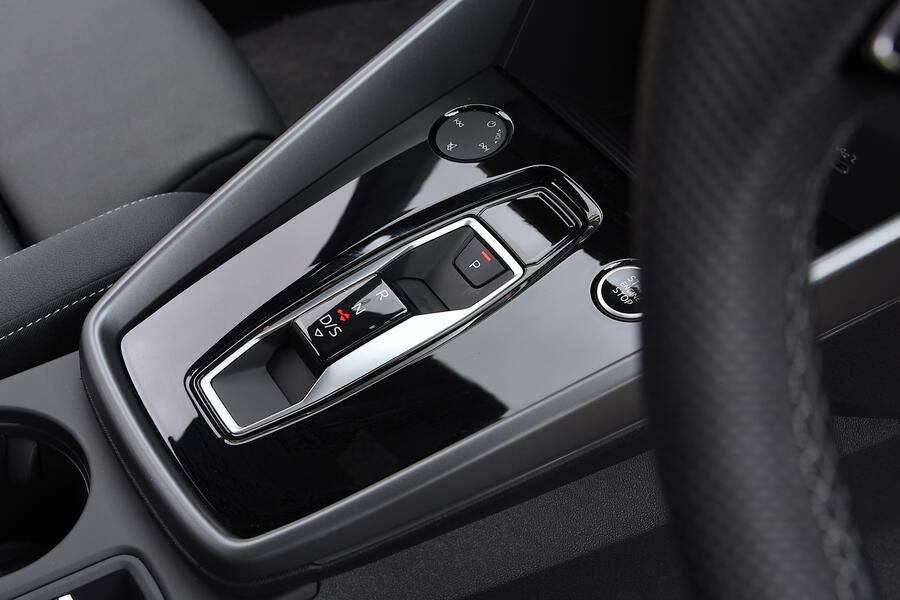
When I first stepped into the A3, having come from a Lexus LBX, an all-new hybrid, the experience did feel very analogue. Not in a negative way but a notable way nonetheless. Inside, there’s a modestly sized touchscreen running familiar Volkswagen Group so ware, plus lots of buttons, and they’re all properly tactile – none of this haptic hoo-ha.
The seats are adjusted using a simple handle, which I’ve always thought just as effective as the electronic alternative anyway. And then there’s the inability to open the doors without using the key fob.
That’s the worst of it for me: when carrying various bags and possibly a tantrum-throwing four-year-old, I don’t want to have to press the button on a key that is attached to my hand but hidden among all the other stuff.
To have that functionality on the A3, you need to pay for the super-shiny Advanced Tech Pack at a cost of £4390… As I discussed in my 5 February report, diesel powertrains do feel somewhat anachronistic now.
Still, having adapted to the lag in torque not found in electrified cars, it has quickly become familiar, and this 2.0-litre four-cylinder engine with 148bhp is perfectly decent.
When I took a very slow journey from west to east London on a Saturday afternoon, it was noisy, but diesels aren’t made for that sort of job, and it didn’t feel unforgiving.
As with everything, time (mostly) normalises experiences: a er a few months in the A3, I can hardly remember feeling that it was analogue in the first place (thank heavens for my notebook). But this car is getting old now: it was launched in 2020 and facelifted in 2024.
As with practically every car maker out there, Audi has focused its efforts on accelerating its EV development and just left its combustion-engined cars ticking over with a nip and tuck occasionally.
That seems savvy from a business perspective: there’s only so much money to go round and you can still appeal to those who don’t want EVs or hardly have the option in some markets.
Despite some of its ageing traits, there’s plenty to commend the A3. The District Green paint (which I incorrectly called Distinct Green before; thanks to reader Richard for pointing it out) feels modern and the white and black badge detailing of S Line trim looks similarly on-trend and far better than chrome.
All the legally required ADAS functions can be jarring but less so than in some rivals. I have the ability to charge my phone, use Apple CarPlay for sat-nav and more, listen to the radio, heat my bum on a cold day and get from A to B in a comfortable, usable space.
What more could I need? There’s no doubt that this A3 feels long in the tooth in a world of brand new EVs and space-age interiors. Comparison is everything. But during my time with it so far, this car feels as up to date as any needs to be – depending on your powertrain preference, of course.
Final update
Go back a decade or two and an Audi A3 was the slightly posher mainstream choice for an everyday car.
If you wanted to be a bit more fancy than a Ford Focus or even a Volkswagen Golf, this (or a BMW 1 Series) was it. Audi even claims to have established the premium compact segment by introducing the A3 in 1996.
Times have changed in the car buying world, but this hatchback is still more important for Audi than some people might expect. It accounts for a quarter of the firm’s sales and is its best-selling model.
From the moment I stepped into the A3 at the end of last year, I could see why, and since then, it has been one easy, effortless journey a er another. What did I like particularly? Well, it’s a handsome if safe-looking car but I don’t think there’s a spec or colour that suits it better than this one.
The S Line detailing is sporty without being too try-hard and the white-on-black Audi logo and lack of chrome are tting. Inside, the user experience is a trusty, familiar one, even with fewer touchpoints than previously.
The set-up is self-explanatory so you don’t find yourself looking for basic functions and the layout and fonts on the touchscreen are intuitive and, to my eyes, agreeable.
Maybe it’s partly through the familiarity of Volkswagen Group products, but nonetheless it’s coherent. And as Felix Page mentions (right), the tactile buttons are very welcome.
Apple CarPlay, which I’m rarely without, integrated easily each time and attaching my phone to charge via wire provided a fast charge for its fast-failing battery… Sitting in the cabin, the accessibility of everything feels in reach and well proportioned, so there’s enough space for your typical needs (unless there are four 6-plus occupants).
I always found the seats to be comfortable and provide decent lumbar support and, given my lower back is increasingly twingey as I age, the A3 was one of the kinder cars I’ve driven of late for a lengthy journey. I also enjoyed driving it.
The first couple of journeys required some readjustment to the relative shortage of initial torque from a diesel compared with the electrically assisted motors I’d been driving, but I soon didn’t give it a second thought.
This isn’t a speedy car per se but 8.1sec for 0-62mph from its 148bhp 2.0-litre diesel is more than enough pace even on motorways. The other obvious benefits of a diesel powertrain are the fuel economy and how rarely you have to fill up.
When the range drops so slowly from above 500 miles, you feel spoiled by the convenience factor of not having to schedule fuel stops at annoying moments when you don’t really have time.
And then there’s the fuel economy, which is decent, if not exceptional. During our time with the A3, it returned 50.8mpg but sometimes achieved very close to the claimed combined economy of 55.4mpg.
Being behind the wheel is undemanding. I know there are rivals with better steering feel but there’s enough direction to make suburban manoeuvring trouble-free while also facilitating a little verve on rural, bendy roads, helped by the dimensions of a hatchback, which makes it a lovely thing to place on any road.
Even in a world of SUVs, this hatchback feels big enough to hold its own without being preposterously oversized. Then there’s the way you’re treated by other road users. It’s fascinating as an automotive journalist to observe how peer drivers respond depending on which car you’re in.
It’s subjective, of course, but I don’t think Audis are the most-liked cars, or at least there was an era of that in the past 20 years or so, but this specific model appeared to be regarded by other drivers as inoffensive, which is welcome for someone who doesn’t like to stand out.
Was there anything that grated? Happily, not much. The 380-litre boot space – pretty standard for a hatchback – seemed a bit lacking, perhaps because I’ve become used to the greater height of more SUV-like cars. In my current life, fitting my little boy’s bike in easily is my measure of ease for a boot and this took some choreographing.
Other things: the diesel engine felt like it could have been more refined but I imagine that’s the inevitable outcome of diesels no longer being honed as EV development is prioritised; I found the typically German executive black interior somewhat dull and claustrophobic; but the most annoying thing of all – in terms of what affected my ease of living most notably – was the absence of keyless entry, which is available only as part of a costly pack.
Perhaps I’m being demanding, but in this day and age, keyless entry feels a given. Grumbles aside, this is a car that makes me feel as warm towards the premium hatchback segment as I always used to be.
It’s traditional in a comforting way without feeling out of date or irrelevant and has all the mod cons you want (and don’t).
Diesel’s death seems inevitable – though stranger things have happened – and such outcomes become self-fulfilling when upgrades aren’t made.
Its appeal remains for those who do many long journeys but, as the stats show, the natural choice – which would be mine – is the higher-powered petrol TFSI or the PHEV. Next year, the A3 across all its generations will be 30 years old. I’m hopeful it has many more to come.
Audi A3 Sportback 35 TDI S Line S Tronic specification
Prices: List price new £36,265 List price now £37,160 Price as tested £38,355
Options: Technology Pack £1495, District Green metallic paint £595
Fuel consumption and range: Claimed economy 55.4mpg Fuel tank 50 litres Test average 50.8mpg Test best 54.8mpg Test worst 47.3mpg Real-world range 559 miles
Tech highlights: 0-62mph 8.1sec Top speed 141mph Engine 4 cyls, 1968cc, turbo, diesel Max power 148bhp at 3000-4200pm Max torque 266lb ft at 1600-2750rpm Transmission 7-spd dual-clutch automatic Boot capacity 380 litres Wheels 8.0Jx18in, alloy Tyres 225/40 R18 Kerb weight 1485kg
Service and running costs: Contract hire rate £420.88 CO2 134g/km Service costs None Other costs None Fuel costs £280.74 Running costs inc fuel £280.74 Cost per mile 13 pence Faults None
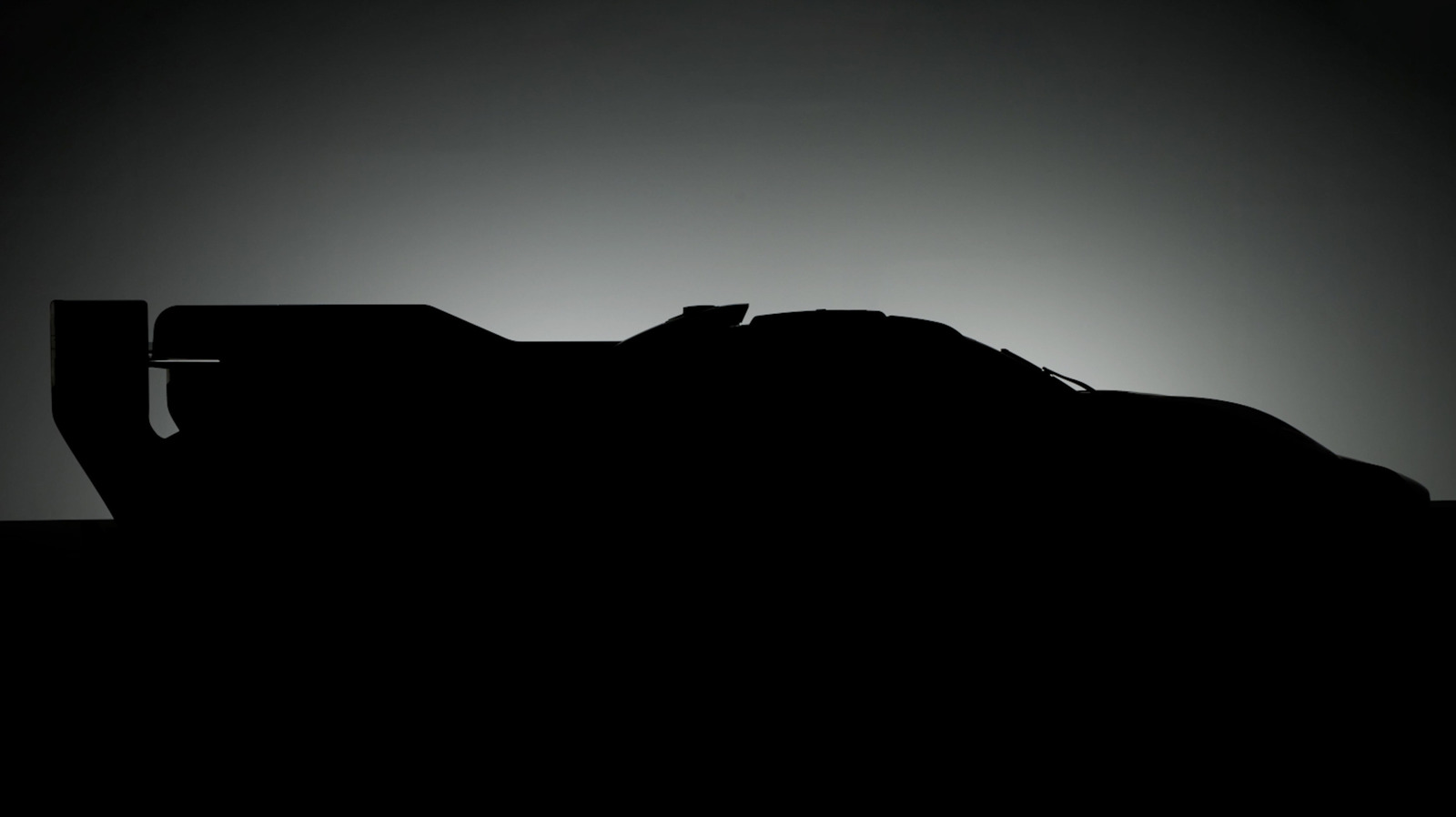
Porsche Prepares to Unveil Street-Legal Le Mans Racer in June
BTCC 2025: Will Tom Ingram Seize Redemption in a Thrilling Title Race?
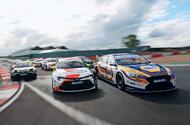
24 drivers will battle for the title this year...Who will be crowned BTCC champion in 2025? As ever, there’s no shortage of candidates
Six months on, it still hurts. Tom Ingram won’t forget how a second British Touring Car Championship title slipped through his fingers in the final race of 2024 at a damp Brands Hatch.
But as the 2022 champion readily admits, that defeat to WSR’s Jake Hill only makes him hungry for redemption as the new BTCC season rolls into action at Donington Park.
“Sometimes you learn more out of not winning,” says Ingram, who will once again race a Hyundai i30 Fastback N run by Excelr8 this year. “
That has been the nature of our off-season: looking at those individual stones that maybe we could have turned over. It’s a case in point of how competitive the championship is now that it comes down to such fine margins.
”Separated by just one point before the final race, Ingram’s bid slipped at Brands in conditions that better suited Hill’s rear-wheel-drive BMW 330e M Sport as the front-wheel-drive Hyundai dropped to sixth and Hill rose to second to claim the crown by eight points.
“The nature in which we lost the championship is hard to take, because it came down to one race in which we made a slight faux pas,” says Ingram.
“It feels like a distant memory, yet at the same time still equally painful as if it was just last week. But that’s a good thing, because it drives you on.”
His two rivals who make up the BTCC’s clear and obvious top triumvirate also enjoy blessed continuity into the new season.
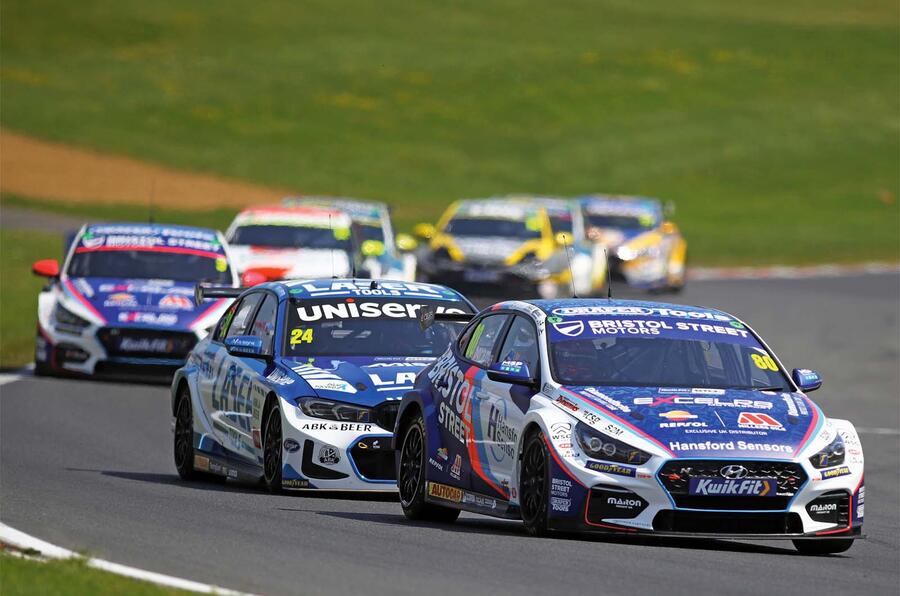
Hill will defend his title in his 330e, while four-time champion Ash Sutton – who claimed a consolatory win in that 2024 Brands finale – remains in Alliance Racing’s Ford Focus ST.
Expect the trio to once again fight it out for the crown. Who will prevail remains anyone’s guess at this stage, which is precisely why we love the BTCC.
“Maybe I’m biased, perhaps everyone sees their own era as the toughest, but it certainly feels incredibly tough right now,” says Ingram.
“Take Silverstone qualifying, when there was a tenth of a second covering a multiple of cars… It’s not just the drivers, it’s the engineers, the tyre strategy, the little bit of luck that comes in as well.
"That’s why we enjoy it so much. As a sportsman and athlete, you always want to compare yourself to the best and fight to constantly improve. Racing in the BTCC is an incredible privilege.”
The main development over the winter was the decision for the BTCC to drop its groundbreaking Cosworth-developed spec hybrid system.
Fair to say, it won’t be missed as the BTCC instead adopts 100% sustainable fuel – a sign of where the wind is currently blowing in motor racing. The new formulation, Hiperflo ECO102 R100, is derived from synthetic and biological non-crude sources, hence its marketable 100% fossil-free status.
The cars are 55kg lighter as a result of ditching the hybrid system, which has pleased the drivers.
“The last time we drove these cars at this weight was in 2021, so it has been a while – and it feels great,” says Ingram, who began testing in the new spec at Anglesey Circuit a little more than a week after the Brands finale last autumn. “That gave us a bit of a head start. We probably had the fastest car in 2024 and we’ve only improved it.”
A power boost to balance performance and aid overtaking remains in place through variation of turbocharger boost pressures.
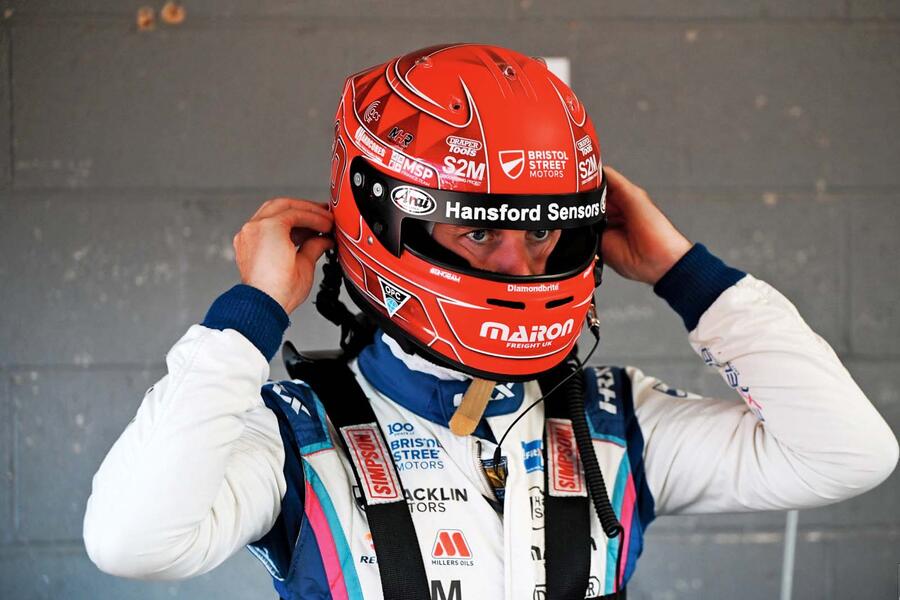
As Ingram puts it: “We’ve still got the push-to-pass element, but instead of being done through electricity, it’s via air. It’s nice to have that without the headache we had in 2021 of piling weight into the car [via success ballast] and making it feel rubbish.
At least the car will feel consistent. “The racing, as always, will be incredibly tight, and the championship will probably come down to a few points, as in 2024.”
The other main factor race to race will once again be strategy choice over the use of Goodyear’s tyres. This year it will be mandatory for the three overall podium finishers in the first of a weekend’s three races to run the hardest tyre compound available in the second race – as opposed to the top 10 finishers in 2024.
The usual exception is Thruxton, because of the Hampshire circuit’s high-speed nature and abrasive surface. At all other events, teams will be presented with standard and option tyre compounds, with the latter being available to use in one of the three races.
“Tyres are the biggest variable,” says Ingram. “Around somewhere like Oulton Park, you really notice the difference in performance. It will be another case of staying as mentally stable as you can through the season and not allowing the peaks and troughs to throw you too far off kilter.”
The biggest loss for 2025 is undoubtedly Colin Turkington, the Northern Irishman who with Sutton and tin-top legend Andy Rouse shares the record for the most BTCC titles.
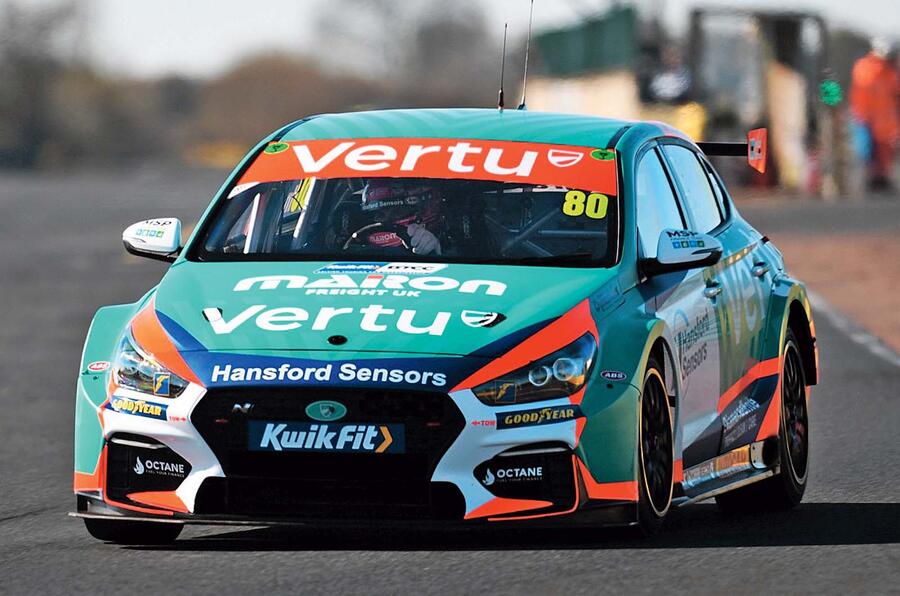
Commercial realities have seemingly put paid to one of the finest BTCC careers (at least for now) as Turkington departs from WSR – and he will be sorely missed. Sutton now stands alone in the race for the record of five titles.
“It’s a shame we’ve lost Colin – but we’ve gained Gordon,” points out Ingram. That will be the sensational return of the season: three-time champion Gordon Shedden, back in the BTCC for the first time since 2022, at 46.
With a sparkle in his eye, Ingram says: “The nice thing with Colin was we knew how he raced. He was incredibly respectful. But we know Gordon is feisty…”
So, who will be champion? Ingram isn’t being complacent, especially after his 2024 near miss. “You can’t rule anyone out of this championship, that’s the beauty of it,” he says. “There could well be a few surprises.
As I’ve learnt the older and uglier I’ve got, you just have to focus on yourself in this game.”
Perfect Pair: Finding the Ideal City Commuter to Complement Your SUV
Volvo Expands EX30 Production to Belgium to Meet European Demand
 Model was previously built solely in China but extra production in Europe will help to meet local demand
Volvo is now building its EX30 electric car in Ghent, Belgium, in a strategic move to assemble key models closer to the markets where they sell best.
The small SUV was previously assembled solely in Zhangjiakou, China, before being shipped across the globe.
However, Volvo decided in October 2023 that adding production capacity for the model in the European Union would help it to better meet demand in that critical region. The EX30 was Europe’s 13th best-selling EV during the first three months of 2025, ahead of cars such as the Audi Q4 E-tron, Cupra Born and Mercedes-Benz EQA.
The decision to prepare the Ghent plant for the EX30 was validated when the European Union last year imposed punitive tariffs on Chinese-built EVs, including the Volvo crossover.
Volvo said at the time that it would consider reallocating output of its cars so that Belgian-built cars were primarily delivered within the EU, circumventing the tariffs.
Conversely, deliveries of Chinese-built cars would ramp up in non-EU markets where the tariffs were not a concern, such as the UK.
“We'll start [EX30] production at our Ghent facility in Belgium in the first half of next year and then ramp up through the gears,” said former Volvo CEO Jim Rowan last year.
“In the meantime, we can supply that car to many other regions which are not yet affected [by tariffs]: a lot of countries in south-east Asia, and the UK is an example of that.”
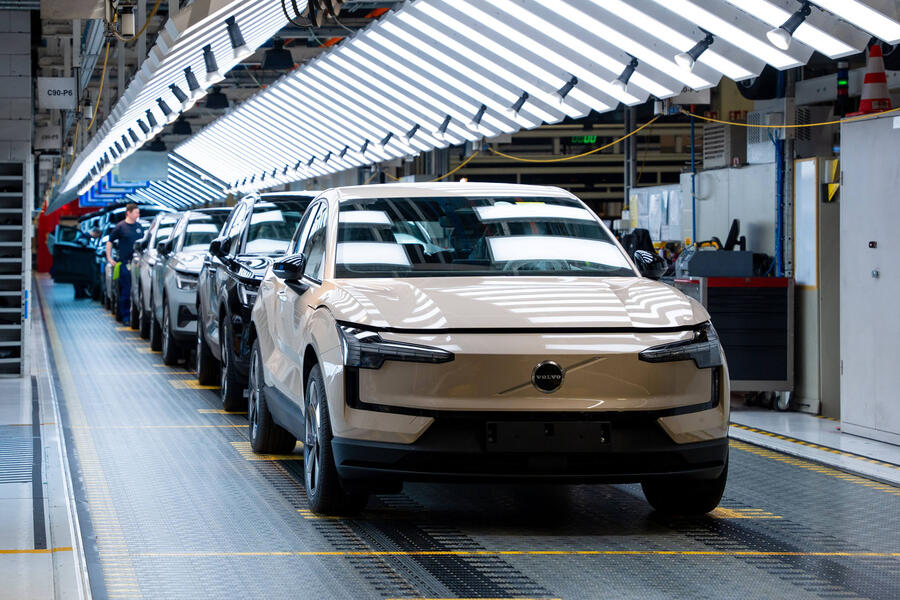
Francesca Gamboni, chief manufacturing and supply chain officer for Volvo, has now said the EX30 is “crucial” for the brand’s position in Europe, adding that its production flexibility “contributes to our resilience”.
Adding EX30 production to the Ghent plant came at a cost of €200 million (£171m), requiring a new assembly line, 600 new or refurbished robots and a new battery pack production line, among other changes.
The factory also builds the electric EC40 and EX40, as well as the XC40 and V60 hybrids.
Volvo had previously planned to launch the EX30 in the US after 2025. However, it has yet to confirm whether this is still the case, in light of US president Donald Trump’s implementation of a blanket 25% tariff on all foreign-built cars.
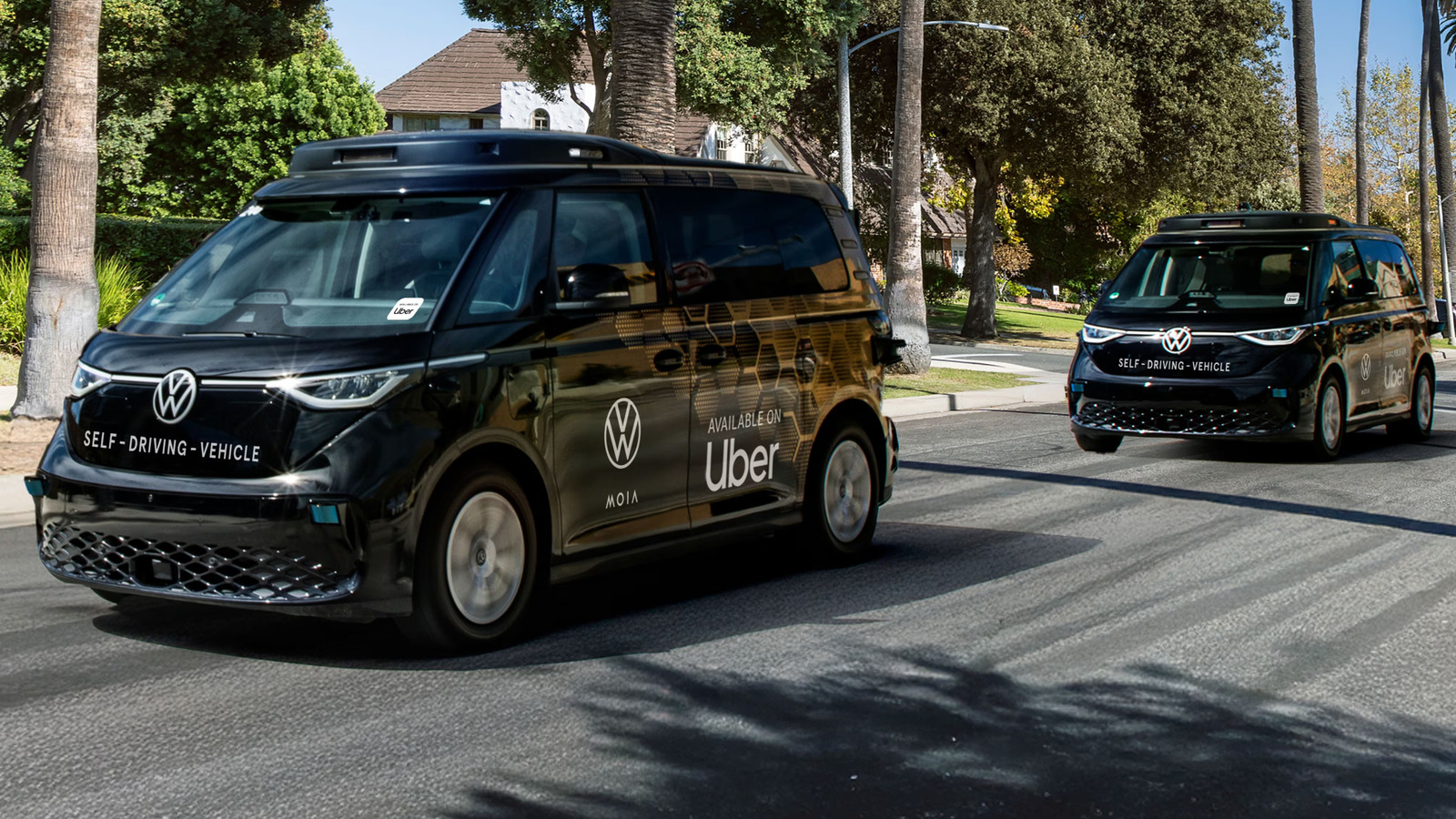
VW’s ID Buzz Electric Vans Set to Power Uber’s Autonomous Taxi Revolution in LA
Elon Musk’s Self-Driving Dream: Why Tesla’s Robotaxi Vision Remains Distant

Cybercab robotaxi is still in the early prototype phase so remains a number of years awayTesla chief previously promised autonomous capabilities for "millions" of cars by the end of this year
Cracks are appearing in Elon Musk’s plan to maintain sky-high valuations for Tesla by pivoting to full autonomy.
Musk has long promised his company would be able to update the majority of Teslas on the road to drive unsupervised, starting with robotaxi rides at the company’s home city in Austin, Texas, from June.
Musk confirmed the timeline on the company’s first-quarter earnings call on Tuesday 22 April and promised a quick roll-out of the technology for private cars. “I bet there will be millions of Teslas operating fully autonomously in the second half of next year,” Musk said. Drivers would be able to sleep in their car while it drives to its destination “by the end of this year,” he promised.
Musk’s bold statements and trademark confidence were deployed against possible fallout from a poor quarter in which automotive revenue sank 21% and the only factor stopping the company from dropping into the red were increased emissions credits paid to Tesla by other car makers.
However, questions from investors teased out more information from Musk and his lieutenants, revealing that the company’s plan to transform the Tesla fleet with a mere push of a software update is likely to remain a pipe dream.
For instance, Musk spoke about standard cars needing a “localised set of parameters for different regions and localities” to deal with, for example, snowy weather in the north-east of the US.
In other words, far from being point-to-point self-driving, any upgrade would be to a very limited level-three autonomy, with cars taking control within restricted operational design domains (ODDs). This is a well-understood condition by which Mercedes and BMW released their level-three autonomous features for the S-Class and 7 Series respectively, which are limited for use on highways in Germany and California and then only at restricted speeds.
As with BMW and Mercedes, a full geographical roll-out isn’t in the gift of Tesla but of law makers in whichever jurisdiction the company is targeting.
Tesla’s long-held dream is that it can activate full self-driving across almost its entire fleet, provided the chip is new enough to handle the extra computing load.
By relying on AI machine-learning and just cameras as sensors, Tesla can build cars relatively cheaply while still retaining the ability to one day transform them with a simple software push, if it can train its self-driving AI to deal with every eventuality.
However, Tesla executives admitted on the earnings call that in some areas, the cars aren’t equipped with the hardware to deal with full autonomy. For example, when the car needs to respond to blue-light situations, the director of autopilot software, Ashok Elluswamy, said that standard Teslas don’t have the required microphones to pick up the noise of sirens, something that is fitted to BMW and Mercedes level-three cars.
Crucially, however, the converted Model Y robotaxis (rather than the future Cybercab) planned for rides from June in Austin will have the audio input. The cars will also be overseen by remote operators, Elluswamy said, making them closer to the sensor-laden Waymo robotaxis derided by Musk on the same call. (“The issue with Waymo's cars is [that they] cost way more money,” he said).
With every additional upgrade needed for models on the road or coming down the line, Musk moves further and further from his dream of switching on a global robo fleet.
Colin Langan, autos analyst at Wells Fargo Securities, wanted to address Musk’s long-held aversion to lidar and other sensors that would offer redundancy to the camera-only set-up.
“A lot of autonomous people still have a lot of concerns about sun glare, fog and dust. Because my understanding [is] it kind of blinds the camera when you get glare,” he said. Musk replied that Tesla cameras don’t suffer from sun glare and similarly had no problems at night.
As Langan alluded, many in the business think Musk is never going to achieve safe full autonomy with just cameras and a smart AI – even those who would benefit from exactly that, such as ADAS specialist Mobileye.
“Mobileye is camera company. It's our DNA. But if you want to reach eyes-off [driving], cameras alone will not get you to this very, very high precision,” company CEO Amnon Shashua told Autocar earlier this year. “The way to achieve this is by redundancy, by having multiple systems perform the same function, starting with sensors.”
Musk referenced the fact that Tesla might need redundancy for autonomy but again said the company was working to avoid the need for it, rather than spend the extra money to have a back-up. “For example, if one of the computers goes down on the customer fleet, it would throw its hands up and ask you to take over, but we don't want that kind of situation,” he said.
Meanwhile, Teslas are circling Austin, Texas, to chase down the edge cases that would confuse a self-driving stack not properly trained on how to deal with even rare events. “We just have like a big list of all the issues, [and] we just burn it down,” he said.
But the extreme timeline and the glaring gaps in safety and regulatory issues make Musk’s latest timeline just as improbable as all the other missed deadlines.
For example, in 2019 Musk claimed Tesla would deploy a million robotaxis globally from 2020, earning the cars’ owners $30,000 a year in revenue as they remotely worked for them. In 2022 he promised volume production of the robotaxi, now known as Cybercab, by 2024. The Cybercab is currently still in early prototype phase.
But in 2022 he also made the statement that still rings true today: “Of any technology development I’ve ever been involved in, I’ve never really seen more false dawns as I’ve seen in full self-driving”. Moving past the brash predictions to drill down into the detail, it looks like the sky is still dark on Tesla’s own self-driving cycle.