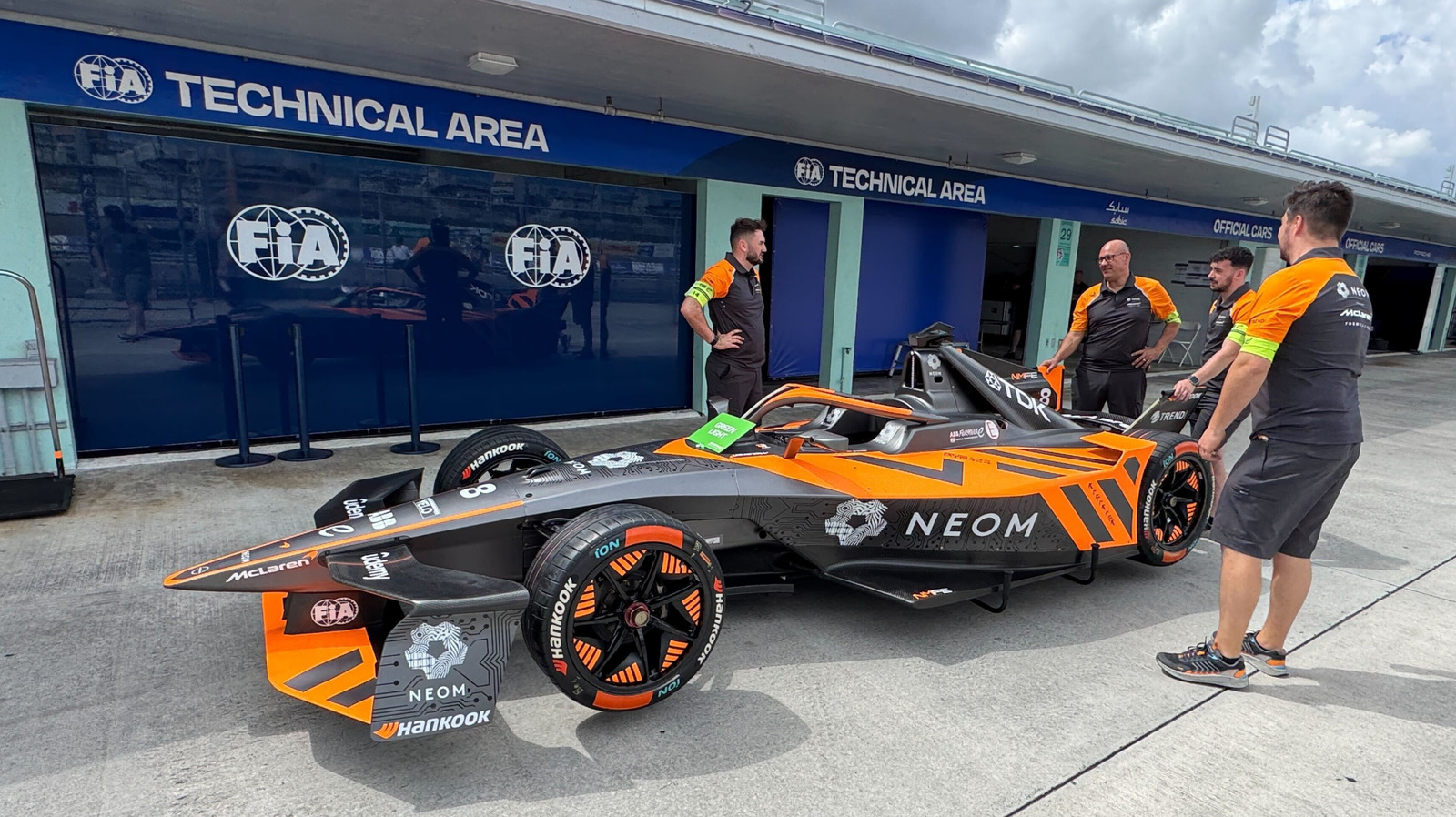
McLaren Exits Formula E as Saudi Sponsorship Fades
Affordable Innovation: Slate Unveils Game-Changing 240-Mile Electric Truck
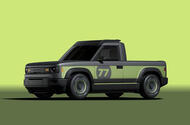 Michigan-based EV start-up to start production of ultra-utilitarian, 240-mile Truck next year
New American EV manufacturer Slate, backed by Amazon founder Jeff Bezos, has revealed a back-to-basics compact pick-up truck set to cost the equivalent of just £20,000.
The secretive start-up had not made any public announcements about its debut model, called simply Truck, in the run-up to its unveiling, but is now taking reservations and plans to begin deliveries at the end of next year - with a targeted base price of $27,000 before local incentives.
Only confirmed for a US roll-out so far, the utilitarian two-seat pick-up is engineered and designed to keep costs down in a bid to make electric motoring affordable and more appealing in a market which continues to heavily favour combustion propulsion.
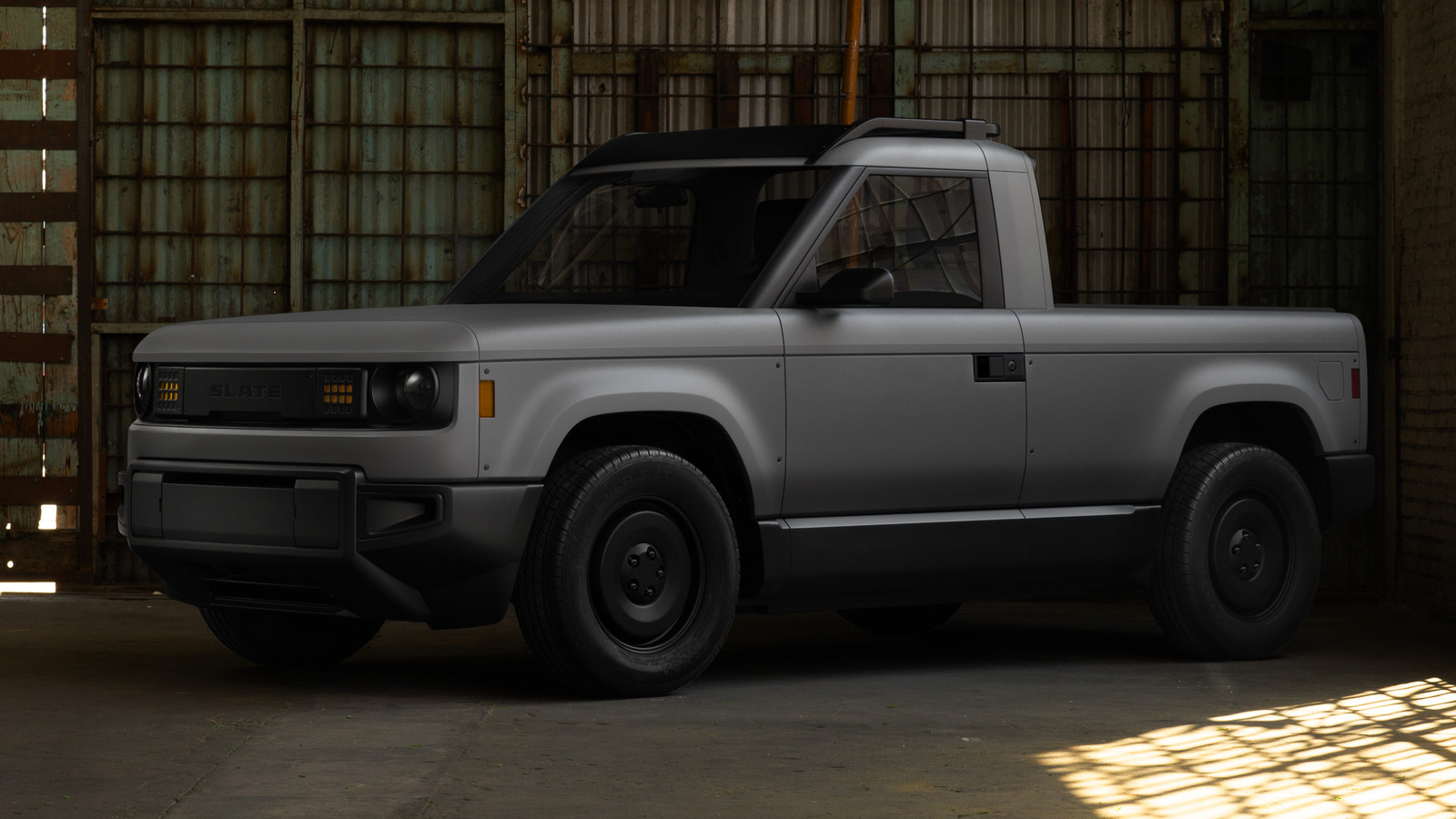
Its monolithic, composite-panelled silhouette is unadorned with chrome and unnecessary decorations, for example, while the windows are manually cranked and there's a smartphone mount in place of a central touchscreen, à la Citroën Ami. Speakers can be fitted as an option, though, and standard kit includes a USB port, central locking and cruise control.
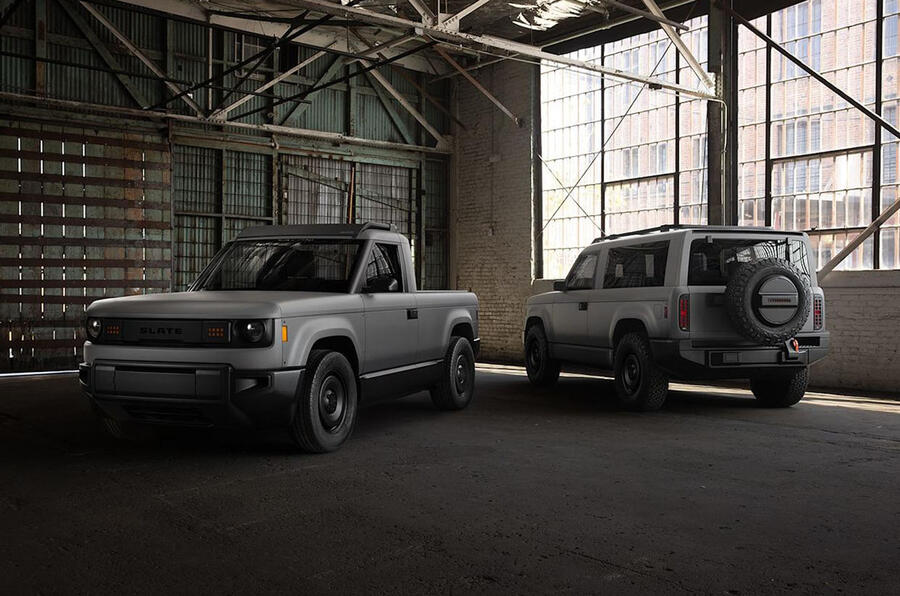
The Truck is highly customisable, though, with a raft of colours, accessories and kits on offer. It can even be converted into a five-seat baby SUV or a fastback crossover using bolt-on conversion kits for the 1047-litre load bay, supplied by Slate.
Power is supplied by either a 52.7kWh or relatively large 84.3kWh battery under the floor, which are said to return ranges of either 150 or 240 miles and can each fast-charge from 20-100% in less than 30 minutes.
Propulsion comes courtesy of a single-motor on the rear axle, giving 201bhp and 195lb ft for a 0-60mph time of 8.0secs and a top speed of 90mph.
Slate will build the Truck at a site in the Midwestern US, so it will not be subject to president Trump's new 25% import tariffs on foreign-made cars, but it has not named a location, nor said whether it plans to build the EV itself.
The company, which is based in Michigan, is bringing the Truck to production partly using funding from Jeff Bezos, founder of Amazon, which has a commercial vehicle supply deal in the US with Rivian, though it is unclear whether Amazon could strike a similar agreement with Slate.
Transform Your Ride: The Versatile Electric Truck That Adapts to Your Needs
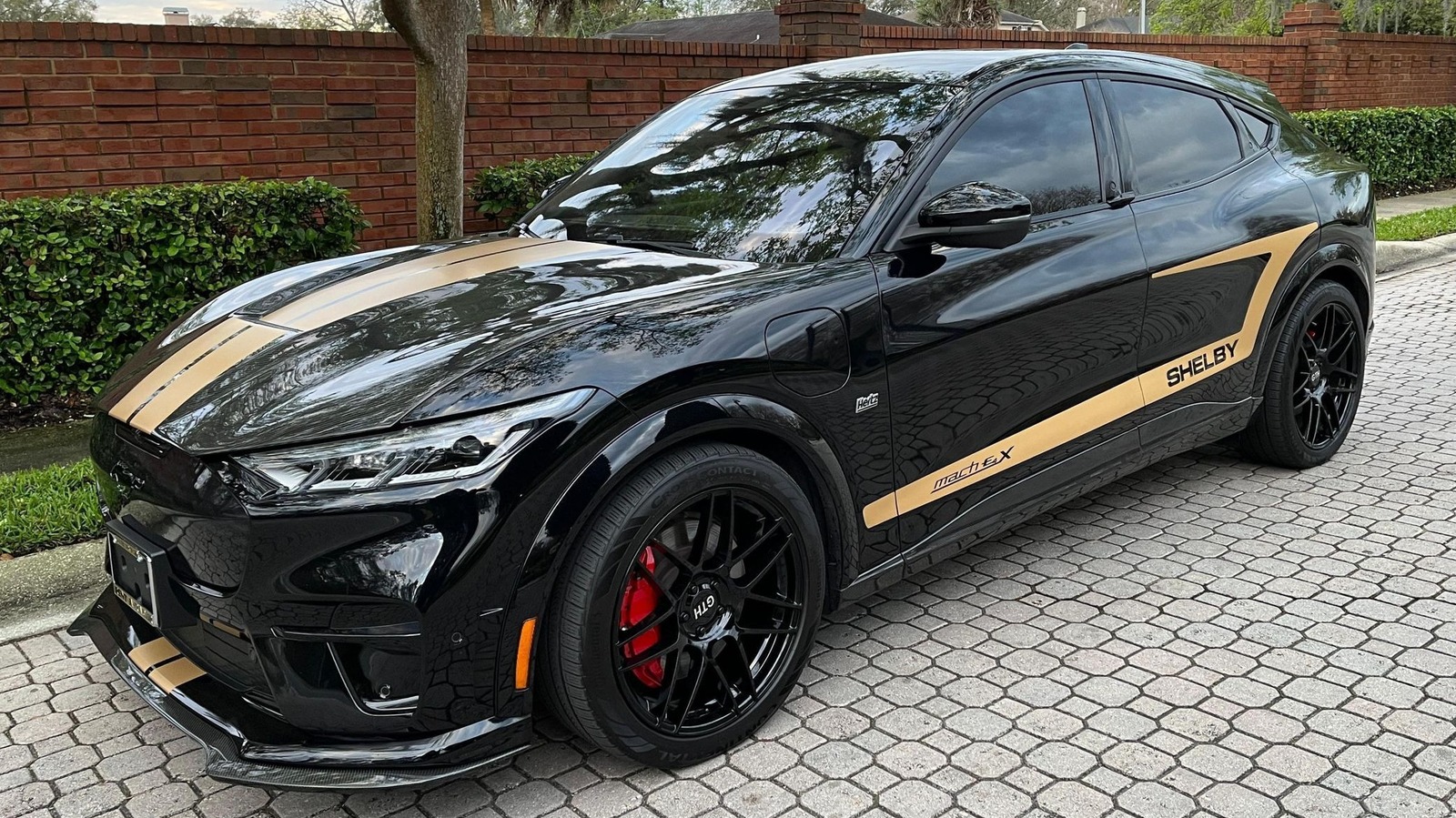
Redefining the Mustang: Why the Mach-E is a Game Changer for Electric Vehicles

Dream Cars and Goodwood Adventures: This Week’s Highlights in the Auto World
 This week Cropley and Prior talk the Goodwood Member's Meeting, JLR and what car they'd buy with £100k
Airline Orders in Crisis: What Happens When Prices Soar?
Range Rover Electric: Conquering Extremes with Cutting-Edge Performance
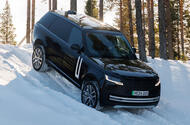 Land Rover brand's first EV is pictured testing in extreme conditions as it approaches launch
The new Range Rover Electric has completed a second round of winter testing ahead of its launch.
Key aspects put to the test included the EV's new thermal management system: how well it could heat the cabin and maintain rapid-charging performance in extreme sub-zero temperatures.
The prototypes also faced high-angle inclines and declines on frozen surfaces, testing that their one-pedal driving modes (using the motors' regenerative effect to slow and stop the car while off the throttle) work across a range of terrains.
"Rigorous testing procedures in extreme and unpredictable conditions like those experienced in Arjeplog [Sweden] are crucial to Range Rover Electric's real-world reliability and resilience," said JLR product engineering chief Thomas Müller.
JLR has also confirmed that the Range Rover Electric uses a 117kWh battery pack designed and assembled in-house, comprising 344 prismatic cells and running at 800V.
The firm has yet to detail a range figure, but such a large capacity should comfortably yield more than 300 miles between charges.
The winter testing comes after prototypes were last year driven in the UAE in temperatures approaching 50deg C.
They were sent up Big Red, a 300ft sand dune in the heart of Sharjah’s Al Badayer desert, to test the EV’s new Intelligent Torque Management system, which replaces a conventional ABS-based traction control system.
This is claimed to improve traction control off road by diverting power to each electric motor to reduce torque reaction time from around 100 milliseconds to as little as one millisecond. JLR says, after five continuous attempts, none of the cars demonstrated any fall in performance.
Müller said: “A hot climate is one of the most challenging for any battery-electric vehicle, because of the need to cool the cabin and optimise battery performance at the same time.
“The additional challenge of driving on sand requires controlled low-speed torque, so our specially developed traction control and thermal management systems work in harmony to ensure power delivery is unaffected.
“Our tests have shown that in this climate, repeatedly driving the equivalent of 100 metres uphill on fine sand, Range Rover Electric matches the performance of its ICE equivalents; in some instances, even surpassing them – thanks to the introduction of these new features.”
Like the cars pictured in the Arctic Circle, these Range Rover EV mules are shown completely uncamouflaged – a decision made to "underline the build quality of the initial prototypes", according to JLR.
Painted all in black and without the contrasting matt trim elements that JLR has previously suggested will mark out the EV powertrain, the prototype looks all but identical to the ICE Range Rover that has been on sale since 2022.
JLR said this shows how the prototype's "modernist design language stays true to the Range Rover bloodline", suggesting that the Range Rover Electric – as it is officially named – will only be subtly differentiated from the straight-six, V8 and plug-in hybrid derivatives.
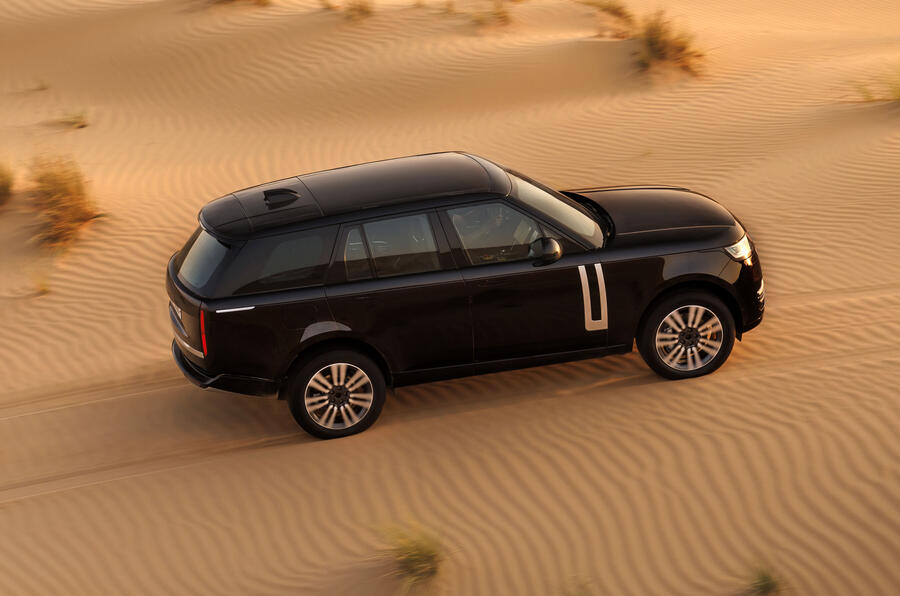
JLR previously highlighted that this is the first car to use a battery and electric drive unit assembled in-house.
Although bosses have yet to give any performance details for the new Range Rover, it has been promised to have the same “go-anywhere” capability as the ICE version, with a pledge that it will offer towing, wading and all-terrain capability that will exceed any other luxury electric SUV – including the ability to wade through 850mm-deep water.
The hint that the Range Rover Electric will offer performance “comparable” to the existing V8 suggests a total output close to the 523bhp that model offers.
It's expected to adopt a dual-motor system, which will allow for greater four-wheel-drive ability and systems such as torque vectoring to boost its off-road potential.
JLR said its test programme has been adapted to particularly examine the vehicle’s underfloor, battery durability and thermal derating.
The Range Rover Electric will be built in Solihull alongside the existing mild-hybrid and PHEV versions. It will initially use batteries from a third-party supplier before eventually switching to packs produced in the new Somerset gigafactory that JLR parent firm Tata is planning.
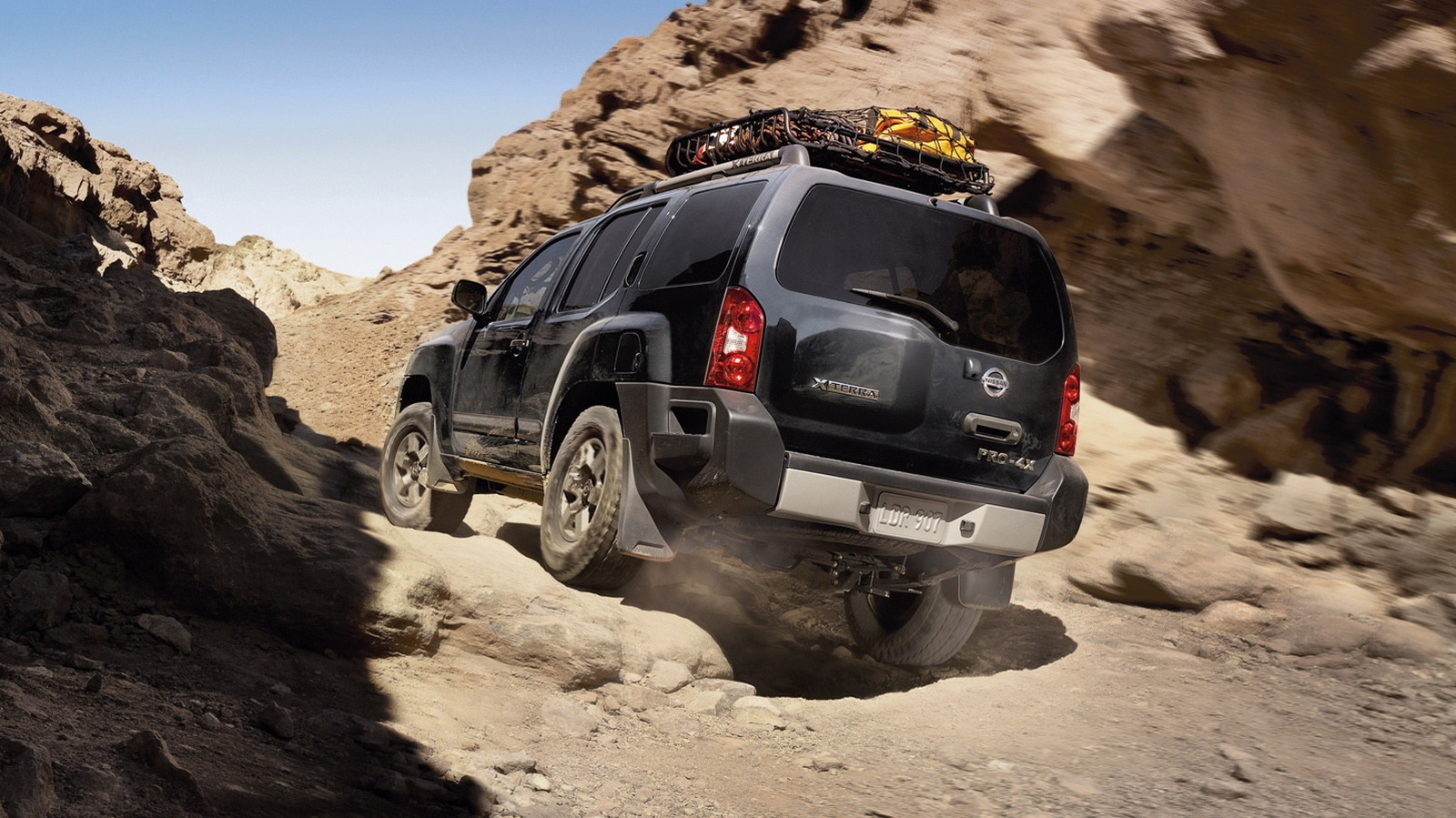
Discover the Affordable Off-Road Gem: Why the Second-Generation Nissan Xterra Outshines the 4Runner
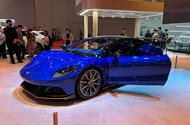
Denza Z: The Electric Coupé Set to Challenge Porsche and Maserati with Cutting-Edge Tech
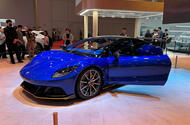 New concept revealed at Shanghai motor show brings steer-by-wire technology and low-slung design
BYD-owned premium brand Denza has lifted the covers off a new concept previewing a Porsche 911 and Maserati Granturismo rival.
Named the Denza Z, it's an electric coupé with a cab-forward design typical of midship sports cars. However, it can also seat two small rear passengers, in similar fashion to the 911 and Mercedes-AMG GT.
Detailed specifications have yet to be revealed, but its low-set, wide-hipped design and large rear wing clearly signal a performance-focused intent.
For reference, the Denza Z9 GT, a Porsche Taycan rival, offers a tri-motor powertrain with a combined output of 952bhp, suggesting the Z could nudge the 1000bhp mark.
No doubt the Z will also replicate some of the Z9 GT’s more novel features, such as its ability to ‘crab walk’, effectively sliding sideways by sending power to individual wheels.
Notably, the Z does away with a traditional steering rack for a new steer-by-wire system, which has no physical link between the front end and the interior. The electronic set-up is claimed to provide a better balance between a smooth feel when cruising and responsiveness in more spirited driving. It also allows the racing-inspired flat-bottomed steering wheel to fold away when not in use.
The Z rides on new magnetorheological dampers that are said to be capable of adapting to changes in the road surface in less than 10ms.
The new car comes just after Denza kicked off its expansion into Europe, targeting Porsche and similar upmarket performance brands.
BYD executive vice-president Stella Li told Autocar that entering this market would be “not too much of a challenge”, emphasising the cars’ performance, plus styling led by former Audi designer Wolfgang Egger.

Mysterious Truck Wreck Leaves Los Angeles Neighborhood in Shock