Discover the Fiat Panda: The Affordable Hatchback with Off-Road Charm
 With prices starting from £2000, is now the time to buy a Fiat Panda or Panda 4x4? If you want a quirky baby hatchback that can also offer genuine off-road ability, there’s only one car for the job: the Fiat Panda. The third generation of the ever-so-cute Italian, launched in 2011, added a cheeky and cuddly look, improved interior technology and greater refinement to its famous versatility.“The Panda is one of those cars that is exceptionally hard to be harsh to, one that revels in being what it is: a wonderfully compact, fun car,” was our summary when we road tested it at the time.Its ease of use and classless appeal helped earn the Panda an impressive 4.5-star verdict, trouncing rivals in a segment that was then full of overachievers – the Volkswagen Up chief among them.Fast forward to 2025 and the Panda is accessible to all, with well-used, high-mileage examples available for less than £2000. If your budget is tight, you will end up with a Panda powered by either a 68bhp 1.2-litre four-cylinder or 84bhp turbocharged 0.9-litre two-cylinder petrol engine.The 1.2 is fine if you intend to use the Panda for city hops, but it feels a bit sluggish on a rural road or motorway. It’s smooth and a little more refined than the thrummy-sounding Twinair, but then that can be comfortably driven around town and up the motorway.A tidy Twinair with around 50k to 60k miles on the clock should set you back around £3500, but it’s well worth spending the extra cash – and some versions of the Twinair won’t cost you a penny in road tax. There’s also a 1.3-litre four-cylinder diesel, the Multijet, which has more than enough grunt and will easily manage around 50mpg.If you’re after more fun from your city car, plus all-terrain usability, the Panda 4x4 is the one to go for, with its increased ride height, bright skidplates and chunky styling.The 4x4 rides acceptably, thanks to its small alloys and soft springs, and because it’s primarily front-driven (power is diverted to the rear in the event of slip), it’s as fun to drive as a standard Panda, albeit with a bit more roll.For proper green-laning, you will want the Panda Cross. It’s a proper trooper, with more prominent skidplates, a dedicated off-road driving mode that locks the differential for permanent four-wheel drive and hill descent control. A tidy, 60k-mile example will be around £2000 dearer than a standard 4x4 in similar condition.Inside, the Panda shows its cheaper side with plenty of hard-wearing, scratchy plastics, but it’s nevertheless pleasant to ride around in, with an airy ambience.If you’re after some modern touches, we would point you towards the facelifted Panda, which arrived in 2020 and could be had with a 7.0in infotainment touchscreen that benefits from smartphone mirroring.That facelift also introduced a 1.0-litre three-cylinder mild hybrid. It’s easy to operate around town and the electrical system gives a bit of extra poke. Mind you, the three-pot is pretty staid and you have to work hard to get it up to speed – plus it will fall 10 short of the official 46mpg.The 4x4 versions are even more charming inside, with colourful dashboard trim pieces and funky patterns on the seats. Space inside is best described as adequate, as the rear bench can only seat two passengers.The boot is large enough for your weekly food shop but little more. Space limitations and material quality are easily overlooked in a car like the Panda, though.No other city car pulls at your heartstrings in the same way or offers as much fun, whether you’re bumbling around town or tackling the rough stuff.
Profit Plunge: How Political Turmoil and Tariffs Impacted First-Quarter Earnings
Unlocking the Dream: How to Own a Ferrari for Less Than a New Ford
 Always dreamed of driving a Ferrari but never had the requisite funds? Richard Bremner has the answer
Depreciation: it can be as much a friend as an enemy. It shrinks the value of your wheeled assets but can also bring once-unattainable dreams within reach.
The idea of a cheap Ferrari is almost as old as the brand itself, but as clichéd as the ‘Ferrari for the price of a Ford’ story is, the excitement of this possibility never wanes, so we make no excuses for once again testing the waters.
You must still spend the price of a very decent set of new wheels – a range-topping Ford Kuga, for instance – to buy a Ferrari of sufficient calibre to ensure that its presence in your garage doesn’t quickly sour.
Enough of the theory, though. Can you really buy into exotic territory on a shoestring? And does that come with the sort of headaches you would imagine? Read on to find out...
Buying a cheap Ferrari
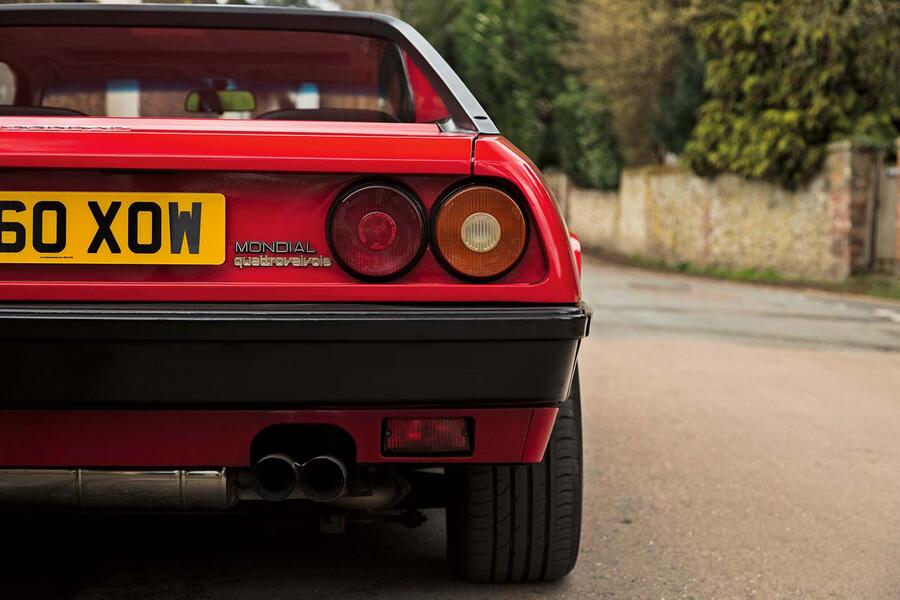
We set out to find the cheapest Ferrari and ended up inspecting the Mondial you see here. It wasn't the absolute cheapest functioning Ferrari available on the day, as anything left-hand-drive or accident-recorded was eliminated.
There’s more than one sub-£40k starter Ferrari.
For the really adventurous (or rash), there’s the 400/412, an elegant, V12-engined four-seater that’s very much a grand tourer and often fitted with a value-reducing automatic gearbox. Thirsty and costly to maintain, it’s nevertheless glamorous and gets you one of Ferrari’s finer engines.
Or there’s its successor, the 456 GT – also a V12 four-seater, also often an automatic and also expensive to maintain, according to Kent High Performance Cars boss Roger Collingwood.
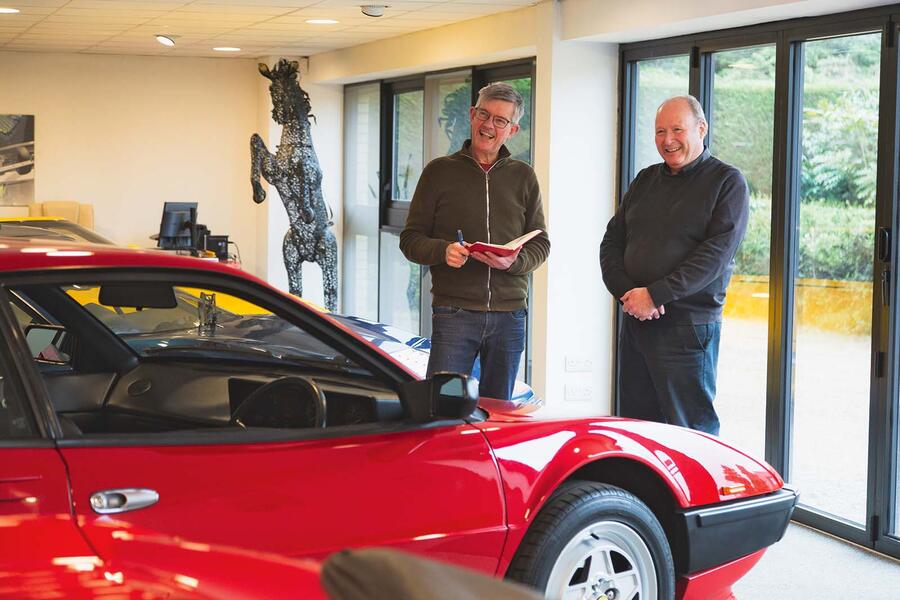
KHPC is a long-established Ferrari specialist – 41 years so far – and very likely Britain’s largest source of used Ferraris. It also has a workshop that services, repairs and restores these cars.
It’s here where we find a £37,995, 49,000-mile Mondial from 1985, with the 240bhp 2.9-litre V8.
“The Mondial is a typical entry-level Ferrari,” says sales executive Simon Hamilton-Walker. Collingwood adds that its four seats can often help win a green light from a family man’s partner, although Hamilton-Walker drily adds that the rear seats “are only useful if you haven’t got legs”.
Collingwood explains that most of the stock “is on a sale-or-return basis”, KHPC earning commission on cars sold on behalf of customers. It typically sells 60-70 annually.
Every car is inspected before it’s sold and any necessary work carried out to bring the car up to standard. This can include anything from minor rectification to corrosion repair, especially on older models like the Mondial, which Collingwood says “is very prone to rust”. He elaborates: “The chassis is usually okay – it’s tubular – but the wings, doors and sills are all vulnerable.”
The mechanical story is more encouraging. “The engine will do 100,000 miles with no problem if it’s properly maintained and has regular oil changes,” Collingwood says, and the same applies to the gearbox if it’s treated carefully.
Most mechanical parts are still available for the Mondial and body panels can be found or fabricated. Trim is harder, says Collingwood, but can usually be made.
What's it like?
We can’t drive this Mondial, because it belongs to a customer, but we’re taken for a ride in it over enough distance to suggest that it functions as it should, a sports exhaust lifting its aural impact. There are no rattles or squeaks, the engine sounds healthy, everything works and the interior is in excellent shape, as is the red bodywork.
It feels like you could immediately do some distance in this car with no issue.
Servicing
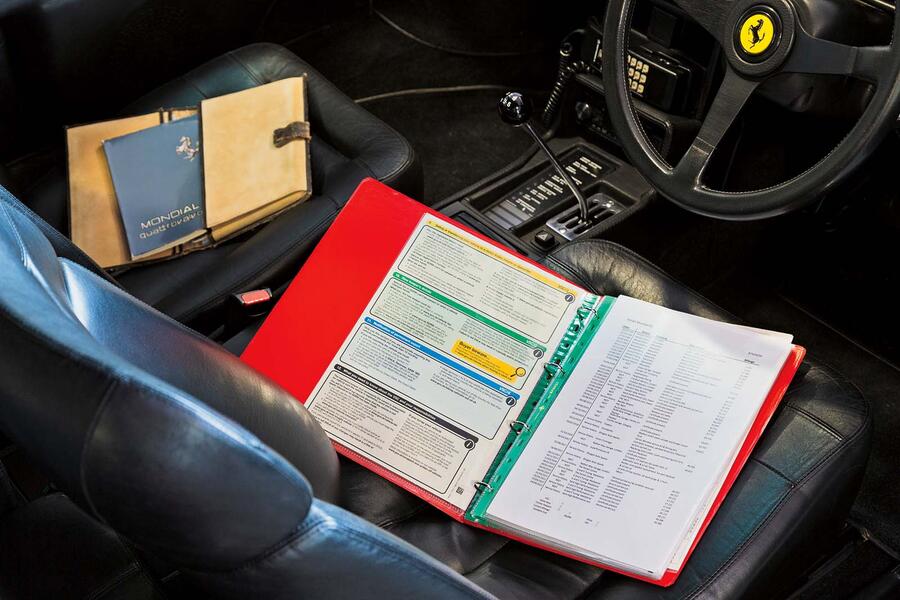
There are no invoices, but the full book pack remains with the car, as does the second key (both encouraging signs), it comes with a factory hard top and its 87,000 miles are below average for its age.
The paintwork carries quite a few scratches and the interior could use a deeper clean, but there should be plenty of life left in it yet.
Ultimately it's mid-engined and infinitely more appealing than the new small SUVs that £40,000 could buy you.
How to buy a budget Ferrari Mondial
Collingwood says: “Buy the best that you can afford and ideally from a specialist, because then it will have been checked over.”
As a specialist himself, he’s bound to say this, but equally the condition of this Mondial and the experiences of your serially car-buying reporter bear out this advice. And if you do have a problem, there’s a dealer with a good reputation to go back to.
Just as important is the car’s history, especially in the case of a Ferrari, which can deteriorate significantly if not regularly tended to.
This car has a pretty extensive maintenance record, as you would hope of a 39-year-old, all of it neatly catalogued. Particular good news is that it had new timing belts and a fresh clutch less than 5000 miles ago.
Workshops with fixed price menus are handy for budgeting, too. A Mondial service is £745 and a belt change £1650 at KHPC – hardly Dacia prices but not bad at all for a thoroughbred.

The Illusion of High Wages: Unmasking America’s Labor Trap

Chinese Car Brands Surge in UK Market with Electrifying Growth
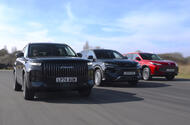 MG led Chinese car makers in the UK but big growth came from newcomers BYD, Omoda and Jaecoo
Sales of cars from Chinese brands in the UK grew 88% in March, as brands including BYD, MG, Omoda and Jaecoo expanded their footprint here.
Chinese brands sold 28,883 cars in March to give them a market share of 7.5%, up from 4.0% in March 2024, according to figures published by the Society of Motor Manufacturers and Traders.
In the first three months of 2025, the Chinese share was 7.0%.
The growth came from newcomers such as BYD, which sold 6480 cars, up 754% on the year before.
SAIC-owned MG led the Chinese cohort with 15,876 sales, up 23%, on the back of the increased popularity of the HS and ZS SUVs, which finished seventh and ninth in the overall top 10 for the month.
Also boosting the Chinese share were Chery-owned arrivals Omoda and Jaecoo, which together sold almost 4000 cars, beating established brands such as Citroën, Fiat, Jeep, Lexus and Suzuki.
The definition of what includes a Chinese brand is muddied by the global footprint of Geely, but for the purpose of this analysis, we haven’t included Lotus, Polestar or Volvo, which produce a proportion of their models outside China. If we had included them, the Chinese share of the UK market in March would have risen to 12%.
The rapid expansion of Chinese brands in the UK market has been accelerated by the shift to electrification, including hybrids, plug-in hybrids and electric cars.
They accounted for 11% of all electric cars sold here in March, led by the BYD Seal saloon, with 2094 sales – enough to place it sixth in the EV chart, ahead of the BMW i4 and Skoda Enyaq. The MG 4 EV hatchback was ninth.
China’s EV leadership put it ahead of Korean brands, which accounted for 9.2% of EV sales in March.
Japanese brands took just 3.2% of EV sales, signalling a fundamental weakness in their line-ups as legislation forces the pace of the EV shift.
PHEVs have also become a core competence for Chinese brands. BYD topped the UK's PHEV model chart in March with the Seal U, registering 2972 sales, putting it head of long-time leader the Ford Kuga.
Overall, Chinese brands logged 15% of all PHEV sales in the month, with BYD’s success augmented by PHEV versions of the MG HS and Jaecoo 7 small SUVs.
Chinese brands are also making inroads in the hybrid market, with MG becoming the fourth biggest hybrid brand in the month after Toyota, Nissan and Renault.
MG’s rapid rise has been driven by the success of the ZS hybrid SUV, the second best-selling hybrid in March after the Toyota Yaris.
It's rare in UK automotive history that relatively unknown brands have made such an impact in such a short space of time, but changing precipitations of competence around electrification have helped.
“Customers see electric cars as a technology platform with no emotional baggage attached to it,” Guy Pigounakis, MG Motor UK's commercial director, told Autocar.
“That’s probably why some of the new entrants have established themselves so quickly. When it comes to electric powertrains, they’ve got at least the same amount of background as any of the legacy brands, probably more so.”
Chinese brands have also been helped by keen pricing at time when the average pricing of new cars has shot up, giving customers the chance to buy new electrified technology at prices equal to or below that which established brands are charging for conventional ICE models.
The Seal U PHEV SUV. for example, is at £33,315 almost £7000 cheaper than the entry version of the similar-size Volkswagen Tayron.
Chinese brands are being helped by the fact that the UK chose not to follow the EU and raise the import tax on China-built EVs.
The taxes were imposed after the EU calculated that Chinese brands were keeping prices low partly through state support and calculated rates judged to level the playing field for European manufacturers.
The sheer size, financial clout and ambition of the biggest Chinese manufacturers are given them market presence in a way that start-ups haven't been able to replicate.
For example, Chery’s Omoda and Jaecoo brands now boast more than 70 dealers in the UK, located from Aberdeen to Plymouth, while BYD targets having 120-150 dealers here within the next two years.
BYD, the global sales leader in EVs and PHEV, aims to be within “touching distance of everybody that needs to buy a car”, UK sales and marketing chief Steve Beattie told Autocar recently.
In the same interview, he pledged to make BYD the UK’s biggest brand outright.
Other Chinese brands are coming. Tesla-rival Xpeng sold 36 cars in March in advance of its tech-driven push into the EV space with the G6, while Stellantis-backed Leapmotor opened its account here with 193 sales of its C10 SUV and T03 city car.
Those who have pledged to follow include state-owned giant GAC, which is aiming for the budget end of the EV market with a rival for the MG 4 EV and a bigger SUV.
Innovative battery-swapping EV maker Nio has also promised a UK roll-out for its budget Firefly brand and Tesla-angled Onvo brand, with its flagship Nio models also a possibility.
Meanwhile, BYD is making bullish claims about its premium Denza brand.
Success isn’t guaranteed, though. Great Wall Motor (GWM) is struggling to make a dent with its Ora 03 hatchback, with sales down a massive 91% in March at just 31 units.
The company is now pinning its hopes on hybrid SUVs from its newly launched Haval budget brand.
China’s pressure on the UK market could potentially ease with news that the EU is considering axing tariffs in favour of either minimum pricing or quotas on Chinese EVs.
However, while the value gap remains between Chinese models and their more established counterparts, sales are expected to continue to grow at the same healthy rate.
| March 2025 | March 2024 | Change | |
| MG | 15,876 | 12,934 | +23% |
| BYD | 6480 | 759 | +754% |
| Omoda | 2082 | 0 | New |
| Jaecoo | 1786 | 0 | New |
| Smart | 385 | 306 | +26% |
| Leapmotor | 193 | 0 | New |
| Xpeng | 36 | 0 | New |
| GWM | 29 | 310 | -91% |
| Maxus | 10 | 1 | +900% |
| Skywell | 6 | 0 | New |
| Total | 26,883 | 14,309 | +88% |
| UK market share | 7.5% | 4.0% | +88% |

Brilliant Minds, Hilarious Fails: The Magic of YouTube’s Best Moments
Revolutionizing Electric Luxury: The Audi E5 Sportback Unveiled for China
 First model for China-specific sub-brand revealed with radical look – and no four-ring logo
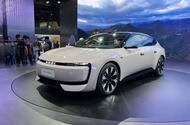
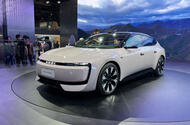
The AUDI E5 Sportback has been unveiled as the first production model from the German car maker's new China-specific sub-brand, packing up to 776bhp and a range of 478 miles.
Described as having been developed “in China for China”, it is an electric car based on new underpinnings developed in collaboration with MG owner SAIC.
Its design is a faithful translation of the E Concept that was shown last year, diverging almost completely from the design language used by the brand’s previous models. It completely dispenses with the four-ring logo, for example, and is much more minimalist in its surfacing treatment.
It is positioned roughly in line with the combustion-engined Audi A5 but is slightly longer and wider, most likely to meet Chinese-market expectations for interior space.
Inside, a 27in display screen spans the full width of the dashboard. Its software is said to place the critical functions in the top level of its menus at all times, and there is an app store that is accessed using facial recognition technology.
The E5 will be offered with four battery-electric powertrains with outputs of 295bhp, 402bhp, 570bhp and 776bhp. The range-topper has four-wheel drive and is badged Quattro, while the entry-level car uses a single rear-mounted motor.
The most potent version is capable of dispatching 0-62mph in 3.4sec.
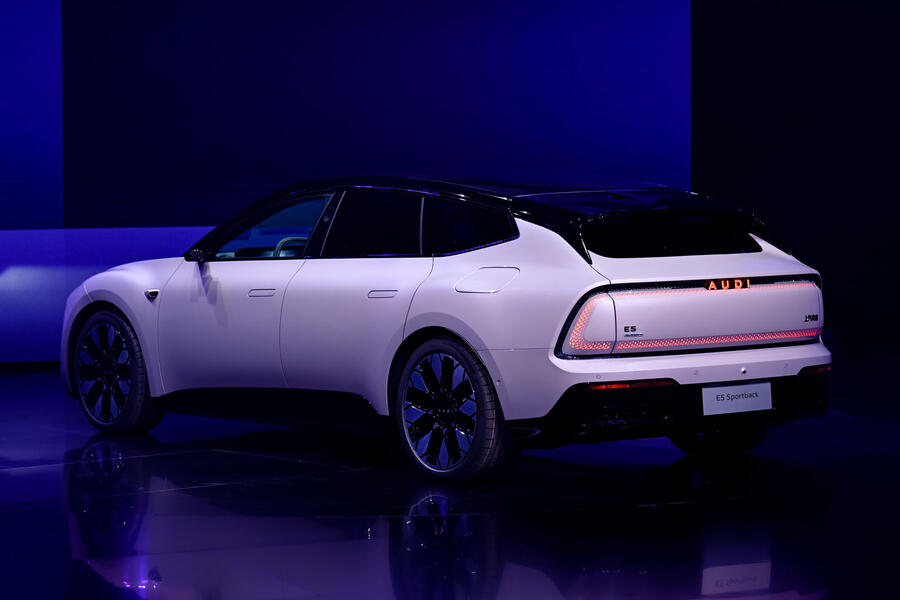
A range of up to 478 miles – on China's more lenient Light-Duty Vehicle Test Cycle – is yielded by the car’s 100kWh battery pack, which is said to be capable of taking on sufficient charge for 230 miles of range in 10 minutes.
The car also majors on autonomous driving capabilities and can take control in both motorway and urban driving. A combination of a roof-mounted lidar box, three long-range radars, 12 ultrasonic sensors and an array of cameras allows it to “predict tricycles and delivery riders like a veteran of Beijing’s hutongs”, Audi claimed.
Production of the E5 Sportback will begin later this year but there are no plans for it to be sold in Europe. It will be followed by a saloon in 2026 and an SUV in 2027, both based on the same platform as the E5.
Custom Cars for a Cause: West Coast Customs Auctions Unique Builds to Fund Trade...
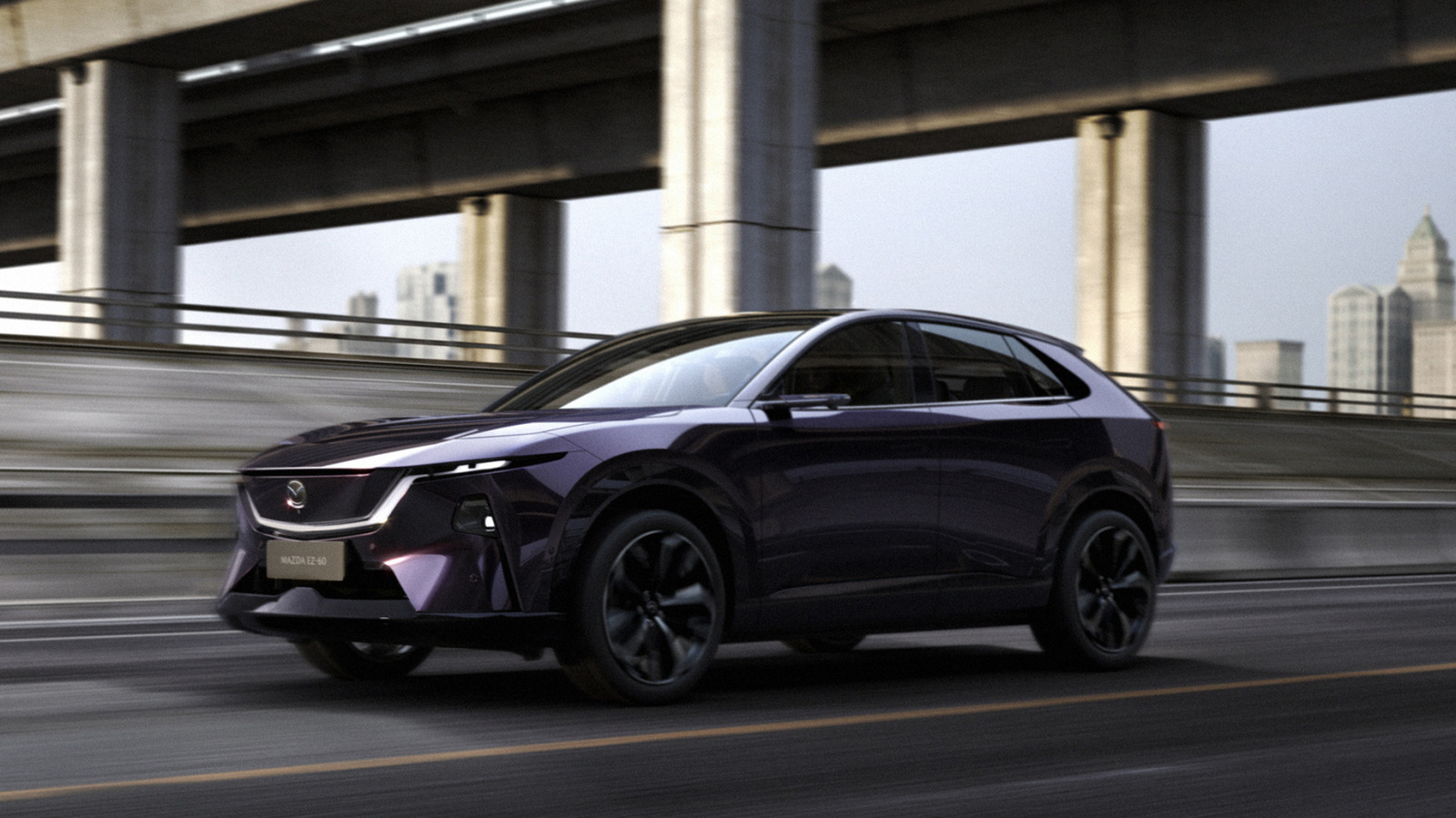
Mazda EZ-60: The High-Tech Electric SUV Redefining Range and Performance
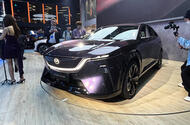 Second Mazda model from joint venture with China's Changan is an electric CX-60 alternative
The new Mazda EZ-60 SUV will be sold with a choice of battery-electric and range-extender powertrains, with the latter offering a combined range of more than 621 miles.
The new model, which may come to the UK as an electric counterpart to the CX-60, was recently revealed in China but details were withheld for its debut at the Shanghai motor show.
Mazda has now confirmed that the new model was developed in collaboration with its Chinese joint-venture partner, Changan, in a similar fashion to the previous Mazda 6e saloon.
Based on the same underpinnings as the Changan Deepal SUV – a Tesla Model Y rival due in the UK later this year – it will be offered solely with rear-wheel drive, regardless of the chosen powertrain.
The range-extender uses a 1.5-litre petrol engine as a generator for a 31.7kWh lithium-iron-phosphate (LFP) battery supplied by CATL, which drives a single, 255bhp motor. This delivers an electric-only range of 100 miles, according to China's more lenient CLTC test cycle. It also has a 50:50 weight distribution front to rear, which matches that of the brand's halo product, the MX-5 sports car.
In a further reference to the MX-5, Mazda said the EZ-60 has been tuned to offer the same 'Jinba-ittai' – "the sense of horse and rider as one" – driving experience as the roadster.
Detailed specifications for the battery-electric model remain under wraps but Mazda confirmed that it will offer a range of around 373 miles on CLTC, and a weight distribution of 47:53. For reference, the Changan S07 packs an 80kWh battery and a 214bhp rear-mounted motor, delivering a range of 295 miles on the European WLTP test cycle. It can charge at 93kW, giving a 30-80% recharge in 35 minutes.
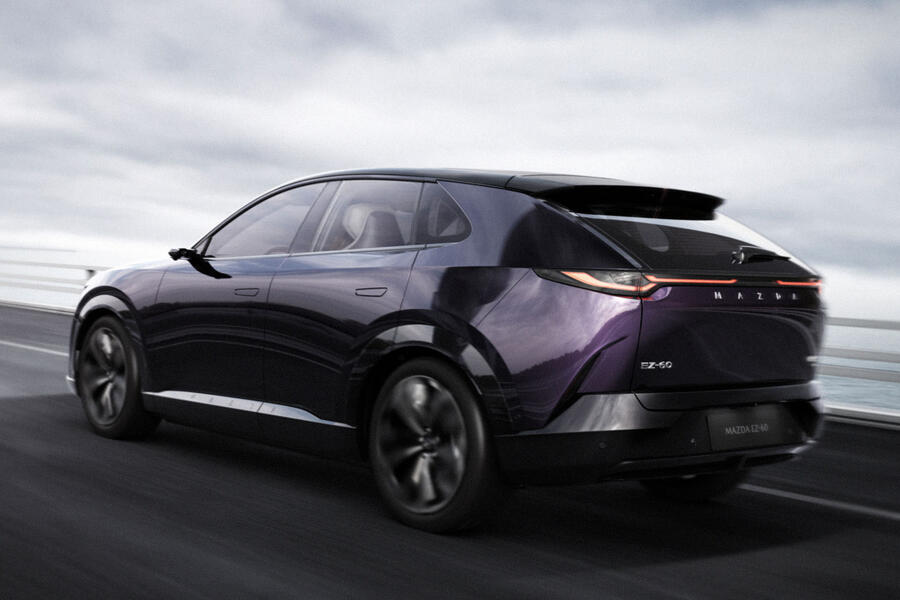
Meanwhile, the Mazda 6e gets a 254bhp motor and a battery pack of the same capacity, yielding 345 miles between charges.
The EZ-60 also draws on the new design language introduced with the saloon, with thin LED daytime-running lights mounted high on the fascia above smaller main-beam headlights. The lower portion of the grille is outlined with LED lighting.
It is notably more angular than the 6e, however, with a prominent chin spoiler on the front bumper and a pronounced shoulder line.
Inside, a 26.45in infotainment screen spans most of the width of the dashboard and a head-up display is projected in front of the driver to show critical information, such as range and speed. The car forgoes conventional side mirrors for rear-view cameras, for which screens are mounted on the doors, under the A-pillars.
Mazda has yet to officially confirm whether the EZ-60 will be sold the UK, but it would give the brand a much-needed boost in its electric car sales, and in one of the most popular classes of car. The company confirmed UK launch plans for the saloon earlier this year.
The Japanese brand previously said it would follow the 6e with a new electric SUV developed independently of Changan, using batteries designed in collaboration with Panasonic. This new model, due around the same time as the next iteration of the combustion-engined Mazda CX-5, will also be assembled in Japan.
Unleashing the Future: New SUV Promises Over 620 Miles of Range in China