
Jay Leno’s Unlikely Car Collection: The One Model He Refuses to Buy
The Surprising Truth About Noise Levels in Hybrid and Electric Cars
 Our testing gear often produces some interesting results when measuring noise isolation
I’ve done plenty of very high speeds on Horiba MIRA’s ‘twin horizontal’ straights, but rarely quite like this.
The Bentley Continental GT Speed Hybrid that I recently road tested took me to the far side of 170mph several times, back and forth in opposite directions, all within the bounds of a measured mile, while simultaneously massaging my rather spoiled and considerable posterior.
I didn’t ask it to; I just forgot to turn that particular seat function off. And, well, there can’t be many cars that could have done both.
The irony was that the optional massage seats weren’t in fact switched on. Instead, I was experiencing what Crewe calls ‘postural adjustment’, fitted as standard and designed to relieve the load on your backside over a long journey.
You can read all about this latest Bentley in a six-page test in a few weeks’ time. Suffice to say, for now, that the Continental GT Speed is indeed a worthy purveyor of the brand’s inimitable and characteristically enveloping, cosseting, thunderously fast and pervasively special grand touring experience.
All 2462kg and 772bhp of it, replete as the car is now with a V8-engined plug-in hybrid powertrain that should keep it relevant for years to come.
And being a PHEV capable of electric-only running at one moment and then switching to the piston-powered kind within an instant, the next thing it made me wonder was: which is actually quieter?
Isn’t the answer obvious? Ultimately, yes. But the size of the decisive margin might still surprise you. There is certainly a bit of a myth abroad that any car capable of electric running must be quieter and more refined than any that isn’t and that EVs are all whisper-quiet.
When you break out the noise meter and record what’s actually going on, the truth turns out to be a fair bit more complicated.
All of Autocar’s cabin noise testing is done on the MIRA mile straights – the same surface where our benchmark acceleration numbers are generated. So while the test conditions on the day can vary, we keep the input factors as constant as we can.
In the new Continental GT Speed, running at a steady 50mph with the engine off, the meter fluctuated around 61.7dBA – but then rose to only around 62.2dBA with the engine running.
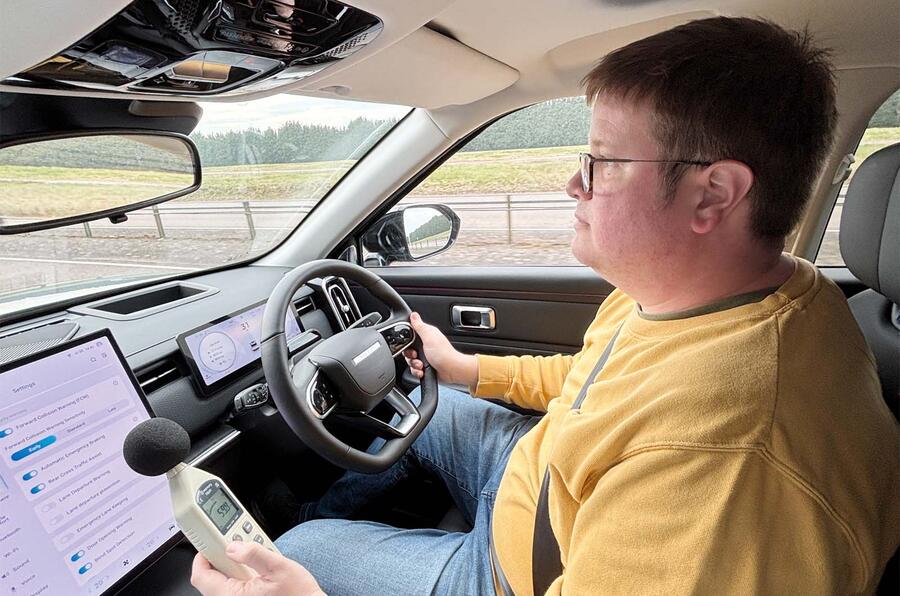
It’s as confounding to read it again now as it was to observe it first hand, because your ears aren’t lying to you.
You can hear the instant the engine starts and easily perceive the difference it makes to the cabin’s ambient noise level, even when it’s only bumbling along just above idle – and then you look down at a meter that might as well be shrugging its shoulders and saying ‘meh’, like some uninterested adolescent.
The Continental GT Speed is a modern luxury car of particularly high standards for mechanical noise isolation, needless to say. In the average PHEV, we could probably expect a greater disparity.
Nevertheless, in any car moving along at a 50mph cruising speed, the greatest individual source of detectable cabin noise usually isn’t the engine, even when there is one fitted. Road noise and wind noise are already more prominent.
And here are some numbers to prove it. The Mercedes-Benz EQS is an exceptionally quiet car, for example, generating just 58dBA of cabin noise at 50mph, but that will have a lot more to do with the fact that it’s a £130,000 luxury Mercedes than simply an electric car.
At the same speed, Cupra’s Tavascan EV is producing 61dBA of cabin noise – but so is the Dacia Duster Hybrid.
The BMW 120 M Sport generates a very respectable 62dBA and the new petrol Audi S5 only 63dBA, yet the Kia EV6 and Audi Q6 E-tron – electric both – each generates 65dBA.
It’s something to think about if you imagine that adopting an EV will automatically be something your eardrums will thank you for. They might – but only if you buy the right one.

Examiner Shortage Causes Long Delays for New Drivers Seeking Licenses

Volvo S90 Revamp Focuses on Chinese Market with Enhanced Tech and Electric Range
 Flagship petrol saloon gets suite of changes aimed primarily at the Chinese market
The Volvo S90 has been updated with a fresh face, upgraded interior technology and extra electric range for the plug-in hybrid version.
Visual changes include a new front grille, which matches those on the revised XC90 and XC60 SUVs, as well as sharper-looking lighting signatures front and rear, bringing it into line with the new ES90 EV.
Additional sound insulation is aimed at boosting interior refinement and adaptive suspension has been standardised across the range.
Inside, the 11.2in touchscreen infotainment system has been updated to improve its responsiveness and it can now be updated over the air.
The car will be offered with a choice of mild-hybrid and plug-in hybrid powertrains. Volvo has yet to release performance figures but the PHEV’s electric range has been increased from 46 miles to 50.
The new S90 is not expected to arrive in the UK. The saloon was removed from Volvo's line-up in the UK two years ago due to poor sales and the brand’s emphasis on electric models at the time. That left Volvo buyers to choose from the smaller S60 saloon, the V90 estate or one of the firm’s SUVs.
Volvo is instead prioritising international markets for the S90. The model will be rolled out in China this summer, with other countries following thereafter.
“The S90 is a key part of our product portfolio for the coming years in some of our Asian markets,” said Volvo product and strategy chief Erik Severinson.
The S90’s de facto successor, the ES90, is due in the UK next year. Prices will range from around £70,000 to just below £90,000.

China’s Airlines Respond to Trump’s Tariffs with Boeing Boycott
Driving Towards Independence: The Promise of Autonomous Vehicles for Those in Need
 Self-driving vehicles may be some way off. But they could offer cost-effective solutions
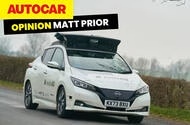
Nissan has now finished testing autonomous cars on UK roads, as its EvolvAD project has come to a close – the last part of an eight-year scheme.
This bit was to see whether a self-driving Nissan Leaf could operate outside of cities and in less connected areas, on residential and single-track country roads, to discover what types of technology will be necessary to drive in such complex environments.
Nissan says the trial has been “tremendously successful”, but you may note that there aren’t autonomous cars serving your neighbourhood yet. Over eight years, autonomous Leafs have driven 16,000 miles over all kinds of terrain. You may also note that doesn’t sound very far.
Autonomous cars are still a long way away, then. And it’s unclear whether they’re viable at all and whether we will ever get there. If you’ve driven a car with any assisted driving technology, you will know how hopeless it can be.
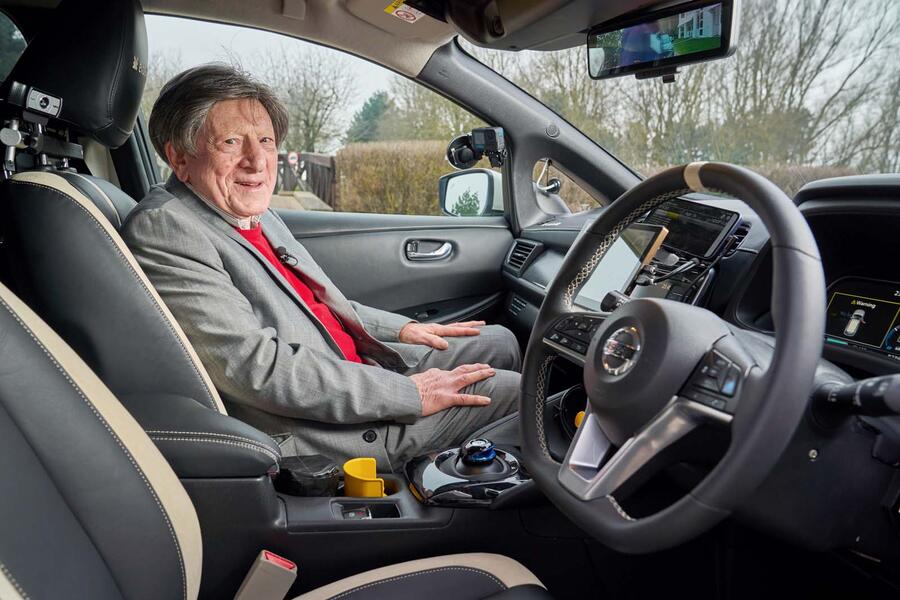
But, but, but. To remind us why it’s doing it, Nissan put a 93-year-old in one of these cars and had it drive him around to show what it could do.
Because while autonomous technology might take the weight off while it drives you to work, more importantly it can also be used to keep mobile the people who need it most – those who can’t drive themselves.
People lament losing personal mobility, their ability to drive, because it gets really expensive when they can’t, and that’s because employing drivers is the expensive bit in any commercial road transport. I have a local bus service that operates limited hours and has to be underwritten by the council for that reason.
So if it costs even, say, £300,000 to equip a vehicle with autonomous driving technology, if the vehicle operates all the time and the technology replaces several drivers, it will pay for itself quickly.
The prospect of self-driving vehicles is bad news for professional drivers. But for people who need to get around, who can’t drive, who can’t get to a bus and who can’t afford taxis, it could make the difference between staying in a home or community they love or being carted off to a home less dignified.
It can make independence more affordable, more viable. And for that reason, it’s worth seeing if it will work.

Mack Trucks to Cut Hundreds of Jobs, Citing Republican Tariffs as the Cause
Reviving Lancia: The Stylish Comeback of the Ypsilon Electric
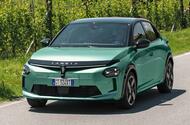
Ypsilon is reigniting the old marque – a hot HF-badged electric version will soon followLancia has at last launched a new car. We drive it to find out whether that odds-defying revival is a success
Until recently, Lancia was withering away on death row, reduced since 2017 to a single model in a single market. One could almost sense hard-headed FCA chief Sergio Marchionne’s irritation as the Fiat 500-based Ypsilon continued to sell in droves.
It’s thanks only to Italian drivers’ patriotism and indifference to needless expense and the latest tech that Lancia survived for long enough to be saved by Stellantis.
Credit must go to founding Stellantis boss Carlos Tavares for appreciating Lancia’s value enough to hand the brand sufficient funding for a 10-year revival of its core model lines.
Precisely what is that inherent value, though? That’s what I’m hoping to discover, driving the new Ypsilon in Turin – home to the first factory that employed Vincenzo Lancia way back in 1898, the first site he opened under his own name and the famous Mirafiori plant, now also host to the Fiat and Lancia historic car collection.
The Ypsilon comes in Ibrida and Elettrica forms, and I’ve chosen the Elettrica, it being Lancia’s electric car. The former uses a 99bhp mild-hybrid 1.2-litre turbocharged petrol triple, the latter a 154bhp motor and a 51kWh battery.
Those specs feel very familiar because they are, from the many small cars based on Stellantis’s e-CMP platform.
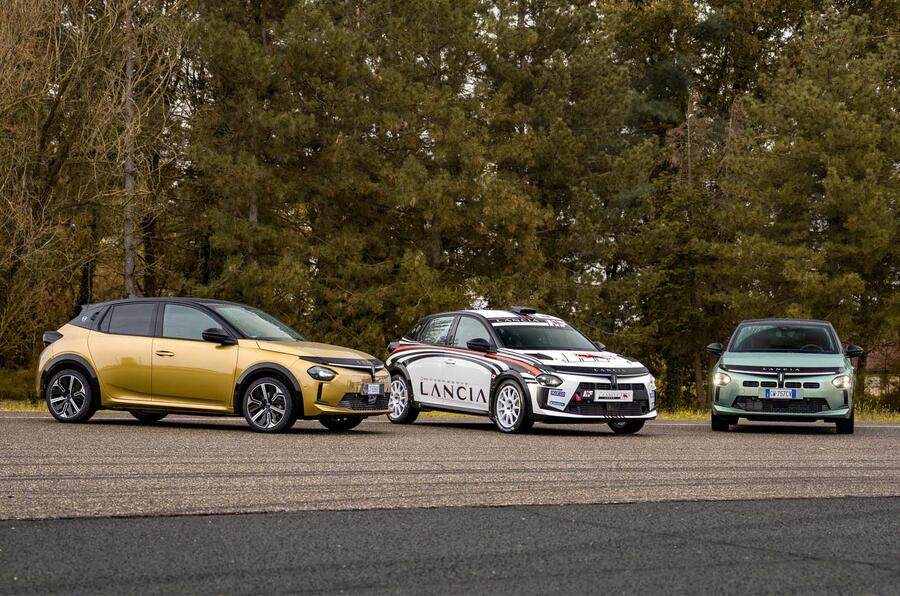
The Ypsilon Elettrica drives virtually indistinguishably from a Peugeot 208 or Vauxhall Corsa EV, then. But I don’t think that’s a bad thing. Those cars have sold extremely well and the finer points of ride and handling aren’t priorities for many buyers in this market.
The Ypsilon is smooth, comfortable and refined on the autostrada, and in town it has a healthy reserve of power and it will round corners sharply. And if that really isn’t enough for you, exciting news: there’s a rally-inspired HF version coming.
What really sets everyday cars apart, prices aside, is design. The reason one person falls in love with the Jeep Avenger may well be why another orders an Alfa Romeo Junior instead, despite their identical specs.
Lancia has always been a design brand and, in this coming era of increasing mechanical and technical similarity, going all in on that appears to be an ideal strategy.
“Many people came expressly to ask me to work for Lancia. There was passion in their eyes, and when I told them about the possible plans for the rebirth of this glorious brand, they lit up,” creative chief Jean-Pierre Ploué (designer of such favourites as the Mk1 Renault Twingo, Citroën C6 and DS 3) recently told Italian publication Auto & Design.
Of the four design pillars his Turin studio team defined, ‘meaningful’ perhaps isn’t the easiest to identify in the Ypsilon, but ‘iconic’ I can see in the Stratos-inspired tail-lights and, while ‘consistent’ and ‘eclectic’ might seem to clash, the exterior sparks interest in its many details – most unusually the, erm, Y-front – without becoming a hotchpotch.
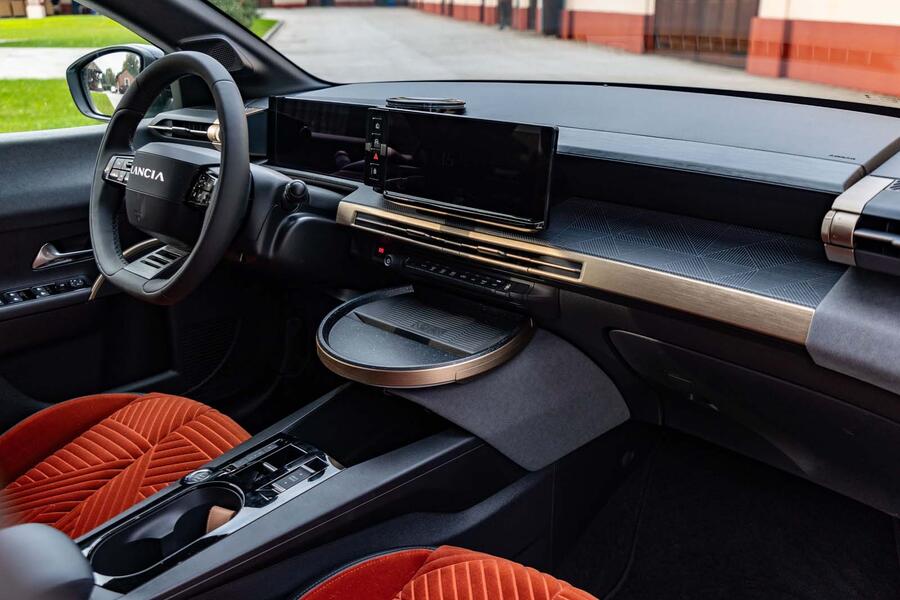
Same inside, where unusual details abound: knurled gold air-vent adjusters, slices of wood, an art deco dashboard pattern and a table atop the centre console – whose round shape is replicated in the doors and ‘Sala Hub’ behind the touchscreen (short for Sound Air Light Augmentation and meant to simplify the digital experience, apparently). And then there are the rust-coloured, boiserie-patterned velvet seats – simply fabulous.
The Ypsilon’s official range is 250 miles, so I expect to finish the 160-mile drive to my hotel in Turin with plenty in reserve, but the number on the display plunges alarmingly as I cruise at 80mph, such that I have to rise early the next morning to get a big charge.
Thankfully, Zap-Map reveals that there are many chargers in this industrial city, and the Plentitude network (run by Italian oil giant Eni) offers both an easy app sign-up process and a slick-looking ‘CCS Hypercharger’.

The rate races to 89kW (the Ypsilon’s limit is 100kW) and all is well – until suddenly it isn’t. The charging process terminates halfway for no obvious reason and fails to restart.
Then the car bongs loudly and says: “Electric traction system failure: stop the vehicle, see user manual.” Ah.
There’s work to be done then, and the technicians tell me later they could find no fault with the car. When I visit the FCA Heritage Hub, the guide suggests some Italians aren’t too hot on the Ypsilon either, unconvinced by the design and annoyed that it’s built in Spain.
It’s evident that rebuilding Lancia is going to be difficult in many ways – but when you see the history the brand has and the passion it still evokes, you realise why it’s an effort worth making.

Arsenal Discovered: Man Caught with Assault Weapons and Booby-Trapped Rifle

Rediscovering 90s Budget Cars: A Showdown of Soviet Superminis
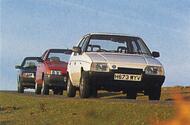
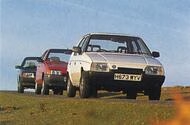
We tested three 'cheaps from the old Bloc' in November 1990…We go back to the 1990s and re-discover which budget Soviet brand was the best
Europe was changing. We'd experienced the revolutionary Autumn of Nations in 1989, which began in Poland and soon spread like wildfire behind the Iron Curtain.
By the end of that year, democracy had returned to Czechoslovakia. Just a year later, the very linchpin of communism, the Soviet Union, fell apart. And Yugoslavia was soon to follow, violently disintegrating into several Balkan states from 1992.
And so, unbeknownst to Autocar's testers, our November 1990 test of the three superminis representing these countries (or 'cheaps from the old Bloc', as we put it) was, in a way, the last hurrah for commie cars — loved and maligned as they had been by the British public for the previous decades.
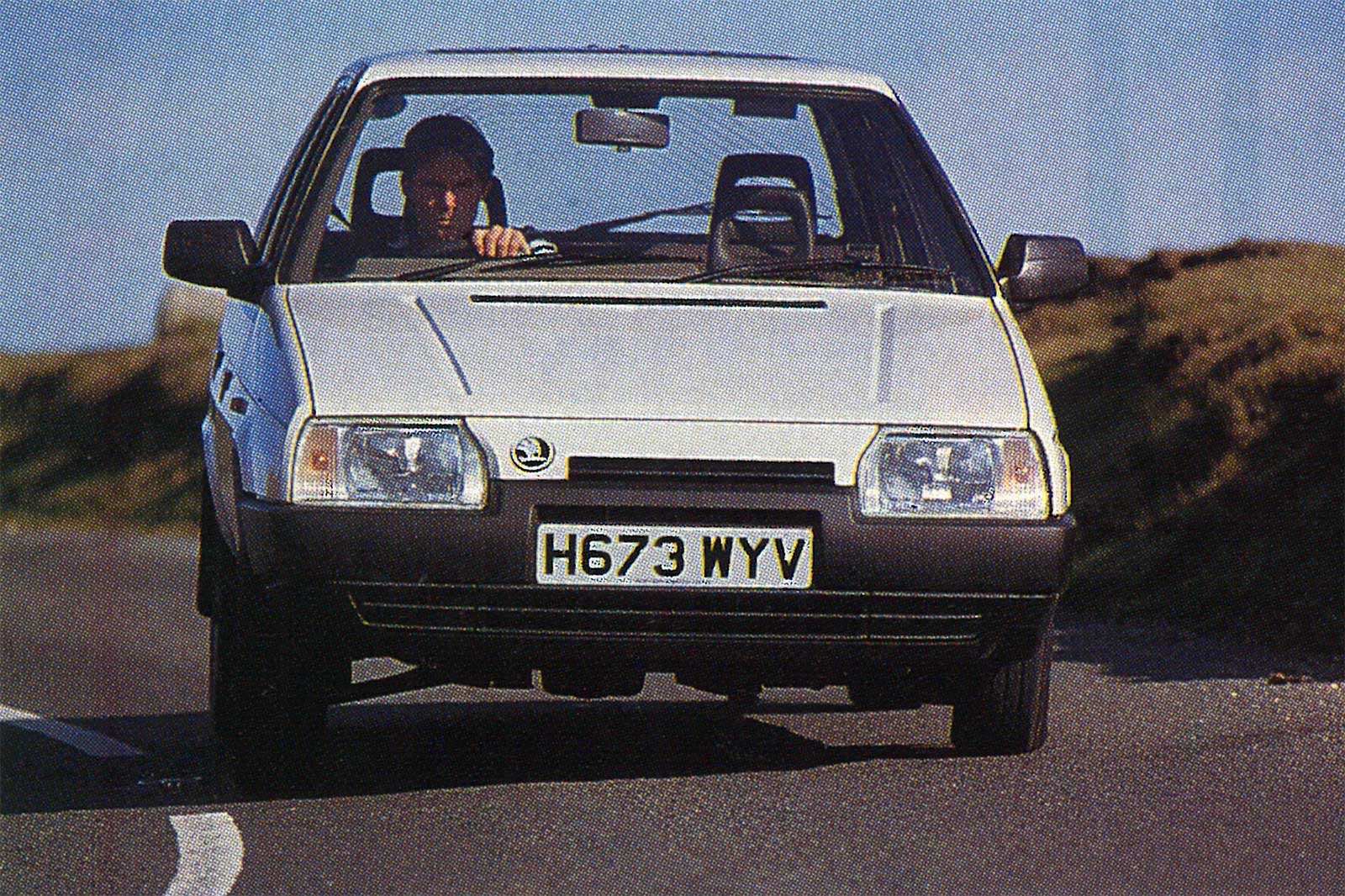
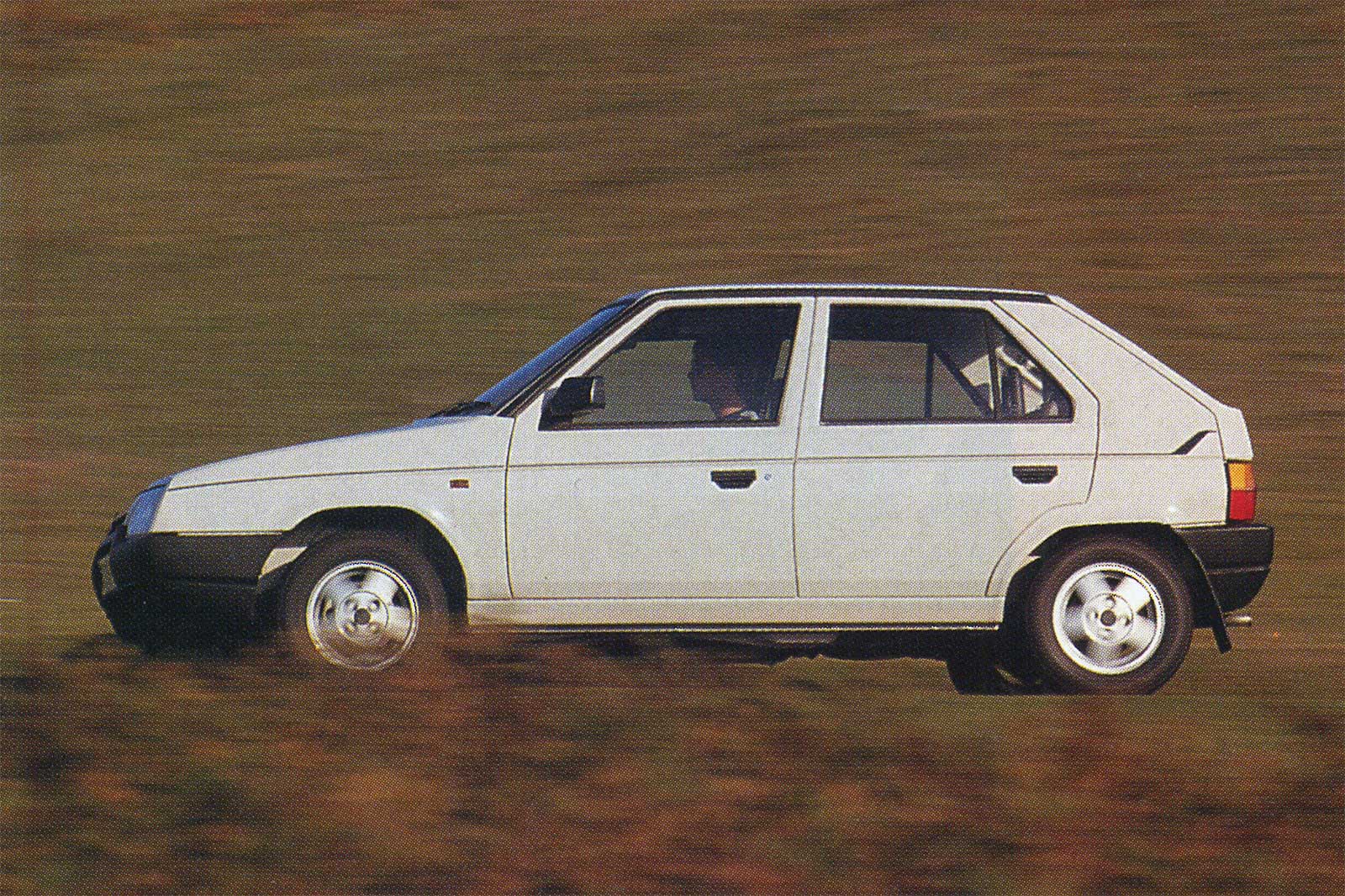
Those three cars were the Skoda Favorit 136LX (£5446), the Lada Samara 1300SL (£5549) and the Yugo Sana 1.4 (£5495). Each was front-engined and front-wheel drive and the result of their overseers' swallowing of national pride. Italians and Germans had helped Skoda; Brits had done work for Lada; and Italians had assisted Yugo.
Which was the best bet?
"None of these cars will be bought for its performance," we said, "but all will provide adequate mobility for the family and none can be considered underpowered.
"As expected, the Yugo, with a Fiat Tipo 70bhp 1.4-litre engine, has the legs on the others. It will buzz and thrash its way to 97mph, passing 60mph in 13.2sec and managing 30-70mph in 14.1sec. Quite why the engine feels and sounds so gruff in this installation is a mystery.
"The Lada isn't far behind. The Soviet's 65bhp 1.3-litre iron/alloy engine, with siamesed valves in a non-crossflow cylinder head, doesn't savour revving. Only the cloth-eared will extract all of the available performance. It runs out of puff at 93mph, reaches 60mph in 13.4sec and records a 30-70mph time of 15.6sec.
"The Skoda, with the least powerful, 62bhp all-alloy engine, will hit 92mph, pulls lustily past 60mph in 14.3sec and keeps the driver waiting for 15.7sec during the 30-70mph increment. It makes up for its less spritely performance by having by far the most responsive, eager engine.
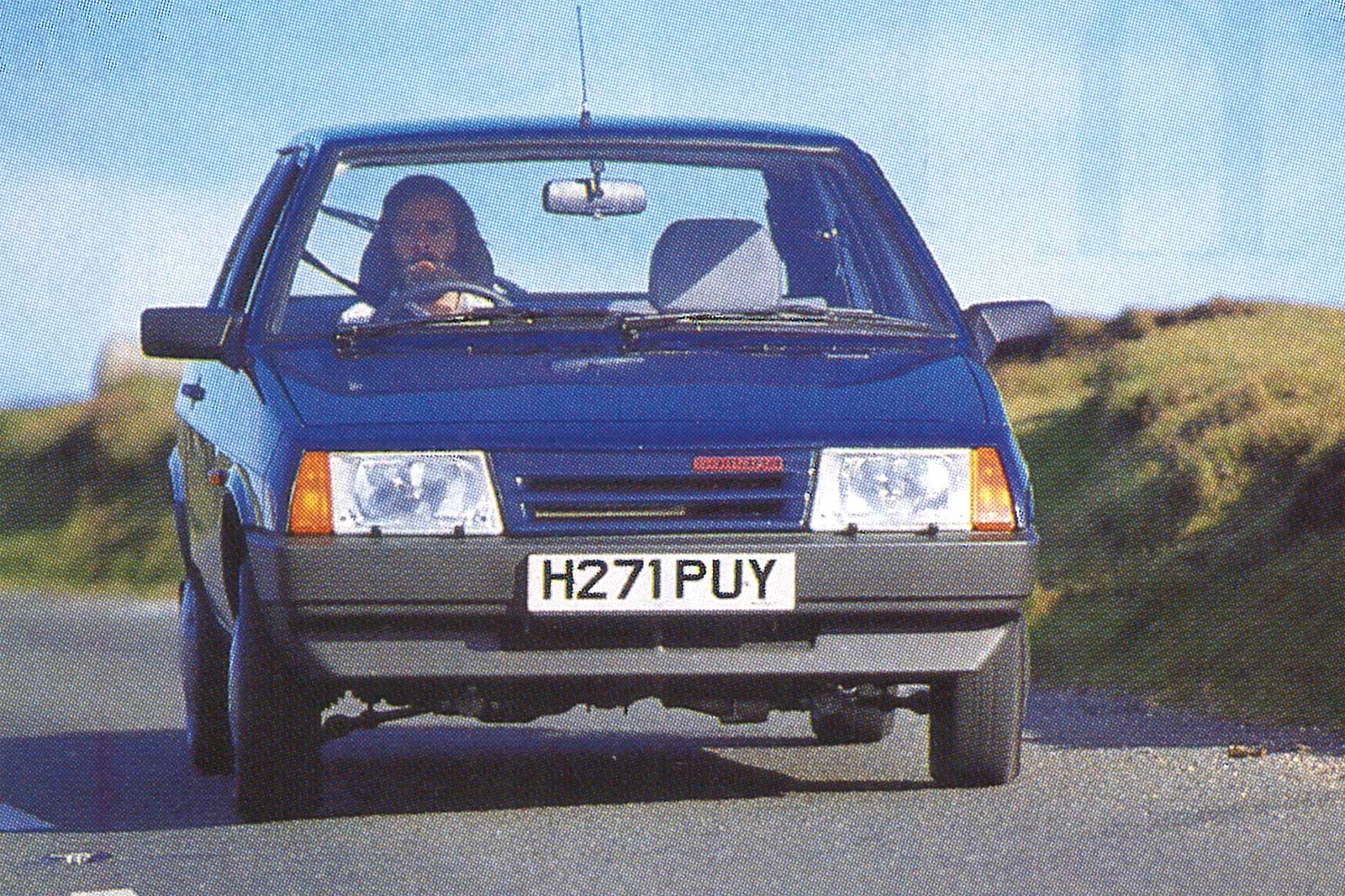
"The Lada is a stable and unfussed motorway cruiser — probably this car's best feature — while the Yugo trundles along at a respectable pace, but with more engine noise intrusion than can reasonably be expected and an accompanying chatter of creaks and rattles from poorly fitted interior trim items.
"The Lada's brakes are, by far, the least effective of the bunch. Travel is long and a continuous push would have the pedal go all the way down to the carpet. Stopping power was weak and, if stamped on hard, there was evidence of premature rear wheel lock-up."
The Skoda also came to the fore in terms ride and handling: "By any standards of the popular hatch market," we continued, "it's well suspended, reasonably composed and able to soak up most that's thrown at it. But it does suffer from slightly insipid damping which can sometimes be felt at the most unexpected times: for instance, during motorway cruising. The Lada lacks composure, as does the Yugo.
"The Lada jolts in and out of ruts and ridges, sometimes sending quite severe shocks through the bodyshell. It likes things to be smooth, and provided nothing upsets the suspension mid-corner, it shows a safe, progressive, understeering stance.
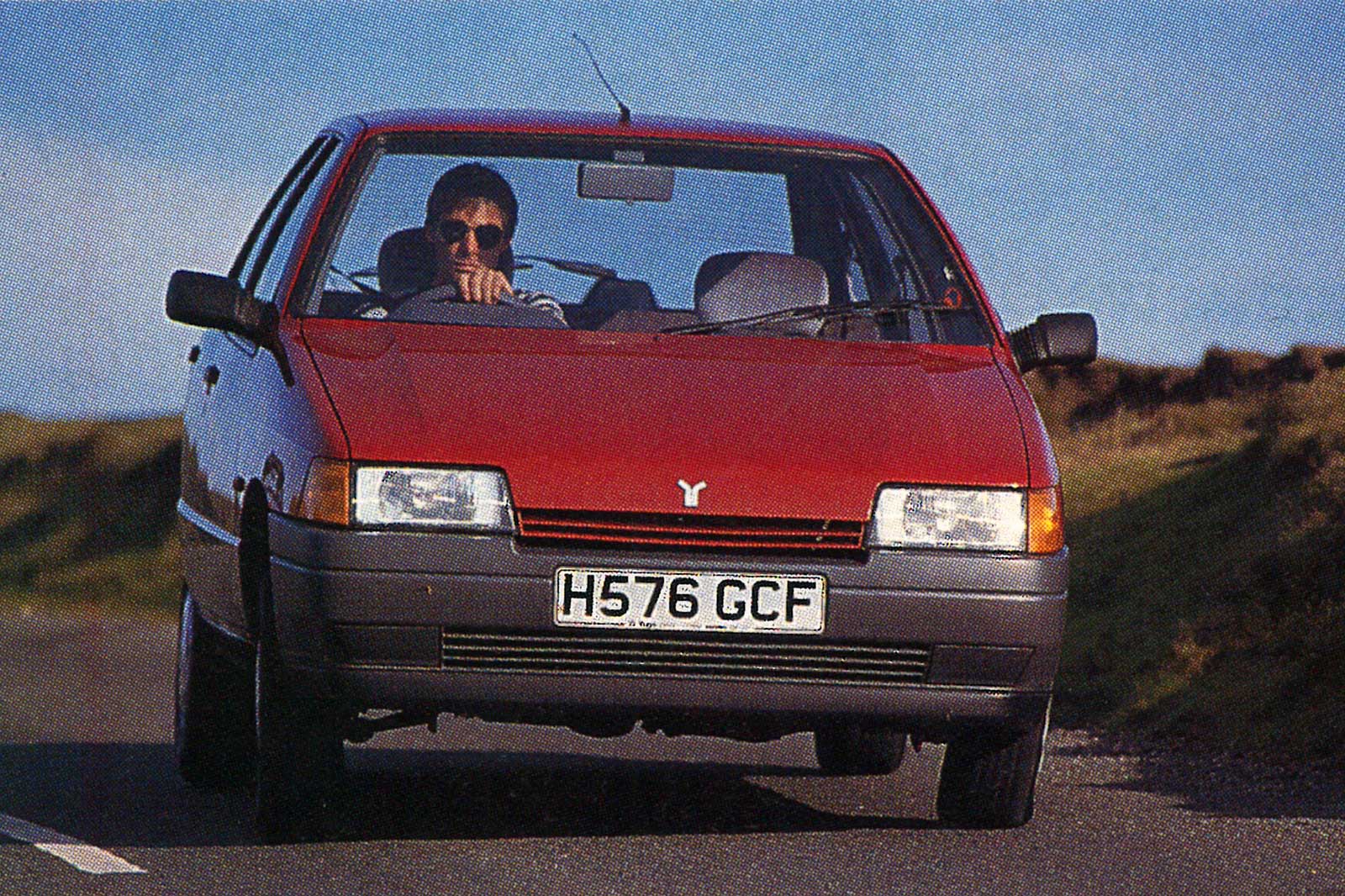
"The Yugo takes unresponsive steering to a new low in this company. On home-produced tyres, its steering is unacceptably heavy at parking speeds, and though less effort is required as speed increases, it remains decidedly dead and stodgy. The ride is lively and uncoordinated, larger shocks being heard (and felt) as they are fed through the bodyshell. The Yugo is a dogged and determined understeerer. Its dynamic responses are a throwback to the dark, early days of front-wheel-drive chassis behaviour.
"Driven in convoy over a variety of tight and twisty Cornish roads, it was the Favorit that won the testers over. The Skoda felt good to drive, with prompt turn-in and a sure-footed stance through corners, whereas the others were harder work on the arms and less precise in road positioning."
Much is made of interior material quality these days, with the words 'squidgy', 'soft-touch' and 'plush' appearing all too often. These three cars would positively horrify today's testers.
We wrote: "Only the Yugo is provided with a soft-touch wheel of pleasing proportions and thick enough rim. The Skoda's semi-soft wheel is thin and insubstantial, while the Lada's larger-diameter wheel is spindly and poorly finished. The Sana comes closest to an optimum seat-wheel-pedals relationship.
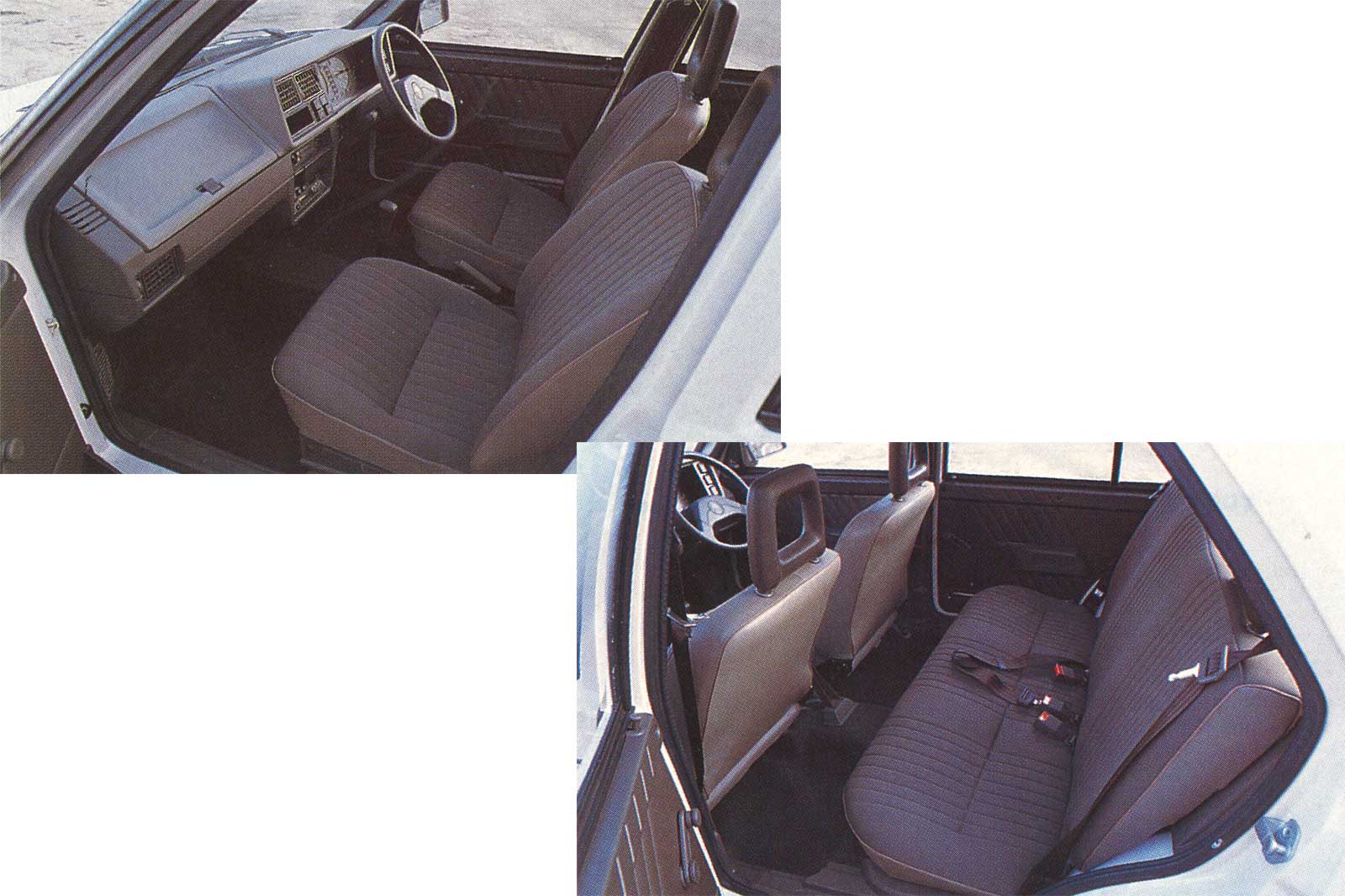
"The Yugo's facia is also, at first sight, the most appealing, with a reasonable standard of finish, a plethora of ventilation nozzles and a comprehensively packed instrument binnacle. In practice, it works less effectively. The gearchange is mounted too far forward and suffers from an ill-defined gate and over-long throw.
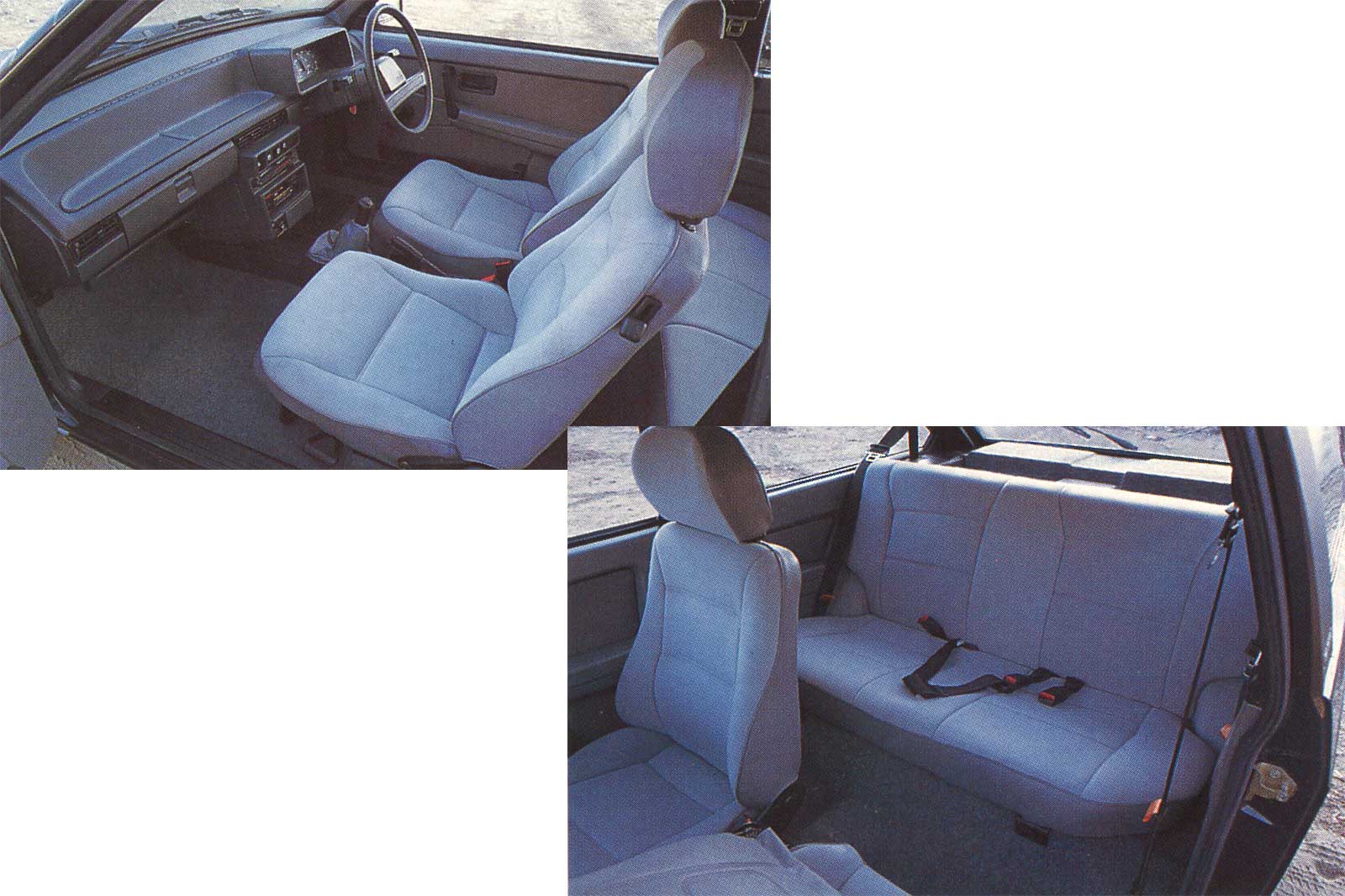
"In terms of ambience, the Skoda comes next. Its facia looks integrated; again, there are sufficient ventilation outlets (though output is poor) and an acceptably designed instrument binnacle. A large analogue clock dominates the display where a rev counter would be better employed. Insubstantial stalks control the usual functions. The gearchange deserves praise (in this company), though, for its fast and smooth operation.
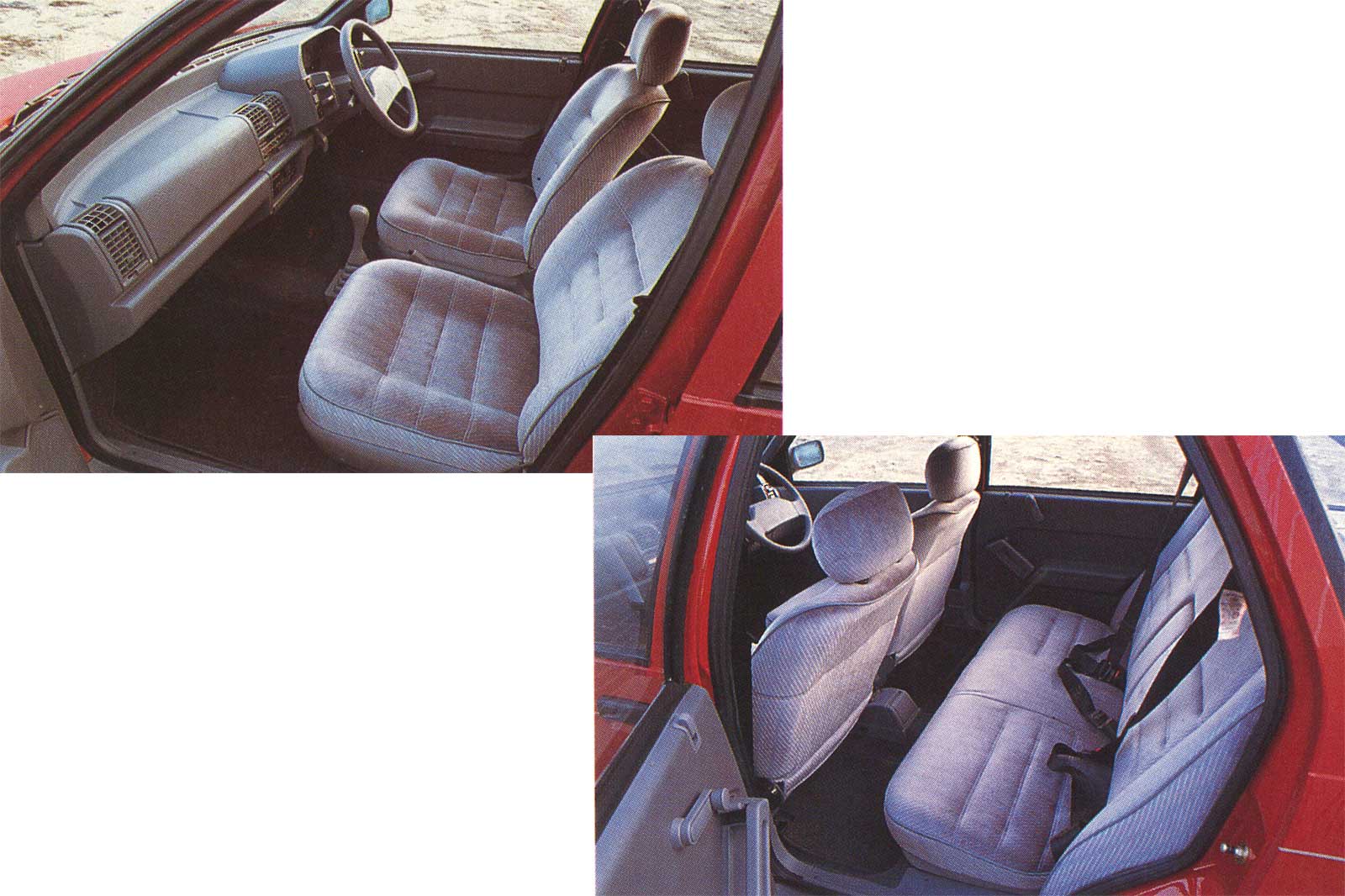
"The Lada is the least appealing. The front seats are set too low and the seat-wheel relationship is poor. The driver's environment is dominated by the wheel and a tacky-looking instrument pod with voltmeter and economy vacuum gauges included. Flimsy stalks correspond to the European norm. Other switchgear appears on a centre console that has the appearance of an afterthought. The gearchange is a stretch too far away, and the long throws require some delicacy."
Okay, prospective buyers would say, I expected that. But how about practical applications? After all, these cars would mostly serve as family transport, be that primary or secondary.
Well, we continued: "The Yugo provides the most comfort and space. The car's size means that it can be considered genuine five-seater. The front seats are well bolstered and sufficiently supportive, but the rear bench, complete with centre armrest, is less generously padded and set too low for full squab support. It also features static rear seatbelts — an unwelcome throwback. Rear head and leg room is plentiful. Lifting the rear hatch reveals a usefully low sill and a deep load area, compromised in width by suspension turret intrusion.
"The Skoda's front seats score barely average marks for comfort and are lacking in lumbar support. Although a few inches more compact than the Yugo, the Favorit's rear bench seat, with integral head restraints, is surprisingly comfortable and offers plenty of knee room, although three adults abreast is a squeeze. The rear hatch opens usefully low, but the load area is again compromised by rear suspension intrusion, and the door aperture by the rear lamp clusters.
"The Lada is the longest of the three cars by three inches, but it doesn't make best use of the available space. The front seats are extremely poor. They are too low, meanly padded and bereft of lateral location. Headrests are intrusive and the seat covering material was already looking grubby, despite our test car's low mileage. Rear seating is spartan but acceptably comfortable. Opening the rear hatch reveals a high sill, which partly negates the very purpose of a hatchback. The load area is usefully large, but again with some turret intrusion."
Overall build quality was as shoddy as parts of the cars' designs.
The article went on: "The Yugo has distortions and rippling of its main panels. Inside, it suffers from poor assembly. The facia is prone to scuttle-shake tremors, giving rise to many creaks and rattles. A one-piece headlining panel wobbles disconcertingly. The overall impression is that it was lashed together against the clock.
"Fair to middling would summarise the Skoda's exterior, while inside scrappy, sharp-edged door bins do little to enhance quality and the facia of the test car vibrated in sympathy with an out-of-balance wheel. Money has been spent in curious ways. The glovebox, for no logical reason, is 'assisted' by a miniature gas strut.
"'Must try harder' is the only message for the Lada's finish. The paintwork of the test car appeared to vary substantially in thickness of application and the orange peel effect was, in places, of mountainous proportions. An impression of having been chucked out of the factory without any quality control inspection was exacerbated by side decals that were a peeling mass of air-bubbles."
The big redeemer, however, was the standard equipment, which was much better than that of any base-line Western European economy car. The Skoda came with alloy wheels, a radio/cassette player, a top-class toolkit and a "beautifully made" removable torch. The Lada had a heated rear window and rear wash/wipe, plus a less impressive toolkit and a tyre pump. The Yugo also boasted most of these convenience items, but a stereo was extra, as it was on the Lada.
There was a clear winner in the test, and perhaps unsurprisingly it was the brand that nowadays makes some brilliant cars and as a result is hugely successful. Despite Skoda being the butt of many jokes back then, we believed the Favorit did not deserve any such reputation. It was well above its two rivals and could be compared with any opposition, irrespective of nationality.
We said: "It rides and handles well, turns in to corners eagerly and functions as a complete package without quirks. It is comprehensively equipped and looks like it should stand the test of time. It is well developed and can even be fun to drive. It offers masses of features for the money, and underneath the obvious value-for-money image, it is a thoroughly engineered car with a pleasing, willing nature."
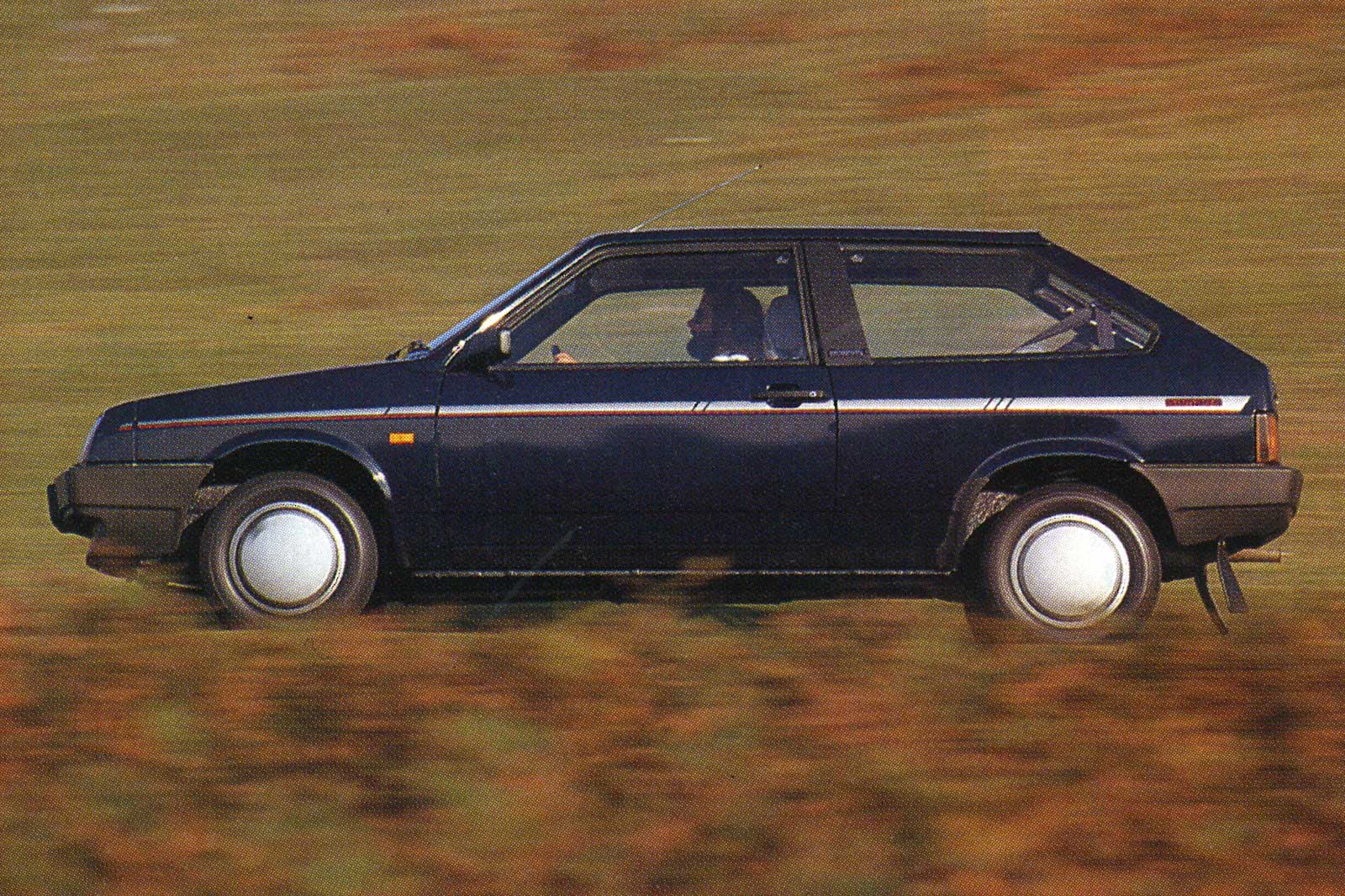
Lada is now mostly restricted to Russia and surrounding countries. We could have predicted that, having tested the Samara. "Tough and durable for a trip over the Urals it may be," we said, "but the fit and finish for the UK market can only be described as dismal. If that isn't bad enough, the operation of the brakes leaves much to be desired."
As for the Yugo, we commented: "It feels flimsy and is shoddily put together in the most obvious areas. It could also benefit from a comprehensive ride and handling development programme. It might be streets ahead in the showroom stakes, but not on the road." Its maker, Zastava, never really rose above such cars and went bankrupt 10 years ago.