

Cars We’d Happily Say Goodbye To
Audi Unveils Bold TT-Inspired Sports Car Concept Heralding a Striking New Design Era
 First look at Audi's retro new design manifesto, set for public debut at Munich motor show
Audi will reveal a radical new sports car concept inspired by the TT tomorrow - but a leaked image has given an early look at what to expect.
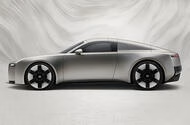
Posted to Audi's Canadian social media feeds and quickly taken down, the image shows a side profile of a sleek, low-slung sports coupé that is unmistakably influenced by the seminal TT.
It's unclear what type of powertrain it uses, but the concept has obvious mid-engined-style proportions and a two-seat cabin.
An official disclaimer says the car shown is a concept vehicle that is "not available as a production vehicle", but the design looks far more production ready than some recent outlandish concepts - so there is potential for a production version.
Indeed, Audi CEO Gernot Döllner has previously said the company would not "show studies anymore", suggesting it plans to launch a production version of every show car it unveils from now on.
More details will be given tomorrow evening, when Audi officially unwraps the new concept - as confirmed on social media by its designer Massimo Frascella, under the tagline 'strive for clarity' - which hints that the concept will set the tone for a new minimalist design language that could be rolled out across Audi's line-up under Frascella's stewardship.
As previously reported by Autocar, the concept will preview an all-new look for the brand, and will make its public debut at next week's Munich motor show.
Döllner previously said that the design would be “a bold step for the brand” and that it would “would look to the future and the strengths of Audi design, for clarity and to bring that to the future, not copying the past”.
This is a sentiment that has been echoed in a new video posted to Audi’s social media channels.
The clip states “the legends of yesterday are the blueprint for tomorrow” with the strapline “strive for clarity” while showing images of the TT, the Avus concept and several Auto Union grand prix cars from the 1930s.
“The absolutely fantastic aspect is that it seems that he [Frascella] somehow had Audi in his mind for his whole career," said Döllner. "Now is the time to let Audi out of the mind of Massimo Frascella."

Affordable Used Cars That Look Luxurious Without the High Price

New Kia EV5 Launches in the UK With 329 Mile Range and Simple Trim...
 Electric equivalent of the Sportage will arrive before the end of 2025 as a rival to the Ford Explorer and Skoda Elroq
The new Kia EV5 is now open to order from £39,295 and with a maximum range of 329 miles, ahead of deliveries starting later this year.
The new crossover is effectively an electric Kia Sportage equivalent, and is the Korean firm's fifth bespoke electric car to launch in the UK, arriving hot on the heels of the EV4 hatchback that lands in the next few weeks.
The Ford Explorer and Skoda Elroq rival will be offered with just one powertrain and battery in the UK from launch, as part of a bid to "keep the buying process as simple and understandable as possible".
To that end, there are just three trim levels. Air opens the line-up, with standard kit including 18in alloy wheels, electric mirrors, chrome trimmings, black cloth upholstery and manually adjustable front seats.
GT-Line ramps the price up to £42,595 and adds 19in wheels, performance-inspired body styling, artificial leather upholstery, heated rear seats, electrically adjustable front seats and vehicle-to-load capability.
GT-Line S costs £47,095 and comes with a sunroof, ventilated front seats, a Harman Kardon sound system, a head-up display, fingerprint recognition and the option of an efficiency-boosting heat pump, among other additions.
Inside, all cars get 12.3in displays for the instruments and infotainment, as well as a 5.3in climate control touch panel.
The bench-style front seats in the China-market EV5 are swapped for a more conventional two-seat arrangement with a larger centre console.
All variants are equipped with the same 81.4kWh battery as used on the EV3 and EV4 hatchbacks, which here offers up to 329 miles depending on configuration and charges at up to 150kW.
It sends its reserves to a motor on the front axle, which produces 214bhp and 218lb ft of torque for a 0-62mph time of 8.4sec.
Kia hasn't confirmed whether the 302bhp dual-motor EV5 will be brought here but has previously said it would offer each of its EVs in hot GT guise.
European-market EV5s will be built in South Korea, rather than China, sidestepping the EU's tariffs on Chinese-built EVs.
Gas vs Diesel RVs: How to Choose the Right Fuel Type for Your Adventure
Fiat Grande Panda Launches as UK’s Most Affordable Hybrid and Electric Crossover
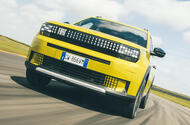 Retro-futuristic crossover undercuts much of the competition; EV starts at £21k
UK order books for the new Fiat Grande Panda have opened, with mild-hybrid versions of the new small crossover priced from £18,035 and its electric counterpart starting at £21,035.
It makes the Grande Panda, named Best Small Car at the 2025 Autocar Awards, one of the UK’s most affordable models. In hybrid form, it undercuts rivals such as the Renault Clio (from £18,995), while the EV is cheaper than the rival Hyundai Inster (from £23,505).
The mild-hybrid pairs a 1.2-litre turbocharged three-cylinder petrol engine with a 29bhp electric motor that is integrated into its six-speed automatic gearbox. They combine for outputs of 109bhp and 107lb ft, enabling a 0-62mph time of 10.0sec.
The EV, meanwhile, has a single front-mounted motor that puts out 111bhp and 90lb ft, dispatching 0-62mph in 11.0sec. Its 44kWh battery yields a range of 199 miles and it can be recharged at up to 100kW.
The electric model has yet to qualify for the government’s new Electric Car Grant scheme – under which the closely related Citroën ë-C3 is discounted by £1500 – but Fiat has reinstated its own ‘e-grant’, cutting the car’s price by £1500.
Customer deliveries are expected to begin in November. Select dealers will be displaying the car on a nationwide tour taking place between 4 September and 11 October.
Fiat claims to have received "unparalleled" demand for the Grande Panda in the months leading up to its launch, with several thousand potential buyers registering their interest and “significant” dealer enquiries.

Save Money on TPMS Sensor Replacement with Costco Member Deals

Leapmotor B05 Unveiled as Affordable Electric Hatchback Promising 260 Miles of Range for Young...
 Electric Leapmotor B05 hatchback set to offer 260 miles of range and 215bhp
Leapmotor has previewed its upcoming Volkswagen ID 3 rival ahead of a debut at the Munich motor show next week.
The Stellantis-backed Chinese brand published a series of shadowy teaser images to its Weibo account, giving a first look at the electric B05 hatchback that will join its European line-up early next year.
Known in China as the Lafa 5, the B05 is effectively a lower-slung and more affordable version of the Leapmotor B10 crossover that's due here in the coming months, and will sit between that car and the tiny T03 city car - with an expected price tag of less than £30k.
Leapmotor vice president Cao Li said the B05 is a "gift" for young people worldwide. "We want to build a dream car for young people who refuse to settle, conform, or be ordinary," he added.
The hatchback is expected to measure around 4.3 metres long, have a 67.1kWh battery giving 260 miles of range, and be powered by a single motor on the front axle giving 215bhp - figures that line it up neatly as a rival to versions of the popular Volkswagen ID 3, MG 4, BYD Dolphin and Renault Mégane E-Tech.
Inside, it is likely to look all but identical to the B10 (below), with a minimalist cockpit that majors on digital functionality - with a 14.6in touchscreen and 8.8in instrument display handling all the main infotainment and control functions.
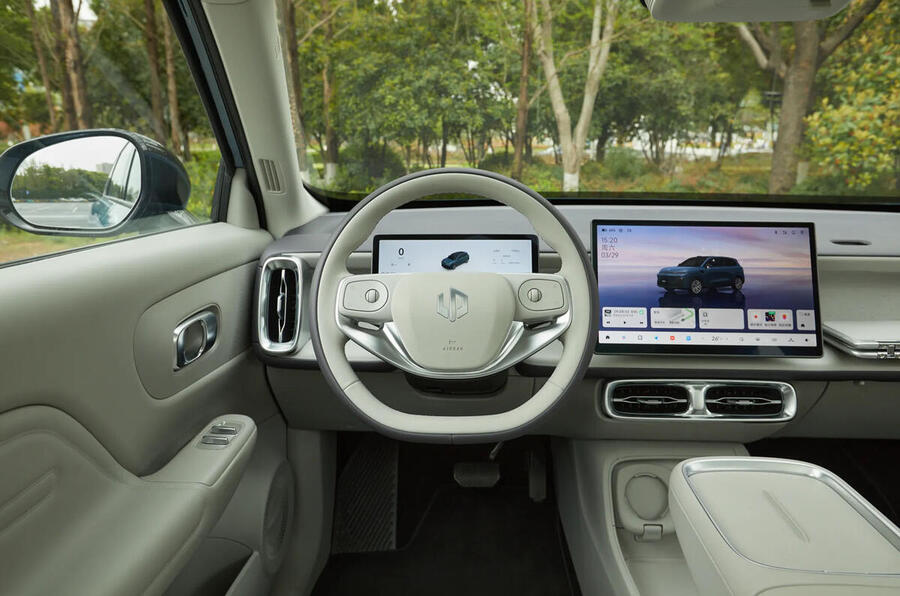
It will be the fourth of six Leapmotor cars that are planned to be on sale in the UK by 2027. It will be followed next year by the A10 – a small crossover conceived as a rival for the Volkswagen ID 2X and Skoda Epiq – and its supermini sibling, the circa-£20k A05.
It remains unclear if Leapmotor will offer any of its new models with the range-extender powertrain that it has recently introduced to the C10, with bosses suggesting they will be gauging market reaction to the technology.
Leapmotor's range expansion comes off the back of rapid growth for the 10-year-old brand, both in its Chinese home market and internationally.
It now has nearly 1500 retail sites worldwide and was the 11th most popular EV brand globally last year.
It aims to move up to ninth this year, then to seventh in 2026, ultimately aiming to become one of the world's five top EV brands.
The Bridge With Fangs and Googly Eyes That Warns Trucks Away
Duster Diaries Why This Affordable SUV Became My Ultimate All-Rounder
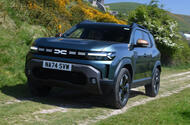 This great-value SUV is an endearing all-rounder. We’re sorry to see it go
We Brits love a bargain. Seeking them out has become our cost-of-living crisis national pastime.
Walk down any high street (yes, they do still exist) or scour the supermarket aisles and you’ll see the buy-one-get-one-free, three-for-two, 50%-off rollback price-match offers at every turn. Yet these deals often aren’t quite what they seem, so you have to shop with your eyes wide open to make real savings.
So when a genuine value-for-money proposition comes around, we’re right to be sceptical – as I was the first time I saw how much, or rather how little, Dacia was asking for the new Duster.
Here was a genuinely good-looking car priced new – in 2025 – at under £20,000. What’s the catch? Apparently there isn’t one. So now here I am, standing in parent group Renault’s London West dealership near Richmond waiting for the covers to be pulled off ‘my’ new Dacia Duster. To say I’m excited would be somewhat understating matters.
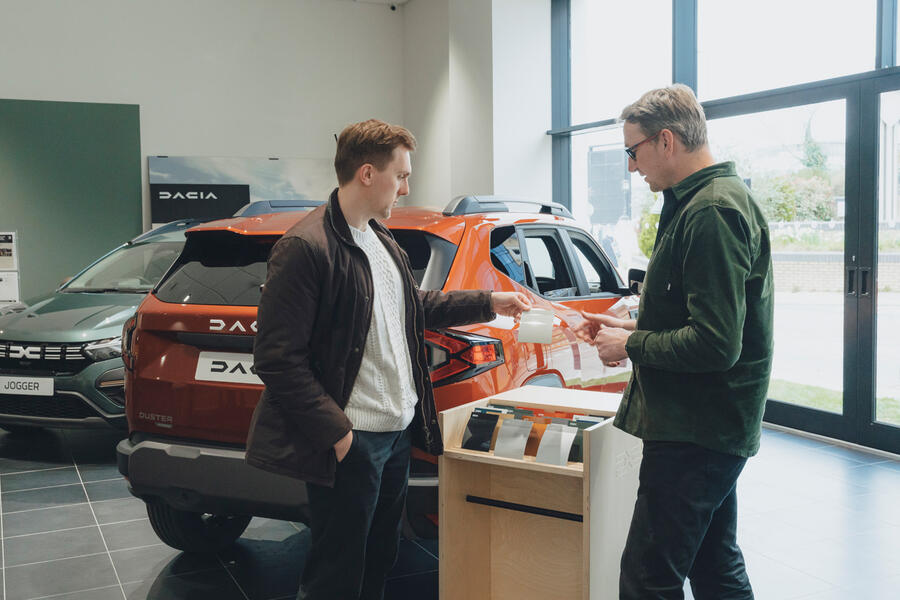
I’ve owned many cars over the years, all of which have been second-hand, so the ‘handover’ such as it was tended to involve a set of keys being slid across a desk after a (relatively modest) payment had been approved.
So all this fuss and palaver makes me feel quite special. I arrived here about an hour ago and was treated to the full customer experience, including a guided tour through the different colours, trims, options and extras.
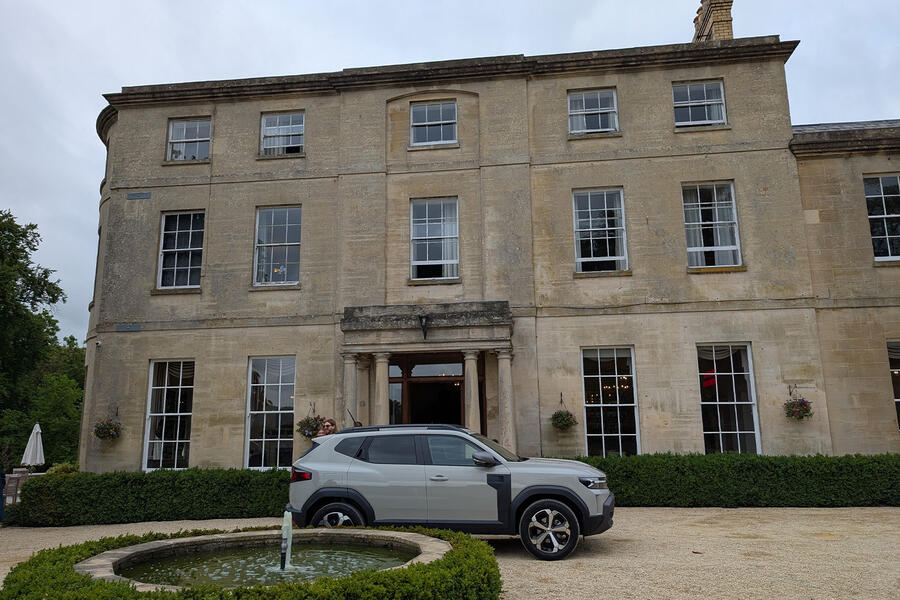
But now is the moment I’ve been waiting for: seeing my Duster. Covers off and I’m delighted: it looks so good in the metal, and that Sandstone paintwork is beautiful.
When the Duster was launched at the end of last year, the uplift from the second-generation model was quite staggering. But, given the low price tag, I remained sceptical of how that would translate in the real world.
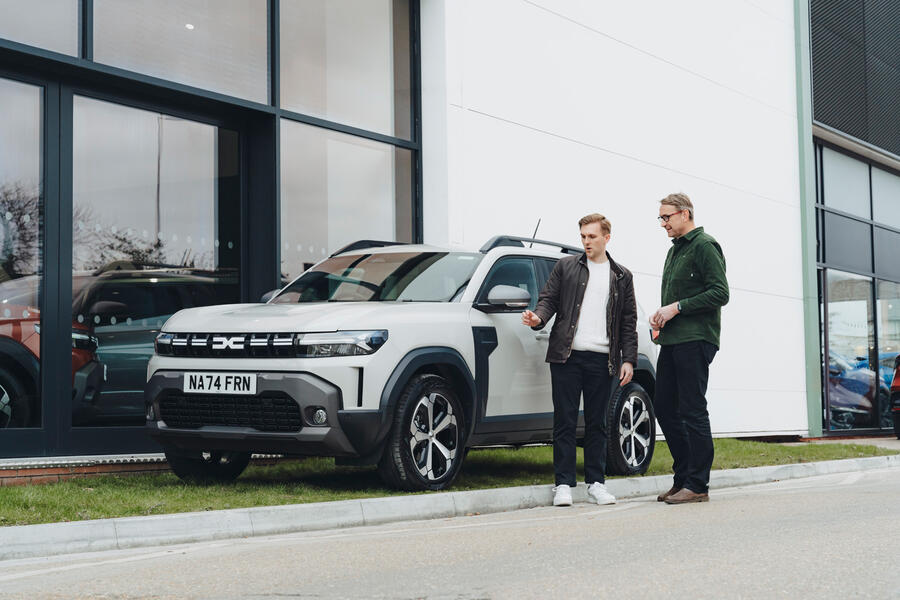
But the Duster truly holds its own up close: it has a real curb presence, and while I wouldn’t go as far as saying it could outdo a Defender in this respect, there’s a similar feeling of awe here.
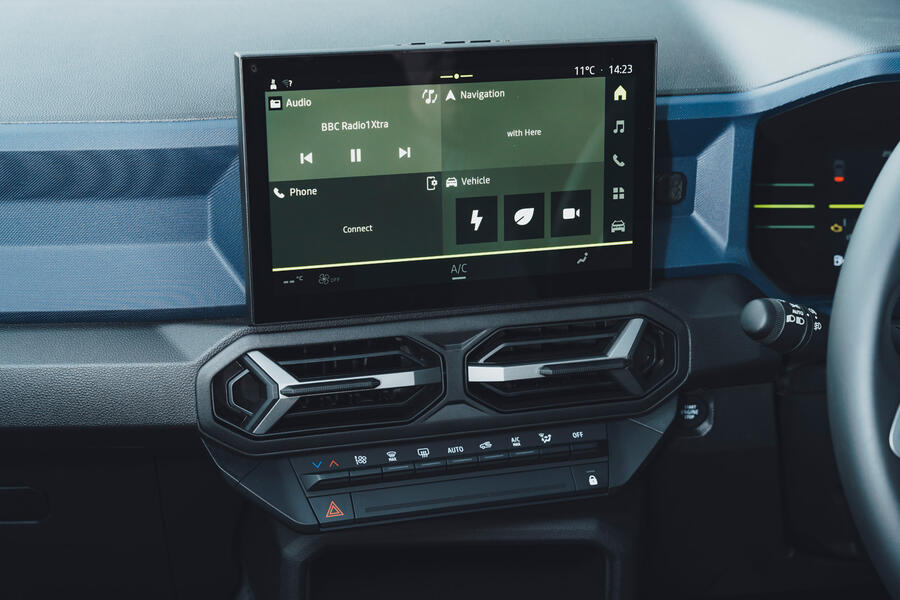
Our Duster is in mid-range Journey trim, which means we get a 10.1in infotainment screen with wireless Apple CarPlay/Android Auto and built-in nav, a 7.0in driver’s display, cloth seats (with Journey’s blue jeans-coloured accents) and some black cladding. Trim-specific features include automatic air-con, four-way parking cameras and 18in alloys.
You’ll need to pay an extra £800 for top-rung Expression trim for heated seats and a modular roof rack (for bike storage and such).
Our Duster has a hybrid set-up that combines a 1.6-litre four-cylinder petrol engine with an electric motor and a starter generator to send 138bhp and 151lb ft to the front wheels and which can achieve a claimed –and rather impressive – 55.4mpg.
Dacia also offers a full 4x4 variant with the less powerful mild-hybrid powertrain. I plan to borrow one and do some off-Tarmac activities, so stay tuned. Anyway, the most important figure is what all this costs.
Our Duster chimes the till at £26,700, which isn’t so cheap any more, but the value position remains. There is a lot of car here, and you’d be hard-pressed to find anything of this size and with a comparable powertrain for the same price.
An entry-level Nissan Qashqai with its e-Power set-up starts at £34,860, while a similarly sized Skoda Kamiq costs about the same as the Duster, but only as a 1.0-litre manual.
That £26,700 – around £350 a month over four years with £3k or so down – isn’t looking so bad now. I’m eager to learn more about the Duster. I’m shown around by product performance manager Matt Downing.
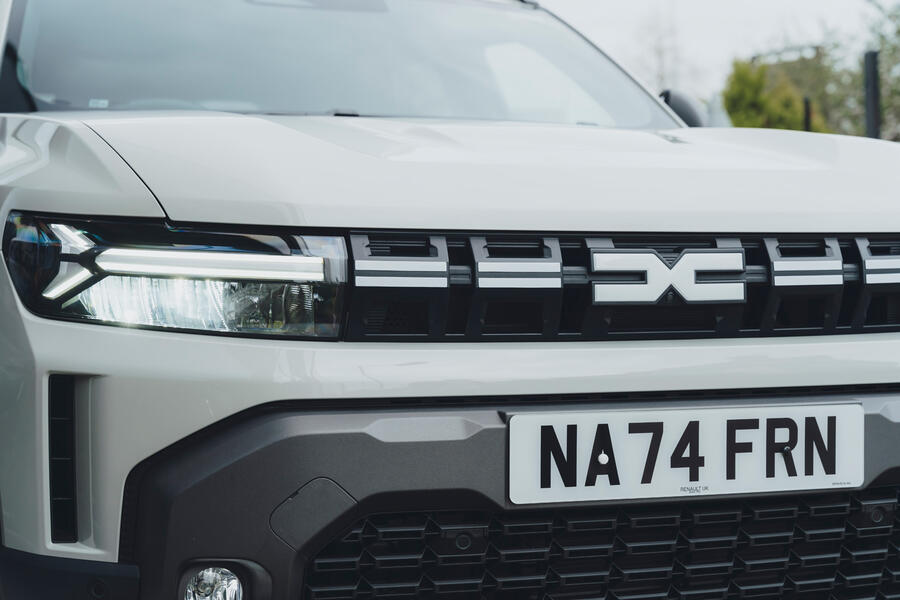
“It really is a great looking thing, isn’t it?” he says. It’s hard to argue. I’m a big fan of the SUV’s more rugged elements – especially the raised Toyota Land Cruiser-esque beltline. The new Dacia nose, which was introduced in 2023, looks great here, too.
Downing points out that the Y-shaped design of the headlights is repeated throughout the car, from the air vents to the door handles – a cool touch.
He also explains what the odd square protrusions are for (one caught my eye to the right of the infotainment screen): they’re part of the YouClip accessory system, which means I can attach a phone holder, a cupholder or a bag at any of the five points (seven with optional headrest attachment added) throughout the cabin.
Neat. I’ve got a few accessories on order… I’m now excited to spend some proper time with the Duster to see if it lives up to my self-imposed hype.
My calendar is filling up, with long slogs up the M4 and a trip to the New Forest already planned. Excitement really is building for living with what could well be the best automotive bargain on the market. I do love a bargain.
Update 2
If anything is going to test a meadow-skipping, hand-holding honeymoon period, it’s your first big trip away. How will you get on for an extended period in each other’s company? Will previously unseen cracks appear? Could what at first seemed to be your perfect match suddenly no longer be ‘the one’?
We’ve all been there. And so the time finally came for my first relationship-testing road trips with the Duster – fittingly in the run-up to my actual wedding.
The value SUV had up until that point proven to be a worthy driveway buddy. It had been easy to use in town and pretty comfy on my traffic-heavy commutes. But now for a stiffer test: 2000 miles of travelling over the course of a few weeks, involving my stag do, a cross-country birthday excursion and finally a 350-mile round trip for the big day.
We would be covering motorways, A-roads, B-roads and the odd town centre. Jitters? None at all. The foundations of our monthlong relationship already ran deep.
First, the Duster is spacious, with a boot that can swallow up to 517 litres of kit – perfect for a weekend away for four adults or a full load of wedding decor, suits and other matrimonial paraphernalia.
In the cabin, even with all five seats taken, it doesn’t feel tight, and there are enough cubbies for the road trip essentials. Sadly, it took all of five minutes on the very first of these journeys for something to appear on my radar: the speakers are a bit rubbish.
Normally I’m a podcast commuter and, at the weekends, a live sport listener, so music doesn’t really get played in the car unless a road trip is in effect. So when my brother chucked a playlist on, trying to set the mood for the stag weekend, it was sad to hear a tinny mess of noise rather than, er, the tinny sound of early 2000s pop classics.
Yes, the Duster costs from just £19,380, but I’d expect more from our £26,700 Journey-trim model: the sound quality in a new, £20,000 Peugeot 208 is much better, for example.
Anyway, our poor singing drowned out the poor speakers, so no real harm done. However, when the phone rang en route to Essex for some birthday celebrations a couple of weeks later, I discovered another issue: the microphone.
Trying to take calls at speeds of more than 55mph resulted in too much noise being picked up and the caller not being able to hear me clearly. Dipping below 55mph presented no issues. Frustrating, though – so much so that I’ve been looking at aftermarket solutions.
These long journeys also revealed that the Duster’s seats aren’t as cushioning as they feel on shorter trips. At six feet tall, I’ve found it hard to locate the perfect seating position, too, given the low roof line (my view feels obscured if the seat is too high) and raised floor (my knees are in my chest if the seat is too low).
However, most of these issues were instantly forgotten as soon as the month’s fuel bill came in: more than 2000 miles, four ll-ups and… just £260 spent. That’s 13p a mile, and it’s why the Dacia’s full hybrid set-up is the thing I’m beginning to love most about this car.
Yes, the 1.6-litre engine is a bit gruff at times, and the clutchless four-speed gearbox can hold on to revs slightly too long (and therefore be quite loud), but it switches between electric and petrol driving seamlessly and a 55mpg-plus return on any kind of journey is plain silly – in a good way, of course.
Plus, the Duster is just a great-looking thing, so it’s hard to stay mad at it for long. Yes, there are niggles, but no other car at a similar price point offers as much for less.
This was summed up by the new Mrs Rimell: “I love that there is a new car as big as the Duster that I might actually be able to afford.” And that’s just the point of a Dacia, isn’t it?
Update 3
It's a sunny weekend and I’m awake early, coffee in hand and up for an adventure. But while my normal go-to might be to jump in the sports car and blitz down some B-roads, I’ve got another idea in mind: let’s off-road.
While my Duster 140 is having a break in the workshop being fitted with a cool bit of kit that I will talk about another time – hint, it will be great for festival season – Dacia has handed me the keys to a 130. It has a five-speed manual gearbox, a 128bhp mild-hybrid powertrain and, most importantly for my Sunday jaunt, four-wheel drive.
Autocar photographer and former fellow south coast-dweller Jack Harrison pointed me in the direction of Corfe Castle in Dorset, which is where we now find ourselves.
Just half an hour from Poole, the landscape here is awash with green rolling hills as far as the eye can see. Heading down a narrow B-road, I turn onto a short gravel track, at the end of which I’m met with a large metal gate adorned with a sign that says I must shut it or the cows will escape.
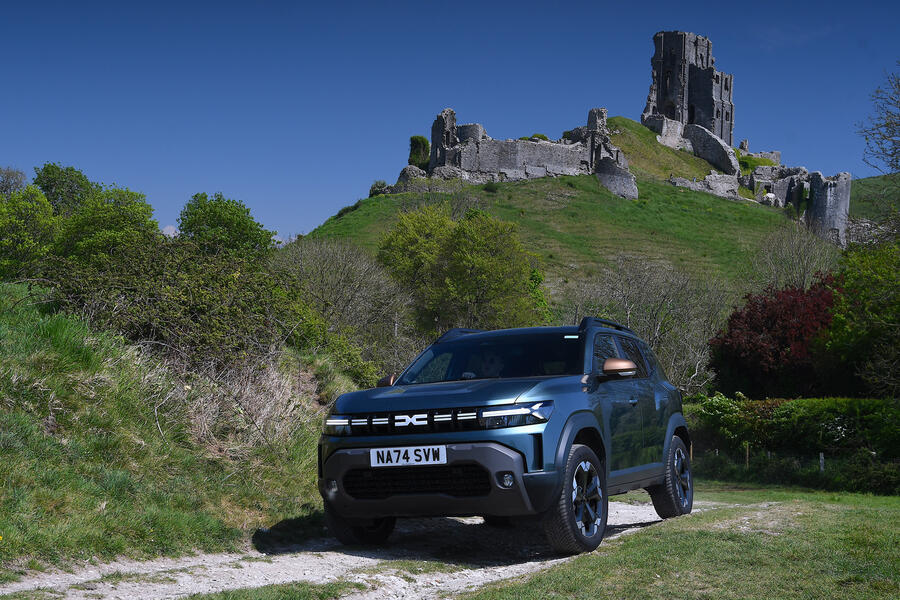
It feels odd to be here with a car, but despite the odd walker staring quizzically at me, this is a perfectly legal byway I can carefully drive along.
There’s even a sign clearly saying: ‘Green Lane Association, byway open to all traffic.’ So I open the gate, drive through and close it behind me. We’re in.
Ahead lies our first test: a slight hill strewn with small craters and a herd of cows. I twist the mode selector to Lock (to lock the central differential into 4x4 mode) and off we go. And you know what? This is a lot easier than I was expecting.
Okay, it’s hardly the Moab desert, but the amount of grip I’m finding with the Duster is impressive. Its light steering, which I’m already a fan of on the road, allows for much-needed quick corrections – especially when I go into a pothole that I didn’t know was there and which throws me in the direction of what looks like the chief cow.
At least the brakes are also working well. It then dawns on me that the Duster has parking cameras that work up to 12mph, and I could have used those for pothole spotting.
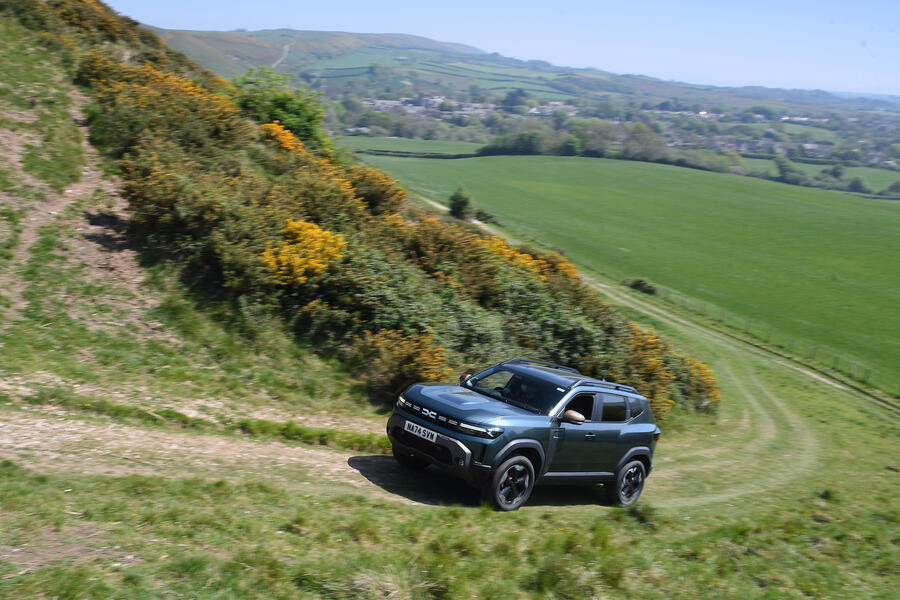
Next up: some grass. I know, perilous. But it’s steep, and I can really see myself getting stuck halfway up. But once again I’ve underestimated the Duster. I know this isn’t the hardest piece of off-roading to tackle, yet the ease with which the Duster seems to dispatch Dorset’s grassy inclines is quite exceptional.
I breeze up and pull over at the top, feeling very kingly as I survey Corfe Castle below. As I get back in the car, I receive a funny ‘you shouldn’t be up here’ look from a couple of walkers, but given the heat of the day, perhaps it’s more a look of jealousy as I enjoy the Duster’s air-con-cooled cabin.
Hill descent mode on – just in case – and I reach the bottom of the slope and turn right. Ahead is a trail that is no wider than the Duster and a badly damaged track full of deep crevasse-like cavities.
Luckily, with a breakover angle of 24deg (that’s more than even a Jeep Wrangler has), I avoid scuffing the underside and push on through the next gate as branches begin chattering against the wing mirrors.
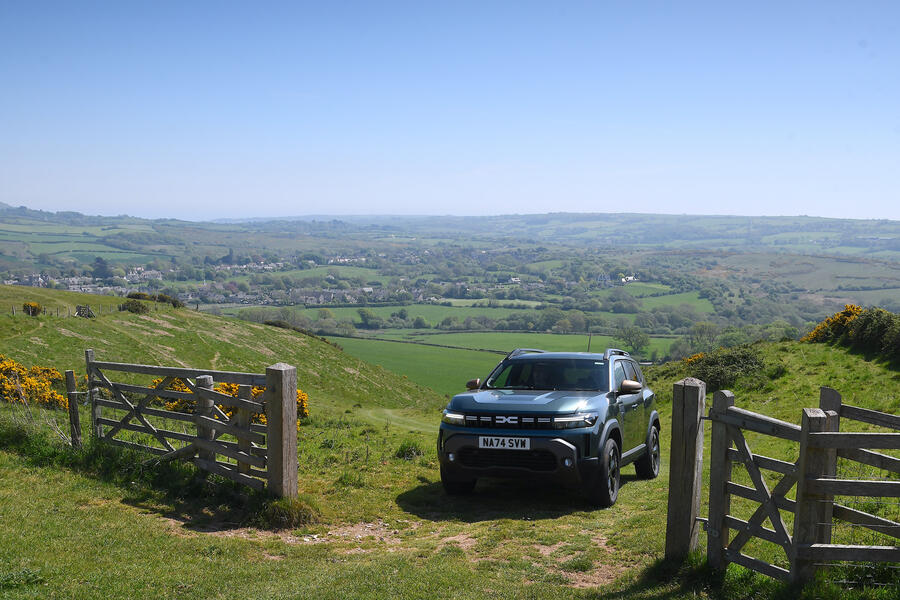
The Duster rides through the potholes, though, and while the gravel underwheel is compromising grip, there is still some to be found. Another gate leads to a steep gravel track, strewn with cows and with, concerningly, a rather perilous drop on one side.
While building the courage to continue a problem emerges: there’s no room to get out of the car to open said gate. As if by magic, a cyclist appears, and she very kindly opens the gate.
I thank her but when I go to pull gently away there’s only wheelspin. That’s embarrassing. Try again: wheelspin accompanied by the smell of burning clutch. Then I notice the Duster has defaulted back to its normal driving mode and unlocked the central diff after I switched it off momentarily before the cyclist showed up.
I’m a dummy. I reset it to Lock and, as if by some more magic, I’m able to chug up the hill, eyes fixed ahead and very much not on the cliff edge to the left. I reach the top and, again, stop to admire another beautiful view.
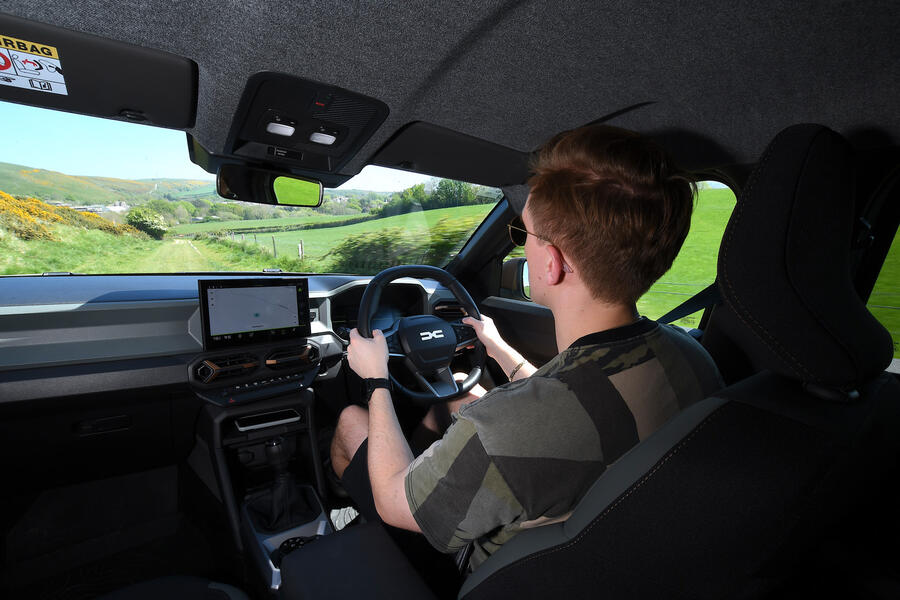
This really is a great way to spend a sunny weekend. On my way back down I’m feeling really quite triumphant, but then my ego takes a punch to the throat as a ratty 2010-plate Volkswagen Touareg comes bounding up the trail I had ascended so carefully.
I move over so it can pass and the excited pair inside give me a wave as they crash their way up. That was definitely a wave goodbye rather than a wave hello…
After passing my herd of bovine best mates from earlier, I reach the entrance gate and get out to inspect the Duster: no scratches, no marks, no dents. Brilliant.
To think I’ve just spent my afternoon tackling an array of routes – some challenging, some steep – on a beautiful day with gorgeous views, and all while spending less than £15 in fuel (which includes getting here from home and back) in my daily driver that costs as little as £26,000 is, quite frankly, ridiculous.
While those more moneyed than I can afford to drive their Porsche 911s to their local circuit for a track day, rag it around and then drive home, this is my budget version – and I don’t need a new set of tyres afterwards. Next time I’ll just remember to take a picnic.
Update 4
If a recently married man tells people he’s going to be sleeping in his car that night, concern, it seems, is the immediate reaction.
“No,” I tell them, “this is for fun.” Little do they know that our Dacia Duster is now fitted with a fold-out bed, a double(ish) mattress and a tent, all of which combine to create a set-up that is poised to turn even the most bougie of Glastonbury glampers a shade of jealous green.
Am I about to experience the future of camping? Is this the camper van killer? We’re all about to find out with a night in a New Forest field. We hit the first obstacle before I’ve even turned the engine on: there’s no boot space.
When getting the carry-on-camping accessories fitted, I didn’t really think about how much room it would all take up. Insert face-palm emoji here.
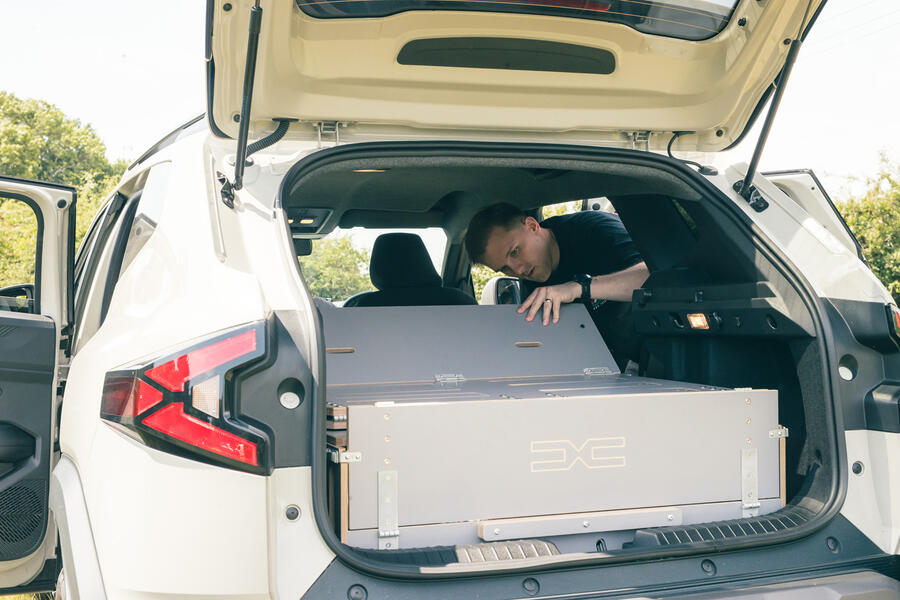
The new Duster has a pretty cavernous 517-litre load space, yet the Sleep Pack takes up the lot. There is some space under the bed’s supporting structure, but that’s needed for the tent itself.
Luckily, though, tonight it’s just me – the wife laughed and said “no thanks” – so my overnight bag, some food and basic survival equipment can go on the back seats. I arrive at my base for the night about 45 minutes later.
Despite the extra weight in the back, the Duster doesn’t drive any differently, and there’s no sign of the economy dropping from my regular 56mpg. It’s about 1pm as I park up. It’s clear I’ve drawn a short campsite straw, because my space has no shady tree coverage and the car’s temperature gauge is currently reading 38deg C.
No better time to start setting up camp, then… The first job is to make the bed, so to speak. I did carry out a small trial at home to make sure it was working. It all made sense, but my lasting impression was that this was going to be a bit of aggro. And so it proves.
First, lower the rear seats flat and push the front seats as far forwards as they go. Next, pull out the wooden bed base, which is heavier than it looks – mind your fingers, like I didn’t – and clip it into place.
Fold out the mattress, add some extra side cushions (to stop you falling into the footwell), attach the window blackouts, which magically snap into place, and… done. This time it was all rather painless – bar the finger.
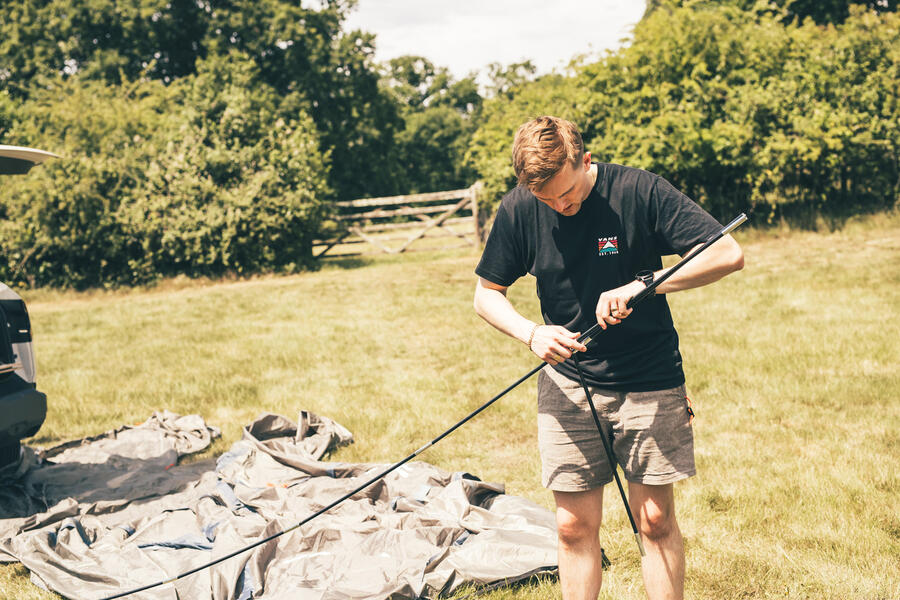
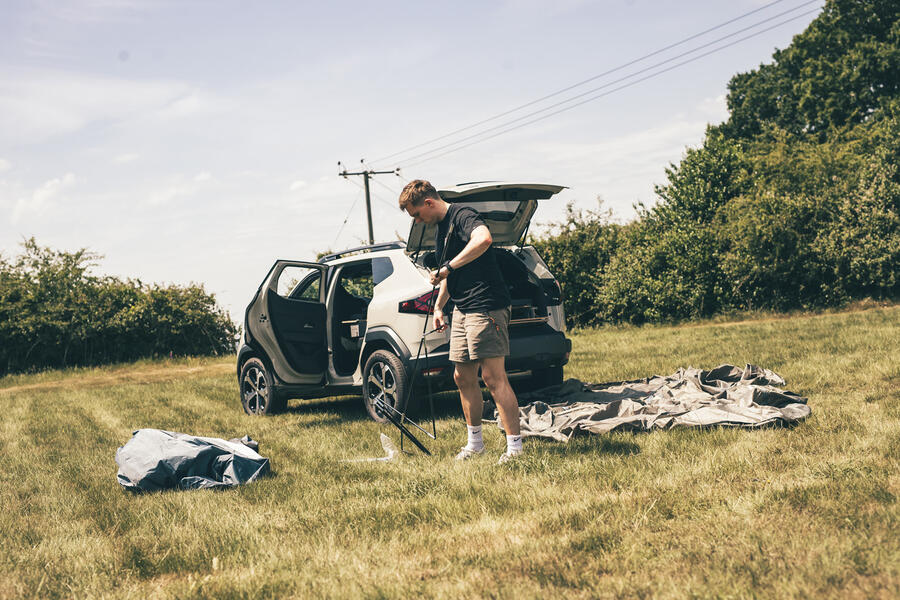
Now, the tent. Anyone who has put up a tent before knows it’s never easy, but having pulled the Sleep Pack’s synthetic canvas house out of the bag, I can tell this is going to be a different level of misery.
Never mind pinning down four corners and popping it up into place; instead, one of the tent’s sides connects to the Dacia’s open boot, and I find out quickly why this is an issue: the open side means the wind can get in, and the wind getting in means the tent keeps trying to fly away, which then pulls out the pegs that are already (not) pinning it all down. Lord have mercy…
At this point I realise my campsite neighbours have formed a small crowd and are staring at me, wondering what on earth is going on. “It’s the future,” I preach to one. He’s not buying it. They definitely think I’m mad.
I manage to get three poles in – two for the main structure, one for the door – and then go about securing the open side to the car. More confusion. Which cord goes where? What does this bit do? And why is this bit not attached? I finally relent and read the manual, which cheerily tells me simply to ‘connect straps to the car’.
Thanks very much. I tie them to door handles, alloy wheels, door mirrors and even the bootlid’s hydraulics. About 40 minutes later the tent is at last erected and pinned down, the guy ropes are in place and the inner compartment – used here for my bags given I’ve got a swanky bed and I’m enjoying the overnight experience on my own – is sorted.
As you can imagine, I’m very proud. My neighbours are still watching, and is that envy I see in their eyes? Actually, no – they’re laughing at it. At me. I take a step back to see what the finished setup looks like and it’s clear what everyone is finding so funny: it’s the campsite equivalent of a proud four-year-old’s squiggly drawing of who knows what.
Regardless, I spend the night and, to my surprise, it’s quite a relaxing experience: this has actually bettered any tent excursion I’ve had previously.
The mattress and blackout coverings are especially brilliant. I wouldn’t, however, recommend this to the claustrophobic among you: I got really quite close to the car’s roof.
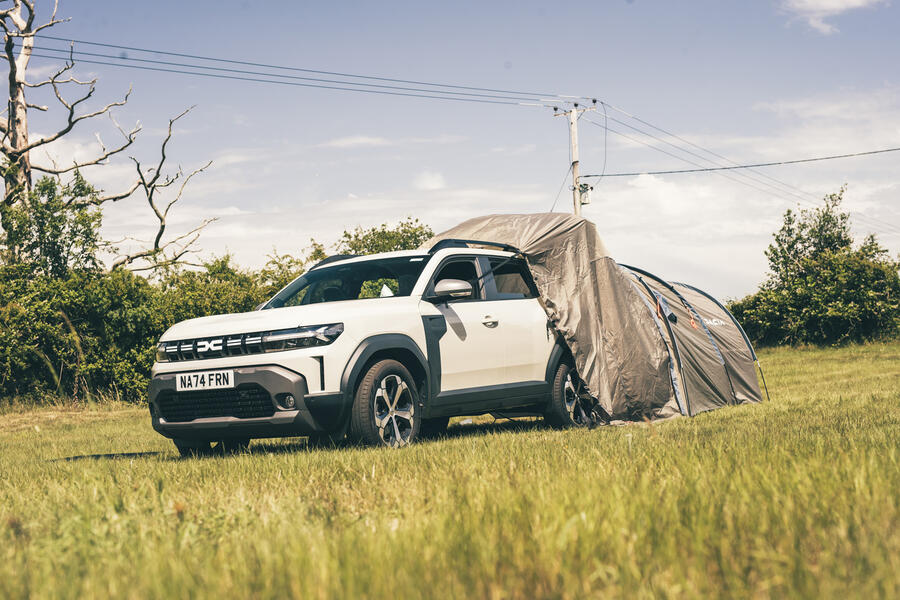
So to answer my earlier question: is this the future of camping? Is the Sleep Pack conversion a camper van killer? Er, not really, but it’s a fun idea.
For those of you considering taking the plunge, make sure you (a) have a garage in which to store the Sleep Pack when not in use, because keeping it in the boot has been quite annoying from a luggage space point of view, and (b) maybe think twice about the tent itself.
It looks bloody cool when it’s finally up, but getting there was the biggest faff of my life. Happy camping!
Final update
Cars are remarkable things. Over the past four months, I’ve travelled some 8000 miles on four wheels, completing a wide array of different journeys on various surfaces, and some other tasks besides.
This has included lugging five adults around the country; helping to transport an assortment of non-specific stuff for my parents’ 100-mile house move; driving up steep coastal hillsides and clambering over rocky off-road terrain; and getting a good night’s sleep in the boot atop a fold-out mattress.
Notably, I completed this wide variety of tasks in the same car, my Dacia Duster, and it was excellent at all of them – and on top of my efforts, Matt Prior took it on a European excursion.
When you boil all this down, the plucky SUV (ours costs £26,700) has proven to be one of the mightiest and most adaptable members of the Autocar fleet in recent times – and that’s at any price point.
As I write this, the keys to the Duster – christened Diego by my wife – have just been handed back to Dacia, and I sit here feeling like a close family member has moved out.
I honestly mean it when I say I’m feeling genuinely sad right now. So let’s reminisce. Firstly, what a looker it was. Compared with the car it replaced, only Will Poulter has had a better glow-up (The Bear fans, you know what I mean).
That high beltline, raised pro le and long bonnet (all of which you can see while driving) all contribute to a raw ruggedness. My compliments to Dacia design boss David Durand. Right now, only the Jeep Wrangler and Land Rover Defender 110 better it, to my eyes.
But looks aren’t everything: a car also has to be good to live with day to day. The Duster and I spent a lot of time together, much of it commuting. I usually find my 135-mile round trip from home to the office is something of a baptism by fire for most of the cars we have on test, and this time was no different.
At speed, the Duster delivered a fuss-free, comfortable ride, with a good driving position (found via manual adjustment) and great all-round visibility. Light steering made the off-motorway parts of the journey easy too. I also loved how the Duster felt like it had been designed with pragmatism at its heart.
This was exemplified by its ADAS button: a simple double-click instantly applied personalised safety settings, which for me would disable the lane keeping aid (which was quite poor) and the speed limit recognition (very poor).
This meant no tedious menu navigation to disable individual functions each time I got in, as is the case with, for example, today’s Volkswagens. But the Duster’s party piece was its hybrid powertrain.
It consists of a 1.6-litre petrol engine supplemented by two electric motors and is chosen by 75% of new Duster buyers. I averaged 56mpg overall – and remember, this is a 1.4-tonne SUV.
My brother is currently running a Renault Clio with the same set-up, and he is averaging the same, despite his car weighing some 300kg less. In real terms, this meant that when brimmed, the Duster’s 50-litre fuel tank (which cost on average £65 to fill) would give me four commutes and a bit.
That equated to about £16 per return commute, which is astonishingly good value. My broad smile and happy bank account helped dilute some of the SUVs small annoyances, such as the rather basic-for-2025 10.1in touchscreen infotainment, which would sometimes get glitchy (mostly concerning the sound).
Also the seats would become a little uncomfortable after about an hour and the poor built-in microphone made phone conversations pointless above 60mph.
Regardless, these were the kind of grievances I was happy to overlook given what was, overall, a bloody good package. So good is the package for the price, in fact, that the plucky Romanian SUV recently earned the title of the Best Value Car in the recent Autocar Awards – although it’s an accolade I’d have awarded the car myself regardless.
“It has been a phenomenal success,” Dacia UK brand director Luke Broad told us. “The reception to the car has been phenomenal. Deliveries have shot up 22%. We’ve had to manage the volume of inquiries we were sending to dealers, because we didn’t want to overwhelm them with demand. It’s an unusual problem to have, but it’s a good problem to have.”
What’s more, the Duster holds on to its value well. Diego is currently on sale for just over £20,000 with 8271 miles on the clock, and we expect it to drop only another £7000 in the next four years.
So if you’re in the market for a good-looking, well-equipped and brilliantly efficient SUV that won’t break the bank and will still be worth something in a few years time, I implore you to look no further. The Duster really could be all the car you’re ever going to need