

Why Hatchbacks Still Outshine SUVs for Everyday Driving
 Hatchbacks are smaller, lighter and cheaper than SUVs – and better, too
It was at once an unsatisfying and actually a very satisfying verdict for a group test. When I put the revised Volkswagen Golf against a pair of rivals in the Toyota Corolla and Peugeot 308 last August, the overarching conclusion was that all three were thoroughly recommendable.
There were a bunch of alternatives that I didn’t include, simply because 10-car group tests are a logistical nightmare, but we could have brought the Mazda 3, the Honda Civic and the Ford Focus and the result would have been broadly the same.
You might conclude, then, that it doesn’t matter which C-segment hatchback you pick, because they’re all white goods. The opposite is true, though: in a world filled with slightly mediocre cars, here’s a market segment that is still bursting at the seams with excellence.
Although SUVs and crossovers have asserted dominance in recent years, combustion-engined C-segment hatchbacks have been the bedrock of the European car market, selling in their millions.
As such, manufacturers have invested money, time and effort into making them really good, and it shows. In many ways, the C-segment hatchback is simply peak car – as if Goldilocks turned out to be an automotive engineer rather than a porridge-pilfering vagrant.
They’re just the right size for European roads: not so small that you feel like you’re driving a Cozy Coupe and not so big that they’re a struggle to park or squeeze down hedge-lined country lanes.
You can just about fit a family in but you’re not then lugging around a tonne of redundant metal when you drive it by yourself.
That rightness of size starts a virtuous circle. Because these cars are not excessively heavy or excessively tall, they don’t need big engines to manage good performance. (The 148bhp petrol Golf does 0-62mph in 8.4sec. Do you really need more?)
And because they don’t have big engines, they can manage 50mpg without trying. Go for a diesel (if you can find one) or a hybrid and 70mpg could be within reach.
Because there isn’t all that much weight or height to control, the suspension can be fairly soft, which means that ride and handling needn’t be a compromise: you can have tight body control and direct steering without the ride turning rough.
It’s all done with less than exotic components, which means they’re not ridiculously expensive if they ever need replacing. Pair it with some 16in wheels with chunky tyres and you’re really winning: pillowy ride comfort and cheap tyres. Talking about cheap: any hatchback is usually a few thousand pounds cheaper than the equivalent SUV.
Quietly great to drive, practical, economical and affordable: if the C-segment hatchback were introduced today as a new idea or product, we would all go mad for it and call it a game-changer.
But because we have had the Golf for 50 years, the Corolla for 40 years and the Peugeot 306/308 for 30 years, familiarity has bred contempt. They are just seen as the standard, the thing that has always existed, the car your parents drove.
More practical than a saloon and more efficient and better to drive than an SUV, a hatchback is automotive bread and butter: hard to beat but not very fashionable. It’s just in need of a sourdough moment now.

The Most Miserable Cars to Start and End Your Workday
Why the Volvo C30 Is a Stylish Bargain With Surprising Flaws for Used Car...
 Volvo's sophisticated coupe was flawed when new. But with used prices starting from less than £2500...
“I should try the 1.6 diesel if I were you.” The words were the Volvo PR man’s, and were slightly disappointing to hear given that this was seemingly the least exciting version in the C30 range.
But the truth was already out, and our pragmatic PR knew it. He’d driven them all, and the 1.6D had the best chassis, because it had the most pliant suspension. What was the truth? That despite borrowing heavily from the parts inventory of the best small family hatchback on the planet, this Volvo was very far from being the world’s best small four-seater coupé.
It was baffling, really. Volvo was part of the Ford empire at the time, specifically the Premier Automotive Group if you remember that (Aston Martin, Jaguar, Land Rover, Lincoln and Volvo were its components, from 1999 to its final 2010 dismembering) and it was able to use the Ford Focus as the basis for this small and classy coupé. Which meant that, potentially, it could build on the best small hatchback chassis in the business and a decent array of engines. But only potentially.
The wasting of some of this potential would only emerge when the wrong kinds of bump and bend spoiled Volvo’s day. Before that, we could all get excited about the C30’s slightly offbeat design, a tailgate entirely of glass, a long, tapering roof, high-stacked taillights, a wedge of side windows and a neatly thrusting nose among the highlights. True, to the uninitiated it looked much the same as a three-door hatchback, but if its pertly distinctive rear end and wheel-arch extensions didn’t disabuse you of that notion, the roundly unhelpful tailgate opening, small boot and limited rear head room certainly would. All of these drawbacks are typical of coupés, of course – these are the sacrifices that must usually be made for that style.
The C30 was following a lineage of small, practical Volvo coupés stretching back to the P1800 ES, a shooting brake version of the pretty P1800 coupé. That had four slightly confined seats and a frameless glass tailgate, as did the 1987 480ES, which the C30 replaced after an 11-year pause. It was keenly anticipated, Volvo first hinting at the C30 with the 2001 SCC concept in 2001. A year later, Volvo committed to a production version, although it took six years to emerge. By that time, the keen – in the UK, at least – wanted the C30 now. And that meant Right Now. But many were thwarted by supply problems, losing the C30 that vital early sales momentum.
Despite this, Volvo’s smallest just outsold the 480 ES over its seven-year life, finding well over 22,000 UK buyers. Apart from its subtly distinctive styling, C30 buyers also got an interior of unusually clean sculpture, the smooth escarpment of the upper dash a contrast to an aluminium centre console thin enough for stuff to be stored behind it. You could add excitement to your journey, possibly dangerous, as you furtled under the dash trying to find something you thought you might have left there but couldn’t quite see. Storage apart, the C30’s cabin was a very rational, finely finished space that was just a little dull unless you ordered the optional orange upholstery, this hue also available for the exterior.
Real fire was added when the C30 was offered as a T5 2.5 turbo, initially with 217bhp and a year later with 227bhp. This five-cylinder engine would also power the Focus ST, a car that perfectly demonstrated the intangible ingredients that made the Ford fun and the Volvo merely fast. Volvo’s retune of the Focus chassis upset the fine ride and handling balance Ford had carefully achieved, the C30’s suspension losing as much in finesse as it gained in unyielding stiffness. Perhaps that extra stiffness was needed to avoid moose on remote Nordic tracks, but, whatever the reason, it spoiled not only the car’s ride but also its scope for serving enjoyable agility.
It was a baffling lost opportunity, this same backwards step undermining the more commercially important S and V30 that were the C30’s blood brothers. Limited editions and a facelift followed, a Polestar special offering 250bhp to 250 US customers. More appropriately given the C30’s mild nature, there was a DRIVe economy version, and a prototype electric model too, some 50 of these field-tested in Sweden. But the most agreeable version of this unexcitingly agreeable car was that 1.6 diesel, whose extra torque and more supple ride unexpectedly provided the C30 with the polish it deserved.

Automakers Face Countdown as Tariff Deadlines Loom


Classic Cars Reimagined The Rise of Restomods

Best Rugged Car Upgrades for Replacing Your Chevy Cruze

IRS Extends Deadline for Expiring Tax Credit Offer—What EV Buyers Need to Know


Chery Shakes Up UK Car Market With Affordable SUVs and Plug In Hybrids Starting...

Tiggo 4 crossover will open Chery's UK range at around £20,000First Chery SUVs are UK's cheapest PHEV and seven-seater; £20k T-Cross rival and £40k-plus PHEV flagship are next
Chinese car maker Chery is targeting Volkswagen with the launch of its latest brand in the UK.
Looking to build on the success of its Omoda and Jaecoo sub-brands that have sold almost 20,000 cars between them in the UK this year with a rapidly increasing market share, Chery itself will now hit the market with its own-badged cars - positioned squarely to take on VW.
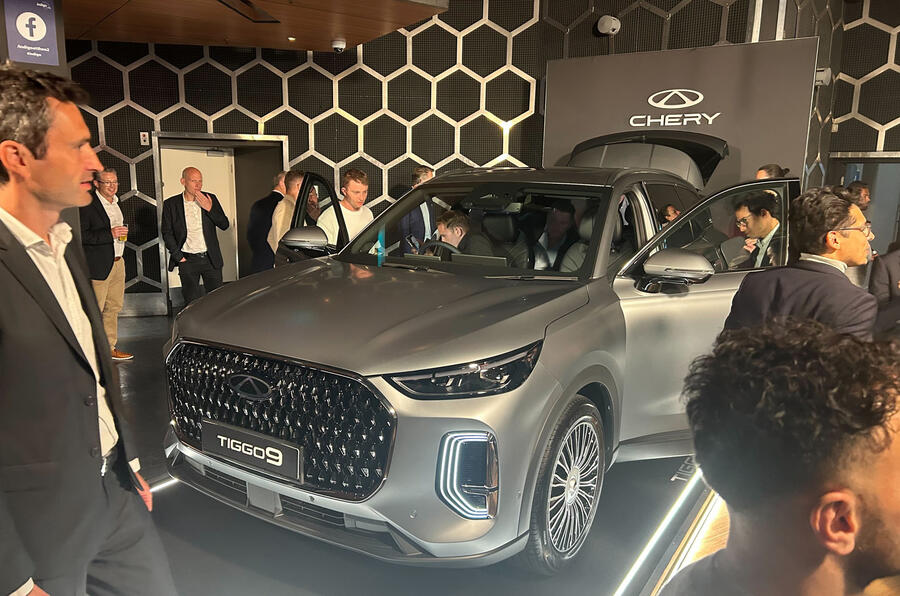
Launched to the UK at an event at the O2 in London, the Chery brand, which is said to be derived from the word ‘cheery’, will start with two models: the Tiggo 7 and Tiggo 8. The first cars from the initial 25 dealers will be with customers by the end of September.
The Chery Tiggo 7 is a petrol and plug-in hybrid mainstream family SUV that lines up against the likes of the Volkswagen Tiguan. Its main selling point is that it is the UK’s cheapest plug-in hybrid at £29,995, while the petrol version comes in £5000 cheaper at £24,995.
The Tiggo 8 is a larger seven-seat SUV that will be billed as the UK’s cheapest full-sized seven seater, starting from just over £28,500. A plug-in hybrid version will add £5000.
The Tiggo name is applied to SUVs in the Chery range but the brand is planning a full range of models across different body styles, ranging from around £20,000 to just under £50,000, according to Chery country manager Farrell Hsu.
Its range will start with C-segment Volkswagen Golf-sized models as it doesn’t see a market for smaller models in the UK at present, said product boss Oliver Lowe. Lowe did confirm that Chery, which started out as an engine maker in China in 1997 before making its first cars two years later, would offer a full range of powertrains, including electric cars, in addition to its initial petrol and plug-in hybrid offerings.
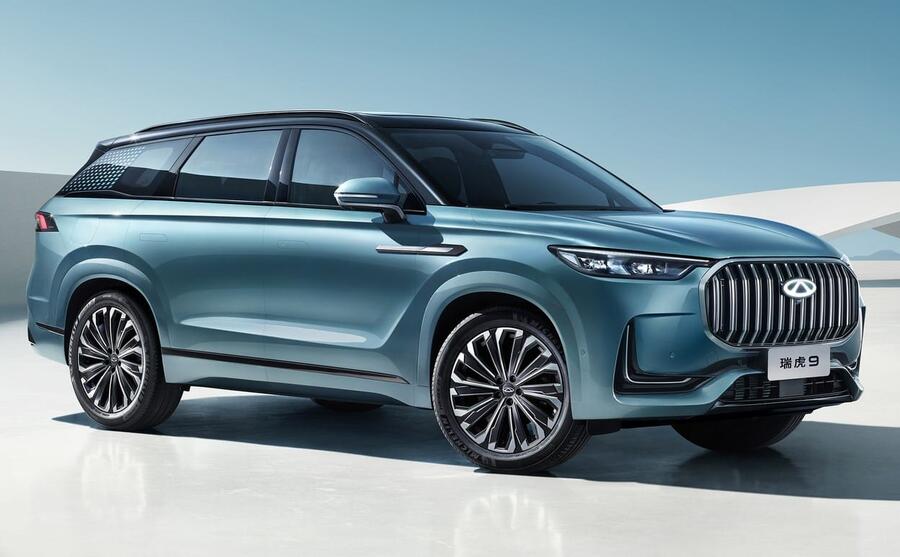
The next two models to launch in the UK will be the entry-level and 1.6-litre petrol-only Tiggo 4 crossover (above), likely priced from around £20,000, and a range-topping Tiggo 9 (below) that will be a flagship for the brand and come in at over £40,000 with a plug-in hybrid drivetrain. Both these models were on display at the O2 event alongside the Tiggo 7 and Tiggo 8 models.
Chery UK CEO Gary Lan said the Chery brand saw a big opportunity for a value player in the UK. “If you look at the percentage of cars available below £40,000 in the UK, that has shrunk dramatically in the past few years. But the desire for those cars hasn’t.”
Lan added that the UK launch had been the result of 20 years of preparation in ensuring the company could build cars to the “higher standards of regulation, quality, durability, reliability” and have strong residual values.
Repeating a pledge made earlier this year, Lan said Chery group was open to domestic production in the UK longer term but it would be a “long journey” that would first require the brand to make more vehicles to a UK specification and then build up a UK engineering and homologation base before any production facility followed.
No date was put on when such a manufacturing base might appear, Lan confirmed, but Hsu confirmed that planning for the R&D centre in the UK was already in the works.
Hsu said a further focus on the UK from Chery was because it was an “open market” and “UK customers have a very high acceptance to new brands”. Lan added that it was “a dream” to get recognition from UK customers and media for any brand.
Rather than utilise the existing dealer network quickly established with Omoda and Jaecoo, which currently stands at around 80 sites, Chery sites will be standalone and will be kept separate from Omoda/Jaecoo and initially with different regional coverage to ensure the brands don’t compete while being established.
Among the retail partners for Chery are Sytner Group, the first time Sytner has worked with a Chinese brand.
“The news is getting out about how profitable our [Omoda and Jaecoo] dealers are, and that’s not something dealers have been doing recently," said Lowe. "That’s created a real buzz around the brands and brought many new inquiries from groups that want to sell our cars.”
The plan is for Chery to get to 120 dealers in the UK by the end of 2026.
Lowe said that profitability was based around the fact that its non-electric cars did not need any discounts or deposit contributions and profitability was already baked in. “That’s something we committed to CAP early on,” Lowe said, in order to help residual values. The lack of retail demand for EVs made them a separate case, Lowe added.
“Our prices won’t fluctuate so that residual value will stay solid. And in our competitor set, while others are always increasing prices, we hope to be more competitive over time [by staying the same].”

2026 Porsche Macan EV Unveils Next-Level Digital Features and Enhanced Towing Power

Government Clamps Down on Electric Car Grants with New Price Cap to Target Affordable...
 More expensive variants of sub-£37k cars previously qualified for grant; DfT narrows the loophole
The government has tightened the criteria for its new Electric Car Grant so that fewer cars are eligible for discounts just because one variant is priced under the £37,000 threshold.
The ECG, launched last month, is available to electric cars priced at £37,000 or under – with discounts of either £1500 or £3750 available. However, the eligibility for each model was determined by the cheapest version of each powertrain variant, meaning only one version needed to be priced under that threshold for more expensive trim levels to qualify for the grant.
But now Autocar can reveal that there will be a new upper threshold of £42,000 for pricier variants of cars that come in at under £37,000.
Previously, for example, all front-driven versions of the Nissan Ariya qualified for the £1500 grant – following the recent addition of a new sub-£37,000 entry variant – up to the £44,500 Evolve trim, which uses the same drivetrain.
The imposition of a new £42,000 threshold means that fewer versions of the front-driven Ariya will be eligible for the grant.
The change will be effective from midnight tonight (00:01 on 29 August) and the government will publish a new list of eligible vehicles.
In a statement sent to Autocar, the Department for Transport said: “The Electric Car Grant is putting money back in people’s pockets whilst also providing a vital boost for industry. The maximum price limit ensures only eligible cars priced at the lower end of the market can qualify for the discounts, ensuring government support is targeted.”
The news comes after the government yesterday awarded the full £3750 discount to the first two cars – the Ford Puma Gen-E and E-Tourneo Courier.
It means that 28 different models now qualify for a grant, with more likely to be added over the coming weeks.