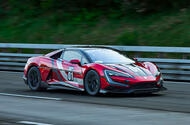
Yangwang U9 Shatters Electric Car Speed Record with Blazing 293mph Run
 Outrageously powerful Track Edition of Chinese supercar hit 293.54mph at the ATP test track in Germany
The 2977bhp Yangwang U9 has hit almost 300mph, smashing the top speed record for an electric car.
The official speed of 293.54mph was achieved at the ATP test track in Germany. It surpasses the 272.61mph set by the Aspark Owl.
The feat was completed by the hardcore Track Edition variant of the Chinese supercar. Each of its four motors puts out 744bhp, meaning power is boosted by 1689bhp over the standard car. This top-rung U9 can hit 62mph from rest in 2.36sec.
Key to the record was the car’s independent torque-vectoring system, said Yangwang. Controlled by road-monitoring sensors, each motor is adjusted up to 100 times per second to maximise grip and performance.
The record achieving U9 also wore special semi-slick tyres developed by Giti Tire, which were optimised to reduce torque loss and wear.
The record was set by German professional driver Marc Basseng, who was behind the wheel for the previous attempt in 2024, achieving a speed of 243mph.
This placed the U9 behind the Owl and the Rimac Nevera R (268.2mph) but was enough for it to become the fastest non-airborne Chinese vehicle ever – surpassing even the 220mph speed of China's high-speed trains.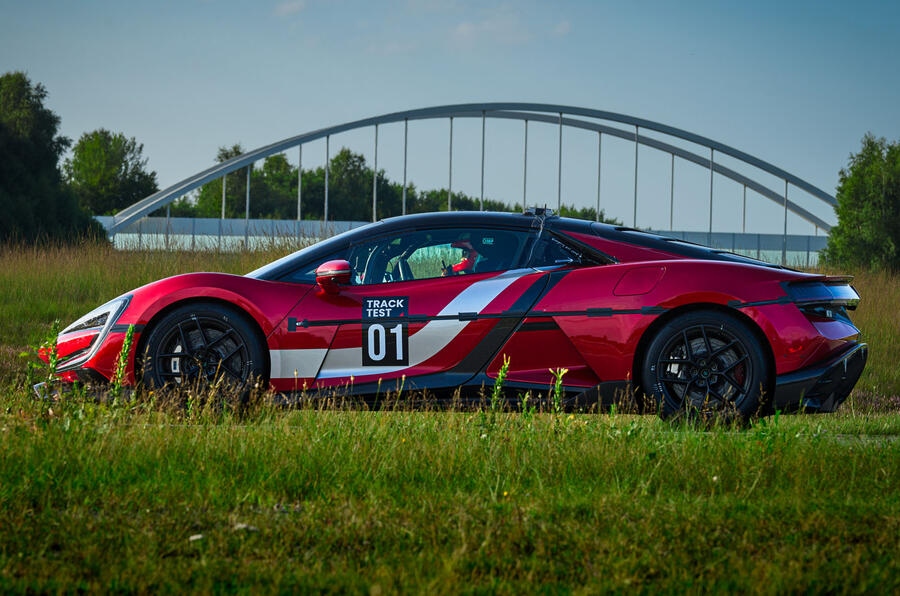
Basseng said: “Last year, I thought I'd peaked. I never expected to break my own record so soon – but here we are, at the same track, with new technologies that have made it possible.”
Yangwang is owned by behemoth BYD and pitched as a maker of tech-heavy, high-performance models. It currently offers the U9 and the chunky U8 SUV in China, priced from the equivalent of around £120,000 and £200,000.
Plans are being tabled to bring the brand to Europe, BYD vice-president Stella Li told Autocar in July. She said its arrival will follow the launch of the Audi-rivalling Denza brand early next year.
This Ferrari SF90 Shines in the Most Stunning Black Paint Yet
Hyundai Unveils Bold New Electric Crossover to Rival Renault 4 With Striking Design and...
 New model will sit between Inster and Kona Electric and be twinned with Kia's upcoming EV2
Hyundai will reveal a concept at next month's Munich motor show that is set to preview an electric alternative to the Bayon.
It has been described as a “forward-thinking vision” of the future of the brand, said Hyundai, and will likely showcase the next stage of the brand’s ‘Art of Steel’ design language as seen on the Santa Fe and the hydrogen-powered Nexo.
The production version of the show car is understood by Autocar to be twinned with sibling brand Kia’s incoming EV2 and will plug the gap between the Inster and Kona Electric.
Ahead of its unveiling, Hyundai has released teaser images that showcase some of the concept’s design. They reveal a looks that appears similar to the recently released Ioniq 6: a lipped spoiler at the rear and a thin LED bar at the front.
The new images come just a few weeks after pictures were taken of heavily camouflaged prototypes of the production car.
They revealed that the model will be close in size to the combustion-powered Bayon, positioning it as a rival to the likes of the Renault 4 and Volvo EX30.
Hyundai confirmed the car will go on sale in the third quarter of 2026, so deliveries could begin as soon as next July. It is understood that Kia’s EV2, previewed by the EV2 concept, will arrive a few months before it.
“We are very much involved with the electrification of our line-up and to increase our electrified mix in the coming years,” said new Europe CEO Xavier Martinet.
Like the EV2, the car will be based on the same scalable E-GMP platform that is used by nearly all EVs in the Hyundai Motor Group, which comprises Hyundai, Kia and Genesis.
It's therefore likely to get a similar set-up to the slightly larger Kia EV3, which is offered with either a 58.3kWh or an 81.4kWh battery pack for ranges of 267 and 372 miles respectively. All versions of the EV3 are powered by a single electric motor that sends 201bhp and 209lb ft to the front wheels.
Inside, the new electric car will bring a “step change” in usability for Hyundai. This includes a new infotainment system that, Autocar has been told, will enable elements such as ambient lighting and noise to alter according to driving modes or chosen style. Like the incoming EV2, the new Hyundai is also expected to get a combined instrument and infotainment display set-up that spans roughly half the width of the dashboard.
Pricing for the new crossover is likely to be close to that of the EV2, at around £25,000.
When it arrives next year, it will be the sixth electric car in Hyundai’s growing EV line-up, following the Ioniq 9 flagship that is due to hit UK roads in the coming months.
Tesla Faces Costly Legal Battle as Stellantis Pauses Self-Driving Ambitions
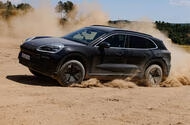
Porsche Cayenne Electric Redefines Luxury SUV with Thrilling Performance and Impressive Range
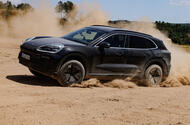 Crucial all-new version of luxury SUV promises enormous performance, delectable handling, a long range and off-road capability all at once There’s no mistaking the importance of the Porsche Cayenne Electric. What we’re driving today on sun-baked Spanish roads, alongside Porsche’s test and development team, is the next-generation of Cayenne: purely electric, still in prototype form and pitched as a landmark in the German car maker’s line-up.It aims to deliver the same impact as the original Cayenne did 22 years and three generations ago. But this time the reinvention comes without an internal combustion engine in sight.The five-seat SUV, known internally as the E4, is based on the Volkswagen Group’s 800V Premium Platform Electric, lengthened slightly from the similar structure used by the Porsche Macan Electric and its Audi sister model, the Q6 E-tron.But unlike the Macan Electric, which in many global markets (but not the UK) has replaced its ICE predecessor outright, the new Cayenne Electric is being positioned alongside the existing third-generation ICE Cayenne for the foreseeable future – a clear signal that Porsche is hedging its bets in response to a slower than anticipated uptake and inconsistent sales of its EVs.So, after much speculation surrounding its future, the ICE Cayenne, based on the group’s long-serving MLB platform, is staying in production, with another facelift planned for next year. The new Cayenne Electric sits alongside it – or even somewhat above it in the overall Porsche model hierarchy.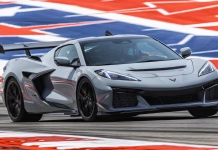
Fire Risk Prompts Recall for Corvette Z06 and ZR1 Over Unique Cooling System Issue


Peugeot 308 Unveiled with Sleek New Design and Extended Electric Range
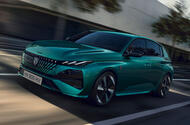 More aerodynamic front end and battery updates bring extra range for PHEV and E-308
The Peugeot 308 has gained a dramatic new look and more efficient powertrains as part of its mid-life update.
The hatchback and estate, which arrived in third-generation form in 2021, have adopted a new front end to bring them closer in line with the bigger 3008 and 5008 crossovers. While visually different, the new nose also improves the car's aerodynamics, said Peugeot, resulting in better fuel or energy efficiency.
The changes are less pronounced inside, with new graphics for the infotainment and digital gauge display.
The 308 is again offered with mild-hybrid petrol, diesel, plug-in hybrid and fully electric powertrains.
The mild-hybrid petrol features the same 1.2-litre turbo triple but has gained 9bhp, now putting out 143bhp, while the diesel has the same 129bhp 1.5-litre four as before.
The PHEV pairs a 1.6-litre four-cylinder petrol engine with an electric motor for 192bhp. Its 17.2kWh battery offers up to 53 miles of electric-only range, up from the previous 49.
All ICE models come with an automatic gearbox as standard.

The electric e-308 uses the same 154bhp motor as before, but its battery has been upsized from 51kWh (usable) to 55.4kWh.
In combination with the aero improvements, this has increased range from 254 miles to 281.
Prices are expected to start from just under £30,000 for the diesel hatch and rise to around £33,000 for the mild-hybrid petrol and £38,000 for the PHEV.
The e-308 is likely to be cut to just under £37,000 to qualify for the new UK government EV grant.
Meanwhile, the SW estates are likely to cost £1250 more each.
How the EJ20 Engine Fueled the WRX Legend and Its Biggest Headache
Nissan GT R35 Bows Out After 18 Years as a Sports Car Legend Ends...
 ‘R35’ GT-R arrived in 2007 as a disruptor before becoming one of the longest-running sports cars yet seen
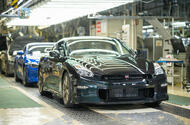
The final example of the current-generation Nissan GT-R has rolled off the production line, bringing an end to one of the longest-running sports cars the world has seen.
Some 48,000 examples of the ‘R35’ GT-R were built over the past 18 years in a run that included two facelifts and several track-focused derivatives from Nissan’s performance division, Nismo.
Each car was powered by a twin-turbocharged 3.8-litre V6 hand-built by a team of nine engineers. In its original guise, it produced 473bhp and 434lb ft, sufficient for a 0-62mph time of 3.5sec and a top speed of 194mph.
The later Nismo version was boosted to 592bhp and 481lb ft, but the powerplant was capable of withstanding much greater outputs in the hands of tuners. Workshops have boasted of figures nudging 2000bhp, landing the R35 a place in the pantheon of modified cars alongside its predecessor, the ‘R34’ Skyline GT-R.
The final iteration of the R35 was introduced in 2023 but it was not offered in the UK, and Japanese order books for the model were filled by last February.
The model’s arrival in 2007 was a landmark moment for performance cars. Nissan famously – and controversially – claimed to have beaten the Porsche 911 Turbo’s time around the Nürburgring Nordschleife, recording a 7min 38sec lap, compared with the German car's 7min 40sec.
August Achleitner, then product manager for the 911 line, accused Nissan of using non-standard semi-slick tyres to improve its time, stating that Porsche could not come within 25sec of Nissan’s time using a standard GT-R. Nissan retorted that its ’Ring car was in factory configuration and, the following year, returned to clock 7min 29sec.
The Nismo would eventually set a time of 7min 8sec.
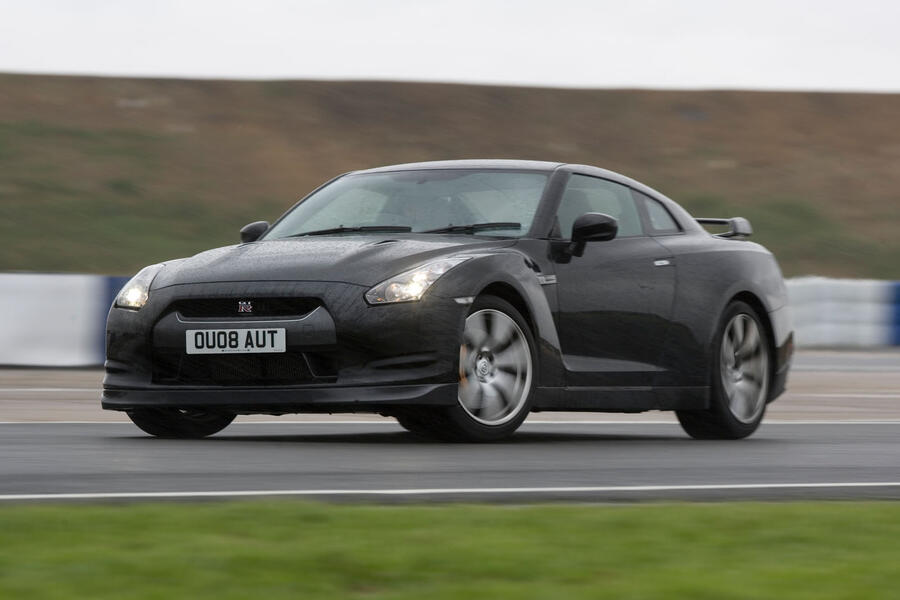
The car also earned critical plaudits, with Autocar’s 2007 first drive concluding that “this has to be one of the greatest giant killers there has ever been”. The following year it won Autocar's annual Britain's Best Driver's Car contest on the basis of its tremendous performance, accessible handling and value for money.
The future of the GT-R remains uncertain. Nissan has said the badge will return, with president and CEO Ivan Espinosa stating “the GT-R will evolve and re-emerge in the future”. But when that will happen, and in what form, has yet to be confirmed.
The striking Hyper Force concept shown at the 2023 Tokyo motor show provided a hint at a new GT-R’s styling, but a production model is understood to remain some years away, leaving plenty of time for changes. The R35 underwent a similarly protracted gestation, with the first concept having been shown at the Tokyo show in 2001, six years before the arrival of the radically different production car.

Harvard Scientist Reignites UFO Debate with Bold Alien Theory