
How Shared Car Platforms Are Quietly Revolutionizing What Drives Us
 More than 40 million cars on the MQB platform have been built – not all carrying a VW badge
There was a time when bosses at car manufacturers didn’t like to talk about platforms – the mechanical underpinnings of their cars.
These are expensive to develop, so big car companies share them across brands, and bosses used to think that it might be perceived as bad news if the public knew that a cheap car was largely the same underneath as an expensive one. So they preferred to keep schtum.
The really difficult and pricey bit to develop was – and still is, most notably in cars with engines – the area between the front wheels and the driver, because largely everything substantial goes into it.
There’s the engine itself, of course, plus the transmission, while behind it is the dashboard and everything that entails, including a whole heap of the electronics – more electronics than ever. Behind it is, put in very crude terms, something a car is just dragging around. So the same platform can host many different lengths of car.
That whole area is where the hard work goes. It has to be compact enough that a driver can see over the top of it. The structure around it has to be rigid enough to properly support the suspension and strong enough to support the forces flowing from the doors in a side impact. And yet it needs to be flexible enough to absorb frontal impacts without forcing the whole shebang into the passenger compartment.
More recently, it’s where loads of active safety and convenience equipment – sensors, cameras and more – have had to be mounted too.
Throwing in the fact that engines and gearboxes are now far more complex than ever means this part of a combustion-engined car is by some distance the most critical and expensive bit, so if a car maker can engineer it once and use it multiple times, so much the better.
Whatever decisions a manufacturer makes in this area therefore defines a raft of models. But thinking that customers wouldn’t necessarily appreciate knowing that, they didn’t always want to talk about it.
It turns out, though, that the car buying public doesn’t care that much at all if what lives beneath, say, their Audi is similar to what lives beneath their Skoda. I’ve heard people say “it’s basically a Volkswagen underneath” about a Skoda to convince themselves they’ve got a well-engineered budget car.
But I don’t think I’ve heard someone say the same about their Porsche Cayenne. They seem contented that Porsche has done extra work somewhere and that it was worth paying for.
And since it turns out that few people seem to care either way, in my experience car makers today seem less guarded about talking platforms and architectures than they used to be.
That has made it much easier to talk to designers and engineers about their cars. It has helped them to explain new models and helped us understand them. It has also (and it’s possible that they like this less) made it easier to quiz them about upcoming variants, particularly when it comes to sporty versions.
If we know a particular engine fits or can make a certain amount of power, or if we know a platform has been made to accommodate four-wheel drive, then surely, engineer, you could, you know, make a GTI/R/RS/etc, couldn’t you? Do tell us more.
Sometimes that has prompted a clear answer: “Sorry, mate, that platform can’t be four-wheel drive, and it would be too expensive to engineer it differently for just a few sporty cars, so there will be no really fast variant of that car.”In the case of EVs, things aren’t quite so straightforward.
Four-wheel-drive EVs need only a motor at the back, not a driveshaft from the front. But if the rear suspension, a subframe or the body isn’t designed to accommodate one, it’s still an expensive re-engineering job.
Or rather it was. It turns out that this particular platform limitation might no longer apply. It’s suggested that the upcoming Volkswagen ID 2 R will have not only a powerful front motor but also a motor inside each rear wheel.
No room for a motor and a differential under the boot floor? No problem: in the hub it can go. I hadn’t thought about that before, but I think it basically means almost any platform could end up hosting any drive configuration that a manufacturer chooses.
The rules as we know them continue to shift.
Lease a Used Tesla for Less in California and Texas with Low Monthly Payments

London Black Cabs Fight Back How Tradition and Innovation Are Keeping an Icon Alive...

"London will always have taxis" says LTDA general secretary Steve McNamaraIs the London black cab being squeezed out of existence by Uber, TfL and costs?
According to my phone, Taxi House, headquarters of the Licensed Taxi Drivers’ Association (LTDA) on Great Suffolk Street, London, E1, is just a 15-minute walk from Waterloo station, where I’m located.
I’m due to meet Steve McNamara, the association’s general secretary, there and although shanks’s pony is more appealing, I ought to take one of his member’s black cabs. It will be a chance to find out what a taxi ride costs these days and to grill the driver about life as a cabbie.
He won’t be cracking jokes…There’s a big debate going on about the future of London’s cabs. In March, a report by the Centre for London warned that on current trends, the trade could disappear from the capital’s streets within as little as 20 years.
The reasons, it said, include the Covid epidemic, which saw many drivers quit, and the rapid growth in private hire vehicles led by Uber (96,000 compared with 14,500 taxis). In addition, it highlighted the “substantial increase” in the costs of purchasing and operating the new LEVC TX range-extender taxis and the ending of the taxi scrappage scheme and recent reduction in the new taxi purchase grant.
It also referenced the challenge posed to driver recruitment by the notoriously tough Knowledge of London, the list of routes that aspiring taxi drivers must learn.
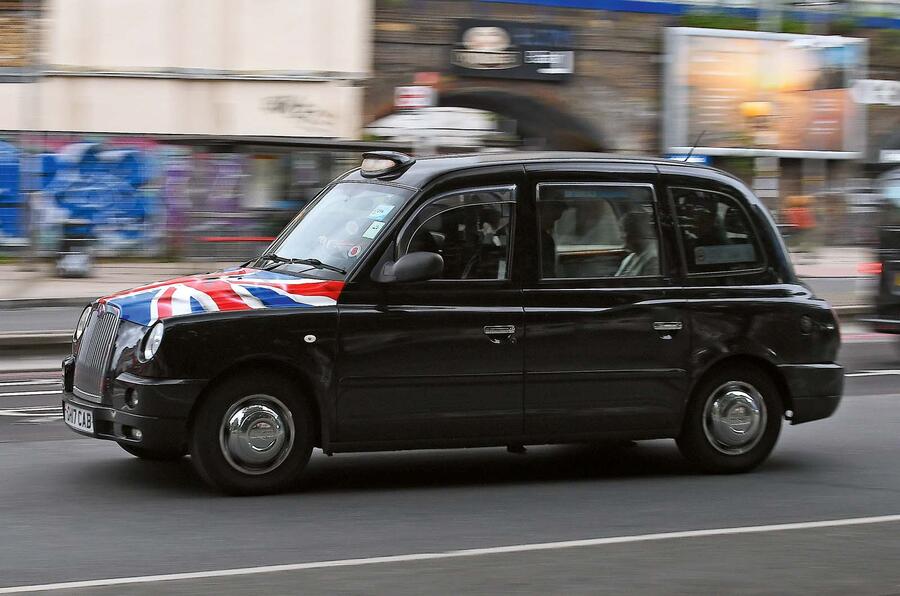
On a more optimistic note, the report’s release coincided with the publication by Transport for London (TfL) of a 14-point plan to support the taxi trade and private hire vehicles over the next five years.
Recognising that the capital’s taxis “play a vital role in London’s green and sustainable transport network”, it promised to ensure that taxis continue to have access to bus lanes wherever possible, to tackle cross-border hiring (the practice of taxis operating outside their licensed areas), to improve the training offered to taxi drivers and to make the Knowledge less intimidating, among other action.
It also pledged to push the government for a continuation of the plug-in taxi grant, to reduce VAT at public charge points and to remove the tax from the purchase price of taxis.
So my cab driver should have a lot to talk about, but first I need to find him or her, a job that takes all of 30 seconds. Uber’s app may have revolutionised hailing a private hire car but it can’t beat just jumping into the nearest available taxi.
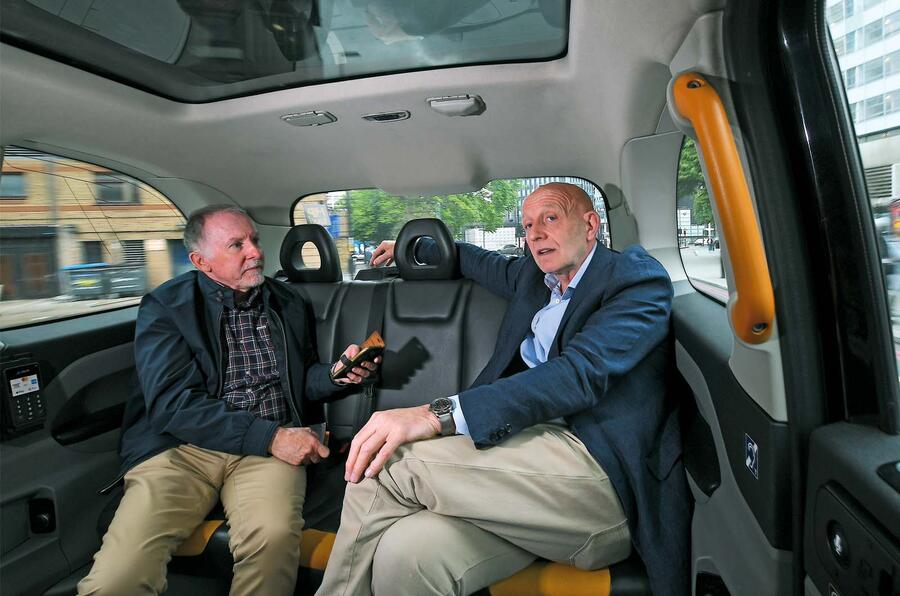
“We’ve been shafted by the 20mph limit and the fact we can’t go down low-traffic neighbourhood roads so can’t take a passenger, who may be disabled, door to door,” its driver tells me. “Taxis should be allowed to go everywhere a bus can but some routes like Tottenham Court Road we can’t enter.
"So we take the road running parallel to it but it has two cycle lanes that makes it narrower and costs journey time. A typical £15 journey three years ago now costs £25. TfL is trying to get rid of us.”
If that’s true, why has 21-year-old Mohamed B, London’s newest and youngest taxi driver, become one? We were planning to interview Mo for this story but he cancelled at the last moment on the grounds that all he had to say he’d already said in his employer’s video publicising his success.
The Covid lockdown may have forced a lot of taxi drivers out of the trade, but Mo explains in the film that this was exactly the stimulus he needed to become one himself. With time on his hands, aged 17, he knuckled down to learning the Knowledge. Two years later, he’d passed all the tests but had to wait until he was 21 to get his licence.
“I’m having the best time,” he says. Even the taxi driver who took me to Taxi House admits that, despite everything, he “loves” the job. Will McNamara be as sanguine? “We’ve had taxis since Cromwell’s day and London will always have them,” he tells me in the back of a taxi he’s magically summoned from nowhere.
“I’m optimistic about that because we’re sitting in the cleanest and 100% wheelchair accessible taxi in the world, driven by the most highly regulated and trained cab drivers in the world. But the driver you spoke to is right: TfL’s war on motorists is also being waged on taxis. On top of that, you’ve got a taxi which, by the time you’ve financed it, can cost up to £100,000. It’s tough.”
In spite of these challenges, McNamara reckons the green shoots of a recovery are emerging. “Demand for taxi rides is growing as workers begin returning to their offices,” he says.
“We’re also seeing the return of younger customers we thought we’d lost to the private hire apps but who have become blasé about the hailing technology. The fares are no longer cheap, either.
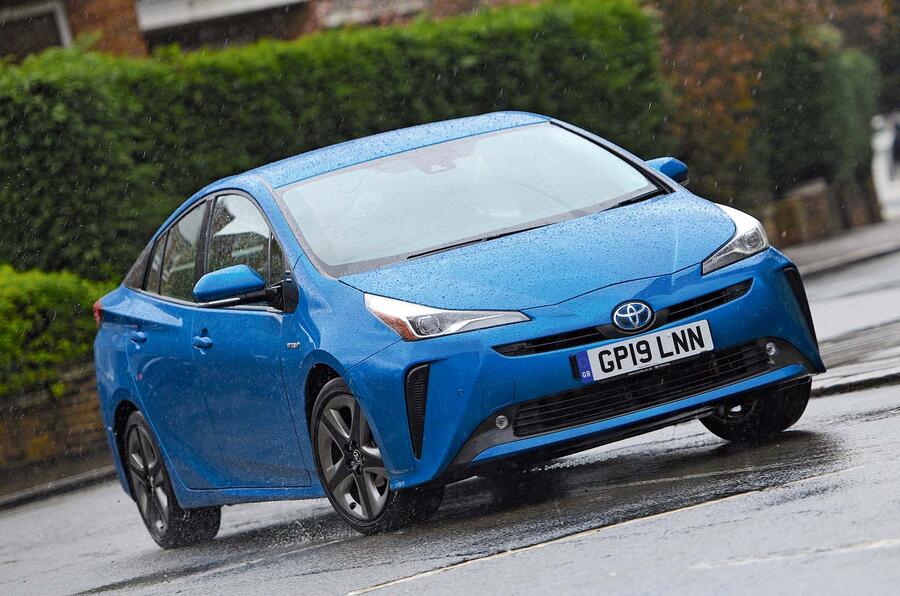
"People can do a journey in the back of a Prius for £10 or in a taxi, a cab they can stop on the street without waiting, for just £2 more. It’s cool being seen getting in and out of a London cab too.
"Numbers may be down but the trade will still be here in 40 years, never mind 20.”

Does Coasting in Neutral Really Save Gas or Put You at Risk?

Why Car Makers Are Choosing Plastic Oil Pans Over Metal

How to Eliminate Musty Car AC Odors and Freshen Your Ride


Where You Can Legally Have 5 Percent Window Tint in the US

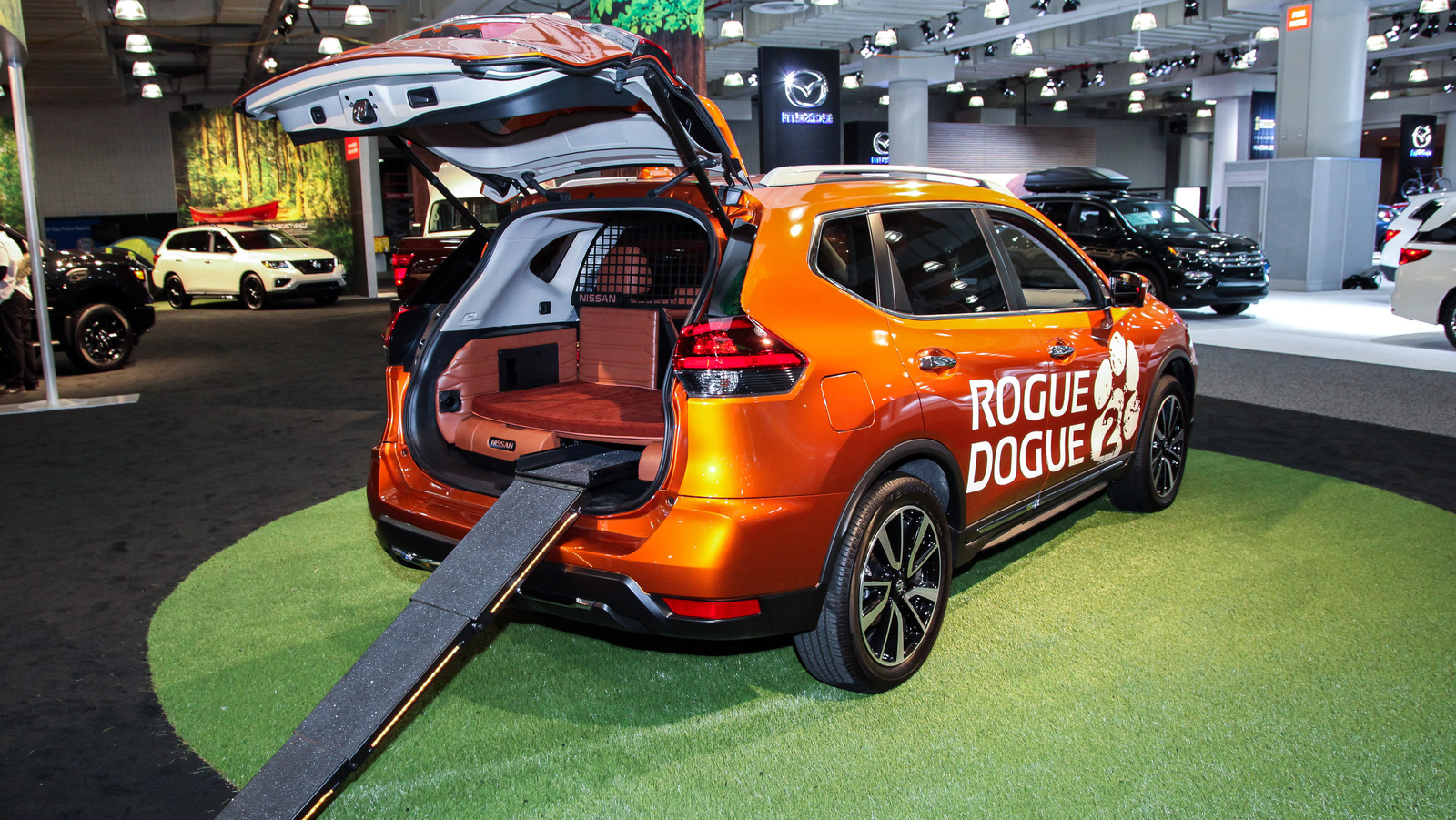
Nissan Unveils the Ultimate Dog-Friendly SUV You Can’t Buy

The Secret Design Behind Costco’s Surprisingly Smooth Parking Experience


Why Boeing 737s Burn Off Fuel Instead of Dumping It and What Happens If...