

Putin Gifts Alaskan Ural Owner a New Motorcycle After Viral Interview


Celebrating New Voices Shaping the Future of Automotive Careers
 New awards will celebrate rising automotive talent from under-represented backgrounds
There is still time to submit your nominations for the Autocar Drivers of Change: New Talent awards - ahead of entries closing on 10 September.
Held in association with the SMMT, the Drivers of Change awards – returning with a new focus after a successful launch earlier this year – will celebrate individuals who are either apprentices or in the first two years of their career.
The goal of Drivers of Change is to celebrate the automotive industry as a place where you can have a thriving career irrespective of your background and to promote the industry as a great place to work for those from all different backgrounds.
In the second edition of these awards, that can be as simple as having started and made an impact in a first role in the industry - having joined, for example, from a background that is typically under-represented in the industry. We will name the stand-out stars, and the company that is doing the most to support new talent, in a ceremony at Stellantis's UK headquarters in Coventry on 13 November.
We encourage you to spread the word and consider nominating anyone from your wider organisation – no matter which sector of the automotive industry – who meets these broad criteria and has a compelling story to tell.
Entries are now open - submit your nomination here.
There will be no specific categories in which to enter and anyone named on our list can call themselves an Autocar Driver of Change. Earlier this year, 40 individuals were named in the inaugural Autocar Drivers of Change for their work mainly in DEI initiatives, in a ceremony at the SMMT headquarters in February.
This forms part of a refreshed calendar of events at Autocar. Each spring we will continue to host Autocar Great Women, which every other year will celebrate Rising Stars. Drivers of Change will follow a similar cadence in this new autumn slot, where it will remain in future years.

Passenger Accidentally Ejects From Fighter Jet While Still on the Ground


2026 Hyundai Tucson Unveiled with Bold New Design and More Space to Challenge Top...
 Korean brand aims to steal buyers from key rivals with radically reinvented fifth-generation family SUV
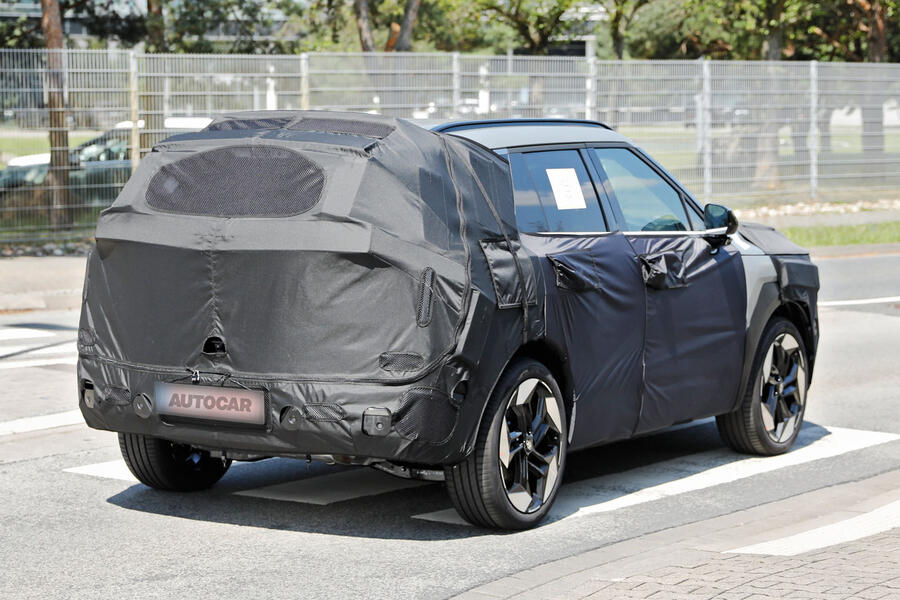
Hyundai is preparing to radically reinvent the Tucson, its best-selling model, giving the family SUV a boxy new look inspired by the larger Santa Fe.
It's expected to go on sale in the latter half of next year, with test mules having been spotted on public roads.
They reveal it will adopt the brand's rugged new ‘Art of Steel’ design language, as seen on the Santa Fe and the hydrogen-powered Nexo.
While both of those models share that design philosophy, they also have their own unique cues – something Hyundai design chief Simon Loasby has previously said was key to making the range like “chess pieces” rather than “Russian dolls”.
The Tucson mules are heavily disguised but it is clear that the new model receives a longer bonnet, chunkier wheel arches and a more upright stance.
The change from fourth to fifth generation looks to mirror that of the Nexo, which Loasby said now has a character that is “much more SUV-like” and “capability-driven”.
Explaining that car’s upgrade, Loasby said: “We deliberately wanted to turn the volume up on the capability and SUV-ness. Pretty much every region in the world has become more comfortable with SUVs and wants [the seating position] to be up.”
The Tucson’s new shape is likely to result in more interior space, too, and could even improve on the current car’s vast 620-litre boot.
It will have the brand’s next-generation interior, which Loasby and Hyundai Group design boss Luc Donckerwolke said could result in a smaller infotainment display and simpler software for the touchscreen – as well as more physical buttons – in an effort to improve safety.
Powertrain options are expected to mirror those of the Santa Fe, which is offered with either a 212bhp 1.6-litre turbo petrol hybrid (with front- or four-wheel drive) or a 249bhp plug-in hybrid (four-wheel drive only).
The Tucson is a critical model for Hyundai as it targets further growth in Europe. It has been a major catalyst in the brand's drive to steal sales from established brands such as Volkswagen and BMW, and it last year recorded some 600,000 sales globally.

Airline Reinstates Pilot After Cockpit Door Incident Cleared of Security Risk


Rise of the Rookie Trucker: Battle Corporate Greed Across the American South


New Tariff Expansion Adds Confusion to Motorcycle and Auto Industry


Vauxhall Unveils 789bhp Electric Corsa Concept Redefining Affordable Performance Cars
 The 789bhp Corsa GSE Vision Gran Turismo “shows where Vauxhall wants to take” its performance sub-brand
The next-generation Vauxhall Corsa has been previewed by the Corsa GSE Vision Gran Turismo, a 789bhp, 1170kg electric concept car built to show the future capability of the GSE performance brand.
While billed as a technical exercise for the PlayStation’s Gran Turismo racing game, it features “real-world” elements that will inform the design of the Mk7 Corsa, due next year, Vauxhall design boss Mark Adams told Autocar.
The concept, which nods to past Vauxhall/Opel motorsport models such as the Manta 400 rally car, also highlights its plans for hot GSE models. Adams called it Vauxhall’s “Type R moment”.
He said the aim is to make “truly attainable poster cars” with “proper performance” that will “make people look at the brand differently” while also appealing to a younger audience.
First look at next Corsa
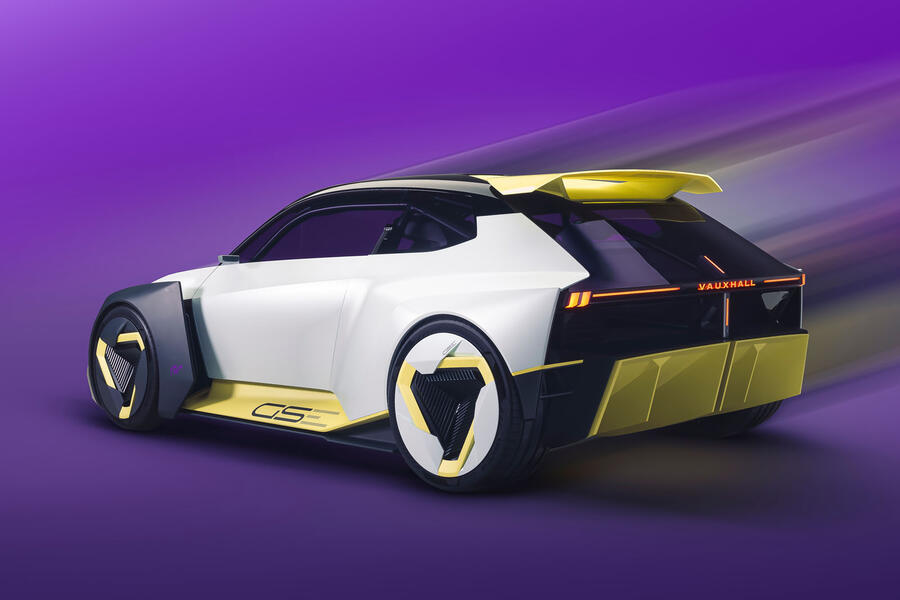
The concept sits on Vauxhall parent company Stellantis’s forthcoming STLA Small platform, which could be first used by the seventh-generation Corsa.
Basing the concept on this future platform and giving it the Corsa name were “very deliberate” moves, said Adams.
He explained: “When you do a concept, so many of them are one metre high, five metres long. It’s a great fantasy, but is it meaningful for people? As soon as you badge it ‘Corsa’, you make something that all of a sudden becomes something you can see [that is] more real, while having a much more compact footprint.”
Compared with the current, CMP-based Mk6 Corsa, the concept is 130mm longer and 105mm wider, suggesting the model won’t grow too much in size.
Notably, the concept draws power from the same 82kWh battery as the larger Grandland, while the biggest battery available in the current Corsa is 52kWh.
Despite the radical exterior, elements with a production focus can be found. This includes the “more technical” interpretation of Vauxhall’s ‘Compass’ signature, which informs the concept’s front and rear lighting designs.
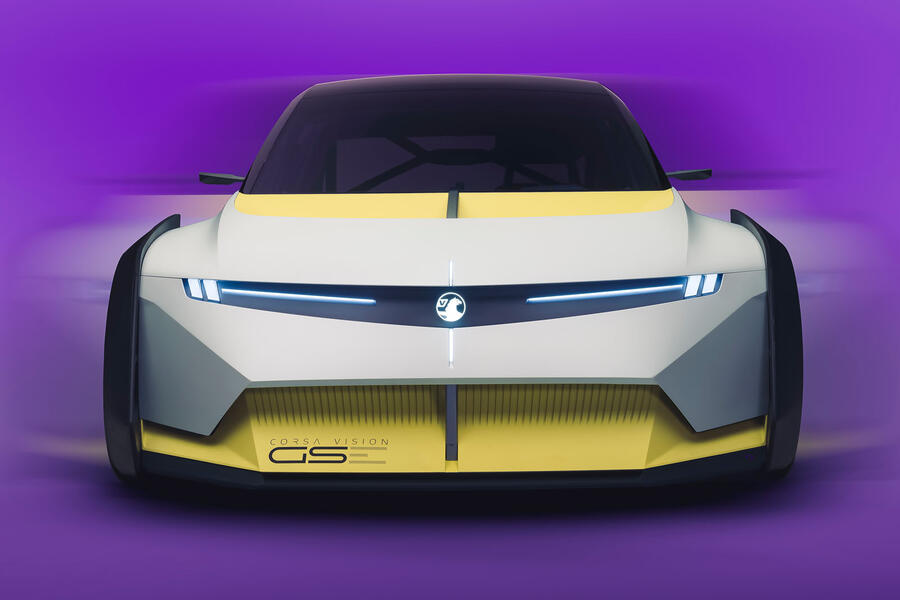
The brand’s ‘Vizor’ fascia has also been redesigned. While current models feature a gloss black panel, on the concept it’s transparent with daytime-running lights behind. The griffin motif now also lights up.
Adams said this is an element that Vauxhall is exploring for production: “We’ve got a clear philosophy, but you want to find fresh new ways to refresh it, revive it, but that is still anchored in good core DNA. So we’re not throwing everything away every time we want to refresh it. And that’s just an example where we’re exploring.”
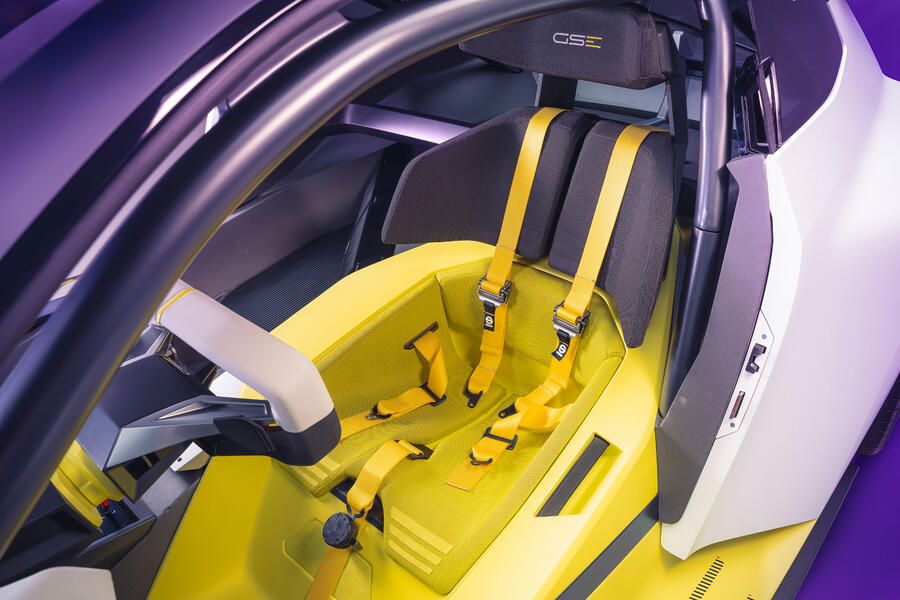
While the interior is a stripped-out affair, it still houses potential production elements, said Adams.
The bucket seats, for example, are split in two, with the backrest hung from the roll-cage and the seat attached to the floor. This makes “one of the heaviest parts of the car much lighter” than in today’s EVs – “a fundamental rethink”.
In an effort to reduce the driver’s mental load, the concept doesn’t contain any screens. Only a handful of physical buttons are present for key functions.
Future of GSE
In July, Vauxhall relaunched the GSE sub-brand as a badge for performance-honed EVs with the 276bhp Mokka GSE.
This Corsa concept, however, moves the dial even further and shows where Vauxhall wants to take GSE, said Adams.
It gets 789bhp and 590lb ft of torque from a dual-motor powertrain, weighs just 1170kg and is claimed to hit 62mph in 2.0sec – faster than a Bugatti Chiron. Top speed is capped at 199mph.
These figures are hypothetical, however, given that the car can be driven only in the Gran Turismo video game.
However, Adams argued that the figures are “realistic” and could “in theory” make it to a production model, saying: “If you were going to get a max but be on the realistic end of max, then they are believable figures.”
As well as performance, Vauxhall also pushed the concept’s design “to the max”, said Adams, adding that it hasn’t “just been made to look cool”.
The active spoiler notably epitomises this: it can extend far beyond the rear of the car to reduce drag and increase stability at high speed and also pivot upwards to act as an airbrake while cornering.
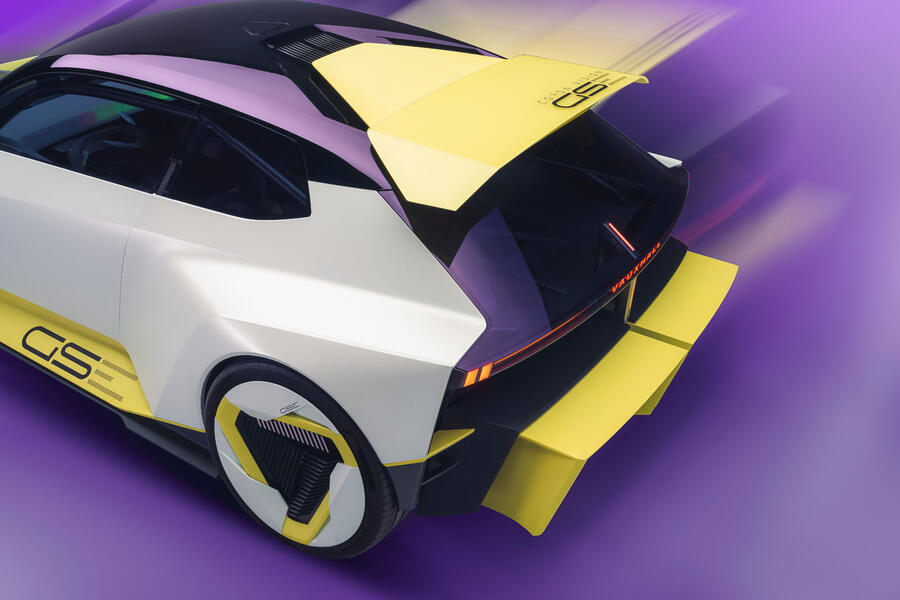
The concept also features wide tracks, a ‘floating’ front end, an active diffuser and a raft of cooling vents. Plus it utilises a kinetic energy recovery system (KERS) for overtaking and features a squared steering wheel.
Adams wants to take elements of the concept’s radical design into production – and claimed that having a design concept like the Corsa GSE Vision Gran Turismo potentially allows that.
“I’d love to be able to do some of this really expressive stuff again,” he said. “There are always wonderful things called constraints that you have to be within. But at the same time, when you have a clear vision, you have a much clearer sight of what you can and can’t do much earlier, rather than waiting too late in the process.”
The overall goal for GSE is to emulate what Honda has done with Type R – creating a performance badge that is known in isolation.
“That’s what we would love to take it to,” said Adams. “The concept shows the over-the-horizon vision and what we always wanted GSE to be, and now it can finally be there. This concept is a signal of intent.”
Small Town Thrills at Kittitas Car Show with Legal Main Street Burnouts
Massive Solar Farm Powers a Greener Future at Leading UK Car Manufacturer Headquarters
 The energy farm is the size of 36 football pitches and is part of a push to reduce grid reliance
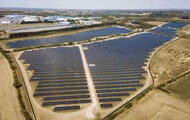
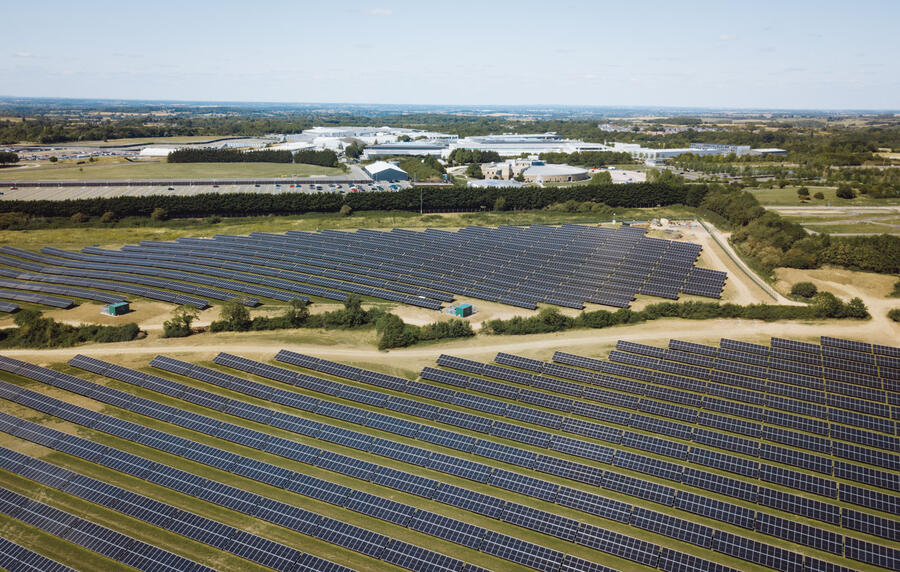
Jaguar Land Rover (JLR) has opened a solar farm the size of 36 football pitches at its Gaydon headquarters as part of efforts to increase its energy independence.
The 26-hectare, 18MW site can generate enough electricity to power a third of the British firm’s base. The site is home to JLR’s design, engineering and R&D teams.
It is part of a move from JLR to source at least 30% of its global energy use from on-site renewables, while also reducing its reliance on grid energy – and therefore fluctuating energy costs – and improving its environmental impact.
A similar project is being completed at its Wolverhampton Electric Propulsion Manufacturing Centre. There, one of the UK’s largest rooftop arrays, featuring more than 18,000 panels, will open in the coming months.
This will be able to generate around 9500 MWh of energy each year, meeting 40% of the site’s needs.
Next year, the marque will install 10MW of solar car ports at its Merseyside site. These include canopies and solar walkways – structures like these are quite common in hotter countries, such as Spain. They will mostly provide energy for EV charging.
JLR’s chief sustainability officer Andrea Debbane said the steps were “important”. She added: “They directly reduce our global operational emissions and help move us closer to our net zero goal, whilst delivering tangible value today and for the long-term.”