

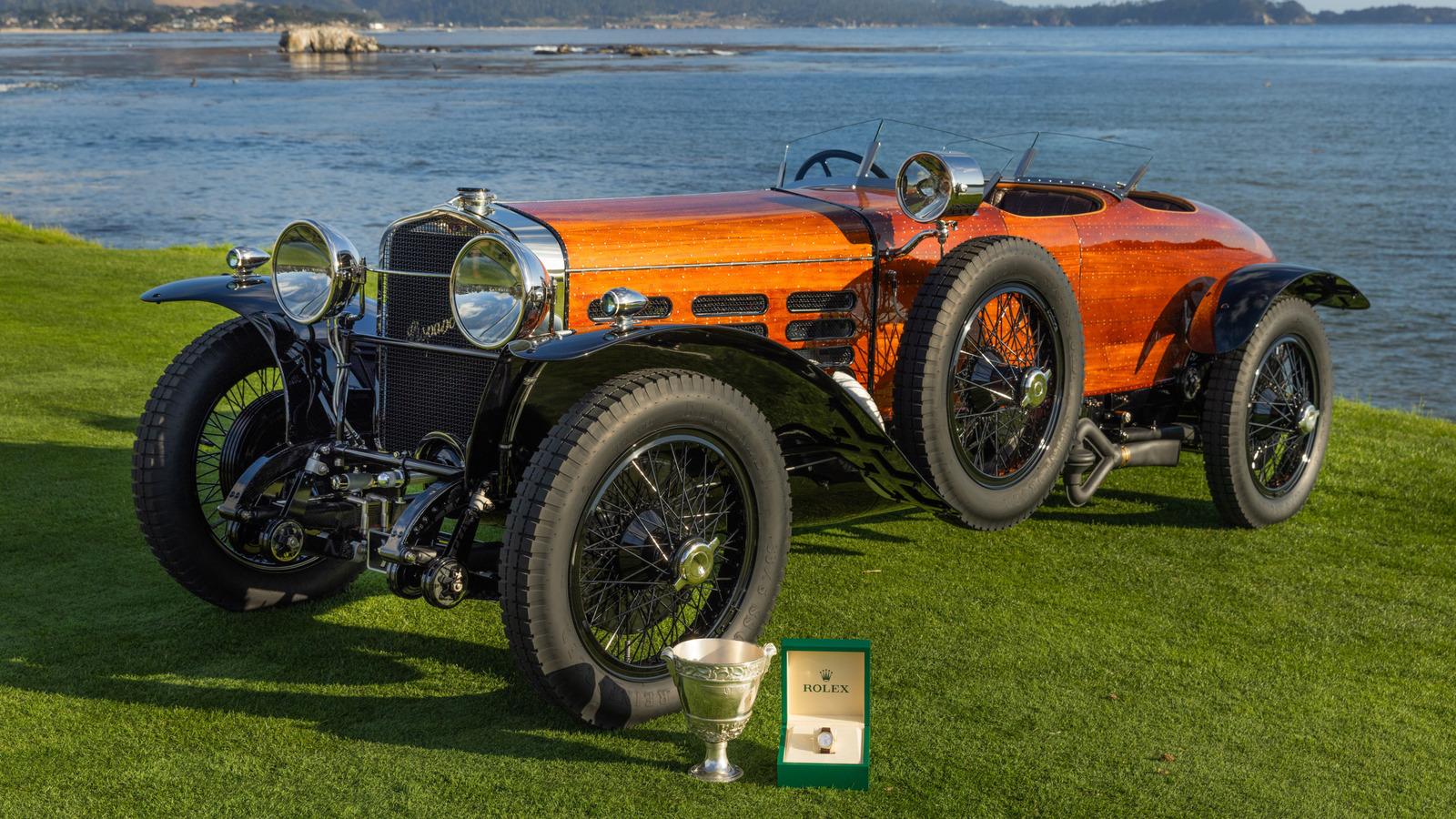
Tulipwood Torpedo Shines as 1924 Hispano-Suiza Wins Top Honor at Pebble Beach 2025

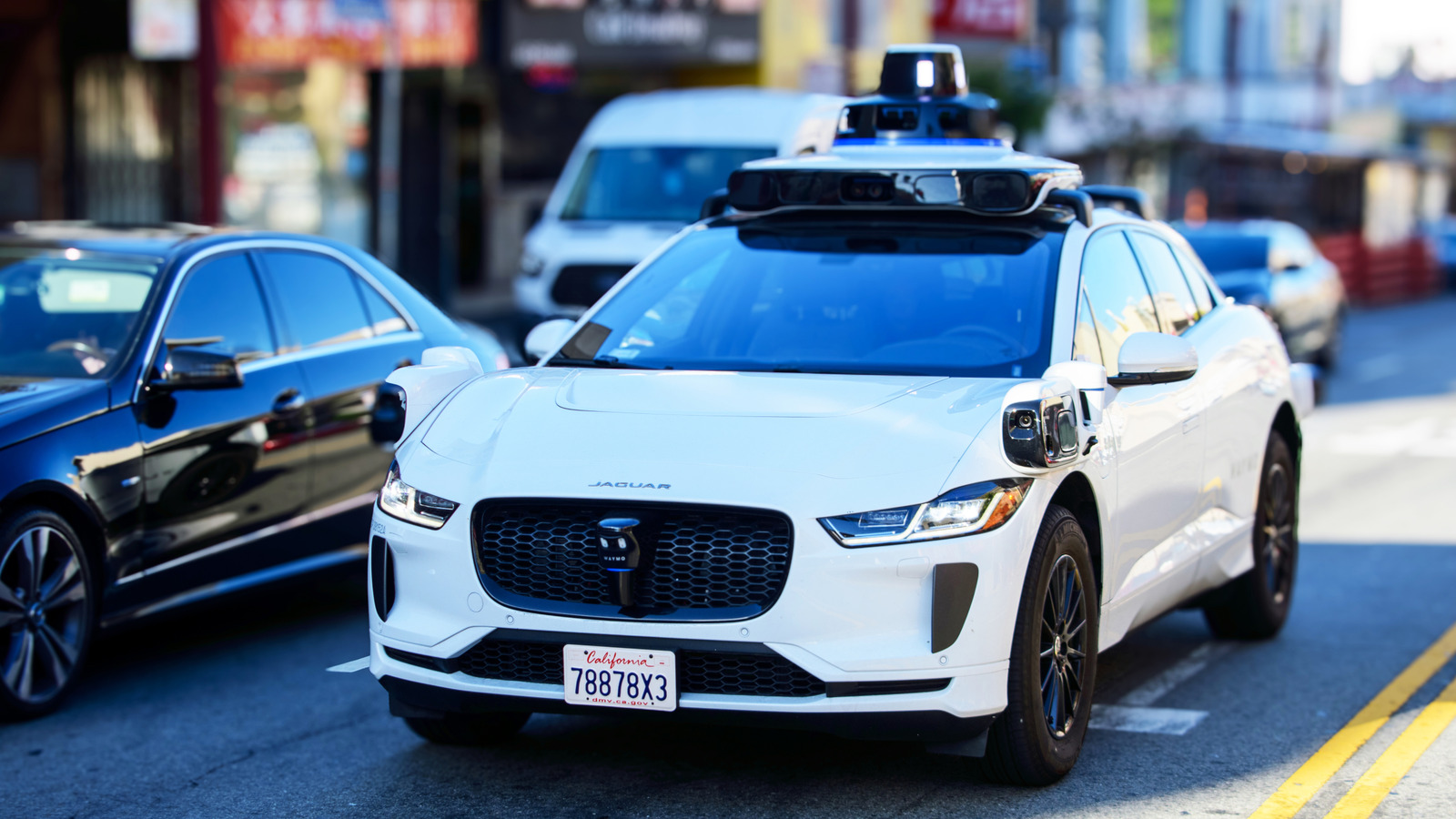
Atlanta Riders Choose Robotaxis Over Human Drivers in New Uber Partnership
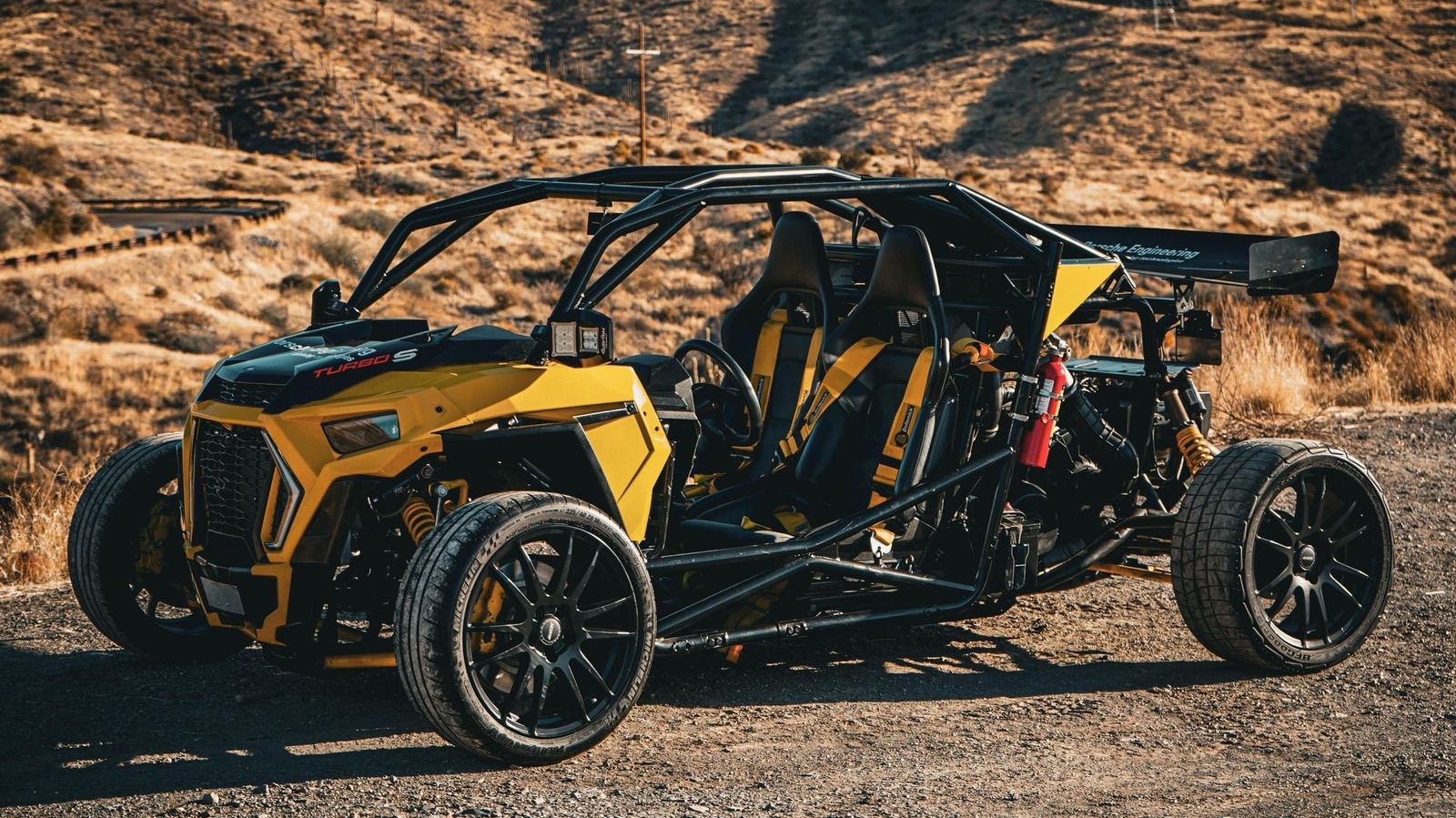
Rare Porsche-Engineered Polaris RZR Surfaces for Exclusive Sale

Exploring the Unique Car Culture of Hawaii’s Big Island

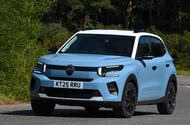
Citroen C3 Redefines Comfort and Value in the Supermini Race After Fiesta Exit
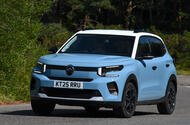 The jostling to fill the supermini void left by the Ford Fiesta continues with a model that's all about comfort The Ford Fiesta may be dead, yet its rivals have taken the initiative by trying to make a new supermini that becomes the default choice in the class.New Renault Clio, Suzuki Swift and MG 3 models have all been launched in recent months to try to take the Fiesta's crown, and now a new Citroën C3 is making its bid.The C3 is a visually identical petrol-powered sibling to the Citroën ë-C3. There's a hybrid option too, and all three versions are based on Stellantis's new Smart Car platform, which was designed to keep costs down.As well as maintaining a low entry cost, character, comfort and class-leading value are the main objectives of the new C3. And it does just that: the new C3 is generously equipped and a newer model still manages to undercut the entry-level Clio.We’ve already driven the petrol and electric versions, and we liked them both. There's also a hybrid, which may well be the pick of the bunch. VersionPowerTurbo 100hp Manual99bhpHybrid 110hp Automatic110bhpElectric 113hp Standard Range Automatic111bhp
Discover the Automotive Special Editions That Truly Stand Out
Five Trucks That Lose Value Fast: What Smart Buyers Need to Know

Are Electric Cars Really Dead in America or Just Hitting Pause
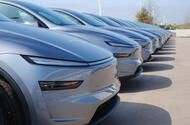
The Tesla Model Y is the best-selling EV in the USDonald Trump's government has killed EV purchase incentives and ripped up fuel consumption mandates
Prospects for electric car sales look gloomy in the US after president Donald Trump’s government killed purchase incentives and ripped up legislation forcing ca rmakers to improve their average fuel consumption. But does that mean EVs are dead over there?
The recent push by car makers to launch more EVs in the US is definitely going into reverse, believes General Motors. “I would be surprised if there aren't fewer EV retailers or EV sellers in the next four to five years,” its CFO, Paul Jacobson, told the JP Morgan Auto Conference on 13 August.
GM is currently the second largest EV seller in the US, after Tesla, but Jacobson warned investors that it would take the company longer for its EV business to become profitable as demand faded. Meanwhile, the company is “investing pretty heavily in our ICE portfolio,” he said.
American EV demand should be showing a spike ahead of the 30 September ending of the $7500 federal tax credit for new electric cars, and sales were up 4.6% in June, figures from S&P Global Mobility reported by Automotive News show. However, EVs' market share was actually down, at 8.6% in the month compared with 8.8% a year before.
By contrast, in the EU, where car makers are still very much guided by legislation to reduce CO2 emissions, the EV share stood at 16% for the first half of the year, according to figures from lobby group the ACEA, up from 12% in the first six months of 2024.
In the US, EV sales are still dominated by Tesla, which accounted for half of all June sales, despite a drop in numbers in the face of strong growth from the likes of GM, Honda and Jeep, according to the S&P figures.
Tesla now has a problem, however. The company relied on emissions credits for much of its income, but the three months to the end of June showed that such income halved to $439 million.
Trump’s 'Big Beautiful Bill', which reduced the penalties for car makers busting the corporate average fuel economy (CAFE) limits will “impact our total revenues going forward,” said Tesla CFO Vaibhav Taneja on the company’s second-quarter call.
Essentially it means those selling ICE vehicles now don’t need to worry about buying credits from Tesla or anyone else if they fall short. So Tesla loses twice, the first being the loss of the $7500 government incentive on EVs costing less than $55,000 (or $80,000 for SUVs and pick-up trucks).
Tesla CEO Elon Musk was downbeat on the call. “We're in this weird transition period where we will lose a lot of incentives in the US. We probably could have a few rough quarters,” he said.
Ford meanwhile said it had cut its commitment to purchase EV credits by a whopping $1.5 billion.
Now that the pressure to hit 50% EV sales by 2030 in the US has been removed and California’s ability to set an even tougher goal has been stripped out, car makers such as Ford, GM and Stellantis can focus on more profitable ICE vehicles.
The imperative to develop and sell more EVs has been removed almost completely. “That was really creating a lot of heavy discounting behavior,” GM’s Jacobson said. “[Car makers] weren't interested in selling EVs as much as they were interested in creating credits that were otherwise going to potentially be short going forward.”
Ford, GM and Stellantis in particular are going back to doing more of what they know best: selling high-displacement pick-ups and SUVs for big profits.
For example, Stellantis under new CEO Antonio Filosa has brought back the Hemi V8 engine for the Ram pick-up, with production starting “very soon” Filosa promised at the end of July.
This came as it delayed its electric and range-extender Ram pick-ups to 2026 and 2027 respectively.
Others are following suit. Honda has reportedly killed a five- and seven-seat electric SUV, while Nissan has axed two electric saloons planned for sale in the country.
This is what Trump – a long-time critic of EVs and any reduction of CO2 emissions in general – wanted.
In July, the US Environmental Protection Agency (EPA) proposed to rescind the 2009 Greenhouse Gas Endangerment Finding, which stated that a combination of greenhouse gases “threaten the public health and welfare of current and future generations”. With that cancelled, the EPA would no longer be allowed to regulate the CO2 output of new vehicles.
One argument the EPA put forward was that “complying requires manufacturers to design and install new and more expensive technologies, thereby increasing the price of new vehicles”.
EVs are more expensive in the US than new cars overall. Price guide Kelly Blue Book calculates the average transaction price (ie with discount) at $57,734 in May, compared with $48,799 for all cars.
However, Trump’s stated desire to lower prices is at odds with the impact of trade tariffs, which is hurting both homegrown and import brands.
“We are still expecting prices to move higher through the summer as the inflationary impact of tariffs begins to hit,” said Erin Keating, analyst at Blue Book parent company Cox Automotive.
While the pressure has been removed to sell EVs of any kind, American car companies realise that electric drivetrains aren't going away. At some point, they will have to make them profitably or lose out to those who can.
“We really see the Chinese companies like Geely and BYD as a competitive set for our next generation of EVs, not the global OEMs,” Ford CEO Jim Farley said on the company’s second-quarter earnings call.
Chinese EVs are as good as banned in the US, due to high tariffs, but few believe that will last forever.
Ford went on to announce a forthcoming range of affordable EVs based on a new Universal EV platform, starting with a mid-size, double-cab pick-up that will arrive in 2027, priced at $30,000 (around £22,000).
Farley described the innovative manufacturing method and reduced complexity as “a Model T moment”, suggesting Ford was once again reinventing car production.
“We believe the only way to really compete effectively with the Chinese over the globe on EVs is to go and really push ourselves to radically re-engineer and transform our engineering, supply chain and manufacturing process,” Farley said.
Small (or what the US thinks as small) and cheap is the new mantra for future EV success. “The pure EV market in the US seems to us very clear: small vehicles used for commuting and around town,” Farley said.
Lower prices will be driven partly by Ford and GM pushing into cheaper lithium-iron-phosphate (LFP) batteries, which use fewer expensive metals like cobalt.
Amazon-backed start-up Slate has a similar philosophy and is prepping a potential rival for Ford in the £20,000 electric Truck, due in 2026 with wind-up windows and the driver's smartphone standing in for a touchscreen.
The success of GM’s $33,600 Chevrolet Equinox compact electric SUV is showing that buyers will respond if the EV is cheap enough.
Powering EVs is inexpensive in the US, thanks to low electricity prices, and of course they can be charged almost off-grid with enough solar panels to draw from – something that appeals to the American sense of self-sufficiency.
The current trend for electric golf carts as suburban runabouts in the US suggests that buyers are not innately anti-EV, even outside of EV hotspots like California.
The charging infrastructure for longer journeys could also continue to improve after Trump’s administration backed off its stated plan to cancel a $5bn funding programme to grow a broader network.
Right now, the American car industry is dialling back investment in EVs and pouring more money back into ICE vehicles – but it’s not a dramatic reset, given how much slower the market was in coming round to EVs compared with China or Europe.
“Really, it's a North American issue.” Patrick McCann, CFO of Canadian parts giant Magna, told the JP Morgan conference. “EVs are coming; it's just a matter of when and at what levels."

How to Spot and Avoid Card Skimmers at the Gas Pump

Volkswagen Unveils Next Gen T Roc with First Ever Full Hybrid Powertrain Ahead of...
 New powertrain – which can run on petrol, electricity or both – will also feature in the Golf and Tiguan
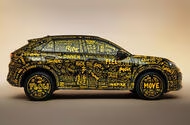
Volkswagen has released the first official image of the new second-generation T-Roc ahead of its imminent reveal, showcasing the new car's sharply raked roofline.
As previously reported by Autocar, the second-generation T-Roc is due to be unveiled in the coming weeks, ahead of an expected debut at September's Munich motor show – where Volkswagen is also tipped to reveal the ID 2X baby SUV.
It will be the brand's first model to use a new full-hybrid powertrain that is also bound for the Golf and Tiguan. It will work similarly to that used by Toyota, capable of driving the wheels using either a petrol engine, an electric motor or a combination of both at any given time.
Volkswagen has never used such a system in a production car, and its introduction comes less than a decade before the firm will have to go all-electric in Europe - but CEO Thomas Schäfer said the company is "experimenting now because certain regions are gliding into HEVs [hybrid electric vehicles]".
"We needed to do it anyway, because South America has a need for an HEV drivetrain - and the T-Roc is built in South America for South America, and also in China.
"Interestingly enough, HEV has also become a big theme in the US specifically. It's a technology that everybody said was not necessary any more, but now with the BEV slowdown in the US, the balance is [moving towards] HEVs."
After introducing this new system in the Mk2 T-Roc, Schäfer said Volkswagen will "see where it makes sense" elsewhere in the line-up but "we're not going to double everything up; we will have PHEV and HEV models".
It will not be introduced to every car that uses the same MQB architecture as the T-Roc, but it will be added to the Golf and Tiguan in the next two years, a Volkswagen official told Autocar.