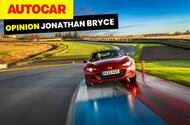
Why Knockhill Is the UK’s Most Thrilling and Authentic Race Track Experience
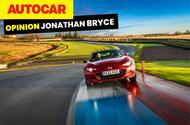 BTCC always serves up argy-bargy, especially around this tricky track
Amid a sea of better-appreciated and well-appointed UK race tracks, Knockhill has a knack for holding its own.
It is Scotland’s only FIA-approved track and is notorious for its narrow, complicated and steeply undulating twists and turns – and this coming weekend, it will host the seventh round of this season’s BTCC. I can’t wait.
I think of it as the UK’s Laguna Seca: one of its corners, Duffus Dip, has a sharp downward gradient much like the Californian track’s Corkscrew.
If you’ve never driven on it before, you will begin each lap with blind faith before negotiating the steep, unforgiving kerbs and tight turns that can make or break victory.
It has taken a while to get here. Back in the early 1970s, a sheep farmer called Tom Kinnaird had a bold vision for a race track – and a digger in his shed.
He carved out what would become Scotland’s answer to the Nürburgring or Spa-Francorchamps, albeit on a slightly smaller scale. The circuit complex would be made up of old farm service roads and a disused mineral railway that closed in the early 1950s.
By 1974, there lay a snaking, undulating ribbon of asphalt that dips and rises by around 60 metres from the track’s highest point to its lowest.
The first race was held in 1975 and, thanks to a large catchment area that includes both Edinburgh and Glasgow, it proved as popular as it was profitable. By the time it was inaugurated into the BTCC calendar in 1992, Knockhill had become one of Britain’s best-known race tracks.
I grew up watching BTCC racers there with my dad. It’s where I learned to appreciate the skill required for drivers to pound round at the limit, and it’s where I found out anyone could drive their car on a track – whether it was a new BMW M5 or a ratty Renault Clio.
It’s also where I got a first taste of on-track driving and the techniques required to do so, from left-foot braking to the trusty heel-and-toe gearshift.
I drove a Honda Civic Type R and a single-seat racer, despite the fact that the fastest car I had experienced at that point was a diesel BMW 1 Series. Quite the unforgettable day.
But something else makes Knockhill memorable: its totally unvarnished, down-to-earth honesty: the greasy pit lanes are always open to the public; the track inspection and cleaning vehicle is nothing more than a rag attached to the back of a Ford Transit; tired old Mitsubishi pick-ups are used for on-circuit maintenance; there are two very earthy eateries; there’s a pervading year-round wind chill; and the camaraderie between drivers on a public track day makes for a fantastic atmosphere.
Look at it this way: last year, I interviewed every BTCC driver and asked them what their favourite track was and, ignoring Silverstone or Brands Hatch, more than half of them chose the plucky, damp Scottish circuit. Quite telling, that.
Gordon Murray’s Modern Supercar Gets a Retro Makeover—But Does Nostalgia Deliver?
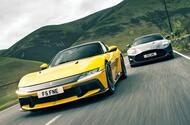
V12 Legends Clash in Scotland Ferrari 12Cilindri vs Aston Martin Vanquish in the Ultimate...
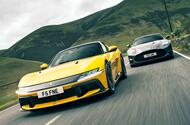
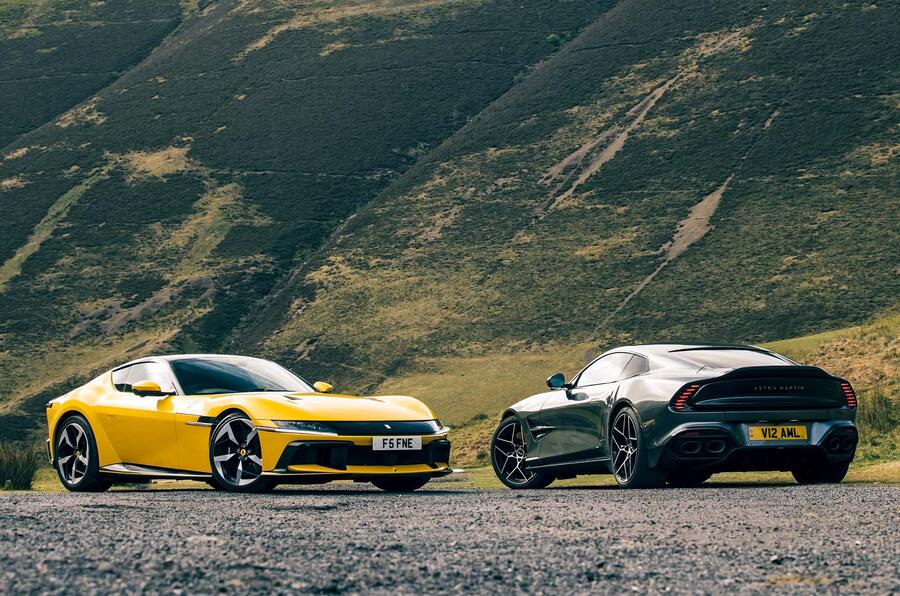
Scotland is the venue for this 1643bhp V12 showdownThese epic new Aston and Ferrari V12s have brought a famous old rivalry back to the boil
The 12Cilindri didn’t have the easiest start in the court of public opinion, and not just because of its cumbersome name. “The V12 isn’t bombastic enough!” brayed forum posters. “The Pontiac Aztek wants its rear styling back,” X-ers snarked. And on it went.
Maybe they had a point. With its breadvan-ish tail and hyper-chiselled prow, the very latest Ferrari GT (styled in-house, Pininfarina’s 66-year influence having ended with the F12 Berlinetta) is provocative. Particulate filters also mean this most recent iteration of the 65deg Tipo 140 engine is indeed tamer on the ears than before.
But temper your prejudices. Remember that many considered the 550 Maranello ugly when it hit the scene in 1996. Remember also that, especially in these darkened times of the fun-car witch-hunt, it is better to have a stirring timbre than raw amplitude.
In any case, what really matters today is how the £339,000 doe-dee-chee-chi-lin-dree feels to drive, and the early signs after its endless banana of a clamshell bonnet peels west off the A74(M) and we wail off into the Lanarkshire wilds are spectacularly promising.
Lurking a few miles up the road is a new Aston Martin. Unlike the Ferrari, we’ve already tasted the Vanquish on home soil, so we know it borders on the spectacular. Ingredients: a lavish cabin, a stunning silhouette and, in its handling, a heavy-set poise that melts so sweetly into slithers of oversteer it makes you laugh out loud. It’s a very modern Aston (with Apple CarPlay and all).
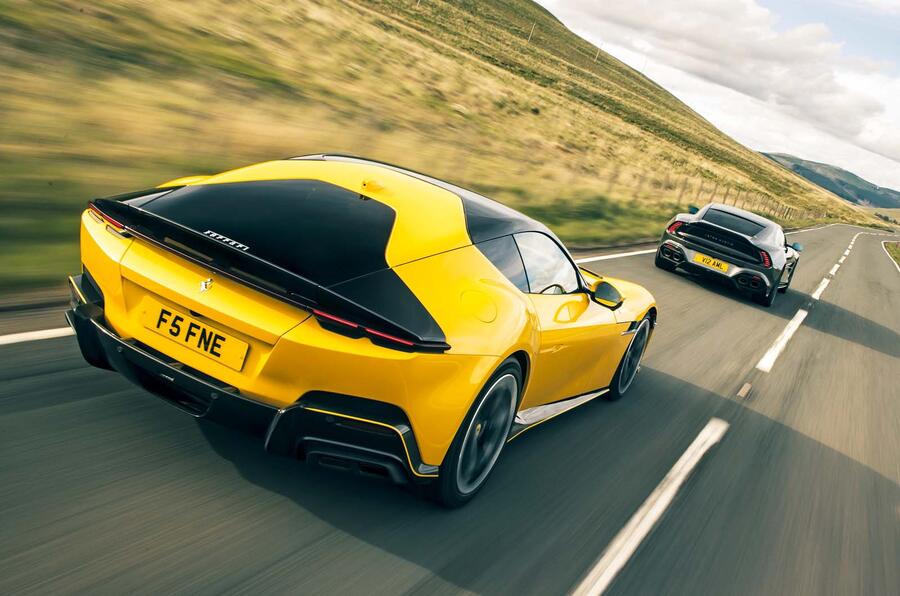
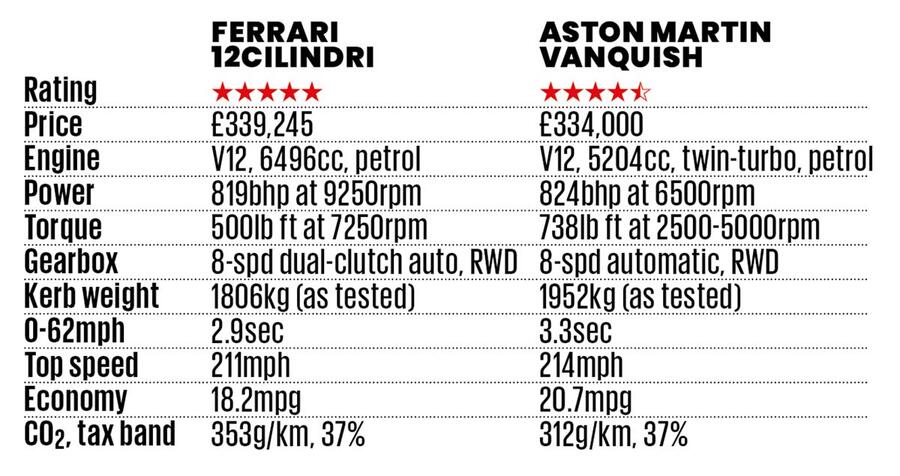
It has the numbers, too. The old DBS was outgunned by the 12Cilindri’s predecessor, the 812 Superfast, but Aston hasn’t let that go unanswered, aided by the fact that, with only 1000 Vanquish examples ever to leave Gaydon, fleet emissions aren’t such a concern.
As such, even though Ferrari cheekily includes a 5bhp bump in its claimed 819bhp output, owing to a ram-air effect at speed (honestly, whatever next?), the Mk3 Vanquish is still more powerful. Its twin-turbo 5.2-litre V12 makes 824bhp and nearly half as much torque again as its atmospheric 6.5-litre counterpart. The carbonfibre-rich coachwork is indisputably prettier as well. V12’s louder, too.
No wonder Aston is so confident in this car’s ability to compete that, for the first time in this sort of contest, there’s price parity. The Brit is still less expensive but now by only 1.5%.
Scotland, then. It’s the venue for this 1643bhp instalment of an especially juicy rivalry, which comes at an especially captivating moment in the intertwined histories of these car makers. Aston and Ferrari have long been kindred, but in 2025 the synergies really are striking.
Both are now publicly listed and compete in the fastest, most glamorous and most high-tech spectacle in motorsport, where not only races but also reputations are won and lost. The road car ranges also shadow one another like never before.
If you’re fortunate enough to be on the hunt for an emotion-driven super-coupé, super-SUV or 12-cylinder super-GT, you can get it from Maranello or from Gaydon. And often nowhere else. When the PHEV Valhalla arrives, we will be able to say the same for mid-engined supercars.
For the offensively rich and well-connected petrolhead, both companies also offer road-legal Le Mans-flavoured dream machines: the new 1138bhp F80 and the 1.1-tonnes-of-downforce Valkyrie (not quite so new).
Meanwhile, deploying those cars’ grizzled, glamorous racing counterparts in the form of the 499P and Valkyrie AMR-LMH, Aston and Ferrari only days ago battled alongside one another for outright victory at Le Mans, for the first time since 1959 (when the DBR1s of the David Brown Racing Dept saw off a 250 GT quadruple threat).
And another thing, to drive home this affinity. Until the recent arrival of Adrian Hallmark, Aston’s CEO was Amedeo Felisa, who once occupied the very same post at Ferrari. We have yet to see quite such a high-profile transfer in the other direction, but who knows what the future holds? Mr Hallmark is rated.
All of which is to say, if you want to compare Aston and Ferrari, there’s no end of criteria. Yet the comparison that hits hardest and means the most remains Il Classico. We’re talking grand tourers, especially the V12 ones. Maybe I’m too romantic, but for me these extraordinary cars still define the companies.
Does it matter which wins? In truth, not especially. I’ll tell you now that, barring the odd quirk, both the 12Cilindri and the Vanquish offer an experience so absurdly gratifying, exciting and evocative that you would give a kidney to own either. Today’s verdict is more of a gun-to-the-head affair.
The drive up from London to the Scottish Borders confirmed the 12Cilindri is a milder-mannered sort than the 812 Superfast it replaces, even if the V12 has now 600rpm greater scope and redlines at 9500rpm – extraordinary for a 6496cc unit with 12,500-mile service intervals.
This toning down of the format is welcome. I loved the Superfast but it wasn’t a well-conceived GT. It lived in a permanent state of arousal, as a hell-raising supercar in grand tourer drag. It was, even among 800bhp supercars, niche.
There are strong traces of that DNA in the 12Cilindri but the new car is more laissez-faire. From cold it fires into the urgent, faintly industrial idle we’re familiar with, although the din is softer and more nasal. The EPAS gearing is still lightning-quick, but there’s more linear off-centre response, married to an all-round heightened sense of maturity and heft.
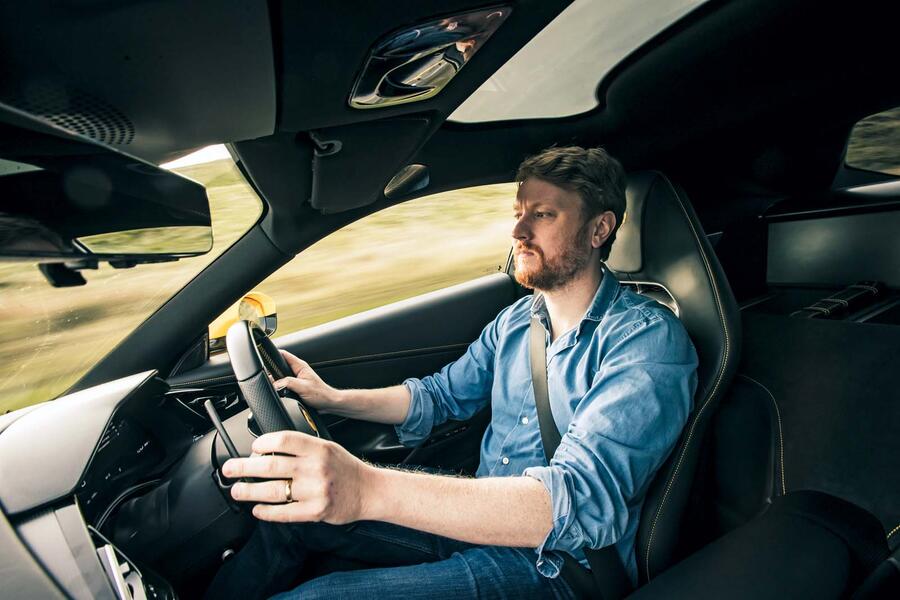
Get going and with stellar engine management you can even pull 40mph at a silken 1000rpm in eighth. The 12Cilindri isn’t quite Porsche 911-drivable about town but it’s not far off. The cabin, with its U-shaped glass canopy panel, also feels more capacious and inviting than the road-racer 812’s ever did, even if the fussy dash is obviously designed to reduce the cost of offering both LHD and RHD.
That’s a shame, because it diminishes the cockpit feel. It can feel like you’re playing Outrun with another, albeit vacant, arcade machine adjacent. Otherwise, this is a hospitable interior. In light leather it would be fabulous.
During 350 miles of motorway running up to Lanarkshire, the digi-needle of the Ferrari’s central rev counter rarely swept beyond 4000rpm, because it didn’t need to. Peak thrust of 500lb ft doesn’t arrive until 7250rpm but this engine’s ability to swiftly usher you from 50-70mph with nothing more than a creamy purr in sixth is fantastically effortless.
There are massage seats and wireless phone charging, and Ferrari’s ever-useful Bumpy Road mode (press the red damper toggle on the manettino) remains a superbly simple way of UK-proofing the ride quality. All in, this feels like something of a reset for the front-engined Ferrari V12. And the result? On arrival, I feel reasonably rested.
We’re dwelling on the prosaic stuff for a moment because, in the real world, it’s critical. A big part of the appeal of rarefied super-GTs resides in the fact they are still, if used properly, wonderful tools for blatting between wonderful places, with the odd back-road thrash thrown in.
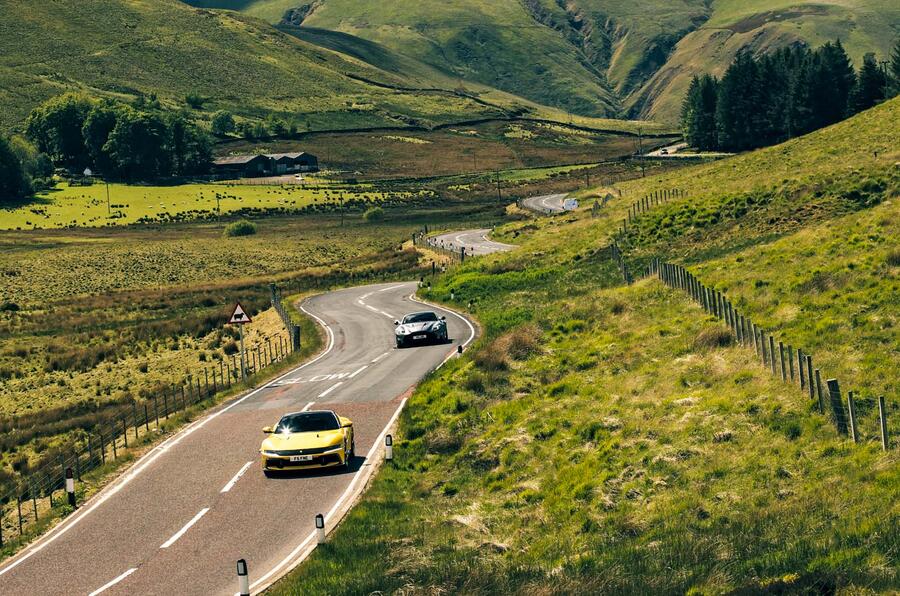
Hopping into the Aston while my senses are still brimming with 12Cilindri feedback is enlightening. So much light in here! At the same time, I feel more embedded in the machine, because not only are the scuttle and beltlines higher but the seats are softer and more substantially bolstered.
It’s a neat duality. Opting for the carbon-shelled buckets in the Ferrari would give you greater support and set you an inch or so lower in the monocoque but it still wouldn’t feel this natural. The Aston’s cabin is a lounge-like space, and the vast panoramic roof and rear quarterlights mean all-round visibility is excellent. That is handy, because this Aston also feels leviathanic compared with its foe – more so even than its 120mm-longer body suggests.
Which brings us to weight. When we put the Vanquish on the scales at Horiba MIRA, the readout said 1952kg split 51:49 front to rear, with the 82-litre fuel tank brimmed. We did the same for the Ferrari. Result: 1806kg split 48:52, with 92 litres on board.
Admittedly, this particular 12Cilindri has £54,754 of lightweight carbonfibre options on it – the price of an Alpine A110 – but it still undercuts the Aston to the tune of two people and does so while carrying actuators for rear-axle steering and a dual-clutch gearbox. The Vanquish has neither and, with its carbon bonnet and comparatively straightforward layout, you do wonder how it has turned out to be quite so portly.
It means the 12Cilindri packs the better power-to-weight ratio, and chooses to pair it with narrower tyres, as well as a wheelbase some 185mm shorter – and, in effect, made 20mm shorter still by those steering rear wheels, aka Virtual Short Wheelbase. Full turns of the rim between the lock-stops? The Vanquish needs 2.3 while the Ferrari is done after 1.9. Right, then.
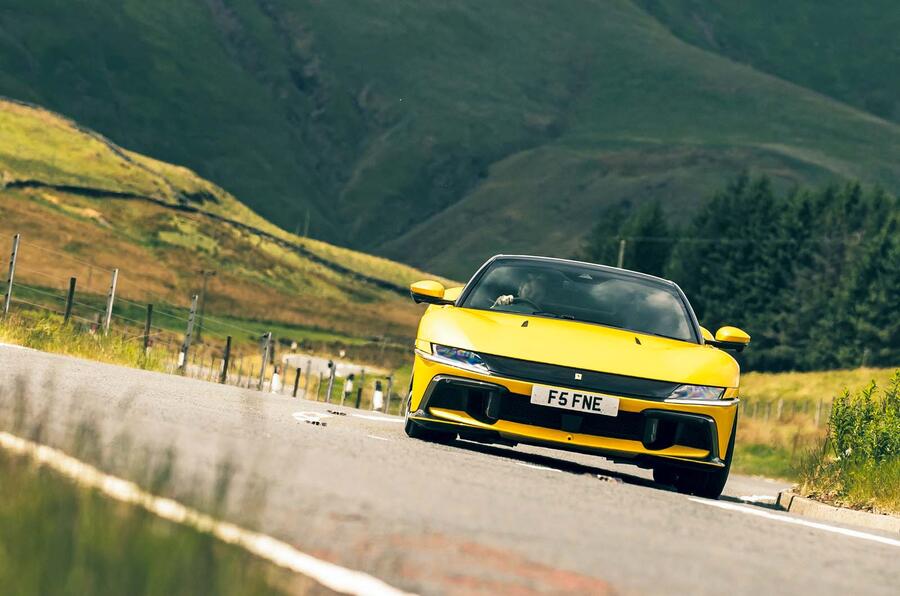
When it comes to uncorking that V12, the 12Cilindri is now looking like it could well have more than mere ‘traces’ of Superfast DNA in it…In the end, the Ferrari sails close to the wind at times but ultimately doesn’t push its dynamic personality too far, as the egocentric Superfast revelled in doing.
Charge down a good B-road (third gear has you covered from 20mph to 120mph, although when the shifts are this sublimely crisp, there’s a joy in snagging second or fourth for the hell of it) and you will have an awareness of the car’s brain whirring away.
An Aspirated Torque Shaping control logic limits torque at lower revs to give the V12 delivery even greater theatre, and the rear-steer (with its single degree of motion) is plumbed into an ecosystem of sensors and controllers that govern the behaviour of both the electronic limited-slip differential and an ABS system taken from the 296 GTB. That, despite all this, the 12Cilindri feels natural is an extraordinary feat.
Your only task in the Ferrari is to ensure you dial yourself fully into the unique relationship between steering and roll. That quick rack and the suspension’s manner of letting the body take a fair degree of lean means it’s still quite easy to overdrive the 12Cilindri, especially if you have the dampers in their Bumpy Road mode.
But get on its terms, building some confidence in the process, and you have a car you can lean on as hard as you like; one whose joyful ability to scythe into and grip through corners can be trusted entirely and whose subtle balance can be precisely manipulated with the throttle.
Imagine a three-dimensional cuboid as long as the car and two inches tall, set at the height of those piercing headlights. It’s within the generous vertical scope of this space – this plane – that the 12Cilindri seems to levitate: pitching, squatting, expressing itself freely but always with sensational control and an unctuous smoothness.
Here we have the pliancy of a super-saloon, the precision of a supercar and the indulgent balance of a front-engined GT. It is a singular experience that is fun and exciting but also just a little bit cerebral.
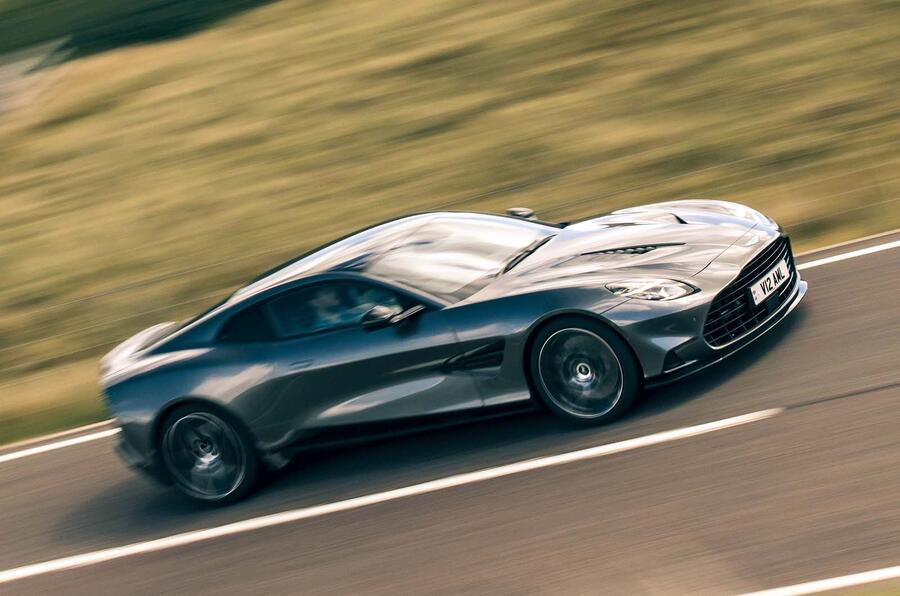
The Aston can’t compete with this, but then it isn’t trying to. It has earthier charms, beginning with the act of sliding into a homely, enveloping, beautifully wrought cabin and firing up, with a gargling flare of revs, a burlier take on the V12 format. The Vanquish reeks of personality, and when you pull away you realise that it is very much a complementary character to the Ferrari.
Still, in the interest of being thorough, there are some salient points of difference. The Aston’s steering is perhaps more naturally sped than the Ferrari’s but is needlessly heavier, is lighter on communication and has a somewhat oleaginous motion by comparison.
The same can broadly be said of the brake-pedal feel and, unsurprisingly, the throttle response. You’re never going to get as close to the action in the Vanquish as you always are in the gymnastic, transparent 12Cilindri.
Perhaps it’s better that way. While the Italian pitches itself into corners with perfect obedience, the Brit’s endless nose takes longer to heave itself towards an apex. Before you can enjoy the lean muscle of the car’s prodigious mid-corner balance, there’s a thin membrane of fatty understeer you need to cut through.
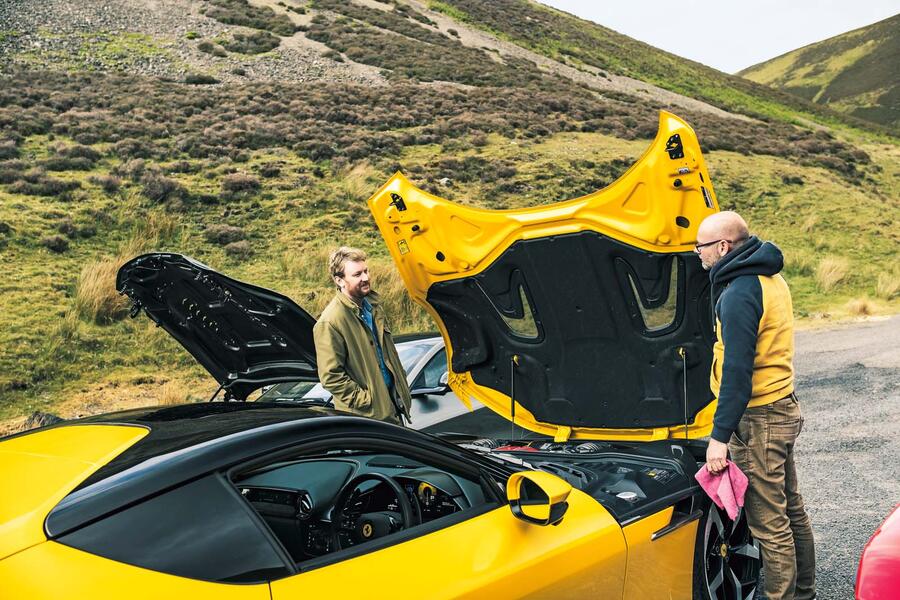
Whether this is due to set-up, or the lack or rear-steering in the Aston, or simply the larger front contact patch (great for outright grip, less so for poise), it’s impossible to say. It’s not the layout, though. Open up the bonnets and you see that, relative to the front axle, the Vanquish’s block is only an inch further forward than that of the 12Cilindri, although the latter’s does nestle notably lower.
This agility deficit affects the way you enjoy the car. It prefers longer radii and the more methodical, demarcated approach of brake-turn-throttle, whereas the Ferrari invites you to take mad liberties in the blurring of those processes.
All of this is in evidence on the morning of day two, when I’m following Matt Prior, who is at the wheel of the Aston, through a slalom of bends in the pouring rain. My colleague – no slouch – subtly straight-lines the sequence, taxing the Aston’s chassis as little as possible.
Fair enough; I’d do the same. But right now I’m revelling in every degree of direction change the road permits, such is the alacrity of the Ferrari.
And yet the Aston is just so enjoyable to be around. On poor surfaces it is routinely crashier than the delicate Ferrari, its damping feeling less sophisticated and the presence of unsprung mass seeming altogether greater, but elsewhere it has a supreme slickness – an ease that allows it to inhale big distances while entertaining the driver.
Being comically over-endowed with torque has twin benefits: the sense of bottomless, latent power is itself gratifying, while actually using it in a targeted way makes the Vanquish ready to play and have fun at any moment.
The performance is outrageous, too. At 8000rpm the 12Cilindri will put your stomach in free fall, but by that point the surprisingly sweet-sounding Vanquish has already disappeared up the road.
It’s savage, but not a savage, although both cars could forfeit a bit of their truly OTT speed for better refinement at a cruise. Focusing narrowly on big-distance travel, the Vanquish offers more, instilling a sense of wellbeing its wild rival can’t match.
The Ferrari counters with dynamics that take your breath away, and a new-found balance of attributes that result in it being the world’s best super-GT. So sod what the armchair critics say: to drive this Ferrari is to experience a masterpiece.
1st. Ferrari 12cilindri
Course-corrects the front-engined Ferrari V12 recipe and duly marries real usability with glorious dynamics. The benchmark.
2nd. Aston Martin Vanquish
Hugely ambitious and in certain respects the better grand tourer but too heavy and can’t live with the Ferrari’s poise and precision.
Bizarre Mustang Mach-E Crash Leaves Experts Puzzled Over Driver’s Actions

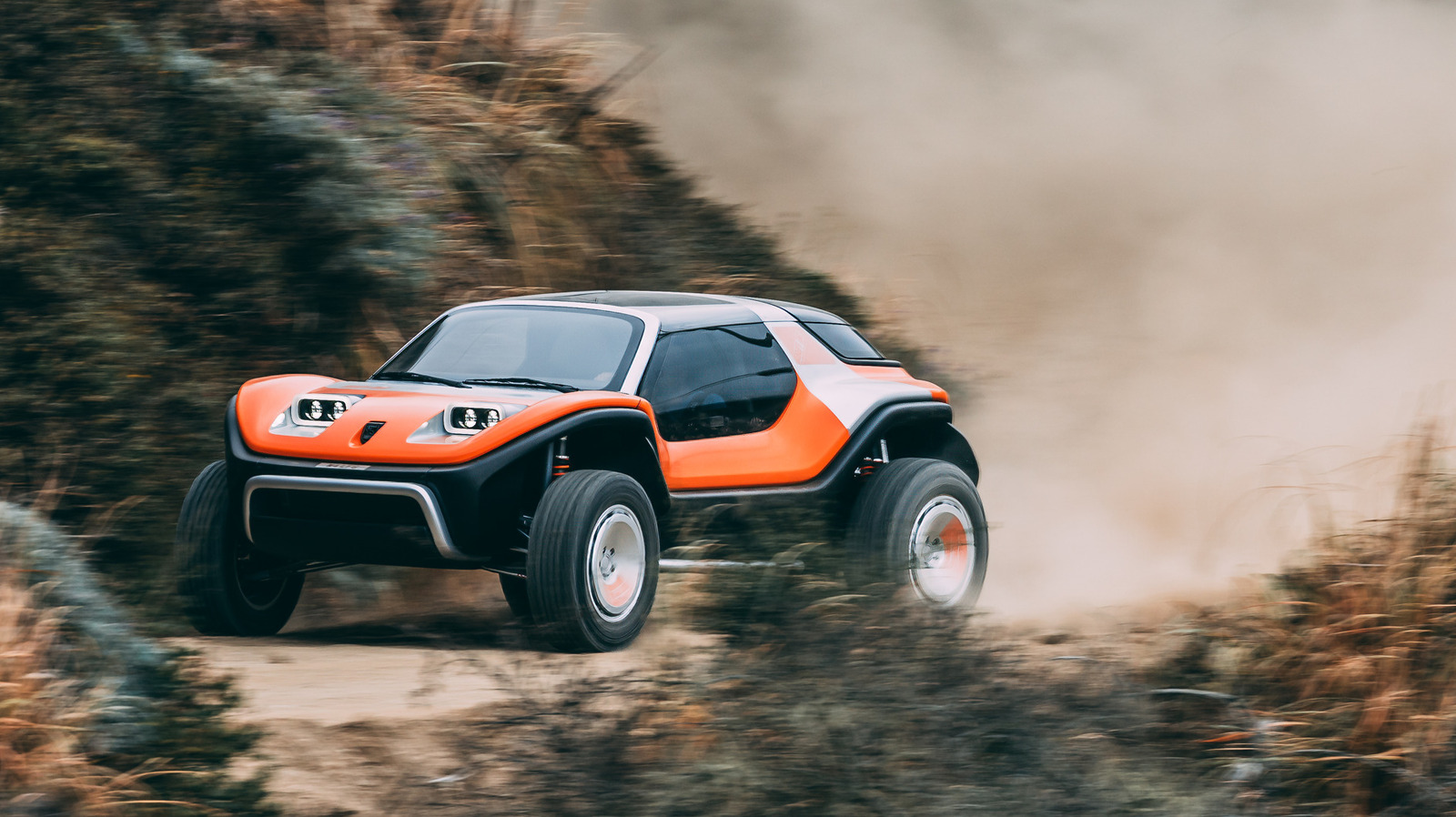
Meyers Manx and Tuthill Reveal High-Performance LFG Rally Buggy

From Skoda to Supercars How Frank Heyl Designs Bugatti’s 250mph Masterpieces
 Bugatti’s Frank Heyl loves timeless styling, engineering supremacy - and listening to The Prodigy at 200mph
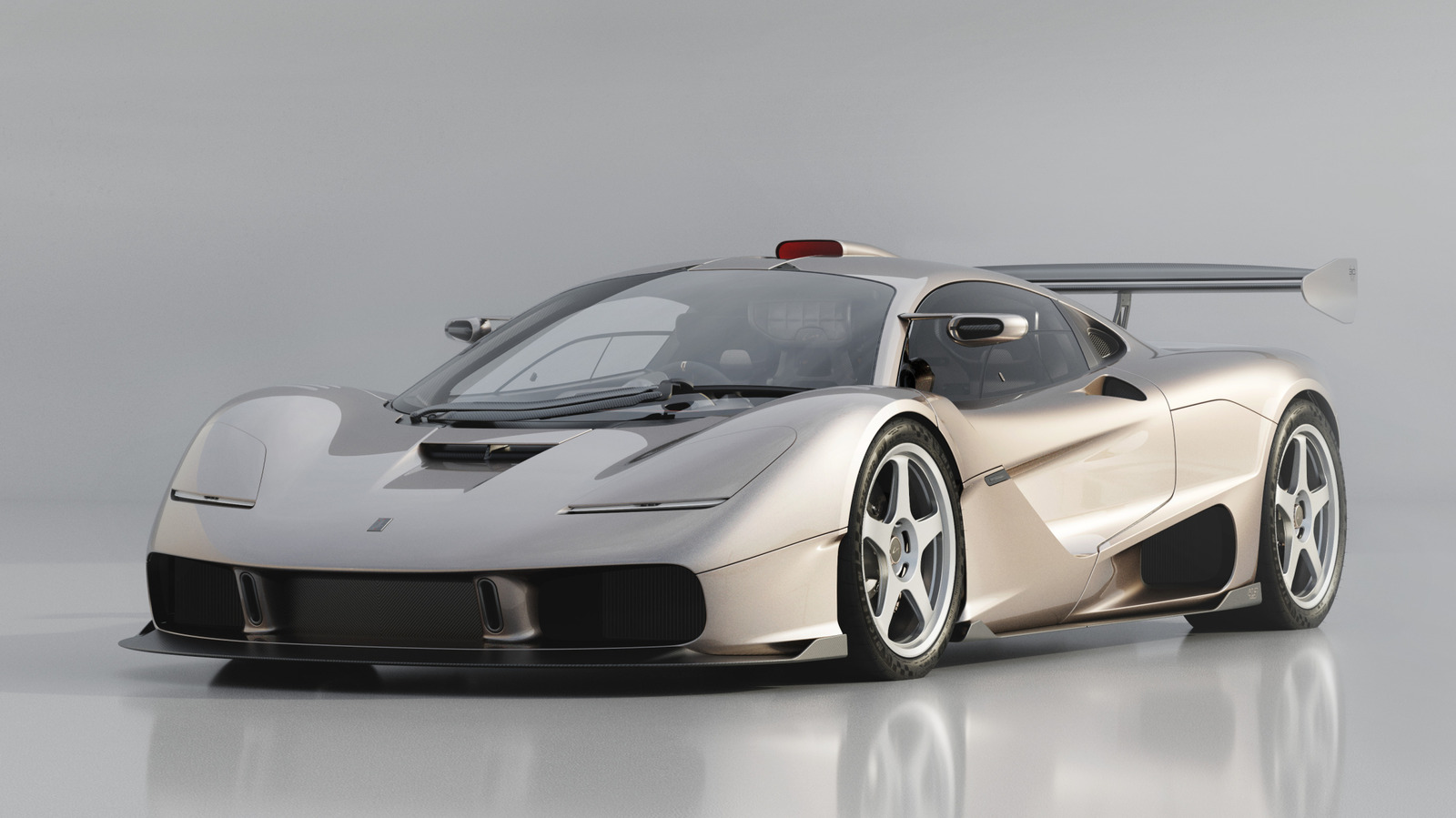
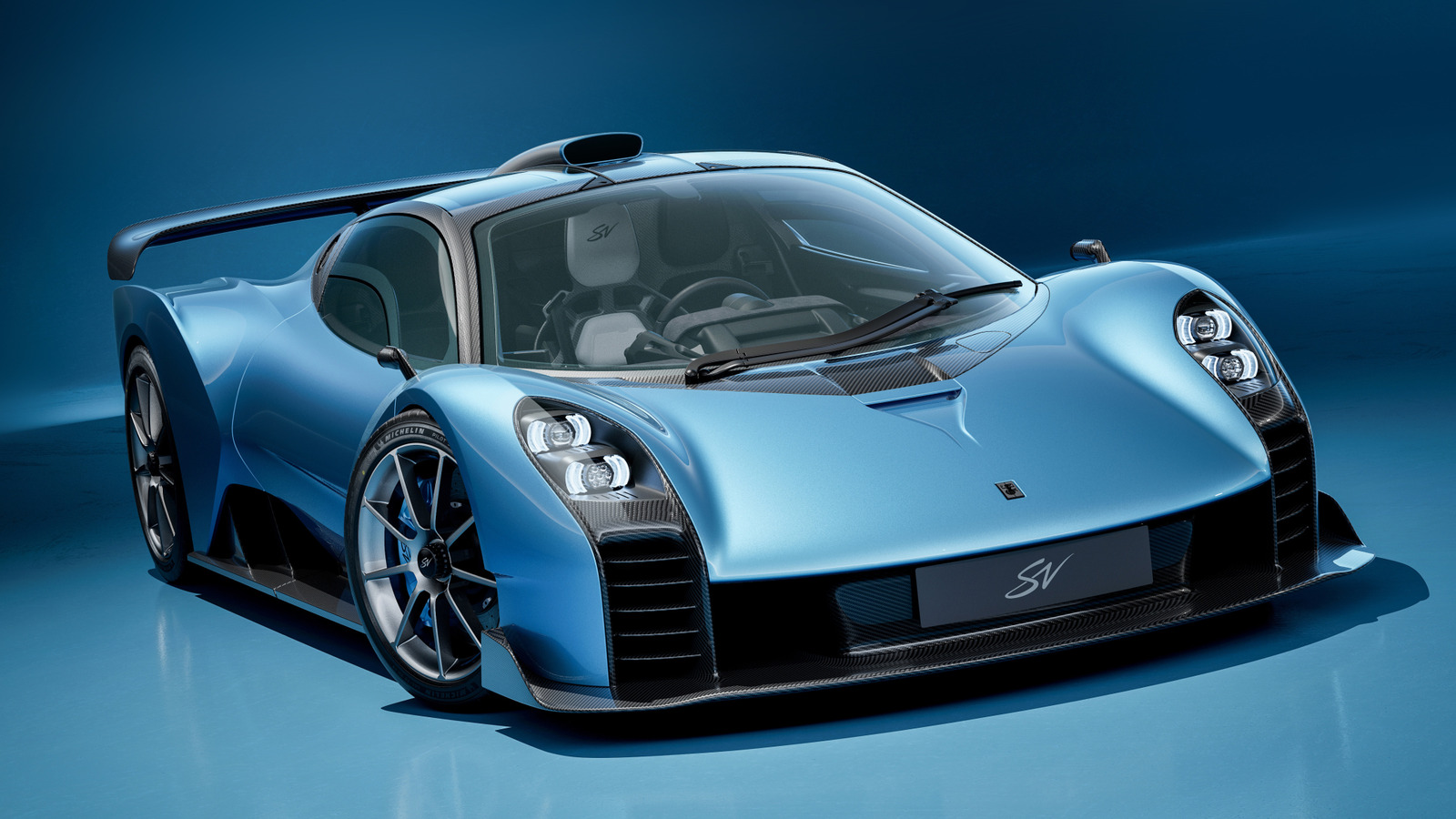
Gordon Murray Unveils Ultra-Rare Le Mans GTR With All 24 Units Sold Out
Electric Car Grant Expands to More Affordable Models Making EV Ownership Easier in the...
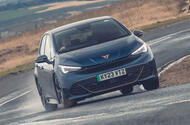 Volkswagen ID 3, Peugeot e-208 and Peugeot e-Rifter are among the latest models to receive the discount
The government has confirmed another five models eligible for its new Electric Car Grant (ECG), including the Cupra Born – rated by Autocar as one of the most fun to drive EVs currently on sale.
The Born, Peugeot e-208, Peugeot e-2008, Peugeot e-Rifter and Volkswagen ID 3 will now receive a £1500 discount, boosting the list of eligible models to 24.
The ECG is applicable to certain EVs priced at £37,000 or under, depending on the emissions output of the countries where they are built, and amounts to either £1500 or £3750.
This first group of confirmed cars have received the lower amount, but some are among the cheapest EVs on sale already, making a £1500 discount all the more significant.
First 24 ECG cars: what they cost now
Alpine A290: £32,000
Citroën ë-Berlingo: £29,740
Citroën ë-C3: £20,595
Citroën ë-C3 Aircross:£21,595
Citroën ë-C4: £26,150
Citroën ë-C4 X: £27,215
Citroën ë-C5 Aircross: £32,565
Cupra Born: £34,190
Renault 4: £25,495
Renault 5: £21,495
Renault Megane: £30,995
Renault Scenic: £35,495
Nissan Micra: £21,495
Nissan Ariya: £33,500
Peugeot e-208: £28,650
Peugeot e-2008: £33,900
Peugeot e-Rifter: £30,750
Vauxhall Astra Electric: £33,505
Vauxhall Corsa Electric: £26,005
Vauxhall Frontera Electric: £22,495
Vauxhall Grandland Electric: £35,455
Vauxhall Mokka Electric: £31,005
Nissan GB managing director James Taylor has hailed the ECG as "a clear signal to both customers and manufacturers that they are prioritising the uptake of electric vehicles in the UK, and on providing affordable options to consumers".
He also noted that the Japanese firm has three new EVs on the way, referring to the Sunderland-built electric Juke, Qashqai and Leaf - the last of which is due imminently and is in a "very strong position" to benefit from the maximum £3750 grant.
Meanwhile, the UK-built Citroën e-Berlingo and Vauxhall Combo Life Electric were awarded the lower discount. This is likely to be because their batteries come from abroad, while the Nissan Leaf's battery will be supplied by the AESC factory next to Nissan's Sunderland plant.
The government has not given any indication of when to expect the next batch of ECG-eligible EVs, but many sub-£37k EVs – including many from Asia that are unlikely to be deemed eligible on the basis of their manufacturing and export CO2 footprints – have already been discounted by their makers.
Unlike with the previous Plug-in Car Grant (PiCG), buyers don't need to register for the discount; instead, the ECG is automatically applied to the sale price of the eligible models.
Transport secretary Heidi Alexander said: “This summer, we’re making owning an electric car cheaper, easier and a reality for thousands more people across the UK.”
To qualify for the grant, car manufacturers' models must meet science-backed emission-footprint criteria, while the individual model lines must be priced under £37,000 in entry-level trim.
Which discount a model receives – either £1500 or £3750 – is determined by its environmental impact: how much CO2 is emitted in an EV's production and assembly, along with the emissions footprint of its battery manufacture. Threshold levels have yet to be made public.
While any manufacturer can apply for their car to be included in the scheme, it's thought that, due to this criteria, cars produced in Asian countries will not be eligible for the ECG.
Worries about manipulation of the scheme have already been raised. For instance, sources have revealed to Autocar that car makers will be able to self-register EVs to receive the ECG.
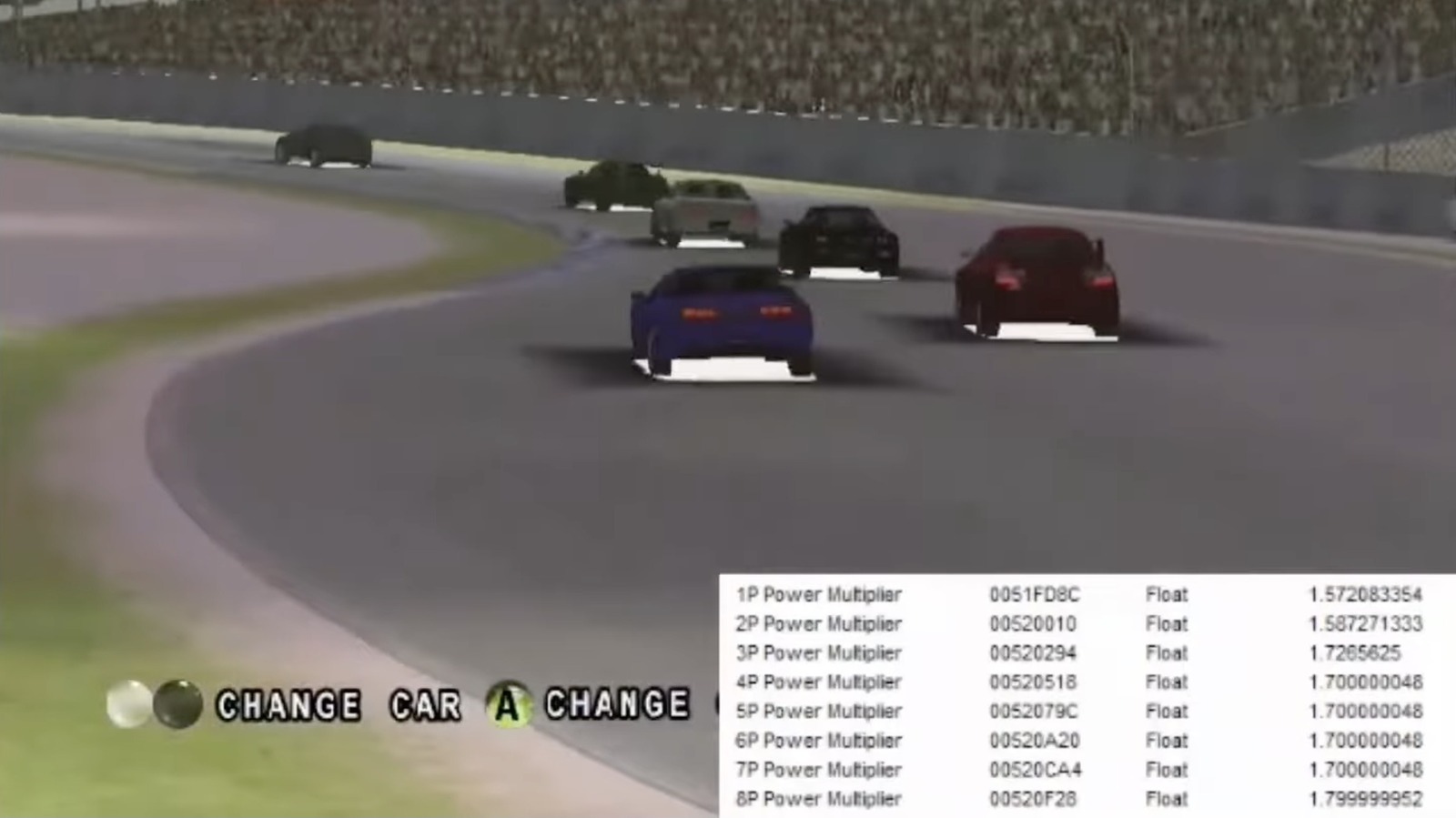
Do Racing Games Secretly Cheat Players? Uncovering the Truth Behind the Tracks

Young American Pilot Resolves Chilean Legal Battle After Antarctic Detainment