

Gordon Murray Unveils Ultra-Rare V12 Masterpieces Inspired by Le Mans Legends
 Two new bespoke V12 cars signal the fi rm’s move into rarefied territory
Gordon Murray Automotive has revealed a longtail reworking of the T.50 and a reimagining of the Le Mans-winning McLaren F1 GTR LM as the first two cars from its new Special Vehicles at Monterey Car Week in California.
Gordon Murray Special Vehicles (GMSV) is the Surrey firm’s answer to Bentley’s Mulliner and Lamborghini’s Ad Personam divisions. Its brief is to create one- and few-off special editions with their own styling and mechanical make-ups and enable greater scope for customisation.
GMSV will have three product lines: SV Design will create limited-run special editions; Bespoke will handle unique customer-commissioned one-offs; and Heritage is for continuation-style reworkings of cars originally designed by company chairman Gordon Murray.
Le Mans GTR

The GMSV Le Mans GTR is based on GMA’s T50 hypercar, but aside from its powertrain, “almost every other element of the car” has been modified.
So it keeps the T50’s naturally aspirated 4.0-litre V12 and six-speed manual gearbox but wraps the running gear in a completely bespoke bodyshell that’s inspired by the legendary ‘longtail’ racers that dominated at Le Mans for decades – including such icons as the Matra-Simca MS660, Porsche 917, Alfa Romeo Tipo 33/3 and Murray’s own McLaren F1 GTR.
A defining characteristic of longtail racers, as the name suggests, is a dramatically extended rear deck that boosts downforce and aerodynamic efficiency – particularly important attributes on on the high-speed Le Mans circuit, where a slightly higher top speed could be the difference between winning and losing the 24-hour race.
So inspired, GMSV’s first production car has been designed with a rigid focus on minimising drag and maximising downforce. It features a long, low and streamlined silhouette adorned by prominent splitters, skirts and diffusers that “generate maximum ground effect aerodynamics” – plus a huge fixed rear wing. As a result, the GTR is able to forgo the ground-sucking fan that’s fitted to the T50.

Between the two channels of the substantial rear diffuser are the dual exits of a re-engineered exhaust system that has been designed to “deliver a deep and balanced V12 soundtrack”. A new roofmounted air intake “adds to the orchestral cabin experience as owners explore the full 12,100rpm rev range”.
The GTR also receives a heavy chassis overhaul that bolsters its on-track potential with stiffer, lighter suspension components, a wider track, larger tyres and new solid engine mounts that, GMA says, boost dynamics while avoiding the noise and vibration that usually come with such an arrangement.
The interior is more trackfocused than the T50’s, but GMA emphasises that “interior quality is retained”. The dashboard, clocks, controls, pedals and seat cushions have all been redesigned and customers are able to fully personalise the colour scheme and materials to their tastes.
Development of the GTR is already under way ahead of the first cars being delivered next year. Prices haven’t been disclosed but are likely to be higher than the £3.1m T50S Niki Lauda track car – and all 24 examples have already been sold, through supercar dealer Joe Macari.
S1 LM

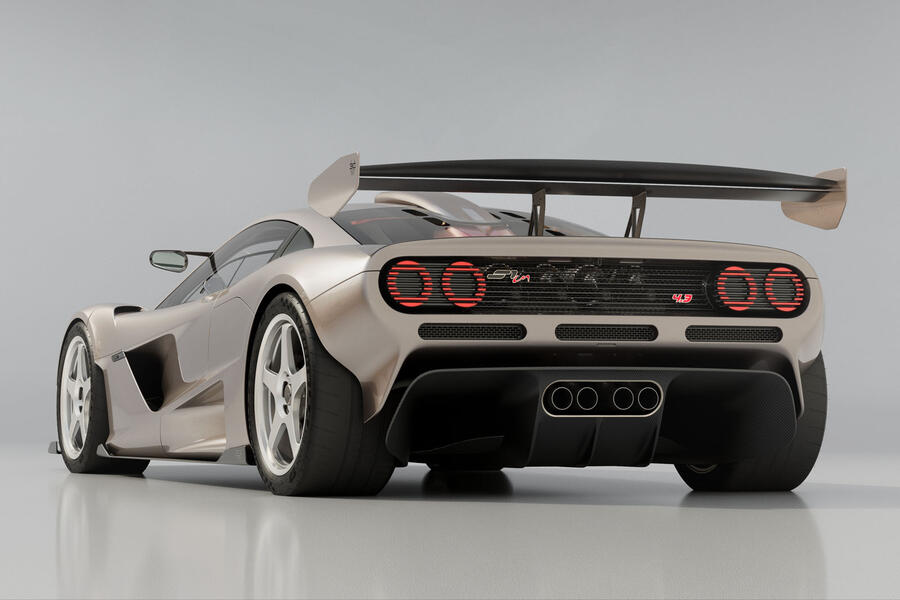
GMSV’s second creation – from the Bespoke line – is designed as a tribute to the Murray-designed McLaren F1 GTR LM that won the Le Mans 24 Hours in 1995 Called the S1 LM, it apes several defi ning design elements of the racer that JJ Lehto, Yannick Dalmas and Masanori Sekiya piloted to victory 30 years ago. These include a central aerofoil, a roof-mounted air intake, split-level rear wing and circular rear light lenses that flank a bespoke quad-pipe exhaust exit.
GMA says it has been designed for “track agility over comfort and cruising”, gaining a substantial chassis overhaul to go with its beefy aero kit, but it remains road legal.
Notably, the S1 LM also has a bespoke engine – still a Cosworth atmo V12, like the T50 and Le Mans GTR, but boosted from 4.0 to 4.3 litres and with a target output of more than 690bhp. It still has a screaming 12,100rpm redline and still sends its reserves to the road through a six-speed manual.
The cabin is “raceinspired yet designed with a precision that belies its track focus”, GMA says, adding that the S1’s interior “explores new lightweighting concepts, utilises the fi nest materials, and showcases bespoke design quality at every touchpoint”.
The S1 is even more exclusive than the GTR, with just five cars being built – for one unnamed client. No price has been given.

Lexus LFR Design Teased by Bold New Sport Concept Features

Lamborghini Fenomeno Unleashed The Ultimate Hybrid Hypercar Breaks Every Performance Record
 Revuelto-based hybrid hypercar redefines Lamborghini's performance benchmarks
The new Lamborghini Fenomeno is a £3 million, limited-run and track-honed special that is the firm's most powerful model yet – and poised to break all the firm's major performance benchmarks.
Based on the £450,000 Revuelto flagship, it is the radical next edition of Lamborghini’s ‘Few Off’ special vehicles programme, following the Sesto Elemento, Veneno, Centenario, Sián and Countach LPI 800-4.
At its heart is the same plug-in hybrid powertrain as the 1001bhp Revuelto. However, power from the 6.5-litre V12 and three electric motors (two at the front, one in the gearbox) has been boosted to 1065bhp. That makes this the most powerful Lamborghini to date.
The 10bhp boost in engine power alone to 824bhp comes courtesy of a redesigned valvetrain and creates the highest specific ouput of any Lamborghini V12 yet, at 127bhp per litre.
Power is sent to the rear wheels via the Revuelto’s transversely mounted, eight-speed dual-clutch gearbox.
The additional 54bhp from the motors is courtesy of a bigger, 7kWh lithium ion battery created specifically for the Fenomeno, which can discharge energy at a greater rate than the Revuelto's 3.4kWh pack. The electric-only range has not been disclosed, but for reference the Revuelto’s EV range is six miles.
Although the carbon-clad hypercar has the same dry weight as the Revuelto, at 1772kg, the extra power gives it a record power-to-weight ratio for a Lamborghini of 601bhp per tonne.
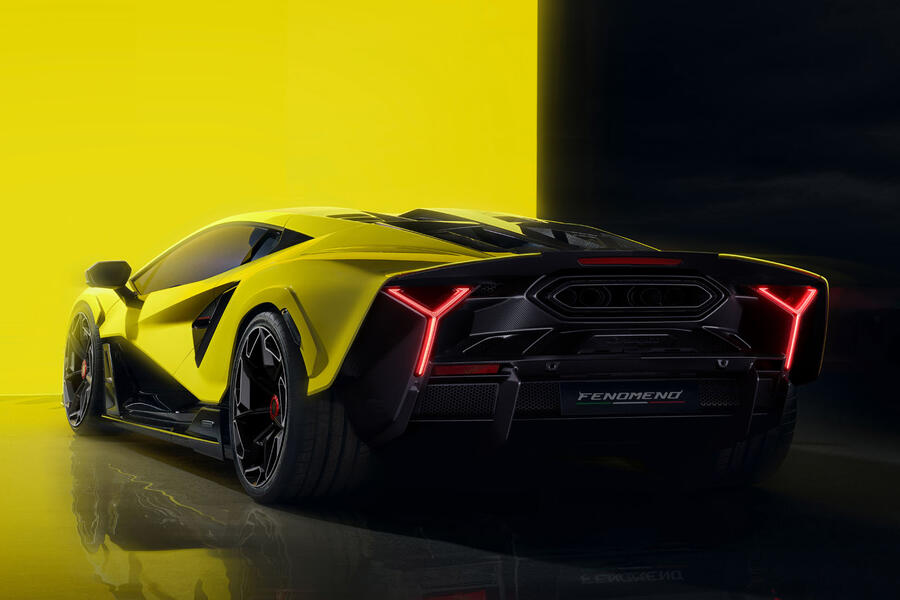
The Fenomeno can also complete the 0-62mph sprint in just 2.4sec, making it the quickest Lamborghini to date. That is 0.1sec quicker than the incoming Aston Martin Valhalla and just 0.1sec slower than the track-honed Ferrari SF90 XX. The Fenomeno achieves 0-124mph in 6.7sec and tops out at 218mph.
In addition to straight-line pace, the Fenomeno features downforce-inducing aero for rapid lap times. Elements include a wide front splitter, a pair of underbody air curtains and an active rear wing.
Making its debut at Monterey Car Week in California, the Fenomeno is a “tribute to the original Countach and the beginning of the era of supercars”, CEO Stephan Winkelmann told Autocar, “but I’m against having retro cars”.
He said “some” elements of the car’s “hyper-elegant” body will be used to steer the design of future models, although it is “too early to say” which parts. “There are some elements which are helping us to decide what to do next,” he said.
Although hardcore in its remit, the Fenomeno offers the usual Lamborghini luxuries inside, where it mirrors the design of the Revuelto with a 12.3in instrument cluster, 8.4in central touchscreen and button-clad steering wheel.
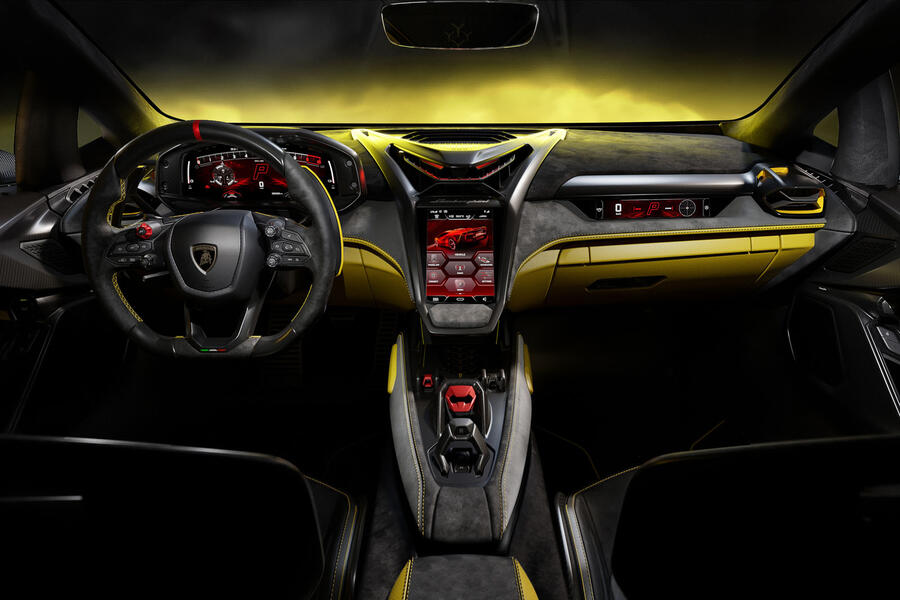
However, the perceived material quality has been dialled up, with even more Alcantara and carbonfibre covering the major touch points. Lightweight racing buckets are also fitted.
Just 30 examples will be made, including one that’s destined for the Lamborghini museum in Bologna, Italy. All are already sold.

Meet the F-26: A 1000-HP Slantnose Porsche Inspired by Racing Legends


Aston Martin DBS Transformed Into 805bhp Supercharged Hot Rod With Bond-Inspired Style
 DBS restomod by American firm Ringbrothers sits on new a chassis and is boosted by a 2.65-litre supercharger
The classic Aston Martin DBS has been reinvented as a hot rod, fitted with a Ford Mustang V8.
Courtesy of American restomod and performance parts firm Ringbrothers, the GT now draws power from a 5.0-litre Coyote engine that has been overhauled and fitted with a 2.65-litre supercharger to put out 805bhp.
To cope with the extra grunt, the original gearbox has been swapped for the same Tremec six-speed manual unit used by models such as the C6 Chevrolet Corvette, Dodge Challenger Hellcat and Cadillac CT5-V Blackwing.
The DBS’s structure has also been extensively modified. Its original chassis has been swapped for a new development by hot rod specialist Roadster Shop, with a 3in-longer wheelbase, an 8in-wider front track and a 10in-wider rear track.
Fox coilover suspension is fitted at each corner, the brakes have been uprated to 380mm Brembo discs and bespoke centre-lock wheels by HRE have been fitted to provide sufficient clearance of the brakes.
The original DBS bodywork has been replaced with a carbonfibre kit painted in Double-0 Silver, in reference to Aston Martin’s connection with the James Bond franchise.
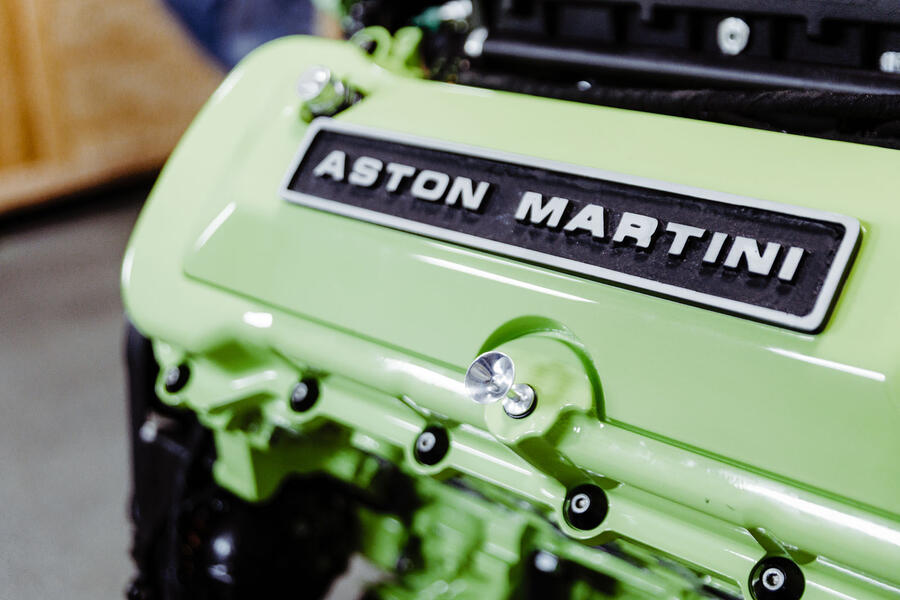
In keeping with the Bond theme, ‘Aston Martini’ is written on the engine’s valve covers and the oil dipstick is machined into the shape of a Martini glass.
Inside, the Ringbrothers DBS gets a new carbonfibre dashboard with stainless steel accents, brass door handles and tan leather upholstery.
“We asked ourselves ‘what would an MI6 agent drive on his holiday?’,” explained Ringbrothers co-owner Jim Ring.
The result, nicknamed Octavia by the firm, will be shown at The Quail Motorsports Gathering as part of Monterey Car Week in the US.

Infiniti QX65 Monograph Concept Reveals Bold New Direction for Luxury SUVs


Lexus Unveils Striking Sport Concept Hinting at Powerful LFA Successor
 New concept car unveiled at Pebble Beach is "a vision for a next-generation sports car"
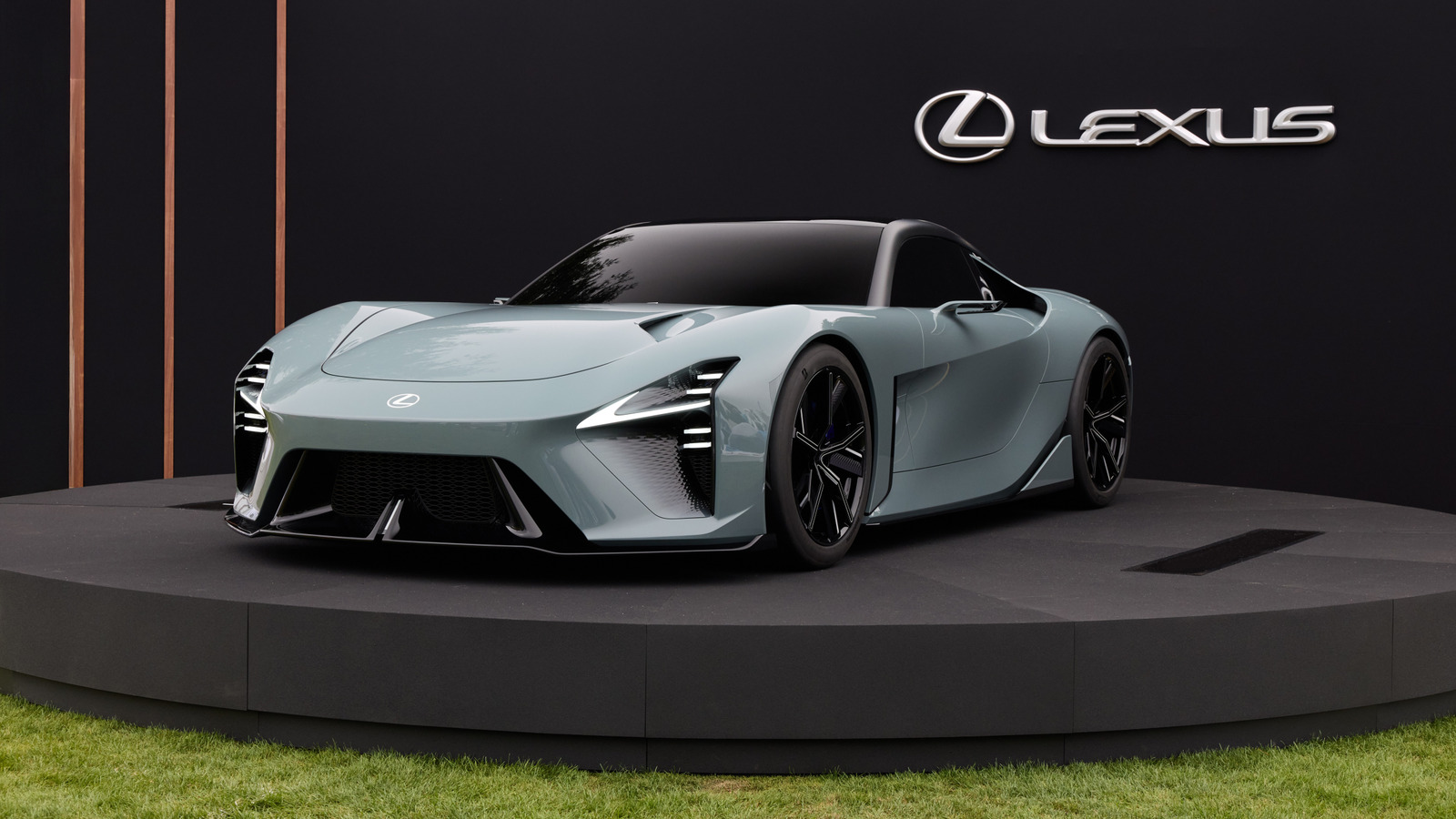
The Lexus Sport Concept has been revealed at Monterey Car Week, giving an early look at the styling of the brand's upcoming V8-powered Aston Martin Vantage rival tipped to be called the LFR.
Although it has not strictly been confirmed to bear a relation to the prototypes demonstrated at the Goodwood Festival of Speed, it has the same rakish proportions and many similar cues, suggesting a link between the two cars. It is described by the brand as "a vision for a next-generation sports car".
It introduces several new design cues evolved from the camouflaged Goodwood prototypes, such as a front light and grille signature that runs along the length of the front wings, and an n-shaped rear light bar that spans the car's width.
It also appears to trade the prototype's conventional side mirrors for racing-style cameras, while there is a small aerodynamics-boosting tailfin on the roof that appears to be lit to match the state of the brake lights.
A chunky rear diffuser and active rear spoiler hint at the car's performance-focused billing, although exhaust pipes – nestled above the diffuser on the prototypes – are conspicuous by their absence.
A triangular motif set into the rear end references the similar exhaust set-up on the Lexus LFA, reinforcing previous reports that the new model would be positioned as its successor. It is thought that the production version may adopt the LFR moniker, although nothing has yet been confirmed by Lexus.
The production version of the concept is likely to hit showrooms in late 2026, given the GT3 racing variant is expected to make its debut in next year's World Endurance Championship which begins in March 2026. GT3 regulations require that competitors share their basic body designs with a related road car, and Lexus' current contender, the RC F, is among the oldest cars on the grid. Indeed, production of the road-going RC F (and the regular RC coupé) ends later this year.
Technical specification remain under wraps, but the soundtrack of the GT3 prototype run up the hillclimb at the Festival of Speed was that of a highly-strung V8. GT3 regulations point to a power output in the region of 600bhp, with a kerb weight of no more than 1300kg, though it is possible the road-going version may adopt some element of hybridisation to help it meet global emissions regulations.
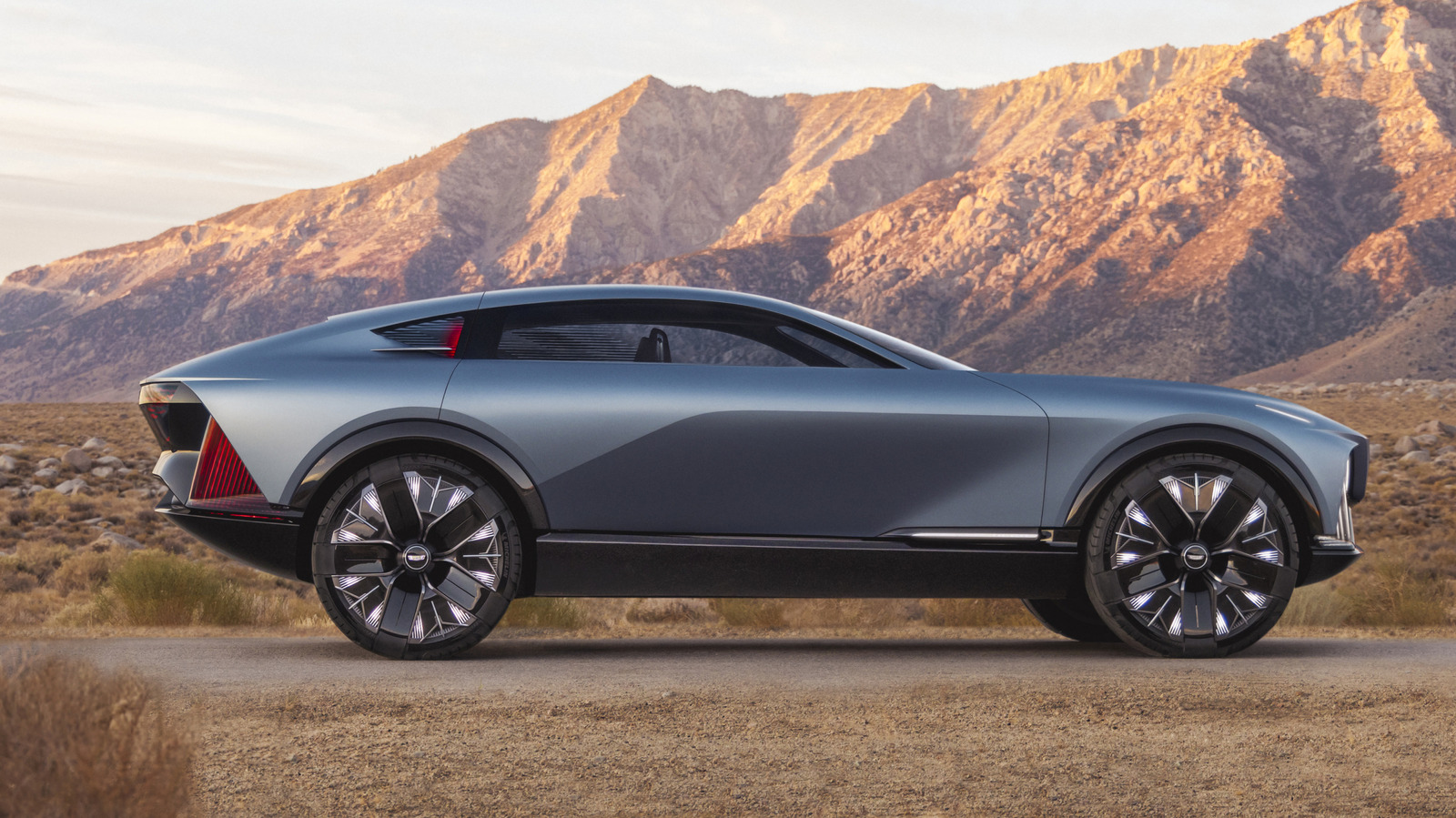
Cadillac Unveils Futuristic EV Concept with Gullwing Doors and Healing Infrared Lights
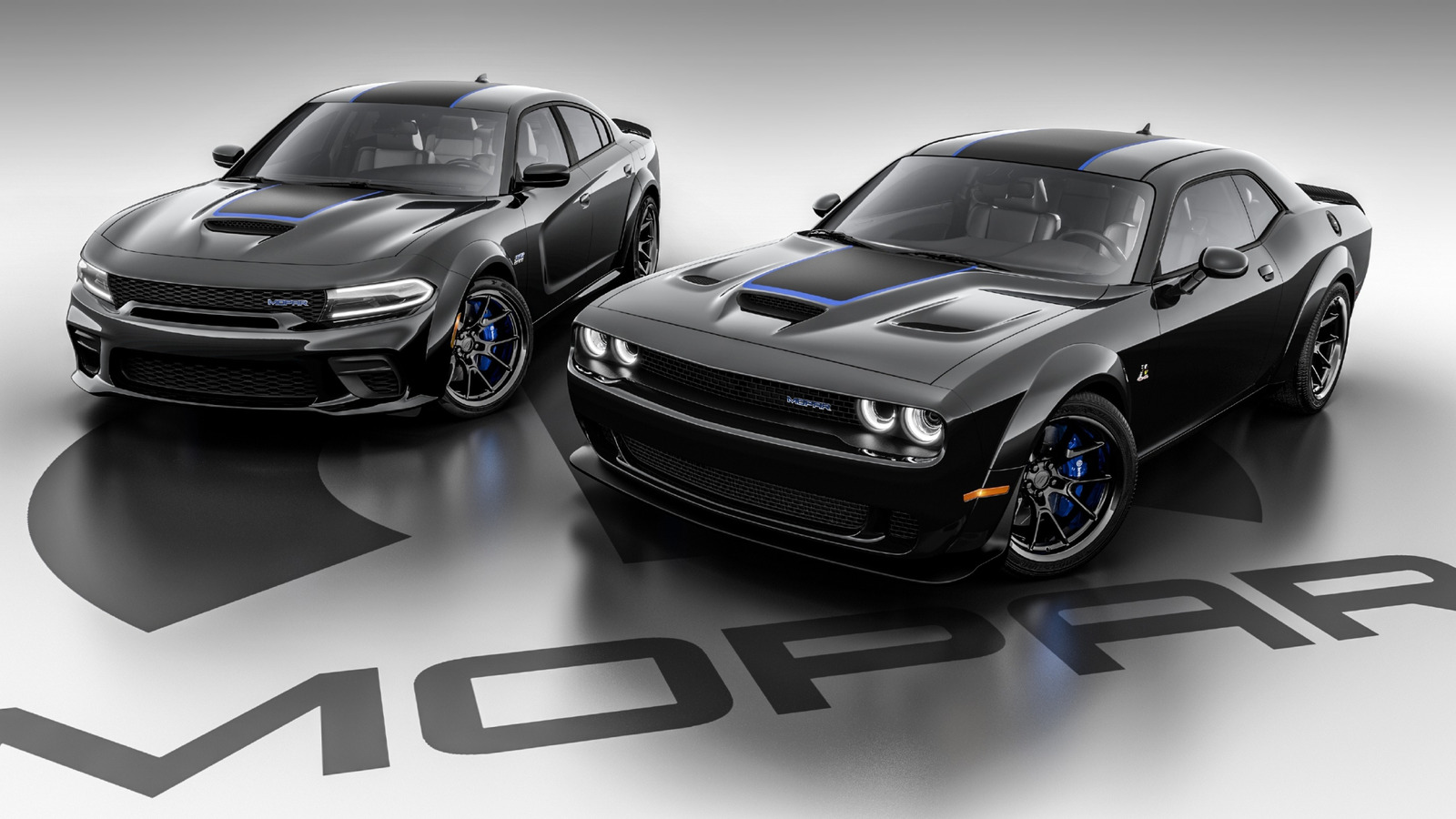
How a 1920s Antifreeze Brand Became a Surprising Muscle Car Icon

Why Modern Car CEOs Are Redefining Leadership in a Turbulent Industry
 For generations, CEOs were either savvy businessmen or engineering savants – now that's changing
It's rare for a new CEO to speak to the media in their first few months in the job, let alone weeks. But just hours after being announced as Luca de Meo’s replacement, new Renault Group chief François Provost fronted up for questions following the release of the French firm’s latest financial results.
A polished performance was dominated by a message promising consistency in delivering what de Meo had begun, albeit at an accelerated rate. No surprise there, given that Provost was an internal appointment and a close ally of de Meo. But don’t expect him to court the limelight in the same way.
The one question Provost half-dodged was how it felt to follow de Meo – the journalist who asked having gushed in his praise for the departed Italian. Keen to mark the start of his own era, Provost didn’t mention de Meo, saying instead that Renault now needed a CEO “to focus on strategy” in a turbulent market.
Sensing the question had gone unanswered, chairman of the board of directors Jean-Dominique Senard chipped in to say “diversity and variety” in leadership styles “brings positivity”. In other words, they have gone from one leadership style to another, which is fine with him.
Such wild swings in approach are becoming common in automotive. Provost talks of turbulence, and that is being felt in the boardrooms too.
At the Financial Times’ Future of the Car summit in May, Chris Donkin of executive search company Savannah said the average tenure of a FTSE company CEO was four years and three months, which is a churn rate of 8% per year.
As of May in automotive, that rate was 20%. De Meo and JLR CEO Adrian Mardell are among those who have gone since as the merry-go-round keeps spinning, and around one in 10 CEO jobs are vacant or being held on an interim basis.
Donkin said none of this was surprising, because the role of an automotive CEO is changing: “For well over 100 years, every CEO came from one of two places: the smartest engineer of their era or most commercially savvy financial guy. And they were all guys.
“The CEO today cannot be as Ferdinand Piëch would have been, as the smartest person in the room on the majority of the issues. Now, with the proliferation of issues a leadership team is dealing with, a CEO can’t be the smartest person in the room on more than a handful of topics.”
Instead, the automotive CEO role now is more akin to that of an executive chairperson, recruiting the very best team to lead various areas, leaving the CEO to have the “strategic dexterity to come up with novel solutions to all of the industry challenges”.
Provost gave the air of being from that school. Now to see how Renault responds to the change in style, if not strategy, from the all-action de Meo.