

Why the Volvo XC60 Is the Smartest Used SUV Buy for Style Comfort and...
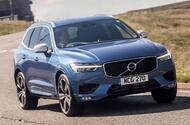 The Mk2 XC60 arrived in 2017 but only one thing betrays its age: its used price In the dog-eat-dog mid-size SUV class, a distinctive exterior design is crucial to stand out from the crowd. Case in point: the second-generation Volvo XC60, which even at eight years old still looks fresh, enticing and just a little bit different.The minimalist, Nordic-chic aesthetic gives the XC60 the distinct edge for kerb appeal next to the likes of the Audi Q5 and BMW X3 – and now that you can bag this upmarket, tech-rich SUV for as little as £12,000, it starts to look all the more attractive.The show continues once the doors open too. The XC60’s airy cabin is modelled on the flagship XC90’s so it is among the slickest, most comfortable and most technologically advanced in its segment.There are plush leathers, soft materials adorn all the key touchpoints and, while there is a big portrait-oriented touchscreen, it’s supplemented by a useful array of chunky switches and buttons to satisfy your analogue proclivities.All trim levels are well equipped. You can spend around £2000-£3000 more on a range-topping Inscription model, which gets 20in wheels and massage seats, but you won’t feel short-changed by entry-level Momentum, with its all-important heated steering wheel and ‘Thor’s hammer’ LED headlights.If you’re after a more sporting look, then R-Design is your best bet but just be aware of the slightly firmer front seats.Rear accommodation is good, and although the second row doesn’t slide fore and aft, adults will have no trouble getting comfortable in the back. The boot is slightly short of class standards, at 505 litres, but it’s still big enough for several carry-on suitcases and has no lip so is easy to load.Boot capacity drops to 468 litres if you opt for the 401bhp T8 Twin Engine petrol plug-in hybrid, but it compensates for its reduced cargo capacity with a 27-mile EV range and cheaper tax.It’s no slouch, either: its turbocharged and supercharged (yes, we do mean ‘and’) engine, coupled with an electric motor, allows for a 5.3sec sprint to 60mph.As for the other engines, there’s nothing bigger than 2.0 litres and no more than four cylinders. The 187bhp diesel D4 is smooth and will do around 45mpg day to day, but we would opt for the 232bhp D5, which is punchier and no less economical.It’s better for towing duties too. There’s also the 251bhp T5 petrol, and while it’s quick, you’ll do well to get more than 30mpg.In 2019, Volvo rolled out a range of hybridised engines. There’s the 247bhp B5P and the sprightly 298bhp B6P. The B5P is widely available and costs around £20,000 for a four-year-old example with about 50k-60k miles on the clock.You’ll pay similar money for a younger 197bhp B4D or 232bhp B5D diesel: both are smooth, efficient and pleasant to drive. Volvo also added the T6 Recharge PHEV, which can do an impressive 48 miles on electric power – more than the equivalent X3.A facelift in 2021 helped the XC60 keep pace with its German competitors, when it gained a new front end, upgraded 12.3in Android-based infotainment system and quieter, more comfortable cabin.A tidy post-facelifted car with around 50,000 miles under its belt will set you back something like £25,000, about the same as an equivalent Audi Q5 – and, more importantly, half the price of a near-identical, showroom-fresh XC60.
Global EV Expansion and Volkswagen’s Labor Talks in Tennessee
New Electric City Car Promises Style and Affordability as Twingo Takes On Budget EV...
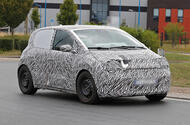 New electric city car will go toe to toe with the Volkswagen ID 1
The fourth-generation Twingo will arrive in mid-2026 as the new, sub-£17,000 entry point to Renault’s expanding EV lineup and a direct rival to the upcoming Volkswagen ID 1.
Spotted testing for the first time by Autocar spy photographers, the new city car will be launched seven years after its petrol predecessor was withdrawn from sale in the UK due to declining demand (just 877 UK sales in 2018).
The new Twingo marks another significant step in Renault’s EV advance and comes off the back of the successful Renault 5, which has carved a path for smaller, affordable EVs.
A key selling point for the Twingo will be its sub-£17,000 starting price, which is part of a brief to create a “fit-for-purpose urban vehicle with no compromise”.
Notably, this undercuts the old Twingo Electric’s starting price of €21,350 (£18,624) in 2021. This variant was introduced during the model’s third generation but never sold in the UK.
Its pricing will position it just above the £14,995 Dacia Spring and £15,995 Leapmotor T03 – the two cheapest electric cars on sale in the UK today – in a growing A-segment that will later be supplemented by the ID 1, Kia EV1 and a Nissan-badged variant of the Twingo.
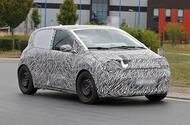
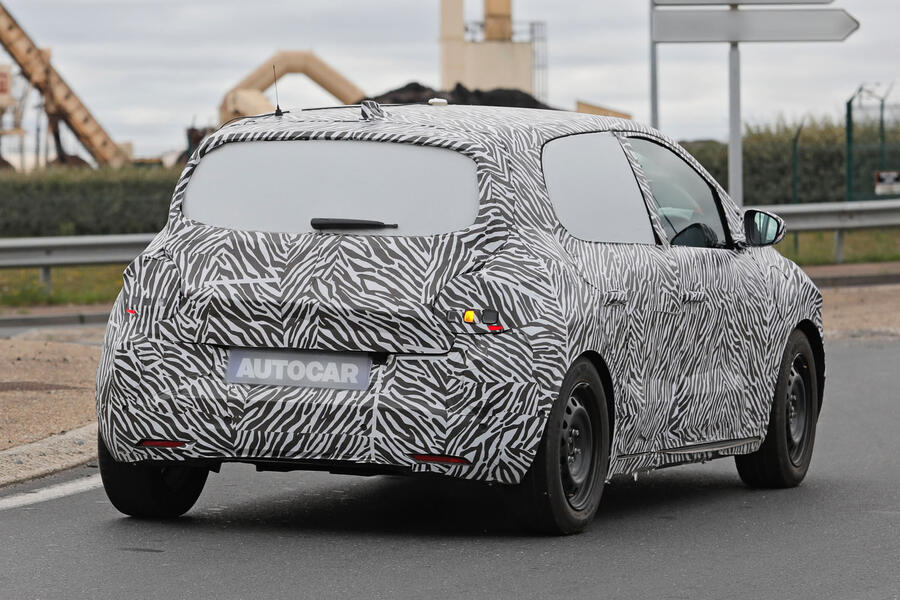
Renault will look to distinguish the Twingo from its rivals with a funky design – and our first sight of test mules reveals that the production car doesn’t differ too much from the radical concept of 2024, which was inspired by the Mk1 Twingo of 1992.
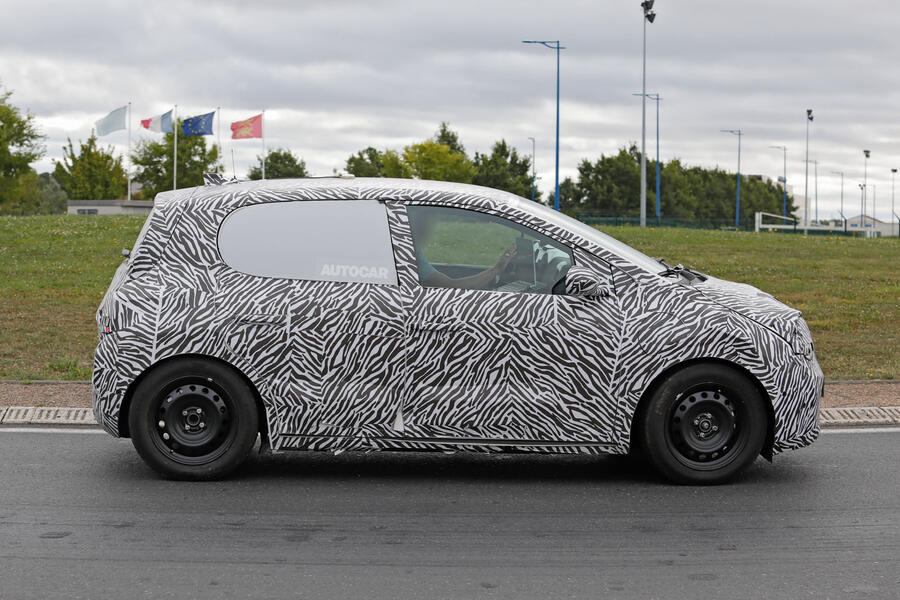
The car’s look retains a similar bubble-like shape to the concept’s, while under the camouflage, it appears to feature the same semicircular light design at the front and rear.
However, some elements have been made more conventional, such as grab handles replacing the concept’s Mk1-inspired integrated pulls. The test mules also have more ground clearance than the low-slung concept.
It’s not clear if it will keep the concept’s unique battery percentage display on the bonnet, made up of three vent-like screens that reference a design detail of the Mk1, while the all-glass boot design has been made more conventional.
The interior of the production car has yet to be seen. However, it has been previewed by the concept’s “90% ready” cabin, which was clearly designed with cost-consciousness in mind – as evidenced by the basic seats and bare surfaces.
At the centre of the concept’s dashboard is a 10.1in infotainment touchscreen supplemented by physical buttons and dials for main functions and a 7.0in digital instrument cluster.
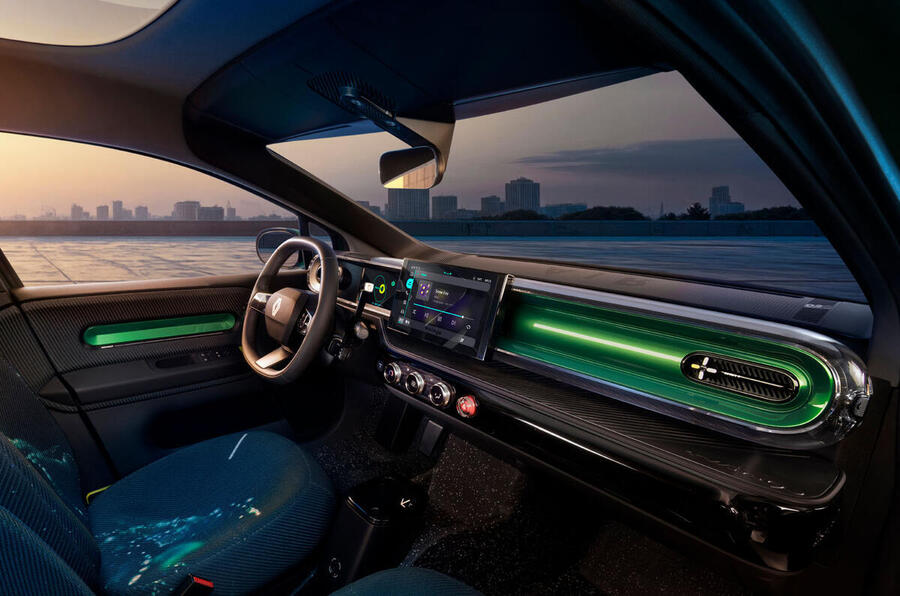
Like the exterior, the concept’s interior makes clear reference to the Mk1, with its ovoid air vents and surfaces and prominent red hazard light button. Renault has described the cabin as “airy, cylindrical and suspended” and “designed to make life easier”.
While the firm has offered no details on the powertrain, it’s understood to be closely related to that used in the larger Renault 5, which sits on the Ampr Small platform.
In the 5’s base spec, which costs £22,995, it offers 118bhp from a single motor and draws electricity from a 40kWh battery pack that enables a range of 190 miles. But in the interests of cutting costs, it could be fitted with an even smaller battery. For example, the Renault-made Dacia Spring uses a 25kWh pack to give a 140-mile range. Originally, Renault claimed the Twingo would offer impressive efficiency of 6.2mpkWh.
While a sub-£17,000 electric city car is important to Renault’s growing EV ambitions, the way it has been developed is also highly significant for the French firm. From green light to showroom, the Twingo will take just 21 months. For context, the current Clio took 48 months.
That drastic reduction in development time is being championed by new Renault Group CEO François Provost, who took over the post vacated by Luca de Meo at the end of July. Provost has vowed to continue cutting development times as part of “an obsession with competitiveness”.
The Twingo is vital to this plan, he said, because the processes used to get it to the cusp of production will be the blueprint from now on. The firm sees this approach as essential to keep pace with an increasingly competitive market, especially with car makers from China.
Production costs will also be an important factor in bringing down the Twingo’s showroom price. Provost’s predecessor claimed the hatchback will cost 50% less to produce than a new C-segment SUV, due to a reduction in materials and the increased focus on a software-driven platform that requires fewer parts and materials.
Key to this will be the work done by Ampere, which was launched last year as a stand-alone, Europe-based company within the Renault Group. Ampere’s focus is to achieve price parity between EVs and ICE vehicles by, among other things, reducing variable costs in Renault’s production processes.
Another key facet of the Twingo is its carbon footprint. Renault claims the electric city car will produce 75%-lower CO2 emissions over its life cycle than the “average European ICE car sold in 2023”.
The Twingo’s arrival in the UK next year follows a period of uncertainty over whether there would be a right-hand-drive version. (The Mk1 was LHD only; the first RHD Twingo was the Mk2 of 2007.) Originally, Renault held back on confirming that it would be sold in the UK, given the costs of converting it to RHD. But the strong reception of the 5 pushed brand boss Fabrice Cambolive to give it the green light.
“The UK is very important in terms of product recognition, because your legacy in terms of cars is very important,” he told Autocar previously. “I’ve followed closely the reaction to the R5 and R4 [in the UK], and with Twingo the exercise will be even more interesting. The Twingo can be one of the solutions of mobility for the UK tomorrow.”

Solar-Powered Drone Aims for Endless Flight with Breakthrough Technology

Hyundai N Division Ignites Excitement with High-Performance Hybrid Future

London Police Seize Luxury Cars in Major Crackdown on Reckless Driving

How Automation Revolutionized Mini Cooper Manufacturing Across Generations

Aston Martin Valhalla First Drive Delivers Hybrid Hypercar Thrills With 1064bhp and Everyday Usability
 Can this new hypercar really offer 1064bhp from a V8 engine and three electric motors yet ‘friendly’ Aston dynamics too? The Valhalla may be an Aston Martin like no other, but it isn’t a supercar like no other.It’s a two-seat, carbonfibre-tubbed coupé, with a mid-mounted turbocharged vee engine supplemented by an electric motor, plus two electric motors driving its front axle.And if that sounds familiar, the likes of the Lamborghini Revuelto, Ferraris F80 and SF90 and even Honda NSX share some shades of this layout. Did the Porsche 918 Spyder do it first? And will the Valhalla do it best? My brief drive of the new supercar/hypercar, as you prefer, to be priced at £850,000 and limited to 999 units when deliveries start next spring, was of a late prototype, with production-ready hardware but software about 85-90% complete.Software sign-off can be left to the very last minute before deliveries these days. And there’s a lot of it to wrap together when you consider how many Valhalla systems need to be tuned into becoming a cohesive driver’s car. So let’s begin.
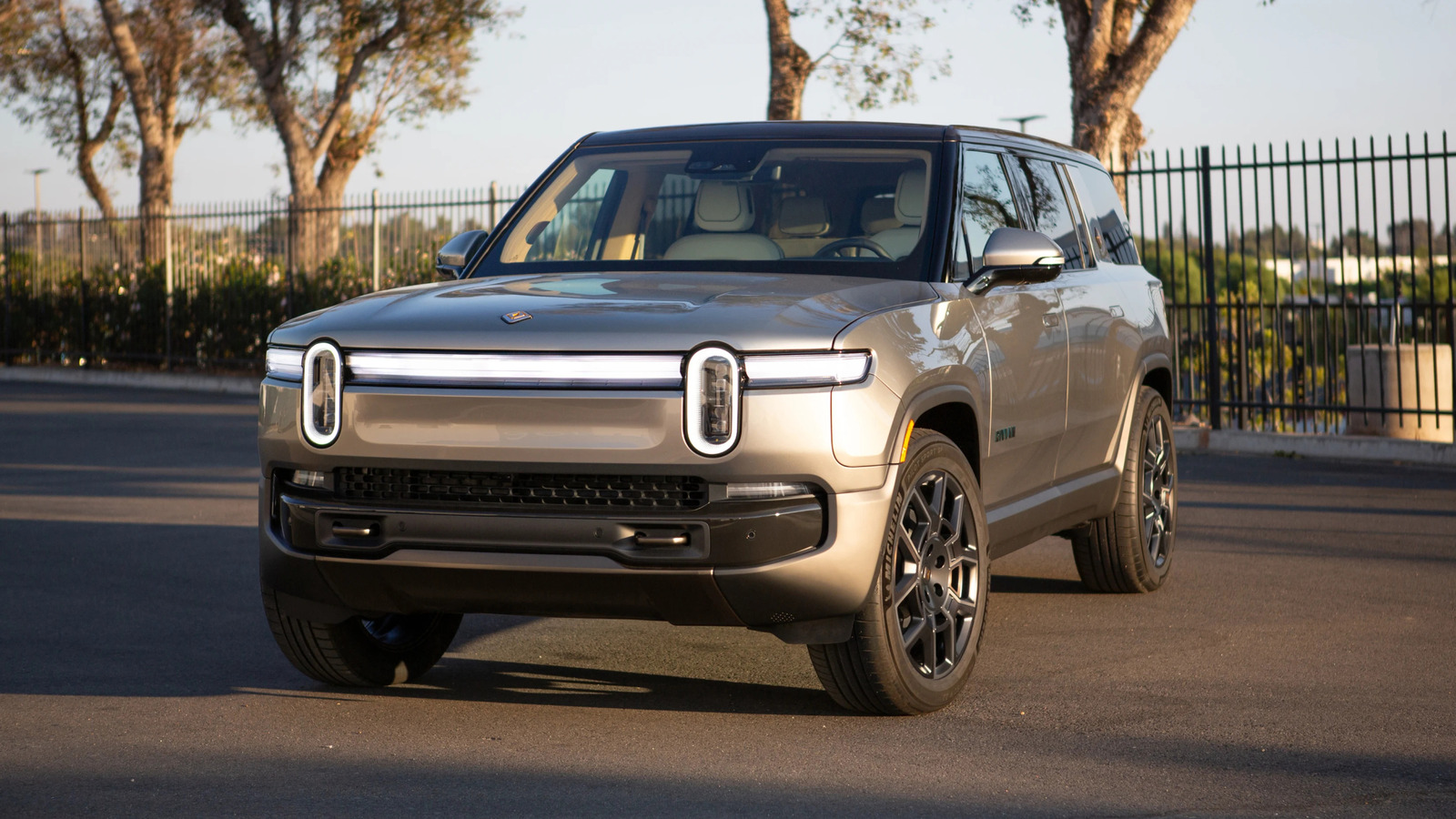
Rivian Unveils Powerful R1S Pebble Beach Edition to Support Clean Water Initiatives
Nissan Ariya Price Drops Over Six Thousand Pounds Making Electric SUV Eligible for UK...
 Nissan adds sub-£37k variants of its electric SUV, with cheapest version now just £33,500
The Nissan Ariya has received a price cut of more than £6000 as the firm shuffles the electric SUV's line-up to make it eligible for the new Electric Car Grant (ECG).
The Ariya was included in a list of 19 models last week that were declared eligible for a £1500 discount under the ECG scheme – the smaller of two amounts offered – but unlike the other 18 cars was priced higher than the £37,000 threshold in all its guises.
Now, though, Nissan has adjusted the range to bring the cheapest version of the Ariya down from £39,645 to just £33,500 after the grant.
That's for the newly added Shiro edition – marked out by its exclusive pearlescent white paint – which comes in entry-level Engage trim and is fitted with the shorter-range 63kWh battery pack, but the larger 87kWh battery is available from £35,500 and so still falls under the threshold.
Only front-driven Ariyas in Engage trim are eligible for the grant, with mid-rung Advance starting at £37,500 and the entry-level e-4orce four-wheel-drive car priced from £45,500. The range-topping Nismo performance edition starts at £56,630.
The announcement means both of Nissan's current UK-market EVs receive the ECG, with the new Micra's entry price reduced to £21,495 with the £1500 discount. The UK-built Leaf crossover, due in the coming months, is in a "strong position" to receive the higher £3750 discount, Nissan's UK boss James Taylor told Autocar.
Nissan GB marketing director Fiona Mackay said: “Securing eligibility for the UK government’s £1500 electric vehicle grant makes the Ariya more accessible than ever. It now offers greater value without compromising on the innovation, design and performance our customers expect, and reflects our approach of removing barriers to EV ownership and empowering more drivers to make the switch to zero-emission driving.
“And this is just the beginning. Alongside Ariya and the newly launched all-new Micra, we’re looking forward to the third-generation British-built Leaf later this year, followed by the electric Juke in 2026, also coming from our Sunderland plant.”