
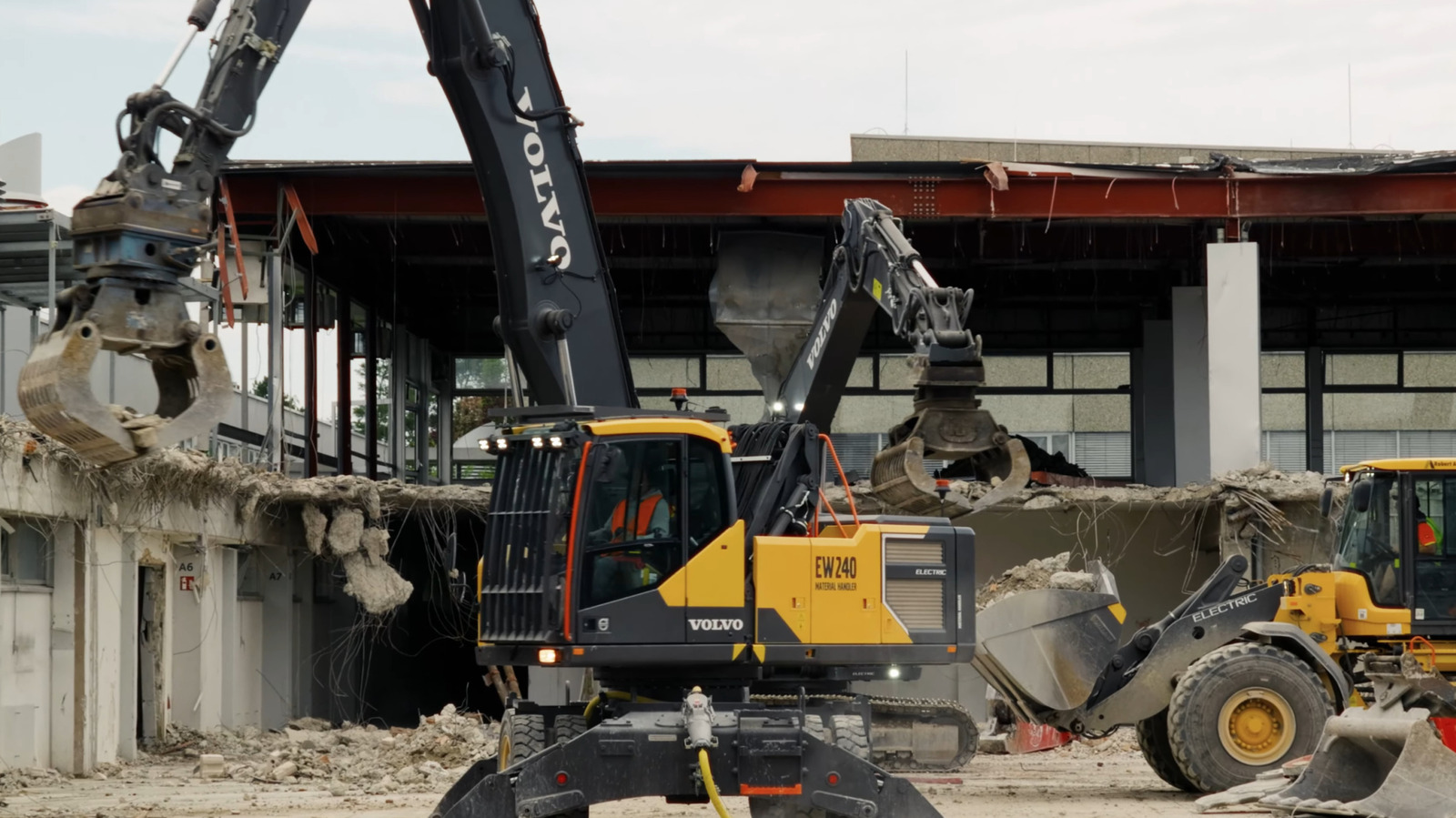
Volvo electric vehicles take on demolition jobs with powerful performance
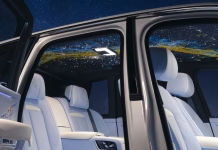
Cullinan Cosmos Headliner Features Stunning Hand Painted Milky Way Artwork
Car Software Subscriptions Lose Steam as Drivers Push Back on Extra Fees
 Negative reaction from customers has dampened enthusiasm for what could have been a money-spinner
The once-hopeful dream of car makers to persuade customers to pay for subscriptions to useful technology is being dashed by a combination of consumer reluctance, technology democratisation and cut-throat competition for business.
Enthusiasm for what could have been a promising new revenue stream for car makers has been dampened by a series of negative reaction from customers asked to pay to unlock technology already fitted to their car – most recently Volkswagen’s £16.50-a-month power upgrade for electric models already homologated for the higher power band.
“We haven't yet seen mass take-up. Consumers don't seem to like it very much,” Andrew Bergbaum, global automotive leader at consultant AlixPartners, told Autocar. “People wonder when they’re paying Y thousand a month for a vehicle why they should spend more for the same hardware they’ve paid for.”
The consumer negativity has shown up in the latest S&P Connected Car survey, which records attitudes to features unlocked via the car itself.
The number of respondents globally who said they’d be willing to pay for connected services including advanced connectivity, better navigation or higher-tech active safety functions has “significantly decreased” from 86% in 2024 to 68% in 2025, the consultancy said.
Meanwhile, those who said they paid for no services at all actually increased by 5%, a surprising shift given car makers are launching more connected cars. “Subscription-based services [navigation, wi-fi etc] are increasingly being met with resistance from price-sensitive consumers,” wrote Vivek Beriwal, principal analyst for automotive technologies at S&P Global.
Not so long ago, car makers were convinced that software was going to unlock a gold mine of payments. For example, Stellantis said back in 2021 as part of its Dare Forward plan that it intended to grow annual software revenues to €20 billion by 2030. The company has since rowed back on many of the Dare Forward promises, such as scrapping the plan for level-three eyes-off driving autonomy by 2026.
Unlocking different levels of autonomy was going to be a key part of the plan get customers to pay more. For example, you might have bought a day’s worth of level-three autonomy for a long journey.
But as the difficulties of autonomy become increasingly apparent, car makers are realising that software alone isn’t going to create the more premium levels of assistance that customers might pay extra for. For the extra assistance, you need extra hardware, which brings us back to the problem that people won’t want to pay to unlock features that already sit on the car.
At the recent Munich motor show, BMW showed off its new iX3 electric SUV on the 'software-defined' Neue Klasse platform, with features including a hands-free Motorway Assistant as well as a Manoeuvre Assistant that lets you park using your smartphone.
BMW and Mercedes-Benz have had more success than most persuading customers to pay for subscriptions, but on the whole customers are buying higher levels of driving assistance in the usual way: by stumping up more money for optional packages when they order their new car.
For example, on the iX3, Parking Assistance Professional adds more cameras for a total price of £775 in the UK.
“Let’s say we’re doing level two-plus-plus, or however many pluses we want, that needs additional sensors. So it all depends upon a few things that are non-negotiable,” said Anshuman Saxena, head product management for advanced driving systems at chipmaker Qualcomm, the company that jointly developed BMW’s new driving assistance technologies.
BMW’s Neue Klasse electric platform is pointing to a future where a handful of supercomputers handle every aspect of the car’s electronics. That is expensive to develop but ultimately will lower the price of hardware.
“Once you have advanced models, the right sensors, the right compute, then the bill of materials is very well defined, and then that allows you to really make it very democratic,” said Nakul Duggal, head of automotive at Qualcomm.
Bergbaum agrees. “The cost of ADAS is plummeting,” he said. ”It's plummeting because software-defined vehicles enable domain controllers and domain controllers allow dumb sensors.”
Once you’ve removed the chip from each camera or radar, then they drop price by so much that you might as well avoid manufacturing cost and complexity and fit them to every model. “It’s clearly a direction of travel,” said Bergbaum.
Once again, China is holding the clearest sign as to that direction of travel. The country has the second highest percentage of car customers after the US who are willing to subscribe to connected features, at 32%, according to the S&P survey. (The US is on 35%, the UK 29%.)
But it has the greatest proportion by far who are using connected services as part of a ‘free trial’, at 51% compared with 14% in the UK. Just 10% of Chinese drivers surveyed used no connected service, compared with 45% in the UK and 54% in France.
“With the price wars that are happening in China, they're throwing it in for free as part of a discount,” said Bergbaum.
The danger for car makers in Europe hoping to repair tattered finances with subscription income is that the Chinese will continue the practice as they expand in Europe, something BYD has already said it plans to do.
Subscriptions are gaining more traction in the US. General Motors said as of the end of the first half of this year that it booked $4bn (£2.9bn) of “deferred revenue” (ie money paid for services not yet provided) from its Super Cruise level-two-plus hands-free assistance as well as its OnStar satellite-provided connectivity. The latter can go up to $40 a month.
Ford’s BlueCruise, also available in the UK, is doing well for the company too, according to executives, while Tesla claims strong uptake for owners upgrading to FSD (Supervised), another level-two-plus set-up.
The US is not Europe, though. “In Europe, people prefer to pay more for the hardware and have the services included. They pay more attention to how much they spend on a monthly basis,” Johann Jungwirth, head of autonomous vehicles at ADAS specialist Mobileye and former chief digital officer at the Volkswagen Group, told Autocar. “In the US, everyone has three or four credit cards and they don’t pay too much attention. Europeans are much more conservative.”

Stolen Audi Q5 Makes Daring Leap Over Seattle Drawbridge to Escape Police

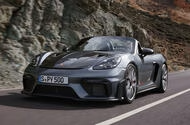
Porsche 718 Leads Shift as Petrol and Hybrid Options Return Amid Slower EV Push
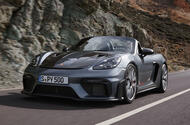 New petrol 718 variants inbound alongside EV; upcoming 'K1' luxury SUV swaps from EV to ICE power
Porsche will include a combustion engine option for “top” versions of the next-generation 718 Boxster and Cayman as part of a significant shift in the company’s electric strategy that also kills the planned large ‘K1’ electric SUV above the Cayenne.
The new ‘strategic realignment’ also confirms major overhauls for the Cayenne and Panamera combustion engine and plug-in hybrid models to keep them running “well into the 2030s’, CEO Oliver Blume said on a call to investors late on Friday 19 Sept.
Porsche will take a €1.8 billion hit on a decision to halt development of the SSP 61 ‘Sport’ version of the Volkswagen Group platform that was going to underpin the K1 large SUV as well as an electric replacements for the Panamera and the Taycan. The SSP Sport platform – derived from the platform underneath mainstream VWG models including the next Volkswagen Golf and Skoda Octavia – has now been postponed until “well into the 2030s”, Blume said
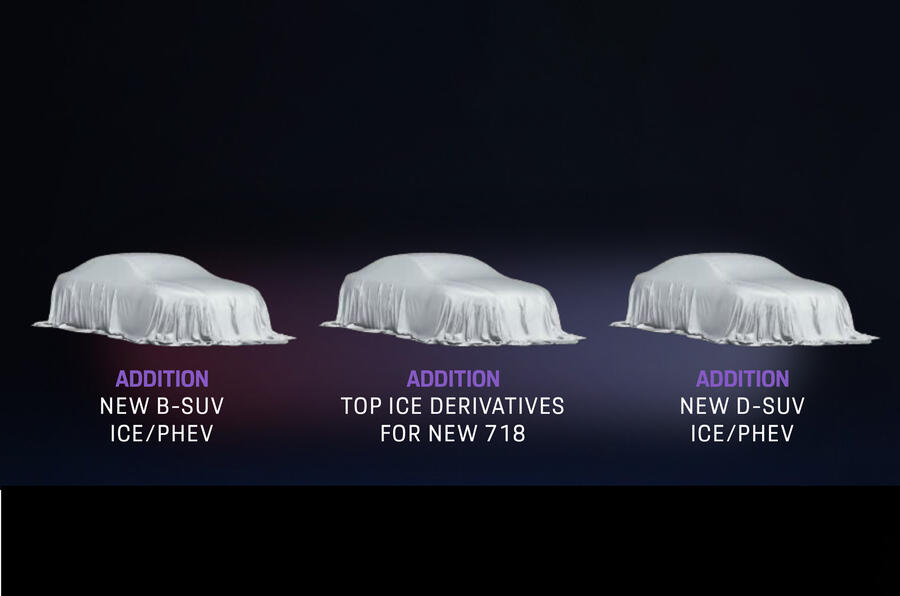
The K1 model – dubbed a 'D-SUV' by Porsche – will now be launched with combustion-engine and plug-in hybrid variants, Porsche said, without giving a precise date. The K1 was first announced in 2022, along with plans for the third-generation Porsche Panamera and second-generation Porsche Taycan.
“We have seen a clear drop in demand for exclusive battery-electric cars, and we are taking that into account,” Blume said.
Porsche has also been roiled by “dramatically decreasing” demand for luxury goods in China, Blume said. Also hitting profits was the US decision to increase tariffs on imported cars.
The company said the combination of circumstances will cut its predicted net profit margin to around 2% this year but predicted a return to growth in the ‘medium-term’ when it planned to grow margins back above 10% with the new products rolling out
“This flexibility gives us a strong position with a compelling mix of combustion engines, plug-in hybrids, and battery electric vehicles,” Blume said.
The CEO said the company was still committed to electrification. “They excite a specific and growing customer group,” Blume added.
Porsche is about to launch the new Cayenne Electric based on the Volkswagen Group’s 800V Premium Platform Electric (PPE) architecture, and already sells the Macan Electric.
Porsche had originally intended the electric Macan to replace the combustion-engine version, back when its plan was to push for 80% of its global sales to be electric by 2030.
However Porsche will now add an equivalent SUV model with both combustion engine and plug-in hybrid variants to sell alongside the Macan electric, the company said.
This new ‘M1’ SUV will be its first production car with drive biased towards the front wheels, after the company decided to based it on the third-generation Audi Q5 which sits on the VW Group’s Premium Platform Combustion (PPC) architecture.
In July Blume said the M1’s short, three-year development was “speeding up the process” of bringing it to market. A new Porsche typically takes five years from concept to road.
No more information was given the ‘top’ versions of the new 718 with the combustion engine, but it could mean the continuation of the hardore RS and GT4 RS models, with entry versions covered by the electric drivetrain.

Candy Crush Truck Crash Spills Sweets Across New Jersey Highway

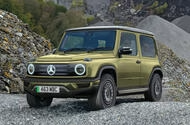
Mercedes Mini G Class Unveiled Modern Design Unique Platform and All Electric Power
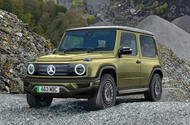
Autocar render shows what the 'Mini G-Class' could look likeGerman rival for JLR's upcoming Defender Sport will look like a G-Class but be almost entirely bespoke
The incoming ‘baby’ Mercedes-Benz G-Class will sit on a bespoke ladder-frame platform, use “nearly all unique” parts and sport a design that “is even more modern than the current car”, bosses have said.
The new SUV will arrive within the next two years and will be the entry point to what is planned to be a new range of models, with Mercedes turning the G-Class into a brand in its own right – in much the same way JLR has done with Range Rover.
Speaking at the Munich show, Mercedes CEO Ola Källenius said test mules would be appearing on roads “very soon”. A new preview image of the incoming model’s rear end was also revealed.
The ‘Mini G’ will be based on a unique architecture, confirmed tech boss Markus Schäfer, in order to be “as authentic as possible”.
He added: “The G is a very special, authentic car, and the Mini G has to be authentic. So I cannot take just a platform, I cannot take an existing platform – I have to create my own. It’s a completely new development.”
Schäfer called the platform a “miniature ladder-frame chassis”, which he described as being “not ladder-frame [to the G-Class’s] extent”, but with similar qualities “when it comes to suspension and wheel size”.
Schäfer also revealed that the Mini G will use a signifi cant number of unique components, “far more than I ever wish to tell you”. These include most of the model’s bodywork.
He said: “Over time, just looking at the car’s capabilities and what’s needed, I came to the conclusion that everything has to be unique, the whole upper body and everything.
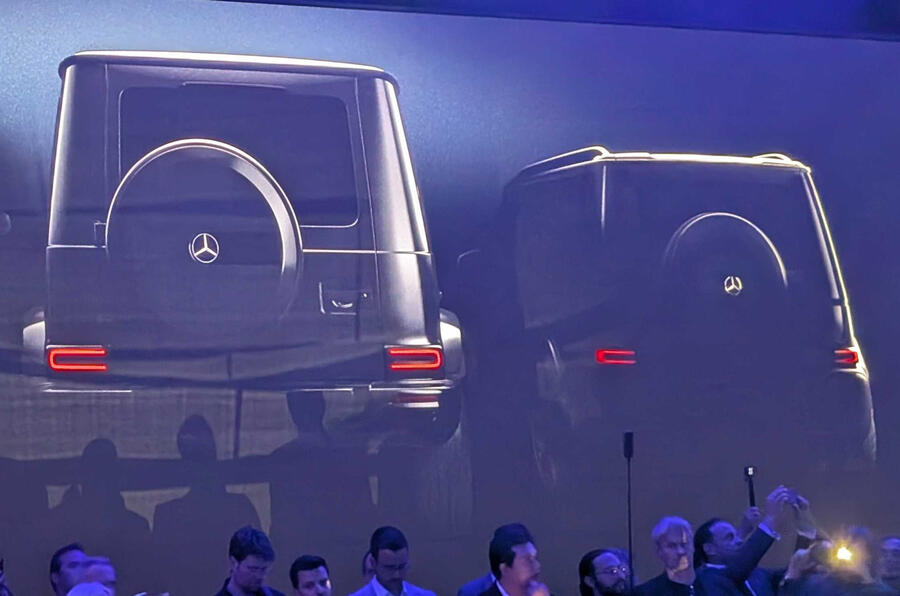
“You know, I can’t even take a door handle from [the current] portfolio, because the G-Class has such unique door handles.
“So we spent a lot of time tuning this car, and over time we started to develop so many unique components to make sure it’s a very good-looking car and very capable.”
The current G-Class is offered with both combustion engines and electric power, but Autocar understands the Mini G will be sold exclusively as an EV.
Asked about powertrains, especially an electric one, Schäfer was coy, stating: “Stay tuned. I don’t want to go in to this detail.”
The Mini G’s styling will be that of a “tweaked” G-Class, according to Mercedes design boss Gorden Wagener, which will make it “even more modern” than the electric G580 EQ that was launched last year.
Speaking about the design, Wagener said: “You cannot change the G much: it’s iconic. I like the new [current G-Class]: that’s a modern G.
“On the little one, we will give a slight tweak: a bit more sharpness, a bit younger [headlight] graphics but still circle. So really it’s details.
“But otherwise we stick to the G, and it’s a modern G – even a touch more modern than the big one.”
Asked if he wanted to be slightly more radical with the design, Wagener said the fundamentals had to stay the same: “You have to hold yourself back and understand what the icon is about. We strive for iconic design, and there is not such an iconic piece like the G.”
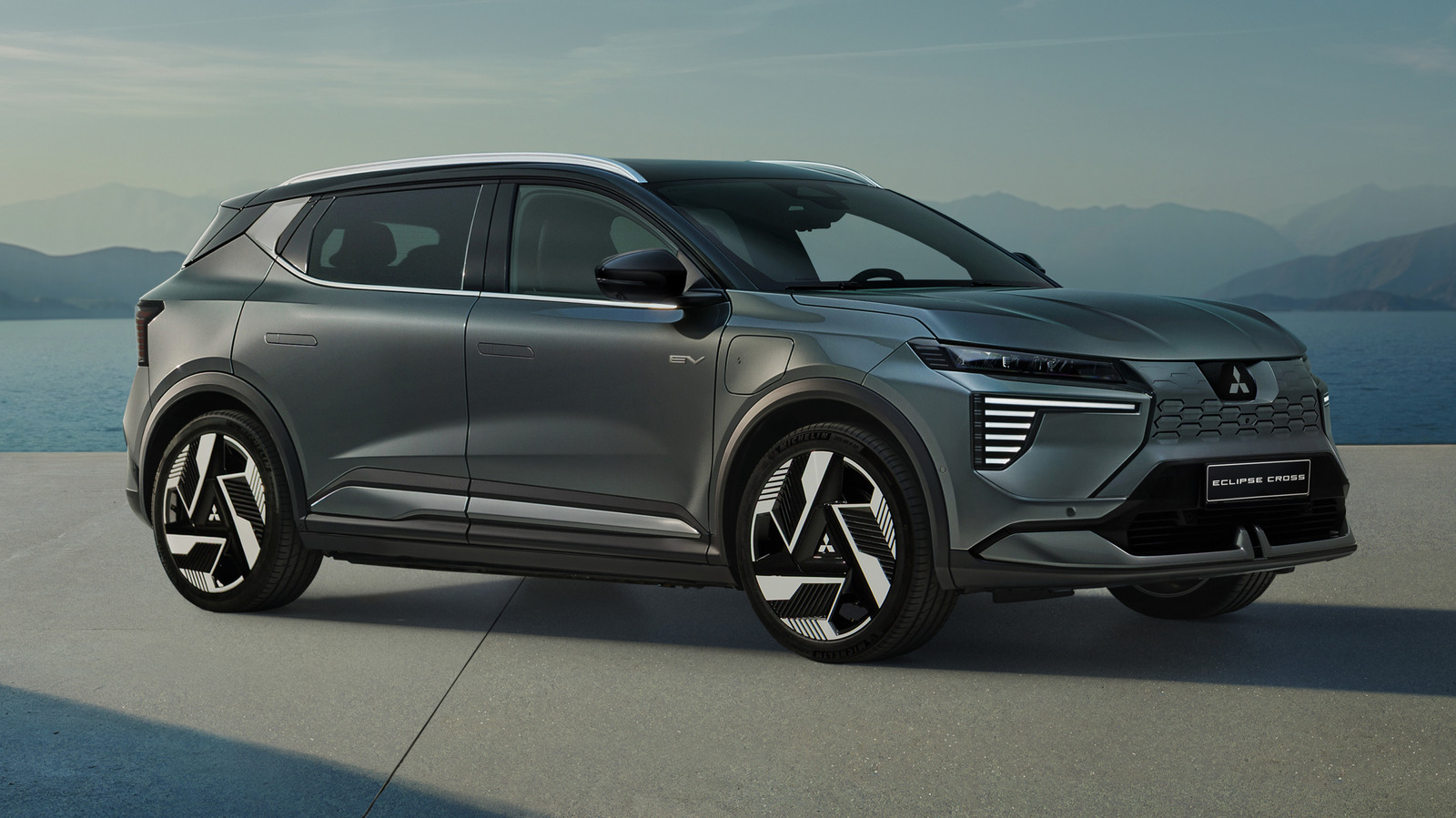
Electric Eclipse Cross debuts with sleek design and Renault-inspired style
Jeep Avenger EV Discount Slashes Prices by £3750 to Match Electric Car Grant
 Avenger has yet to qualify for the Electric Car Grant but Jeep has matched its maximum discount for a short period
Jeep has cut the price of the electric Avenger by £3750 following the introduction of the government’s Electric Car Grant (ECG), for which it has yet to qualify.
The discount has been applied to all trim levels of the EV, meaning its price now ranges from £26,249 for the entry-level Longitude model to £30,249 for a range-topping Summit.
Jeep will also make a £1500 deposit contribution toward financing on the Avenger Summit when a buyer chooses a 0% APR contract, which requires a 20% down payment. This results in a monthly payment of £270 for the model.
The discounts and finance contributions will be available until 30 September.
Jeep is the latest in a line of manufacturers who do not yet qualify for the ECG but have introduced their own discount. Chinese brand Leapmotor moved first, cutting prices by £3750 to match the maximum discount provided by the grant, and it was soon followed by Alfa Romeo, MG and GWM, among others.
The criteria for electric cars to receive the grant are based on minimum sustainability criteria, including the manufacturer being signed up to the Science-Based Targets initiative for carbon emissions reduction. For those that qualify, the grant provides either £3750 or £1500 based on the emissions created by the production of the car and its battery.
Only two models currently qualify for the full £3750 grant: the Ford Puma Gen-E and the related Ford E-Tourneo Courier. A further 26 cars receive a £1500 discount.
Several manufacturers that have yet to be included in the scheme have hit out against its perceived preferential treatment of European manufacturers.
Stella Li, chief of the European arm of Chinese manufacturer BYD, recently told Autocar that it was “not fair to consumers” because of its effective exclusion of Chinese brands.
“They did that more to target Chinese firms, which is not fair to consumers," she said. "But we have to deal with that. We are not afraid, because I'm sure our sales numbers will continue increasing every single month.”

Optimus AI Head Departure Raises Questions About Tesla Project Stability