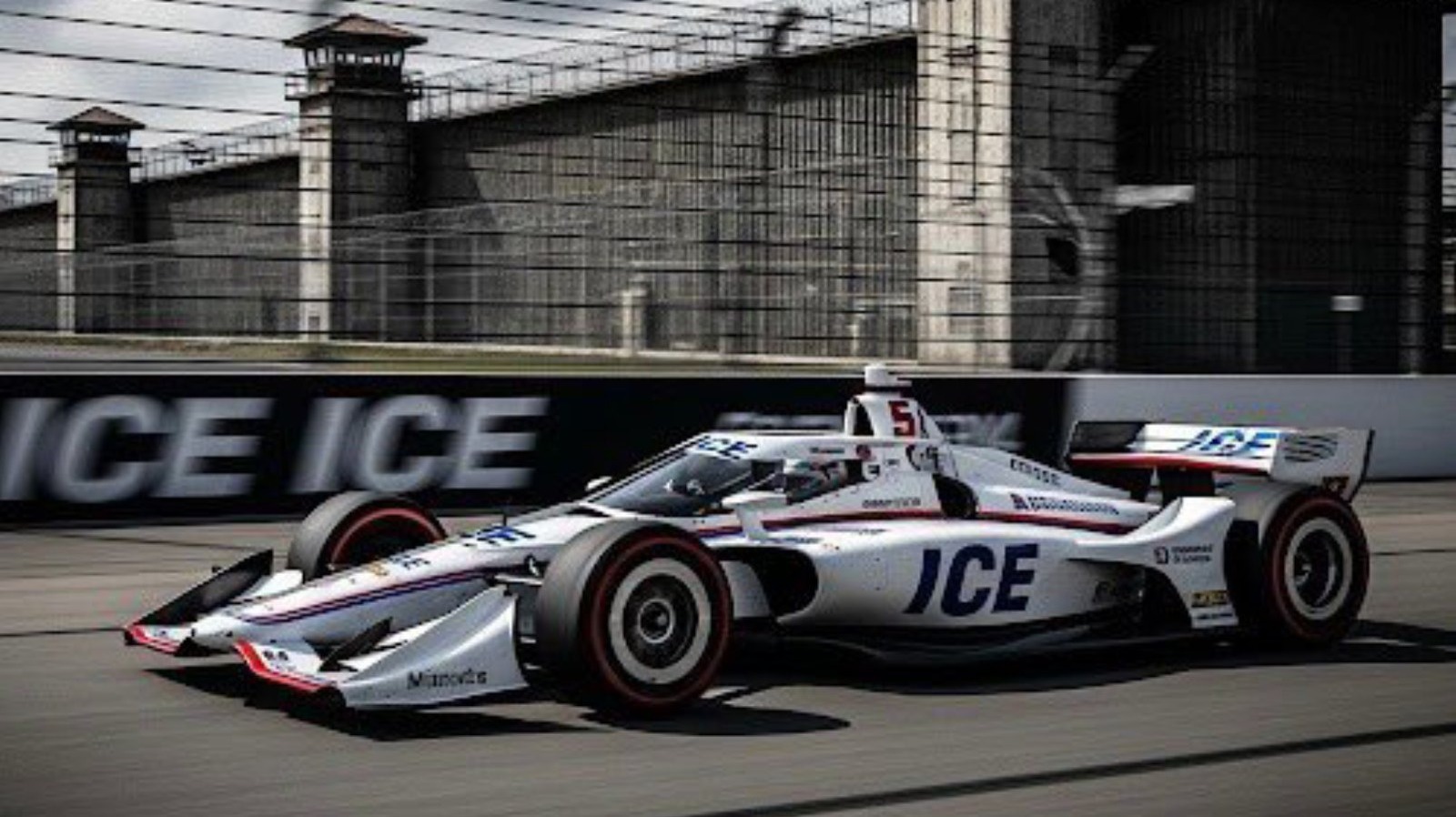
IndyCar Community Outraged as Feds Use Racecar to Promote New Detention Center
Why the Ferrari 458 Italia Is the Ultimate Supercar Bargain You Can Own Today
 The Ferrari 458 Italia set new standard for supercars in the late 2000s - now you can have one for less than £100k With a Pininfarina-designed body, a naturally aspirated V8 mounted directly behind your back and a truly exhilarating driving experience, the Ferrari 458 Italia remains the definitive supercar of the early 2010s.So good is the F430’s successor that residual values remain strong, which is why the 458 is best snapped up now before modern classic status takes hold and renders it a near-unaffordable collector’s item.Given the fact that list prices for newer 296 GTBs and Purosangues are falling by the week, the 458 should make for a solid investment too.Sure, those cars are more powerful and much faster on paper, but the 458 will certainly nip at their heels – and because it predates the hybrid era, it delivers a sensory experience that its modern equivalents can only dream of.A 0-62mph time of 3.3sec and a top speed of 210mph mean it’s still a ridiculously quick car and its Getrag-engineered dual-clutch automatic gearbox is the ideal wingman to the 458’s intoxicating 4.5-litre V8, which makes 542bhp and 398lb ft of torque.You can access 80% of the Ferrari’s power as early as 3250rpm, but you won’t be swapping cogs as low down as that because this heady V8 lump will rev all the way to 9000rpm. Watch for skipping gears on the test drive, though, because the dual-clutch auto can suffer from electric gremlins (see ‘Buyer beware’, right).While the fabulous V8 and slick gearbox endow the 458 with plenty of drama, its chassis balance and handling make it a true driver’s car – and one that’s far sweeter than cheaper Ferraris of yore.Whether or not the dampers are in their ‘bumpy road’ mode (handy for Britain’s unkempt roads), the 458’s body is controlled and tight, and despite the steering being light and quick, it’s communicative and precise.The 458 handles with a supreme level of agility matched by only the Noble M600 – and yet the Ferrari is the far better-riding car. And the trick electric differential and suite of driving modes – controlled via the tactile manettino on the steering wheel – mean the 458 can be either a laid-back daily driver or exciting track car, to suit your mood.The Brembo-sourced carbon-ceramic brakes provide plenty of stopping power too. Just make sure you’ve got £10,000 stashed away when you need to replace them.You can pay less than £100,000 for a high-mileage car, but for around £125,000 you’ll have access to a broader choice of colours, interior trims and cars with a main dealer service history.If your future 458 will spend most of its time on track, carbon buckets and Alcantara trim are must-haves – and try to avoid carbon exterior elements because you don’t want gravel and the like forcing unwanted (and expensive) repairs.Opt for leather and comfort seats if you’re after a grand touring ambience. Sunseekers are likely to be drawn to the open-air thrills of the 458 Spider, which commands a slight premium over the coupé. Whatever your choice, the 458 is a landmark supercar that has tumbled to such accessible levels (in a relative sense, of course) that it’s impossible to overlook.Why not snap up this hedonistic Ferrari, set the sat-nav for the North Coast 500 and bask in its brilliance all the way to John O’Groats.
Can a Clogged Air Filter Cause Your Diesel Engine to Overheat? What You Need...

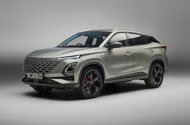
Omoda 5 and E5 SUVs Get Rapid Upgrades After Criticism Boosting Comfort Handling and...
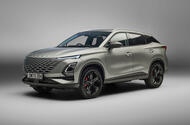 Updates have been made to improve interior quality, practicality and ride refinement
Omoda has announced what could be the fastest update to a car yet, confirming that refreshed versions of its 5 and E5 SUVs have been launched following critical media reviews.
The changes come less than a year after the two models arrived in the UK as part of the brand's market launch here. The updates include technical improvements, higher perceived material quality and revisions to the cars' handling and overall driving refinement.
For both cars, Chery-owned Omoda has upgraded the front suspension and revised the steering geometry to “provide a more dynamic proposition to drivers”.
This follows Autocar’s road test of the 5, which noted a “poor ride and handling balance” with body control that has “a fundamental lack of cohesiveness” and is “so ill-matched to the steering’s rate of response it makes for a tiring driving experience”.
Meanwhile, new front wheel hubs and bearings have been added and brake linings have been refreshed. This follows criticism of the cars' “vicious pitch and shimmying under hard braking”.
Inside, both models now sport the same interior to bring more parity to the range and give the combustion car better cabin quality with softer materials. Omoda previously told Autocar the EV’s cabin was “half a generation” ahead of the 5 and our test noted that the E5 felt “quite a bit more plush”.
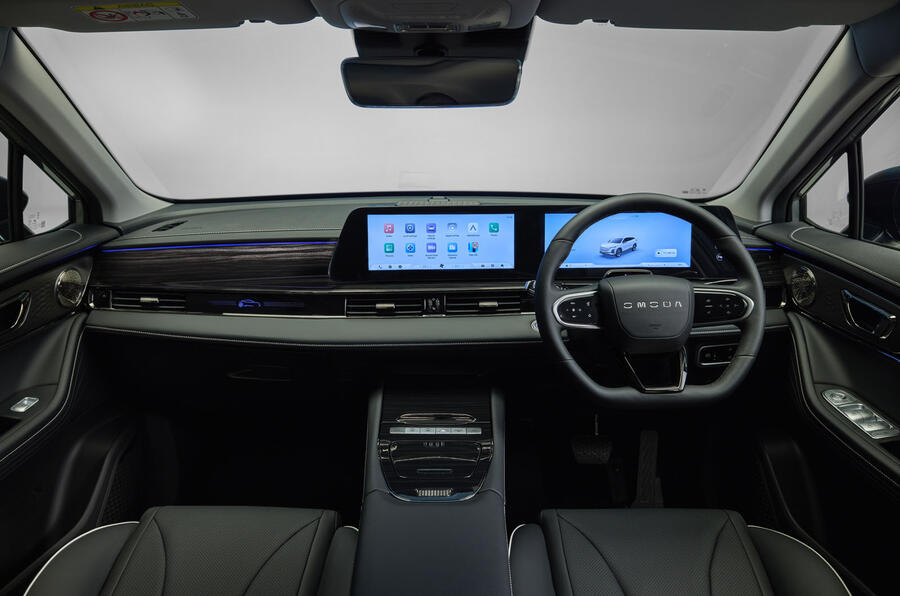
The brand has also added larger, 12.25in screens, which have been angled towards the driver for better visibility when driving.
In addition, there is a revised steering wheel design and new seats, with more adjustment, across the range. The gear selector and wireless charging pad have been repositioned to make them easier to access on the move.
At the car's rear, Omoda has removed the full-size spare tyre in a bid to boost boot space from 372 litres to 430 litres. Previously, our road test noted the boot size was “poor”. The increase moves it closer to the 504 litres offered by its Nissan Qashqai rival.
Under the skin, the 5’s 1.6-litre petrol engine has been detuned from 187bhp to 145bhp, which, the brand says, is in an effort to reduce its emissions output and therefore its tax bracket.
Meanwhile, the E5’s 61kWh CATL-sourced battery pack has been improved to offer 267 miles of range, up 12 miles. Its charging rates have also been increased to 130kW via a DC and 10.3kW via AC. The top Noble trim also gets a heat pump.
Pricing for the 5 range starts at £23,990 for the base-level Knight trim and rises to £27,490 for a Noble-spec 5. The E5 is priced from £33,065 and tops out at £34,565.
Driver Caught at 199 MPH Sets New Speeding Record on Highway
Why Modern Cruise Control Feels More Annoying Than Helpful for Drivers
 ADAS systems are so frustrating these days you can't help but yell at them
Occasionally you see people giving their dog a stern talking to for tugging at the leash, barking at a goose or engaging in other dog-typical behaviour.
Part of me wants to say “the dog doesn’t understand!”, but I don’t, because that would be weird. Also I do understand the urge to chastise something for only doing what its innate but relatively simple evolutionary programming tells it to do – particularly given that many modern cars come with adaptive cruise control.
I often find myself shouting at a test car: “Just go 70mph, you bastard!” Who decided that adaptive cruise control is a superior version of normal cruise control, rendering the latter obsolete? Some cars still let you switch between the two, but adaptive is the default and only option with most these days.
Adaptive cruise control can be quite useful in dense traffic, when you’ve got no choice but to just stay in your lane and go with the flow. At almost any other time on the motorway, though, I find ‘dumb’ cruise control far more relaxing: Just set it to 70mph, and when the distance to the car in front becomes uncomfortable, indicate right and overtake.
If you want to do that and maintain good lane discipline with adaptive cruise control, you need to guess when the car ahead is going to start to slow and either override it with the accelerator or move to the right lane sooner than would be ideal.
That’s not to mention the stress caused by the sensors seeing ghosts and applying the brakes for no reason or deciding to slow down because there’s a slight curve in the road.
Unless you’re happy to be a cruise control zombie mindlessly sitting in the middle lane at 65mph with another car glued to your rear bumper, adaptive cruise control actually requires more brainpower, effort and general babysitting from the driver. I’ve spoken to several colleagues who feel the same way about cruise control – but maybe we’re in a control-freak motoring journalist bubble.
Sure, you could just not bother and use the good old accelerator pedal to manage your speed, but in a lot of cars that’s surprisingly hard, because turbo lag, hybrid systems and a ‘sporty’ throttle map can conspire to make maintaining a constant speed quite difficult. Anyway, is it too much to ask that convenience features are actually, I don’t know, convenient?
The broader issue here is ‘smart’ technology trying to make things easier by automating them but not actually being quite smart enough to do it well. It’s not just cruise control; some BMWs and Toyotas have automatic heated and cooled seats.
The idea is that you never have to press a button again (luxury! Also, no more need to make a button, so profit!), because just at the point where you’re starting to feel cold, the seat starts to warm up. My experience of these features is actually being confused by why the heated seats have randomly stopped working.
Then there are Volvos that gaslight their drivers with a ‘contextual’ shortcut bar, which shows you the buttons the car thinks you might find useful at any given moment: “I must be going insane: I swear there was a shortcut for opening the glovebox last time I looked.”
Like a dog that can identify and retrieve a specific stick that its owner has thrown into the bushes, the intelligence of these systems can seem quite impressive in a certain light – but you wouldn’t trust them to drive a car.
Unlike dogs, cars have settings menus, so you should be able to turn them on and off as you please. Bafflingly, though, you often can’t. For now, shouting will have to suffice. Maybe at some point, the voice control will get the message.
Why the Lexus LFA Remains a Priceless Icon Even With High Mileage

Next Generation Mercedes GLC EV Unveiled Bold Design Long Range and Cutting Edge Tech...
 Successor to EQC will go toe-to-toe with forthcoming BMW iX3 in Europe's most hotly contested segment
Mercedes-Benz will launch a radical new GLC next year, an important new model for the German firm as it looks to gain a foothold in Europe’s most hotly contested new car segment.
Launching at the same time as the new BMW iX3, its key segment rival, the electric GLC not only marks Mercedes' next step in electrification but also will be the first car to embody the brand’s bold new-era design language – something that will be adopted across the rest of the range in the coming years.
It will be sold alongside the current, second-generation combustion-engined GLC, which was launched in 2022. That car has regularly been Mercedes’ best-selling model since its introduction in 2015 and the firm hopes the new GLC EV – successor to the discontinued EQC SUV – can leverage the equity built by the GLC name and be a catalyst for Mercedes’ EV sales.
Going on sale in early 2026, the electric GLC – which we've already driven in prototype form – will become the first model to use the Mercedes-Benz Electric Architecture (MB.EA), which will also form the basis of the upcoming electric C-Class, due at the end of 2026 or start of 2027.
It supports an 800V electrical architecture and has an expected maximum charging speed beyond the 320kW of the new MMA-based CLA EQ – the longest-range and most efficient EV currently on sale.
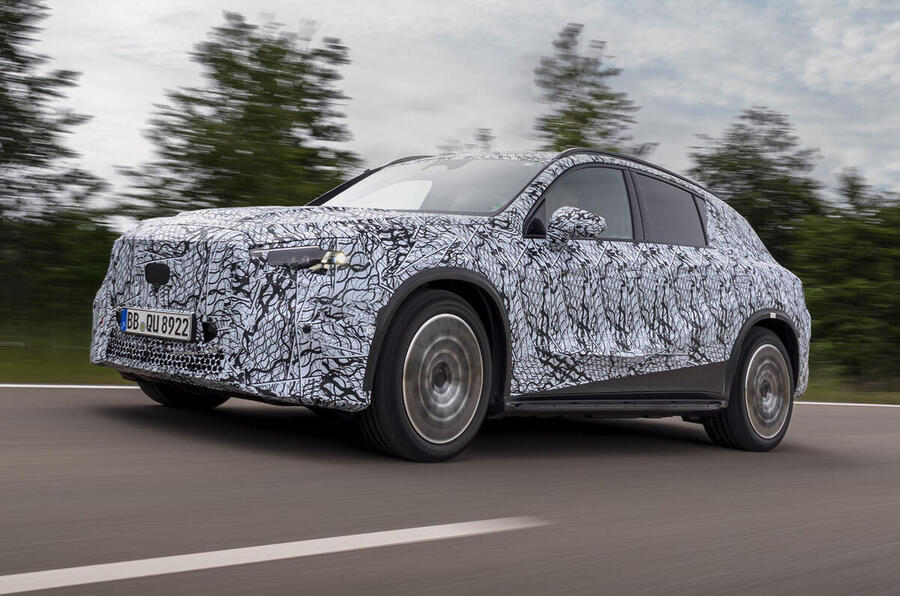
Mercedes officials have confirmed to Autocar that the electric GLC will draw electricity from a 94.5kWh battery, which will provide up to 435 miles of range in its most efficient form.
While that is a significant amount of range for an SUV, matching today's class-leading Peugeot e-3008, it will be beaten by the new iX3, which is promised to offer 497 miles.
The electric GLC will be sold with single- and dual-motor powertrains, offering up to 482bhp in dual-motor guise.
An AMG performance flagship is due in 2027 and is tipped to offer up to 600bhp.
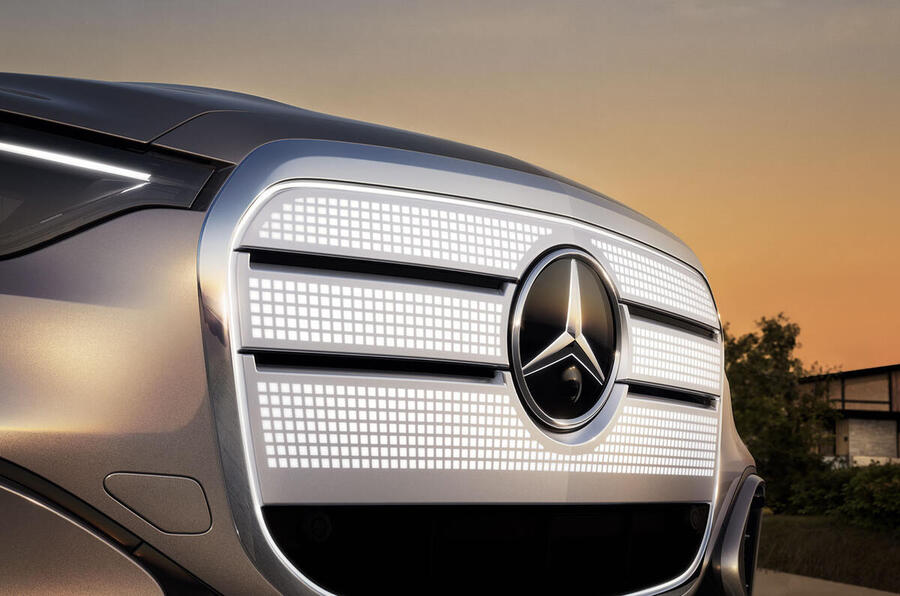
In styling terms, the GLC will introduce Mercedes' new look. A key aspect of this is the new nose. Official pictures from the German firm show a reinvented grille design that fuses classic styling with bold lighting elements.
This includes a chrome front perforated with 942 small holes. Behind the panel are more than 100 LEDs, which enable the grille to light up in a variety of customisable ways.
The central star logo is also illuminated, although the extent to which it is will be dependent on local regulations.
Mercedes boss Ola Källenius said the new design would ensure Mercedes could maintain its identity through its EVs “in current times, with 100-plus Chinese firms” and others entering the market; and ensure it could carry “the calling card of Mercedes, the unmistakable Mercedesness” into the future when new ICE cars finally go off sale from 2035.
Like the smaller CLA, the GLC’s overall design is of a progressive look. It draws heavily on Mercedes’ Vision EQXX concept car in terms of aerodynamic performance and minimising the loads on the motors to maximise efficiency.
For reference, the streamlined EQXX extracted 627 miles from a 100kWh battery pack last year.
As a result, this approach will yield a futuristic-looking design, with a rakish bubble-like roofline.
According to Mercedes design chief Gorden Wagener, the ambition is to give the new model “a strong identity” in the “sea of sameness” that he perceives among today’s EVs.
Much of the GLC’s cockpit design remains under wraps, but the new CLA hints at what to expect. That car’s dashboard is designed around the latest iteration of Mercedes’ Superscreen, which spans the width of the dashboard with three digital displays – a 10.25in screen for driving information, a 14.6in infotainment screen in the middle and a 14in screen for the front passenger.
Like its iX3 rival, the GLC will dispense with many physical buttons and instead use voice controls backed by artificial intelligence systems.

Motorcyclist’s First Crash Highlights the Life-Saving Power of Proper Gear

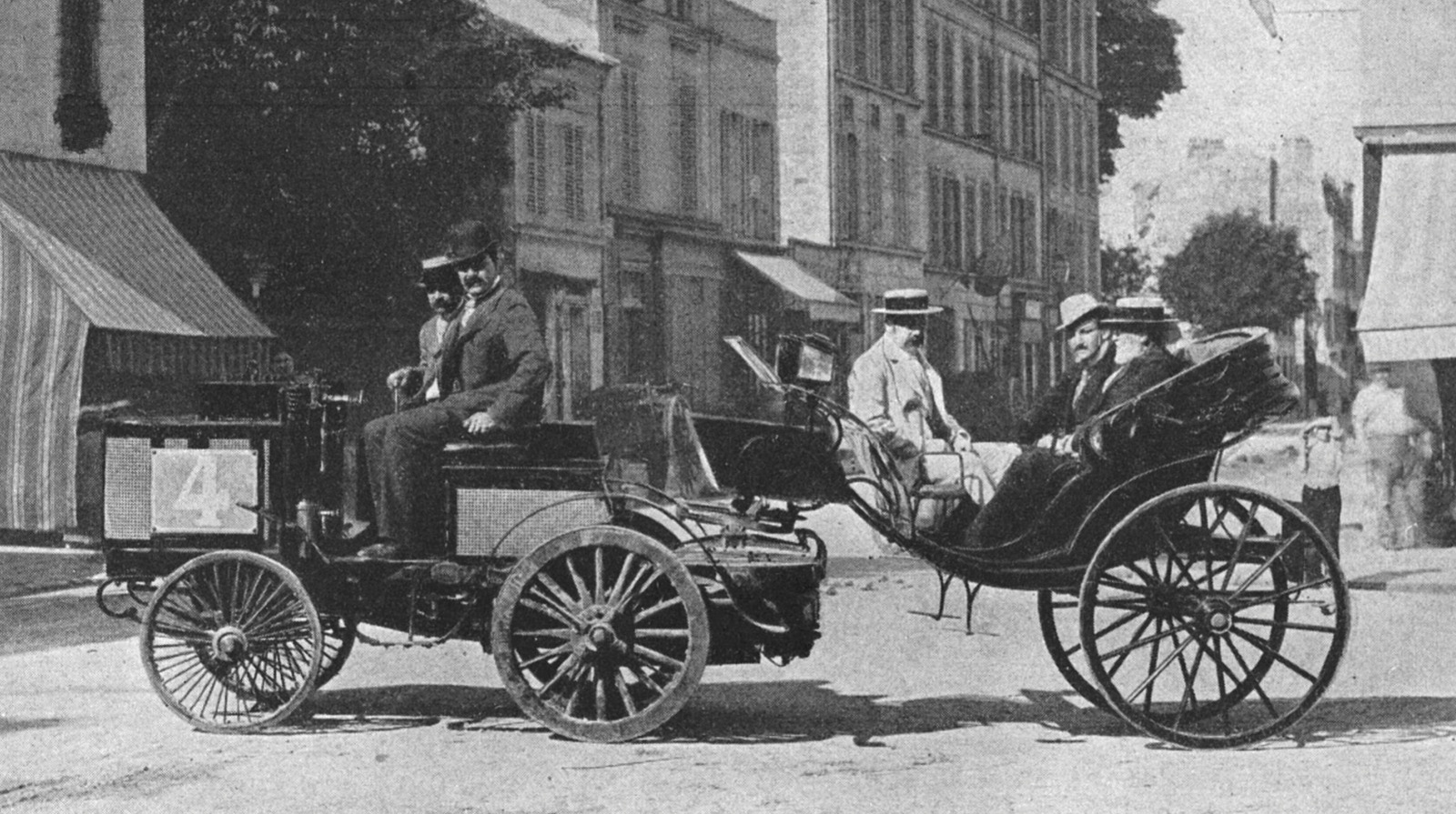
From Racing Glory to Scandal: The Shocking Downfall of a Pioneering Champion