Why the 4L60E Transmission Struggles to Win Over Car Enthusiasts
Why Modern Car Interiors Feel Luxurious Without Relying on Giant Touchscreens
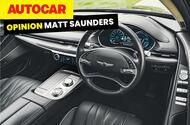 Today, what we might call ‘baseline’ perceived quality is an awful lot higher than it was 30 years ago
Road testers like me have expended plenty of column inches over the past couple of decades writing about something we call perceived quality.
It may seem a slightly mysterious concept. Some readers think we imagine it entirely; others that we simply place too great importance on it. So what follows is a short effort to explain a phenomenon that has had a large influence on the development of the car industry in the 21st century.
It’s not to be confused with manufacturing quality. When car industry types refer to quality in the broadest sense, this is what they tend to mean – ostensibly the capacity of a production line, be it automated or not, to produce accurately and correctly made cars without defect in repeatable fashion.
Perceived quality isn’t about whether body panels align correctly, whether door seals stop the wind properly, what paint finish is like and whether a car built on a Friday afternoon is the same as one from a Tuesday morning.
As much as those things may indeed be more meaningful indicators of a car’s quality, they’re indicators that you typically need at least a little bit of an eye or ear to spot. Perceived quality, by contrast, is the kind that exists entirely so you will spot it.
Most road testers would agree that the idea of putting fixtures, fittings and features into car interiors that look and feel expensive and that move in a similar way for its own sake was popularised by German manufacturers in the early 1990s.
Search through Autocar’s digital archive for the first usage of the phrase in the intended sense and it crops up in our first drive of the B4-generation Audi 80 Avant in July 1992.
That seems like about the right moment. Audi was striking out to make a new name for the superior quality of its cars. Tester Steve Sutcliffe confirmed explicitly how “good to touch, good to look at and exquisitely finished” so many parts of the 80’s cabin were.
The trend wasn’t contained to luxury or executive models, though. The Mk4 Volkswagen Golf, for example, came as a transformative moment for perceived quality when it appeared in 1997. This was Wolfsburg’s big reply to the landmark Ford Focus.
The story goes that when Volkswagen executive chairman Ferdinand Piëch first sat in a development car, he slid the driver’s seat all the way back, looked down and immediately demanded that the car’s front seat mountings be re-engineered so that he couldn’t see their running tracks.
Just because. And, more amazingly, the stature of Piëch meant it actually happened. Now times could hardly be more different.
Many manufacturers prefer to spend the budget that years ago they might have ploughed into over-engineered cantilevered ashtrays and air-conditioning controls that clicked like buttons on a Swiss watch on larger and larger digital screens, the existence of which often saves that same manufacturer from including so many physical switches anyway.
Ambient lighting has taken the place of haptic appeal. In some showrooms, you have to go a long way and spend an awful lot of money to find a luxury interior that really feels expensive.
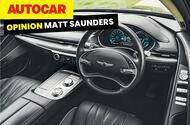
Not if you know where to look, however. The most expensive, high-quality-feeling interiors of our current crop of cars aren’t made in Germany any more but in markets that have been more reticent about adopting digital cabin technology. I would say Lexus, Genesis and Mazda are among the leading powers now.
But the real gift of perceived quality has been to drag the prevailing standard of fit-and-finish and material quality up by its bootlaces, right across the board, from Ford to Fisker to Ferrari and back again.
Thirty years ago, material cheapness still abounded in places where it really shouldn’t have. Today, what we might call ‘baseline’ perceived quality is an awful lot higher.
Ford 6.7 Power Stroke Engine Years to Avoid According to Owners

2025 BMW 1 Series Reinvents the Premium Hatchback with Mild Hybrid Power and Bold...
 Munich's fourth-generation 'compact premium' hatchback adopts mild-hybrid petrol power Somehow, after two decades of effort, Munich has yet to fulfil its true potential when it comes to its smallest model, the BMW 1 Series.For two model generations and 15 years, it tried – and, notably, failed – to make a rear-wheel-drive layout work as an outstanding dynamic selling point. And since then, it has been trying – and, arguably, failing – to execute a more conventional, natively front-driven family hatchback with a BMW-typical sporting edge.It’s with a rather hollow self-aggrandising air, then, that the firm hails the 1 Series as “the pioneer of driving pleasure in the premium compact segment” - and, similarly questionably, that it announces this road test subject as a fully fledged fourth generation of the five-door hatchback, when it would seem to amount to little more than a heavy facelift. Nevertheless, here we are. The 1 Series has a new 48V mild-hybrid petrol powertrain to set it apart, as well as a stiffened chassis, retuned suspension, updated interior and freshened exterior styling. It returns to a family hatchback segment in which competiton remains fierce, however, taking on everything from old premium rivals such as the Audi A3 Sportback and Mercedes-Benz A-Class to more mainstream fare such as the Volkswagen Golf, Mazda 3 and Peugeot 308. And that's to say nothing about the increasing number of EV rivals, given that the entry level is one of the few areas in which BMW is yet to offer an electric car.
How to Ensure Your Trailer Is Level and Safe for Towing
Mercedes Unveils Striking Illuminated Grille Redefining the Future of Electric SUVs
 Reinvented grille design, fusing classic styling with bolding lighting elements, will be seen on all future models
Mercedes-Benz will introduce a bold new chrome grille design that will feature on its next-generation of electric vehicles, starting with the new electric GLC SUV that will be revealed at next month’s Munich motor show.
The new front-end design, which has been previewed with a teaser image, reinvents the classic radiator grille design that has featured on nearly every combustion-engined Mercedes model.
The new electric GLC, which is in effect a successor to the EQC, will sit alongside the existing combustion-engined version and is the first in a major product offensive by Mercedes-Benz as it abandons dedicated model names for its EVs.
The current design lineage dates to the 1900 Mercedes 35 PS, which featured an upright honeycomb grille to maximise cooling. Elements from that design, such as the distinct central kink on the angled grille, can be seen in current models, although aerodynamics has led the grilles to become far lower and wider.
Because the grille was developed purely for cooling that an EV doesn’t need, the first generation of electric Mercedes featured a different front-end design. But the next-generation electric models will introduce a more traditional grille that returns to a taller and more upright format.
Mercedes-Benz boss Ola Källenius said the grille was originally “not a design choice, but form follows function”. He said the new design would ensure Mercedes could maintain its identity “in current times, with 100-plus Chinese firms” and others entering the market, and ensure it could carry “the calling card of Mercedes, the unmistakeable Mercedesness” into the future.
Without the need for a cooling function, the grille has been reinvented by Mercedes as an illuminated panel. The version that will appear on the new GLC EV will feature a chrome front – notably going against a wider industry trend to reduce the use of chrome styling elements – that is perforated with 942 small holes. Behind the panel are more than 100 LEDs, which enable the grille to light up in a variety of customisable ways. The central star logo is also illuminated, although the extent to which it is will be dependent on local regulations.
The illuminated grille will feature on all next-gen Mercedes models, although the design will vary slightly between them. The firm is also set to update its combustion models in the coming years, and given it has previously said their design language will 'merge', it is likely their radiator grille designs will change to match the new shape.

Ukrainian Drones Deliver Lifesaving E-Bike to Trapped Soldier in Bold Rescue


Why Diesel Engines Outperform Gas for Towing and Hauling

The Truth About Cylinder Deactivation and Fuel Savings

Which Car Was First to Feature Standard Disc Brakes? Unraveling the Automotive Mystery