Range-Extender Hybrids Versus Plug-In Hybrids Clarifying the Distinct Roles and Advantages in Electrified Mobility

Leapmotor's C10 Hybrid EV is the only REx on sale in the UK - but more are comingBoth PHEV and REx drivetrains combine combustion engines and electric motors, but there are crucial differences
A range-extender (known as a REx or REEV) is pleasingly simple: it's an electric vehicle with a smaller battery that can be topped up by a petrol engine when the state of charge drops.
Traditionally, a REx is a type of series hybrid, which means the electric motor turns the road wheels and the engine works as a generator, charging the battery.
Modern REx engines are small, light and tuned for high efficiency, and they run at a constant speed when the battery needs charging.
A REx has something in common with a PHEV in that both can be plugged in to charge the battery and run in pure-electric mode.
The main difference is that with a PHEV, both the engine and the motor are used to turn the wheels.
Both PHEVs and traditional full hybrids like the Toyota Prius are described as 'parallel hybrids', because the engine and motor can drive the wheels in parallel, ie at the same time.
Like other hybrids, a REx has the disadvantage of being more complex than pure EVs in the sense that they incorporate a mixture of both combustion and electric drivetrains.
Another potential downside is that a REx could go for longer periods with the engine lying dormant – but most are generally started periodically by the car’s electronic systems for a ‘maintenance cycle’.
RExs are ideal in parts of the world where the EV public charging infrastructure is sparse, and they are popular with Chinese manufacturers, which is a powerful incentive to make the technology easily accessible.
A REx's high-voltage battery is a lot smaller and cheaper than that of a pure EV, too, making a turnkey REx drivetrain a cost-effective solution.
Suppliers including Horse Powertrain are now beginning to offer modular REx units, complete with integrated power inverters, which any manufacturer can buy and incorporate into its vehicle range.
Horse, a collaboration between Renault and Geely, is producing a number of REx solutions, including its small, ‘suitcase-sized' C15 unit, which can be installed at the front or rear of an EV platform.
ZF is also starting volume production of modular REx units this year. One example is the eRE+, which operates as a generator but can also be connected to the car's wheels by means of a clutch to give four-wheel drive.

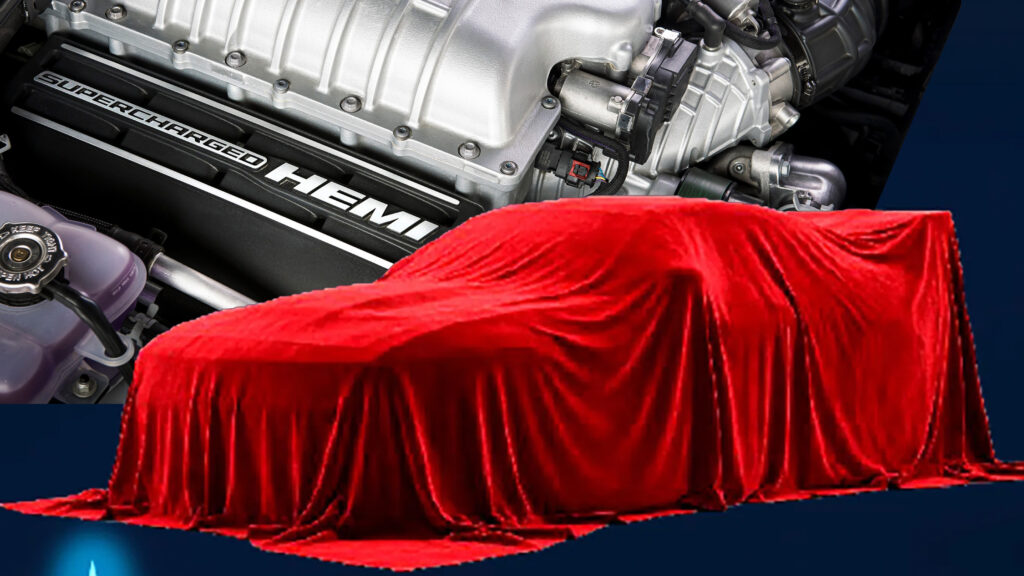
Hellcat V8 Returns to Dodge Charger as Stellantis Responds to Electric Muscle Car Pushback

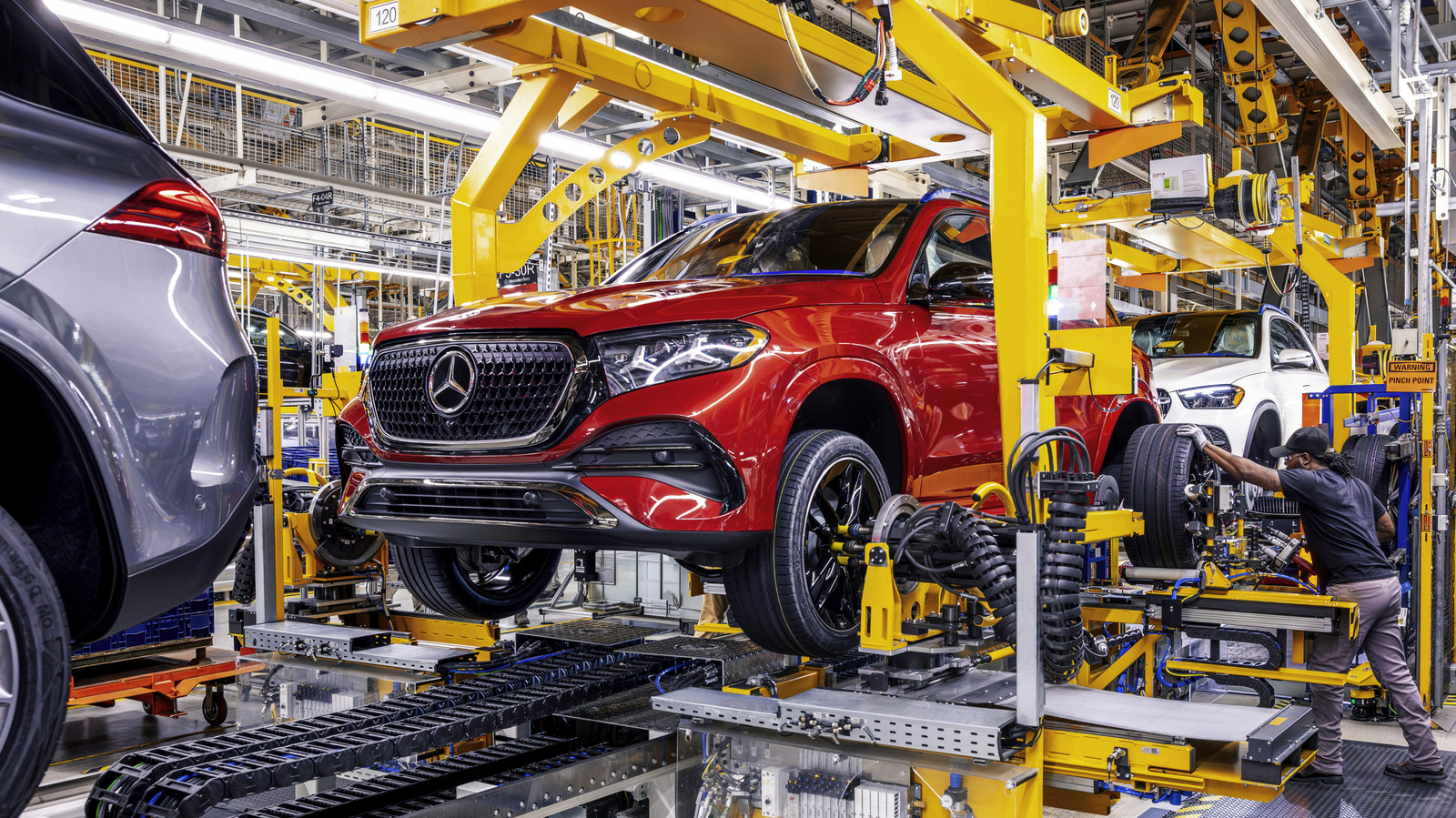
Mercedes Faces Potential US Market Ban Amid Congressional Scrutiny of Chinese Ownership

Lego Innovation Meets Automotive Passion in Dave Collins’ Renault 5 Turbo 3E Recreation
 Civil engineer Dave Collins tells us how he built a superb recreation of the Renault 5 Turbo 3E
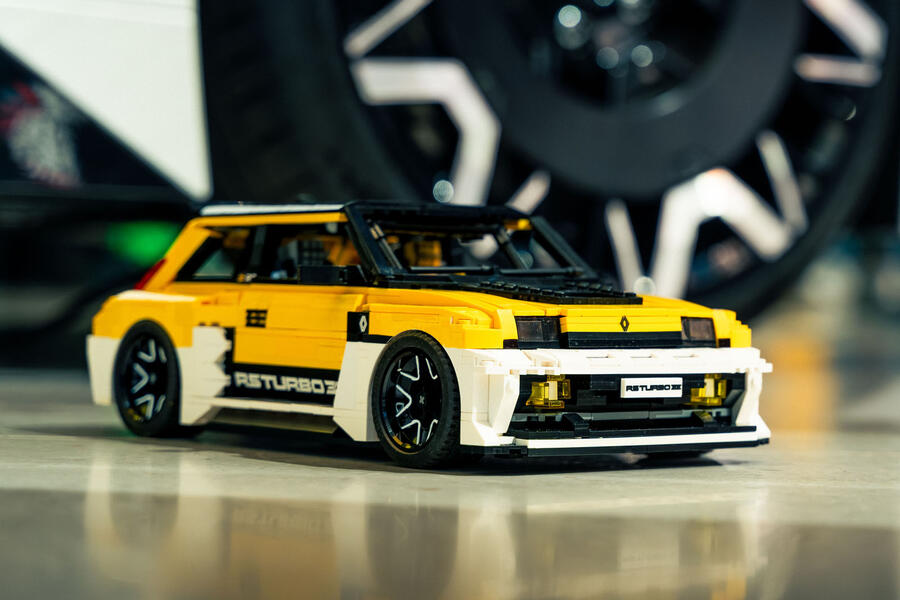
Dave Collins' superb Lego recreation of the Renault 5 Turbo 3E could soon be headed to a shop shelf near you, having passed a vital stage in its approval by the plastic brick maker.
Collins' model was submitted to Lego Ideas – the platform on which fans of the bricks can post their own models, with the potential for them to become a real set – in April, soon receiving the backing of Renault UK. It has now attracted 10,000 public votes of support, meaning it will be passed to Lego insiders for review.
"We will build concept models and determine if the concept meets our high standards for what it takes to be a Lego product," the Danish company said. "This includes factors such as playability, safety and fit with the Lego brand. Every potential Lego product goes through a process like this and must meet the same standards."
The 5 Turbo 3E will be included in Lego's second review for 2026, which will include proposals that breach the 10,000-supporter milestone by 7 September.
It said reviews "can take several months" and that, following approval, the development phase "also takes several months". That means that, should it be approved, Collins' set could be on sale late next year.
In this interview, he tells us about the painstaking process of recreating the 5 Turbo 3E in miniature.
The yellow brick road: Building a Lego Renault 5
"It's my wife's fault," says Dave Collins. "I put the model on my bookshelf along with my others. We engineers don't seek the limelight, but she insisted I photograph it and send the pictures to Renault."
That's how his 1:12-scale model of the £140,000, 550bhp Renault 5 Turbo 3E, conceived and built entirely by him from Lego, found its way into Steve Cropley's 8 April column in the Autocar magazine – an appearance that has since helped it attract 10,000 supporters on the Lego Ideas website, where people can promote their creations.
Collins' remarkably accurate model will be now put forward to Lego's review board for commercial consideration. It will have to pass through many hoops, but we have our fingers crossed that the board will be sufficiently confident in his car to add it to Lego's range of model sets. Then Dave Collins, 40-something, husband, father and civil engineer, will be officially recognised as a Lego Fan Designer and earn 1% commission on his model's net sales, plus 10 complimentary copies.
Not that he set out to do it for the money. "I just enjoy building with Lego," he says. "It's a mindful process, one of trial and error. Playing with Lego, you might call it!"
Collins' relationship with the plastic bricks began, naturally enough, in childhood. In time, he graduated to more challenging Technic sets, including Forklift Truck, Hook and Ladder Truck (a fire engine) and Snorkel Squad (a large flatbed with a fireman's ladder), which he still displays in his hobby room. Eventually, he left home for university to lay down the foundations of his present career in civil engineering. Then years later, in 2020, Covid struck...
"One of my friends who had older children was giving away all their Lego and, knowing of my past interest in it, offered the lot to me," says Collins. "All told, the pile of bricks and other parts weighed around 20kg. I've always liked cars; my passion is Group B rally cars of the 1980s. I thought that, to help me and my daughter get through the pandemic, it would be fun to use the Lego to design and build cars that I'd owned, and maybe a rally car too from the same era."
Which is how, over a period of months, Collins' Lego model of a Mk1 Toyota MR2, a Ford Escort XR3i (the version he once owned was a more modest 1.4 L) and a Renault 5 Turbo (a car he had never owned in any form) came into being. You can see the XR3i on his Instagram page, under his building name Devonbricks. He also created a superb model of an MG Metro 6R4 (he had owned a Metro 1.4 Si), which he submitted to Lego for board review early last year. It has so far attracted more than 2800 supporters. It's pictured below; you can see more of it on his Instagram page or the Lego Ideas website.
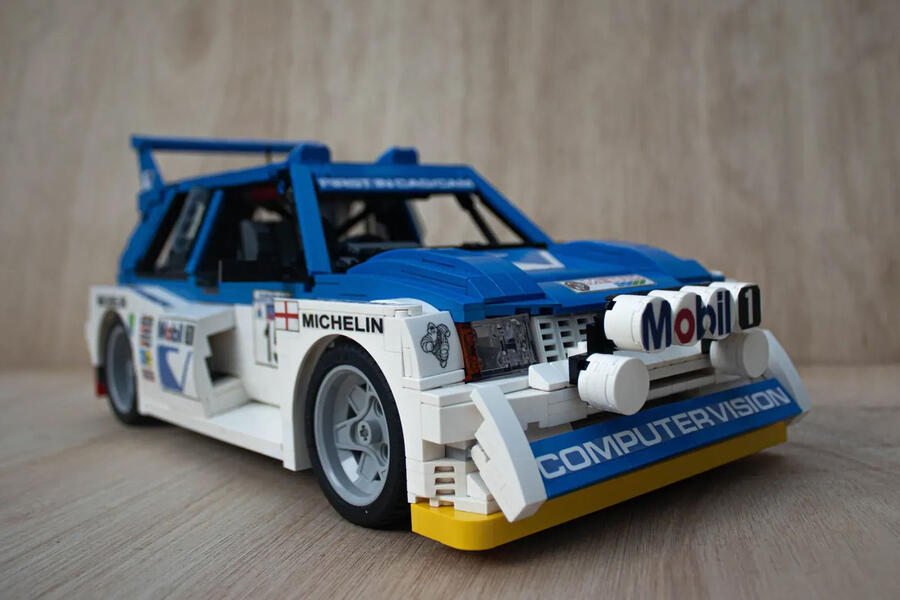
That all four cars were created by trial and error is remarkable but more remarkable still are their features and detail. Collins is a modest man, but he accepts that his models are a cut above even Lego's premium sets: "I've taken Lego to the next level, to something as close as the real thing as possible and which doesn't look like a typical Lego model."
Whether it's an approach that can be made commercially viable (the MR2 and XR3i are made from around 1200 parts and the 6R4 from 1700 parts) is another question, but then Collins insists that he has never considered the marketability of his models when creating them.
Of the four he built during and after lockdown, it was the 6R4 that he enjoyed most: "I like the flared-arch look, while it and '80s cars in general have an angular quality that is easier to build in Lego. It's a look shared by the new Renault 5. Retro-futuristic, Renault calls it."
It's a look that Collins was instantly attracted to: "Electric power is the future of motoring and the Turbo 3E is a mind-blowing example of what lovers of performance cars can expect. I love its aero and wide wheel arches. It's a beast and I just had to build it. It turned out to be a process that excited me from start to finish."
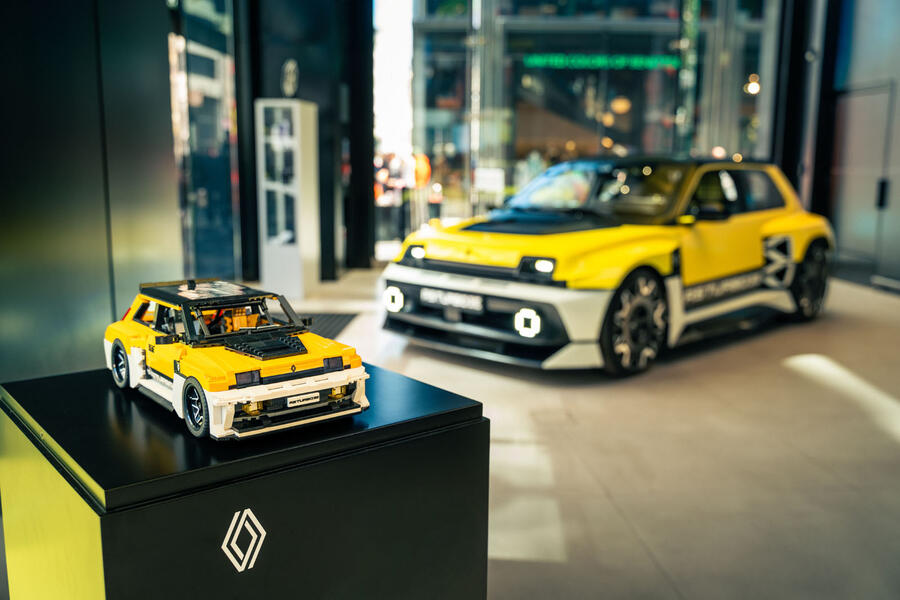
If, like most of us, the furthest you've got improvising with Lego is building a toppling tower block, you doubtless will be wondering how Collins transformed the rods, wheels, bricks and countless other old Lego parts given to him by his friend into the stunning 5 Turbo 3E that has captured the imagination of his supporters.
In fact, as with his other models, the process began with sheets of A3 paper. Onto them he traced images of the Renault from his large computer screen to give him templates of the car's sides and front and rear ends. He then laid the traced images on sheets of card, cut them out and arranged Lego parts on the cut pieces to achieve the vehicle's basic shape and outline and to judge the suitability of each piece. With the sides loosely prepared, he then built the chassis from Technic pieces, fitted the wheels and joined everything up.
More trial and error followed. "I have a frustrating eye for detail and perfection," says Collins. "Everything has to be spot on. Every day I'd see the Renault on my shelf and I'd have to keep tweaking it. The hardest part was the roof: I had to figure out how to give it good structural support so that the doors and the tailgate could open and close. Getting the tailgate to fit flush to the body was also a challenge. In the end, the roll-cage saved the day. The easiest part was the basic chassis, not least because, unlike my other builds, there was no exhaust system and silencer to make or engine to install."
The 5 Turbo 3E's interior was also difficult to model, with Collins' eye for detail creating all sorts of challenges: "I wanted the seats to be as authentic as possible, so each of them has side supports, bolsters and headrests. I reproduced the tartan print on the upholstery using AutoCAD software and printed the design on A4 paper. I painted the wheels with white fabric paint. I tried to make it look like a radio-controlled car but as realistic as possible."
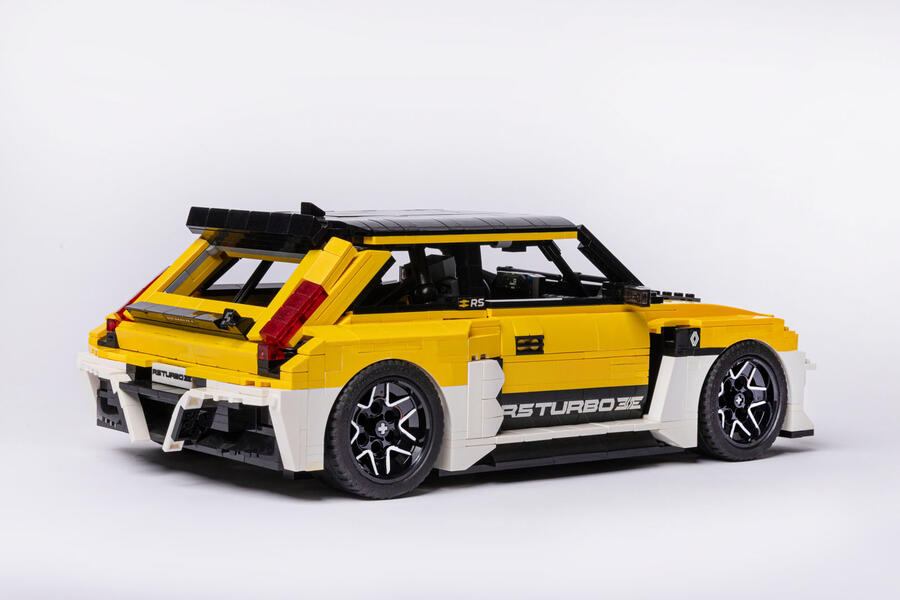
To do so required 1300 Lego pieces. Many he was able to source from his friend's old collection while others, especially those in the right colours, came from eBay and BrickLink, an independent marketplace for Lego parts. "These extra pieces cost me around £50," says Collins, "but if I'd had to buy all the parts for the car, the total build would have cost around £200."
The project took three months and around 100 hours to complete, concluding this February. Job done, the 5 Turbo 3E was destined for Collins' shelves while he considered his next project. But, as we know, his wife had other ideas, with the result that the little car (it measures 320mm in length) has placed its shy and retiring creator in the spotlight.
"The attention the car has attracted from Renault and Autocar and, of course, from the Lego supporters, to whom I'm extremely grateful, has been a shock but an enjoyable one," he says. "One minute I was sitting in my office and the next I was on a train with the car beside me in a cardboard box going to London to be photographed by Renault. Arnaud Belloni, Renault's brand chief, even popped into a video call to tell me he thought my car was brilliant. Renault are keeping the car for a short time for media purposes. I hope no one drops it. So it can't be rolled along the floor, I've locked the wheels."
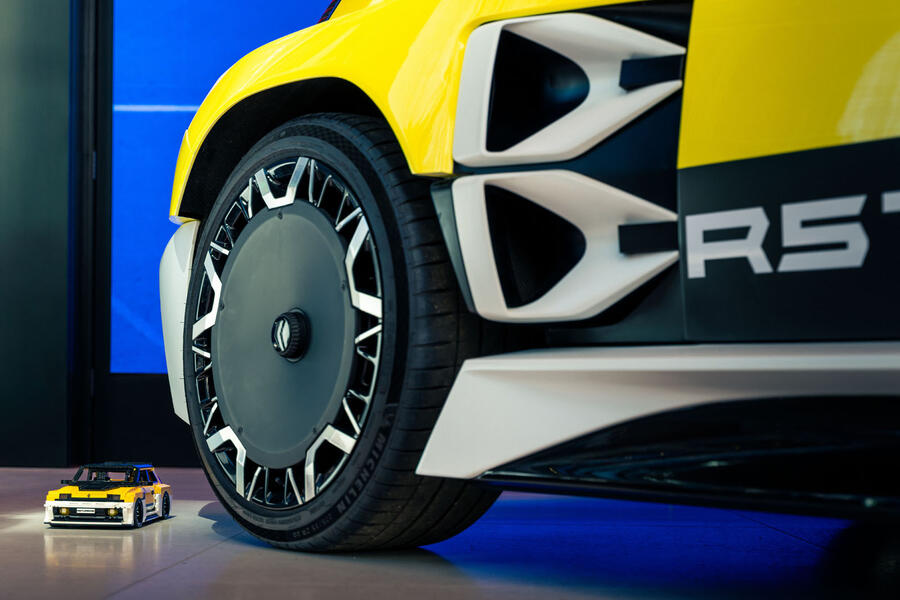
During his time with Renault in London, the best moment for Collins was when his model was placed next to the real thing: "At first, it was nerve-racking to see it. Would it look like it and would the proportions be correct? Fortunately, it did and they were. To say I was pleased is an understatement."
To follow Collins' 5 Turbo 3E in its bid to be adopted by Lego as an official product, visit ideas.lego.com.

Mercedes Faces US Sales Threat as Proposed China Ownership Law Tests Global Auto Ties


Kia EV4 Undercuts EV3 as UK Grant Rewards Local Production and Supply Chain Emissions

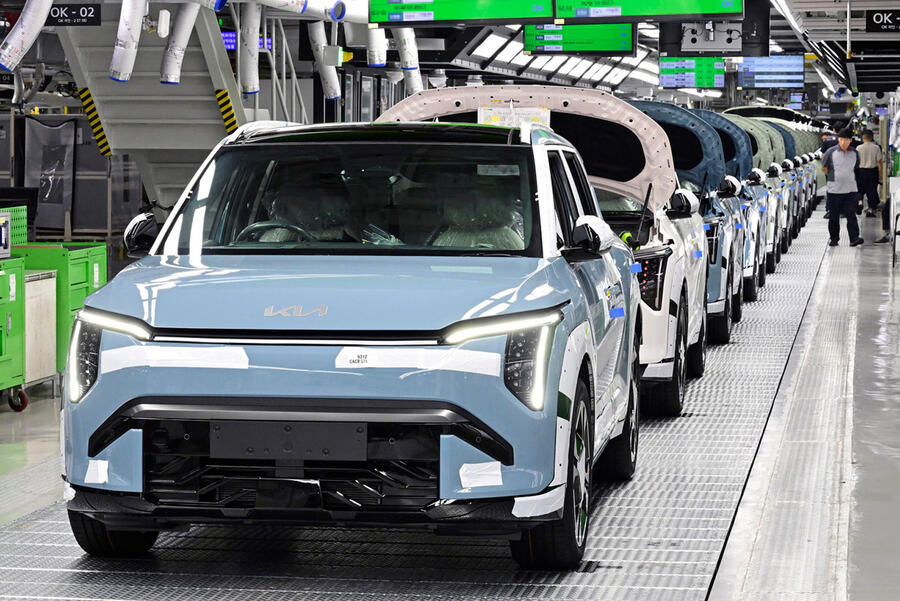
EV4, pictured, gets a bigger grant than the EV3 because it is built in SlovakiaLarger car has secured the full £3750 Electric Car Grant from the UK government, meaning it now starts at £30,995
The Kia EV4 hatchback has qualified for the upper tier of the UK government’s Electric Car Grant (ECG), making it cheaper than the smaller EV3.
The upgrade to the full Band 1 grant of £3750, up from the previous Band 2 grant of £1500, means the EV4 in entry-level Air trim now starts at £30,995. It offers 201bhp and a range of 273 miles between charges.
That's £560 less than the equivalent EV3, despite the EV4 being a larger car – and despite the two models being closely related in their technical make-up, sharing batteries and motors.
The EV4 is now cheaper because the EV3 still qualifies only for the lower Band 2 discount of £1500.
That's because it's built in South Korea, whereas the EV4 is built in Slovakia: the ECG takes into account the emissions from the car's supply chain, and shipping the EV3 over from east Asia raises those significantly.
The fastback version of the EV4, which is likewise imported to the UK from South Korea, doesn't receive the ECG whatsoever, being too expensive at £40,495.
The upgrade in the EV4 hatchback’s banding brings its pricing back into line with key rivals that had already qualified for the full £3750 discount.
These include the Mini Countryman E (priced from £29,555), Citroën ë-C5 Aircross Long Range (from £32,565) and Renault Scenic E-Tech (from £33,245).
Meanwhile, the smaller Kia EV2 Long Range – which is assembled in Slovakia, using a European-made battery – is expected to be upgraded to the full £3750 grant in due course, cutting its price from £27,995 to £24,245.
Kia UK already offers its own discount of £3750 on the long-range EV2, but that will be replaced by the ECG if this model variant receives approval for Band 1 status.

EV Rebates Drive Canadian Sales Surge but Delayed Dealer Payments Expose Policy Friction

Status Symbols and Social Dynamics of Arriving at Your High School Reunion

Vauxhall Corsa Used Market Assessed: Value, Powertrain Choices, and Key Reliability Risks
 A lot of supermini for the money - and there's petrol, diesel, hybrid and EV to choose from
In 2021 the Vauxhall Corsa finally became Britain's best-selling car after more than 30 years of trying, and it remains a consistent fixture of the top five to this day.
It thoroughly deserves its commercial success too, because it's well-rounded, pleasant to drive, decently equipped and available with a broad mix of powertrains.
Its popularity also means there is an abundance of current, 'F'- generation Corsas on the second- hand market - many for a bargain price, with the earliest 2020 cars starting from less than £5000.
The Corsa F is closely related under the skin to the Peugeot 208, sharing its CMP platform, powertrains and dimensions. A keener driver will tease out subtle differences in chassis set-up, but the two are so similar that your preference largely rests on which one you prefer the look of.
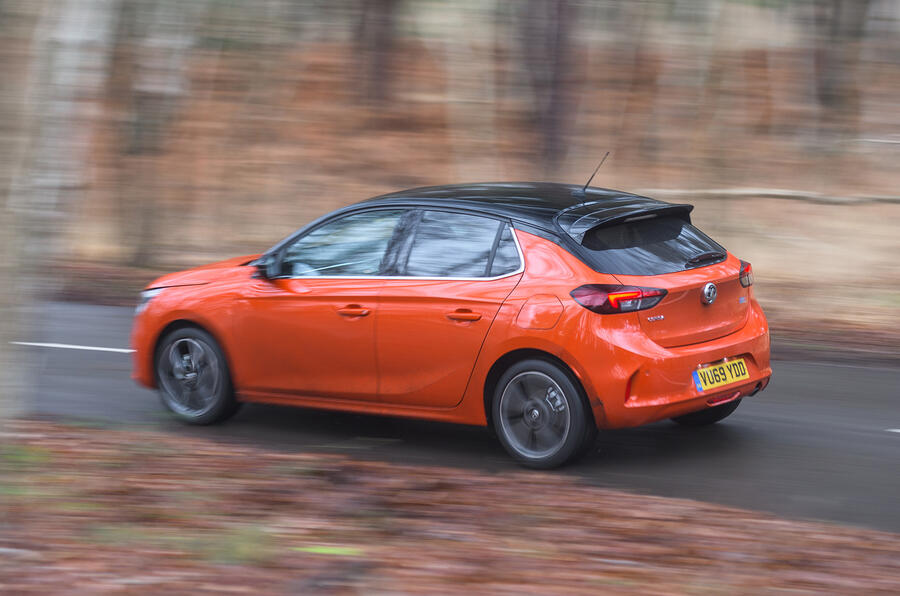
Let's assume it's the Vauxhall. (And why not? It's a handsome- looking thing.) Most used F Corsas are 1.2-litre Puretech petrols with the tricky disintegrating wet belt (see Buyer Beware, right), or you can up your budget for the later, more reliable chain-driven motor, which also brought the option of mild-hybrid power.
Longer-haul drivers will like the idea of the 1.5-litre diesel, which has enticing cruising economy (70mpg) and decent refinement, but it's relatively scarce. There's also an electric model. Now available from just £7500 with a 175-mile real-world range, it's one of the best used small EVs out there.
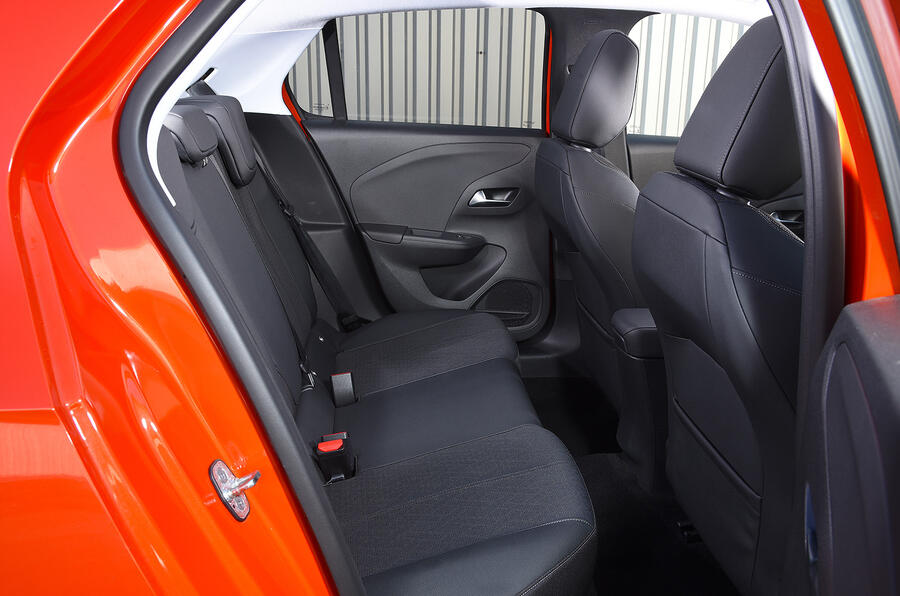
Regardless of powertrain, all Corsas share a compact exterior (it's less than 4.1m long), with an interior to match. While the space up front is generous enough, the back seats are more cramped for average-sized adults and a Polo, Ibiza or Fiesta will be more spacious. But the Corsa's 300-litre boot is about right for the class. It feels decently premium and well-built inside too.
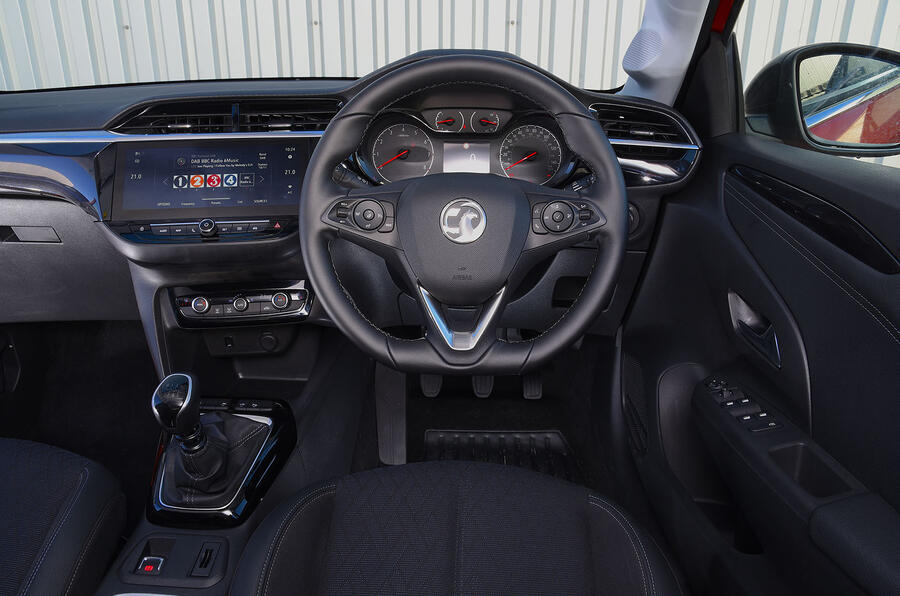
The 10in infotainment system - or 7in on pre-facelift (before mid-2023) lower-spec versions - is simple to use and it's supported by physical buttons to operate key functions. On the road, the Corsa is easy to rub along with. The 1.2-litre petrol is smooth and torquey, the diesel impressively vibration-free and the electric version punchy and supremely quiet at low speed.
The sense of big-car refinement and quality is broken over coarse roads, when the ride feels wooden. It's not great on 17in alloys but is passable on 16s - and the EV has a more settled ride than ICE cars. Most Corsas have an adequate 99bhp from their 1.2-litre turbo petrol. Some early versions had just 74bhp and were naturally aspirated, while a 128bhp tune came with a hesitant auto gearbox. We'd stick with a six-speed manual 99bhp car, which should be good for 50mpg and 0-62mph in a little over 10sec.
In 2024 a couple of hybrids joined the range (with 108bhp or 143bhp) offering 60mpg and a smoother dual-clutch automatic gearbox. With the EV (134bhp or 154bhp), the later you go, the better the range. Early 50kWh cars will do 150 miles in the real world, but later versions boost that to 175 miles, and a heat pump was offered as standard from 2022, keeping that range more realistic in the winter. In 2024 a 51kWh battery was added as an option, boosting the real- world range to 200 miles. There's plenty of choice, then, and plenty of rational appeal. It's a sensible kind of car that offers quite a lot for not very much outlay.
What to look out for
Petrol engine: The degrading wet belt is a potential ticking time bomb, but frequent, high-quality oil changes can prevent a costly failure. A chain-driven 1.2-litre petrol (optionally hybridised) is a safer bet and you can spot it by the oil cap being to the left of the middle of the engine cover, rather than the front left.
Diesel engine: The 1.5-litre diesel has a traditional timing chain but it is also prone to premature failure, causing extensive engine damage, even after a 2022 recall that replaced the 7mm chain with an 8mm version.
Clutch: A sticky pedal action could be a problem with the master or slave cylinder, the release bearing or the return spring. Budget up to £1000 for the first two, or around £100 for the last two.
Gearbox: Problems often occur at around 30,000 miles and mainly affect manual transmissions. Grinding or crunching noises indicate wear, which in some cases may require replacement of the entire gearbox, although a software update of the transmission control unit or an oil change can help.
Infotainment: It's never been the quickest or slickest system, but turning the car off and on again should solve any glitches and crashes.
Interior: Faulty clips can make it difficult to operate the folding rear- seat mechanism. Occasional failures have been reported with the electric windows and occupancy sensors.
Also worth knowing
A Corsa loses value far more quickly than a Polo, Fabia, Fiesta or Mini - which means it's a buyer's market. The less you spend, the less you lose when the time comes to move the car on. A facelift in mid-2023 made the Corsa look more distinctive and upmarket with the introduction of the brand's new 'Vizor' face. Before the facelift, trims ascended through SE, SRi, Elite (all with the option of Nav, Premium and Nav Premium) and Ultimate. We'd recommend SE Nav Premium as it's very well equipped and doesn't have the ride-inhibiting 17in alloys. Since the facelift, trim levels have been Yes, Design, GS and Ultimate.
How much to spend
£5000-£7499 Well-used, often low-spec ex-company and driving school cars. Check for a fastidious service history and evidence of a belt change (petrol) or chain change (diesel).
£7500-£9999 More desirable specs and lower mileages (around 60,000) plus EVs for roughly a £1000 premium.
£10,000-£13,999 Low-mileage, high-spec three- and four-year-old petrol Corsas and a few diesels.
£14,000-£30,000 Facelifted cars from 2024 onwards, chain-driven petrols and hybrids. Corsas from 2026 start at £16,000.
An owner's view
April Sparkes: "I've just bought a new, unregistered Corsa Electric for £16,000 from a Vauxhall main dealer and couldn't be happier. People criticise the depreciation of EVs, but at that price it doesn't look like it will lose money any faster than any alternatives. I was looking at getting an automatic petrol initially, but the problems I had with my old Peugeot 208 and the fact that I never drive very far decided it for me. So far, it's been smooth sailing and has saved me a chunk of change in petrol too."

Porsche Carrera GT Reimagined as JC9 Explores the Tension Between Heritage and Innovation in...