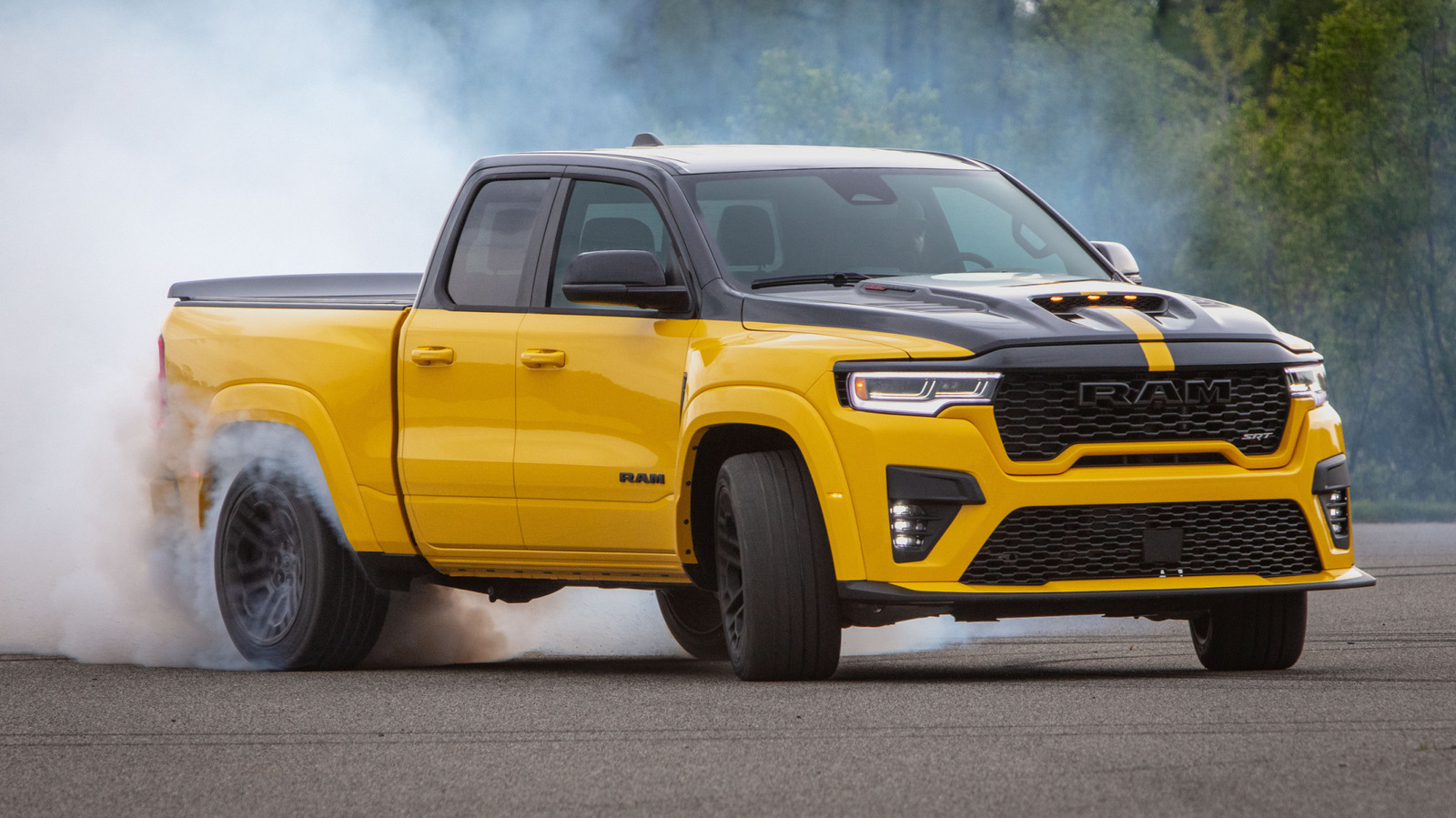
Rumble Bee Returns as Ram Reclaims Its Muscle Truck Heritage with the 1500 Revival

Renault 5 E-Tech Electric Sets a New Standard for Urban EVs by Uniting Design,...
Renault 5 E-Tech electric combines standout style, everyday usability and real EV value in a package that’s perfectly suited to urban life...
“Ultimately, that’s why it works so well as a city car. It has the design to make you want it, the compact size to make urban driving easier, the value to make switching to electric feel realistic and the technology to smooth out the rough edges of daily use. Add in sensible practicality, and it becomes clear that Renault 5 is much more than a stylish revival of a famous name. It’s a small EV that feels perfectly judged for modern urban life – and that’s exactly what makes it so appealing.”
City cars have always had a simple brief. They need to be compact, easy to drive and affordable to run, while still offering enough practicality for the rigours of everyday life. But that doesn’t mean they have to be dull.
That’s what makes Renault 5 such a standout option. With its compact dimensions, liberating real-life range, clever tech and eye-catching design, it feels like a car built around the way people really drive today. Add in the fact that eligible versions qualify for a discount of up to £3,750 through the Electric Car Grant, and it makes an even stronger case as an electric vehicle that’s not only attainable, but genuinely desirable.
Here are five ways Renault 5 makes a convincing claim to be the ultimate urban icon.
Find out more about Renault 5 E-Tech electric

#1 Character most city cars can only dream of
Small cars are often sold on practicality and price, not personality. Renault 5 E-Tech electric manages to offer all three.
It doubles down on character with its confident, retro-futuristic styling. Those neat, visual references to the original Renault 5 give it some old-school appeal without making it feel overly retro. The result is a car that looks fun, distinctive and full of flair, and is guaranteed to turn heads.
That matters in a city car, because this is likely to be the car many owners use most often: for the commute, the school run, the trip to the shops or the countless short journeys that fill everyday life. Driving something that looks good and feels special makes those trips more enjoyable.
It also gives Renault 5 wider appeal. Plenty of buyers want a small EV because it makes practical sense, but they don’t want a car that feels like a compromise. Renault 5 doesn’t feel apologetic or purely rational. It feels as though it has been designed to be wanted.
And it clearly has substance to back up that showroom appeal. Renault 5 is the current What Car? Small Electric Car of the Year for 2026 – and it was crowned our Overall Car of the Year in 2025 – which underlines just how convincing it is as an overall package.
In a market where many small electric cars still feel worthy rather than exciting, the striking Renault 5 has a clear advantage.

#2 Its size makes urban driving easy
Anyone who drives regularly in town knows that larger cars can quickly become tiring. Narrow roads, crowded car parks and tight parking bays are rarely enjoyable when you’re driving something wide, tall and cumbersome.
Renault 5 E-Tech electric thrives in this environment. Its compact dimensions make it easy to place on the road, easy to manoeuvre and much less stressful to park than a larger hatchback or SUV. In fact, it makes it outright fun to drive and own. In a city, that’s not a minor benefit; it can shape the whole ownership experience. Renault also quotes a tight 10.3-metre turning circle, which is especially useful when making U-turns or squeezing into awkward spaces.
Yet while Renault 5 is small enough to suit urban life, it never feels compromised. It still has five doors, five seats and a useful boot, so your friends – and their stuff – can come along for the ride.
That’s what makes the packaging so appealing. The best city cars aren’t simply tiny; they’re cleverly judged. They need to be compact enough to make life easier in town, but still versatile enough to serve as a proper everyday car. Renault 5’s designers clearly understood that brief very well.
Its nippy electric powertrain only reinforces the point. Urban traffic is one place where driving can feel genuinely easier in an EV than in an equivalent petrol car. There’s no need to change gears, no engine noise humming away in the background and no sense that the car is being used outside its comfort zone. Instead, stop-start traffic feels smoother and calmer, which is exactly what many drivers want from a city car. And, there’s plenty of instant zip on-tap when you need it. Darting into a gap at a busy junction is satisfyingly effortless.

#3 Technology that makes city driving easier
Renault 5’s infotainment solution is so effortlessly intuitive you’ll be wondering why other manufacturers haven’t taken the same approach.
The OpenR Link system features built-in Google [2], which means it includes Google Maps, Google Assistant and Google Play right out of the box – so it feels instantly familiar. But what’s really impressive is how those apps are properly built into the fabric of the car, which makes the experience feel much more seamless than relying entirely on your phone. In fact, it’s arguably one of Renault 5’s biggest selling points.
For example, when plotting a route in Google Maps, the system will predict your battery level at the end of the journey. If you’re going on a particularly long trip, it can add a charging stop at a convenient location. And, because the system is so ingrained within Renault 5, it’ll automatically precondition the battery as you near your charging destination to help maximise your charging speed.
Driving in towns and cities is a breeze thanks to real-time traffic updates and intelligent rerouting – a dream for avoiding rush hour jams and unexpected delays. Having a built-in navigation system that responds intelligently to motoring curveballs can make a real difference to how stressful a journey feels.
Voice control is similarly brilliant. Renault 5 uses built-in Google Assistant to deal with voice commands, and as with Google Maps, it’s properly baked into the car. That means you can simply ask Google to adjust the cabin temperature or turn on the heated seats. You can also ask Google to switch driving modes, check your remaining electric range, set a route and much more. That’s helpful on a busy drive when there’s a lot going on outside the car. It means you can make a request without taking your eyes off the road. A genuinely helpful convenience.
Because you have access to the Google Play Store, you can also download some of your favourite apps to Renault 5. Netflix or Prime Video can keep you entertained while you’re parked and waiting, and music streaming apps like Spotify mean you can take your favourite tunes and podcasts with you.
The cabin itself adds to the appeal. Renault 5’s modern digital setup makes it feel like the contemporary EV it is, but without making the car seem intimidating or overcomplicated. In fact, it's incredibly intuitive to use. That balance matters, especially for buyers stepping into an electric car for the first time.

#4 It offers exceptional value and plentiful range
For many people, price remains one of the biggest barriers to switching to an EV. That’s why Renault 5 E-Tech electric’s value proposition matters so much.
This is a car that makes electric motoring feel far more attainable than many buyers might expect. Crucially, versions of Renault 5 qualify for the Band 1 Electric Car Grant, with eligible models attracting up to £3,750 off the purchase price. In a class where affordability matters hugely, that’s a significant advantage and one that helps strengthen Renault 5’s case as a genuinely accessible electric car rather than an aspirational one.
That matters because one of the biggest misconceptions around EV ownership is that it inevitably involves spending a lot more money up front. Renault 5 pushes back against that idea. It combines the style, cabin appeal and modern technology people now expect from an EV with a pricing structure that feels much more grounded in real-world budgets.
Just as importantly, that sense of value doesn’t come with an obvious usability penalty. Renault 5 also offers the kind of range that copes comfortably with typical day-to-day driving tasks. For commuting, shopping, school runs and general day-to-day use, even the entry-level 120 Urban Range with up to 193 miles[1] between charges promises the sort of coverage that allows drivers to get on with life without constantly thinking about the next charge.
And that’s really the sweet spot for a car like this. Most buyers don’t need an enormous range from a compact electric hatchback; they need enough. Enough to use the car naturally through the week, enough to cope with the odd longer trip, and enough to make electric ownership feel straightforward rather than inconvenient. For those travelling further afield the 150 Comfort Range offers up to 252 miles[1] between charging stops.
For urban and suburban drivers in particular, that should make a huge difference. Rather than feeling as though you’re paying extra for less, Renault 5 makes a strong case that you’re getting a stylish, modern EV at a highly competitive price, with a range that suits everyday life perfectly well.
In that sense, its value is about more than just a list price or a grant figure. It’s about the total proposition. Renault 5 is a car that gives buyers what they actually want from a small EV, while keeping the financial side of the equation reassuringly sensible.

#5 A city car designed for how people really live
Urban driving can be stressful. You’re dealing with parked cars, cyclists, buses, pedestrians, delivery vans and endless low-speed manoeuvres, often all within the same few minutes. A good city car needs to reduce that strain, not add to it.
That’s another reason Renault 5 E-Tech electric is so convincing. Beyond the standout styling and accessible price, it offers the kind of reassuring, everyday usability buyers increasingly expect. Renault 5 is available with up to 25 advanced driver-assistance systems[3], while features such as front and rear parking aids should be particularly welcome in town. It all comes together to offer that extra peace of mind when behind the wheel.
That reassurance is important because it broadens Renault 5’s appeal. This isn’t a car that relies solely on charm or nostalgia to win people over. Underneath the eye-catching design is a thoroughly modern hatchback built to slot neatly into the routines of contemporary life.
And that, ultimately, is why it works so well as a city car. It has the design to make you want it, the compact size to make urban driving easier, the value to make switching to electric feel realistic and the technology to smooth out the rough edges of daily use. Add in sensible practicality, and it becomes clear that Renault 5 is much more than a stylish revival of a famous name.
It’s a small EV that feels perfectly judged for modern urban life – and that’s exactly what makes it so appealing.
Find out more about Renault 5 E-Tech electric
[1] WLTP figures shown are for comparability purposes only. Actual real-world driving results may vary depending on factors including the starting charge of the battery, accessories fitted after registration, weather conditions, driving styles and vehicle load.
[2] Google, Google Maps and Google Play are trademarks of Google LLC.
[3] Always follow road safety regulations. It is your responsibility to stay alert, drive safely, remain alert of immediate surroundings and be in control of the vehicle at all times. Driver assistance features have speed and other limitations and should not be solely relied on. For more information, please refer to the owner’s manual or visit renault.co.uk/safety.
AMG CLE Mythos and the Return of the V8: How a Track-Focused Flagship Signals...

Mercedes-AMG’s V8 Revival in the CLE 63 Mythos Signals Strategic Shift Away from Hybrid...
Wide-tracked and bewinged performance coupé will spearhead performance division's return to its signature
Mercedes-AMG is making a decisive return to V8 power, heralded by the incoming CLE 63 Mythos coupé.
AMG’s variant of the CLE has thus far been available with only a turbocharged straight six, but the Mythos will bring a new V8 derived from that introduced by the facelifted S-Class.
The twin-turbocharged 4.0-litre engine has a flat-plane crank – typically reserved for supercars – and in the S-Class it produces 530bhp and 553lb ft. That's sufficient to propel the two-tonne saloon from rest to 62mph in 4.4sec.
AMG is expected to turn up the wick on the powerplant for the new CLE 63 Mythos, which is the second car in its exclusive Mythos range, following the SL Purespeed roadster. That car cost £664,000 and just 250 examples were made.
It's possible that the CLE’s version of the V8 could tip over 600bhp, giving it a 0-62mph sprint time of less than 4.0sec.
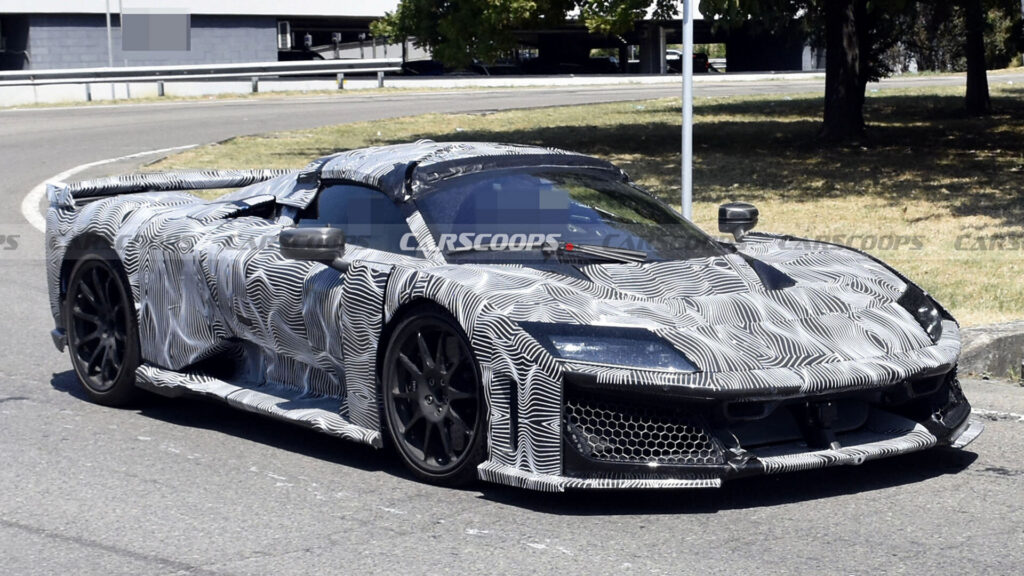
The coupé’s chassis will undergo significant modification to cope with the extra power. A new prototype has been caught testing at the Nüburgring sitting notably lower and wider than the existing CLE 53. It also wears different bodywork to previous test mules, with a more cohesive, motorsport-inspired look lying beneath the camouflage.
Indeed, it bears a strong resemblance to AMG’s previous Black Series models, yet it appears even more extreme.
AMG’s return to V8s comes after its attempt to downsize engines and make up for the power deficit with hybridisation was panned.
An AMG insider previously told Autocar that the four-cylinder plug-in hybrid powertrain used in the C63 and GLC 63 “failed to resonate with our traditional customers”.
What's more, the cost of re-engineering that four-cylinder engine (also used in the SL 43 and A45) to meet the incoming Euro 7 emissions standards was “very high”, said Autocar’s source, prompting the rethink.
Ferrari 348 Challenge as Track-Day Artifact: How Factory-Built Rarity and Race Modifications Redefine Usability...

Hyundai Recalls Reveal Systemic Safety Risks as Software, Airbag, and Suspension Failures Trigger Sweeping...

Uncovering Automotive Eccentricities: What This Week’s Unusual Online Car Listings Reveal About Shifting Collector...

Citroën 2CV Revival Signals Strategic Push for Affordable Electric Mobility in Europe’s Urban Market

Official teaser (right) gives clues to retro design of reborn 2CVIconic French people's car will be reborn in 2028 as a £15,000 urban EV with familiar snail shape
Citroën has confirmed the revival of the storied 2CV name for its upcoming £15,000 electric city car - and previewed its design ahead of a reveal at the Paris motor show in October.
Taking to the stage at parent company Stellantis's investor day presentation in Michigan, Citroën CEO Xavier Chardon gave a first look at the firm's new entry-level EV and confirmed: "The 2CV is back."
The long-awaited confirmation that Citroën will redeploy the iconic name for its new E-car – to be built alongside a reborn Fiat Panda in Italy from 2028 – comes alongside the first hint that the 1940s car's styling will be reinterpreted for a new era too.
Autocar exclusively broke the news that Citroën was plotting a revival of the 2CV in January 2025, as part of a bid to tap into opportunities in Europe's affordable car segment as rival manufacturers exited en masse.
Speaking to Autocar last month, Chardon said the new model would have "exactly the same purpose as the 2CV did in the late 1940s" in reigniting buyer demand in a stagnant European car market" and added that the company's priority was to give "buying power" back to European motorists.
The first teaser of the new city car reveals that it will adopt the same snail-shaped silhouette as its era-defining forebear, but with a more modern look influenced by Citroën's recent ELO concept, which set the tone for the brand's design going forward.
The preview comes just days after Stellantis confirmed it would begin building affordable electric city cars – with a target price under £15,000 – at its Pomigliano plant in Italy from 2028.
Fiat will similarly channel the styling – and likely the name – of its own historic 'people's car', the original Panda of 1980, for its take on the formula.
Chardon said the new 2CV will be one of seven new models launching by 2030. Five of these will be renewals of existing models, while the 2CV and one other – expected to be a slightly larger electric supermini – will take Citroën into "new profit pools".
Confirming the name of the firm's new entry model, which effectively replaces the old petrol-powered C1, Chardon said: "Products alone do not create icons. Icons create emotion. Icons connect brands with people. And today, one icon is about to return. Yes, the Deux Chevaux is back."
He then showed the darkened silhouette of the new EV and said: "If you want to see it in full light, you are invited in person to the [Paris motor] show in October."
He referenced the importance of the original 2CV in giving "freedom of mobility to millions" in the wake of World War II and said: "Eighty years later, the new 2CV will democratise electric mobility."
It will be "a true people's car designed for real life", Chardon pledged. "For me, the future of mobility will not be won by the most complex cars but by the simplest and the most intuitive ones.
"What truly matters is to be relevant."
Acura NSX Auction Exposes the Fragility of Online Bidding Integrity After a Six-Figure Typo...