

Alfa Romeo’s Next-Generation Hatchback Signals Strategic Shift Toward Flexible Electrification and Market Repositioning
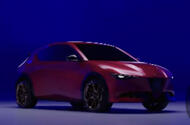 C-segment hatch will come alongside closely related Tonale replacement; next-gen Giulia and Stelvio pushed back
Alfa Romeo will launch a new family hatchback to rival the Volkswagen Golf in the next few years - its first since the Giulietta was axed in 2020.
The new C-segment car will be based on parent company Stellantis's new STLA One architecture - which it will share with the same-sized, next-generation Peugeot 308 and Vauxhall Astra.
The platform, previously known as STLA Medium, is a 'multi-energy' structure that can accommodate both electric and combustion-engined drivetrains, and Alfa Romeo said it will offer both to broaden market appeal.
Confirmation of the new hatchback comes following the Stellantis investor day presentation last week, at which it outlined an ambitious plan to launch 110 new models globally, across all its brands and with a mix of powertrains, by 2030.
During the presentation, Stellantis's European boss, Emanuele Cappellano, confirmed that Alfa Romeo was developing a new mid-sized SUV to replace today's Tonale, along with an exclusive new sports car from its Bottega Fuoriserie bespoke division.
A brief teaser of an unidentified model could be the first look at the new Alfa Romeo hatchback, which the Italian brand said will "build on icons such as the 147 and Giulietta".
The Tonale successor and the hatchback are expected to share a basic footprint and much of their technology and drivetrain hardware - mirroring the relationship between the hatches and SUVs that Alfa's sibling brands sell.
The electric derivatives will be equipped with 800V hardware for rapid-charging capabilities, while the ICE versions will likely use the same array of mild- and plug-in hybrid systems available elsewhere in Stellantis's arsenal.
All could be offered with the STLA platform's steer-by-wire capability, as previewed recently by the radical Peugeot Polygon concept.
Alfa Romeo hasn't yet given a timeframe for the new models, but the Tonale – which unusually for a Stellantis model uses its own platform and drivetrains – will be up for replacement in 2029.
More precise details on the brand's mid-term strategy haven't been given, but it has today (26 May) issued a statement to clarify its plans following the Stellantis presentation: "Looking ahead, Alfa Romeo will leverage Stellantis's global scale while differentiating its offering to continue developing authentic Alfa Romeos, further strengthening its distinctive positioning as a unique and iconic brand."
The new hatchback, SUV and sports car will be sold alongside the little Junior crossover – itself due a refresh soon – with the current Giulia and Stelvio scheduled to end production next year.
Alfa Romeo had previously been almost ready to unwrap an electric replacement for the Stelvio but put the project on ice last year in response to wavering uptake for premium and sporting EVs. A long-mooted electric Giulia was expected to be close behind using the same mechanicals.
Now the company appears to have gone back to the drawing board entirely on replacements for its two premium flagship models, saying only that it's "studying solutions to continue operating in the D-segment with new interpretations of the current line-up made up of Giulia and Stelvio".
It said it aims to remain "true to its performance-driven DNA while adapting to market evolution" and that any Giulia and Stelvio successors would "leverage flexible platforms" - no doubt the modular STLA architecture that can span from the B- to the D-segment.
"Further details will be communicated at a later stage," it said about potential larger models.

Honda City Facelift Accelerates Hybrid Shift in Thailand with Updated Design and Expanded Tech...

Mercedes-Benz and the Limits of Prestige: How Innovation, Experimentation, and Market Shifts Shaped the...
 Mercedes-Benz was the first to put the automobile into production, but that doesn’t mean all its cars since have been such a success…
Mercedes is not a brand particularly known for controversy, at least compared with some we could mention.
It has, however, had its moments, producing cars which certainly gave people pause for thought.
Here, then, are 30 models which could, using the term very broadly, be described as at least partly controversial, arranged for your pleasure in chronological order.
Mercedes 35hp (1900)
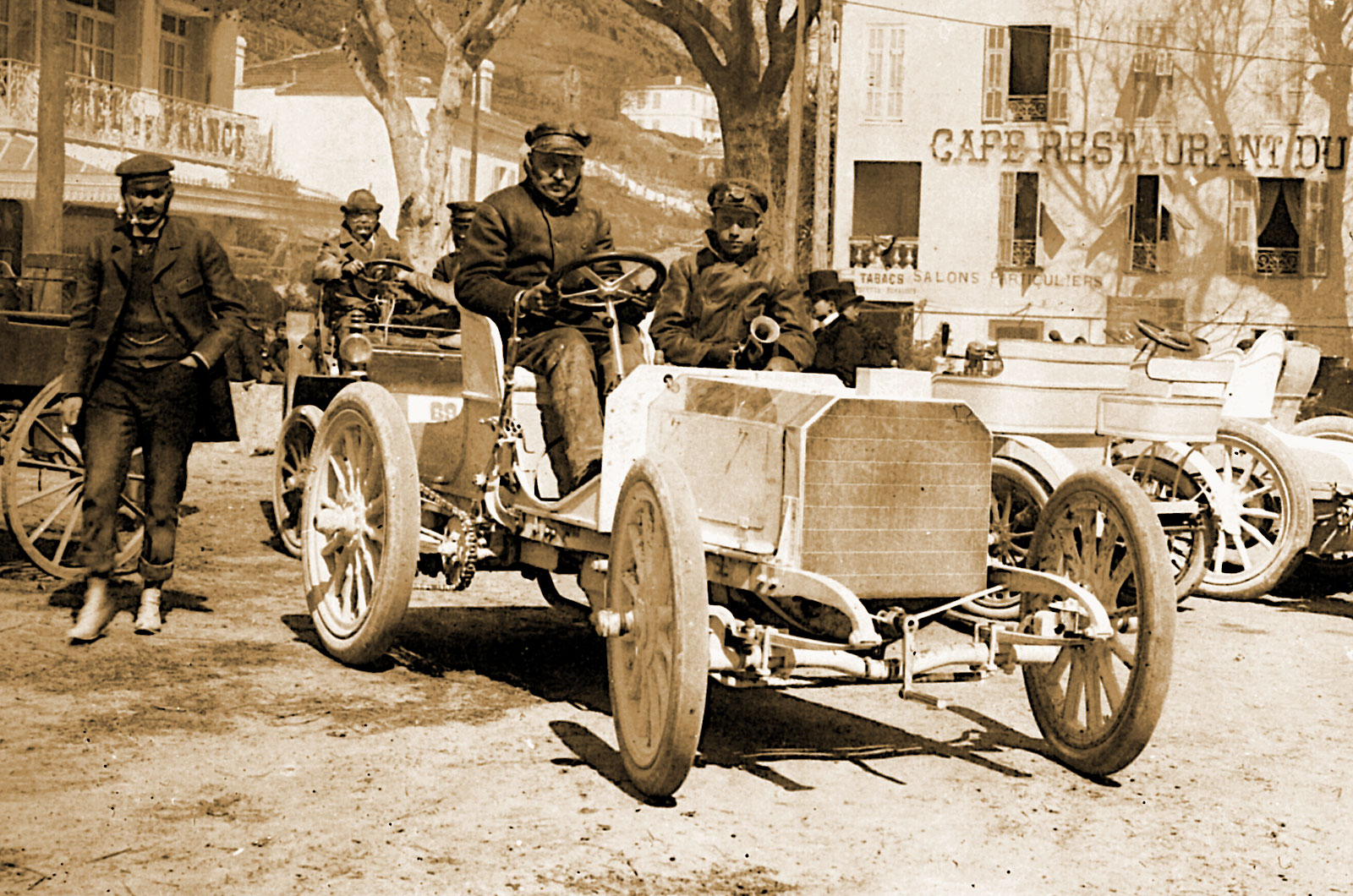
The very first Mercedes was proposed to Daimler by one of its dealers, Emil Jellinek-Mercedes (1853-1918), who named it – and his race team and even, weirdly, himself – after his young daughter (1889-1929).
Designed by Wilhelm Maybach (1846-1929), the 35hp was light and powerful, and had a remarkably low centre of gravity for the time. It was such a fast road car, and did so well in competition, that the French journalist and motorsport pioneer Paul Meyan (1852-1938) was moved to write, “We have entered the Mercedes era.”
Mercedes-Simplex (1902)
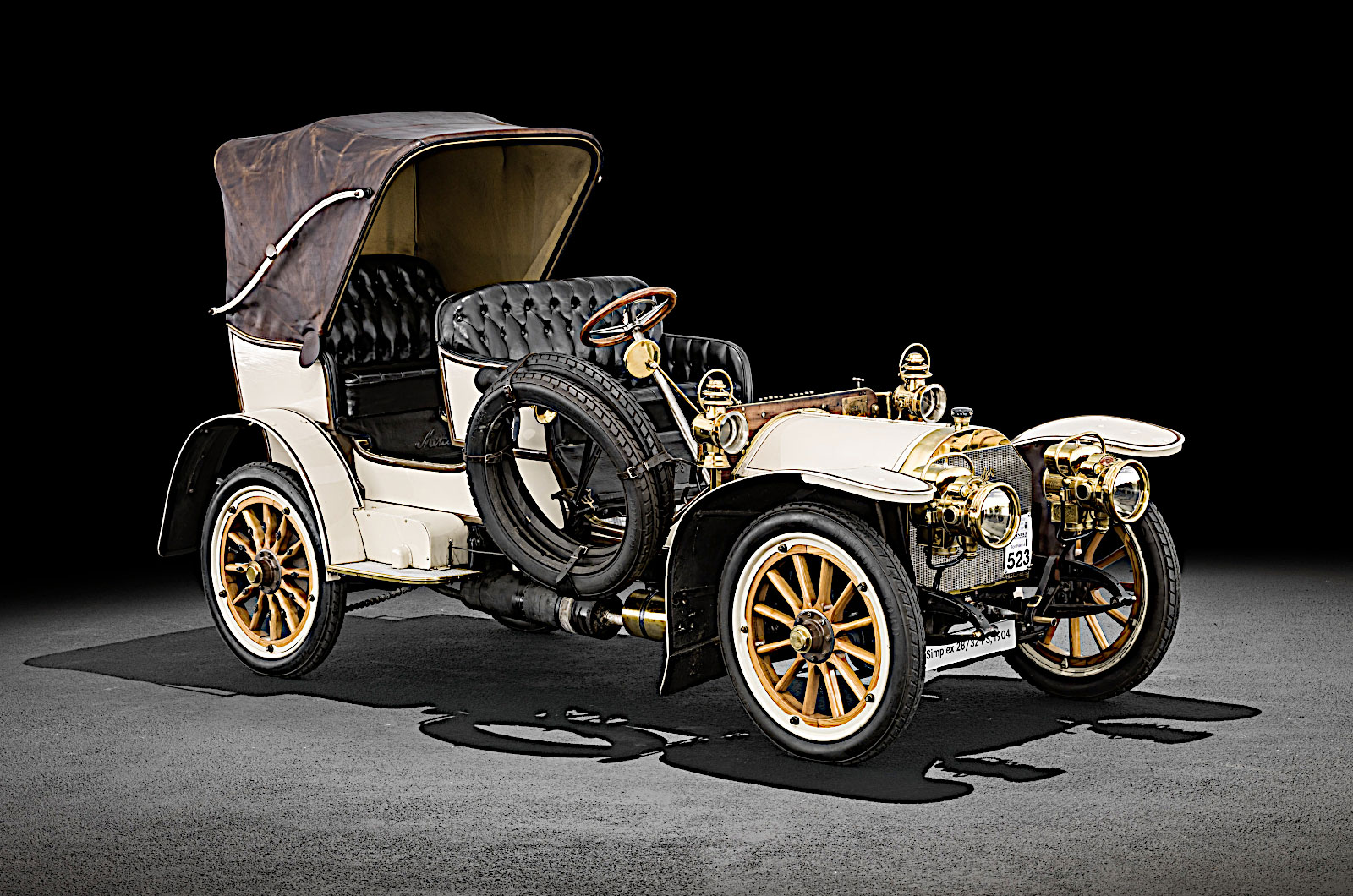
Wilhelm Maybach followed up the 35hp with the first of several Simplex models, so named because they were simpler to operate than their predecessor. With 40hp, it was even faster, and although less powerful versions were later added the last, introduced in 1909, was rated at a mighty 65hp.
Emperior Wilhelm II (1859-1941) was an enthusiast, joking with Maybach that his new model was “not as simple as that, you know,” while American tycoon William K. Vanderbilt (1849-1920) owned a Simplex which still exists, and is believed today to be the oldest Mercedes in existence.
Mercedes 75hp (1907)
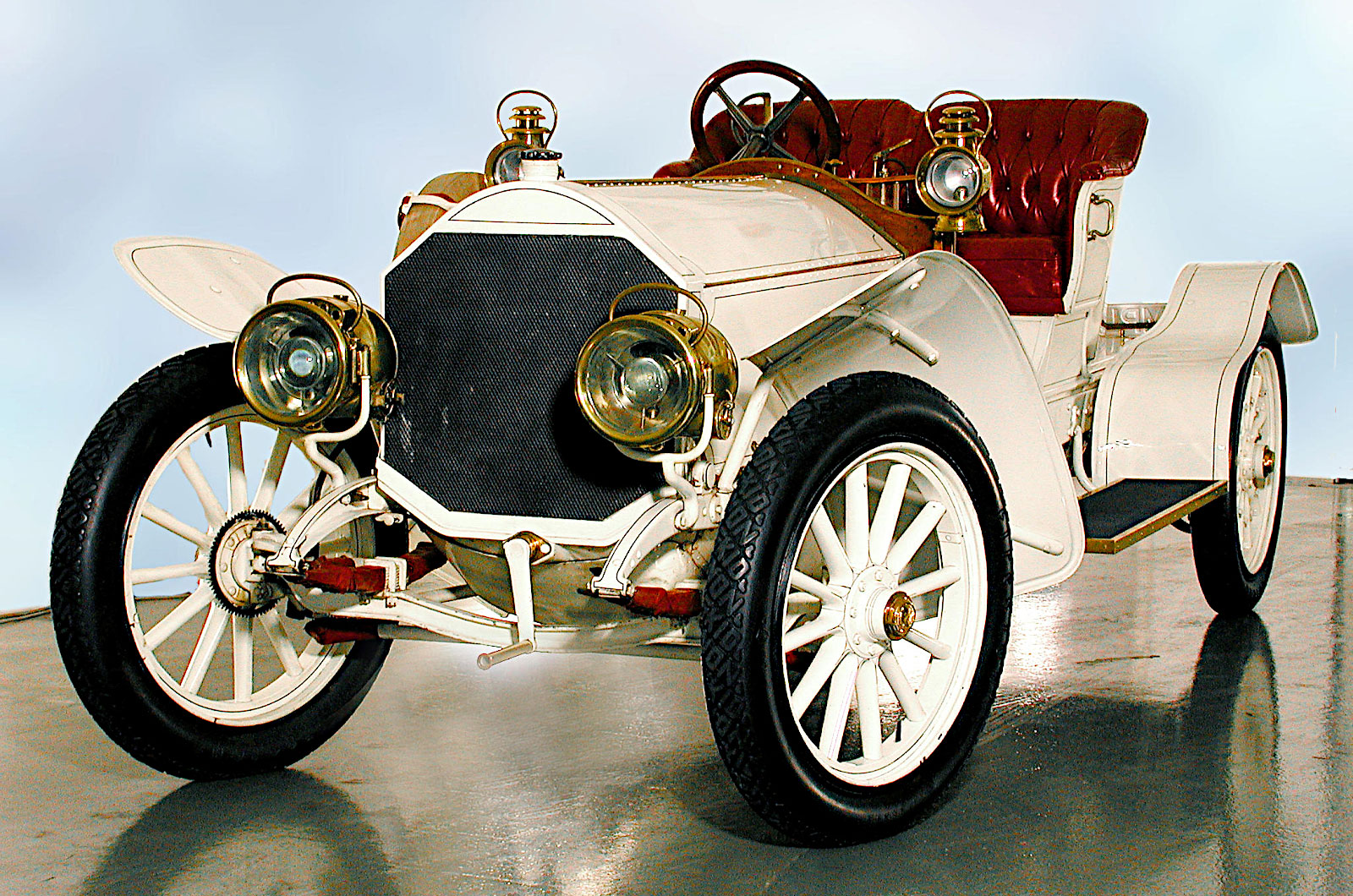
The first big controversy within Daimler was the departure of Wilhelm Maybach. After a dispute, he left the company he had joined before it started building cars and was replaced as technical boss by Paul Daimler (1869-1945).
Maybach’s final contribution to the firm was the design of its first six-cylinder engine. In 10.2-litre form, it first appeared in January 1907 in the car then known as the 75hp, though two years later it was renamed 39/80hp. A 9.5-litre version appeared later in 1907 in the 65hp, which became the 37/70hp.
Mercedes-Knight (1910)
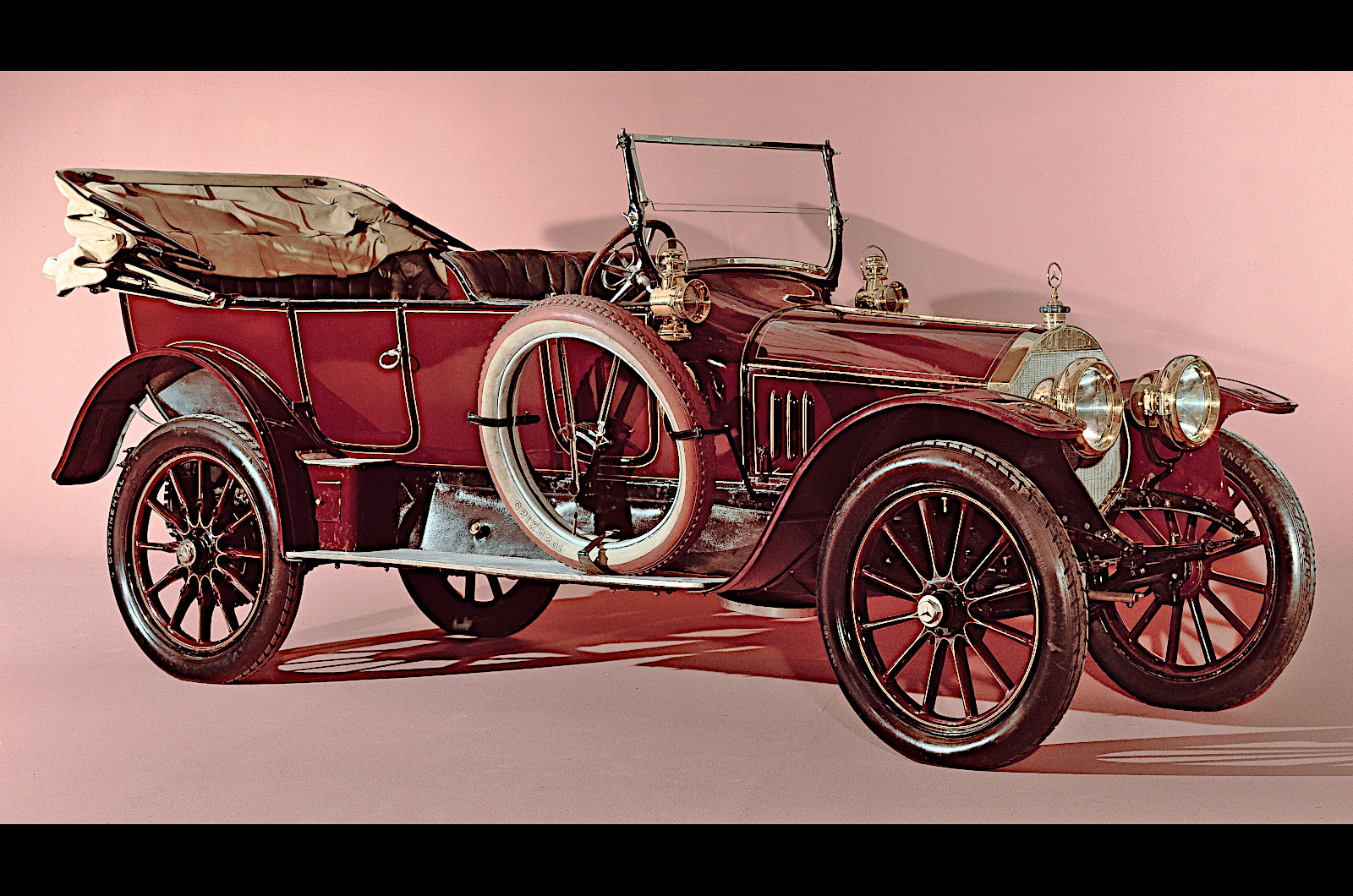
After a decade of producing Mercedes models with its own engines, it must have seemed shocking when Daimler introduced a car with a unit developed by someone else. The someone else in question was the American Charles Yale Knight (1868-1940), whose sleeve-valve design was highly favoured at the time, and used by several manufacturers.
The first Mercedes-Knight was the 4.0-litre 16/40hp of 1910, and was followed two years later by the similar 10/30hp and 25/65hp. Their engines were very quiet, but they were also hard both to build and to maintain. This, along with limited development potential, led to Daimler giving up the idea in 1924.
Mercedes 18/100 (1914)
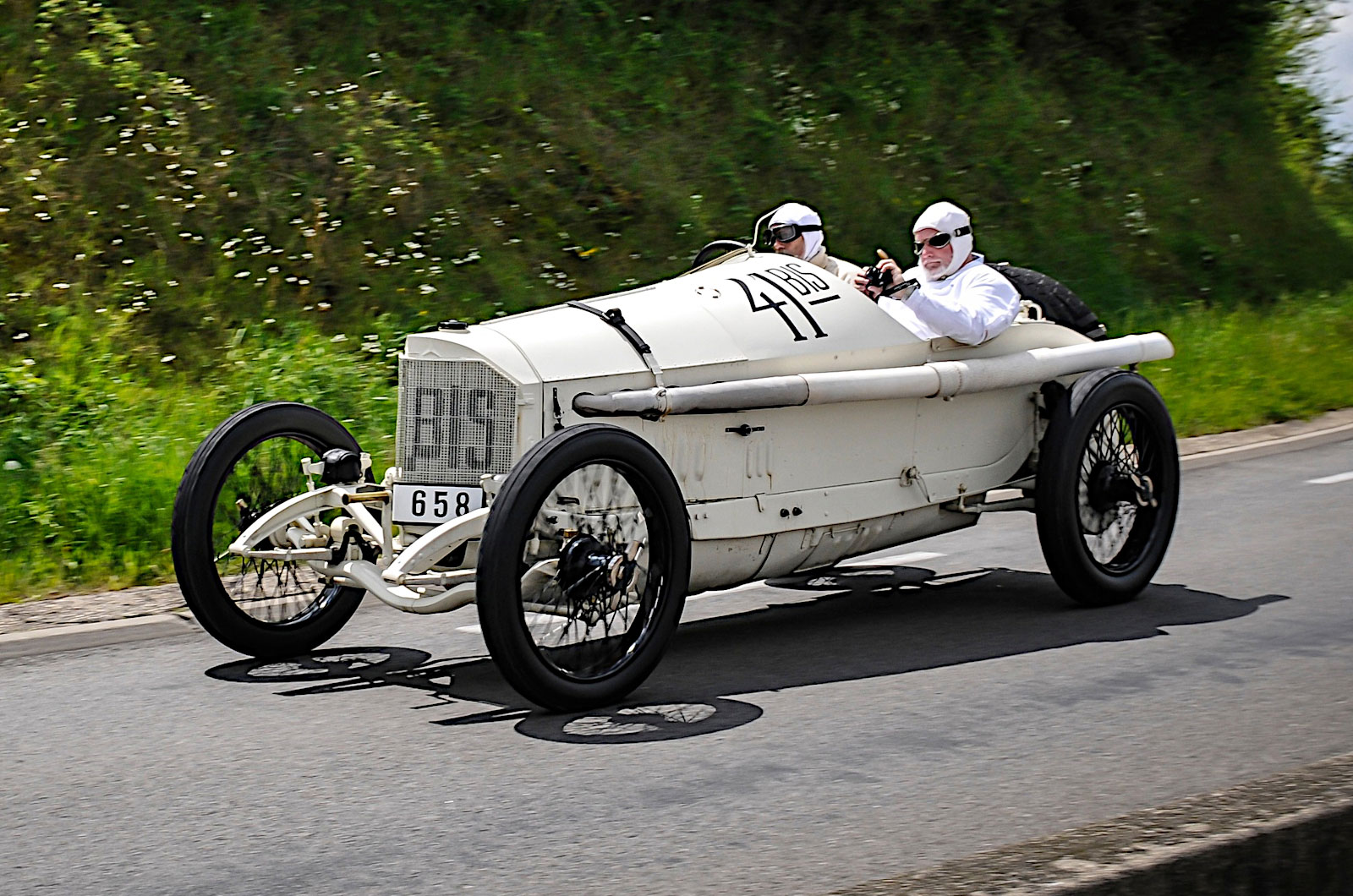
Although we are concentrating mainly on cars developed largely for road use, it seems to make an exception in the case of the 18/100 racer which competed in the French Grand Prix in July 1914. This event was essentially a battle between France and Germany, represented by Peugeot and Mercedes respectively.
Peugeot put up a magnificent fight, but in the end all the honours went to Mercedes, which took the top three places. The home crowd was chastened by defeat at the hands of a nation which would become its wartime enemy less than a month later.
Mercedes 28/95 (1914)
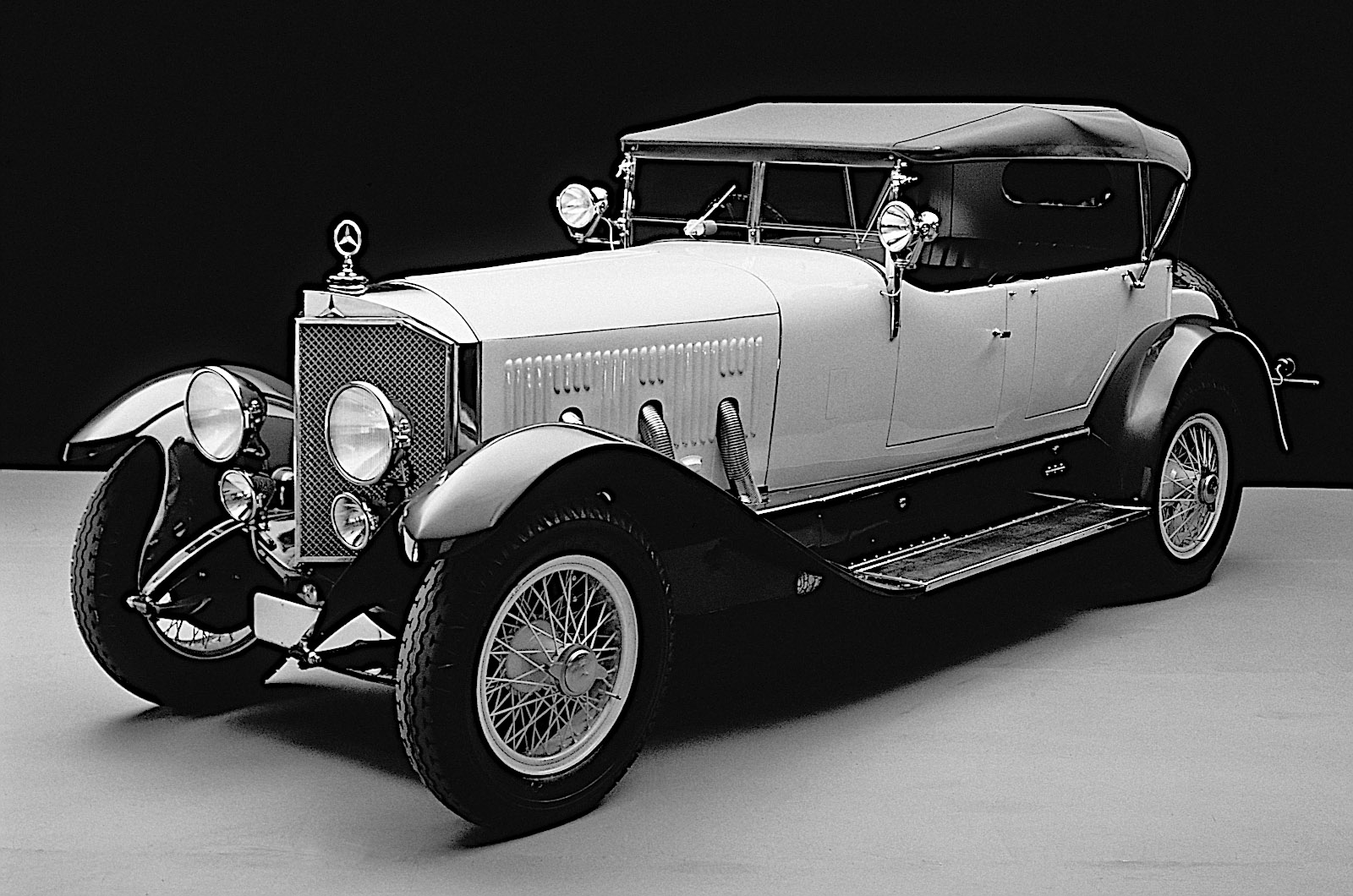
Appropriately enough for the builder of the car which won Europe’s greatest race of 1914, Daimler introduced an innovative and very powerful road-going model in the same year. Its 7.3-litre straight six engine had an overhead camshaft (not exactly new, but still very unusual at the time) and produced no less than 90bhp.
Production was abandoned during the First World War, but resumed when peace returned, and continued until 1924.
Mercedes 24/110/160hp (1924)
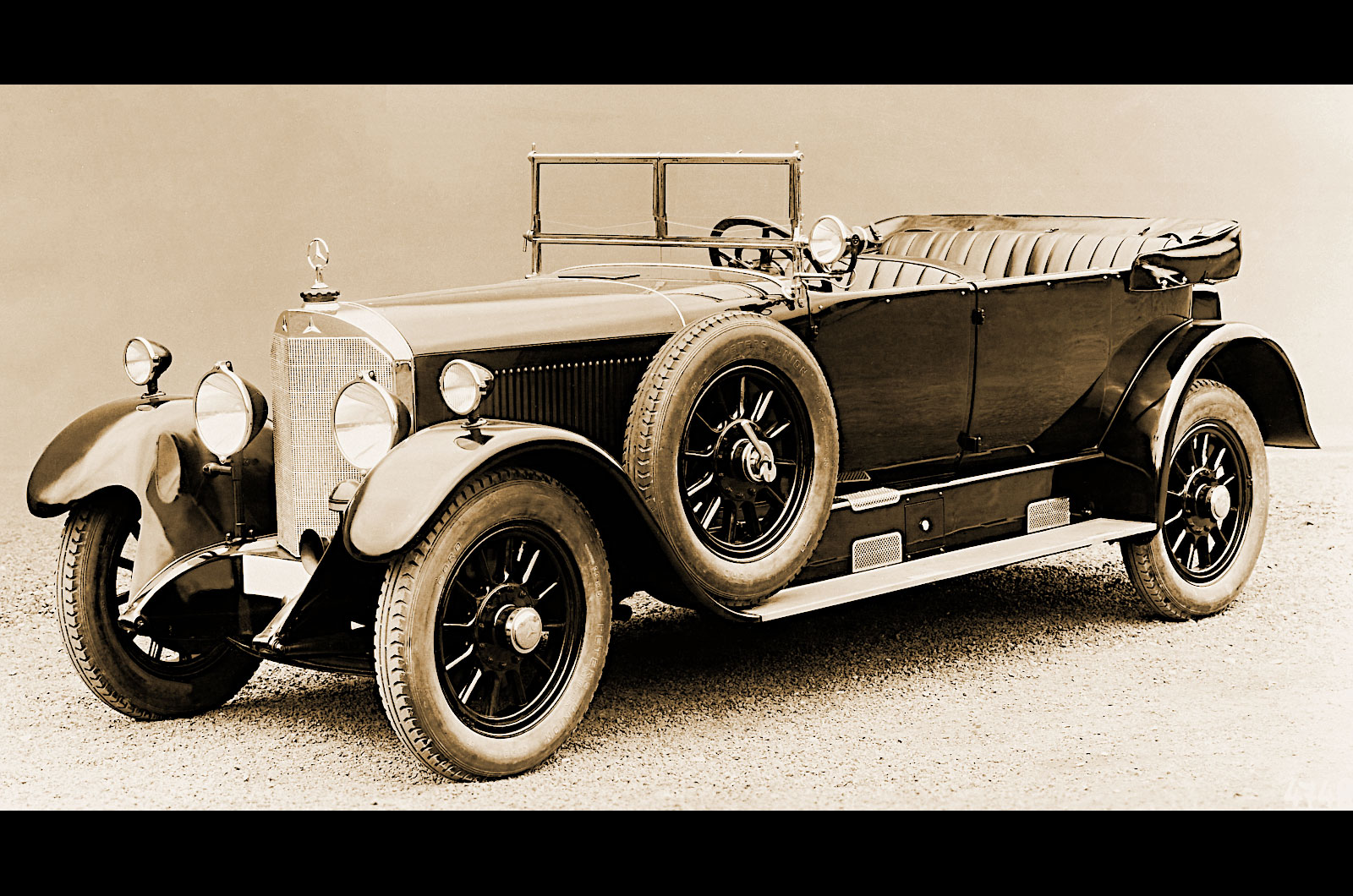
Having taken over from Wilhelm Maybach many years before, Paul Daimler resigned in 1922 and was replaced by Ferdinand Porsche (1875-1951). Porsche’s early work in the top technical role included developing two very grand cars. The complicated names of the 6.3-litre 24/110/160hp and the 3.9-litre 15/70/110hp were based on their taxable horsepower, their actual horsepower without supercharging and their actual horsepower with supercharging.
But it wasn’t just about the engines. According to a rather bumptious Daimler press release of the time, the “design and technical execution of both chassis and coachwork represent a tremendous step forward in terms of the series production of the motor vehicle”.
Mercedes 8/38hp (1926)
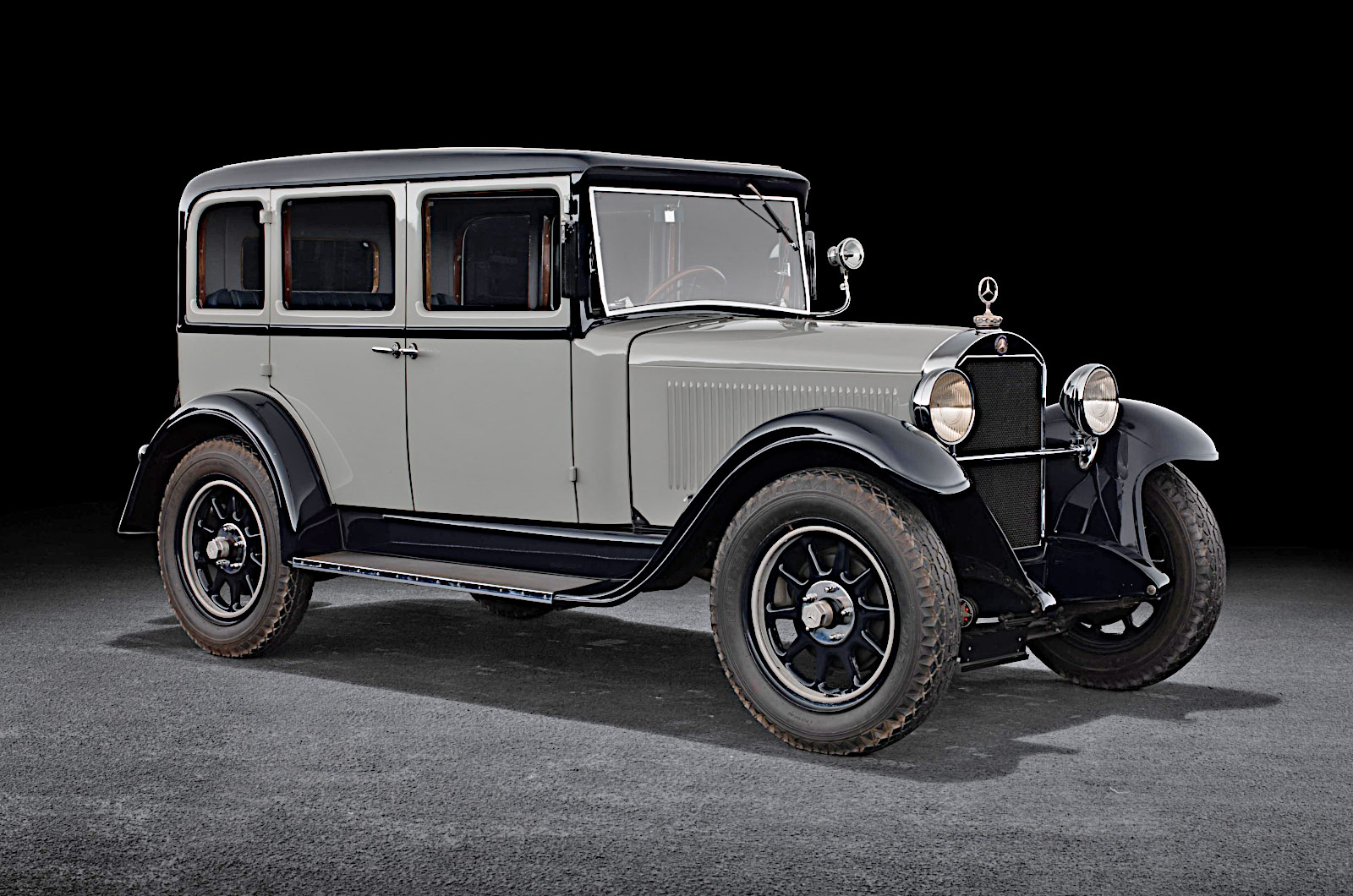
Daimler and Benz, the great rivals in the German motor industry, established a ‘community of interest’ in 1924, and merged two years later. The combined company was called Daimler-Benz, but from now on its cars would be called Mercedes-Benz.
The first model with this name was the 8/38hp, and in view of what had gone before it was amazingly conventional, with a 2.0-litre sidevalve (or flathead) engine. Customer choice, however, was considerable. Offered initially as a two- or four-door saloon or an open tourer, the number of available body styles would reach 13 in 1928.
Mercedes Nürburg (1928)
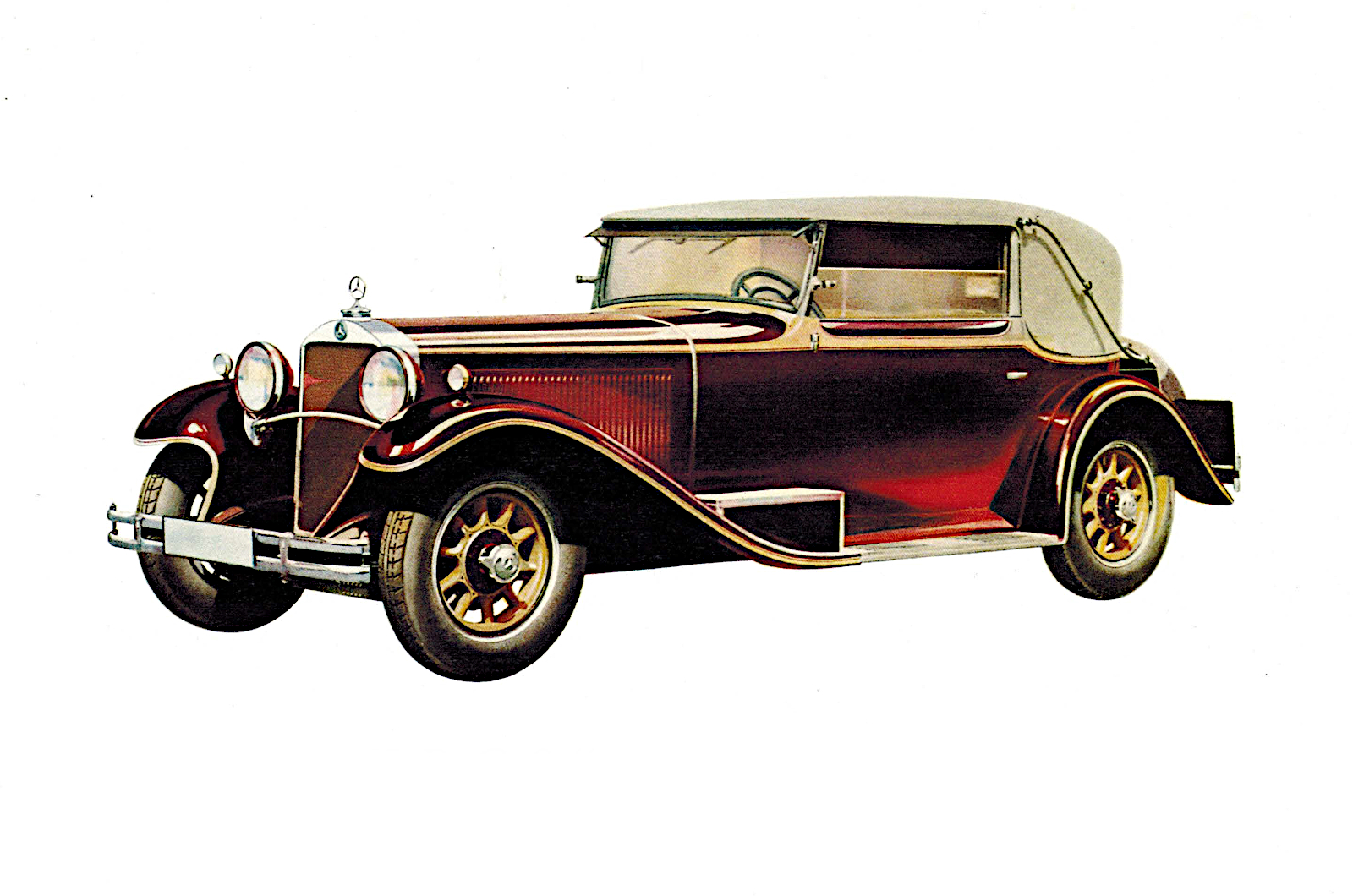
The Nürburg models were named after the recently completed Nürburgring race track, where a prototype had been driven for 20,000km in just 13 days. Despite this, and the fact that their engines in some cases measured as much as 5.0 litres, they were not performance cars but grand luxury vehicles a world away from the little 8/38.
They were also the first series-produced Mercedes cars with eight-cylinder engines, and were sometimes referred to as Nürburg 8 (the figure being embossed with gold on the cover page of early catalogues).
Mercedes SSK (1928)
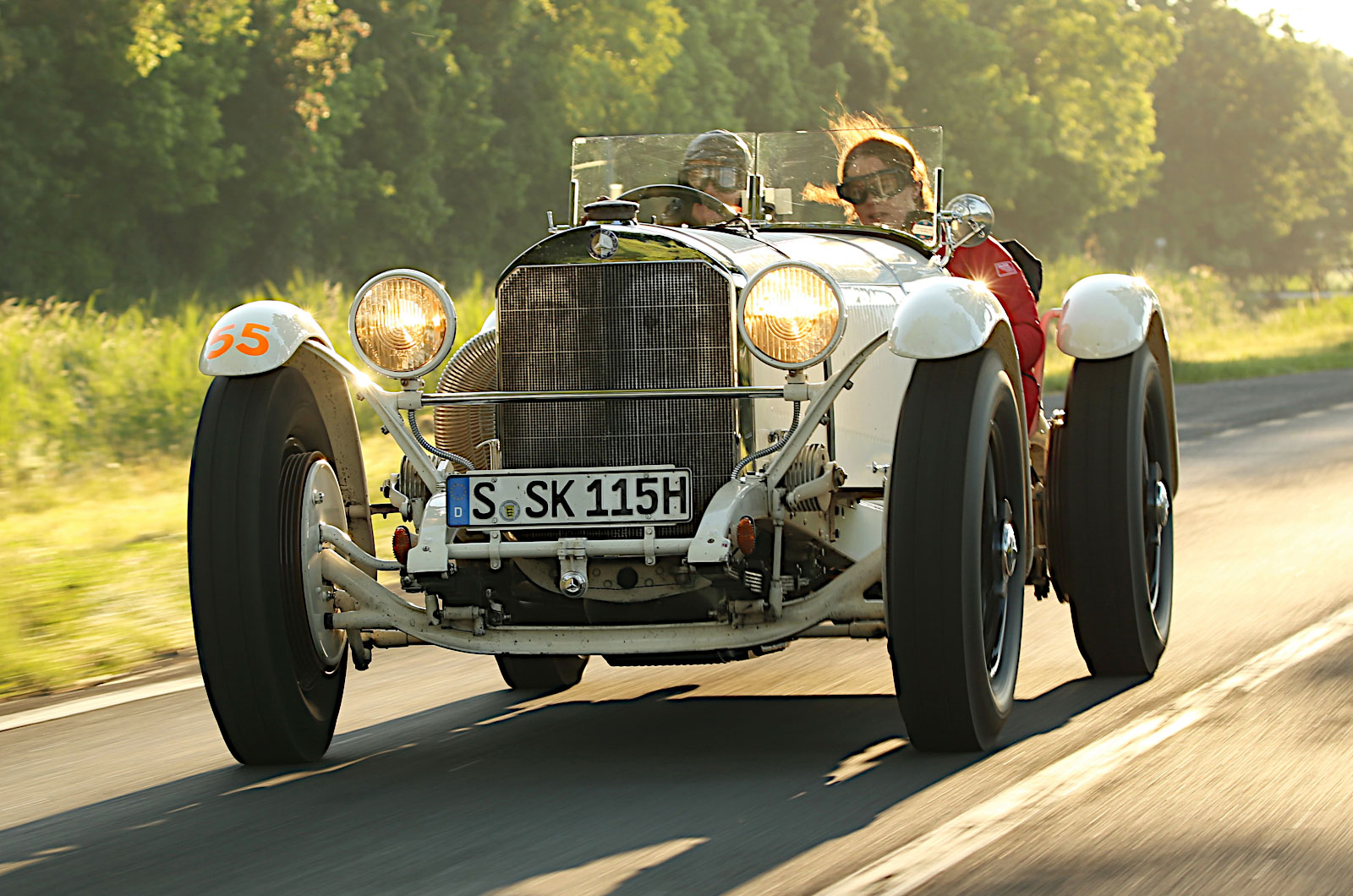
The SSK (for Super Sport Kurz, the last word meaning ‘short’ in reference to its wheelbase) was the ultimate road-going version of the Model S, a series intended for both private and competition use. Its supercharged 7.1-litre straight eight engine was steadily developed to the point where it produced around 250bhp in 1929, and it was wondrously successful in motorsport.
The SSKL, a lighter derivative of the same car with up to 300bhp, was developed primarily for racing, and achieved victory in the hands of such heroes as Rudolf Caracciola (1901-1959), Hans Stuck (1900-1978) and Manfred von Brauchitsch (1905-2003).
Grosser Mercedes 770 (1930)
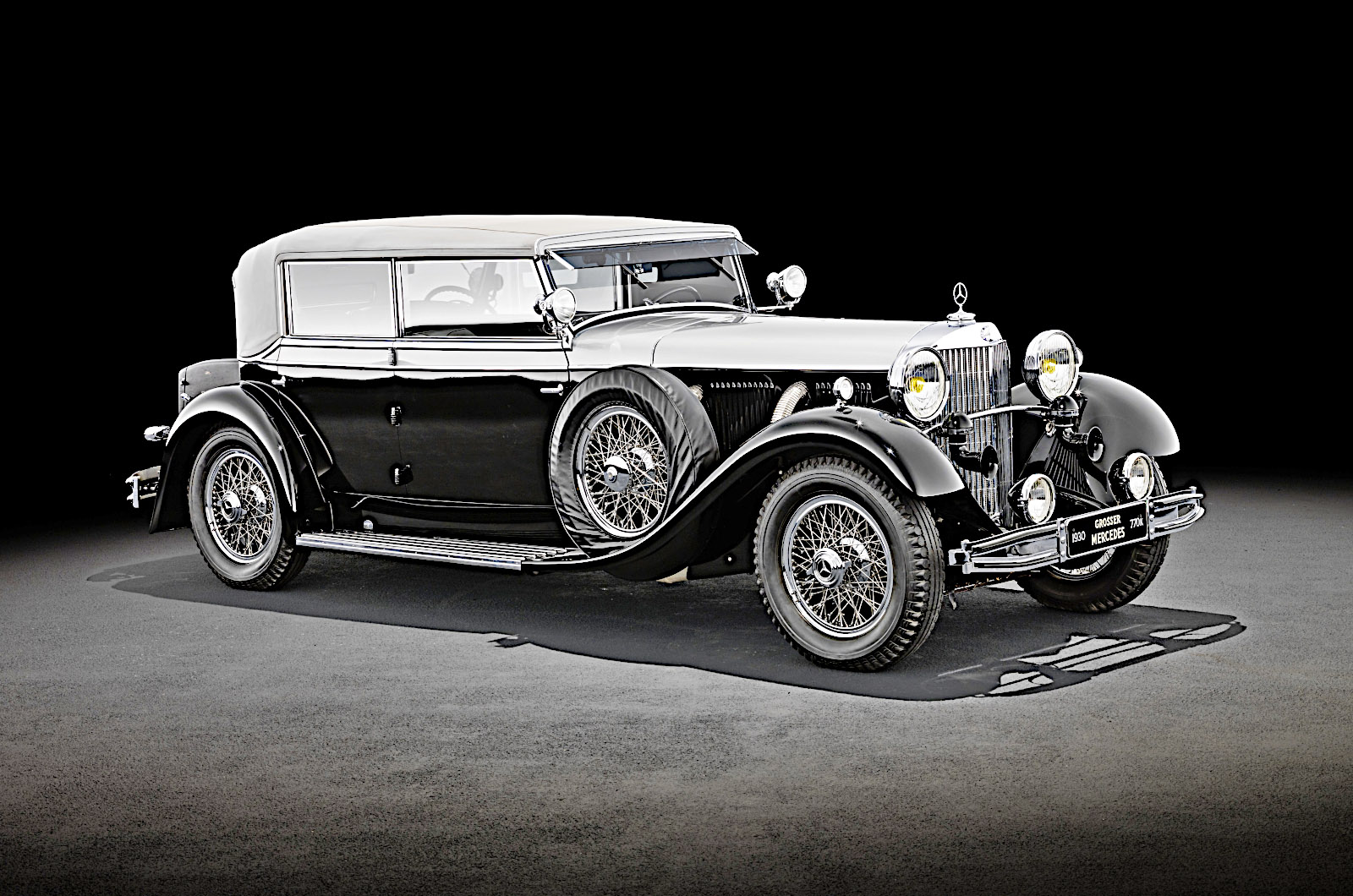
The first Grosser, or ‘Grand’, Mercedes was powered by a 7.7-litre engine which produced 150bhp in naturally-aspirated form, or 200bhp for the benefit of those who were prepared to extra for a supercharger, as 104 of the car’s 117 wealthy buyers did.
For rather more money, customers could even specify armour-plated bodywork, an offer taken up by Japan’s Emperor Hirohito (1901-1989). His car was returned in 1971 and put on display in the Mercedes-Benz Museum in Stuttgart.
Ponton Mercedes (1953)
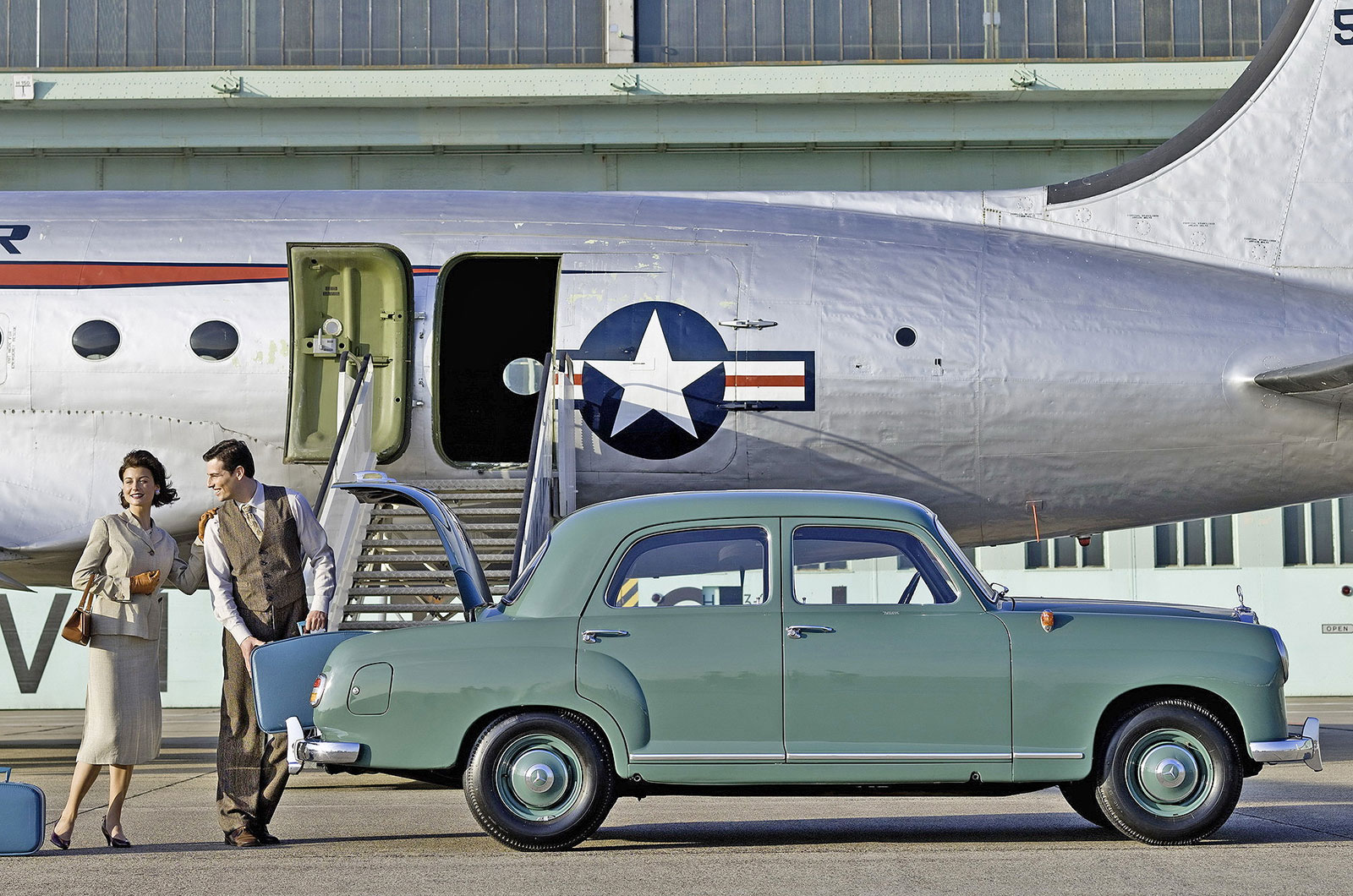
Mercedes cars of the immediate post-War era looked more or less as they would have done if they were sold in the 1930s. This tendency was blown out of the water in 1953, when Mercedes introduced the series codenamed W120. It’s nicknamed ponton because of its body style, which had what might unkindly be described as slab sides, and nothing resembling the running boards of the past.
The 180 D of 1954 had a diesel engine, which was unusual at the time but not new. The pre-ponton 260 D launched in 1936 had one too, as had earlier commercial vehicles. The Ponton Mercedes was a key model in helping the company return to success after the war years.
Mercedes 300 SL (1954)
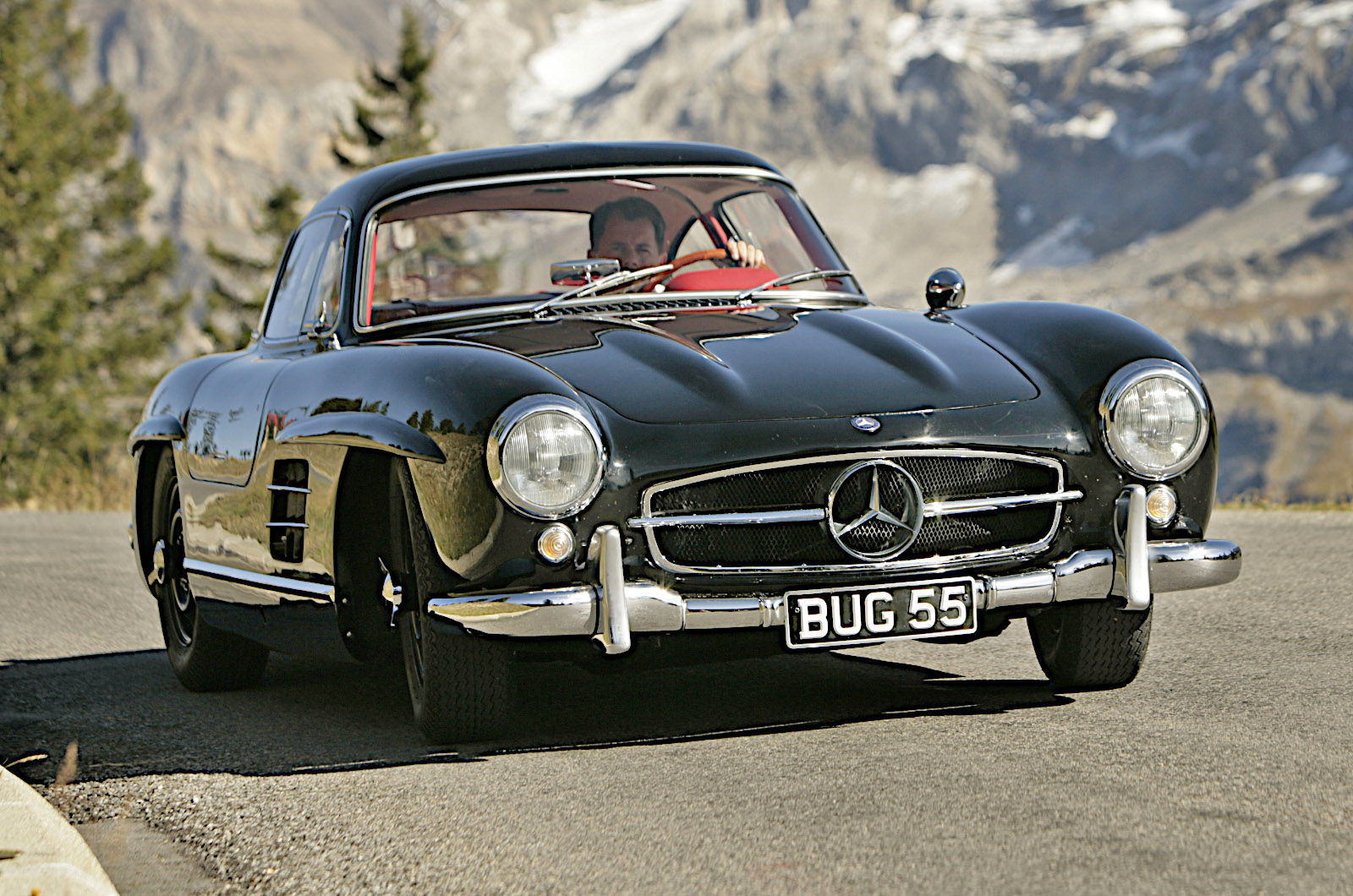
Developed at the suggestion of the American Mercedes importer Max Hoffman (1904-1981), the 300 SL caused a sensation. This was largely because of its coupé body, and particularly the gullwing doors attached to it, but the close mechanical resemblance to the W194 sports race which made its debut in 1952.
The coupé bodywork was abandoned in favour of a roadster in 1957, and from 1955 to 1963 Mercedes also produced the 190 SL, which was nearly as pretty as the 300 SL but very much slower.
Mercedes Fintail (1959)
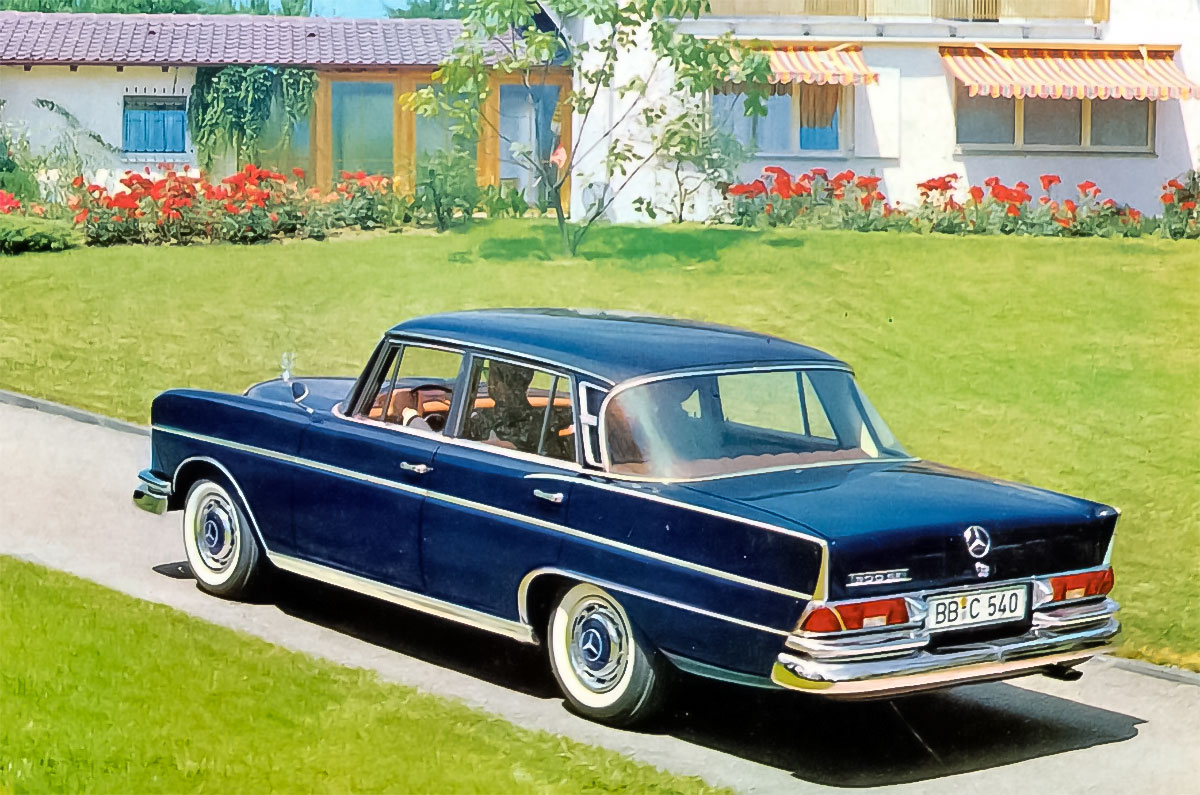
The W111 was the first Mercedes with what would become a classic look for the brand, with tall, vertical headlight units on either side of a prominent grille. At the back, there was a shorter-lived styling cue – tailfins which, though extremely modest by American standards of the time, were prominent in European terms.
All the early Fintail cars had six-cylinder engines, but the fins appeared on the four-cylinder W110 series in 1961. They began to look old-fashioned later in the decade, and were abandoned entirely in 1968.
Grosser Mercedes 600 (1964)
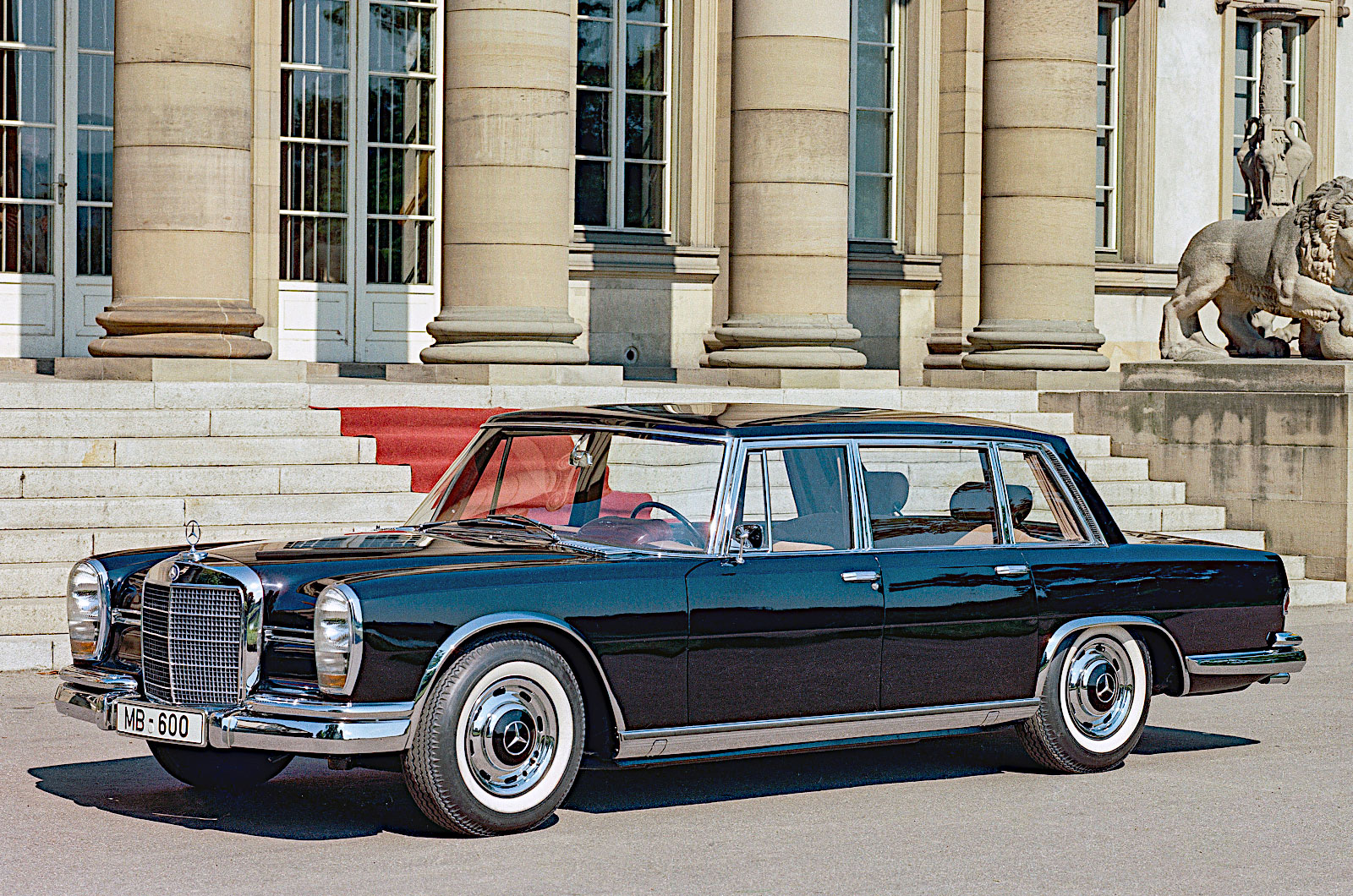
Introduced 34 years after the first Grosser, the 600 was powered by the first V8 engine ever fitted to a road-going Mercedes. Standard equipment included air suspension, central locking and electronic heating and ventilation – nothing special today, but a phenomenal specification for a car launched in the early years of the Beatles.
2677 examples were built before production ended in 1981. Of these, 429 were Pullman limousines, and 59 the even more exclusive landaulets. A particularly special landaulet, with a raised roof among other unique features, was built in 1965 for Giovanni Montini (1897-1978), better known as Pope Paul VI.
Mercedes C 111 (1969)
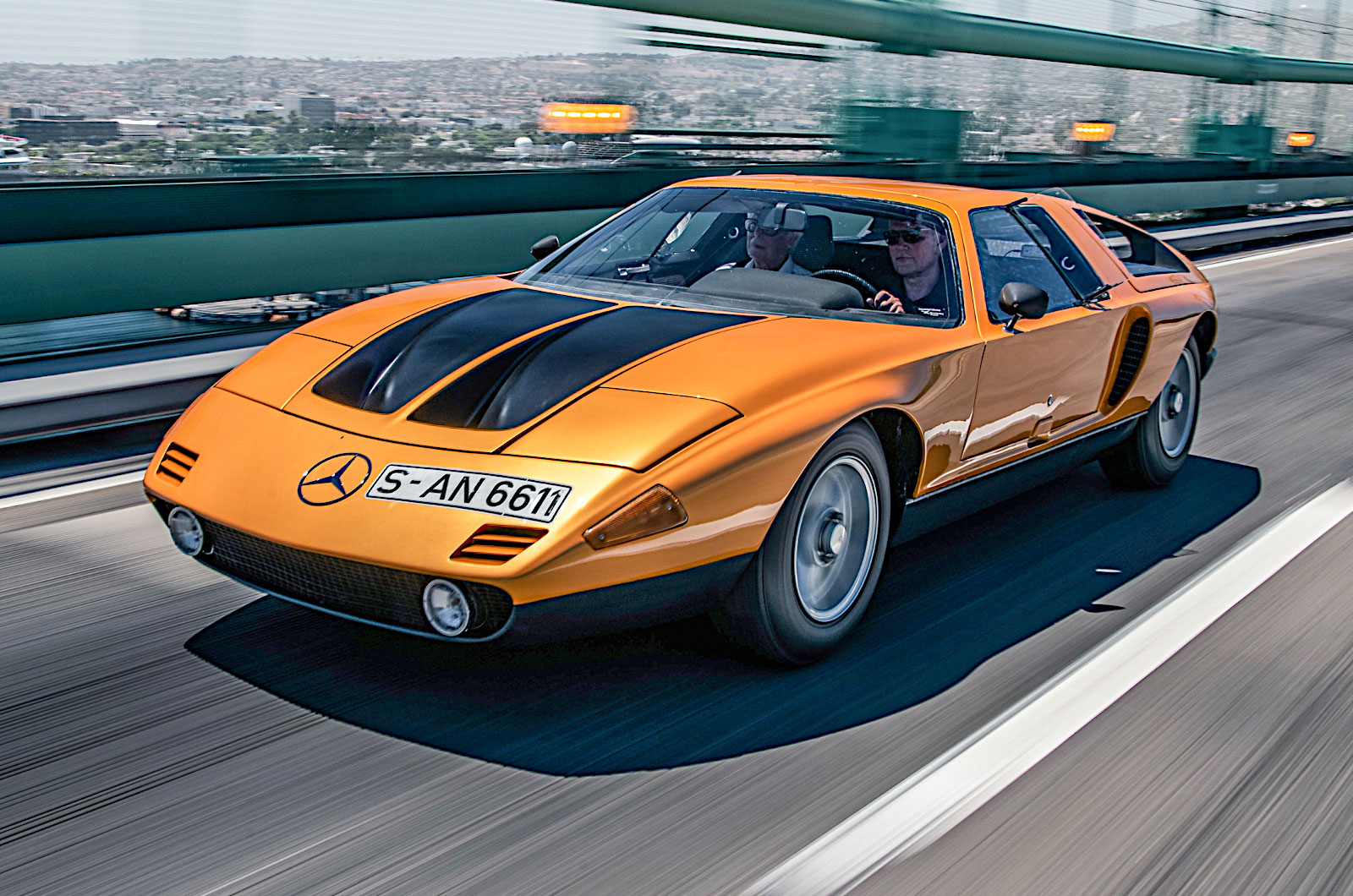
As is often the case with manufacturers, one of the most remarkable cars Mercedes ever devised was never sold to the public. In fact there were several of them, since the C 111 was a series, produced over several years. Like the 300 SL, they all had gullwing doors, but unlike the earlier production model they were mid-engined.
In most cases, the engine was a rotary of some sort, but Mercedes decided this wasn’t the way forward, and has never to this day sold a production car fitted with such a thing. Later C 111s had petrol V8s, or in one case a 3.0-litre diesel.
Mercedes G-Wagen (1979)
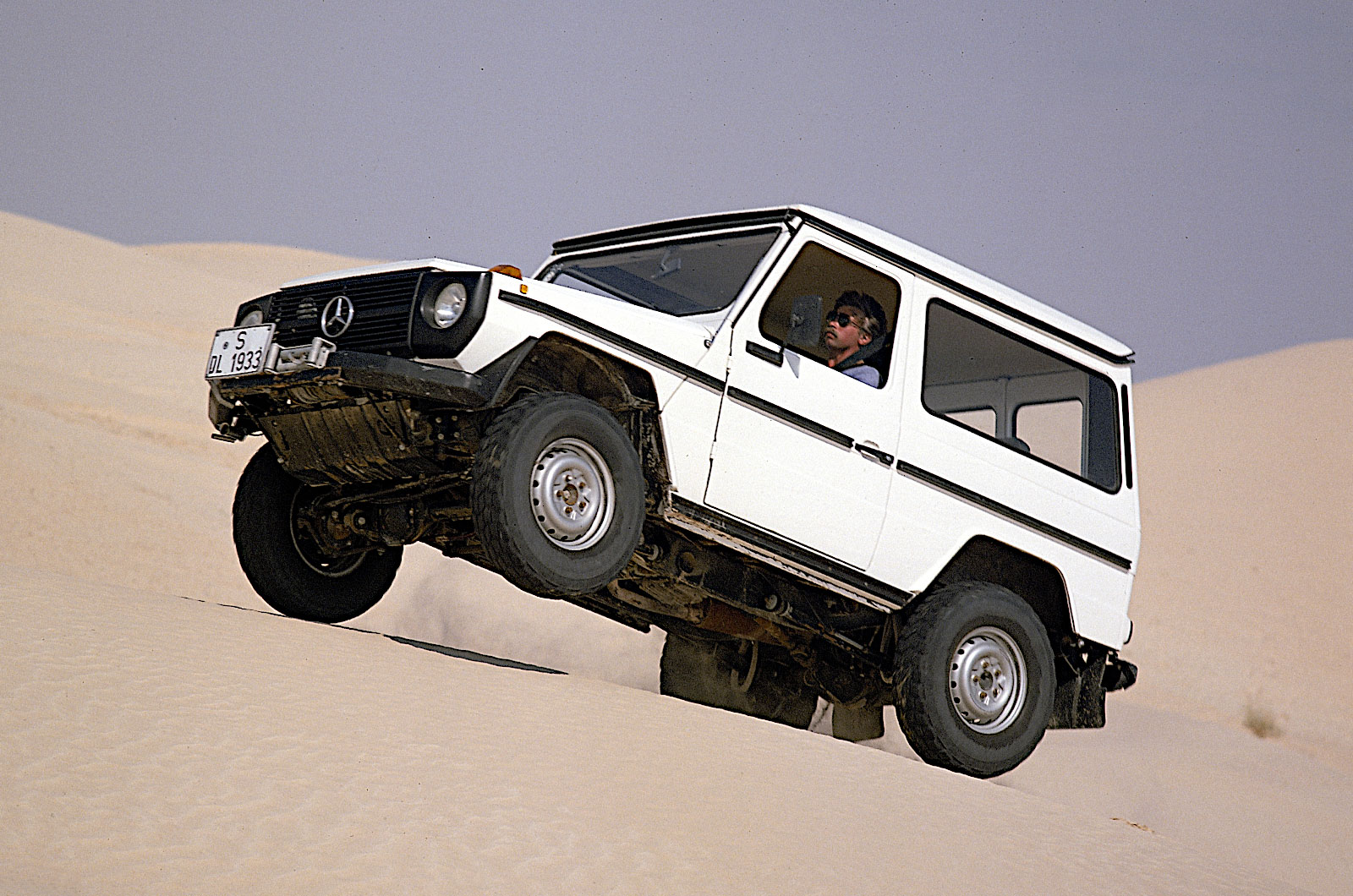
Later renamed G-Class, the Geländewagen was just what it said it was (in German) – an off-road vehicle which could also be driven on ordinary public roads, though not necessarily in great comfort.
As Mercedes itself says, the new model “broke completely new ground”, but quickly found a customer base. Available in various forms, it stuck around until 1992, and was replaced by something similar. Several generations later, you can still buy a G-Class today, and an all-electric version was revealed in April 2024.
Mercedes 190E (1982)
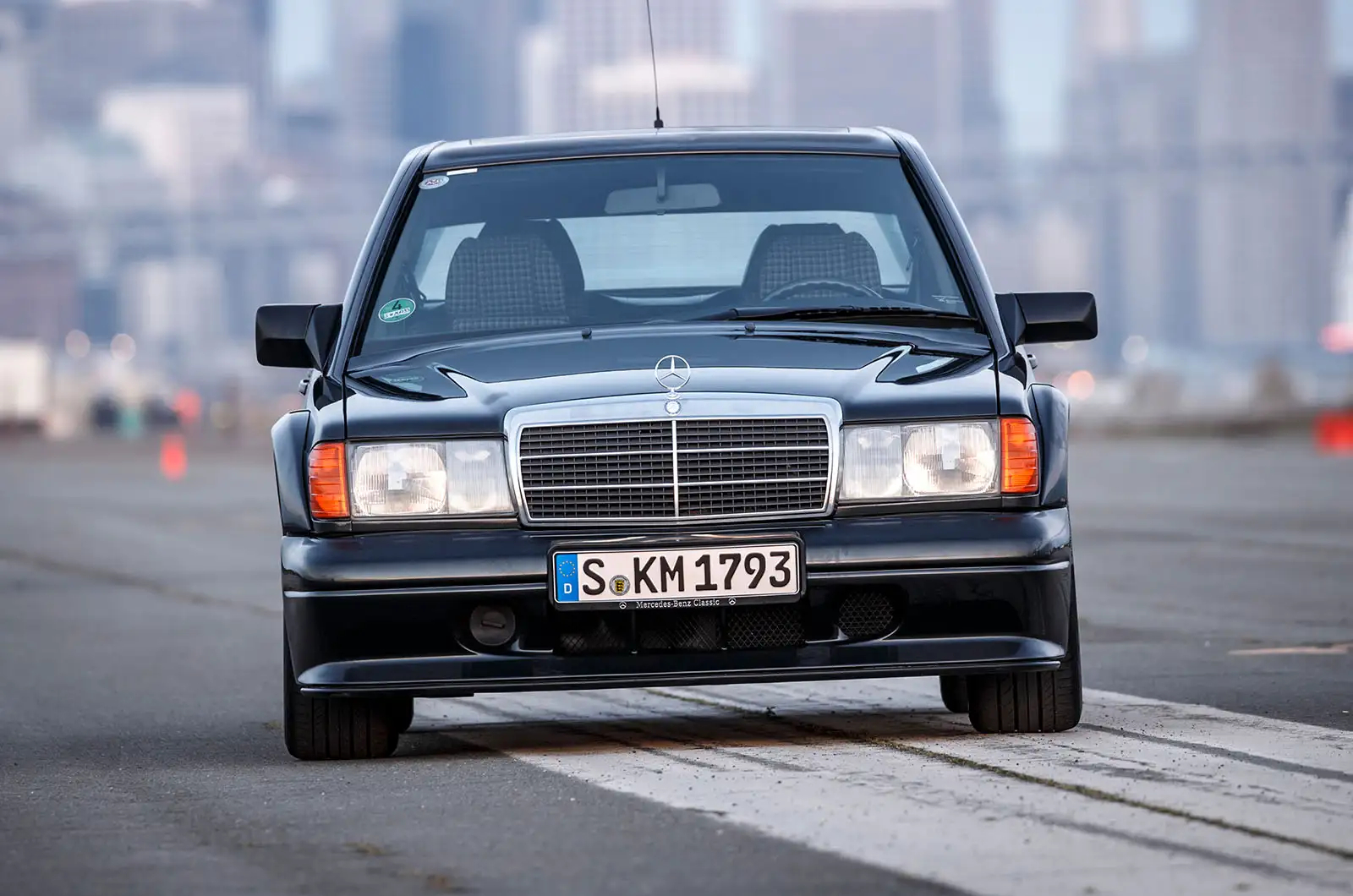
The W201 series consisted of the medium-sized Mercedes models immediately preceding the first C-Class. The most notable version was the 190E, especially when its 2.3-litre (and later 2.5-litre) engine was fitted with a 16-valve cylinder head developed by Cosworth.
Roughly analogous to the BMW M3, these were fine high-performance road cars, and the versions modified for competition use were deeply impressive. The most famous 190E of them all, though, was the one in which Ayrton Senna (1960-1994), new to Formula 1, beat his more experienced rivals, all of them driving similar cars, in a special race at Hockenheim in 1984.
Mercedes C 36 AMG (1993)
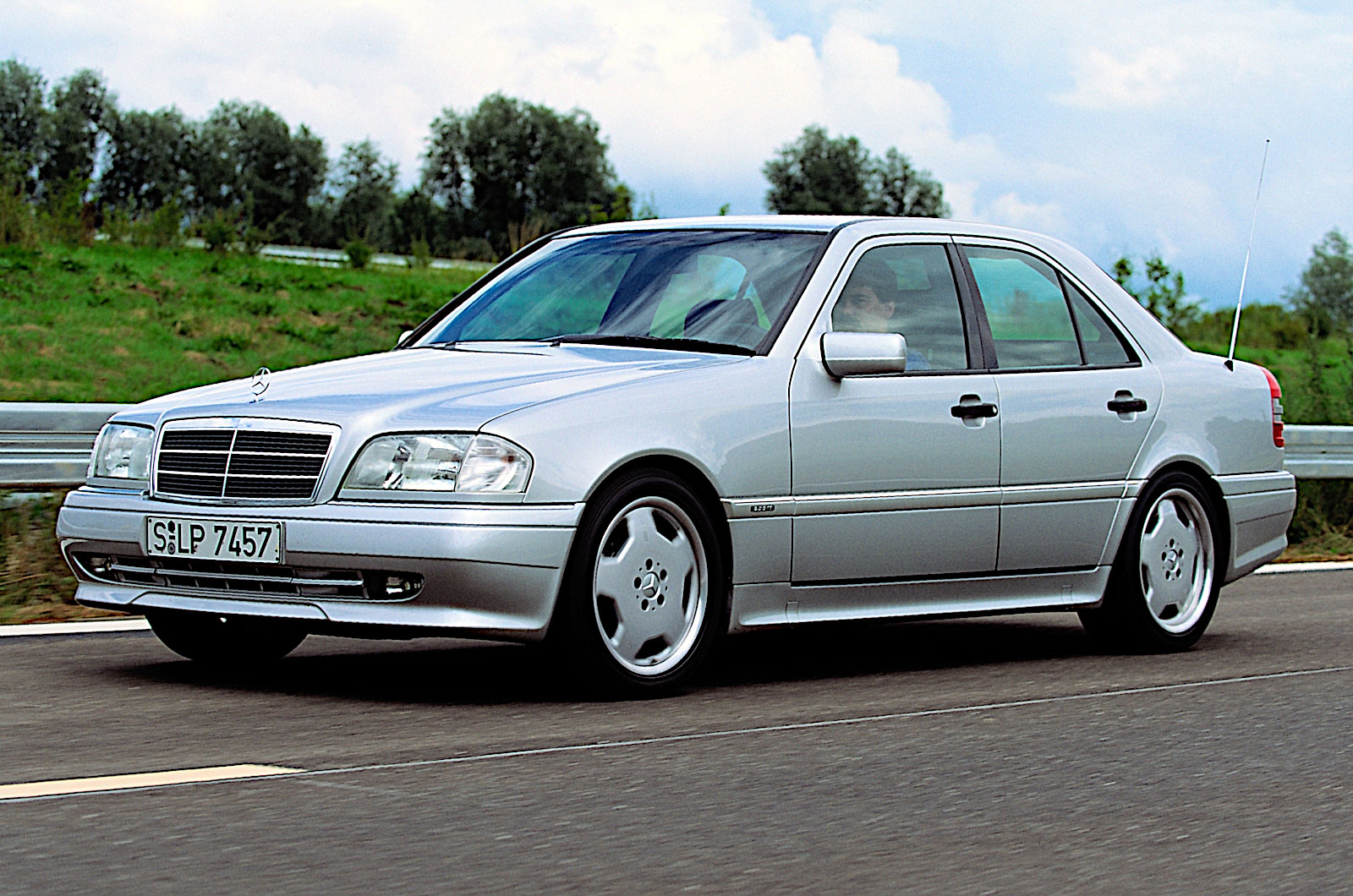
AMG started out as a tuning business specialising in parts for Mercedes vehicles, and was drawn into the company over a period of years. The first road-going collaboration was the C 36 AMG, which had a 3.6-litre straight six engine.
With a maximum output of only around 280bhp, it was far less powerful than future AMG models, but it was beautifully balanced, and a pleasure to drive on either road or track.
Mercedes SLK-Class (1996)
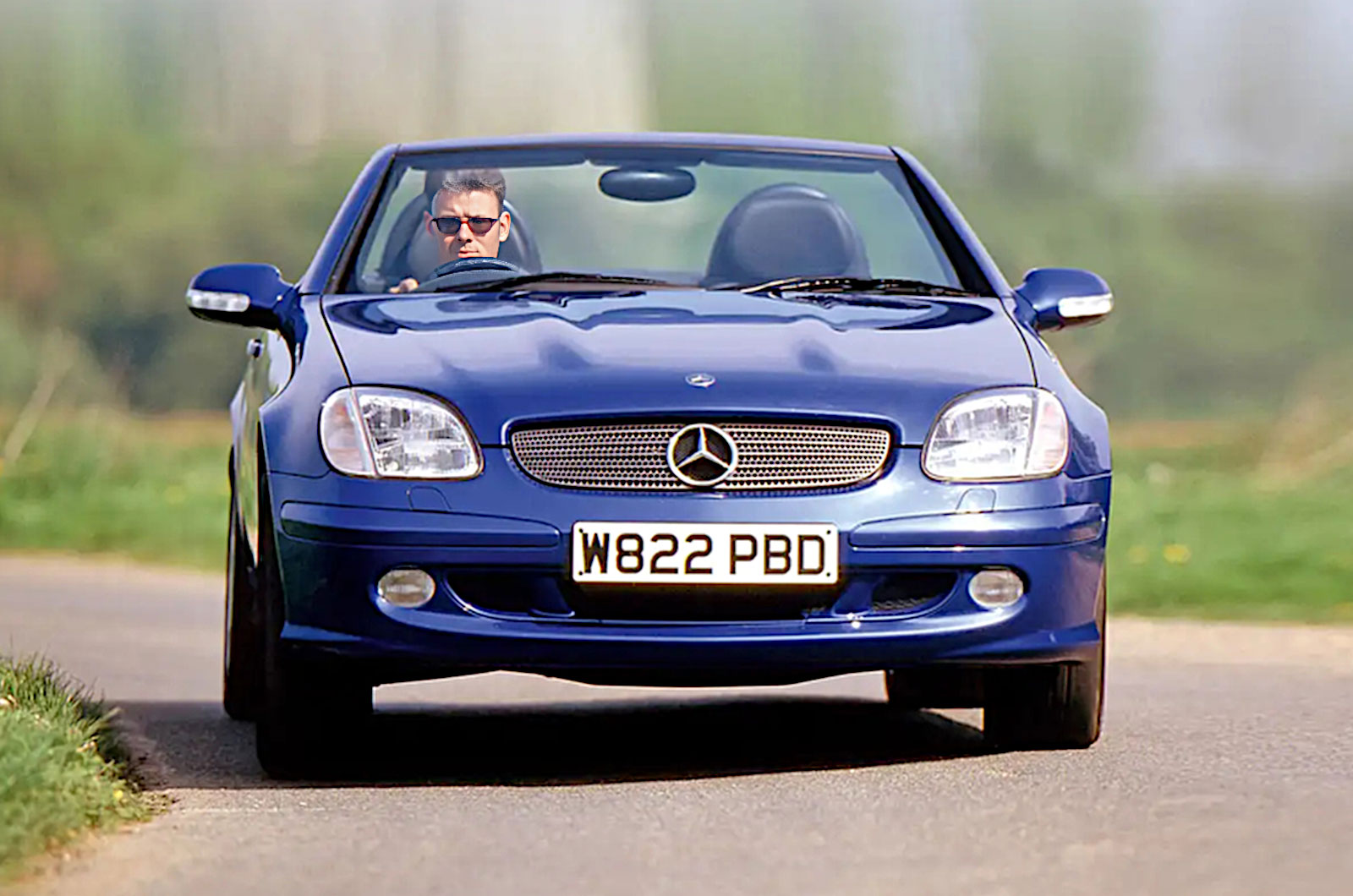
The original SLK was available with a variety of four-cylinder engines, sometimes supercharged, or a 3.2-litre V6. It was an unusual model for Mercedes to produce, but it did well enough for the company to decide it was worth moving on to a second generation in 2004.
When that happened, the first SLK was repurposed as the Chrysler Crossfire, an outcome of the merger of Daimler and Chrysler. The fact that one of the partners had taken on a model recently discarded by the other was controversial too.
Mercedes V-Class (1996)
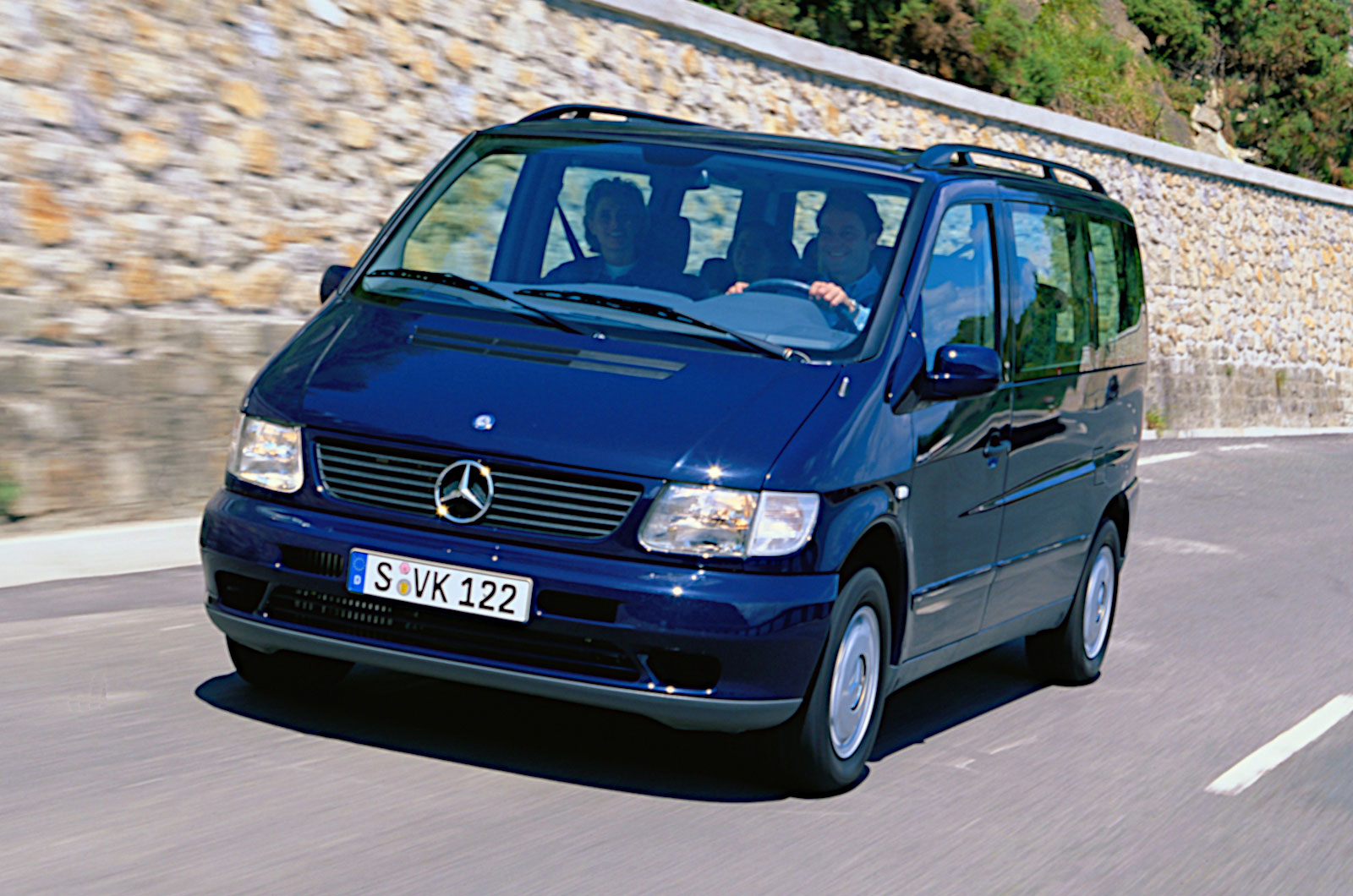
For nearly a century, it would have been almost unthinkable that Mercedes would create a passenger vehicle by adding extra seats and windows to a van. That, however, is what happened with the V-Class, the MPV version of what was otherwise known as the Vito.
Unusual though this seems, the plan worked, and there is still a V-Class today.
Mercedes A-Class (1997)
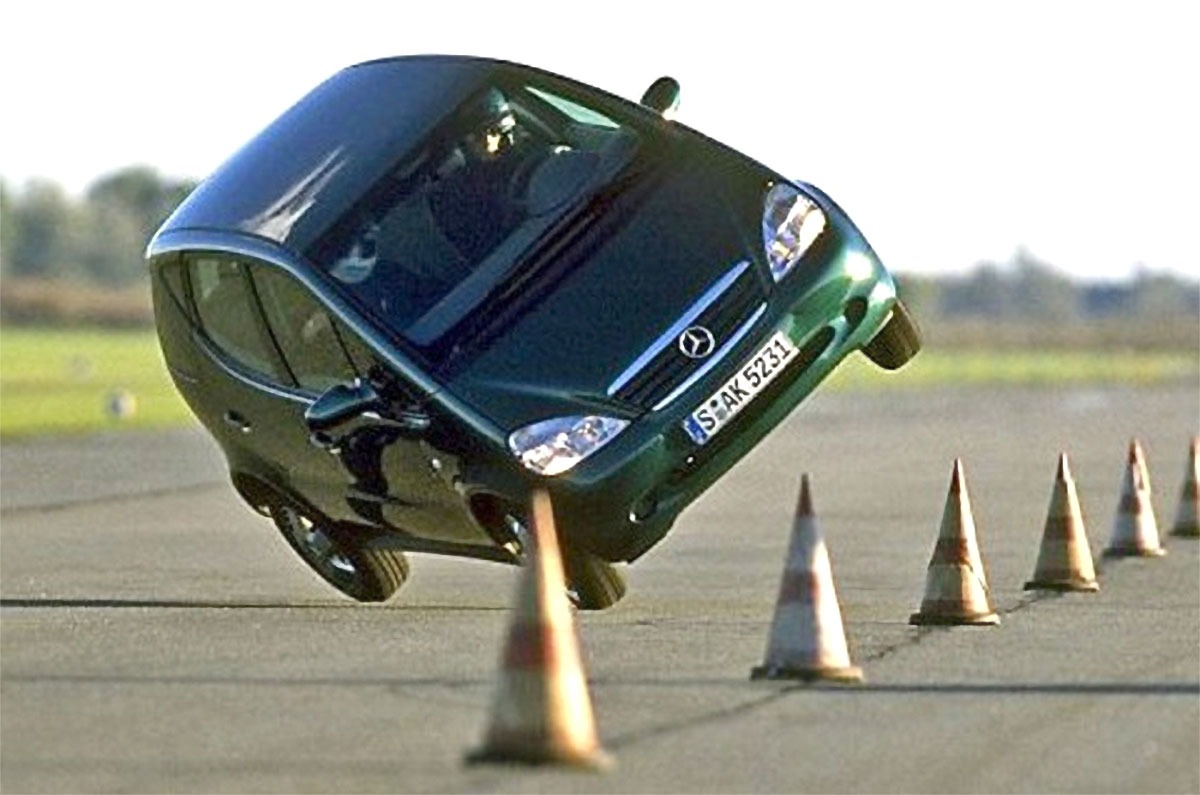
It all happened a long time ago, but for a while it was almost impossible to have a conversation about the first-generation A-Class without someone mentioning the elk test. This has been conducted for many years by the Swedish magazine Teknikens Värld, and in 1997 the A-Class failed it spectacularly, turning over before reaching the finish line.
All talk of the little hatchback’s ingenious double-floor layout was forgotten, and the incident led to a major controversy. After much discussion, Mercedes revised the suspension and added electronic stability control and in 1998 the A-Class became capable of avoiding elks with little trouble.
Mercedes M-Class (1997)
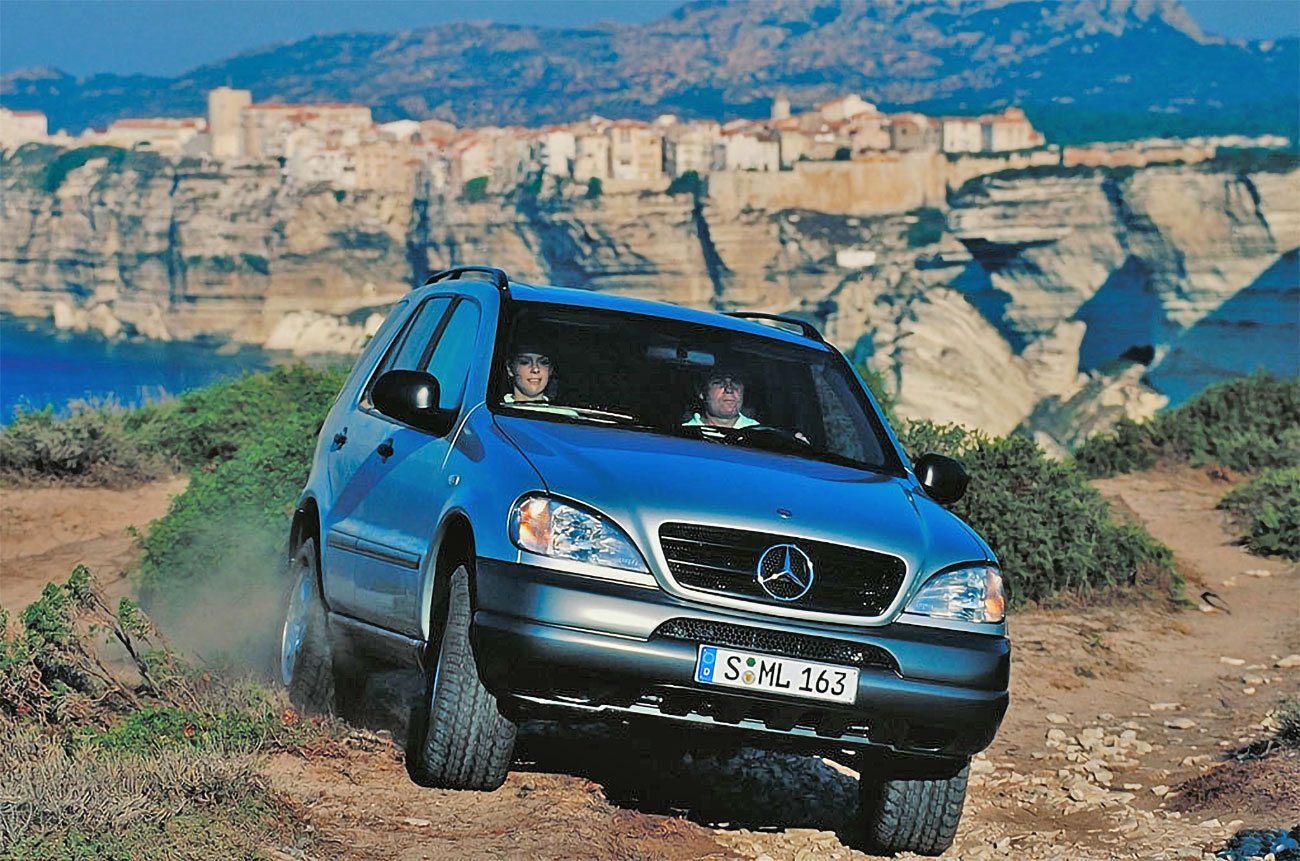
The M-Class was the first Mercedes crossover SUV, and was built at the company’s first American factory, located in Tuscaloosa, Alabama. Despite the name of the series as a whole, individual models were named ML (plus a number indicating engine size, such as ML 230), to avoid a possibly unlikely confusion with BMW M cars.
This problem was eventually eradicated completely when a new policy led to later versions being called GLE-Class.
Mercedes Vaneo (2001)
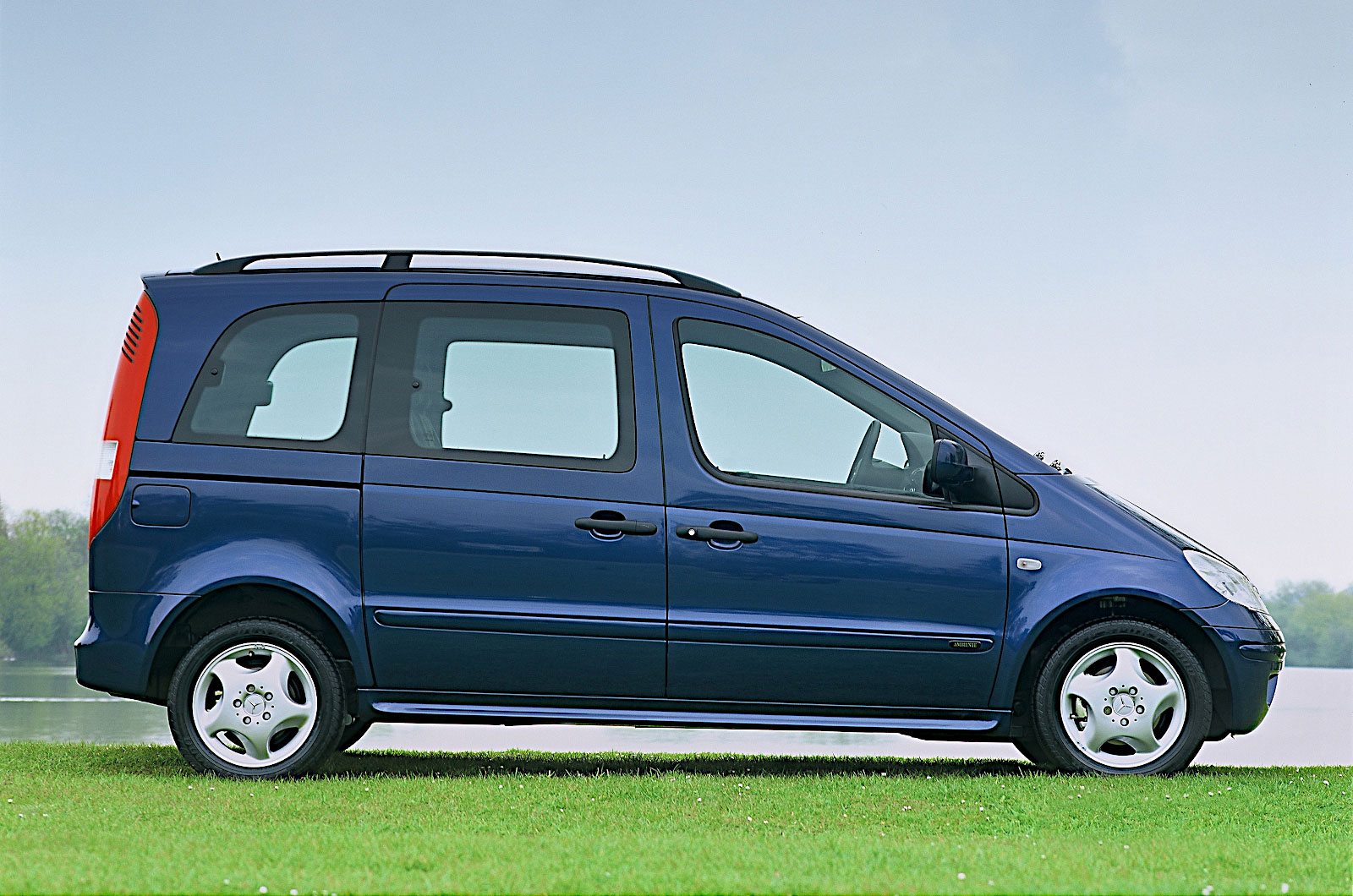
Mercedes described its little monospace vehicle as “a family saloon, recreational vehicle and spacious estate in one”. Although it looked like it was based on a van, it actually wasn’t (being in fact a relative of the A-Class), and Mercedes took pains to point this out, but didn’t help the situation by giving it a name whose first three letters spelled the word ‘van’.
This wasn’t the first vehicle to seem like an odd addition to the Mercedes line-up, but unlike others of which that could be said it wasn’t successful, and was withdrawn from the market in 2005.
Maybach (2002)
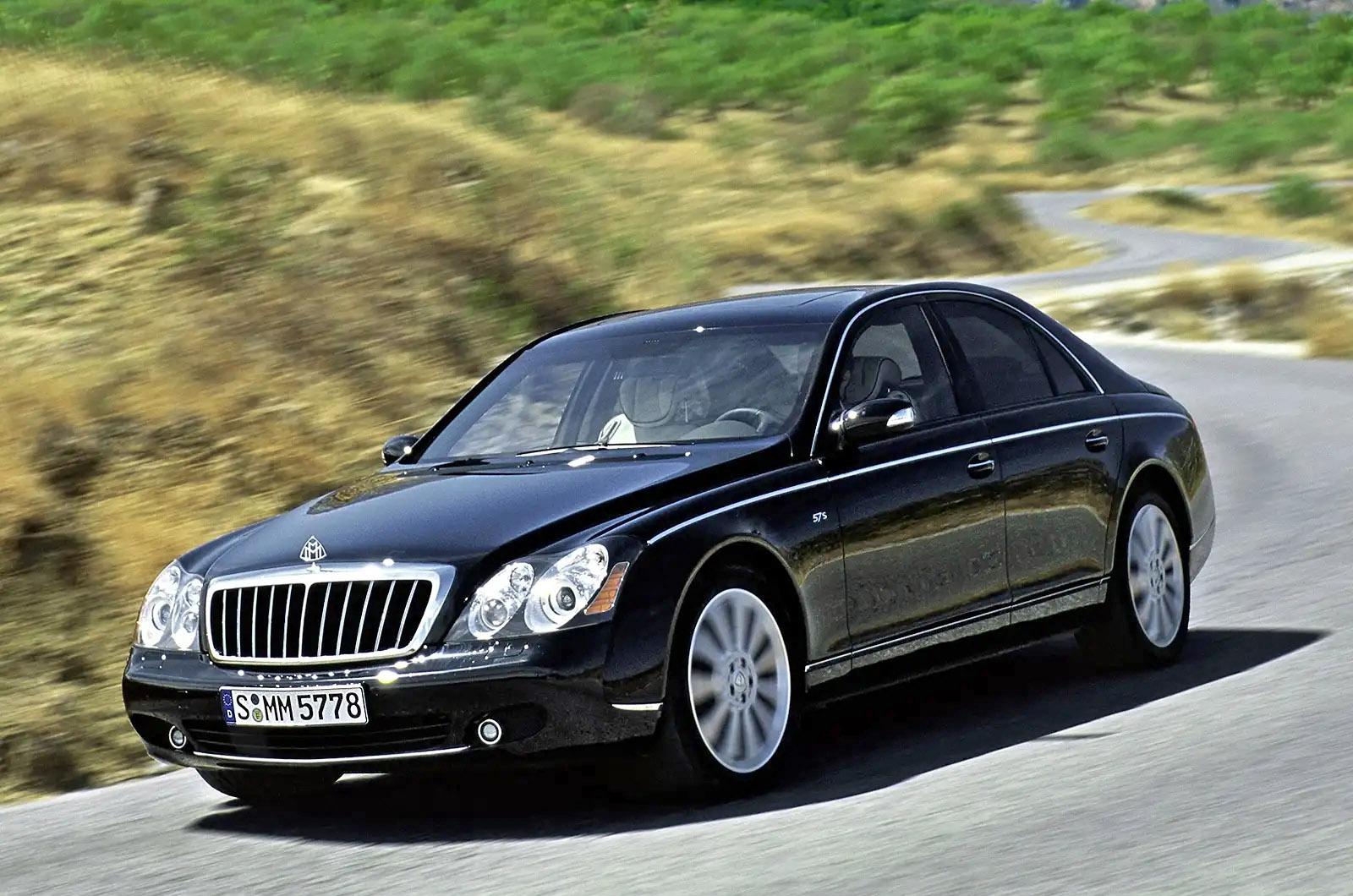
Named after Wilhelm Maybach (who, you’ll remember, had left Daimler nearly a century earlier), the Maybach luxury cars were certainly the work of Mercedes even if they didn’t carry that name. The 57 and the longer-wheelbase 62 were very expensive both to buy and to own – independent research once showed that their UK values fell more in the first year after purchase than those of any other car.
The sub-brand was discontinued in 2013, but ultra-luxury models are now known as Mercedes-Maybach on models like the S-Class and GLS-Class.
Mercedes SLR McLaren (2003)
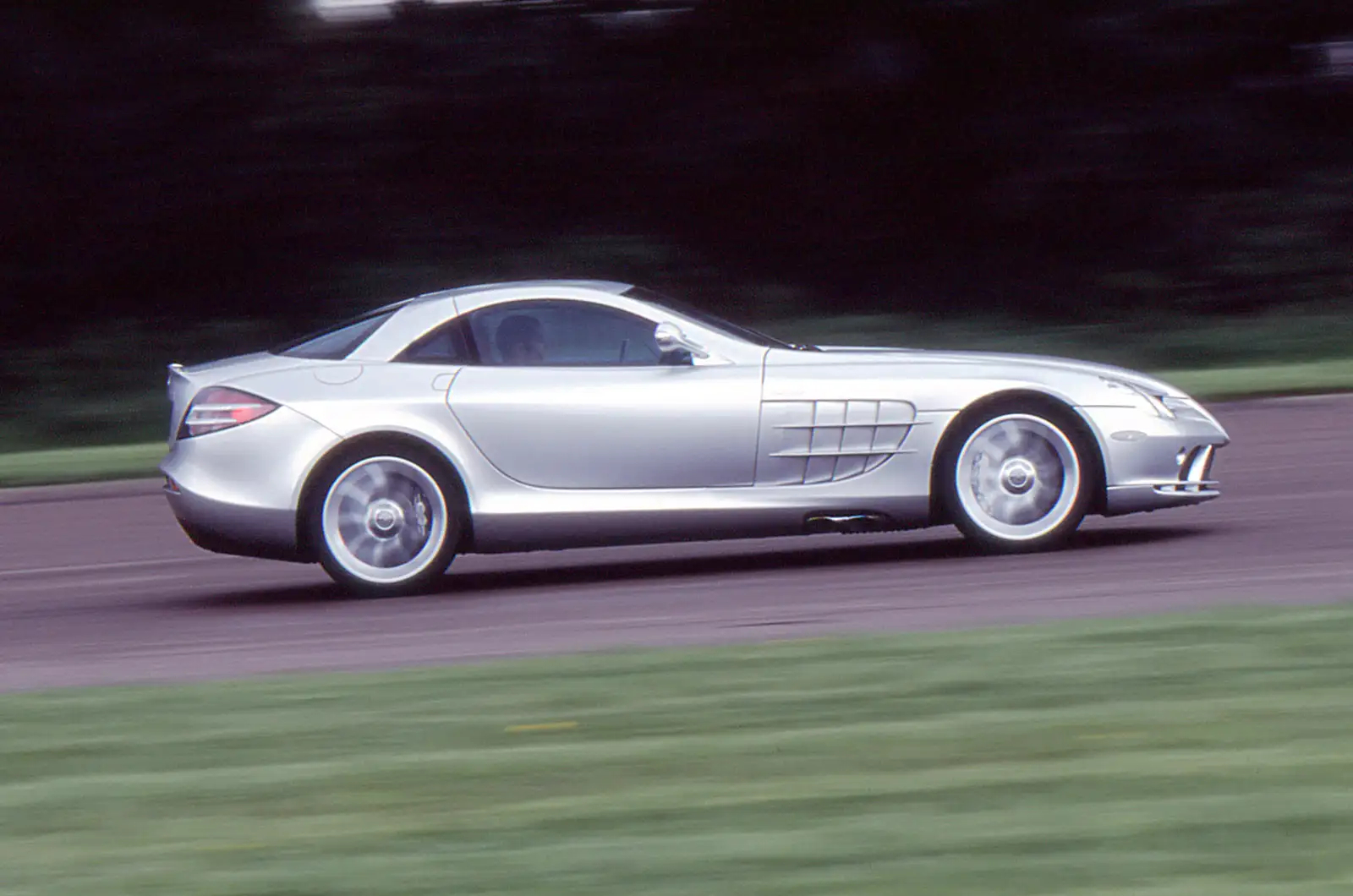
The SLR (for Sport Leicht Rennsport, or Sport Light Racing) was named after a race car of the 1950s, and as the other part of its name suggested it was developed partly by the McLaren Group. Its supercharged 5.4-litre V8 engine, developed by AMG and producing well over 600bhp, was mounted very far back, which meant that the passenger compartment had to be even further back, giving the car a resemblance, at least in profile, to a Funny Car dragster.
“Not quite the all-conquering hypercar we had expected from two of the industry’s greats,” we said, but added, “The SLR was nevertheless a unique and intoxicating beast.”
Mercedes R-Class (2005)
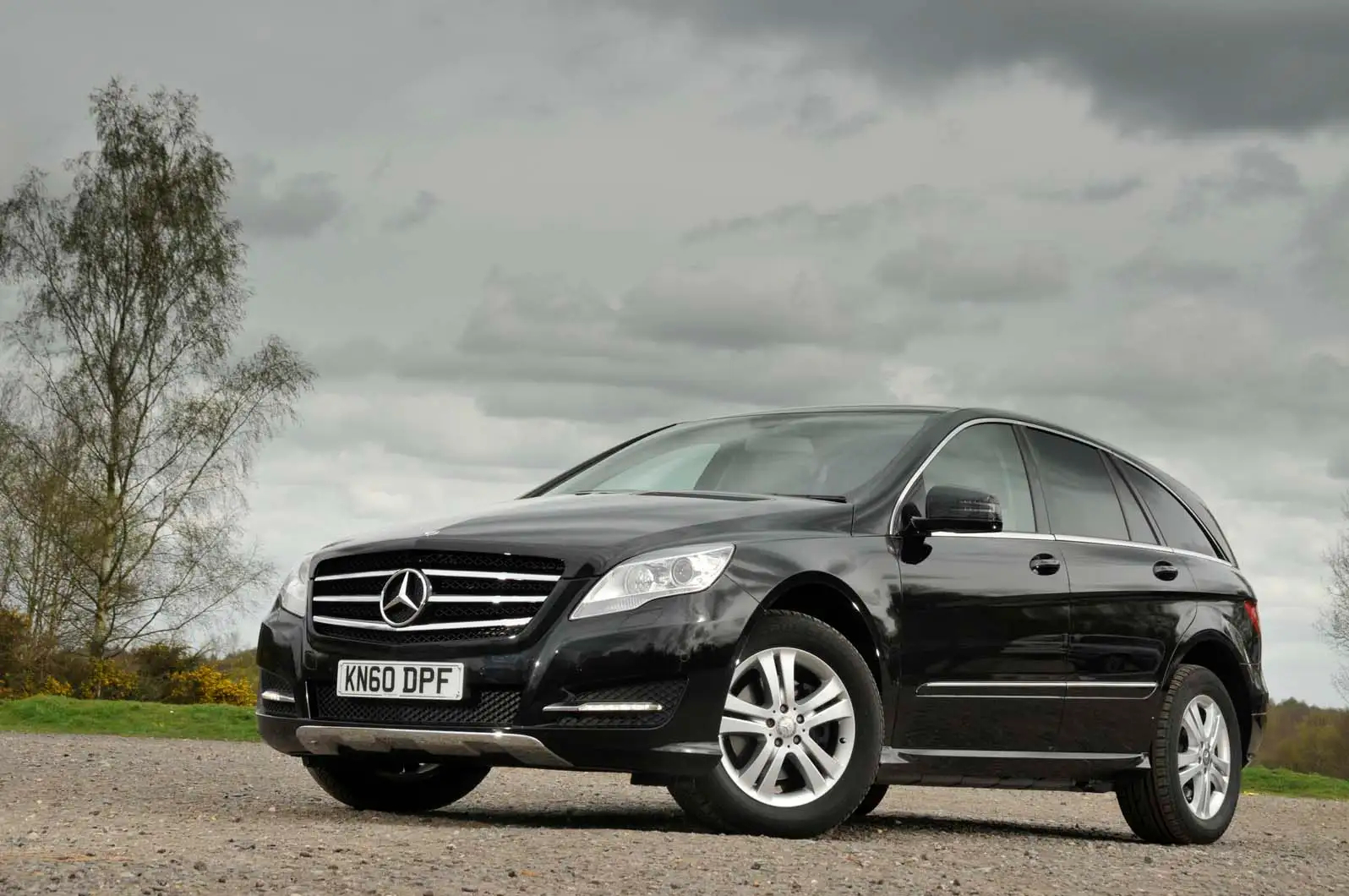
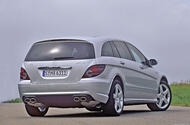
In another example of blurring the boundaries between market sectors, Mercedes combined the familiar ideas of a sporty saloon, an estate, a minivan and an SUV into the luxurious six-seat R-Class, which it described as a Grand Sports Tourer.
As such, it more or less occupied a category untouched by anyone else, though since production lasted for a dozen years there was obviously some demand for it. The 6.2-litre V8 R 63 AMG – “one of Mercedes’ crazier ideas”, we said – was perhaps a step too far, and didn’t last for long; just 200 or so R63s were sold.
Mercedes A 45 AMG (2013)
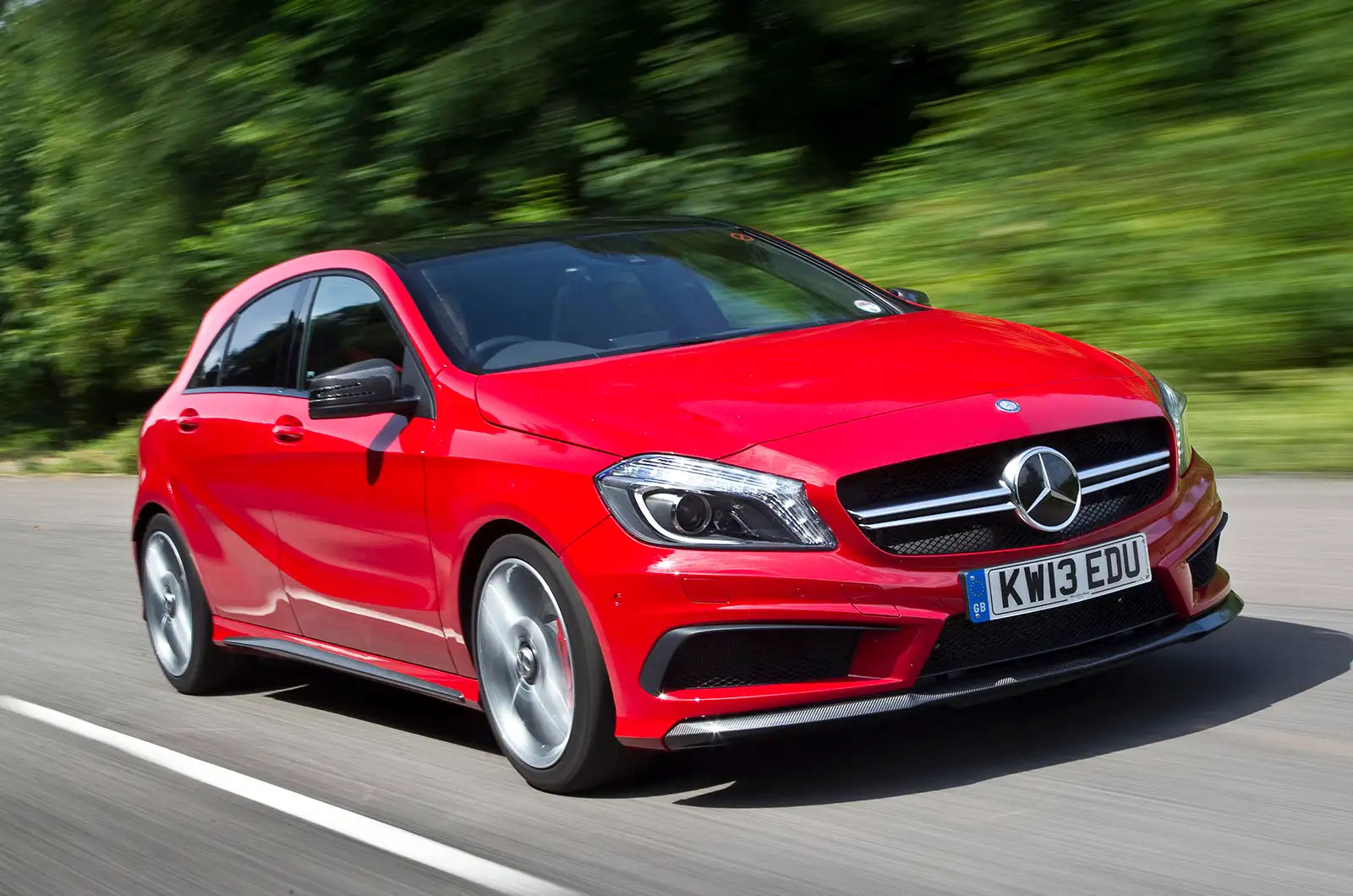
The outstanding feature of the A 45 AMG was its turbocharged 2.0-litre engine, whose output of 355bhp (as originally launched) was the highest of any production four-cylinder unit in the world.
At around the time the car was renamed Mercedes-AMG A 45, this rose further to 376bhp. The successor to this engine, still with the same basic layout, now exceeds 400bhp.
Mercedes G 63 AMG 6x6 (2013)
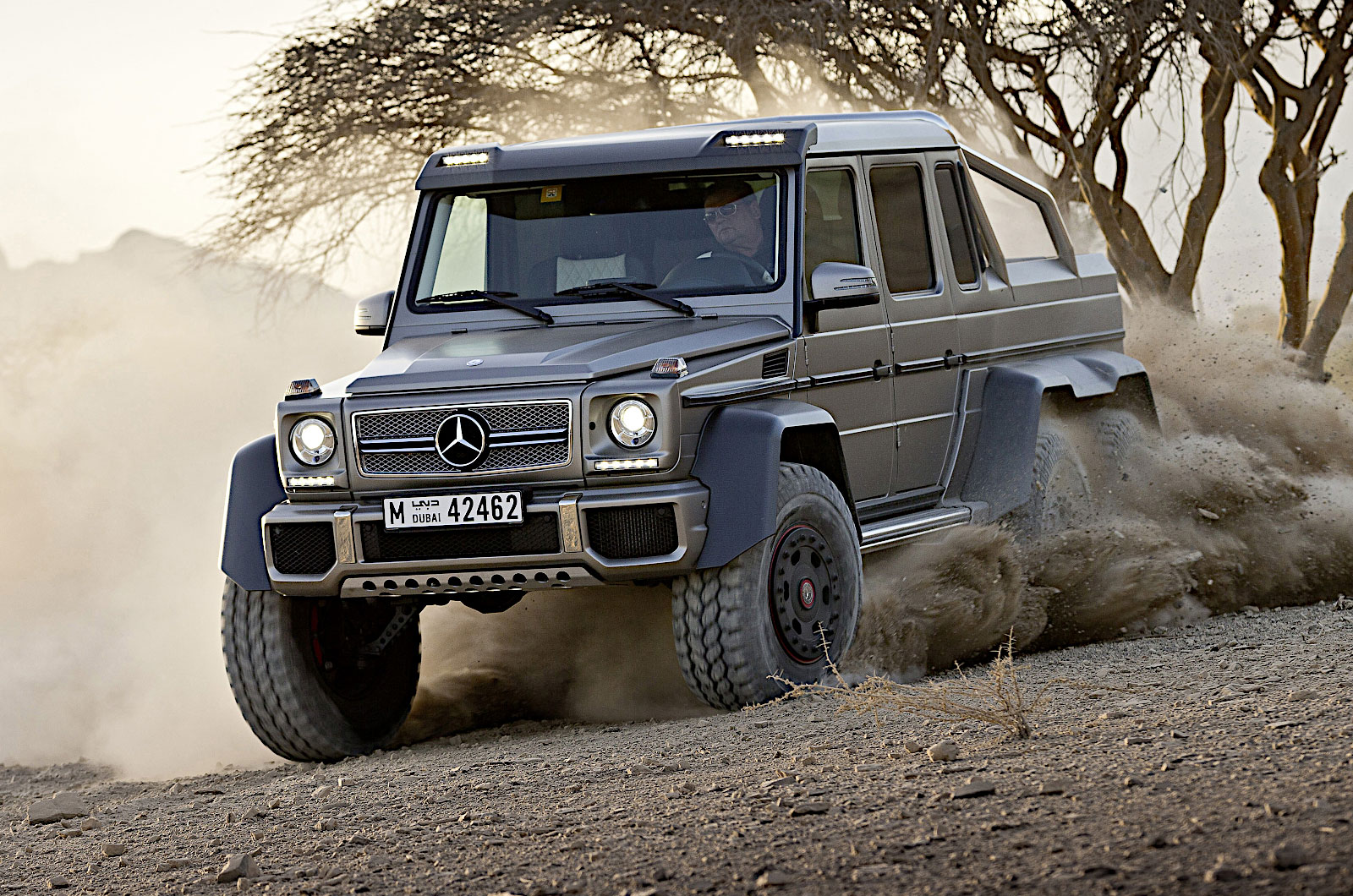
The most powerful G-Class of all has been the G 65 AMG, whose “spectacularly unnecessary twin-turbocharged 6.0-litre V12”, as we described it, produced 621bhp. In terms of craziness, though, it takes second place to the G 63 AMG 6x6, even though that vehicle’s 5.5-litre twin-turbo V8 produced a far more modest 536bhp.
As its name indicates, this one had six wheels, all of them driven. The existence of just one example would have been remarkable enough, but in fact Mercedes built and sold more than 100.
Mercedes-Maybach S-Class (2021)
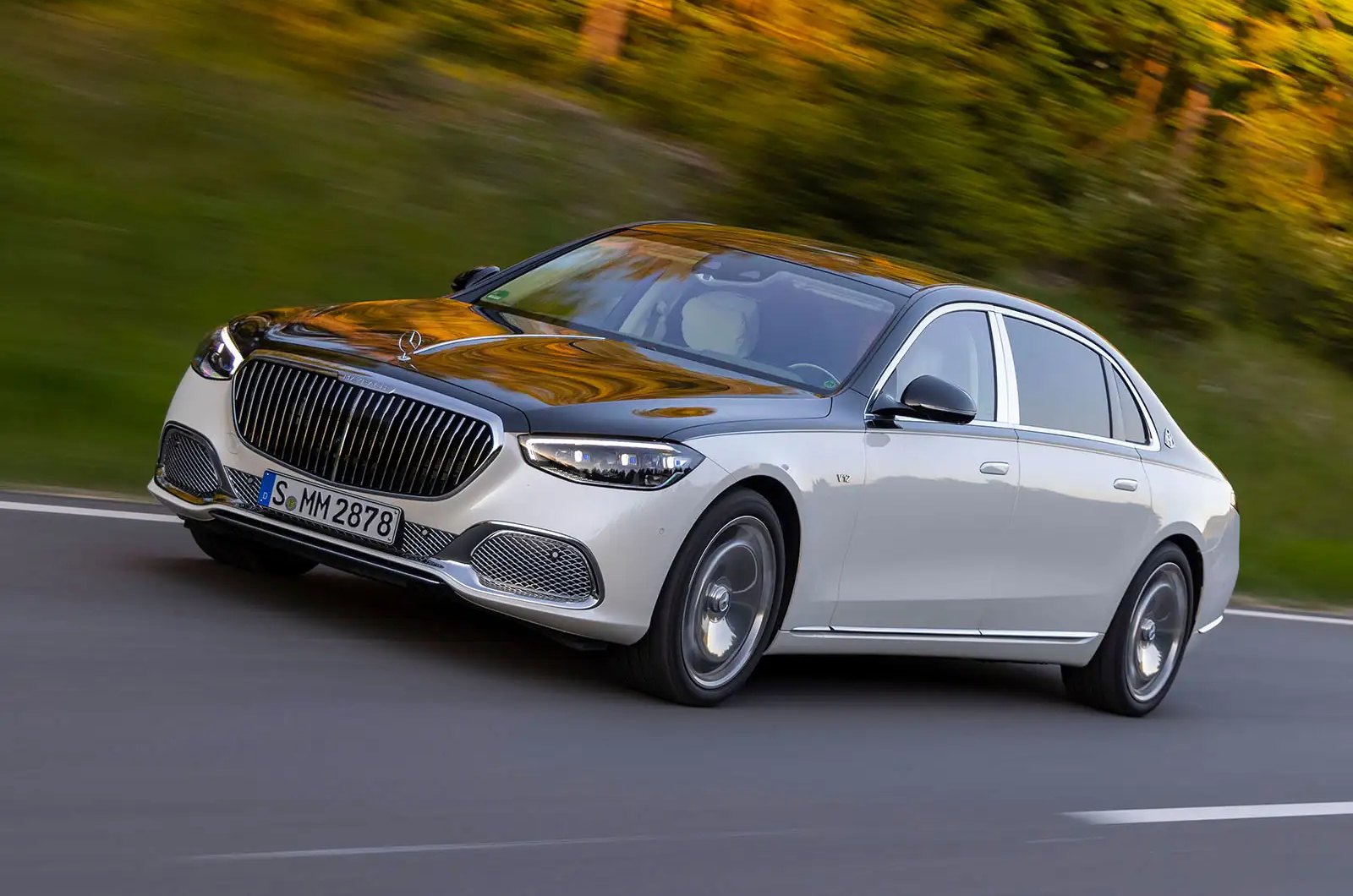
Today’s equivalent of the old Grosser Mercedes models is the top-level S-Class, a perhaps fitting tribute to the genius of Wilhelm Maybach.
Writing of the 603bhp V12 S680, we said it “delivers incredible refinement, strong performance, outstanding roadholding for such a large car, a world-class ride and a truly exclusive passenger experience”.

Ferrari Trademark Filings Signal Strategic Expansion of F80, 12Cilindri, and 296 Lineups with New...

Volvo V90 as the Modern Estate Car Balancing Scandinavian Design, Practicality, and Reliability in...
 This is a traditional family car a sleek design twist — and it's reliable too, if you choose the right one
Think of a large family estate car. You're picturing a Volvo, aren't you?
Although the XC90 is the Volvo de choix for big families these days, the more traditional V90 estate still holds massive appeal, having only recently bowed out of production after nearly a decade. And not just because it's one of the prettiest wagons around.
The second car to use Volvo's then-newfangled SPA platform, it arrived as a long, low and sculptural model like no Volvo estate before it - and its strong Scandi-chic design still looks clean and fresh today.
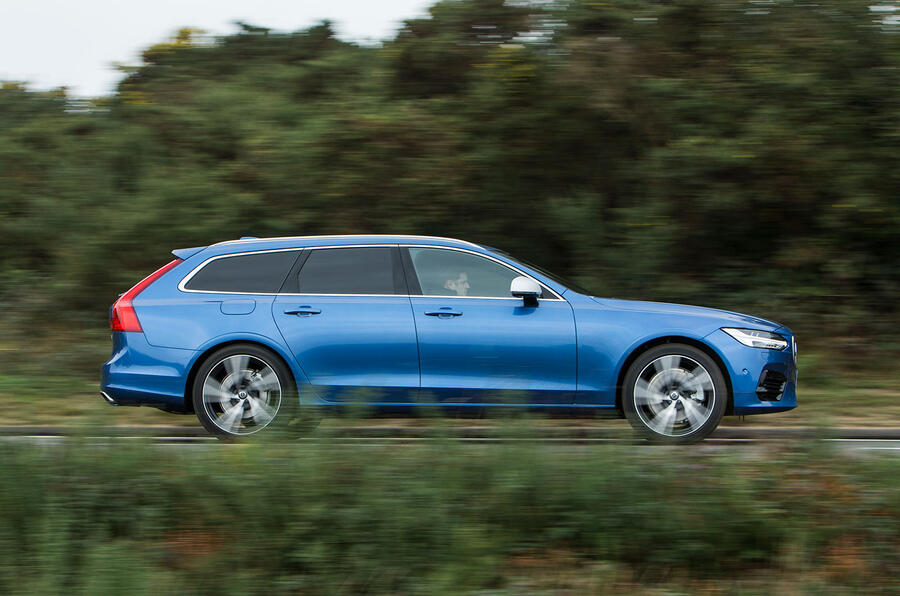
The by-product of its added kerb appeal is that it is not quite as utilitarian and practical as its breeze-block forebears - the sloping rear screen precludes the fitment of a third row of seats, for example - but the boot is still a competitive 560 litres, even in the PHEV, and four occupants have plenty of space (although a fifth makes it tighter).
For outright space, the Skoda Superb, Volkswagen Passat and Mercedes E-Class have it beat, but if you're looking for something that's in equal parts stylish, relaxing and practical, the V90 should be right up the top of your list with the Audi A6, BMW 5 Series and Jaguar XF.
The interior is family-friendly but still very stylish. All the materials look and feel expensive, and the 9.0in portrait touchscreen still looks modern, even if it can be laggy, which is grating because of the dearth of physical controls.
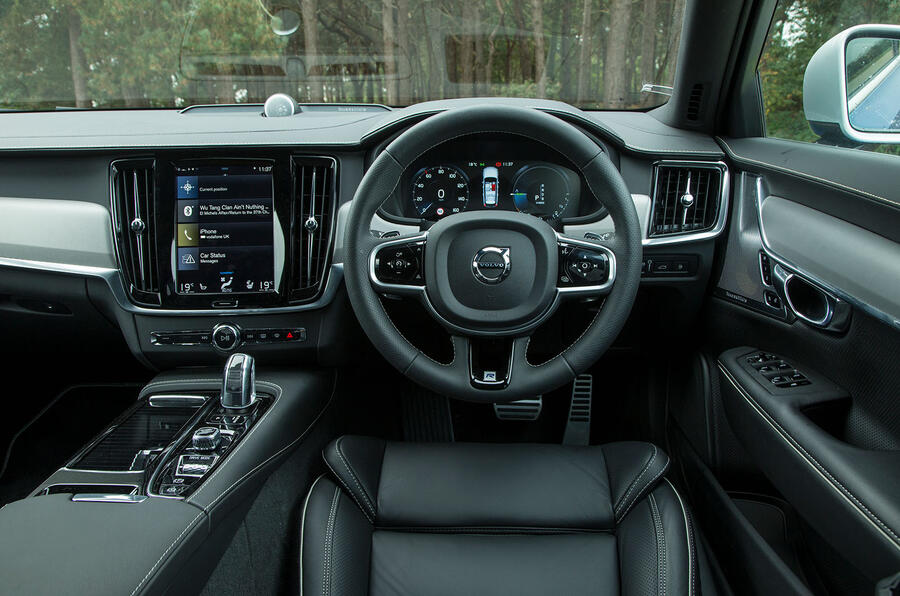
Equipment is generous. Even entry-level Momentum trim has LED headlights, heated leather seats, sat-nav, Bluetooth, adaptive cruise control, lane keep assist and DAB radio. On top of that, it has a powered bootlid, keyless start and rear parking sensors.
Used Inscription cars cost about 10% more than like-for-like Momentum models and get extra interior lighting, nappa leather seats and a larger, 12.3in digital instrument cluster, plus electric front seats and bigger alloys.
R-Design models have held their value best and offer firmer suspension for a sportier drive - but bear in mind that the V90 is very much a wafty and hushed cruiser, especially on adaptive dampers, and the R-Design's big wheels and stiffer dampers do unsettle the ride.
Handling is good across the board, though. The V90 has an encouraging level of body control for its size and supple set-up so can be briskly hustled along a twisty road.
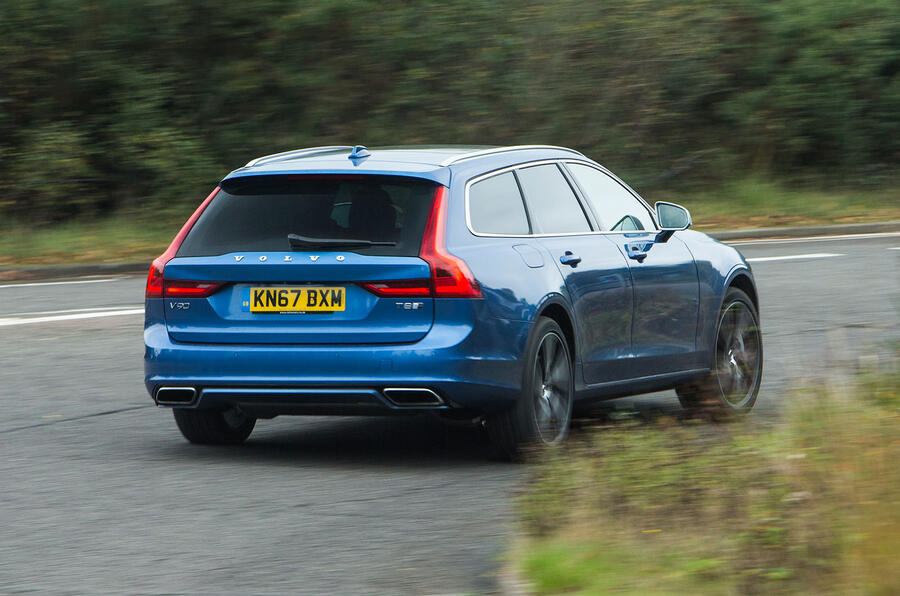
All powertrains are based around a 2.0-litre engine, initially the 187bhp T4 petrol or D4 diesel, the 232bhp D5 or 247bhp T5, or the top-link 306bhp T6. The highest-power petrol and diesel came with four-wheel drive, but they have a poorer reliability record, so we would recommend the torquey D4 (expect mid-40s to the gallon) or pokey T5 (around 30mpg). The T4 is gutless and no more efficient than a T5.
All V90s are automatic, which is generally fine but early cars can be a bit jerky and hesitant.
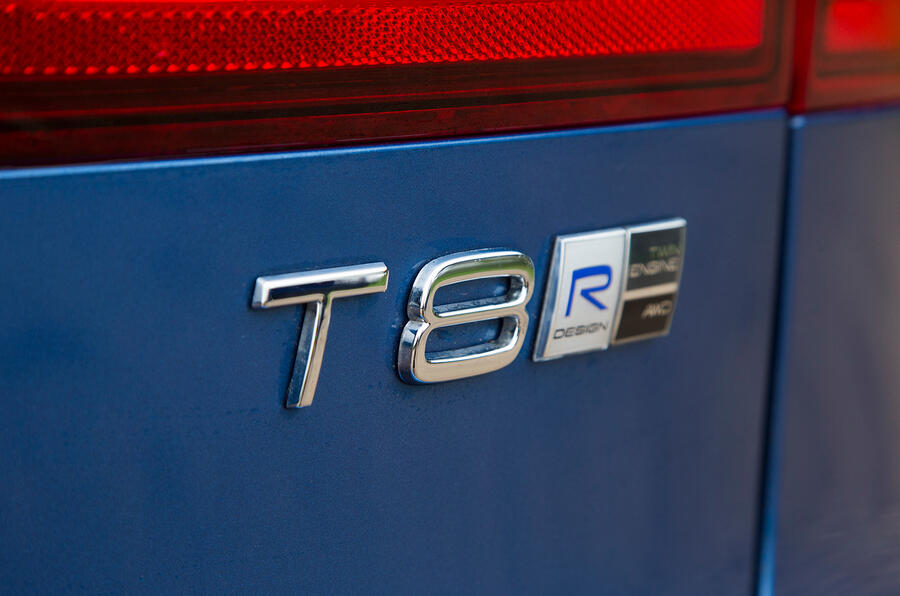
If you have a home charger and are tempted by the blisteringly quick 401bhp T8 PHEV, note that there are well-documented problems and you'll get only 20 miles of EV running on a good day.
The V90 is a useful tow car, with the D5 and T6 rated for 2200kg and even the PHEVs being capable of pulling 2100kg. It's a workhorse, then, like all good Volvo estates have been, but with the tech and panache to slip into premium exec duties effortlessly. What more can you ask of a car that starts at £8k?
What to look out for
Engine: The high-output D5 (later B5) and T6 (later B6) use Volvo's PowerPulse compressed air system to spool the turbos quickly, reducing lag. Failure of the air compressor or associated hoses in this system is an occasional fault, leading to a loss of immediate performance, and can be expensive to fix.
Electric motor: Owners of plug-in hybrid T8s have reported a systemic issue with the 'ERAD', or EV motor, on the rear axle. These often fail after the warranty expires and £10,000 should be budgeted to fix it. So have it thoroughly checked out before purchase.
Suspension: Higher trims often feature rear or full air suspension. While it provides a superb, floaty ride and self-levelling, the air springs and compressors are prone to leaks and failure over time. Look for the car sitting unevenly when parked, and check for suspension warning messages on the dash. Volvo refuses to cover the system in extended warranties.
Body: The optional panoramic sunroof's drain tubes can become clogged with debris, causing water to accumulate and potentially leak into the cabin or damage the electronic modules located near the headliner.
Infotainment: The touchscreen has a tendency to lag and there are very few buttons to fall back on. Total crashes are usually solved by turning it off and on again. V90s from 2016 and 2017 need a 3G sim to offer wi-fi. Coverage will soon end, so if this bothers you, choose a newer model.
Also worth knowing
The V90 was facelifted in 2020 with some small but important changes. The petrol Ts and Ds became Bs, with the addition of mild-hybrid technology, which doesn't make the world of difference to economy or performance but it's nice to have if your budget stretches.
The hybrid line-up expanded, with a new 335bhp T6 offering a claimed 35 miles of EV range initially, before being upgraded with a new battery to 53 miles in 2022. The T8 also received this and a bump in power to 449bhp. Note that without any electrical assistance, the PHEVs will struggle to break 35mpg.
Core, Plus and Ultimate replaced the previous trim levels.
How much to spend
£8000-£12,999 Cars with over 100k miles and some with more than double that.
£13,000-£19,999 A range of pre-facelifted cars, from Momentums with average miles to top-spec, low-mile T8s.
£20,000-£32,999 A wide choice of facelifted models, including the last of the mild-hybrid petrols and diesels.
£33,000-£55,000 Plug-in hybrids from the last few years of production.
An owner's view
Sarah Hughes: "I ran a D4 R-Design for three years and 60,000 miles. For a car of its size, the economy was strong, hitting high-40s on a motorway run. The comfort is the biggest selling point: I've never sat in a better seat. The Pilot Assist [adaptive cruise and steering] made motorway journeys easy and the overall interior design and quality are hard to beat. Nothing broke, although the Sensus infotainment did occasionally have a 'Matrix moment' where it just froze and needed a restart to clear. My biggest gripe was the gearbox; it was often dim-witted and hesitant when pulling away."

Lucid Air reliability woes expose the gap between technological promise and real-world ownership experience

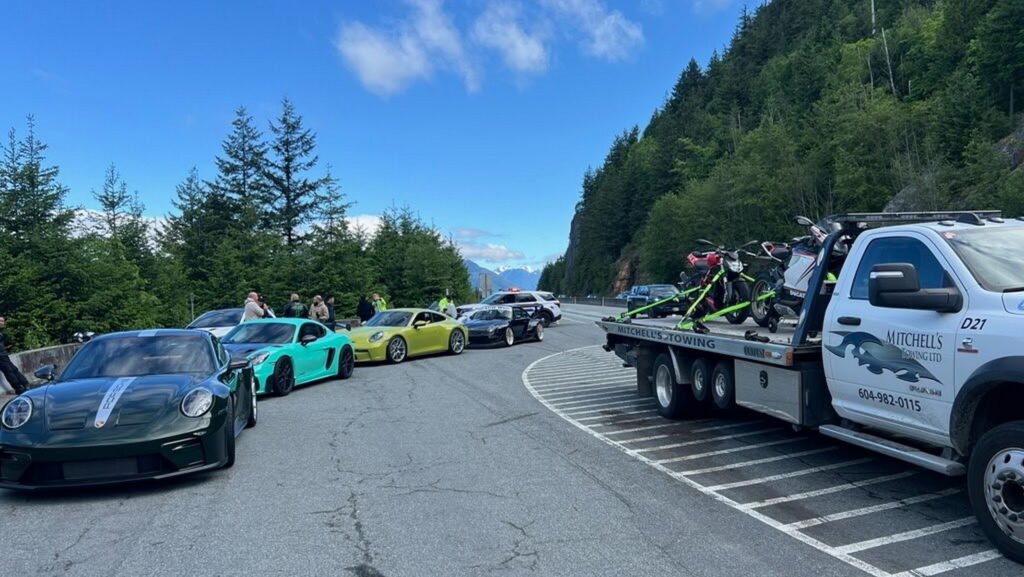
Speeding Crackdowns on the Sea-to-Sky Highway Reveal Enforcement’s Limits in Changing Driver Behavior

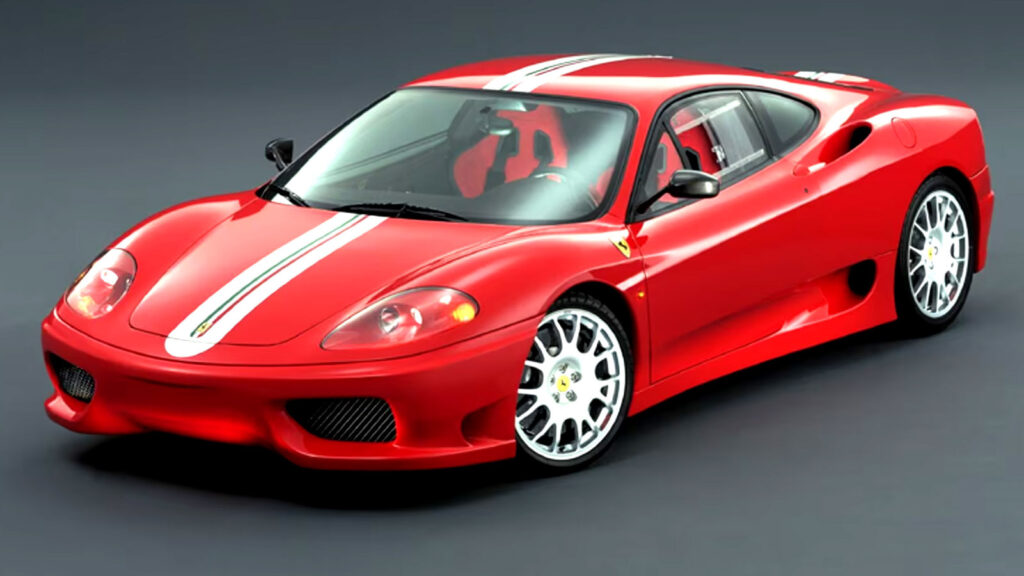
Ferrari Quebec Fire Exposes Dealership Negligence and the Human Cost of Automotive Failures

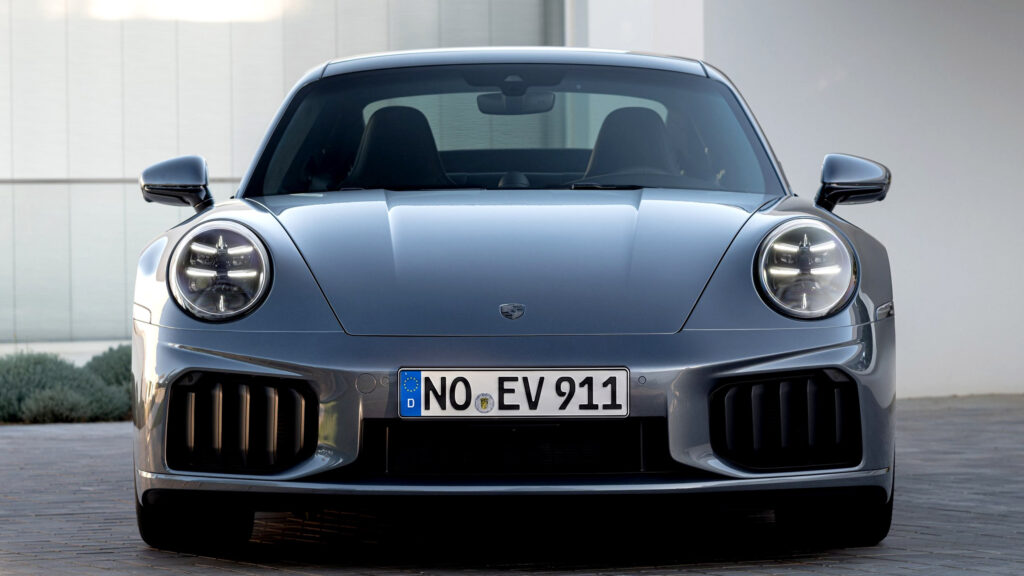
Porsche’s Electrification Strategy Delays a 911 EV as Hybrid and Multi-Powertrain Approaches Hedge Against...

AI Traffic Cameras and Increased Fines as Catalysts for Restoring Road Safety Deterrence in...
Deterrents – such as bright yellow cameras or traffic police – could be a more effective measureExecutive director of Parliamentary Advisory Council for Transport Safety suggests drivers are becoming complacent
Fines for driving offences should be increased to fund a rollout of Al-powered traffic cameras across the UK, the head of a leading transport safety charity has told Autocar.
Jamie Hassall, executive director of the Parliamentary Advisory Council for Transport Safety, claimed this will quash a belief among a growing number of drivers that they are unlikely to be caught speeding or driving dangerously.
The latest generation of Al traffic cameras feature high-resolution imaging and ultra-fast processors that can detect if a driver is speeding, using their phone or not wearing a seatbelt. They can also automatically check all UK police and DVLA databases to check whether a vehicle is taxed and insured.
Around 200,000 drivers are found guilty of speed limit offences each year. Last year, almost five million penalty points were issued for driving offences, more than three-quarters of those for speeding.
To address this, Hassall recommends that fines are increased to help fund more speed cameras and Al cameras.
"Penalty points are a useful tool, but we need to increase the probability of bad drivers being caught," he said.
"One way would be to increase fines for moving traffic offences from £100 to £500, using the money raised to fund more cameras and Al technology, in addition to police patrols and improved intelligence around drivers such as serial parking offenders, who are often dangerous drivers.
"You can get fined £150 for dropping litter, but no one dies. Speed awareness courses are useful, but second-time offenders deserve a much higher penalty."
Meanwhile, a new survey of drivers has found that fewer than half of motorists believe penalty points discourage dangerous driving.
However, the survey, by USwitch, also found that among those drivers who had been given points, four out of five changed their driving behaviour to avoid accumulating more.
Commenting on the findings, James Gibson, executive director of charity Road Safety GB, said: "Penalty points are useful but not sufficient on their own. Evidence around deterrence of offending highlights increased visibility of enforcement to be important. This is based on research that shows the perceived likelihood of getting caught is a stronger deterrent than the severity of consequence if caught."
Plan for overhaul of penalty points
While the government has yet to announce plans to raise driving fines, it is looking to deter law-breaking motorists in other ways.
In a bid to lower road death numbers, which have plateaued since 2010, it wants to increase and more effectively use penalty points, as well as to introduce new offences.
A spokesperson said: "We know that the majority of motorists are responsible and law-abiding, but they and other road users want to see law-breaking dealt with, to make all our communities safer."
Further revisions are also being weighed up, with the proposed key changes as follows:
Seatbelts: Non-compliance to go from a £100 on-the-spot fine to accruing three penalty points.
Registration: Points for driving a car with no registered keeper, no MOT or an incorrect numberplate.
Impaired driving: Combining drink-and drug-driving offences, with lower limits.
Driving uninsured: An increase from the current six penalty points if caught driving without or with improper insurance.