BMW Neue Klasse Revival How a 1960s Saloon Saved the Brand and Shaped German...
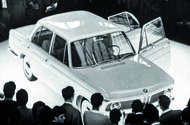 BMW was in financial difficulty in the 1960s - until the Neue Klasse saloon turned up
BMW has recently revealed its new iX3 SUV at the Munich motor show, as the first member of its 'Neue Klasse' of EVs. These cars are critical for the company's future just as the original 'Neue Klasse' of mid-sized saloons was back in the early 1960s, when BMW found itself under serious financial pressure.
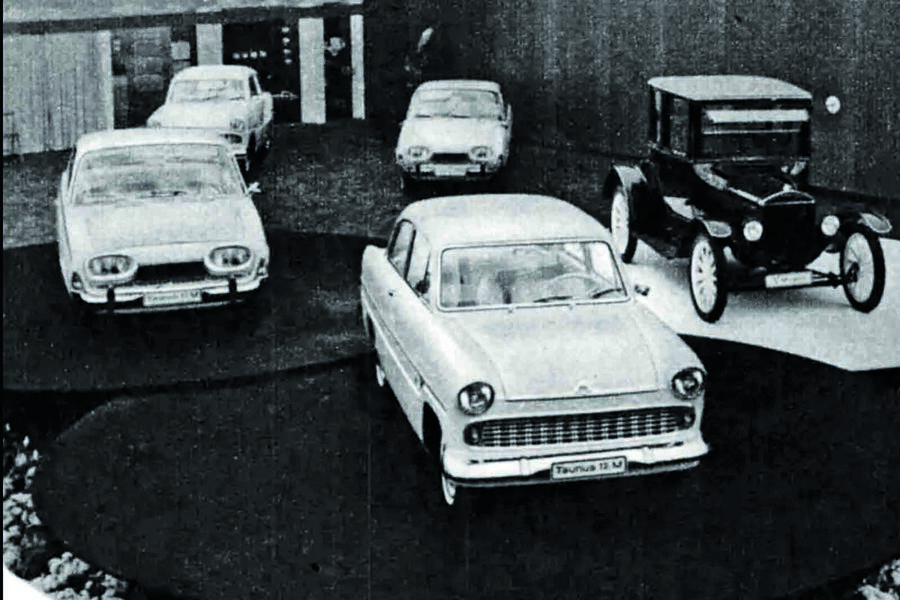
It was the 1961 Frankfurt show where the public first saw a Neue Klasse saloon, giving a "tremendous reception" to the "very elegant and well-appointed", Michelotti designed 1500. "If the estimated price of £760 [£14,650 in today's money] and dry weight of 1005kg can be maintained, its success seems assured," reported Autocar.
Also new on the BMW stand was the 3200 CS luxury coupé, designed by Bertone and powered by a 160bhp 3.2-litre V8, costing £2650 serving as a striking contrast to Munich's popular miniature 600, at £622.
Yet it was Volkswagen that was the centre of attention, with its own new 1500. Also known as the Type 3, this was the first all-new car from Wolfsburg since the seminal Type 1 'Beetle', conceived way back in the 1930s. "The VW 1500 is undoubtedly very cleverly conceived, and the standard of finish is very high," we said but we did fear that the poor refinement of an air-cooled engine couldn't cut it in the 1.5-litre class, especially when at £567 it cost a bit more than its Ford and Opel rivals.
Enjoy full access to the complete Autocar archive at the magazineshop.com
The estate version "seemed a much better proposition" than the notchback. Sadly the smart-looking cabriolet version never would come to fruition, but then Volkswagen already offered such a product in the "well-styled" Karmann Ghia, the new 1500 version of which (easily distinguished by two extra front lights) was also on its stand.
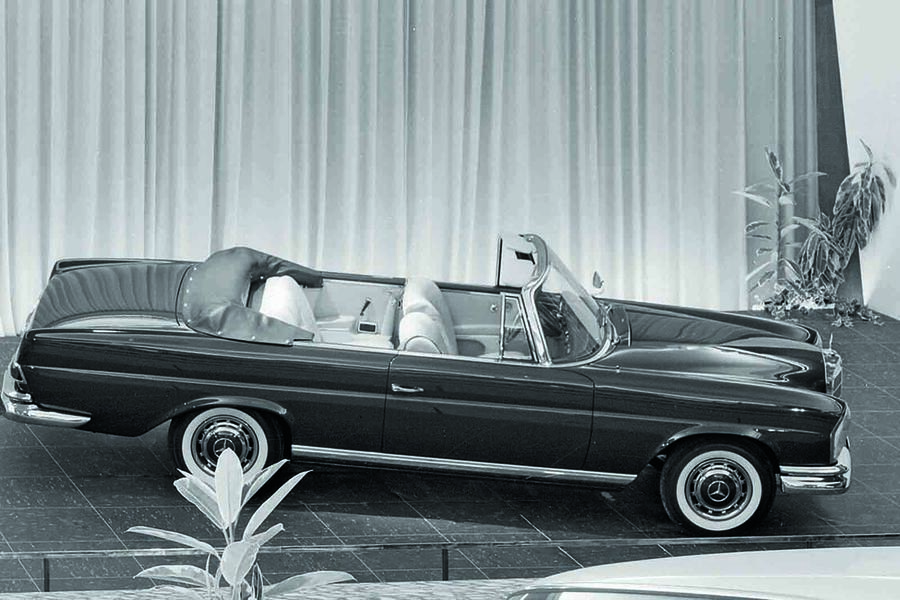
Mercedes-Benz surprised show attendees with a new cabriolet of its own, a rag-top version of its recently launched six-cylinder 220 SE coupé (W111 generation). Of even greater interest, however, were the new 190 (W110) and 300 SE (W112) saloons, think E-Class and S-Class. "The 190 is very good value for money at £890 and is noticeably more refined than its predecessor," we said. "Although the 300 SE is expensive, at £2150, its specification has a big sales appeal."
Auto Union (the forerunner of today's Audi) had no new model to show but created a lot of interest in a new Bosch-developed oiling system, which "eliminates the annoyance of pre-mixing it with the fuel" and let the ratio be cut from 1:40 to 1:100 and to be standard on most UK cars.
Ford of Cologne (then a distinct car maker) had "enjoyed a very big success" in its first year selling the Taunus 17M P3 family saloon, and at Frankfurt it introduced a higher-performance version, the TS, with an extra 60cc and separate front seats.
Its Rüsselsheim rival Opel countered with a coupé version of its own 1.7-litre offering, the year-old Rekord P2, "but it is not a very attractive car", we stated, "the lines of the new roof conflicting with those of the main shell, which is the same as that of the four-door".
The smaller German companies all had fresh wares to exhibit, too. NSU unleashed a major update on its Prinz miniature saloon: "The new body has enabled passenger accommodation to be increased significantly, and a great deal of work has gone into reducing the noise level of the rear-mounted, twin-cylinder, air-cooled engine."
Porsche made several detail changes to its Beetle-based 356B sports car most prominently the standardisation of the race-inspired Carrera version's twin intake grilles and added a new Carrera 2 model with a bigger, 2.0-litre engine.
And Glas sought to offset falling sales of its ultra-cheap, two-stroke Goggomobil with a new 1.0-litre four-cylinder coupé, the S-1004.
French, Italian and British car makers were naturally also looking to capitalise on the growth of West Germany's economy so unlikely and so rapid that it would become known as the 'economic miracle'. The most impressive Brit was the sporty new BMC Mini-Cooper, two of which were raced to Frankfurt at an average of 70mph from Aachen and Hamburg by a team of four race and rally drivers (one of whom was future F1 champion Graham Hill).
The one notable absentee was Germany's own Borgward, which had produced almost twice as many cars as BMW in 1960 but had recently ceased operations amid a controversial bankruptcy case.
The Bremen company's beautiful Isabella had been one of the most popular upmarket models and it was in this vacuum that the Neue Klasse would bloom, setting BMW onto the path to not just survival but eventually vast expansion.
"In terms of output, the West German motor industry is now the largest in Europe and heading world statistics in the number of exports," concluded Autocar. "Gone are the times of the happy-go-lucky small manufacturers, and the new slogan appears to be concentration."
Audi E5 Sportback Delivers Stunning Range and Power at a Surprisingly Low Price in...

Police Chases Highlight Dangers as High-Speed Pursuit Crashes Into Home
Volvo EX60 Electric SUV Unveiled with Over 435 Miles of Range and Advanced Tech
 Electric equivalent of best-selling XC60 SUV will offer more than 435 miles of range
The crucial new Volvo EX60 electric family SUV, described as a "cornerstone" of the firm's future line-up, will be revealed on 21 January.
The Swedish firm has been gradually hyping the launch of the new EV for months and CEO Håkan Samuelsson has now confirmed its reveal date on social media platform LinkedIn with an early look at the finished car.
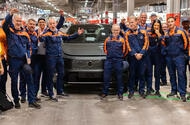
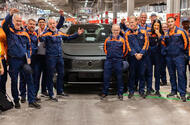
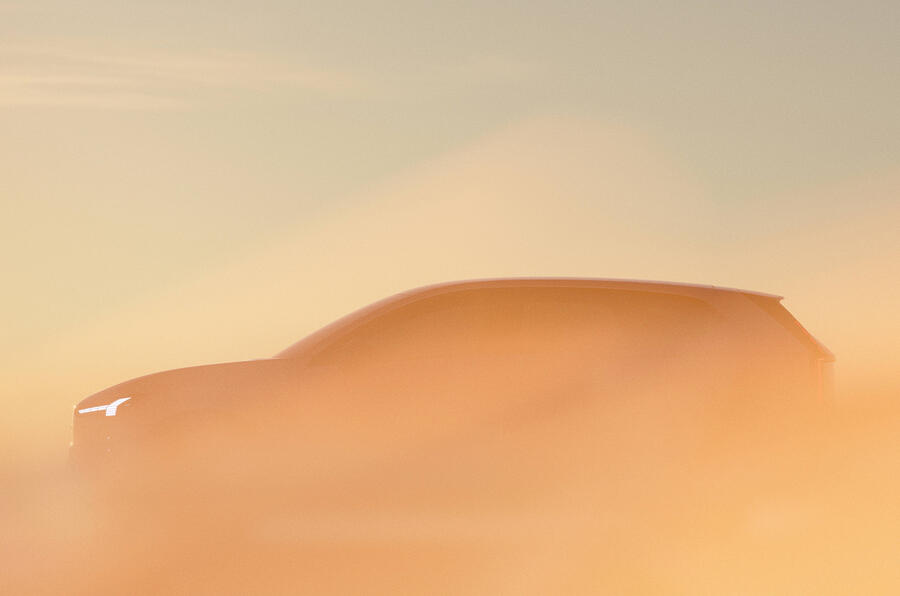
Tucked behind a group of workers at the Torslanda plant in Gothenburg, where it will be produced, it appears to have a low bonnet line and a smoother, more aerodynamic design than its combustion-engined counterpart, the XC60.
Narrow front headlights featuring Volvo's 'Thor's Hammer' design, similar to those on the EX90 large SUV, can also be seen.
Samuelsson said the car has been "designed and developed in Gothenburg" and "can't get much more Swedish".
Volvo confirmed that the EX60 will be its first car to use the firm's "latest technology base", adding that it will "deliver a longer electric range than any Volvo car before it". It is set to beat the Volvo ES90 saloon, which is expected to offer an official WLTP range of 435 miles using a 106kWh battery.
The new technology base that the EX60 will use is Volvo's advanced, highly scalable SPA3 platform, which is effectively a successor to the platform that underpins the EX90 and ES90. This new architecture will allow Volvo to add both smaller and larger cars to its line-up, and can accommodate a wide range of battery sizes.
As with those models, the EX60 will be designed around an advanced software stack, giving it the capability to accept over-the-air updates and extra features.
Anders Bell, Volvo's engineering and technology chief, called the SPA3 platform "100% electric and 100% Volvo Cars", rather than a shared Geely group platform, such as the SEA platform used for the EX30 crossover.
"Because it's 100% electric, we've been able to remove all the old constraints of the combustion engine," said Bell. "We very much took a first-principles approach to it. You will see the highest level of supremely well-integrated technology coming together in these products."
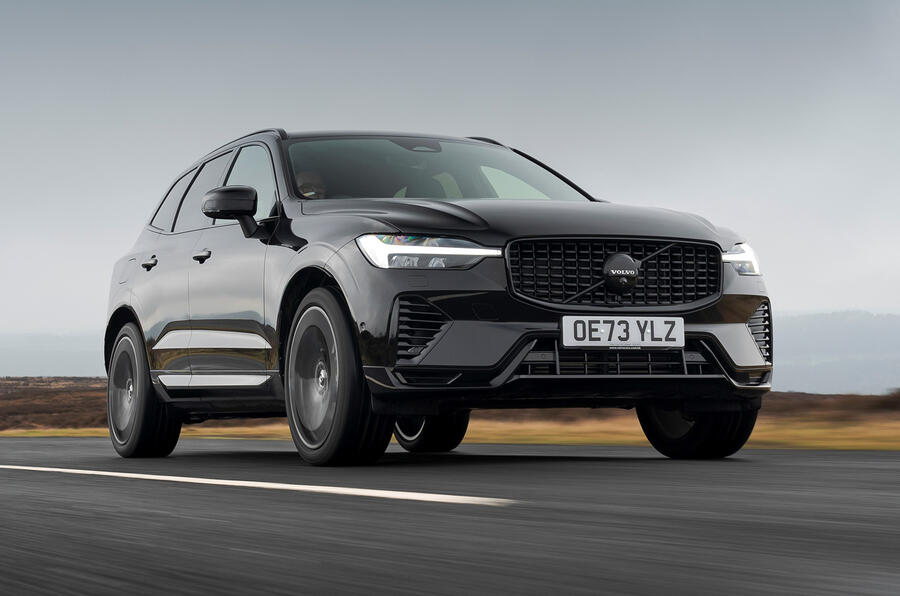
The EX60 is likely to broadly match the dimensions of the XC60 (pictured below), the brand's best-selling car.
Bell said the SPA3 is “a big step from a mechanical perspective, but from a software electronics perspective it's a straight evolution”.
He added: “All the work we're putting into the EX90 will go directly into the SPA3 cars as well. It's basically the same software stack.
"SPA3 is designed from the beginning to be much more scalable, in size and price point and across regions, but also scalable in volume.
"It's designed for scale in every dimension: when it comes to size, my job is to make sure that the company has optionality. We are designing [the SPA3] to be scalable from B to F [segments], to make sure that we have flexibility and that we can launch the products that markets decide they want when they want it.”
Since all future new Volvo models will share the same basic tech stack, Bell added that it will allow for more focused and rapid development. “Because it’s all one technology stack, there's no repeat of work,” he said. “It's the same software stack, same basic electrical architecture. Yes, it's scalable in size, price and capabilities, but it's not spreading our products in different ecosystems.
“Everything we do gets married to the Volvo connected car cloud. If you look at successful tech companies, they're all single tech stack companies where all their products are interlinked. Apple is a good example: hardware, software, telephones, laptops – they’re basically all interconnected with the same software. That’s one example of where we need to be converging as a technology company going forward.
"Our focal point is safety, sustainability and creating this fantastic customer experience, all wrapped in this Scandinavian design, on one tech stack."
As previously revealed by Autocar, the EX60 will also be the first Volvo designed to benefit from megacasting – a technology set to be introduced with the SPA3 that allows for entire sections of a car to be created as a single part rather than multiple elements.
That, along with other changes and the more modular nature of the SPA3, will lower production costs.
When it arrives, Volvo's EV line-up in Europe will consist of the EX30, EC40, EX40, EX60, ES90 and EX90, with the addition of the EM90 MPV in China.
Genesis EV Plans Unveiled New High Performance Models Promise Over 1000 HP and Impressive...
Renault Clio launches UK exclusive campaign inspired by iconic Papa and Nicole ads
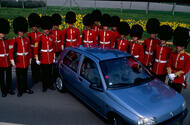
Renault Clio adverts were once talked about like TV shows in the UK"Clio could be English": supermini has a special place in UK culture and needs its own campaign here
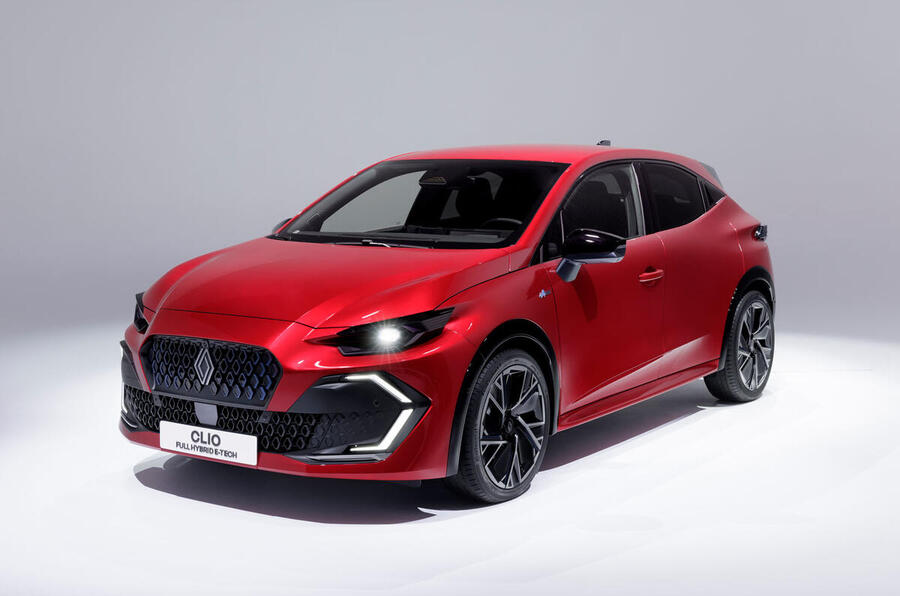
Renault will launch a UK-specific marketing campaign for the new sixth-generation Clio in a landmark break from the established convention of global advertising – channelling the spirit of one of the best-known car ads of all time.
The company will look to replicate the success of Papa and Nicole, the fictional father and daughter it created for advertising the first-generation Clio in the UK during the 1990s.
Ranked by various surveys as the most popular car adverts ever aired in Britain, the Papa and Nicole sequences played a significant role in driving the huge commercial success of the original Clio – and changed the face of automotive marketing.
In 1998, an estimated 23 million people watched the final instalment of the campaign – which gained comparable status to a long-running TV series in its own right – wherein Nicole left her would-be groom (played by comedian Vic Reeves) at the altar and drove off into the sunset with her new partner (Bob Mortimer) in the then-new Mk2 Renault Clio.
The brand has not confirmed whether Nicole and Papa themselves will return to the screens to advertise the new sixth-generation Clio, revealed last week at the Munich motor show, but marketing boss Arnaud Belloni told Autocar that the campaign will leverage the unique cultural status of Renault in the UK.
“Renault has a very specific story in the UK," he said. "Renault has always been good in the UK when it was not trying to behave like a French brand. I studied in London when Renault was not very good… Renault was a nobody brand when I was here in the early 1980s.
“But after Clio, and Papa and Nicole, and the French players for Arsenal and Manchester United – Thierry [Henry], [Eric] Cantona and all those guys – it changed completely.
“Renault was good in the UK when it was playing the pop culture. Papa and Nicole, Va Va Voom, Thierry Henry - these were the good times," he said, referencing the legendary Arsenal striker's early noughties stint as a Clio ambassador.
Traditionally, car makers tend to create one universal campaign for a given model and adapt it to suit different regions with bespoke voiceovers and subtitles - and indeed Belloni said that is Renault’s standard policy - but the Clio needs a unique treatment.
"There is only one car for which I've said, since day one, I will do a specific movie for in the UK - and it's the Clio, because of Papa and Nicole. That's the only one. Otherwise, we cannot afford it any more.
"When I entered Renault five years ago, I discovered that for the launch of the Mk5 Clio, there were basically 10 campaigns over the world - and most of them were completely crap, by the way.
"It cost Renault a fortune for no results, so when I came, I made just one, and the one was good. But I do think that Renault has the maturity to accept one exception - for Clio."
He said the Clio has “a cachet, a legacy” in the UK that merits a bespoke style of messaging and communication and he went so far as to suggest: “Clio is part of Britpop culture - Clio could be English, by the way. If we had a factory in the UK, it could have been enormous."
Belloni said he will begin working on the campaign with Renault's UK leadership team in early 2026 in preparation for the Clio's market launch around a year later.
Right-hand-drive versions of the supermini are subject to an extensive delay as a result of earlier uncertainty around the UK’s zero-emission vehicle mandate framework, which had threatened the firm’s ability to sell the petrol-powered Clio here at all.
Mazda CX-30 Adds Stylish Aire Editions and Tech Upgrades for 2026
BMW alternatives that deliver classic driving feel in a modern sedan

Software Defined Vehicle Promises Reliable Performance with In House BMW Innovation
 Manufacturer has developed the software stack for its next-generation models entirely independently
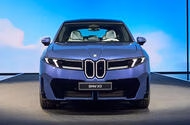
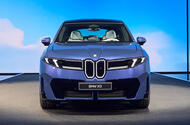
BMW has pledged that its first software-defined vehicle, the new BMW iX3, won’t suffer from the software issues that have hampered rival firms.
The electric SUV, revealed at the recent Munich motor show, sits on a new EV platform and features a new computing architecture built around four ‘supercomputer’ chips that run all of the vehicle's key functions.
BMW has developed the entire software stack for the system in-house.
While rivals such as Volvo and the Volkswagen Group have struggled with their efforts to develop software-defined vehicles, BMW’s Neue Klasse chief, Mike Reichelt, is confident his firm will avoid bugs and issues.
“For us it was really important [to develop the software stack in-house],” said Reichelt. “It’s like the transformation from the combustion engine to electric mobility: the biggest step is when you reach this change in the middle of the company.
“Every engineer at BMW is dealing with this new technology. Every function in the car has a hardware part and a software part, so we speak about function and owner and not about the hardware side or software side.
"Every engineer has to go into the digital world; that’s the transformation.
“For me, it’s a failure when you believe you can take digital development outside the company or to another part of the company and the rest makes cars like it has for the last 20 years. So we changed it.
"For example, in our Driving Experience department, half of the engineers work in electrics or electronics, and it’s a little bit more every month.”
Bentley Flying Spur Ombre Paint Option Blends Luxury and Artistry for a Stunning $68000...