Volkswagen Touareg returns as an electric SUV with new tech and a bold future


Ford EV demand drops in Europe while Nissan faces EV shortages in Japan


Renault 4 Van Expands Electric Range With Practical Cargo Upgrade
 Retro electric crossover swaps rear seats for a load tray; priced from equivalent of £25k
The new Renault 4 EV has gained a new cargo van variant, swapping its rear seats for a plastic load tray and lashing hooks.
The removal of the rear seats gives the converted crossover a cargo capacity of 1045 litres, while its maximum payload is rated at 345kg.
A mesh bulkhead is offered as an optional extra and, depending on the market in which the van is sold, it also comes with functions to prevent the rear doors and windows from opening; an anti-slip mat for the load bay; or a privacy cover for the load bay.
Unlike many commercial variants of cars, such as the Skoda Enyaq Cargo, the rear windows aren't tinted for privacy as standard.
The 4 Van has yet to be confirmed for the UK but is currently under evaluation for sales here.
In its native France, prices start from €29,300 – equivalent to £25,000, excluding VAT.
That nets the entry-level powertrain that isn’t offered in UK-market versions of the four-seat 4. Pairing a 118bhp front-mounted motor with a 40kWh battery, it yields 191 miles of range and can be charged from 15-80% in 30 minutes.
The 4 Van can also be had with a more potent 148bhp motor and 52kWh battery, boosting range to 254 miles. This has a higher peak charging rate of 100kW compared with the smaller pack’s 80kW but still takes 30 minutes to charge from 15-80%.
The conversion is performed by Renault’s in-house customisation service, Qstomize, at the Maubeuge plant in France where the 4 is produced.

Porsche Cayenne Electric Slashes Development Time with Virtual Testing and AI Innovation


Renault Megane E-Tech Leads Hot Hatch Revival With Performance Makeover

Autocar image shows what the "hot" new Megane could look likeRefresh is part of effort to revive hatch after sales began to dive earlier this year
Renault is poised to launch a range-topping performance version of the Megane E-Tech next year as part of a radical styling makeover that will reposition the EV as a hot hatch.
The move is motivated by a desire to revive the Megane E-Tech’s appeal and reverse a sharp fall in sales of the car over the past 18 months.
Speaking at the Munich motor show, Renault brand CEO Fabrice Cambolive confirmed the Megane E-Tech will be repositioned as “a hot hatch or a hot car”, adding: “That’s the direction we want to go in.”
He also told reporters that Renault is exploring the viability of a new performance model and will show the “first proposals” within 12 months.
While he declined to give further details, the two are expected to be linked.
The brand’s last true dedicated sporting model was the fourth-generation Megane RS hot hatch, which went out of production in 2023 with the 296bhp Ultime run-out special.
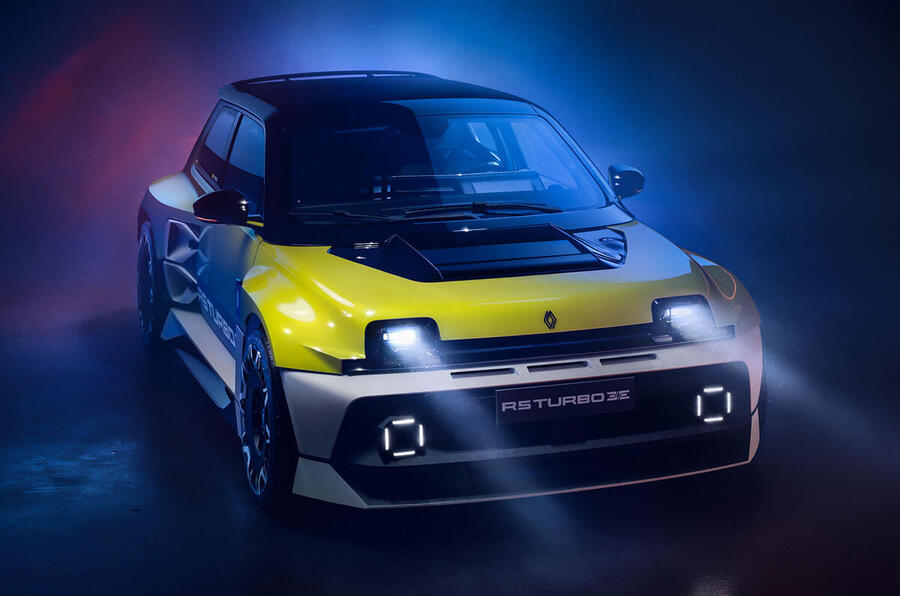
Renault has begun experimenting with sportier models again recently, bringing to market the exclusive, £140,000 5 Turbo 3E – a 533bhp hyper-hatch designed to show what a Renault performance EV is capable of.
The new top-rung Megane E-Tech model isn’t expected to receive such a lofty power output, but a more feasible option is apparent from its Ampr Medium platform-mates.
Of those, the new Alpine A390’s bespoke 464bhp tri-motor powertrain isn’t likely to be transferred to the Megane E-Tech, but the Nissan Ariya Nismo’s 429bhp dual-motor set-up could be in play. The current Megane E-Tech is offered exclusively with a single electric motor and a topend output of 215bhp.
It is not yet known if the new range-topping Megane E-Tech will take the Renaultsport name.
Cambolive hinted that the Renault Group could decide to continue using the Alpine brand exclusively for dedicated sports cars.
Previously, in February, the Renault Group’s then CEO, Luca de Meo, described Renaultsport to Autocar as being “in the fridge” and said that while “everything sporty would be building on Alpine”, that “doesn’t mean that sometimes this thing wouldn’t be revived”.
On the viability of the Megane E-Tech rangetopper potentially spawning a series of new performance cars, Cambolive said “we have to find the right balance” between cost and demand before any approval is given.
To that end, Renault Clio product line manager Emmanuel de Jesus Pequeno recently told Autocar that a hot version of the new sixth-generation supermini is not currently on the cards. This is because of the “compromise” between the level of investment required to transform it into a hot hatch and the level of expected demand.
A refresh of the Megane E-Tech has been a big focus for Renault, said bosses. The model was launched in 2022 as one of Renault’s first new-age electric cars.
Following its initial success, the Megane E-Tech has subsequently been challenged by a growing number of newer rivals, some of which are delivering more for less than the hatch’s £32,495 asking price. As a result, sales have fallen sharply – down 67% (to 10,082) in Europe for the fi rst half of 2025 compared with the year before.
Speaking about the Megane E-Tech’s 2026 refresh, Cambolive said it will get a larger battery. This is likely to be the 91kWh pack used in the Ariya Nismo and Scenic. In the hot Nissan, the battery offers up to 310 miles of range.
Autocar understands the facelift will bring a new grille, new daytime-running lights and a lower, wider stance, although Renault Group design boss Laurens van den Acker would not be drawn into specifics.
On the need to refresh the hatch, van den Acker admitted: “We need to sell more of it.” He added: “If you put a new battery in the car, which is very expensive, and you don’t change the car, then it’s really hard to seduce people to pay more for it.
“So we needed to justify the change underneath the skin by showing something on the skin. And then we thought that what the world was missing was kind of a hot-looking EV. And so we thought we had nothing to lose, so we’ll just push that.”

Porsche 911 Slantnose Returns With 600 HP and Bold Modern Makeover

JLR Cyber Attack Halts Land Rover Production and Threatens Jobs Worldwide
 No new Land Rover cars have been produced since 1 September cyber attack; issues affecting JLR globally
JLR car production will not restart until 24 September at the earliest, the company has confirmed.
The Jaguar and Land Rover maker was targeted by hackers on 1 September and is still in the process of rebuilding its computer systems. The group that hit Marks & Spencer earlier this year has claimed responsibility.
This has led to production shutdowns at all of JLR's global plants, has created issues with parts ordering and has stifled retailers.
The effect could be costing JLR up to £5 million a day, business economics professor David Bailey told Autocar last week.
Wednesday's news is the first time since the attack that any timescale for a fix has been announced.
A statement read: “Today (Tuesday 16th September) we have informed colleagues, suppliers and partners that we have extended the current pause in our production until Wednesday 24 September.
“We have taken this decision as our forensic investigation of the cyber incident continues, and as we consider the different stages of the controlled restart of our global operations, which will take time.
“We are very sorry for the continued disruption this incident is causing and we will continue to update as the investigation progresses.”
Since the cyber attack, the majority of JLR’s employees have been off work.
It's understood that JLR bosses will meet with ministers today to discuss support measures for its plant workers – which is expected to involve a furlough scheme, similar to that used during the Covid pandemic. This would involve the government subsidising workers' pay while unable to work.
It is thought suppliers will be supported too, as worries are now growing that some could go bankrupt.
Reports over the weekend claimed that some of the firm's suppliers could go bust as a result of the shutdowns.
Former Aston Martin CEO Andy Palmer told the BBC: “I would not be at all surprised to see bankruptcies.”
Palmer added that many suppliers will soon begin to slim their staff count as a result of the shutdown, saying: “You hold back in the first week or so of a shutdown; you bear those losses. But then you go into the second week, more information becomes available – then you cut hard. So layoffs are either already happening or are being planned."
One of those making the call for a furlough scheme is Commons Business and Trade Committee chairman Liam Byrne.
The Labour MP said: "What began in some online systems is now rippling through the supply chain, threatening a cashflow crunch that could turn a short-term shock into long-term harm. We cannot afford to see a cornerstone of our advanced manufacturing base weakened by events beyond its control."
The general secretary of trade union Unite, Sharon Graham, has also called for a furlough scheme.
“Thousands of these workers in JLR's supply chain now find their jobs are under an immediate threat because of the cyber attack," she said. "Ministers need to act fast and introduce a furlough scheme to ensure that vital jobs and skills are not lost while JLR and its supply chain get back on track."
JLR hack: what happened?
Autocar first reported issues affecting JLR on 1 September, when dealers couldn't register new cars on 'new plate day' , traditionally one of the year's busiest for registrations.
In an effort to combat the hack, JLR began “shutting down our systems” on 2 September.
It's still in the process of rebuilding them and is unabel to confirm a timescale for the fix.
The hack has left the Jaguar and Land Rover maker crippled. No cars have been produced globally since, leading to millions of pounds of lost income.
The extent of the issues meant JLR brought in police and cybersecurity experts in to “restart our global applications in a controlled and safe manner”.
During this process, which included an investigation, it was discovered that "some data" was "affected", said JLR. Those affected will be contacts, said the firm.
It's not officially known what data was taken or if a ransom demand has been made, but it is thought it most likely involves customer data given the involvement of the police.
Who has claimed responsibility for JLR hack?
On 3 September, a group of hackers calling themselves Scattered Lapsus$ Hunters claimed responsibility for the attack on JLR.
This is the same group that hacked Marks & Spencer in May, causing the British retailer seven weeks of disruption and costing £300 million in lost operating profit.
It claimed to have obtained customer data after exploiting a similar flaw in JLR’s IT system. The claim was made on a Telegram messenger group, where a user linked to the hackers posted a screenshot of what appeared to show JLR's internal system.
A member of the group revealled that a well-known flaw in SAP Netweaver, third-party software used by JLR, was exploited to access the data.
The US's Cybersecurity and Infrastructure Security Agency warned about the flaw earlier this year. An update for the software was released, but whether JLR applied it is unknown.
It's also not known what data was taken or if a ransom demand has been made of JLR.

Car designs rediscovered in New York barn reveal origins of American automotive icons


Renault Megane E Tech Reinvents as Hot Hatch with Sporty Makeover and Power Boost

Autocar image shows what the "hot" new Megane could look likeRefresh is part of effort to revive hatch after sales began to dive earlier this year
Renault will launch a range-topping performance version of the Megane E-Tech next year as part of a radical styling makeover that will reposition the EV as a hot hatch.
The move is motivated by a desire to revive the Megane E-Tech’s appeal and reverse a sharp fall in sales of the car over the past 18 months.
Speaking at the Munich motor show, Renault brand CEO Fabrice Cambolive confirmed the Megane E-Tech will be repositioned as “a hot hatch or a hot car”, adding: “That’s the direction we want to go in.”
He also told reporters that Renault is exploring the viability of a new performance model and will show the “first proposals” within 12 months.
While he declined to give further details, the two are expected to be linked.
The brand’s last true dedicated sporting model was the fourth-generation Megane RS hot hatch, which went out of production in 2023 with the 296bhp Ultime run-out special.
Renault has begun experimenting with sportier models again recently, bringing to market the exclusive, £140,000 5 Turbo 3E – a 533bhp hyper-hatch designed to show what a Renault performance EV is capable of.
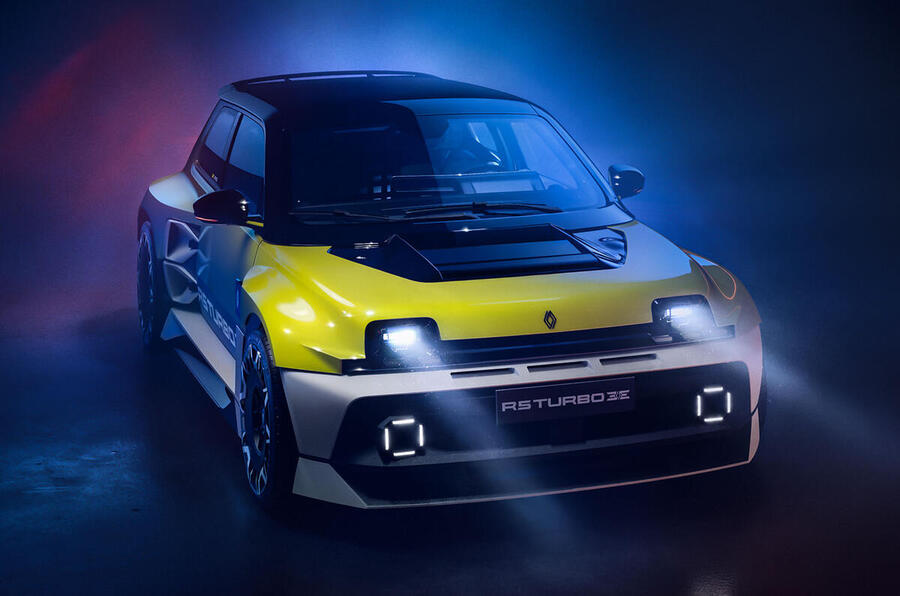
The new top-rung Megane E-Tech model isn’t expected to receive such a lofty power output, but a more feasible option is apparent from its Ampr Medium platform-mates.
Of those, the new Alpine A390’s bespoke 464bhp tri-motor powertrain isn’t likely to be transferred to the Megane E-Tech, but the Nissan Ariya Nismo’s 429bhp dual-motor set-up could be in play. The current Megane E-Tech is offered exclusively with a single electric motor and a topend output of 215bhp.
It is not yet known if the new range-topping Megane E-Tech will take the Renaultsport name.
Cambolive hinted that the Renault Group could decide to continue using the Alpine brand exclusively for dedicated sports cars.
Previously, in February, the Renault Group’s then CEO, Luca de Meo, described Renaultsport to Autocar as being “in the fridge” and said that while “everything sporty would be building on Alpine”, that “doesn’t mean that sometimes this thing wouldn’t be revived”.
On the viability of the Megane E-Tech rangetopper potentially spawning a series of new performance cars, Cambolive said “we have to find the right balance” between cost and demand before any approval is given.
To that end, Renault Clio product line manager Emmanuel de Jesus Pequeno recently told Autocar that a hot version of the new sixth-generation supermini is not currently on the cards. This is because of the “compromise” between the level of investment required to transform it into a hot hatch and the level of expected demand.
A refresh of the Megane E-Tech has been a big focus for Renault, said bosses. The model was launched in 2022 as one of Renault’s first new-age electric cars.
Following its initial success, the Megane E-Tech has subsequently been challenged by a growing number of newer rivals, some of which are delivering more for less than the hatch’s £32,495 asking price. As a result, sales have fallen sharply – down 67% (to 10,082) in Europe for the fi rst half of 2025 compared with the year before.
Speaking about the Megane E-Tech’s 2026 refresh, Cambolive said it will get a larger battery. This is likely to be the 91kWh pack used in the Ariya Nismo and Scenic. In the hot Nissan, the battery offers up to 310 miles of range.
Autocar understands the facelift will bring a new grille, new daytime-running lights and a lower, wider stance, although Renault Group design boss Laurens van den Acker would not be drawn into specifics.
On the need to refresh the hatch, van den Acker admitted: “We need to sell more of it.” He added: “If you put a new battery in the car, which is very expensive, and you don’t change the car, then it’s really hard to seduce people to pay more for it.
“So we needed to justify the change underneath the skin by showing something on the skin. And then we thought that what the world was missing was kind of a hot-looking EV. And so we thought we had nothing to lose, so we’ll just push that.”
BMW Neue Klasse design ditches giant grilles for a sleeker, retro-inspired look