
Munich Motor Show 2025 Ignites Europe’s Fierce Battle Against China’s Automotive Surge
Opel-Vauxhall was one of a wave of European 'legacy' brands with a point to proveAt Europe's biggest motor show in years, locals defend against China's surge of bold designs and even bolder strategies
To a person, the early arrivals look busy and happy to arrive at an event billed all year as the greatest European motor exhibition for a decade, maybe longer.
In the massive Munich motor show entrance hall, veteran attendees talk about enjoying again the very smell of a genuine motor show.
Not that this Munich event is like static shows of old. Sure, it’s based in a classically huge, six-hall exhibition centre, but in other locations across the city there have already been extravagant unveilings and displays, many involving dynamic demonstrations and lots of test driving, and there will be even more throughout the week.
Munich motor show 2025: all the best new cars
If you seek affirmation that car culture and a car industry still matters to at least one leading nation in Europe, here it is. However, you only need to take a few steps inside – and begin to eyeball the huge and fast-changing display screens that are everywhere – to realise that this show is far from being an old-time carefree chance to feast your eyes on the latest in mobility.
This is a car industry battleground. It's the place where a renewed European industry – mostly German, because of where we are – will show how it will use a slew of improved and rethought models to defend its stake in its home car market against a tidal wave of Chinese rivals, every one of them driven by a slowdown in their own home sales to seek customers across Europe.
Annual car making capacity in China today is 50 million, a helpful Chinese market expert tells me, but the home market can only accept 28 million. There are thus 22 million extremely well-priced Chinese cars per year seeking foreign homes, despite both the EU and US tariff uncertainties.
This fact has special implications for the UK car market, currently just about the easiest and most accepting of the lot for an importer to enter.
The seriousness of the challenge to Europe is laid bare by the extreme changes, particularly in tone of voice, of major players.
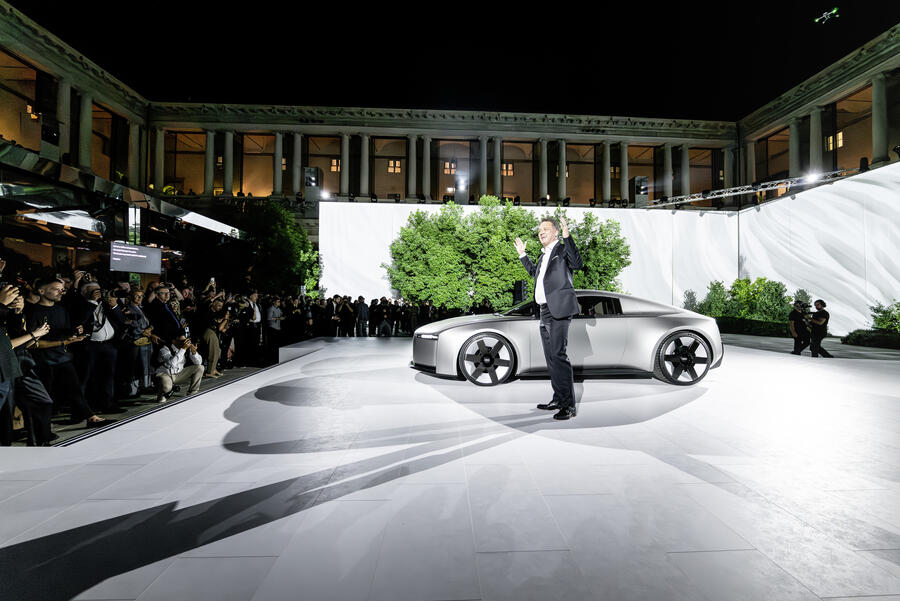
Audi has already revealed its superb 'TT' coupé concept – reminiscent in my eye of the Jaguar Type 00, in which its design chief Massimo Frascella was also heavily involved. Audi, says Frascella, aims to begin a new design era. He has already candidly told assembled hacks that the four-rings marque “lost its way” for a while and needs a bold, simple, new design direction. This is it.
BMW uses Munich to reveal its own hottest harbinger of change, the new iX3 EV, first production model from the much-discussed Neue Klasse family that will eventually to amount to 40 different cars. The aim is to greatly improve both the customer appeal and the economics of the Munich company’s whole car-making business.
The iX3 looks good – a little more like the outgoing model than some might have wished (one of the penalties of designing SUVs) and somewhat bigger than expected. Perhaps the first Neue Klasse saloon – previewed at the show and confirmed to take the i3 name – will be even better, we all agree.
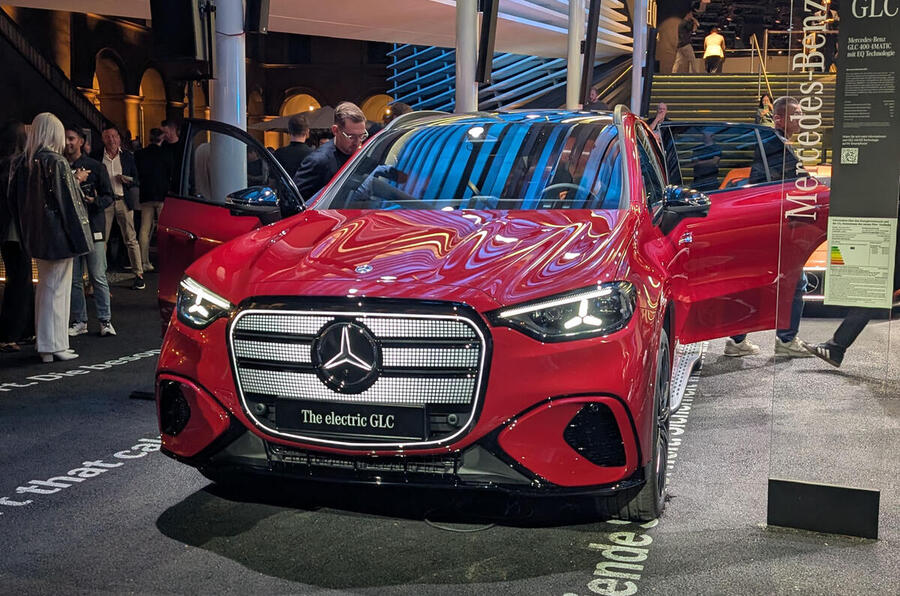
Mercedes-Benz has plenty to offer too. Its big 'WELCOME HOME' slogan is on screens and hoardings everywhere and is doubtless meant to sound comforting - and to encourage those who know the brand values to embrace them again. To my ear, there’s a strikingly un-Mercedes lack of confidence about it. 'Please come back', they’re saying; 'you left us and now we really need you.' I'm not sure desperation sells. It's a million miles from 'Engineered Like No Other Car' back in the day.
Volkswagen is also in full change mode, but part of that change is backward. There’s lots of talk about the new, enticing range of small EV models building a 'true Volkswagen' line-up. All the talk is about realigning the range with Volkswagen's core values. There’s a bit of desperation there too – 'remember the good old days?' – but it works because it’s understandable. Small EVs have an appeal and a logic to the many of us numbed in recent years by successions of big saloons and endless identical SUVs with 500bhp-plus, as if such outputs were important to most car buyers.
But again, this isn’t a simple celebration of Volkswagen's capabilities and a chance to appreciate its view of the future. It’s a grim-faced circling of the wagons to meet a looming threat – from China. Many other displaying brands show the same mindset.
There are actually more Chinese manufacturers displaying at this Munich show than European ones, although you wouldn’t know it. Even well-known Oriental marques, established in Europe, are scattered to remote locations across the six-hall array, smothered by dozens of stands occupied by decent-enough component suppliers likely to be of little interest to the thousands of punters due here later in the week. Finding the likes of Changan, Xiaomi and Aito – all of which have new cars to show – is like being at an airport and being forced to walk through endless duty-free shops on your way to the departure gate.
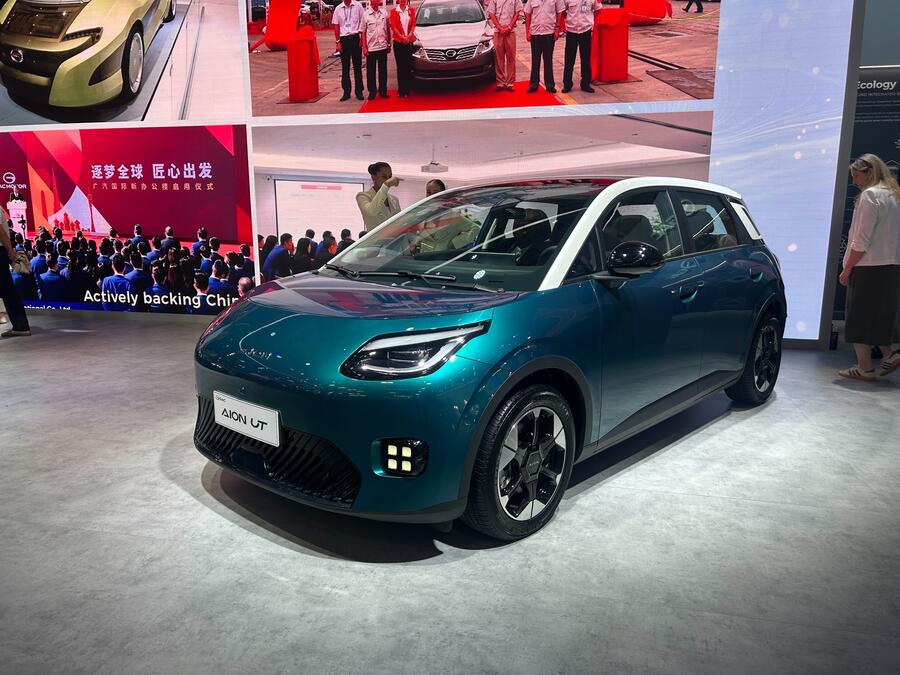
Along the way, I learn that the initials of Aito – one of at least five car marques backed by the gigantic, controversial Huawei technology conglomerate – stand for 'Adding Intelligence To Auto'. This information comes one of many nice, open-faced, young Chinese brand ambassadors who intercept me as I wander past. They all seem keen to talk and happy to be at Europe’s greatest motor show. Not one, as far as I can judge, is interested in the overthrow of Western civilisation…
The Europe-versus-China thing is on everyone’s mind in Munich, yet it can’t be pitched as a battle. As all parties admit, the new Chinese arrivals employ copious numbers of Europeans to import, register, sell and service their products - surely a positive. And from the product appeal point of view, you can hardly expect a financially pressed European car consumer to feel guilty about buying the best-value car they can find, whatever its origin.
The focus of many discussions therefore was on what the European authorities, muleishly intent on implementing climate neutrality standards that pose an existential threat to the whole European car industry, can do to improve the situation.
The words 'sense of urgency' come up every time legislators were mentioned – not least by new Renault Group boss François Provost, who makes clear his belief that the European strategy on climate neutrality is wrong and that “technology neutrality with a push toward electric” is the way that will work.
One Munich feature, different from motor shows past, is its overall quietness. No loud displays; no bands or dance acts; even the ceiling-high video presentations are muted. “This place is a bit like electric cars themselves,” says one cynic. “No noise, no vibe.”
Yet such a dismissal of Munich’s mighty event – with its many associated city mobility festivals – would be a gross misinterpretation of what really happened.
Wonderful designs with new eye-appeal are everywhere. Huge improvements in the practical appeal of European cars have been prepared for whizzbang unveilings in these epoch-making days of early September 2025, likely to be remembered for many years. The excellence – and in many cases the anonymity – of the latest Chinese offerings is also laid bare.
Now the battle for the soul of the European car industry will begin in earnest.
Luxury Car Interiors Face Off as Mercedes Critiques Audi and BMW’s Bold New Designs
Volvo CEO Foresees Challenges and a Future Shaped by Chinese Automotive Innovation
Skoda Unveils Vision 7S Electric SUV Flagship With Seven Seats and Bold New Design...
 Production version of Vision 7S concept is confirmed for 2026; could push brand into new price bracket
The production version of the Skoda Vision 7S seven-seater will arrive next year as the firm’s new electric flagship, with chiefs claiming it can play a key role in further strengthening the brand.
The new EV will sit above the Elroq, Enyaq and forthcoming Epiq in the Czech firm’s growing bespoke EV line-up and has been described by CEO Klaus Zellmer as Skoda’s new flagship.
The concept version of the Vision 7S was shown in 2022, introducing Skoda's new ‘Modern Solid’ design language, which has since been applied elsewhere.
The production version, which like the Eloq and Enyaq will use the Volkswagen Group’s MEB platform, is tipped to stick close to the concept’s styling.
Skoda sales boss Martin Jahn told Autocar that the new seven-seat EV would be “our new highlight”, adding: “There are not too many seven-seaters in the in the BEV arena, so we believe it will be a really important car: beautiful from the outside, very practical from the inside.
"It’s also an extension of the brand. We put a lot of effort into strengthening the brand, and this car will also help us to do that.”
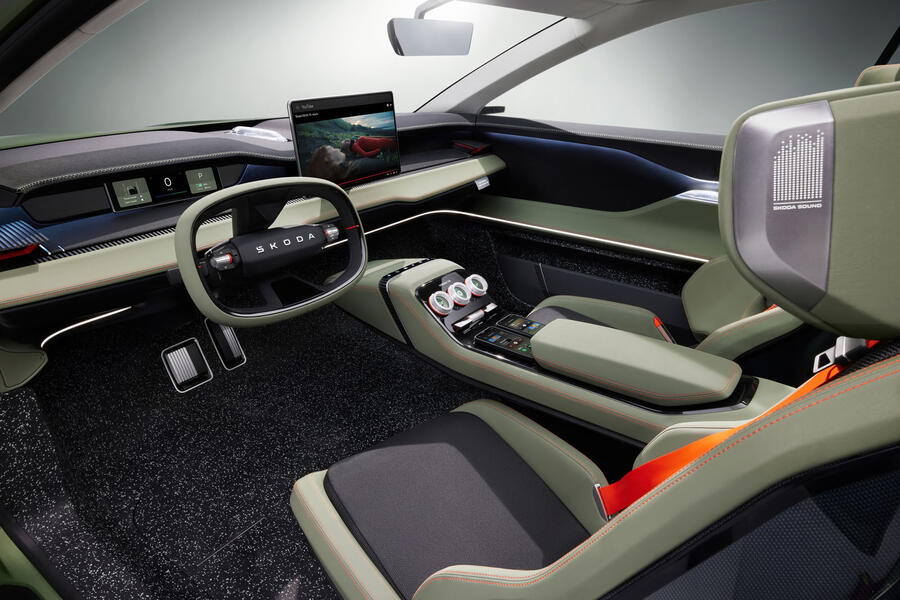
Jahn refused to discuss an aspirational target price for the new model but acknowledged that it will sit above the Enyaq (which is priced from £39,010), potentially pushing Skoda into an entirely new price bracket.
But he said: “Skoda is always based on value for money. We are not the cheapest car in the segment, but when you buy our cars, you get better value for money than when you buy a car for the same money from another brand. Value for money is important for us, but [with this car it will be on] a different level than before.”
Billionaire Auto Heir Swaps Boardroom for Community Service After Tax Dispute Settlement
Tariffs Backfire as Companies Rethink American Manufacturing
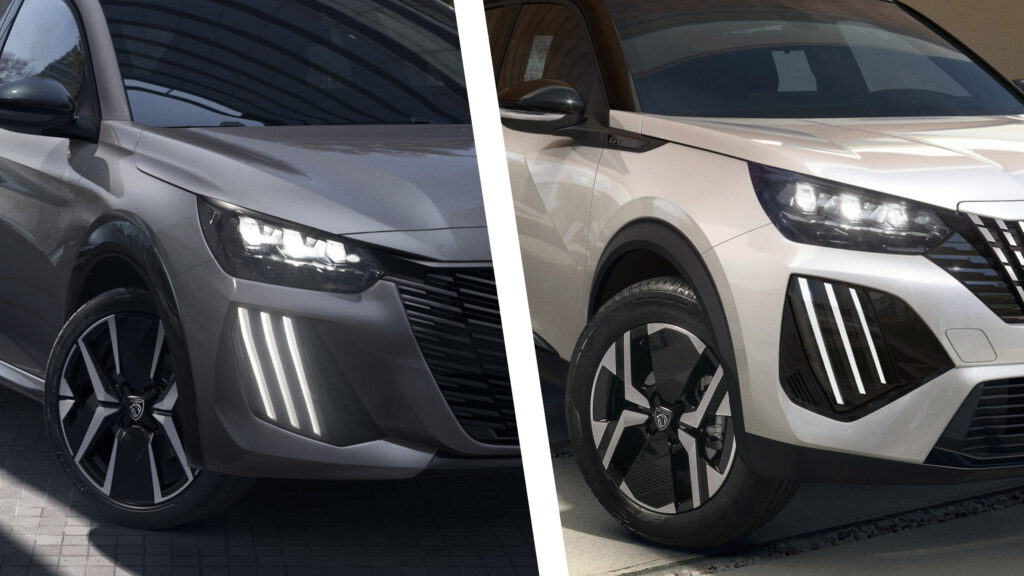
Peugeot Unveils Hybrid 208 and 2008 GTs in Brazil with Flex-Fuel Power and Bold...
Mercedes EQS Prototype Sets New Benchmark with 749 Mile Solid State Battery Drive Without...
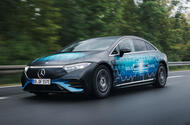 Prototype fitted with breakthrough battery tech drives from Stuttgart to Malmö without recharging
A Mercedes-Benz EQS fitted with a prototype solid-state battery has been driven 749 miles without stopping to recharge, marking a milestone in the development of the technology.
Mercedes engineers drove the modified saloon from the firm’s home town of Stuttgart, Germany, to Malmö, Sweden. It claims to have finished the trip with 85 miles of range left in reserve.
Although the route between the two cities would typically measure around 630 miles in length, the engineers plotted an alternate course accounting for the landscape and traffic conditions, while avoiding ferry crossings. That extended the drive by more than 100 miles.
The car’s solid-state battery uses cells from US firm Factorial Energy while the pack was designed in collaboration with Mercedes’ F1 base in Brixworth, Northamptonshire. Its weight and footprint are said to be “comparable” to a standard EQS’s lithium-ion pack – which yields up to 481 miles of range – but its energy capacity is said to be improved by 25%.
The battery pack uses a floating cell case with pneumatic actuators that help to manage the expansion and contraction of the cells in operation, to improve their stability and longevity.
Mercedes had previously expected the new pack to improve the car’s range to around 620 miles.
Chief technology officer Markus Schäfer hailed the technology as a “gamechanger”, saying the successful test drive shows how it can deliver “a new level of range and comfort”.
Schäfer added that Mercedes is aiming to bring solid-state batteries – which have long been considered a major breakthrough for electric cars, but which have faced decades of delays – to market this decade.
That matches the timeline quoted by the rival Volkswagen Group, which has unveiled its solid-state prototype at the Munich motor show. Rather than testing the technology in cars, however, it has opted to use a motorbike built by Audi-owned brand Ducati.
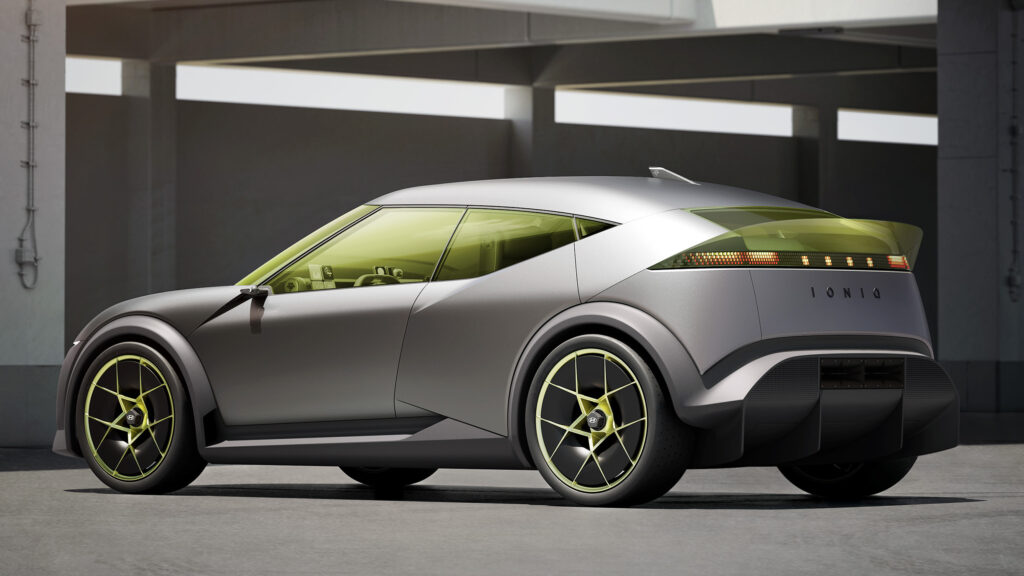
Hyundai Unveils Striking Concept Three EV to Challenge Electric Hatchbacks
Renault Teases Return to Performance Roots with New Sports Car Proposals on the Horizon
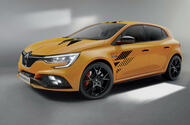 As the £140k Renault Turbo 3E nears production, Renault is "exploring some other" potential sports cars
Renault is exploring the viability of new performance models – and it will show “first proposals” within the next year, its CEO has said.
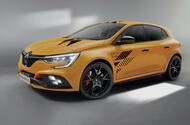
Its last true dedicated sporting model was the fourth-generation Mégane RS hot hatch, which went out of production in 2023 with the 296bhp Ultime run-out special.
Renault has been experimenting again with sportier models recently, bringing to market the highly limited £140,000 5 Turbo 3E – a 533bhp hyper hatch that was created as a statement of intent for what a Renault performance EV is capable of.
Asked if the brand would consider launching anything more volume-focused and affordable in the sporting segment, boss Fabrice Cambolive told Autocar at the Munich motor show: “Yes, we are exploring some others. We will come to you with some proposals in the next 12 months."
On the viability of such a car or series of cars, Cambolive said that “we have to find the right balance” between cost and demand before approval will be given.
To that end, Renault Clio product line manager Emmanuel de Jesus Pequeno recently told Autocar that a hot version of the new sixth-generation supermini is not currently on the cards. This is because of the "compromise" between the level of investment required to transform it into a hot hatch and the level of demand anticipated.
Renault would most likely be required to redevelop the previous Mk4 Clio RS's 1.6-litre turbocharged four-cylinder engine or the Alpine A110's punchier 1.8 to meet future emissions regulations, which could prove prohibitvely costly.
Although the new "proposals" could resurrect the Renaultsport moniker, Cambolive hinted that the Renault Group could decide to continue using the Alpine brand exclusively for dedicated sports cars.
In February, then CEO Luca de Meo described Renaultsport to Autocar as being “in the fridge” and said that while “everything sporty would be building on Alpine”, that “doesn't mean that sometimes this thing wouldn’t be revived”.
Furthering his point, de Meo said: “I’ve been asked why the new 3E Turbo is not an Alpine, and I said ‘sorry, because the 5 Turbo was never an Alpine, it was a Renault, and if you want to do something authentic, you gotta respect the history of the thing'.”