

Norway’s Electric Surge: Tesla Sales Skyrocket While Others Decline

Ford F-150 Lightning Recall: A Loose Nut Could Mean Trouble on the Road
Charger Unleashed: The Power Behind the Wheel Without the Full Force
Top Gear’s Producer Faces Six-Month Driving Ban for Speeding Violation
McLaren Unveils 750S Le Mans Edition: A Tribute to Racing Glory
 Makeover includes high-downforce kit and five-spoke wheels referencing original LM of 30 years ago
McLaren has commemorated the 30th anniversary of its maiden victory at the 24 Hours of Le Mans with a special-edition 750S channelling the legendary F1 GTR.
The centrepiece is a new aerodynamic package developed by McLaren Special Operations (MSO), comprising a larger carbonfibre splitter, a larger active rear spoiler and a new body-coloured panel under the spoiler.
The tweaks are said to result in 10% more downforce being generated than on the standard 750S.
The 750S Le Mans also gains a roof scoop, five-spoke wheels and a choice of Le Mans Grey or McLaren Orange paint finishes, the former referencing the No59 F1 GTR that took victory in 1995.
Inside, the supercar is upholstered with black Alcantara and leather, with contrasting Alcantara elements finished in grey or McLaren Orange.
It also gets Le Mans branding on the head rests and floormats, and there's a commemorative plaque on the centre console.
A further track record plaque, detailing the Le Mans success, can be fitted in the front boot as an optional extra.
Just 50 examples will be built. McLaren has yet to disclose a price, but it's likely to represent a significant premium over the £252,650 asked for the regular 750S.
McLaren will again vie for Le Mans glory again in 2025, with two examples of the previous 720S supercar competing in the GT3 class.
In 2027, the British brand will for the first time enter the top class of sports car racing, shooting for overall Le Mans glory.
GM’s Strategic Shift in Korea: What It Means for the Future
Unleashing Power: The Bentley Bentayga Speed Redefines Luxury SUV Performance
 Updated performance model can outdrag an Aston Martin DB12, and packs a new drift mode
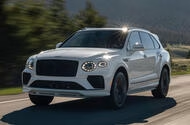
The new Bentley Bentayga Speed has been unwrapped as the brand’s quickest SUV yet, beating its predecessor to 62mph by half a second and going on to 193mph.
It swaps the previous Bentayga Speed’s 6.0-litre W12, now retired, for a twinturbocharged 4.0-litre V8 that puts out 641bhp and 627lb ft – a gain of 15bhp and a loss of only 37lb ft.
The smaller powerplant also plays a significant role in cutting the Speed’s kerb weight by 42kg to 2466kg.
Helped along by a new launch control function, the super-SUV is now capable of completing the 0-62mph dash in 3.4sec, beating the 3.9sec and 4.5sec sprint times of the old Speed and the V8-engined S.
The extra power also boosts the Bentayga’s top speed by 3mph.
In addition to its enhanced pace, the Speed gets reworked drive modes, including a Sport mode that increases the dampers’ stiffness by 15% and slackens off the stability control to “permit exhilarating drift angles”.
Meanwhile, rear-wheel steering aids manoeuvrability at lower speeds and boosts stability when pressing on.
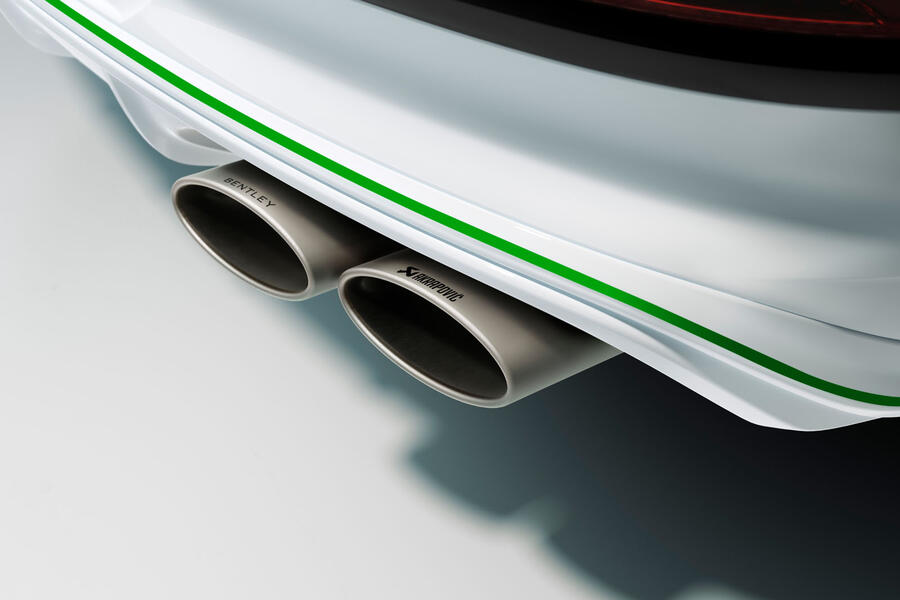
A sports exhaust system is fitted as standard, but there is an optional Akrapovic-supplied titanium system with four tailpipes, said to unleash the “drama and potency” of the new powerplant.
The new super-Bentayga is differentiated visually from other variants by the Speed badges on its fl anks, as well as a choice of bespoke 22in or 23in wheel designs.
The larger of those two is offered as an optional extra with the addition of carbon-ceramic discs.
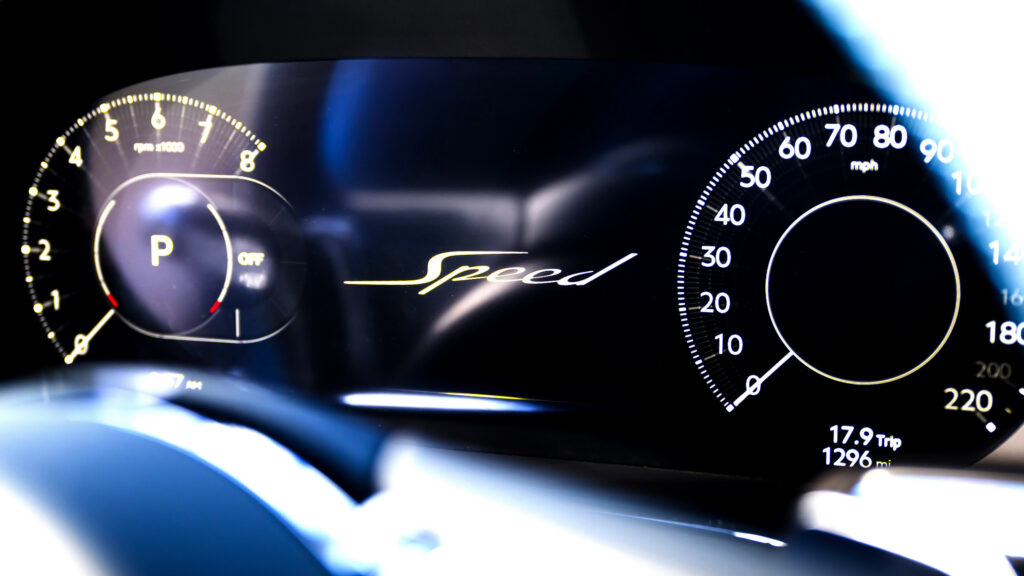
Inside, the Speed gets a different layout on its digital instrument screen, as well as Speed badging on the passenger side of the dashboard and the treadplates, plus matching embroidery on the seats.
Prices start at £219,000, positioning the Speed between the S (£201,500) and the more opulent Mulliner EWB (£259,300).
Its closest rivals include the V8 Range Rover Sport SV (£169k), the V8 plug-in hybrid Lamborghini Urus SE (£208k) and Aston Martin’s V8 DBX S (£210k).

Unraveling the SUV Mystery: Key Differences Between SUVs, Crossovers, and Hatchbacks
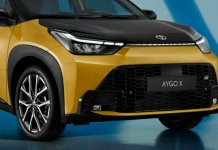
Revamped and Electrified: The 2025 Toyota Aygo X Unleashes Hybrid Power and Sporty Style
Conquering the Hills: The Enduring Challenge of the Land’s End Trial
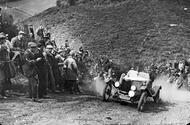
The Land's End trial includes famous hills like Beggars Roost which has been used since 1922The infamous trial has been part if the trials calendar since 1908 and is one of the toughest events of the year
For classic trials regulars, Spring means it’s time to dust off the competition car and head down to Cornwall for the Land’s End Trial.
Originally the London to Land’s End Reliability Trial, this 24-hour motorsport event challenges some 300 competitors and their vehicles across more than 200 miles and up 20 hills.
The aim? To win a gold medal by reaching every summit.
It’s one of three classic trials run by Britain’s oldest motorsport club, the MCC, along with the Exeter Trial in January and the Edinburgh Trial in September (actually held in the Peak District, confusingly).
Autocar reported on the Land’s End Trial from the first running in 1908 but didn’t follow the event from start to finish until 1921.
There was controversy before that particular trial even began, when the MCC introduced a rule that cars with no more than 12hp had to complete the infamously steep Porlock Hill in Somerset at an average speed not below 18mph.
Enjoy full access to the complete Autocar archive at the magazineshop.com
Such was the clamour around the new rule that many headed to the steep climb beforehand to see if this was even possible. “In [our] opinion, the MCC have framed a regulation which is certainly needlessly severe and may possibly prove dangerous,” we said.
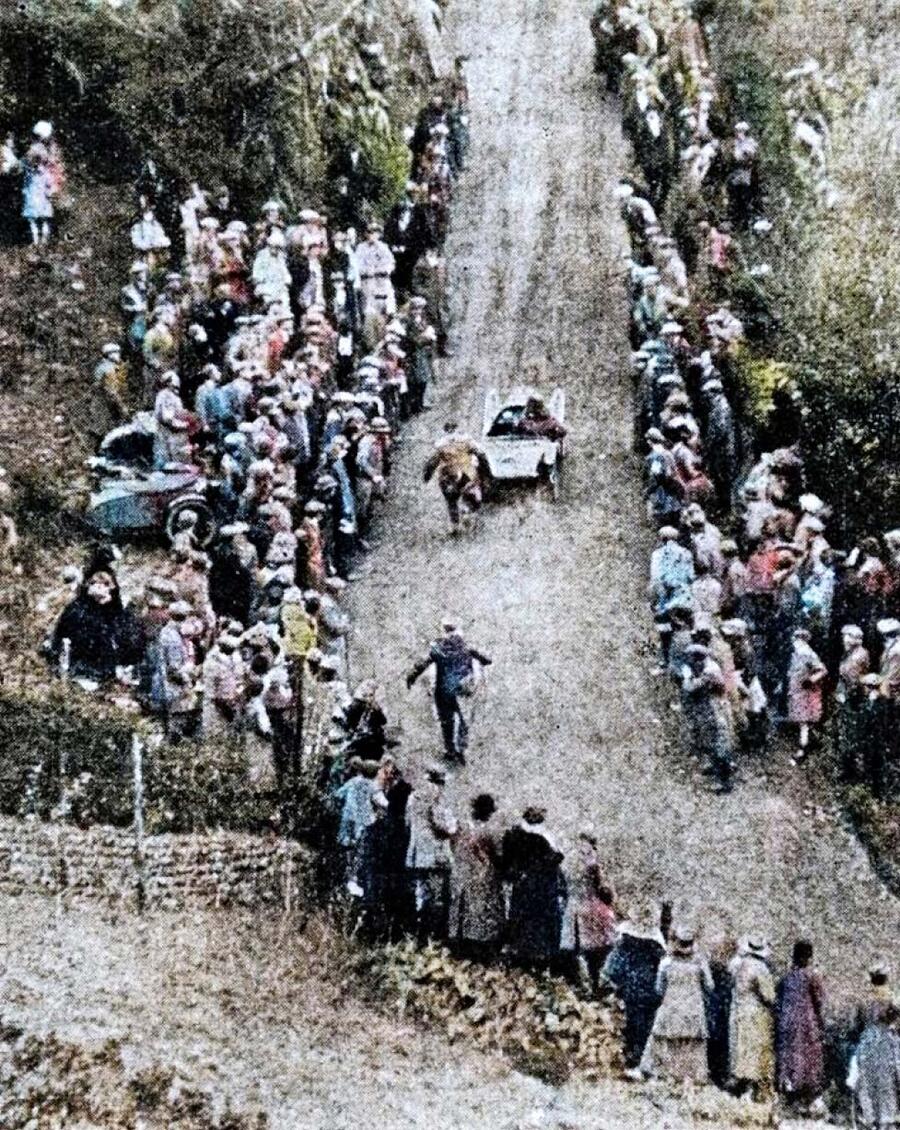
Our coverage brought a rush of entries: “The Autocar first drew attention to the difficulty of the trial and more entries had to be dealt with, a testimony to the sporting spirit of the British small car owner.”
Fifty-eight cars (Rovers, Morrises, Rileys, ACs, various obscurities) of the 64 entered lined up at Cranford Bridge (today close to Heathrow airport) to set off from half past midnight.
One local resident reacted to the large group of “weirdly clad” men hanging around in the dark by “retiring to her cottage in haste to bolt and bar the door”!
The competitors had to not only cover 314 miles on narrow, usually dirt roads using feeble headlights but also brave challenging weather, with “many devoutly wishing they had carried at least one more coat”.
Proceeding through the night, they had to endure an ice-cold mist and could barely see the road ahead.
“There can be no doubt that Porlock proves one of the most exacting portions of the trial and on this occasion provided some interesting and exciting results,” we said of the following hill.
Plenty of competitors cleared it, 26 of them at or above the required average speed of 18mph, despite its intimidating gradient and sharp hairpin bends – even a large saloon with six aboard.
An even more challenging climb lay ahead: Lynton Hill. Here drivers had to average at least a strenuous 19.4mph, and it certainly delivered on the entertainment front.
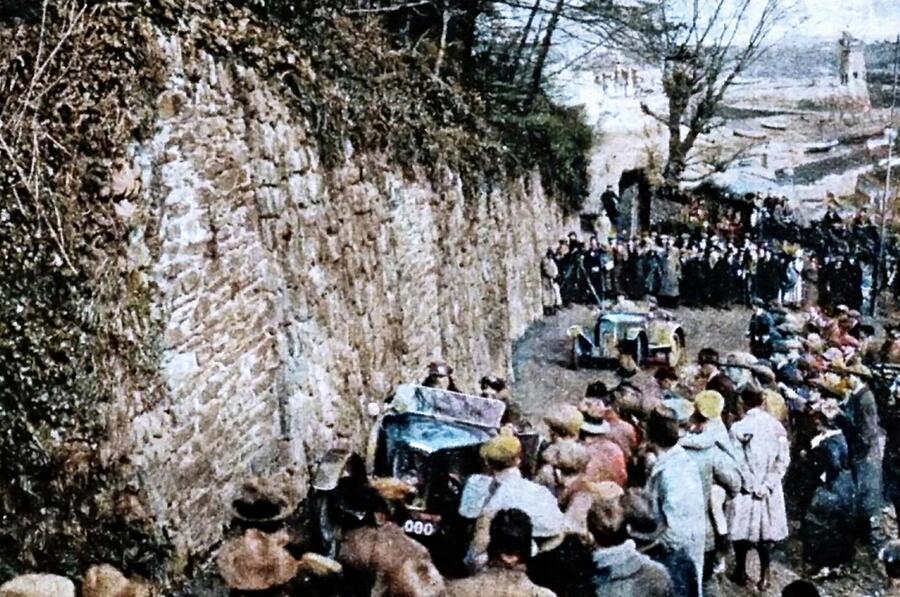
“Tired drivers and mud-spattered cars were eagerly awaited by a considerable crowd which lined the sides,” we said. “The surface was in a very treacherous condition due to rain overnight, and many sidecars had failed due to a lack of adhesion from their single wheels.”
Indeed, many competitors floundered, but there were several impressive performances too, like that by VG Lloyd, who “astounded everyone with his speed” in his two-cylinder Carden.
Notably, Lionel Martin “romped up the hill” in his new production Aston Martin (he had co-founded the company in 1913 to build hillclimb specials; Aston was a course in Buckinghamshire).
Several had to shed passengers to reach the top, while others fouled the hill by hitting the wall at the hairpin. Some even managed to clear it while avoiding a comrade’s stricken car. One did it on a flat tyre.
From there on to Land’s End, there was little to really concern the drivers.
Forty-two made it to the finish – and we were surprised to see among them HJG Smith’s 10hp Eric-Campbell (a small firm that briefly made cars at the Handley Page aircraft factory in London), as he had broken a tie rod on Porlock so effectively was steering with one wheel. He won a gold medal along with 22 other worthy competitors.
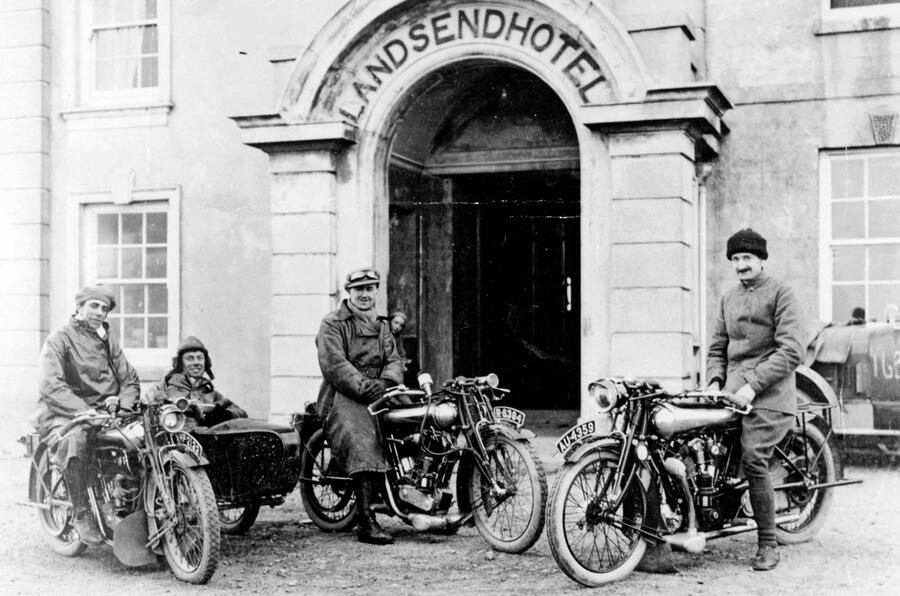
We concluded: “The general consensus of opinion was that a better trial had never been, or one to which more merit was attached to a reward, while, as to sport, no man could wish for better.”
Since then, more notoriously difficult sections have been added, most famously Beggars Roost (in 1922) and Blue Hills (in 1936), and the Land’s End Trial continues to challenge the best trials drivers and cars.
Long may it continue.