Audi Unveils Striking TT-Inspired Sports Car Concept Heralding Bold New Design Era
 First look at Audi's retro new design manifesto, set for public debut at Munich motor show
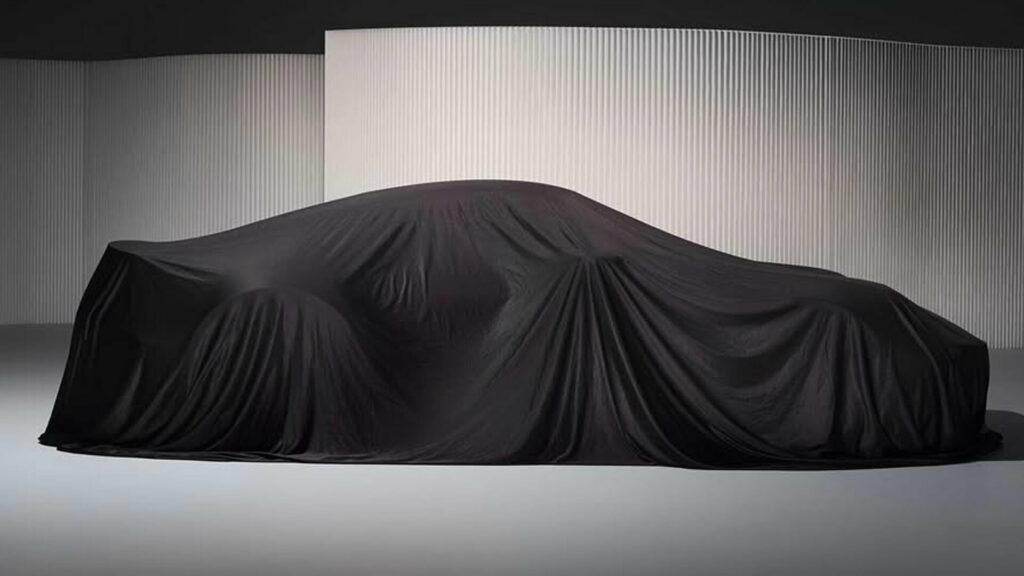
Audi will reveal a radical new sports car concept inspired by the TT later today - but a leaked image has given an early look at what to expect.
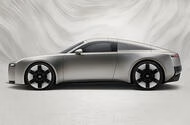
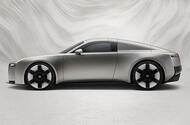
Posted to Audi's Canadian social media feeds and quickly taken down, the image shows a side profile of a sleek, low-slung sports coupé that is unmistakably influenced by the seminal TT.
It's unclear what type of powertrain it uses, but the concept has obvious mid-engined-style proportions and a two-seat cabin.
An official disclaimer says the car shown is a concept vehicle that is "not available as a production vehicle", but the design looks far more production ready than some recent outlandish concepts, so there is potential for a production version.
Indeed, Audi CEO Gernot Döllner has previously said the company would not "show studies any more", suggesting it plans to launch a production version of every show car it unveils from now on.
More details will be given tomorrow evening, when Audi officially unwraps the new concept - as confirmed on social media by its designer Massimo Frascella, under the tagline 'strive for clarity' - which hints that the concept will set the tone for a new minimalist design language that could be rolled out across Audi's line-up under Frascella's stewardship.
As previously reported by Autocar, the concept will preview an all-new look for the German manufacturer.
Döllner previously said that the design would be “a bold step for the brand” and that it would “would look to the future and the strengths of Audi design, for clarity and to bring that to the future, not copying the past”.
This is a sentiment that has been echoed in a new video posted to Audi’s social media channels.
The clip states “the legends of yesterday are the blueprint for tomorrow” with the strapline “strive for clarity” while showing images of the TT, the 1991 Avus concept and several Auto Union grand prix cars from the 1930s.
“The absolutely fantastic aspect is that it seems that he [Frascella] somehow had Audi in his mind for his whole career," said Döllner. "Now is the time to let Audi out of the mind of Massimo Frascella."
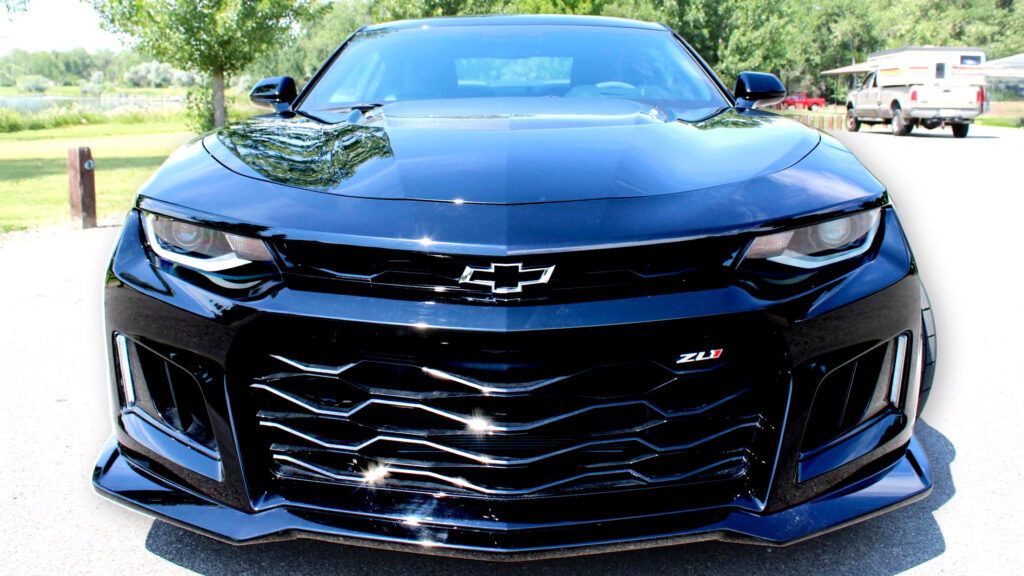
Low-Mileage Camaro ZL1 Stuns Auction With Near-Showroom Condition and Big Price Tag
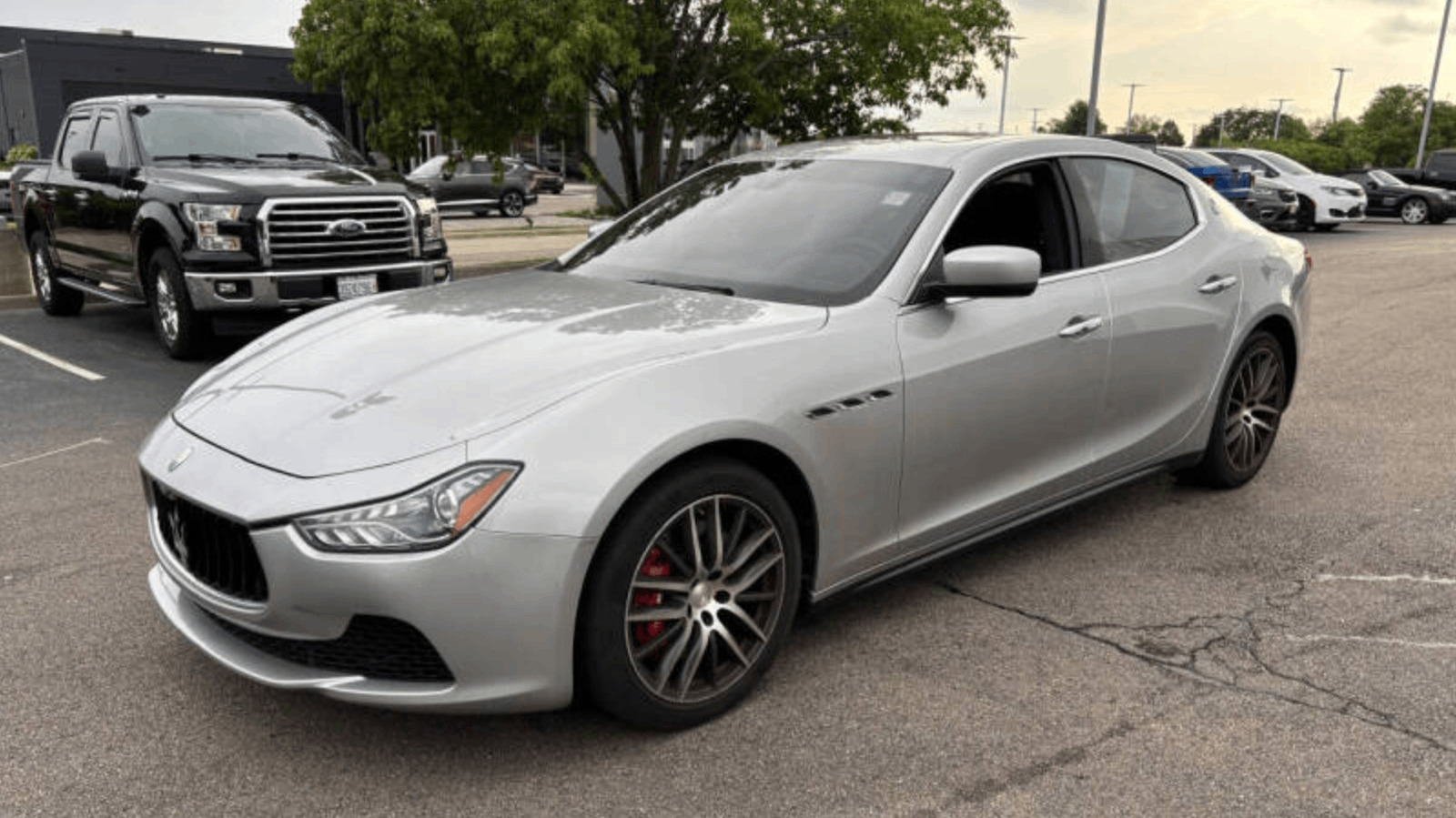
Should You Take the Plunge on This $9,650 Maserati Ghibli?

Why Car Makers Are Replacing Carbon Fiber With Sustainable Flax Composites
 Manufacturers like BMW will use flax-fibre parts on upcoming production models
After using a sustainable, natural-fibre composite in motorsport for a number of years, BMW has announced it will be using the flax-based material, developed by Swiss firm Bcomp, on future production models. In testing, the material has proved suitable for a range of uses, including visible A-surface finishes on the interior and exterior.
Several years of R&D have found that composites made from renewable materials are not only able to create attractive surface finishes, but they can also be used for structural components.
An example is the roof panel in next-gen cars, where renewable fibre composites can reduce CO2 equivalent by 40% during production, and it gives end-of-life benefits.
BMW’s venture capital arm, I Ventures, holds a stake in Bcomp, which was founded in 2011 to make high-performance skis using flax fibres, and Bcomp became an official BMW Motorsport partner in 2022. Its woven fabric Amplitex is made from European flax fibres, sourced from the plant of the same name.
Weaves can vary for different uses and visual effects, and it comes either as fabric or impregnated with thermoplastic resin (prepreg). Structural panels can be reinforced with ‘Powerribs’, a grid-like mesh also made from flax fibres and bonded to the mat.
BMW first used reinforcement parts made from the natural fibre material in its 2019 Formula E cars, followed by the M4 DTM as well as the M4 GT4, replacing carbonfibre-reinforced plastic (CRFP). The M4 GT4 was equipped with parts made from the new materials for the Nürburgring 24 Hours.
Bcomp says that depending on application, the ‘cradle to gate’ (extraction of raw materials to leaving the factory) CO2 footprint can be up to 85% lower compared with conventional composites. Some components can be 50% lighter and reduce the use of plastic by 70% – thermoplastic Powerribs can meet those weight- and plastic-reduction criteria for interior panels.
Bcomp is also working with a number of other car makers. Cupra is using its materials in seats, Kia has used it on the interior of the EV3 and EV4 concepts, Polestar in the Polestar 3, Volvo on the Concept Recharge and Porsche has used it in the 718 Cayman GT4 Clubsport for wings and doors.
Along with its announcement, BMW released images of prototype roof panels, a rear diffuser and cabin trim.
Elsewhere, Karuun, a material made from rattan by German firm Out for Space, was used by Nio in its Eve concept back in 2017. It was later used in production in the ET7 and EC7 as a trim material. Karuun Stripe, a rattan veneer, is used in Porsche’s Macan Electric for its Nature Tech Material interior trim options.
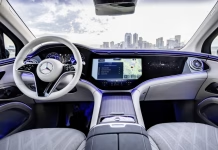
AI Car Tech: Which Features Drivers Love—and Which Still Frustrate

Near-Miss Shocker Reveals Urgent Need for Safer Skies


Leapmotor Unveils Affordable Electric Hatchback Promising 260 Mile Range and Bold Design for Young...
 Latest EV from Stellantis-backed Chinese manufacturer is set to offer 260 miles of range and 215bhp
Leapmotor has previewed its upcoming Volkswagen ID 3 rival ahead of a debut at the Munich motor show next week.
The Stellantis-backed Chinese brand published a series of shadowy teaser images to its Weibo account, giving a first look at the sub-£30k B05 electric hatchback that will join its European line-up early next year.
Known in China as the Lafa 5, the B05 is effectively a lower-slung and more affordable version of the Leapmotor B10 crossover (due here in the coming months) and will sit between that and the T03 city car.
Leapmotor vice-president Cao Li said the B05 is a "gift" for young people worldwide. "We want to build a dream car for young people who refuse to settle, conform or be ordinary," he added.
The B05 is expected to measure around 4.3 metres long, have a 67.1kWh battery giving 260 miles of range and be powered by a single motor on the front axle giving 215bhp.
These figures line it up neatly as a rival to versions of the popular ID 3, MG 4 EV, BYD Dolphin and Renault Megane.
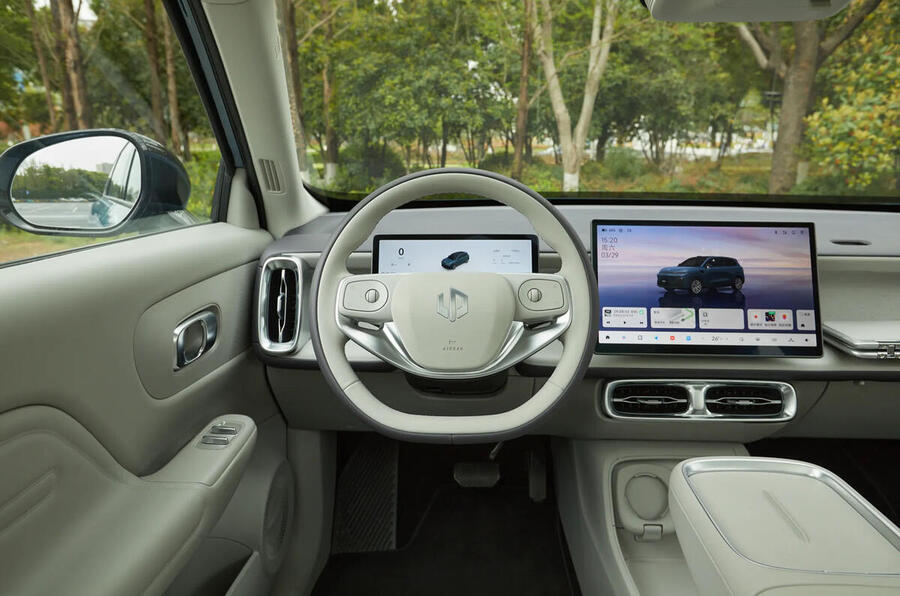
Inside, it is likely to look all but identical to the B10 (below), having a minimalist cockpit that majors on digital functionality - with a 14.6in touchscreen and 8.8in instrument display handling all the main infotainment and control functions.
The B05 will be the fourth of six Leapmotor cars that are planned to be on sale in the UK by 2027. It will be followed next year by the A10, a small crossover conceived as a rival for the Volkswagen ID 2X, and its hatchback sibling, the circa-£20k A05.
It remains unclear if Leapmotor will offer any of its new models with the range-extender powertrain that it has recently introduced to the C10 SUV, with bosses suggesting they will be gauging market reaction to the technology.
Leapmotor's range expansion comes off the back of rapid growth for the 10-year-old brand, both in its Chinese home market and internationally.
It now has nearly 1500 retail sites worldwide and was the 11th most popular EV brand globally last year.
It aims to move up to ninth this year, then to seventh in 2026, ultimately aiming to become one of the world's five top EV brands.
Mercedes Shifts Gears: EQE and EQE SUV to End as New E-Class EV Takes...
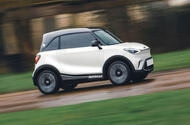
Smart Reveals All Electric City Car for 2026 Set to Be One of Europe’s...
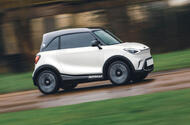 City car enters final stages of development; will be one of Europe's smallest electric cars
Smart has confirmed it will return to the city car segment with a successor to its signature model, the Fortwo, that is due to arrive late next year.
Smart CEO Dirk Adelmann last year confirmed that the project was in the works, pending a feasibility study. Following the “successful” launch of the #5 (the large electric SUV that forms the other bookend in the brand’s line-up), it has now become viable and has entered the final stages of its design and development.
It will be named #2, in reference to its ancestor and its two-seat configuration, but it will slot into Smart’s line-up below the #1 crossover, as its smallest and most affordable model.
The #2 will be designed by Mercedes-Benz and built in China, most likely at one of several plants owned by its 50:50 joint-venture partner Geely.
Technical specifications remain under wraps, but Smart has confi rmed it will be electric-only. Adelmann previously said the company was working on a new platform bespoke to the model but that the financial case for its development would hinge on finding a partner.
“The [city car] segment is not huge in Europe. The best year for [the] Fortwo was around 100,000 units, and that’s not enough to justify a platform,” Adelmann told Autocar. “If you share this platform with partners – we’re still in evaluation – then you can also share the investment costs and the production site etc, and it starts making sense.”
That the #2 has passed the feasibility stage suggests that Smart has indeed found a partner. But it is also possible that the brand has abandoned this in favour of an existing platform from the Mercedes or Geely portfolios.
The previous Fortwo EQ’s underpinnings are such an option, although one compromised by its origins in a combustion-engined model. Its 17.6kWh battery yielded a range of just 99 miles and it couldn’t charge on a DC connection, capping the rate at 22kW.
Neither figure would stand up to the competition now, but the seven years of battery development since that car’s launch surely have provided significant room for improvement.
Smart could also adapt Geely’s Panda Mini EV to meet the Fortwo brief. That car, sold in China, measures 3.0m long, has a 40bhp front-mounted motor and offers a range of up to 124 miles miles – for the equivalent of around £6000.
Visually, the #2 will do away with the curves of its Fortwo predecessors, favouring a more bluff, angular look. Teaser images published by Smart suggest it will have a Kamm tail-like rear end and a small roof spoiler, most likely to boost aerodynamics and extract the maximum range from the car’s small battery.

Porsche Teases Next-Gen 911 Turbo Hybrid With 700 HP Ahead of Munich Debut