Stolen Fire Truck Rampage Leaves Trail of Wrecked Cars in Washington Neighborhood

Clearmotion Unveils Breakthrough Active Suspension Bringing Luxury Ride Comfort to Everyday Cars
 Clearmotion's fully active suspension promises a generational leap in comfort – we get a first taste
US-based start-up Clearmotion has developed a fully active suspension system that could be fitted to almost any car – and it is set to appear in future Porsches.
Fully active suspension – where the car can control both the extension and compression strokes using an actuator or motor – has been the stuff of dreams for chassis engineers for a long time.
Whereas passive or semi-active suspension (adaptive dampers and/or air suspension) can only ever react to inputs from the road, an active system can effectively pull the wheel up for a bump and push it back down when the road dips, as well as compensate for body pitch and roll in order to keep the car’s body perfectly level. In this way, it can theoretically isolate occupants from what is going on underneath. It can also control the load on the four contact patches individually to improve roadholding without compromising the ride.
In a lineage that includes Citroën’s hydropneumatic suspension, Mercedes’ Active Body Control and the Ferrari Purosangue’s Multimatic set-up, active systems have always had compromises, such as cost, reliability, functionality or all of the above.
Porsche’s Active Ride is arguably the best seriesproduction system so far, but it is very expensive and power-hungry, which means it can only be fitted to cars with a high-voltage electrical system (plug-in hybrids and EVs).
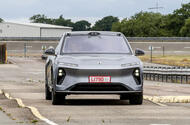
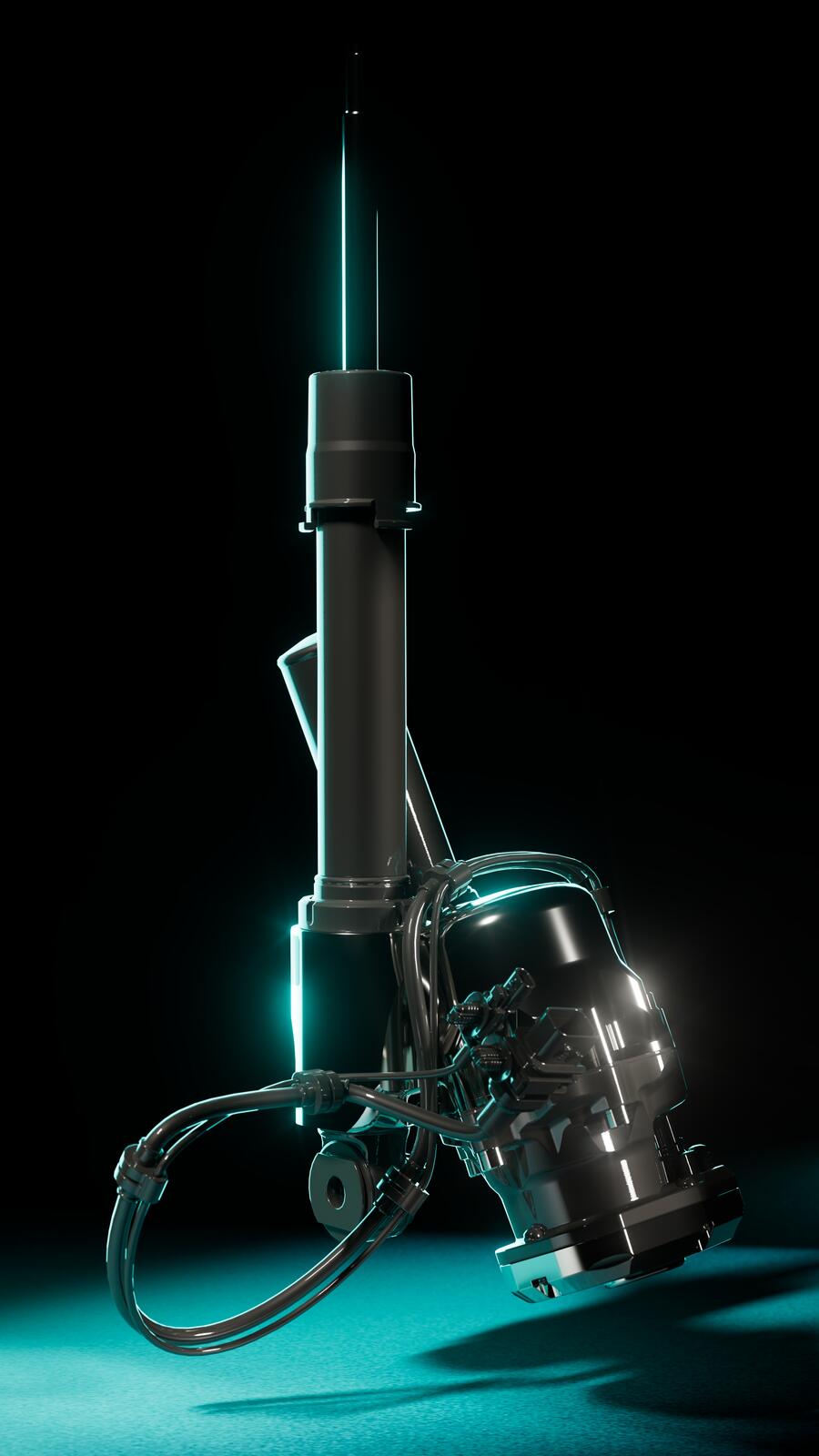
Clearmotion’s solution, as demonstrated on Chinese EV maker Nio’s ET9 flagship, looks remarkably similar to a normal combination of a spring (either air or coil, depending on the application) with a remote-reservoir damper. This compactness and relative simplicity allows it to be installed in many existing cars with minimal modification. It runs on 48V, but a converter allows 12V cars to use it too.
Clearmotion technical fellow Marco Giovanardi said: “We are a different kind of supplier from the ZFs of this world. We didn’t already have a mature product, so we couldn’t wait for someone to design a vehicle for us.”
Key to the system is a rotary electric motor with its own control unit, which powers a hydraulic pump that forces fluid in or out of the damper. There’s one for each corner of the car, rather than a central one, thus eliminating metres of pipework.
This all plugs into a central control unit, which uses data from the car’s various sensors to decide what each suspension corner unit should do. Clearmotion doesn’t use cameras because they are unreliable in less than perfect conditions, and lidar sensors are expensive and create too much data.
To add in a predictive element, Clearmotion is also developing Roadmotion, which builds up a detailed scan of road surfaces in the cloud by taking in the data from any number of cars. (Anything from the past 10 years with adaptive suspension will do.) This data can then be fed back to cars with active suspension to allow them to anticipate the road surface.
“That data portion of the business has a way bigger potential,” said CEO Christian Steinmann. For example, that data could allow autonomous vehicles to avoid potholes and other hazards.
As well as being fitted as standard on the Nio ET9, Clearmotion’s suspension will be used on future Porsches. Other OEMs are showing interest too.
With greater scale should come lower costs, said Steinmann: “So far, every application of active suspension has been in ultra-luxury vehicles or race cars. My objective is to get it into mid-size vehicles. We hope to accomplish this within this decade – in China probably by 2027.”
Is it as good as Porsche's Active Ride?

Autocar was invited to Clearmotion’s UK tech centre at the Horiba MIRA test track to experience its Nio ET9 demonstrator. In terms of hardware, it was exactly as you can buy it in China, although Clearmotion has tweaked the software to make it more to its own liking – and more suitable for UK roads.
The difficulty with such a system is that it is, by design, underwhelming. The aim is that you can’t feel the bumps. It’s only when I experience the same road in another car, or with the system turned off, that I realise that this B-road isn’t glass-smooth.
Turning the system on is quite spooky: every bit of pitch or head toss just vanishes. Adding on the Roadmotion somehow makes it even smoother. This is a more incremental change than the difference compared with normal air suspension, but it is easy to feel nonetheless.
Is it as good as Porsche’s system? Without a backto-back test, it’s hard to say. Equally, it’s clearly in the same ballpark, and in a different league from lesser systems.
That said, it’s not perfect. The active suspension is spectacular at erasing the big bumps but it can’t quite filter out the smaller ripples and asperities in the surface. On the one hand, this is perception: because the primary ride is so smooth, the secondary aspects are drawn into focus. On the other hand, the system doesn’t have the bandwidth to filter out such high-frequency inputs yet. The bushes could be made softer, but that would introduce latency as the actuators have to push through their deflection before getting to the job at hand.
Bentley’s Bold Leap: First All-Electric Luxury SUV Set for 2027 Debut
California Launches Paid Apprenticeship Program to Tackle Auto Technician Shortage

BMW Street Stunt Ends in Fiery Crash Right Before NYPD Eyes


NASA Employees Sound Alarm Over Risky Decisions Endangering Public Safety

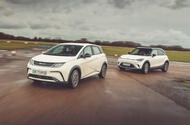
UK Electric Car Grant Set to Exclude Chinese and Asian EVs Under Tough New...
 Other EVs manufactured in Asian countries, such as in Korea or Japan, are also expected not to qualify
EVs manufactured in Asia, including in China, are expected to be excluded from new UK electric car purchase incentives once strict new criteria is applied, including penalising battery manufacturing in countries with carbon-intensive grids.
The Electric Car Grant is backed by £650 million of government funding and will knock up to £3750 off the price of a new EV.
The offer of funding is a win for the UK automotive industry following months of fierce lobbying to help ease some of the burden of having to hit the strict EV sales target imposed by the ZEV mandate.
However, the money will be hard to access. “The criteria for qualification looks quite tough,” former Nissan executive Andy Palmer told Autocar. “I’m in contact with several OEMs and they still don’t know which models will qualify”.
The basic criteria is easy to understand, such as the requirement that qualifying cars must be zero-emission and cost under £37,000 (although higher trim levels can exceed that figure and still qualify, providing that an entry model with the same battery starts below it).
Cars must also be offered with a battery warranty lasting for 100,000 miles or eight years, with an agreement to replace the pack if it falls below 70% capacity during that period.
However, the deciding factor that determines whether a car falls into the highest band-one category for the full £3750 grant or band two for £1500, or is excluded altogether, is based on its environmental score – and that’s where qualification process becomes opaque.
The score is based on the manufacturing location of not just the car but more importantly the battery cells. If the country of manufacture in question generates much of the power for its national grid from fossil fuels, then the car is denied a grant.
The cell source accounts for 70% of the environmental score, while vehicle assembly contributes just 30%.
The government has said that all cars are assessed equally and the environmental score element is to “incentivise more sustainable manufacturing practices”, but the underlying purpose is pretty clear.
“Let’s call a spade a spade, this is probably looking to penalise cars that are produced in China,” Tim Dexter, UK vehicles policy manager for green pressure group Transport & Environment, told Autocar.
At this stage car makers are gathering evidence to prove they qualify, so we don’t have a list of eligible cars yet. But the scheme is very similar to the one operated in France, and it can already be seen which cars there make the minimum environmental score and which don’t.
In France, no Chinese brands qualify for the government EV incentive, and neither do any electric cars built in China by western brands, such as the Mini Cooper E or Cupra Tavascan. Mini might be rueing the decision to postpone production of the electric version at Oxford.
It's not just China. No EV imported from Korea or Japan qualifies either. The French scheme takes into account distance travelled when totting up the environment score, which hurts the Asian manufacturers. The UK didn’t copy that element, but the promised hard look at the grid cleanliness will penalise China, Korea and Japan, all of which are more reliant on fossil fuels than Europe.
European Union manufacturing locations will be assessed based on grid carbon intensity per country, rather than as a whole.
This means that Polish-built EVs, such as the Jeep Avenger, or anyone using batteries from LG Chem’s vast plant there (the biggest battery factory in Europe) could be downgraded due to Poland’s coal-fired grid, which is rated the worst in Europe for emissions at 594g CO₂/kWh, according to the European Environmental Agency (EEA).
Other high-emitting countries in Europe include the Czech Republic, home to Skoda, at 361g CO₂/kWh, and Germany, at 320g CO₂/kWh.
French-built cars should be fine given the country's low-CO2 energy generation – the Renault 5 and 4 are built at Douai using batteries sourced nearby from Envision AESC.
Outside Europe, EVs from Turkey, including the forthcoming Hyundai Ioniq 2, could be on shaky ground due to the country's high grid emissions.
The forthcoming Nissan Leaf should also score well. The government has distanced itself from reports that the scheme was established to give Nissan a leg-up as it finally starts production of its new electric crossover in northern England, but it’s hard to see how the car won’t be an automatic band-one recipient of the full £3750.
The UK is better than the European average on grid intensity, with a rating in 2023 of 162g CO₂/kWh, and Nissan has the added advantage of sourcing batteries in Sunderland from Envision AESC.
Reinforcing the idea that banding will be more generous to UK-embedded companies is a section on the car makers’ application form that asks for 'UK presence – facilities and support' and 'UK opportunities'.
A further qualification hurdle is that car companies must be signed up to the Science Based Targets Initiative that monitors and approves CO2 reduction goals within that company. That immediately takes Tesla out of the running after the US company backed out of its commitments. Hyundai and Kia aren’t signed up either, according to the SBTi dashboard that lists all participating companies. Stellantis also isn’t listed, although its former iteration PSA Peugeot-Citroën is.
In short, the scheme will take a while to get going while car makers get their ducks lined up. Many won’t qualify at all, but if it persuades someone – for example, Mini – to shift electric car manufacturing to the UK, it could prove to be worth the money spent.
Scout Motors Pushes for Direct Car Sales, Challenging Dealer Laws and Sparking Industry Debate
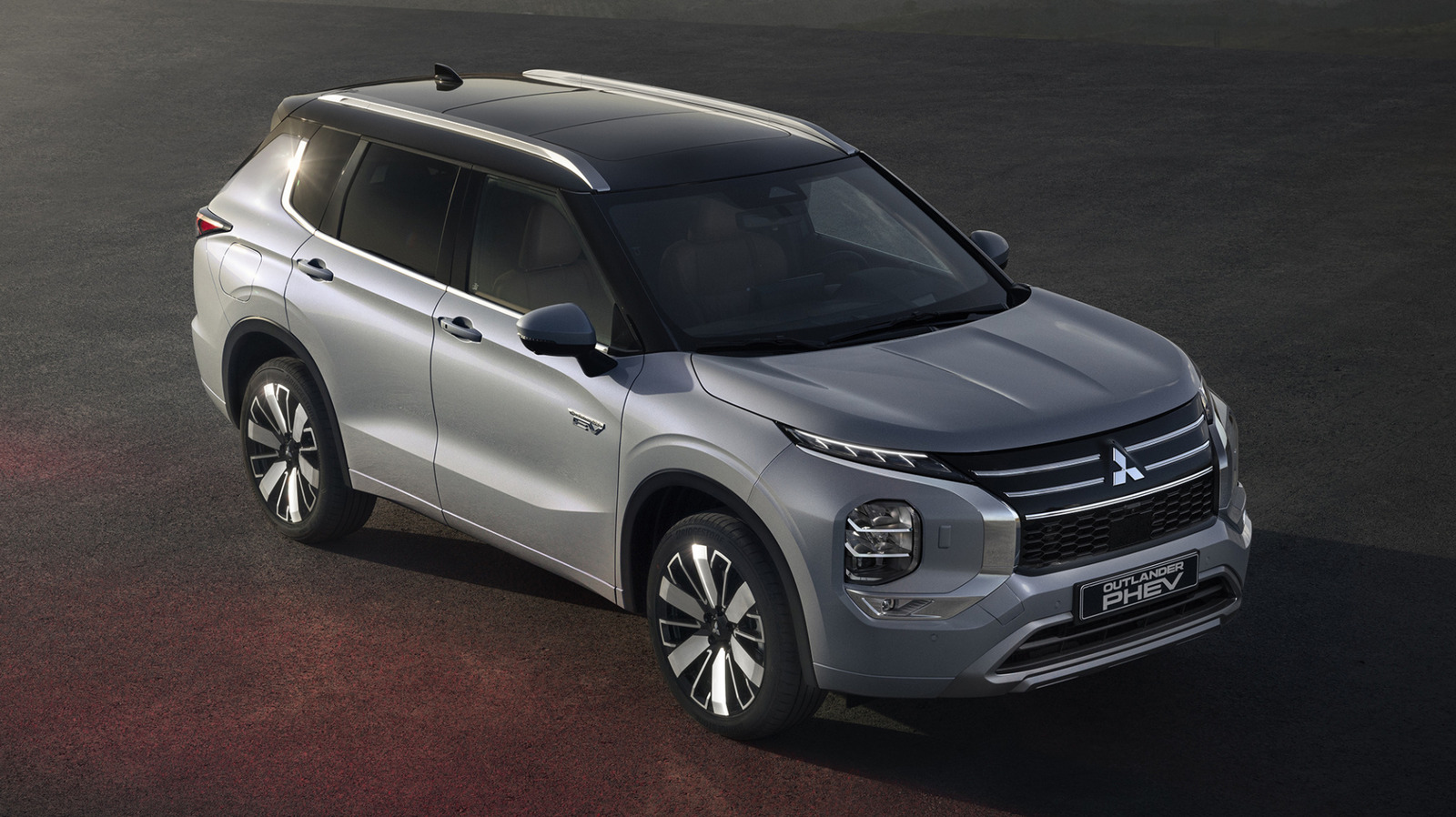
2026 Mitsubishi Outlander Debuts Hybrid Power and Remains the Most Affordable Three-Row SUV
Ram 1500 TRX Set for Powerful Comeback to Challenge Raptor R