Elevate Your Ride: Gunther Werks Unveils Stunning Upgrades for the Porsche 911 Turbo S
Mercedes GLC EV: A Game-Changer in Electric Luxury Driving
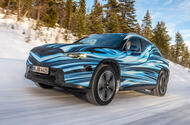 Indirect replacement for EQC SUV is the first electric car based on Mercedes' new MB.EA platform
The new Mercedes-Benz GLC EV will arrive later this year as an indirect replacement for the EQC SUV, marking a strategic shift in Mercedes' electric model strategy: one focused on integration rather than reinvention.
This more pragmatic approach from Mercedes will result in the GLC EV slotting alongside a facelifted version of the combustion-engined GLC next year, wearing a near-identical look inside and out.
Company boss Ola Källenius wants less differentiation and greater cohesion between different powertrains in a bid to drive EV sales, instead of its previous push of designing distinct EVs with unique names and positioning.
Given that the GLC has regularly been Mercedes' best-selling model since its introduction in 2015, it's hoped that the GLC EV can leverage the equity already built by the moniker and be a catalyst for Mercedes’ EV sales.
The strategy also streamlines development and production, a crucial consideration as Mercedes-Benz seeks to cut costs as it scales up its number of electric models.
While the next CLA will be the first to follow this new strategy, when both the EV and ICE variants are launched later this month, the GLC EV is the first car to arrive alongside a sibling that's already on sale with petrol, diesel, and plug-in hybrid powertrains.
Such is the importance of the new GLC EV, given its status as a rival to the Audi Q6 E-tron, BMW iX3 and Porsche Macan Electric, that it's set to headline Mercedes’ display at the Munich motor show in September.
An early 2026 launch is pencilled for the UK.
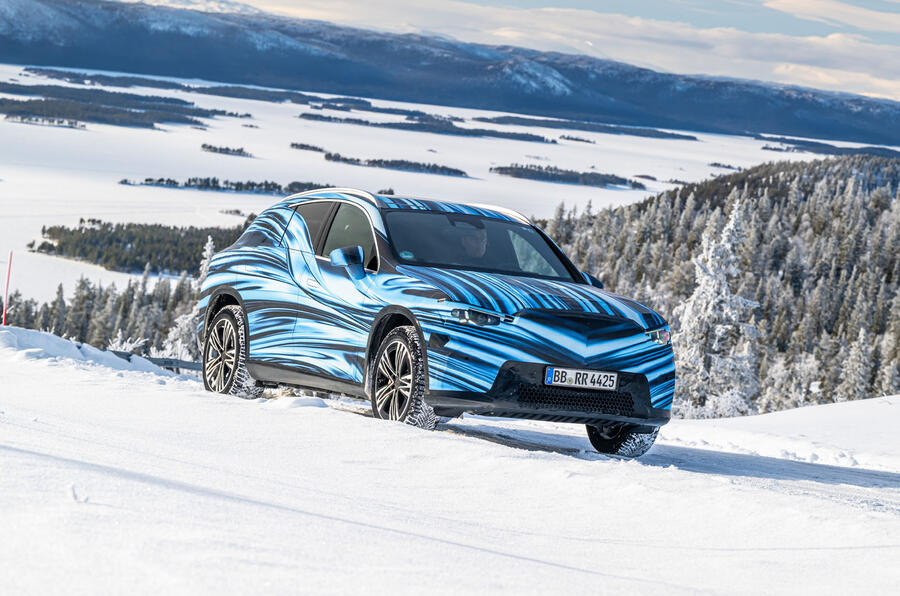
The GLC EV is the first model to use Mercedes' new MB.EA platform – a dedicated EV platform that’s also planned to underpin the upcoming electric version of the C-Class saloon and junior G-Class off-roader, both set to be revealed in 2026.
It's also the first model to use Mercedes' eATS 2.0 drivetrain, as previewed by the Vision EQXX engineering concept in 2023. In its most potent dual-motor, four-wheel-drive form, it will offer up to 483bhp. A single-motor, rear-wheel-drive model with 268bhp is also under development.
Power is drawn from a 94.5kWh nickel-manganese-cobalt (NMC) battery, which is claimed to deliver a range of over 404 miles.
It all operates on a new 800V electrical architecture that provides a charging speed of up to 320kW. This is good for a 162-mile recharge in 10 minutes.
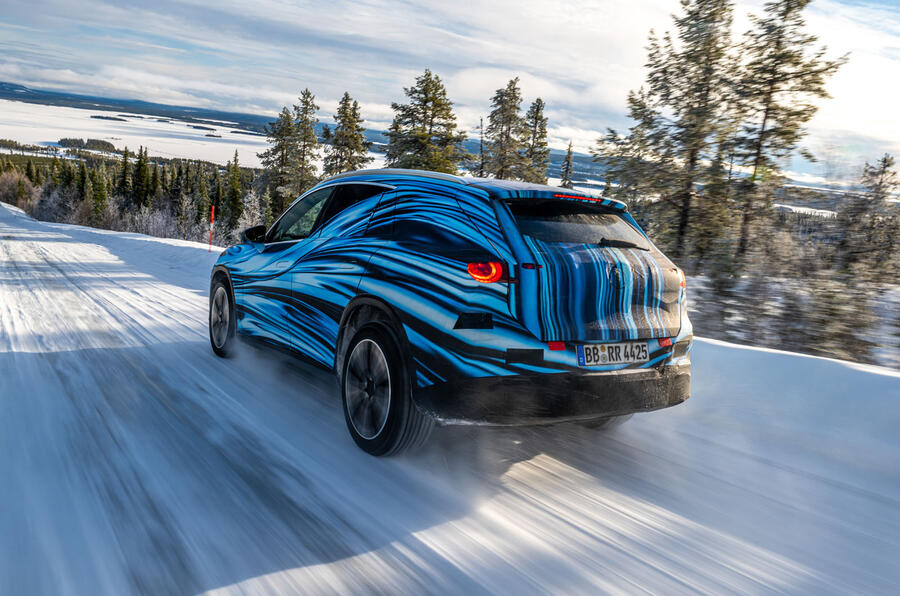
Efficiency is further boosted by a new heat pump, which is not only significantly more effective than the system in use today but also far more compact.
This has allowed Mercedes to integrate a 100-litre frunk in addition to a 560-litre rear boot, providing the GLC EV with even greater luggage space than the ICE GLC on sale today.
Additionally, Mercedes has developed a sophisticated new brake energy recuperation system, dubbed One Box. Unlike in traditional braking systems, the brake pedal is decoupled from the physical braking system, with computers calculating how much regen and how much physical disc should be used for the desired braking levels.
Dominik Voogdt, head of overall vehicle engineering for the GLC EV, describes this new braking system as a “game-changer” for overall efficiency.
The Galtispuoda Pass: a test of grit and grip
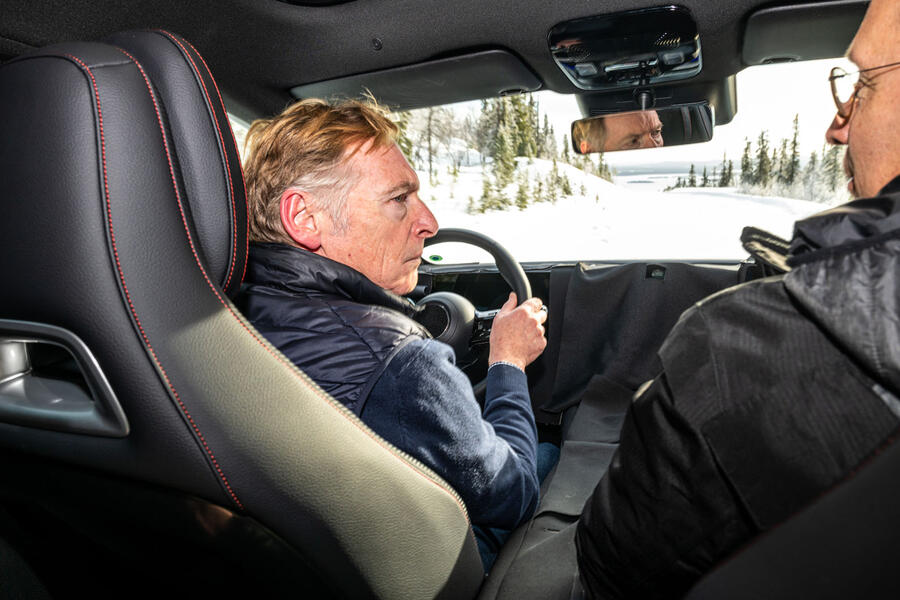
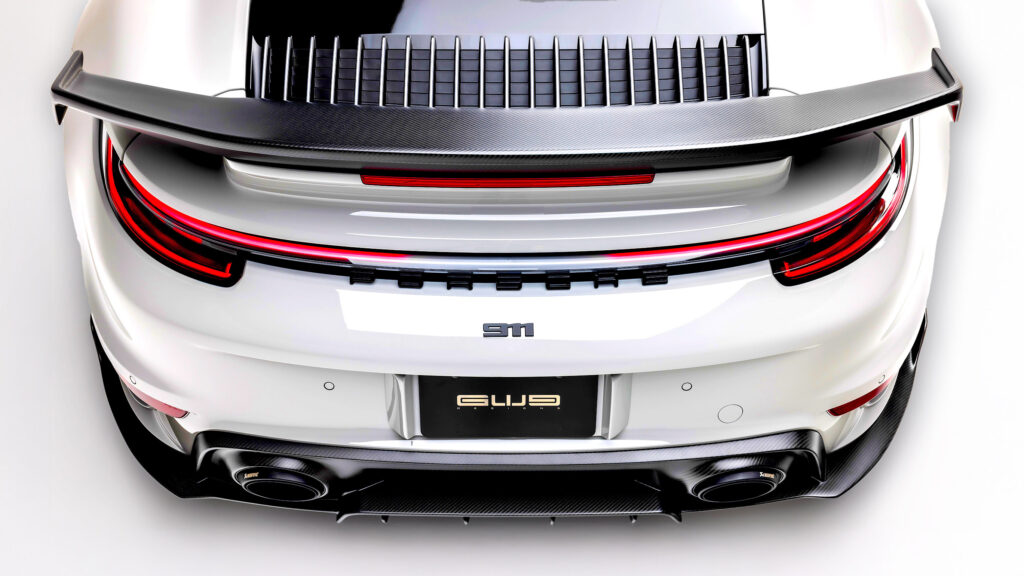
For my first drive of the GLC EV, Mercedes has brought me to the Galtispuoda mountain pass, just outside Arjeplog in Sweden’s Arctic north. This winding, snow-covered mountain road is a relentless test of a car’s mettle. It’s got it all: steep inclines, precipitous descents, fast open bends and sharp hairpins – all with surfaces that, at this time of year, shift unpredictably from compacted snow to sheer ice and back again before you realise.
With a heavy cloak of disguise covering the prototype’s dashboard and other areas, we can’t say much about the interior design yet, except that it departs quite radically from that of the ICE GLC models, which are likely to adopt it, along with a new pillar-to-pillar display panel and other digital developments, including the new MB.OS operating system, as part of a mid-life facelift before the end of next year.
That said, the driving position and ergonomics all feel familiar, with typical Mercedes refinement and attention to detail. A large glass roof floods the cabin with natural light, while a longer wheelbase than ICE GLC models (a benefit of the EV's MB.EA platform) provides additional space, much of which has been allocated to extending rear-seat leg room. It’s very roomy, noticeably so in the back.
But I haven’t flown halfway to the North Pole to be a passenger: I'm here to drive. From my starting point at the summit of the Galtispuoda, there’s a silent yet undeniable urgency to the qualities of the new eATS 2.0 drivetrain in the first mile or so, the kind that pins me to the driver’s seat when traction is found and exploited by the GLC EV’s fast-reacting four-wheel-drive system and other driving assistance systems. Despite the treacherous conditions, there’s dependable traction and swift acceleration on the straighter sections of the pass.
The stability-control system works rapidly and completely in the background without ever feeling intrusive or overbearing, keeping progress smooth and controlled. Voogdt says changes to the vehicle operating system have reduced the amount of CPU networking, providing faster and more seamless control of power to each of the wheels.
It shows. Even in these conditions, the GLC EV builds speed effortlessly. But it’s in the corners where it really impresses. The steering, typically light in feel, is very precise and offers quite a lot of feedback, inspiring confidence from the outset. It’s backed up by a rear-wheel steering function that has been tuned by the same team of engineers responsible for the similar systems used by Mercedes-AMG models, with 4.5deg of rear steer in this prototype.
The GLC EV's overall agility belies its size and weight. It’s not just the way it turns in sharply and confidently; it’s the composure it maintains mid-corner when the surface shifts from snow to ice and back again before you even reach the exit that gets my attention.
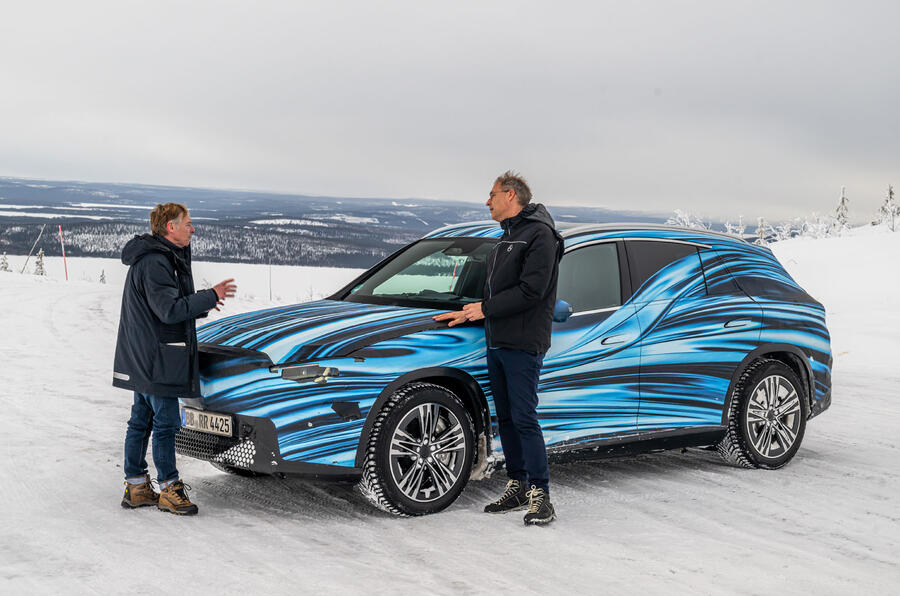
I'm driving with measured throttle inputs through the winding sections of the pass, being careful to slowly work up to the limits of what the road conditions allow. But even so, the GLC EV feels extremely lively, changing direction with truly eager qualities. And there are no specially prepared spiked tyres to enhance grip – just regular winter tyres.
The air suspension, with its variable ride height, keeps body movement well controlled. These aren't the sort of conditions in which to make a definitive call on the finer points of its double-wishbone and five-link suspension, but it’s already clear the GLC EV operates on a far higher dynamic level than the old EQC. It’s fluid and well balanced, with a greater sense of control and precision.
And what of those 'game-changing' new brakes? Apart from the dependable feel of the pedal, what’s impressive is just how much of the braking force is handled purely by regen, even in situations where you would expect the friction brakes to take over. The car brings itself to a complete stop under what feels like genuinely hard braking without ever engaging the physical brakes.
You alter the amount of regen by tapping the gear selector stalk forward and backward. It’s seamless, efficient and surprisingly effective.
The GLC EV will be produced at Mercedes plants in Bremen, Germany, and Beijing, China, with the possibility of additional production in Tuscaloosa, US, depending on tariff considerations.

Inferno at Sea: Cargo Ship Carrying 3,000 Vehicles Engulfed in Flames

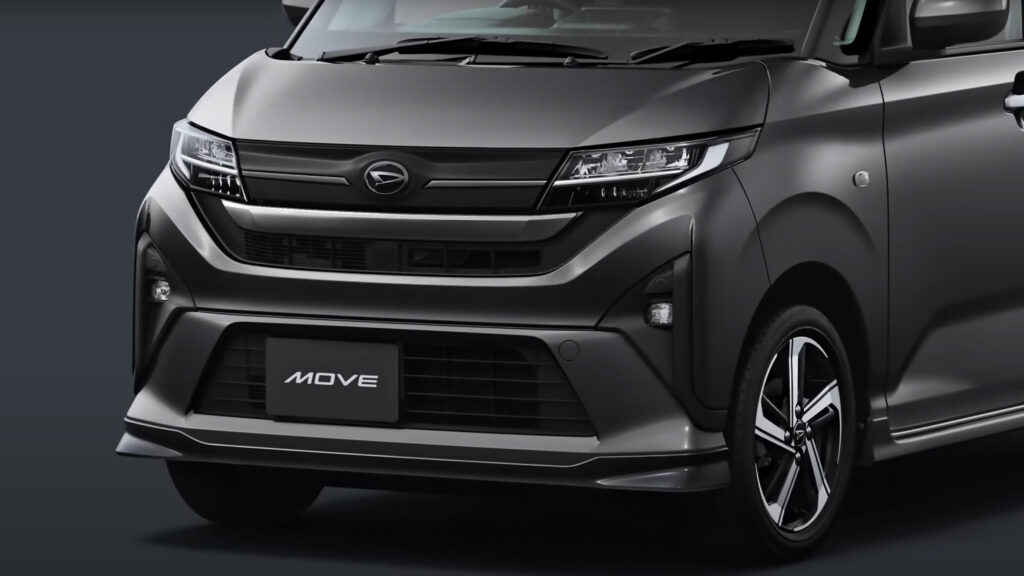
Reviving a Classic: The All-New Daihatsu Move Makes Its Grand Return
Civic Type R’s Final Bow: Celebrating 28 Years with the Ultimate Edition
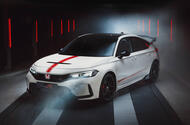 Hot hatch follows Ford Focus ST in being pulled from sale in Europe; UK to get 10 Ultimate Edition cars
The Honda Civic Type R is being pulled from sale in the UK and Europe due to increasingly stringent legislation – bowing out with a new special edition that commemorates its 28-year production run.
Honda said it's removing the Type R from its line-up in 2026 because "the industry is changing and our model range is having to evolve with it in accordance with European legislation".
Although Honda hasn't been as explicit as to blame the EU’s General Safety Regulation 2 (GSR2), which mandates the fitment of kit such as driver attention monitoring and a speed limit warning buzzer, it's most likely the reason for the model’s early demise.
GSR2 contains a provision allowing non-compliant cars with fewer than 1500 sales annually to remain until July 2026. This coincides with the end date for European availability of the Civic Type R.
The same legislation is to blame for the early demise of the Toyota GR86 and, once the exemption window closes, will also kill the Alpine A110.
The decision to pull the Civic Type R from sale will also ease the pressure on Honda in the face of Europe's increasingly stringent fleet CO2 emissions standards, given it's one of the brand’s higher polluters: it produces 189g/km of CO2, compared with the 114g/km produced by the regular Civic.
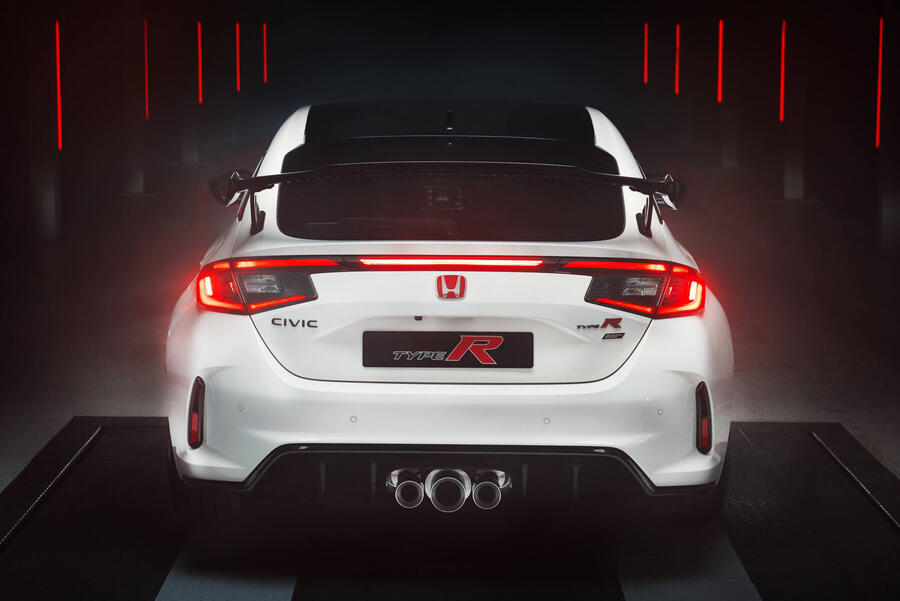
The Ultimate Edition is intended to celebrate the legacy of the Civic Type R as it bows out in Europe, having first arrived as a grey import some 28 years ago.
It's painted in the signature Championship White shade, with contrasting red racing stripes calling to the model’s traditional interior colour.
Inside, there's an abundance of carbonfibre details, such as on the door skidplates and around the centre console.
Pricing has yet to be announced, but it's likely to cost notably more than the regular Civic Type R (£48,900).
Only 40 will be built in total, with 10 of those bound for the UK. These will be sold on a first come, first serve basis, Honda said.
It's the latest in a series of hot hatches to have been axed in the UK and Europe: Autocar last week reported the demise of the Focus ST, and that followed the Hyundai i30 N, pulled from sale last year.
Few front-driven, petrol-powered hot hatches remaIn, such as the stalwart Volkswagen Golf GTI, the smaller Volkswagen Polo GTI, the Mini Cooper S and its hotter sibling, the John Cooper Works.
The four-wheel-drive hatch market is in a healthier state, comprising cars such as the Golf R, Toyota GR Yaris and Mercedes-AMG A45 S, but all are threatened by emissions regulations and several brands' moves to electric performance cars.
The Civic Type R's run in the UK spanned 28 years and six generations – although the first (launched in late 1997) wasn't officially offered by Honda UK, rather a grey import from Japan.
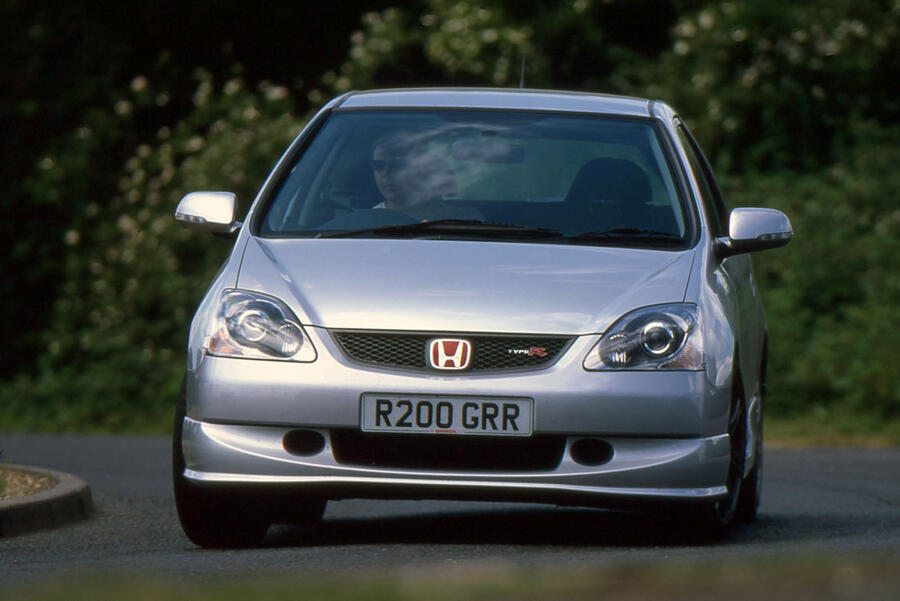
The second-generation model arrived in 2001 with a 2.0-litre naturally aspirated four-pot producing 197bhp. It was built in Swindon and indirectly replaced the Integra Type R that had been offered in the UK between 1997 and 2001.
It was an immediate hit, thanks to a well-judged chassis set-up, a superb free-revving engine and a relatively low price, and it remains among the most affordable examples of the hot hatch.
The UFO-like Mk3 was launched in 2007. Europe got an entirely different model to Japan, with a radical coupé-like silhouette, rather than the saloon body offered in its home market.
It retained the great 2.0-litre powerplant but was 134kg heavier and had less sophisicated rear suspension so was something of a letdown – especially compared with the Japanese version, which was both lighter and more powerful.
The fourth-generation car landed in 2015 and marked a return to form, retaining its tearaway character dsepite adopting a turbocharger.
The fifth and sixth generations brought further refinements and are widely regarded as being among the finest driver's cars of the modern age.

Southwest Airlines: From Beloved Econo Choice to Just Another Airline

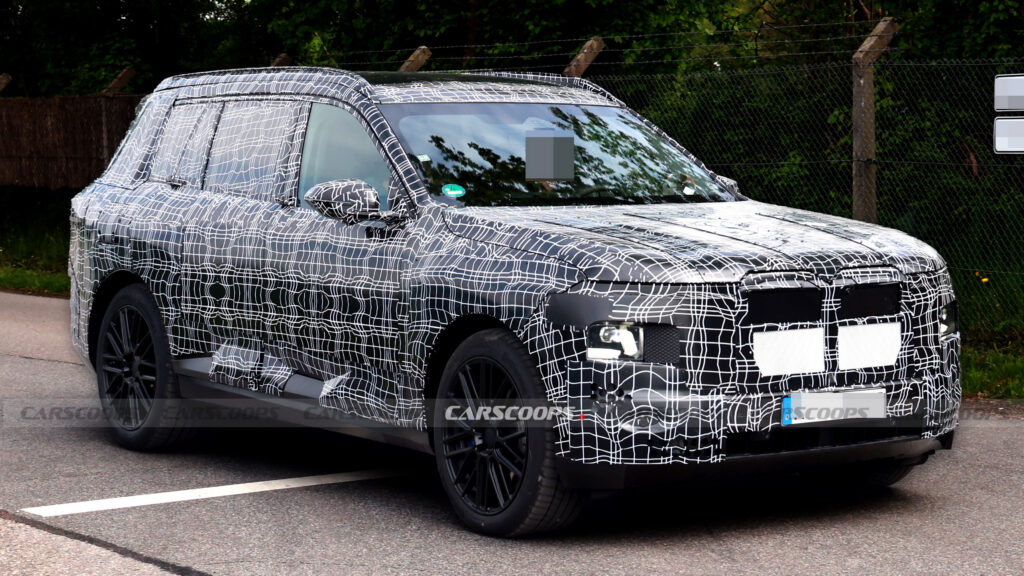
BMW’s Next-Gen X5, X6, and X7: Power, Performance, and Electric Futures Await

Revolutionizing Safety: Volvo’s Smart Seatbelt Adapts to Protect Every Passenger

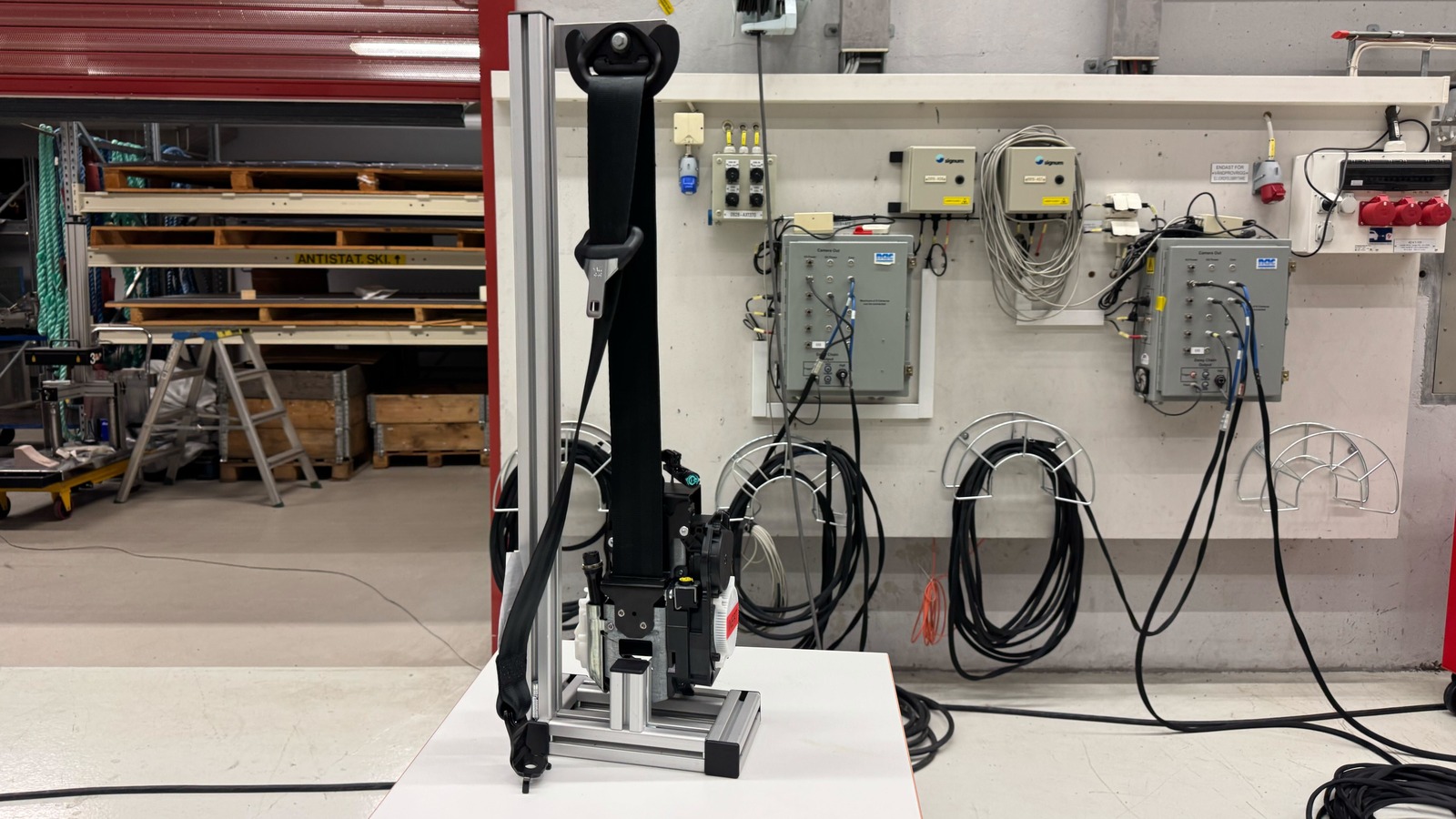
Multi-adaptive safety belt uses sensors to determine how to restrain its occupant in a crashNew EX60 will feature new belt that caters its crash response according to seat occupant's shape and size
Volvo has invented a new type of seatbelt that could dramatically improve in-car safety - again.
The firm, which pioneered the use of the three-point belt, has revealed a new 'multi-adaptive safety belt', which uses sensors to analyse an occupant's height, weight, body shape and seating position and responds accordingly in the event of a crash.
A larger occupant will receive a higher belt load, Volvo said, to reduce the risk of head injury, while it will respond less severely to smaller passengers to lessen the impact on their ribs.
The system – developed in collaboration with ZF Lifetech – will also respond differently according to the nature of the impact, gathering data from around the car "in less than the blink of an eye" to determine how much force the seatbelt should apply.
Today's seatbelts use load limiters to change the amount of force applied by the seatbelt, with three 'load-limiting profiles' available. Volvo's new device ups that to 11.
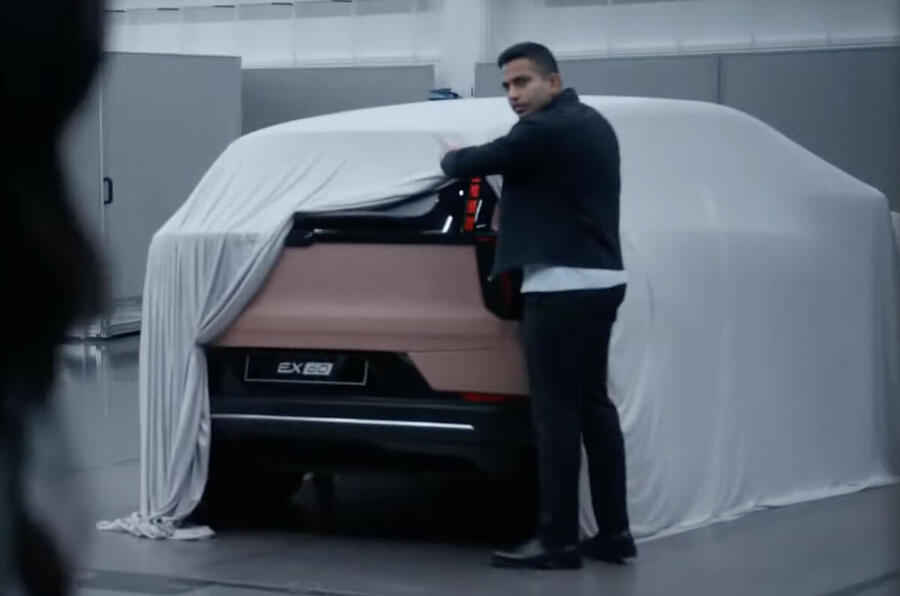
The new Volvo EX60 electric SUV, due next year, will be first to feature the new belts, and Volvo said over-the-air software updates will mean "it gets better over time".
As Volvo gathers more crash safety data, "the car can improve its understanding of the occupants, new scenarios and response strategies".
Åsa Haglund, who runs Volvo Cars' Safety Centre, said: "The world first multi-adaptive safety belt is another milestone for automotive safety and a great example of how we leverage real-time data with the ambition to help save millions of more lives.
“This marks a major upgrade to the modern three-point safety belt, a Volvo invention introduced in 1959, estimated to have saved over a million lives.”
The new seatbelt's unveiling coincides with the 25th anniversary of the Safety Centre, where Volvo can "recreate almost any traffic accident and perform tests that exceed regulatory requirements for real-world safety".
Revolutionizing Safety: How Volvo’s Smart Seatbelts Evolve with Every Drive
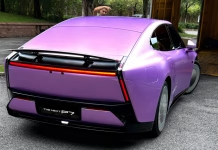
Xpeng P7: The Bold New Electric Sedan Redefining Performance and Style