Hyundai Ioniq V N Imagined as an EV Flagship Bridging Supercar Design and High-Performance...

GAC Emzoom Promises Budget SUV Value but Stumbles on Driving Experience and Transmission Flaws

Daily Drivers That Defy Monotony Why Some Cars Make Everyday Commutes Exciting

Lada 2105 VFTS Rally Car Challenges Classic Market Expectations with $71,500 Price Tag

Mazda 3 Demonstrates the Enduring Value of Driver Engagement in an Era of Industry...
 Much of what the five-star MX-5 so great is evident in this humble hatchback
I worry about the future of smaller car firms. With so much new technology to invest in and develop and new rivals flooding the market, the relative minnows are getting squeezed.
That's why, like many of its contemporaries, Mazda is increasingly reliant on partnerships, sharing development with Toyota and Changan. Such deals give a firm like Mazda a path into the future, but the fear is that they lose some of the individuality that is a core part of their appeal.
I've been reminded of that every time I've jumped behind the wheel of this 3 because, gosh, Mazda really does know how to make a car handle nicely. Even in a humble family hatchback – never mind, say, an MX-5 – there's a certain sharpness and feel to the steering of a Mazda that is both enriching and rewarding.
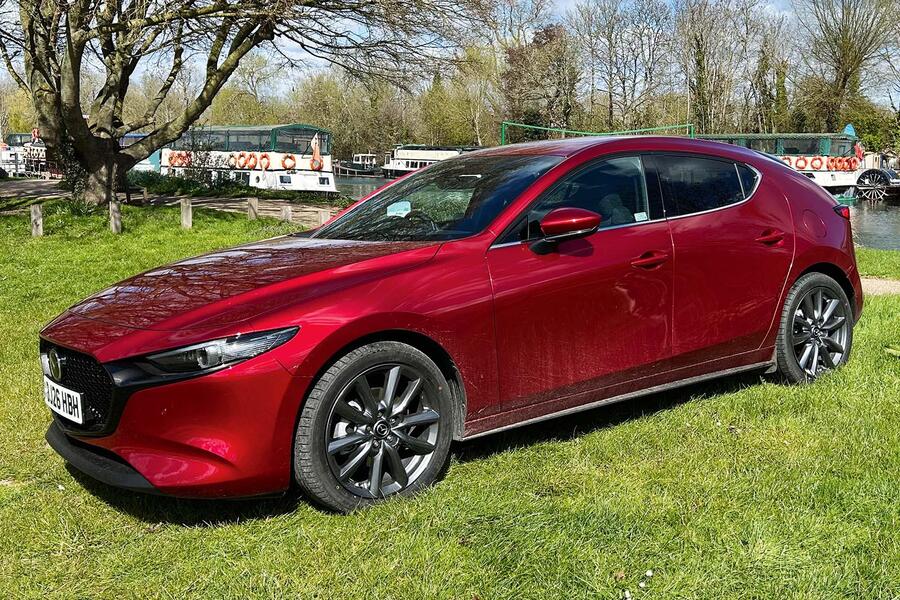
The firm makes much of its 'jinba ittai' ('horse and rider') philosophy, which prioritises making the driving experience feel natural. And when you're behind the wheel of a Mazda, you know it's more than a marketing slogan. A few weekend jaunts into the Hampshire countryside recently have given me the chance to enjoy driving the 3 on some entertaining, flowing roads, and while it isn't an outright hot hatch, it's certainly engaging.
The steering is direct and well weighted in a very pleasing Mazda sort of way, so when you turn into a corner you have confidence the car will go where you point it. Helping the Mazda's cornering stability is that the ride is on the firm side, although there's clearly a drawback to this given the current state of British roads.
Hit a bump or a pothole and it can jar a bit, although thankfully that nimble steering means that if you're paying attention you've got a decent chance of missing them.
My habit of entering random running events in the countryside often involves having to park up in a field, which can be quite unpleasant in some stiff hatches. But Mazda seems to have found a reasonable balance in firming up the handling without making life too uncomfortable, impressive given that I suspect most hatchback buyers these days are likely to be chasing a level of driver engagement beyond what mass-market SUVs and crossovers usually offer.
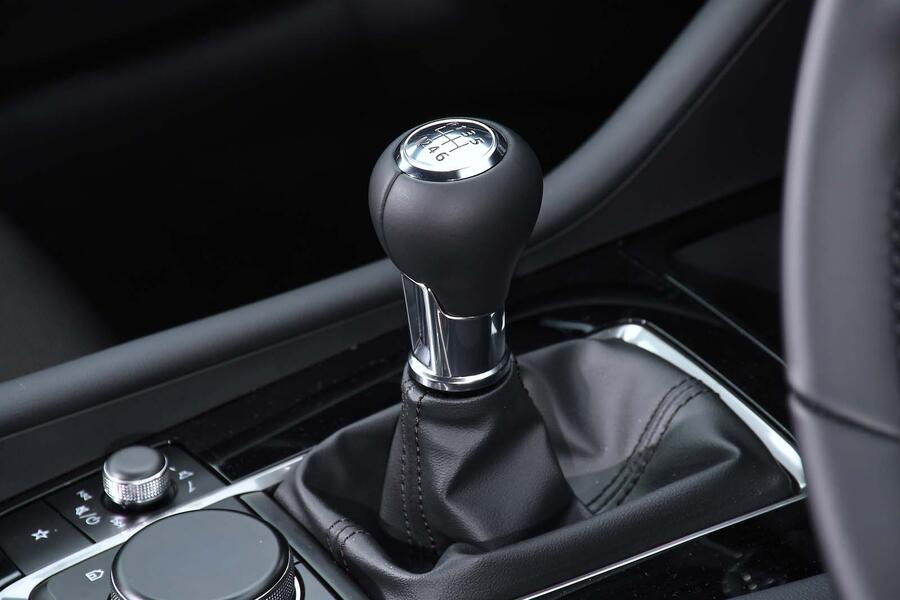
The 3's mildly hybridised but naturally aspirated 2.5-litre petrol four is nicely responsive too, although it confuses me a little. Given the unusually large displacement for a family hatch, I had expected it to be noisier than some rivals, but it's actually really rather quiet.
In fact, a few times when stopped at traffic lights and the auto stop-start has kicked in, it has been hard to know when the engine has re-engaged, so hushed and smooth is it at idle.
In a way, the engine note is a bit like the 3 itself: nicely understated. It's engaging and entertaining in all the right ways, yet simultaneously quite relaxing and calming. It just feels right and is a pleasure to drive. And that's why I spent a few weeks filling up my diary so that I was too busy to hand it over to magazine editor Rachel Burgess, who is running the 3. Sadly she finally insisted I relinquish the keys a week or so back.
So I'm left finding excuses to ask for another go, and hoping that Mazda can find some way to preserve its ability to make cars handle in a future of shared development.

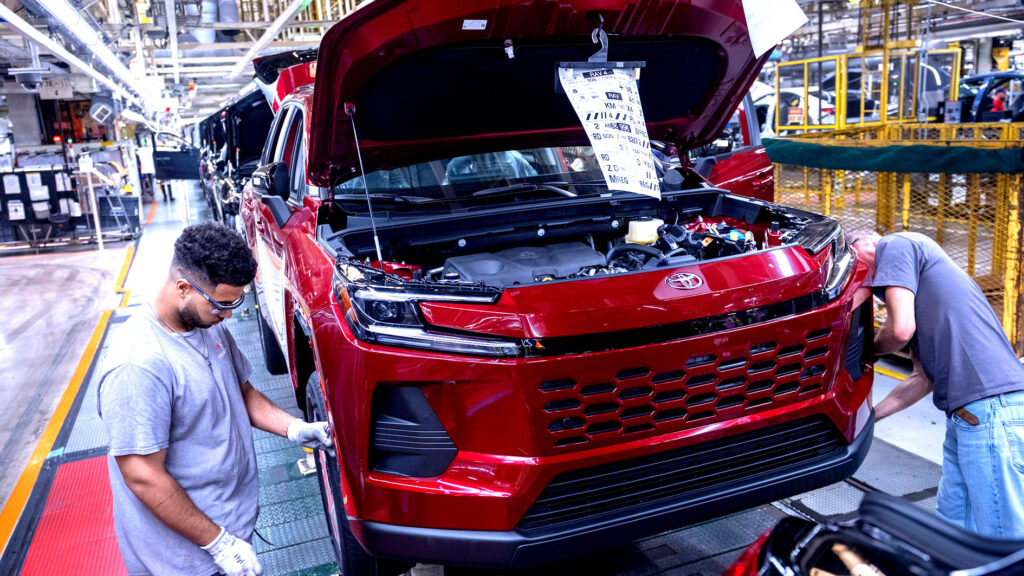
Toyota RAV4 Production Cuts Deepen Global Supply Strain Amid Surging Demand and Geopolitical Disruption

Depreciation’s Hidden Impact: Why Car Finance Deals Mask Risks for Buyers and Manufacturers
 PCP deals have put depreciation out of mind for most motorists, but it could soon bite back
Whatever happened to depreciation?
There was a time when it was car buyers' main concern. Now, not so much. Perhaps the popularity of PCP finance deals is the reason. With the car's minimum future value guaranteed, a vague promise of equity at the end of the term to put towards the next one and lower monthly payments than hire purchase, PCPs might just have brushed the spectre of depreciation under the carpet.
"If you're buying on a PCP, you're not looking at the value of the car at the end of the term, you're looking at how much you're paying a month," says Paul Toomer, founder of Car-Pod, a used car dealership near Southampton. "Plus, assuming the dealer pays enough for your old car, you've got a cash-free deposit and you're in a new one."
So yes, depreciation may have been brushed under the carpet. However, like everything under there, sooner or later it will come back to the surface. The fact is that cars still depreciate, mainly because there are too many of them chasing too few buyers.
"Supply and demand is always key in the used car market," explains Derren Martin, an automotive consultant at vehicle data firm Cazana. "Put a lot of new cars into the market and in three years' time they will be back as used cars. If their numbers are more than the market can reasonably absorb, they will depreciate fast."
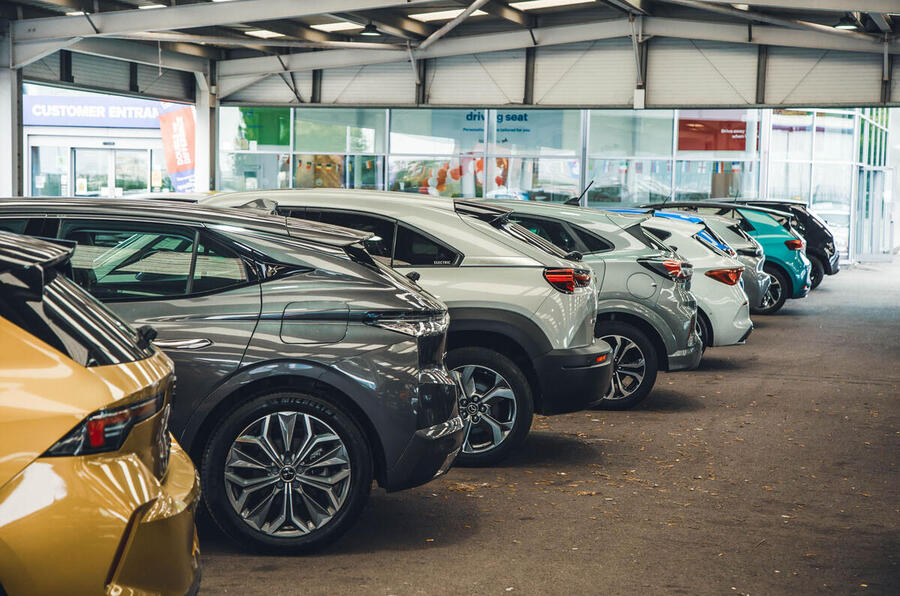
Factor in a weak image, an unpopular specification, doubtful provenance, poor condition or a high mileage and watch a car depreciate faster still. But again, with a PCP to rescue them, do car buyers actually care?
"From a consumer's point of view, depreciation is probably less important, because on a lease such as a PCP they're not taking any risk," says Chris Plumb, new car valuations expert at another automotive data firm, Cap HPI. "However, within the industry, depreciation is still a hot topic. Manufacturers are certainly becoming more attuned to it, because if your cars are performing well in the market and you're doing everything to maximise their residual value, that translates into their forecast value from people like us and from your finance houses, so you can support your vehicles less."
With a PCP, your monthly payments are a combination of the interest charged on the car's total price plus its depreciation during the finance term. If the car were forecast to be worth nothing at the end of the term, the size of the monthly payments would be through the roof. The finance company or the manufacturer would have to subsidise them by slashing the purchase price, offering a big deposit contribution or by shoring up the car's value with its own money.
In fact, some manufacturers and their finance companies are having to deal with this very problem. It's not that their cars are forecast to be worth nothing, rather that they have depreciated far faster than was predicted, turning what was hoped to be an asset into a liability.
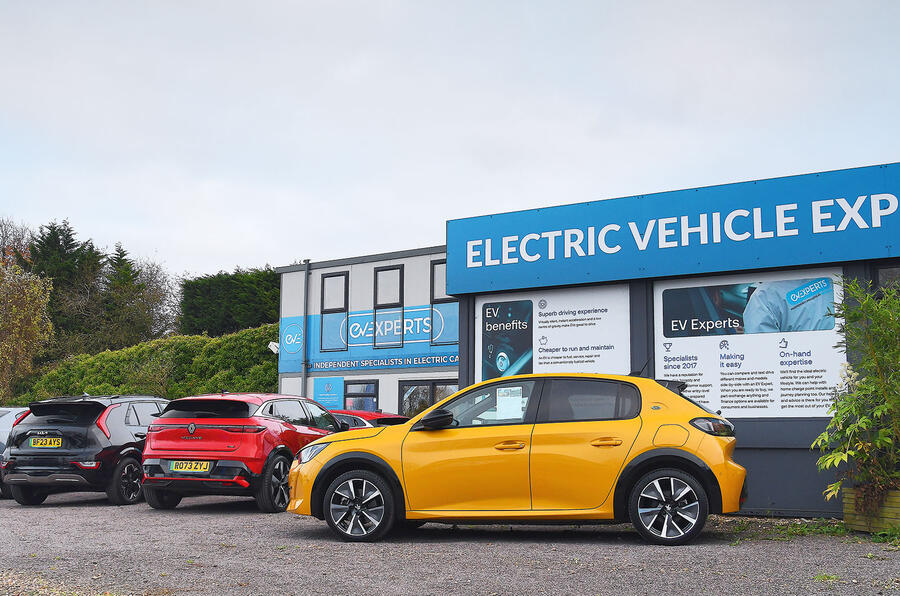
"It has been a tough time for finance houses in recent years, especially with the big falls in EV values to deal with," explains Martin. "In response, they've become masters of their own destiny, setting their own residual values rather than referring to forecasters such as Cap HPI. One of the big things they're doing is secondary leasing - sweating the asset a bit more by putting it back on lease rather than putting it into the used market."
Manufacturers and finance companies would rather not have to throw their cars a lifeline - which is why they're careful how they market their new cars to large fleets.
"The decisions car makers take today influence depreciation tomorrow," says Plumb. "So, for example, they avoid being over-represented in the daily rental market. It puts bums on seats but, when the cars are moved on after six months, there's a risk they will swamp the used market, depressing values."
It's estimated that there will be around 80 car brands on the UK market by the end of this year. However, sales of new cars are expected to grow by only around 1.4% to a little over two million. The result is that manufacturers are under more pressure to move metal. There are reports of discounts approaching 27% on some models.
"For consumers, 2026 will be the year of the deal," says Robert Forrester, CEO of Vertu Motors, one of the UK's biggest new car dealership groups. "The offers for consumers will be unbelievable and, in my opinion, even uneconomic for dealers and manufacturers, they will be that good."
Plumb says that he recently saw a popular, three-year-old SUV with 26,000 miles on the clock being advertised by a car supermarket on a three-year/30,000-mile PCP, with a £2500 deposit and an APR of 10%, for £410 per month. Elsewhere, on a popular leasing website, he found a brand-new example of the same model and over the same term but with an APR of 0% for £277 per month.
"People are looking for value for money," says Plumb. "They're asking what the monthly payments look like and whether they can come out of their three-year PCP and be offered a new car on similar terms. On the strength of these examples, they can."
Bumper discounts, deposit contributions, low-rate finance: on the surface, they're great news for car buyers financing new cars on a PCP. However, at the end of the term, the return of these cars en masse to the market could have a depressing effect on future used car values.
"New car offers are so good, especially those being offered by the new Chinese brands, that when all these discounted new cars return as used ones in 18 months' time, who will buy them and what will they be worth compared with a new one?" asks Martin. "Electric cars especially are likely to have outdated tech that buyers don't want; values will fall.
"How used cars are resold to consumers will be critical. If they end up with car supermarkets, they risk being sold more cheaply, undermining their values and fuelling depreciation." Toomer is wary of cars less than three years old: "In my experience, the heaviest depreciation occurs in the first three years of a car's life. On its third birthday, a car with average mileage is worth about half what it cost new. It means that any car we stock that is two years old is still depreciating quite quickly and, if it doesn't sell for a few months, all of a sudden we face selling it at a loss."
Looking ahead, declining brand loyalty and mounting pressure from Chinese newcomers threaten to worsen depreciation for some legacy brands and certain sectors of the market.
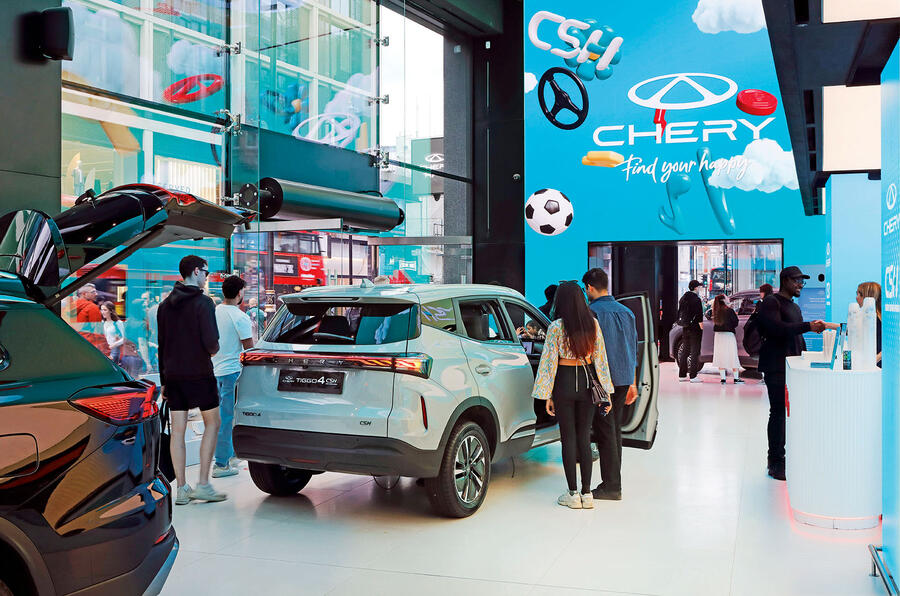
"The arrival of cheap new cars from China will threaten the values of many existing used ones," says Martin. "Take the Chery Tiggo 4, for example. It's a genuinely impressive car for just £19,995 new. If you've a used car that's equivalent to it but it costs more, its value is likely to drop.
"The China effect also threatens to depress the values of used models from some of the legacy brands. Honda and Suzuki could be at risk."
These are dark clouds on a horizon that threatens to become cloudier. Depreciation may appear to be hidden under the carpet at present, but there are signs that it could bite back.
Current used market trends
Despite the pressure they face, used cars are generally worth more today than they were at the turn of the decade. In part this is due to the scarcity of three- to five-year-old cars, caused by the collapse of new car sales during the Covid pandemic and delays to car supplies resulting from parts shortages when the Ukraine war began.
At the same time, rising new car prices have boosted used car demand. In its latest market analysis, Cazana reports the average values of used cars at three years old have increased by 1.7%, adding around £340 to retail prices. One-year-old cars are up 0.7% with five-year-olds up 1.4%. Even 10-year-olds, the bedrock of the budget car market, have risen 0.5%.
At all price points, all fuel types have increased in value, with hybrids leading the charge at 2.3%, while EVs are up 1.4%. The star performers? The promise of warmer weather has inflated used convertible values by 2.6% - and, owing to lower numbers and rising demand, estates and MPVs are up 3.4% and 2% respectively. These bullish numbers are reflected on the forecourts, says Car-Pod's Paul Toomer: "I'm still having to pay high prices for stock. I can't get anywhere near what [other] dealers are bidding for cars on the online buying platforms and then paying a £400 charge on top for the service."
However, although its effects are partially masked by finance products such as PCPs, depreciation is still happening, and Chris Plumb at Cap HPI suspects its previous seasonal highs and lows are returning. "It's all to do with supply and demand, and there's a lot of supply," he says. The lesson is that if you have a quality used car to sell or part-exchange to offer, ignore the doomsayers and hold out for the highest offer you can get while it's still on the table.
Top 10 Slowest-Depreciating Cars At 3 Years and 30,000 Miles
| Car Model | Avg. New | Avg. Used | Retained | |
|---|---|---|---|---|
| 1 | Lamborghini Urus | £159,925 | £178,655 | 111.7% |
| 2 | Suzuki Jimny | £15,941 | £17,080 | 107.1% |
| 3 | Mercedes-Benz G-Class | £142,244 | £128,858 | 90.6% |
| 4 | Volkswagen California TDI | £54,236 | £48,579 | 89.6% |
| 5 | Porsche 718 Cayman | £53,113 | £47,359 | 89.2% |
| 6 | Bentley Bentayga PHEV | £130,500 | £114,635 | 87.8% |
| 7 | Jeep Wrangler | £44,527 | £38,322 | 86.1% |
| 8 | Porsche 718 Boxster | £50,407 | £42,988 | 85.3% |
| 9 | Dacia Duster | £14,004 | £11,828 | 84.5% |
| 10 | Audi RS3 Saloon | £47,775 | £39,991 | 83.7% |
Top 10 Fastest-Depreciating Cars At 3 Years and 30,000 Miles
| Car Model | Avg. New | Avg. Used | Retained | |
|---|---|---|---|---|
| 1 | Polestar 2 | £49,990 | £20,991 | 42.0% |
| 2 | BMW i3 | £35,896 | £14,552 | 40.5% |
| 3 | Audi A8 Hybrid | £76,716 | £30,486 | 39.7% |
| 4 | MG ZS EV | £27,275 | £10,348 | 38.0% |
| 5 | Mercedes-Benz EQC | £71,407 | £26,653 | 37.3% |
| 6 | Vauxhall Grandland X PHEV | £39,679 | £14,426 | 36.4% |
| 7 | Hyundai Kona Electric | £36,295 | £13,088 | 36.1% |
| 8 | Vauxhall Corsa-e | £29,167 | £9,858 | 33.8% |
| 9 | Nissan Leaf | £31,643 | £9,965 | 31.5% |
| 10 | Jaguar I-Pace | £72,776 | £20,175 | 27.7% |

Defender’s American Pivot: JLR’s Stellantis Alliance Weighs Rugged Bronco Rival Against Ultra-Luxury SUV Expansion

Land Rover Recall Exposes Airbag Connector Flaw and Halts Sales Pending Simple Fix

EV Savings Depend on State: Fuel Costs Drop but Insurance Gaps Erode Gains for...