
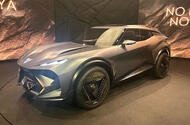
How Does the Cupra Tindaya Concept Redefine What Drivers Expect from an SUV?
If you think SUVs are all about practicality and little else, Cupra’s Tindaya concept is here to shake things up. This isn’t just another big, comfy family hauler. Instead, Cupra is betting that drivers still crave excitement—even in a segment that’s often accused of being, well, a bit dull. The Tindaya is the largest car Cupra has ever built, stretching 4.72 meters from nose to tail. But don’t let the size fool you: with a 0-62mph sprint in just 4.1 seconds, it’s also the fastest. That’s not a typo. This SUV can outpace plenty of sports cars.
So, what’s the secret sauce? It’s a radical new range-extender (REx) drivetrain that blends the best of electric and gasoline power. The result: a car that can travel farther and faster than any Cupra before it, while keeping the focus firmly on driver engagement. It’s a bold move, especially as the industry grapples with how to make EVs more appealing to everyday drivers.
What Makes the Tindaya’s Powertrain So Different?
Let’s get under the hood—figuratively, at least. The Tindaya rides on Volkswagen Group’s upcoming SSP platform, which will also underpin future icons like the next Volkswagen Golf and Skoda Octavia. But here’s where things get interesting: while most new EVs stick to pure electric power, the Tindaya introduces a range-extender system. In plain English, that means it’s got a battery for electric driving, but also a 1.5-liter four-cylinder petrol engine that acts as a generator, topping up the battery on the go.
This isn’t just about squeezing out a few extra miles. The Tindaya’s electric motors—one on each axle—deliver a combined 489bhp. That’s supercar territory. On battery alone, you’ll get about 186 miles of range. But with the range-extender running, Cupra claims a jaw-dropping 620 miles between fill-ups. For context, that’s enough to drive from London to Edinburgh and back, with plenty left in the tank.
Range-extender tech isn’t entirely new—brands like Mazda and BMW have dabbled in it—but Cupra’s approach is particularly timely. With European EV adoption slowing and infrastructure still catching up, a hybrid solution like this could be the sweet spot for drivers who want the thrill of electric but aren’t ready to give up long road trips.
How Is Cupra Pushing Design Boundaries with the Tindaya?
It’s not just the powertrain that’s turning heads. The Tindaya’s design is a statement in itself. Cupra’s head of UX/UI design, Ruben Rodriguez Bosch, describes the car as “alive, like an animal, with some kind of connection with the driver.” That’s not just marketing fluff. The exterior features muscular haunches and flowing curves, with exposed sections made from BComp—a sustainable, flax-based material that’s lighter and greener than traditional carbon fiber.
The use of color and texture is deliberate, breaking up the Tindaya’s substantial silhouette and giving it a sense of movement even when parked. Around the rear arches, a prominent ‘blister’ motif showcases the brand’s new design language, hinting at what’s to come for future Cupra models.
Step inside, and things get even more radical. Forget ordinary doors—these are pillarless and open in reverse. The seats appear to float, and the center console stretches the full length of the cabin. While some of these features are pure concept-car fantasy, they signal Cupra’s intent to make interiors more engaging and less predictable.
Why Is Cupra Bringing Back Physical Controls in a Digital Age?
Here’s a twist: while most carmakers are racing to replace every button with a touchscreen, Cupra is going the other way. The Tindaya’s cockpit is unapologetically driver-focused, with a yoke-style steering wheel, carbon bucket seats, and a 24-inch wraparound display. But the real surprise? Most core functions are controlled by good old-fashioned switches and buttons.
Rodriguez Bosch explains the thinking: “We are going back to more physical buttons. For example, we could have done capacitive switches [on the steering wheel] but these are mechanical switches. We are bringing back the physical because the interaction is better.”
It’s a refreshing change. Recent studies from organizations like J.D. Power have shown that drivers often find touchscreens distracting and less intuitive, especially when on the move. By prioritizing tactile controls, Cupra is betting that drivers want to feel in command—not just swipe through menus.
Is Artificial Intelligence the Future of In-Car Controls?
But don’t mistake this for nostalgia. The Tindaya is also a testbed for next-generation tech, including artificial intelligence. Instead of a traditional touchscreen, there’s a full-width digital display at the base of the windshield and an advanced voice control system. In the center console, a unique prism-shaped device lets you adjust settings and drive modes with a twist or a tap.
Rodriguez Bosch sees AI as a game-changer for how we interact with our cars. “A few years ago, voice assistants didn’t work properly, so it was very difficult to drive by voice, but we see AI as a potential opportunity to improve that.” The idea is to offer only the information and controls you need, when you need them—no more endless menus or cluttered screens.
This approach aligns with broader industry trends. According to a 2023 report from McKinsey & Company, automotive AI is expected to become a $27 billion market by 2025, as manufacturers race to deliver smarter, more intuitive user experiences. Cupra’s willingness to ditch the touchscreen entirely is a bold bet that could pay off as drivers grow more comfortable with voice and AI-powered controls.
How Does the Tindaya Balance Everyday Usability with Driving Thrills?
You might be wondering: is all this just for show, or does it make the Tindaya a better car to live with? Cupra insists it’s the latter. While the Tindaya draws inspiration from the radical DarkRebel supercar concept, it’s designed for daily use. The goal is to deliver a driving experience that’s as rewarding on a school run as it is on a winding back road.
This philosophy is echoed in the car’s layout and features. The spacious interior, advanced tech, and long range make it practical for families and commuters. At the same time, the focus on driver engagement—through both hardware and software—means you won’t feel like you’re piloting a bland appliance.
It’s a tricky balance, but one that more brands are trying to strike. As SUVs continue to dominate global sales (accounting for nearly 50 percent of new car registrations in Europe in 2023, according to the European Automobile Manufacturers Association), the pressure is on to make them more exciting and less generic.
What Can We Expect from Future Cupra Models?
The Tindaya isn’t just a one-off showpiece. It’s a preview of where Cupra is headed, both in terms of design and technology. The brand is clearly doubling down on emotional appeal, sustainability, and cutting-edge user interfaces. And with the flexibility of the SSP platform, we can expect to see similar range-extender powertrains—and perhaps even more radical interiors—across the Volkswagen Group’s next wave of EVs.
For drivers, that means more choice. Whether you’re ready to go fully electric or want the reassurance of a hybrid setup, brands like Cupra are working to ensure you don’t have to compromise on performance or personality.
The Big Takeaway: Why the Tindaya Matters
At the end of the day, the Cupra Tindaya is more than just a concept car. It’s a statement of intent—a signal that the future of driving doesn’t have to be boring, even as we transition to new forms of power. By blending bold design, innovative tech, and a genuine focus on the driver, Cupra is carving out a niche for those who want their cars to do more than just get them from A to B.
Will all these features make it to production? Probably not in their wildest form. But the ideas behind them—longer range, smarter controls, and a renewed emphasis on driving enjoyment—are here to stay. And that’s something any car enthusiast can get excited about.